Why Spa Retailers Need a Supplier Scorecard for Canvas Messenger Bags
Spa retailers usually buy canvas messenger bags for more than one purpose. The bag may be sold as branded merchandise, used in gift-with-purchase programs, included in membership kits, or packed with robes, skincare sets, and wellness accessories. That means the bag is not just a low-value accessory. It affects brand presentation, store receiving efficiency, and customer perception of quality. A bag that feels soft but flimsy, prints poorly, or arrives in mixed cartons without clear labels creates problems across merchandising, operations, and after-sales service.
That is why a structured canvas messenger bag supplier scorecard for spa retailers is useful. It forces procurement teams to compare suppliers on the factors that actually drive performance in bulk orders: fabric quality, construction, logo durability, MOQ logic, sample control, packing, inspection discipline, schedule reliability, and landed cost. Without a scorecard, buyers often compare quotes that are not truly equivalent. One factory may price a lined 360 GSM bag with reinforced strap anchors, while another prices an unlined 300 GSM version and still calls it the same product.
A scorecard also improves internal alignment. Spa brands often have design, merchandising, warehouse, and finance stakeholders reviewing the same purchase. The design team may care about logo placement and handle feel. Operations may care about carton labels and barcode placement. Finance may focus on MOQ, surcharge rules, and landed cost. A good scorecard converts those priorities into measurable checks so the sourcing decision does not depend on whichever stakeholder speaks first.
For first-time sourcing or supplier switching, the scorecard is especially important because the biggest risks are usually hidden in details omitted from the quote. Those details include canvas weight tolerance, reinforcement at load points, sample revision rules, carton assortment accuracy, and what happens if inspection fails. When you compare those points upfront, you reduce the chance of paying later through defects, delays, repacking, or markdowns.
- Use the scorecard to compare like-for-like quotes instead of headline FOB prices
- Align merchandising, operations, and finance teams around the same approval criteria
- Catch hidden risks early: material substitution, weak construction, vague packing, or unclear inspection remedies
Define the Bag Specification Before You Compare Suppliers
The scorecard only works if suppliers are quoting the same bag. Many sourcing mistakes begin before the first quotation, when the buyer sends a reference photo but no technical specification. Factories then make different assumptions about fabric weight, lining, pocket count, hardware finish, and strap construction. Quotes come back with large price differences, but those differences are driven by different products rather than better commercial terms.
For spa retail, the specification should reflect actual end use. If the bag is meant to carry a folded robe, skincare products, a notebook, and a water bottle, the body fabric and strap need more support than a simple giveaway tote. If the bag will be sold in-store, appearance standards also rise. You may need cleaner topstitching, a premium zipper pull, inside branding, and retail-ready packaging. If it is part of a gift set, flat shipping efficiency and carton assortment may matter more than heavy internal structure.
At minimum, define the main body fabric, whether the bag is lined, the closure type, strap width, adjustability, pocket layout, and target dimensions. For branding, specify whether the logo is printed on the flap, body panel, or woven label, and whether placement is measured from the bag edge, centerline, or pocket seam. For packaging, state whether each bag must be individually protected, whether hangtags are attached at source, and what barcode information needs to appear on the unit or outer carton.
A simple supplier brief can save multiple rounds of correction. The goal is not to create a complicated engineering file for a basic bag, but to lock the commercial assumptions before price comparison begins. When a supplier cannot or will not quote against a defined specification, that itself is a meaningful scorecard signal.
- Lock the core build: fabric, lining, closure, pockets, strap, dimensions, and branding location
- Describe real end use so the supplier quotes the right construction level
- State packaging and barcode expectations before asking for FOB pricing
Fabric and Construction: The First Real Quality Gate
Fabric is usually the first place low-cost quotes hide compromise. For a canvas messenger bag used in spa retail, a typical working range is 340 to 380 GSM for the outer canvas, depending on how much structure you want and whether the bag includes lining or interfacing. Lighter fabric can work for promotional use, but for a retail bag expected to carry personal items and maintain shape on shelf, very light canvas tends to collapse, wrinkle quickly, and show wear sooner. The issue is not just feel in hand. Lighter fabric can distort logo prints, pull at seams under load, and make the flap look uneven when hung or displayed.
GSM alone is not enough. Ask about weave density, cotton composition, washed versus unwashed finish, and whether the supplier uses interfacing or base support in the bottom panel. Two bags can both be quoted as 350 GSM and still perform differently if one uses a looser weave, softer finish, or no structure in the load-bearing areas. For messenger bags, the buyer should also check strap webbing width, strap adjuster quality, and reinforcement at the strap anchor points. A clean outside appearance does not matter if the load path from body panel to strap fails during use.
Construction review should include seam allowance, stitch density, and reinforcement method. High-stress points usually include the strap attachments, flap hinge area, side gussets, and the base corners if the bag has depth. Ask whether those points use bar-tacks, box stitches, or extra backing material. Also confirm whether the bag includes an inside zipper pocket or slip pocket, because interior organization often matters for retail customers and changes sewing time and cost.
For buyer comparison, it helps to create a short construction matrix with yes or no fields. Does the quote include lining? Does it include an inside pocket? Is the base reinforced? Are strap attachments bar-tacked? What is the strap width? What zipper type is used? This is where technical clarity starts to translate into commercial clarity.
- Recommended outer canvas range for spa retail messenger bags: roughly 340 to 380 GSM depending on structure and use
- Verify more than GSM: weave density, finish, lining, interfacing, and reinforcement all affect performance
- Review the full load path: body fabric, seam strength, strap webbing, anchor construction, and hardware quality
Branding Method: Choose for Durability, Appearance, and MOQ Fit
Logo application should be chosen based on bag position, expected wear, artwork detail, and order size. For spa retailers, the common options are screen print, woven label, embroidery, and heat transfer. Each affects durability, look, and production economics differently. The right choice depends on whether the bag is a branded retail item, a membership gift, or a low-cost seasonal promotion.
Screen print is often the most practical option for larger orders when the logo is visible on the flap or front panel. It works well on medium-to-heavy canvas and offers a clean branded look if the artwork is not overly complex. Ask about ink type, print size, color count, and whether the supplier has experience printing on textured canvas without excessive spread. If the logo includes very fine lines or small serif lettering, ask to see a strike-off or close-up sample before approving production.
Woven labels are strong for spa brands that want a quieter, more premium presentation. They suit side seam placement, front pocket seams, or interior brand identification. They also avoid some of the wear issues that can affect broad printed areas. Embroidery can feel premium too, but on canvas messenger bags it may add stiffness or puckering if the backing and stitch density are not managed well. Heat transfer can be acceptable for certain short-term promotions, but it is usually less desirable for a reusable retail bag expected to keep its look over time.
Whatever method you choose, the scorecard should require evidence. Ask suppliers what they recommend for your specific artwork and why. Request wash or rub testing where relevant, or at least sample handling tests for print adhesion and colorfast appearance. A supplier that simply says 'all methods are okay' without discussing logo size, placement, or canvas texture is not adding useful technical judgment.
- Match the branding method to artwork detail, bag position, expected wear, and order volume
- Request strike-offs or close-up samples for fine text, dense embroidery, or textured canvas printing
- Score suppliers on recommendation quality, not just on whether they offer many logo methods
MOQ Logic and Quote Structure: Compare the Real Commercial Offer
Minimum order quantity is one of the most important commercial filters for spa buyers, especially when testing a new retail concept, store rollout, or seasonal color. The problem is that MOQ is often quoted too simply. A supplier may say the MOQ is 500 pieces, but the real condition may be 500 pieces per color, per logo, per fabric shade, or per packaging configuration. If you need two logo colors, three store assortments, or branded and unbranded versions in the same order, that headline MOQ can become much less flexible than it first appears.
This is where your canvas messenger bag supplier scorecard for spa retailers should push for detail. Ask whether MOQ applies to the shell color, print artwork, woven label, or total order quantity. Check whether split runs are allowed and what surcharges apply. Some factories will support mixed-color orders if the fabric is stock-supported. Others will require separate dye lots or screen setup charges that materially change unit economics. Those are not necessarily deal breakers, but they must be visible in the comparison.
Quote transparency matters just as much as MOQ. A lump-sum FOB price gives too little information for meaningful procurement review. Ask for a line-item breakdown including outer fabric, lining, hardware, cutting, sewing, logo application, and packing. You are unlikely to get a perfect open-book margin structure from every supplier, but even a partial breakdown exposes major differences in material grade and build level. It also reduces the risk that a supplier quietly downgrades components later in order to preserve their margin.
For internal decision-making, combine MOQ and quote structure into one commercial view. A slightly higher unit price may still be the better offer if it includes lower development charges, better split-order flexibility, or retail-ready packing that saves warehouse labor. The goal is to compare total procurement practicality, not just nominal unit cost.
- Clarify whether MOQ applies per color, per artwork, per packaging version, or total order
- Ask about split-order surcharges, screen charges, and stock-fabric options for test runs
- Use line-item FOB comparison to expose differences in build level and hidden commercial assumptions
Sample Development and Approval Control
Sampling is where many avoidable production failures begin. A buyer approves a sample because the shape looks right, but details such as strap length, logo placement, lining color, zipper quality, or carton labeling remain unresolved. Bulk production then starts with incomplete standards, and every later dispute becomes harder to solve. For spa retail buyers, the sample stage should establish the exact approval reference for both appearance and workmanship.
The first question is what kind of sample you are receiving. A development sample proves general feasibility. A pre-production sample should reflect the agreed construction and branding. In some cases, especially for larger programs, a production sample or first-piece approval is also worth requiring. Each stage serves a different purpose. If the supplier uses stock fabric for the first sample and custom-dyed fabric for bulk, the buyer should confirm whether a shade approval or lab dip approval is needed before cutting starts.
Good sample control means using pass-fail criteria instead of general comments such as 'looks okay' or 'please improve sewing.' Approval notes should cover finished dimensions, logo size and placement, canvas hand feel, lining inclusion, pocket layout, topstitching neatness, hardware finish, and packaging details. Mark tolerances where needed. If the flap print must sit centered within a defined band, say so. If the strap range must fit both in-store display and actual carrying use, define the adjustability range.
A reliable supplier will also confirm how the approved sample is translated into bulk production. Ask who keeps the signed reference, whether the production line receives a technical sheet, and whether first-piece photos will be sent before the order proceeds at full speed. That handoff discipline is often a better predictor of bulk consistency than the initial sample itself.
- Separate development, pre-production, and first-piece approval instead of treating all samples the same
- Use written pass-fail comments covering dimensions, branding, construction, hardware, and packing
- Ask how the approved sample standard is handed from the sample room to the bulk production line
Packing and Retail Readiness: Protect Product and Reduce Warehouse Work
Packing is often treated as a minor afterthought, but for spa retailers it has direct cost and service implications. A well-made bag can still arrive wrinkled, dusty, scratched, or incorrectly labeled if packing instructions are loose. On the receiving side, poor assortment control or missing barcodes creates unnecessary handling work, especially when bags are allocated by store, campaign, or set configuration. That is why packing should have a visible place on the supplier scorecard.
Start with the unit level. Decide whether each bag needs an individual polybag, tissue insert, desiccant, shape support, or a simple fold-and-pack presentation. The correct choice depends on your channel. A retail shelf item may need cleaner presentation and better dust protection than a bag packed inside a larger spa gift set. If the bag includes exposed hardware, request protection against scratches or fabric marking during transit. If a hangtag or barcode sticker is required, specify exactly where it must be attached and whether it goes on the bag, the polybag, or both.
Then define the carton level. Procurement teams should ask for carton dimensions, units per carton, gross weight, net weight, and assortment rules. A supplier that can separate SKUs accurately by color or store code may save significant time in your distribution center. Carton marks should also be standardized so warehouse teams can identify style, color, quantity, purchase order number, and destination without opening cartons unnecessarily.
Retail-ready suppliers are sometimes priced higher, but the extra cost may be justified if it reduces repacking labor, ticketing mistakes, and product damage. The practical question is not 'Is packing expensive?' but 'What packing level minimizes total handling cost while protecting the brand experience?' A strong scorecard makes that tradeoff visible.
- Specify unit-level protection, fold method, hardware protection, hangtag application, and barcode placement
- Require carton-level details: dimensions, weights, units per carton, and assortment logic
- Compare packing cost against the warehouse labor and damage risk it helps eliminate
Quality Control and AQL: Put Inspection Rules in Writing
Quality control should be defined before the order is placed, not after a problem appears. For messenger bags, inspection needs to cover both workmanship and functional performance. Typical visual defects include crooked stitching, uneven flap shape, mismatched hardware finish, poor print registration, and loose threads. Functional defects include broken zippers, weak strap anchors, torn seams, and hardware that slips under load. Without written standards, the supplier and buyer may evaluate the same shipment very differently.
A practical approach is to combine specification checkpoints with agreed AQL levels. Many retail buyers use AQL 2.5 for major defects and AQL 4.0 for minor defects, but the exact threshold matters less than documenting it clearly in the purchase order and inspection brief. For spa retail programs, you should define what counts as a major defect. Examples may include fabric holes, broken zipper function, missing reinforcement, incorrect logo, major shade mismatch, or incorrect barcode labeling. Minor defects may include loose thread ends, slight print variation within approved tolerance, or light noncritical crease marks from packing.
The supplier should also explain their internal QC sequence. Ask whether they check incoming fabric, review cut panels, perform in-line sewing audits, and inspect finished goods before packing. For larger orders, third-party inspection before shipment is often worthwhile, especially when the supplier is new, the product is customized, or the delivery date is linked to a campaign launch. In-line or mid-production inspection can be valuable if the bag has multiple construction details that would be costly to rework late.
Most important, the remedy for failed inspection should be agreed in advance. If the shipment exceeds defect allowance, who pays for reinspection? Will the factory rework, replace, credit, or hold goods for buyer decision? Procurement teams that define the remedy early usually handle disputes faster and with less commercial friction.
- Define major and minor defects specifically for this bag style instead of relying on generic supplier language
- Request visibility into incoming, in-line, and final QC checkpoints for bag production
- Agree on remedies for failed inspection before production starts: rework, replacement, credit, or reinspection terms
Lead Time, Capacity, and Schedule Risk
A quoted lead time only becomes useful when the buyer understands what it includes. For canvas messenger bags, the overall schedule can involve fabric booking, dyeing, sample approval, logo setup, cutting, sewing, inspection, and shipment preparation. Some suppliers quote only sewing time, while others include material lead time. That difference can make a large impact when you are buying for a spa promotion, holiday set, or store launch with little schedule flexibility.
Ask suppliers to break lead time into milestones. A reliable timeline should show sample duration, material readiness, preproduction approval, production window, final inspection timing, and shipment handoff. This gives buyers a way to identify critical path items. For example, if custom-dyed fabric is needed, color approval may become the schedule driver. If the branding method requires a new screen or woven label, artwork confirmation may need to happen earlier than expected. If you wait until after sample approval to resolve those details, the promised ship date can slip without warning.
Capacity should be reviewed separately from quoted lead time. A factory may technically know how to make the bag but still have limited availability during peak periods. Ask whether your order will run on one line or multiple lines, whether they are producing similar bags currently, and what happens if one material arrives late. For repeat programs, ask how early booking is required to hold production space. This matters especially when spa retailers are coordinating several seasonal components at once.
Build some buffer into planning even with a dependable supplier. Sample revisions, fabric shade corrections, and freight booking delays are common enough that zero-buffer calendars are not realistic. Procurement teams that schedule backwards from the required in-warehouse date usually make better sourcing decisions than teams that accept a factory lead time at face value.
- Break lead time into milestones so the critical path is visible before the PO is placed
- Check production capacity separately from technical capability and sample quality
- Work backward from required warehouse date and include realistic buffer for revisions and shipment timing
Landed Cost and Final Supplier Scoring
The final supplier decision should combine quality, service, and total cost rather than relying on FOB price alone. For spa retailers, landed cost may include freight, duty, insurance, inland delivery, warehouse handling, relabeling, and even the labor required to correct poor packing. A cheaper quote can become more expensive if the bag arrives under-specified, mispacked, or late. That is why the last step in the scorecard should convert technical findings into a commercial ranking.
A practical scoring model can weight the major criteria based on your program priorities. For example, fabric and construction, branding durability, QC discipline, and packing accuracy may deserve heavier weighting for a premium spa retail line. MOQ flexibility and development charges may carry more weight for a first test order. Lead time reliability may dominate if the bag supports a fixed seasonal launch. The point is not to find a universally correct weighting, but to make the tradeoffs explicit and consistent across suppliers.
It helps to score each supplier on a five-point scale for every criterion and add a short evidence note beside the score. If one supplier receives a higher rating for packing, the note should state why: supports barcode labeling, accurate assortment packing, and lower carton weights. If another supplier scores lower on commercial clarity, note that the FOB quote lacked itemization or MOQ rules were ambiguous. This forces the sourcing team to base decisions on documented comparisons rather than memory or sales impressions.
Before awarding the order, review the lowest three risks and the highest three risks for the preferred supplier. If the supplier is strong on quality but weak on schedule clarity, resolve timing milestones before deposit. If they are strong on price but weak on retail-ready packing, quantify the cost of downstream handling and decide whether that tradeoff still works. The best outcome is not simply the lowest quote. It is the supplier whose offer holds up operationally after the bags leave the factory.
- Score suppliers across quality, commercial terms, packing, QC, schedule, and landed cost
- Use evidence notes beside each score so the comparison stays objective and auditable
- Resolve the preferred supplier's top remaining risks before confirming deposit and bulk production
Specification comparison for buyers
| Supplier option | What to verify | Commercial advantage | Buyer risk to control |
|---|---|---|---|
| Direct sewing factory | hardware trim card, strap-load photo, lining close-up, approved flap sample, and first-piece production photos | Better sample-to-bulk control and faster production feedback | May be weaker on export paperwork or branded packing unless checked early |
| Trading company | Factory name, production photos, trim-source proof, and who owns QC decisions | Can coordinate small mixed orders and extra services | Markup can hide real factory capability and slow defect decisions |
| Specialized bag workshop | flap shape, strap webbing, buckle, D-ring, inner pocket, zipper pocket, seam allowance, and load path | More practical for detailed construction, trims, and repeat programs | Capacity may be limited during peak seasons |
| Low-price general supplier | 10-16 oz canvas, washed canvas, rPET canvas, lining fabric, interfacing, and hardware finish | Useful for simple promotional runs with loose specs | Material downgrades, weak packing, and vague inspection scope can erase savings |
| Retail-ready supplier | shape support, strap folding, hardware protection, individual bag, carton drop expectation, and retailer hangtag placement | Can handle labels, SKU separation, carton marks, and receiving rules | Higher unit cost must be compared against reduced warehouse work |
| Compliance-focused supplier | Fabric records, labeling review, test plan, and production traceability | Safer for retail programs and repeat brand orders | Documentation claims need evidence, not only sales language |
| Local sample room plus bulk factory | Signed sample, bulk factory handoff, first-piece photos, and deviation owner | Good for complex branding before large production | Sample room quality may not match bulk line unless handoff is controlled |
Buyer checklist before sampling
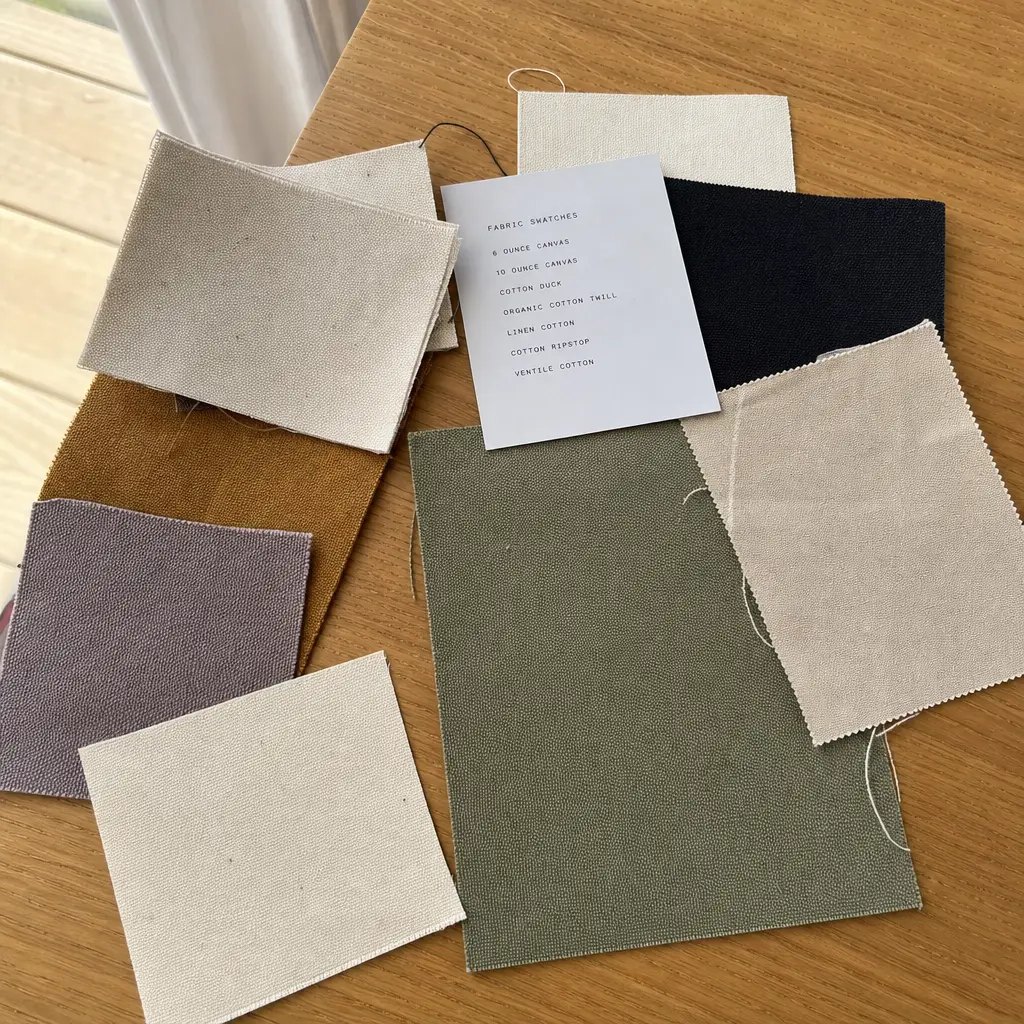
- Confirm canvas composition, GSM, and weave density with a swatch card before sampling; do not approve from photos alone
- Ask whether the quoted bag includes lining, interfacing, base reinforcement, inner pocket, zipper pocket, and adjustable strap hardware
- Request a construction sheet or annotated sample showing seam allowance, bar-tack points, strap width, and closure method
- Verify MOQ by color, design, and logo application; ask whether split-color orders or mixed-store assortments are allowed
- Set a written sample approval standard covering dimensions, stitching quality, logo placement, hardware finish, and packaging details
- Define packing requirements: individual bagging, desiccant if needed, carton weight limit, carton dimensions, and barcode label position
- Require a line-item FOB quote so fabric grade, labor, print, and packing can be compared on the same basis across suppliers
- State AQL levels, inspection timing, rework responsibility, and remedy for failed inspection directly in the purchase order
- Ask for a production timeline with milestones for fabric booking, cutting, sewing, in-line QC, final inspection, and shipment
- Check who pays for sample remakes, third-party testing, inspection reruns, and replacement freight if goods fail agreed standards
Factory quote questions to send
- What canvas composition, GSM range, and weave density do you recommend for a spa retailer messenger bag, and can you send a labeled swatch card?
- Does your quoted construction include lining, interfacing, base support, inside zipper pocket, slip pocket, adjustable webbing strap, and reinforced strap attachments?
- Which branding method is most suitable for our logo on this bag style: screen print, embroidery, woven label, or heat transfer, and what are the cost and MOQ differences for each?
- What is your MOQ per color and per logo version, and can you support split-color or mixed-assortment orders under one purchase order?
- What is your sample lead time using stock fabric versus custom-dyed fabric, and how many revision rounds are typically included?
- Can you provide a line-item FOB quotation that separates fabric, lining, hardware, cutting, sewing, logo application, packing, and any development charges?
- What are your standard in-line and final QC checkpoints for messenger bags, and what AQL level do you normally apply for retail programs?
- How do you test strap strength, zipper function, and print adhesion before shipment, and can those results be shared with the buyer?
- What is your standard retail packing method, including individual polybag spec, carton dimensions, carton weight, barcode labeling, and hangtag application?
- If the shipment fails agreed inspection or arrives with defects above AQL, what is your written remedy: rework, replacement, credit, or partial claim settlement?
Quality-control points to confirm
- Fabric weight: verify GSM on the submitted swatch and on bulk cutting fabric; reject unexplained variance below the approved tolerance
- Fabric shade: compare bulk fabric to approved standard under consistent lighting; flag lot-to-lot color variation before cutting
- Pattern and dimensions: confirm finished width, height, gusset depth, flap drop, strap length range, and pocket size against the approved spec
- Logo placement: measure print or label location from fixed seams or edges; keep placement tolerance clearly defined on the approval sample
- Stitching quality: no skipped stitches, broken threads, open seams, or inconsistent stitch density; stress areas require reinforcement as specified
- Strap security: confirm bar-tacks or box-stitch reinforcement at both strap anchors and test pull strength against the agreed load requirement
- Zipper function: open and close repeatedly to check catching, waviness, missing teeth, or weak end stops
- Hardware finish: inspect buckle, slider, D-ring, snap, and zipper pull for plating defects, scratches, sharp edges, and color mismatch
- Interior cleanliness: no oil marks, loose threads, raw-edge fraying, or trapped debris inside compartments before packing
- Packing accuracy: verify fold method, insert materials, barcode placement, carton assortment, carton marks, and master carton weight before sealing