Why a Generic Messenger Bag Fails in a Coffee Roastery
A canvas messenger bag that works for a bookstore or a yoga studio will collapse under the specific demands of a coffee roaster. You are not shipping lightweight t-shirts. You are packing 12oz retail bags of whole bean coffee, sometimes five pounds of bulk beans, cupping spoons, or a grinder for a wholesale account visit. The bag's bottom panel, strap attachment, and fabric density must be specced for dense, shifting loads that can tear a standard 10oz canvas within weeks.
Beyond physical stress, coffee roasters face a unique environmental problem: aroma absorption. Canvas is hygroscopic. If your bags are stored in a roastery, packed in a container with green coffee, or handed to a customer who then tosses it in a car trunk after a cupping session, the bag will absorb ambient moisture and volatile coffee oils. Without a sealed lining and proper polybagging during freight, your brand's premium bag arrives smelling like a damp burlap sack. This scorecard addresses the material and QC thresholds that prevent that exact complaint.
- Roasters need 16oz+ canvas to prevent seam blowout from dense coffee loads.
- Unlined canvas absorbs ambient roastery humidity and coffee oils, leading to musty customer complaints.
- Strap attachment is the #1 failure point; box-X tack with rivet is non-negotiable for loads over 8lbs.
Fabric GSM: The Load-Bearing Number Most Quotes Ignore
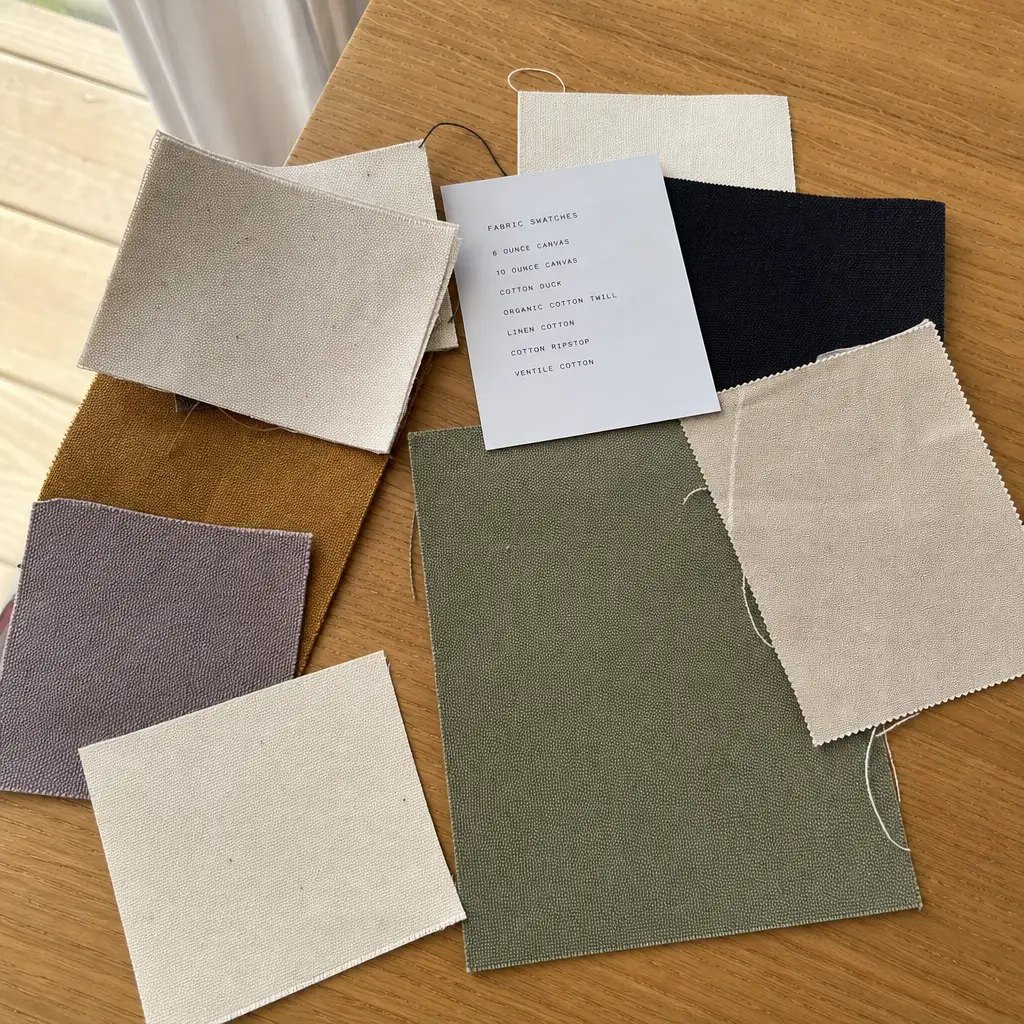
When a supplier quotes a 'heavy canvas messenger bag' at $4.20 FOB, your first question must be: what is the cut fabric weight in GSM, and is that before or after dyeing? A 12oz canvas (roughly 400 GSM) is standard for tote bags but inadequate for a messenger bag that will carry multiple 12oz coffee bags plus a laptop. We recommend a minimum of 16oz (540 GSM) full cotton canvas for the body. This weight provides the necessary drape stiffness to hold its shape on a shelf and the tensile strength to resist tearing at the shoulder strap anchor points.
Ask the supplier for a fabric mill certificate, not just a verbal assurance. A common trick is quoting '16oz' based on the greige fabric weight before finishing. After desizing, scouring, and dyeing, that same fabric can lose 8-12% of its mass. Your pre-production sample should be cut from the actual bulk fabric roll, and you should measure it yourself with a GSM cutter upon arrival. A 16oz finished canvas should feel substantial, not like a stiffened 10oz. If the supplier hesitates to provide the mill source, walk away.
- Spec 16oz (540 GSM) finished weight for the body; 12oz is for light totes, not load-bearing messengers.
- Demand a mill certificate showing post-finish weight, not greige weight.
- Measure the pre-pro sample with a GSM cutter; a 10% underweight is a rejectable defect.
Lining Choices That Protect Your Brand from Moisture and Odor
The lining is not just a cosmetic upgrade. For a coffee roaster, it is a functional barrier. A full cotton drill lining in 10oz weight serves two purposes: it adds a second layer of structural integrity to the bag body, and it provides a sacrificial inner surface that can be spot-cleaned. More critically, it creates a partial barrier between the canvas shell and the coffee beans or equipment inside. We do not recommend PU-coated linings for roasters because they crack at fold points after repeated use and trap condensation inside the bag.
If your brand sells high-end single-origin coffee at $22 per bag, your merchandise bag should not smell like a shipping container. Specify that the lining fabric is cut on-grain. Off-grain cutting causes the lining to twist and pull at the seams after the bag is loaded and unloaded repeatedly. This is a subtle defect that only appears after a month of use, but it destroys the perceived quality of your brand. A simple QC check: lay the bag flat and verify that the lining weave runs parallel to the bag's bottom seam.
- 10oz cotton drill lining adds structure and a cleanable inner surface.
- Avoid PU-coated linings; they crack and trap condensation in variable roastery environments.
- Specify on-grain cutting for lining to prevent twisting after load stress.
Print Method and Ink Cure: Why Your Logo Can't Flake Off
A canvas messenger bag gets folded, stacked, and rubbed against clothing and car seats. A plastisol screen print that works fine on a t-shirt will crack along the fold lines of a bag flap within weeks. For natural canvas, water-based screen printing with a proper heat cure is the only method that penetrates the fiber rather than sitting on top. The ink must be cured at 160°C for a minimum of three minutes to achieve full polymerization. If the supplier rushes this step to save energy, the print will wash out or abrade.
Your QC specification must include a cross-hatch adhesion test using 3M 600 tape on a cured production sample. Apply the tape firmly over the printed area, wait 60 seconds, and pull at a 180-degree angle. No more than 5% ink removal is acceptable. Also, specify a minimum ink penetration of 3mm into the fabric cross-section. This is visible under a loupe on a cut sample. If the supplier cannot provide a cross-section photo of the print penetration, they are not controlling the cure process.
- Water-based ink with 160°C/3-min cure is mandatory for fold-resistant logo adhesion.
- QC spec: 3M 600 tape test with <5% ink removal after 24-hour cure.
- Require a cross-section photo showing 3mm minimum ink penetration into canvas fiber.
Hardware That Survives Daily Use: Zippers, Snaps, and Rivets
The front flap closure and the shoulder strap hardware are the two points where a $4.20 bag becomes a $4.20 problem. A magnetic snap on the flap is convenient for quick access, but it must be backed with a reinforcement patch of leather or heavy webbing. A snap set directly into canvas will eventually tear out, leaving a hole that cannot be repaired. For the main compartment, a YKK #5 zipper with antique brass finish is the industry standard for bags in the $30-$50 retail range. Generic zippers from unbranded coil manufacturers fail at the insertion pin and box within 500 cycles.
Request a YKK batch certificate with every shipment. Counterfeit YKK zippers are common, and they fail by coil separation at the tape edge. The shoulder strap attachment is the highest-stress point on the bag. A single bartack is insufficient for a bag carrying coffee. You need a box-X tack pattern with a rivet through all layers at each end of the strap. The rivet burr must be fully spread on the inside of the bag, not just crimped. Ask for a cross-section photo of a destroyed sample to verify the burr spread.
- YKK #5 antique brass zipper with batch certificate; reject generic coil zippers.
- Magnetic snap must have a leather or webbing reinforcement patch on the back side.
- Strap attachment: box-X tack plus rivet with fully spread burr, verified by cross-section photo.
MOQ Logic for Roasters Testing Multiple Colorways
A coffee roaster launching a merchandise line typically wants two or three colorways: a natural canvas with a black print, a dyed olive or navy body, and perhaps a limited-edition color for a seasonal blend. Most canvas bag factories quote a 1000-unit MOQ per color because their cutting table is optimized for long runs. But you can negotiate a 300-unit per color MOQ with a 10-15% surcharge. This is a fair trade-off: the factory loses cutting efficiency but gains a new client who may reorder at higher volumes.
The key is to bundle your colorways into a single production run. The factory can cut all three colors from the same marker if the bag pattern is identical. The only change is the fabric roll. If you ask for different print designs per colorway, the screen setup cost multiplies. Keep the print design consistent across colorways and vary only the fabric color. This keeps your MOQ surcharge low and your per-unit cost predictable. Always ask for the surcharge as a dollar amount per unit, not a percentage, so you can compare quotes directly.
- Negotiate 300 units/color with 10-15% surcharge instead of 1000/color MOQ.
- Keep print design identical across colorways to avoid multiple screen setup charges.
- Ask for the MOQ surcharge as a dollar amount per unit for direct quote comparison.
Sample Approval: Pre-Production vs. Salesman Sample
A salesman sample is a bag the factory made six months ago for another client, with different fabric, different thread, and different hardware. It tells you nothing about what your production run will look like. A pre-production sample is cut from the actual bulk fabric roll you approved, sewn by a production-line sewer, and finished with your exact hardware and print. This is the only sample that matters for a roaster placing a 500+ unit order.
Your sample approval checklist must include: fabric hand-feel compared to your reference swatch, print adhesion tested with tape, zipper function cycled 20 times, strap attachment inspected from the inside, and a dimensional check against your tech pack. If the pre-pro sample fails any of these, the factory must submit a second pre-pro sample before cutting begins. This adds 7-10 days to your timeline, but it prevents a container of 1000 bags that all have the same defect. Build this sample approval buffer into your lead time.
- Reject salesman samples; demand a pre-pro sample from actual bulk fabric and hardware.
- Test pre-pro sample: fabric hand, print adhesion, zipper cycle, strap attachment, dimensions.
- Build a 7-10 day sample approval buffer into your production timeline.
Packing Protocol to Prevent Musty Canvas on Arrival
Canvas is a sponge. If your 500 messenger bags are bulk-packed in a single carton without individual polybagging, they will absorb moisture from the container air during the 4-week sea freight journey. When they arrive, they will smell musty, and your customer will associate that smell with your coffee brand. The packing spec must require each bag to be individually polybagged with a small silica gel desiccant sachet inside the polybag, then packed 25 units per master carton.
The master carton itself must be a double-wall corrugated box with a minimum burst strength of 200 PSI. A single-wall carton will crush under the weight of 25 canvas bags, and the bags at the bottom will have permanent crease marks. Specify a carton drop test: 1 corner, 3 edges, and 6 faces dropped from 90cm onto a concrete floor. The carton must not split, and the bags inside must not shift enough to cause abrasion damage. This is standard ISTA 1A protocol, and any competent factory can perform it.
- Individual polybag with silica gel desiccant for each bag to prevent container moisture absorption.
- 25 units per double-wall master carton with 200 PSI minimum burst strength.
- ISTA 1A drop test: 1 corner, 3 edges, 6 faces from 90cm; no carton split or bag abrasion.
Landed-Cost Reality: Freight, Duty, and the Hidden Aroma Risk
A $4.20 FOB quote for a 16oz canvas messenger bag from a competent factory is realistic. But your landed cost per unit will be closer to $5.80-$6.50 depending on your port, freight mode, and duty rate. Canvas bags fall under HTS 4202.22.1500 if they have an outer surface of cotton, with a duty rate of 6.3% for most countries importing from Asia. Sea freight for a single pallet of 500 bags can add $0.80-$1.20 per unit. Air freight is triple that and only makes sense for a rush reorder.
The hidden cost is an aroma-related return or discount request. If a wholesale customer opens a carton of your branded messenger bags and detects a musty or chemical smell, they will demand a credit. That credit can wipe out your margin on the entire order. The packing protocol and QC odor test described in this scorecard are not optional; they are your insurance against a landed-cost disaster. Budget an extra $0.15 per unit for proper polybagging and desiccant. It is the cheapest insurance you will buy.
- Realistic FOB: $4.20-$5.50 for 16oz canvas with lining and YKK hardware at 500-unit order.
- Landed cost estimate: $5.80-$6.50/unit including sea freight and 6.3% duty.
- Aroma-related returns can wipe out margin; $0.15/unit for desiccant packing is cheap insurance.
Supplier Scorecard: How to Compare Three Quotes in 20 Minutes
When you have three quotes in your inbox, do not compare them by unit price alone. Create a simple scorecard with the seven decision rows from the comparison table above. Assign each supplier a pass/fail on each row. A supplier who quotes 12oz canvas when you specified 16oz fails the fabric row immediately. A supplier who cannot provide a YKK batch certificate fails the hardware row. This method eliminates the two suppliers who are quoting a cheaper bag, not a comparable bag.
The remaining supplier should be able to answer all seven factory quote questions with specific, verifiable evidence. If they say 'yes, we use YKK' but cannot produce a certificate, that is a fail. If they say 'the canvas is 16oz' but the pre-pro sample measures 14.5oz on your GSM cutter, that is a fail. The supplier who passes your scorecard is the one who treats your RFQ as a technical specification, not a price negotiation. That supplier is worth a 10% premium because they will deliver a bag that your wholesale customers will reorder.
- Score each supplier pass/fail on 7 spec rows; eliminate those quoting a cheaper, non-comparable bag.
- The winning supplier answers all 7 factory quote questions with verifiable evidence, not verbal assurances.
- A 10% price premium for a spec-compliant supplier is cheaper than a container of defective bags.
Specification comparison for buyers
| Supplier option | What to verify | Commercial advantage | Buyer risk to control |
|---|---|---|---|
| Direct sewing factory | hardware trim card, strap-load photo, lining close-up, approved flap sample, and first-piece production photos | Better sample-to-bulk control and faster production feedback | May be weaker on export paperwork or branded packing unless checked early |
| Trading company | Factory name, production photos, trim-source proof, and who owns QC decisions | Can coordinate small mixed orders and extra services | Markup can hide real factory capability and slow defect decisions |
| Specialized bag workshop | flap shape, strap webbing, buckle, D-ring, inner pocket, zipper pocket, seam allowance, and load path | More practical for detailed construction, trims, and repeat programs | Capacity may be limited during peak seasons |
| Low-price general supplier | 10-16 oz canvas, washed canvas, rPET canvas, lining fabric, interfacing, and hardware finish | Useful for simple promotional runs with loose specs | Material downgrades, weak packing, and vague inspection scope can erase savings |
| Retail-ready supplier | shape support, strap folding, hardware protection, individual bag, carton drop expectation, and retailer hangtag placement | Can handle labels, SKU separation, carton marks, and receiving rules | Higher unit cost must be compared against reduced warehouse work |
| Compliance-focused supplier | Fabric records, labeling review, test plan, and production traceability | Safer for retail programs and repeat brand orders | Documentation claims need evidence, not only sales language |
| Local sample room plus bulk factory | Signed sample, bulk factory handoff, first-piece photos, and deviation owner | Good for complex branding before large production | Sample room quality may not match bulk line unless handoff is controlled |
Buyer checklist before sampling
- Request a pre-production sample cut from the actual bulk fabric roll, not a salesman sample.
- Specify 'colorfastness to crocking, Grade 4 minimum' for any direct-printed canvas.
- Confirm inner lining is cut on-grain to prevent twisting after first wash or heavy load.
- Audit strap attachment: demand a cross-section photo showing rivet burr spread on the inside.
- Require a 10-bag random pull from bulk for AQL 2.5 inspection before final payment.
- Validate carton drop test: 1 corner, 3 edges, 6 faces from 90cm for master cartons.
- Check that magnetic snap is backed with a leather or fabric reinforcement patch, not just canvas.
- Get written confirmation that water-based ink cure temperature reached 160°C for 3 minutes.
- Measure fabric GSM with a calibrated cutter on 3 points per roll; reject if below 510 GSM for 16oz spec.
- Verify YKK zipper batch certificate matches the antique brass finish and #5 coil size.
Factory quote questions to send
- What is the exact mill source and composition of your 16oz canvas? Provide a mill certificate showing post-finish weight and shrinkage test result.
- Do you apply a pre-shrink sanforization process to the canvas before cutting? If not, what is the expected residual shrinkage after first home wash?
- For the YKK zipper, can you supply the batch certificate and a sample of the zipper tape with the antique brass finish we selected?
- What is your internal AQL standard for stitch defects per 100 units, and will you share the inspection report from the last similar order?
- If we order 300 units per color across 3 colors, what is the exact per-unit surcharge versus a 1000-unit single-color order? Express as a dollar amount, not a percentage.
- Describe your packing protocol to prevent canvas absorbing roastery odors during sea freight: do you use vented or sealed polybags, and what desiccant is included?
- Can you provide a photo of the actual greige fabric inventory allocated to our order before cutting begins?
- What is the maximum load capacity of the strap attachment based on your internal pull-test data? Provide the test method and result in pounds.
Quality-control points to confirm
- Fabric weight tolerance: ±5% of specified GSM, measured with a calibrated GSM cutter on 3 points per roll. Reject if any point falls below 510 GSM for a 16oz spec.
- Stitch density: 8-10 stitches per inch on main seams; no skipped stitches allowed on strap attachment. Verify with a seam ripper on the pre-pro sample.
- Print adhesion: 3M 600 tape test on cured print; no more than 5% ink removal after 24-hour cure. Perform on 3 random locations per sample.
- Hardware function: 100% functional test on zipper and magnetic snap for 20 cycles on AQL sample. Reject if any cycle fails.
- Dimensional tolerance: ±0.5 inch on body width and height; flap alignment within 0.25 inch of centered. Measure on 10% of production.
- Odor test: sealed bag opened after 48-hour conditioning at 25°C/60%RH; no musty or chemical smell acceptable. Test on 5 random bags per 500 units.
- Strap pull test: minimum 80 lbs static load for 60 seconds without seam separation or hardware failure. Require a video of the test.
- Carton drop test: ISTA 1A protocol, 1 corner, 3 edges, 6 faces from 90cm. No carton split, no bag abrasion, no hardware damage.