Start With the Spa Retail Use Case
A canvas messenger bag for a spa retailer is not the same product as a student book bag, conference giveaway, or rugged outdoor satchel. Spa buyers usually need a calm shelf appearance, soft but structured handfeel, comfortable strap, and enough perceived value to sit beside skincare sets, robes, towels, candles, oils, or amenity bundles. If the RFQ only says “canvas messenger bag with logo,” suppliers will quote very different products.
Define how the bag will be used before discussing price. A retail resale item needs cleaner sewing, stronger shelf shape, better label control, and packaging that prevents creasing. A gift-with-purchase may need efficient carton packing and consistent logo visibility more than long-term durability. A staff utility bag may need a darker color, reinforced strap anchors, and easy spot cleaning. These choices affect fabric weight, hardware, lining, pockets, branding, MOQ, and acceptable cost.
The use case also changes defect judgment. A small natural cotton slub may be acceptable on a rustic membership gift, but not on the front flap of a premium retail SKU. A soft bottom may be fine for a folded amenity kit, but not for a bag expected to stand upright in a boutique display. Put the commercial use at the top of the supplier brief.
- Retail resale: prioritize clean flap shape, neat topstitching, consistent logo placement, hangtag accuracy, and carton presentation.
- Amenity kits: prioritize capacity, easy filling, low logo defect rate, and carton quantities that match the kitting workflow.
- Staff use: prioritize darker canvas, reinforced strap anchors, durable hardware, and practical pockets.
- Membership gifts: prioritize perceived value, controlled branding, and packing that prevents creases before unboxing.
- Seasonal promotions: limit colorways and trim variations to keep MOQ, sampling, and lead time realistic.
Convert Spa Products Into Bag Dimensions
A good specification starts with the products that will go inside the bag. Skincare bottles, glass jars, boxed masks, candles, folded robes, slippers, towels, and welcome cards all load a messenger bag differently. A slim flat profile may look elegant in a photo but fail when a boxed skincare set pushes against the flap. A wider gusset improves capacity, but the flap depth and closure position must also change or the bag may bulge open.
Common starting dimensions for spa retail programs may sit around 32–38 cm wide, 26–32 cm high, and 8–12 cm deep, but these are not universal standards. Treat them as design starting points to confirm with your products and supplier. Send product dimensions, estimated loaded weight, and a simple packing diagram rather than only a reference image.
Construction details determine whether the bag feels intentional. Decide whether the body is unlined, self-lined, or lined with cotton. Clarify whether seams are overlocked, bound, or hidden inside lining. Specify whether the bottom needs an extra canvas layer, whether the flap uses interfacing, and whether the strap is fixed or adjustable.
- Measure finished width, height, gusset, flap drop, bottom width, strap width, and adjustable strap range.
- For bottles and candles, test whether the bottom sits flat and whether hard corners distort the canvas.
- For robes and towels, allow soft expansion and avoid a flap that pulls open when filled.
- For wall display, confirm strap length, hang orientation, and whether the bag collapses unattractively.
- For pockets, specify opening width, pocket depth, closure, and intended contents such as phone, receipt, membership card, or samples.
Choose Canvas Weight, Color, and Handfeel Carefully
Fabric choice controls appearance, print result, sewing behavior, and freight cost. For many spa retail messenger bags, 12 oz to 14 oz cotton canvas, often in the approximate 380–475 GSM range depending on weave, is a practical starting point. It gives better body than lightweight promotional canvas without becoming as stiff or heavy as very dense canvas. Confirm actual GSM with the supplier because ounce-to-GSM comparisons can vary by fabric type.
Heavier canvas is not always better. It can create bulky flap corners, make strap-anchor sewing harder, raise carton weight, and feel too rigid for a soft wellness brand. Lighter 8 oz to 10 oz canvas can work for giveaways or simple kits, but it may lack shelf presence for boutique retail resale. Ask the supplier how the chosen fabric behaves in cutting, sewing, printing, washing, and packing.
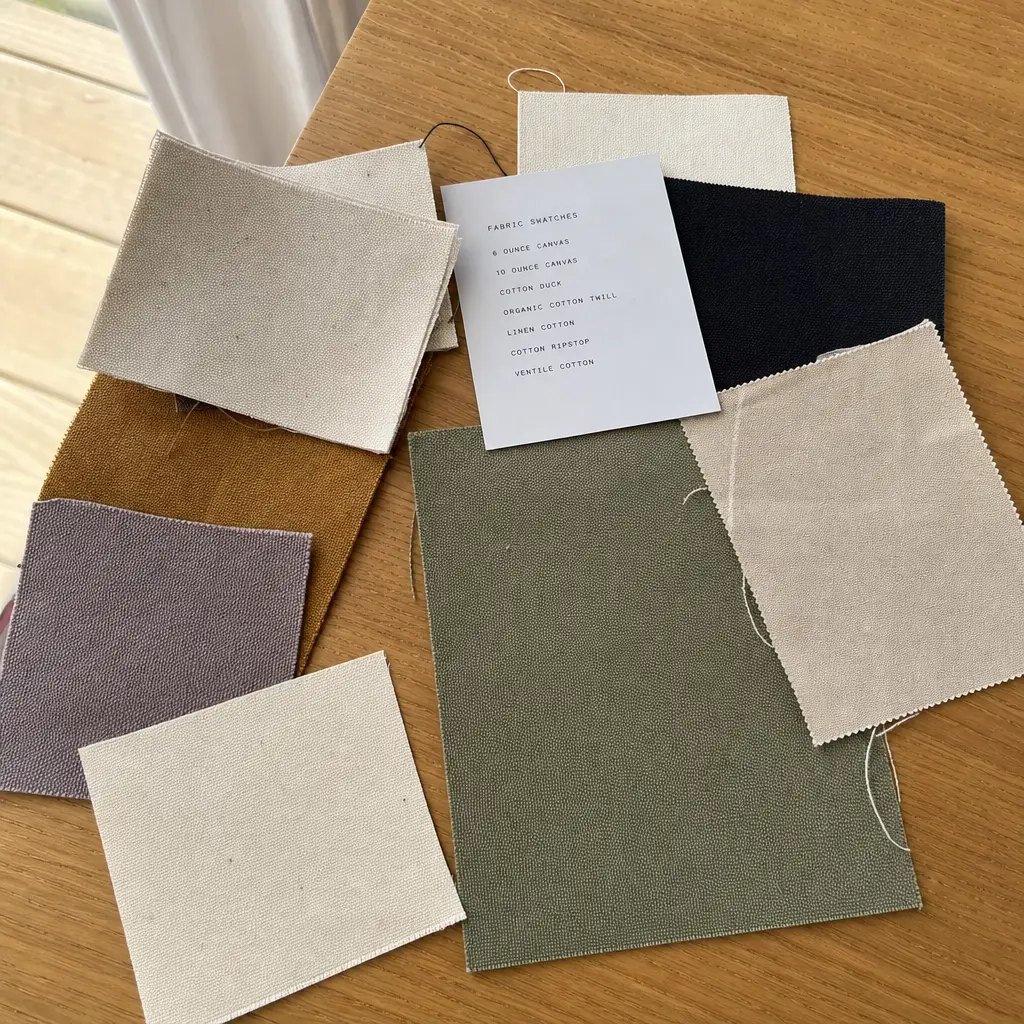
Natural canvas has a warm wellness look, but shade variation is normal because cotton lots differ. Dyed canvas gives stronger brand control for sage, taupe, charcoal, stone, blush, or deep green, but it requires lab dip approval and often adds time. Washed canvas gives a relaxed handfeel but can increase dimensional variation and seam puckering. Review physical swatches under boutique lighting, daylight, and warehouse lighting if color matters.
- 8–10 oz canvas: lighter and lower cost; best for simple promotional or low-load uses.
- 12–14 oz canvas: balanced option for spa retail bags, membership kits, and moderate daily use.
- 16 oz and above: stronger body but higher sewing difficulty, stiffness, weight, and freight impact.
- Natural canvas: calm and cost-effective, but shade and slub variation must be accepted within limits.
- Dyed or washed canvas: better style control, but requires lab dips, shrinkage review, and sample confirmation.
Compare Supplier Routes on Evidence
The word supplier can mean a direct bag factory, trading company, domestic wholesaler, sourcing agent, print decorator, or retail-ready packaging partner. Each route can work, but they solve different problems. A direct factory is usually stronger for custom dimensions, private labels, repeat construction, and cost control. A wholesaler is useful for low-MOQ tests or urgent openings. A retail-ready partner may be best when carton labels, barcodes, and SKU separation are difficult for your internal team.
Do not compare quotes until the work scope is normalized. One supplier may include dyed canvas, woven label, magnetic snap, barcode, and individual packing. Another may quote a stock natural bag with a one-color print in bulk cartons. The lower number is not meaningful unless fabric, trims, logo method, packing, MOQ splits, sample process, and inspection rights are the same.
Ask for evidence, not broad capability statements. Useful proof includes fabric swatches, trim cards, construction photos, packing photos, sample lead times, carton data, and a clear answer about subcontracting. Subcontracting is not automatically a problem, but undisclosed subcontracting creates risk when print color, sewing quality, or packing accuracy fails.
- Use a direct factory for custom size, repeat SKUs, controlled materials, and sealed-sample discipline.
- Use a wholesaler for fast tests where exact long-term continuity is less important.
- Use a local decorator for quick domestic branding, but verify blank-bag consistency before reorders.
- Use a retail-ready supplier if barcode, hangtag, carton marking, and store receiving rules are critical.
- Treat fast quotes cautiously if they omit GSM, carton size, print method, packing method, and MOQ splits.
Specify Branding for Textured Canvas
Spa branding often needs to look quiet, clean, and premium. On canvas messenger bags, screen printing is usually practical for simple logos, botanical icons, and short messages. It is cost-effective for bulk production and works well when artwork is prepared for fabric texture. Very fine lines, small serif text, low-contrast colors, and large solid ink blocks can show pinholes or texture show-through.
Other branding options may fit a retail item better. A woven label offers consistency and subtle private-label presentation. Embroidery adds dimension but can pucker lighter panels if backing and stitch density are not controlled. A sewn cotton patch can carry detailed artwork while avoiding heavy ink coverage on the main flap. For wellness brands avoiding leather, cotton, cork, washable paper, or recycled fabric patches may align better with policy.
Logo placement must be measured. “Centered on flap” is not enough. Define distance from the flap edge, seam line, snap, or bottom edge. Confirm whether printing happens before or after sewing. Printing before sewing gives a flatter panel but requires accurate cutting and alignment; printing after sewing may be harder near seams and thick flap edges.
- Screen print: good for one to three colors, moderate detail, and repeatable cost control.
- Heat transfer: useful for fine detail, but test handfeel, edge durability, and adhesion on textured canvas.
- Embroidery: premium look, but control puckering and avoid tiny lettering.
- Woven label: strong for private-label retail programs and repeat SKUs.
- Printed patch: useful when direct printing on dyed or textured canvas is inconsistent.
- Always approve a logo strike-off on actual fabric before bulk production.
Understand Cost Drivers Before Negotiating
Canvas messenger bag pricing depends on more than fabric weight. The cost structure includes fabric consumption, cutting waste, sewing time, hardware, logo method, labels, packing labor, inspection, and carton volume. A bag with a full flap, adjustable strap, inside pocket, zipper pocket, magnetic snap, bound seams, and individual retail packing may require far more operations than a simple promotional bag of similar size.
MOQ logic can change the real cost. A supplier may quote a good price for one fabric color and one logo, then add charges when the order is split across three spa locations, two colors, separate barcodes, and different carton labels. Small splits increase setup time, printing control, packing segregation, and inspection work. Ask for a price matrix if the program includes multiple versions.
The best comparison is landed cost. A slightly higher unit price may be better if the supplier provides accurate labels, lower defect risk, efficient packing, and fewer warehouse corrections. Ask for carton dimensions, gross weight, pieces per carton, estimated CBM, and packing method at RFQ stage so freight and receiving costs can be modeled early.
- Fabric cost rises with GSM, dyed color, washing, special finish, and cutting waste from large flaps.
- Sewing cost rises with lining, zippers, binding, reinforced anchors, shaped gussets, and multiple pockets.
- Hardware cost rises with custom metal finish, branded pullers, magnetic snaps, buckles, rivets, and corrosion-resistant finishes.
- Branding cost rises with print colors, print size, embroidery stitch count, patch sewing, label MOQ, and artwork changes.
- Packing cost rises with tissue, belly bands, hangtags, barcodes, individual bags, inner cartons, and SKU segregation.
Build an RFQ Suppliers Can Quote Accurately
A strong RFQ reduces price confusion and prevents sample-to-bulk surprises. Send a concise technical brief with target dimensions, fabric range, color, logo method, strap style, closure, pockets, labels, packing, quantity, delivery window, and inspection expectations. Use reference photos as guidance only, and clearly mark which features are mandatory versus flexible.
Include presentation and receiving requirements. If the bag will be sold on a shelf, ask for packing that avoids deep flap creases. If it will be filled at a kitting center, request carton quantities that support the filling workflow. If each spa location receives different SKUs, request carton labels and packing lists by destination. These operational details affect price and error rate.
Require suppliers to return quotes in the same format. A useful quotation states fabric specification, included branding, hardware, sample fee, sample timing, production lead time, MOQ, payment terms, carton data, estimated CBM, exclusions, and substitution rules. If a supplier cannot give carton data or MOQ splits, the quote is incomplete for procurement comparison.
- Attach vector artwork, Pantone references, logo size, and placement measurements.
- List order quantities by color, logo, label, barcode, packing style, and ship-to location.
- State whether price must include care label, country-of-origin label, hangtag, barcode, individual packing, and export carton.
- Ask for options: base version, upgraded hardware version, retail-ready packing version, and lower-MOQ test version.
- Require written approval before any material, trim, logo, or packing substitution.
Use Sampling to Lock the Real Product
A prototype made from available fabric is helpful for checking size and structure, but it should not become the final production approval. The pre-production sample should use actual canvas weight, actual color, actual strap, actual hardware, actual label, actual logo method, and actual packing. If anything is substituted, it should be clearly marked as pending approval.
Review the sample in the environment where it will be sold or packed. Natural canvas can look warmer or grayer depending on lighting. Sage, taupe, and charcoal may shift under LED boutique lights. Print contrast may look acceptable in a factory photo but too faint on a shelf. Fill the bag with real products to test flap closure, strap balance, bottom shape, and pressure points from jars or bottles.
The approved sample should become a controlled reference. Sign and date it if possible, photograph all sides, record measurements, and keep approved swatches, trim cards, print strike-offs, label proofs, and packing photos together. The factory should keep a matching sealed sample for inline and final inspection.
- Measure dimensions against the technical sheet rather than judging from photos.
- Load the intended spa set and check flap closure, snap alignment, bottom shape, and strap comfort.
- Rub the logo with dry white cloth and slightly damp cloth to screen for weak curing or transfer.
- Open and close snaps, zippers, buckles, and adjusters repeatedly to catch weak setting or rough edges.
- Check inside seams, pockets, label placement, loose threads, and binding against the approved construction.
- Approve the packing sample before mass packing starts.
Set QC Standards That Match Retail Reality
Canvas is a natural material, so buyers should allow reasonable character while rejecting defects that harm appearance or function. The purchase order should separate acceptable fabric variation from defects. A minor slub in a hidden area may pass; oil stains, holes, severe shade mismatch, crooked flaps, loose strap anchors, and off-center logos should not.
Inspection should focus on the surfaces customers see first: front flap, logo zone, strap, top edge, closure, and retail label. Hidden areas can have a different cosmetic threshold, but function still matters. If the bag is part of a gift set or distributor order, barcode accuracy and carton segregation are as important as sewing quality because fulfillment errors create downstream cost.
Use buyer-set targets or supplier-confirmed norms rather than assuming one universal tolerance. Finished size, stitch density, print placement, and strap strength depend on fabric, washing, design, and equipment. Define critical, major, and minor defects before inspection so the inspector does not have to interpret brand standards on the warehouse floor.
- Visible panels: reject stains, holes, oil marks, severe slubs, obvious shade mismatch, and crease damage.
- Logo area: check position, color, curing, smearing, pinholes, and ink transfer against the approved strike-off.
- Seams: reject open seams, skipped stitches, weak reinforcement, raw visible threads, and uneven flap topstitching.
- Hardware: check alignment, rust, burrs, cracked coating, loose rivets, weak magnet, and zipper movement.
- Function: confirm strap adjuster grip, flap closure when lightly filled, symmetrical gussets, and untwisted bottom.
- Packing: verify SKU, color, barcode, hangtag, carton mark, quantity per carton, and PO reference.
Control Packing, Cartons, and Lead Time
Canvas messenger bags are not fragile, but they can be damaged by poor packing. Deep flap creases, print abrasion, distorted gussets, dirty natural canvas, and crushed hangtags often come from over-compressed cartons or unapproved folding. A flat pack may work for bulk warehouse intake, while retail-ready presentation may need tissue, a belly band, individual bag, or inner carton.
Landed cost depends on CBM, gross weight, carton count, handling rules, and receiving requirements. A cheaper factory price becomes less attractive if cartons exceed receiver weight limits, packing is too bulky, or warehouse staff must relabel every unit. For spa chains and distributors, carton size matters because store back rooms may be small.
Lead time starts after approvals, not after the first inquiry. Natural canvas with standard trim and one-color screen print can move faster than dyed canvas with woven labels, magnetic snaps, and individual barcode stickers. Build the schedule backward from the in-store date and include sampling, approvals, production, inspection, freight, customs, domestic distribution, and possible correction time.
- Flat bulk packing: lower cost, but higher risk of flap compression marks.
- Individual recycled polybag: better moisture and abrasion protection, but may conflict with plastic reduction goals.
- Paper belly band: stronger retail presentation, less plastic, but lower moisture protection.
- Tissue between flap and body: useful for printed flaps and light natural canvas.
- Inner carton by SKU: helpful for multi-location orders, but adds material and handling.
- Custom labels, dyed fabric, patches, retail packing, and testing should be planned early.
Specification comparison for buyers
| Supplier option | What to verify | Commercial advantage | Buyer risk to control |
|---|---|---|---|
| Direct sewing factory | hardware trim card, strap-load photo, lining close-up, approved flap sample, and first-piece production photos | Better sample-to-bulk control and faster production feedback | May be weaker on export paperwork or branded packing unless checked early |
| Trading company | Factory name, production photos, trim-source proof, and who owns QC decisions | Can coordinate small mixed orders and extra services | Markup can hide real factory capability and slow defect decisions |
| Specialized bag workshop | flap shape, strap webbing, buckle, D-ring, inner pocket, zipper pocket, seam allowance, and load path | More practical for detailed construction, trims, and repeat programs | Capacity may be limited during peak seasons |
| Low-price general supplier | 10-16 oz canvas, washed canvas, rPET canvas, lining fabric, interfacing, and hardware finish | Useful for simple promotional runs with loose specs | Material downgrades, weak packing, and vague inspection scope can erase savings |
| Retail-ready supplier | shape support, strap folding, hardware protection, individual bag, carton drop expectation, and retailer hangtag placement | Can handle labels, SKU separation, carton marks, and receiving rules | Higher unit cost must be compared against reduced warehouse work |
| Compliance-focused supplier | Fabric records, labeling review, test plan, and production traceability | Safer for retail programs and repeat brand orders | Documentation claims need evidence, not only sales language |
| Local sample room plus bulk factory | Signed sample, bulk factory handoff, first-piece photos, and deviation owner | Good for complex branding before large production | Sample room quality may not match bulk line unless handoff is controlled |
Buyer checklist before sampling
- Define the commercial use first: retail resale, spa membership gift, staff utility bag, amenity kit, influencer package, or seasonal gift-with-purchase.
- Specify finished width, height, gusset, flap depth, pocket sizes, strap width, adjustable strap range, and whether the bag must stand, hang, or fold flat.
- Choose a target canvas weight and ask suppliers to confirm both ounces and GSM, plus weave, shrinkage behavior, color treatment, and whether fabric is natural, dyed, washed, or finished.
- List all components: lining, interfacing, zipper, magnetic snap, buckle, D-rings, strap adjuster, rivets, labels, hangtags, barcodes, and individual packing.
- Provide vector logo artwork, Pantone references, print size, placement measurements, and acceptable texture show-through on canvas.
- Separate MOQ by bag color, strap color, lining color, logo version, label version, barcode, packing style, and ship-to location.
- Request a pre-production sample using actual fabric, actual trims, actual logo method, actual label, and actual packing—not only a lookalike prototype.
- Set buyer-approved QC targets for size, stitch consistency, print placement, color, strap anchoring, hardware function, carton weight, barcode accuracy, and label position.
- Confirm carton plan early: pieces per carton, carton dimensions, gross weight, estimated CBM, carton marks, SKU separation, and pallet recommendation if needed.
- Compare landed cost by FOB unit price, duty, freight volume, inspection, relabeling risk, warehouse handling, and repacking—not only the quoted bag price.
Factory quote questions to send
- Is the quoted price based on your own production, or are sewing, printing, washing, embroidery, labeling, or packing subcontracted?
- What exact canvas weight is quoted in ounces and GSM, and can you provide a swatch from the same fabric quality before sampling?
- Is the fabric natural, bleached, dyed, washed, organic, recycled, rPET blend, or treated with any finish that could affect printing, odor, shrinkage, or handfeel?
- What is the MOQ per bag color, strap color, lining color, logo artwork, label version, barcode, and packing method?
- Which logo method is included, how many colors are included, what ink or thread type is planned, and what is the maximum logo size without extra cost?
- What hardware is included: magnetic snap, buckle, D-ring, strap adjuster, zipper slider, rivet, branded puller, antique finish, nickel-free finish, or plastic alternative?
- What sample types can you provide: fabric swatch, blank prototype, lab dip, logo strike-off, trim card, pre-production sample, packing sample, and sealed reference sample?
- What production tolerances do you normally hold for finished size, strap length, print placement, flap alignment, color variation, stitch consistency, and pocket position?
- How many pieces per carton, what are the carton dimensions, gross weight, net weight, estimated CBM, and recommended pallet pattern for this order quantity?
- What lead time applies after all approvals, and which items could add time: dyed fabric, washing, custom woven label, custom hardware, third-party testing, or retail packing?
Quality-control points to confirm
- Finished size should follow buyer-approved tolerances stated on the technical sheet. Many bag programs target tight control on main dimensions, but acceptable variation depends on canvas weight, washing, lining, and design shape.
- Stitch density and reinforcement should match the approved sample or supplier-confirmed production norm. Strap anchors, flap stress points, pocket corners, and gusset ends should use bartacks or equivalent reinforcement where required.
- Print placement should be measured from agreed reference points such as flap edges, seam lines, or a placement template. Do not rely on visual centering alone.
- Screen print ink should be properly cured and checked with simple dry rub and light wet rub tests so ink does not transfer to white tissue, packing paper, polybags, or adjacent canvas panels.
- Magnetic snaps, D-rings, buckles, rivets, zipper sliders, and zipper pulls should be checked for rust, plating defects, sharp edges, weak attachment, misalignment, cracked coating, and basic opening-closing function.
- The flap should close naturally without twisting; side gussets should be symmetrical; the bottom should sit evenly when lightly filled according to the intended spa retail load.
- Inside seams should be bound, overlocked, lined, or otherwise finished as approved. Loose threads near skincare, towels, robes, or candles can become customer complaints.
- Fabric defects should be judged by panel visibility. Minor natural slubs may be acceptable in low-visibility areas; stains, holes, oil marks, severe shade mismatch, or front-flap weaving defects should be rejected.
- Individual packing should protect printed surfaces from abrasion and prevent deep flap creases. Folding direction, tissue, insert, belly band, or polybag should match the approved packing sample.
- Carton marks, SKU labels, color names, barcodes, hangtags, country-of-origin labels, and packing-list quantities should match the purchase order before shipment release.