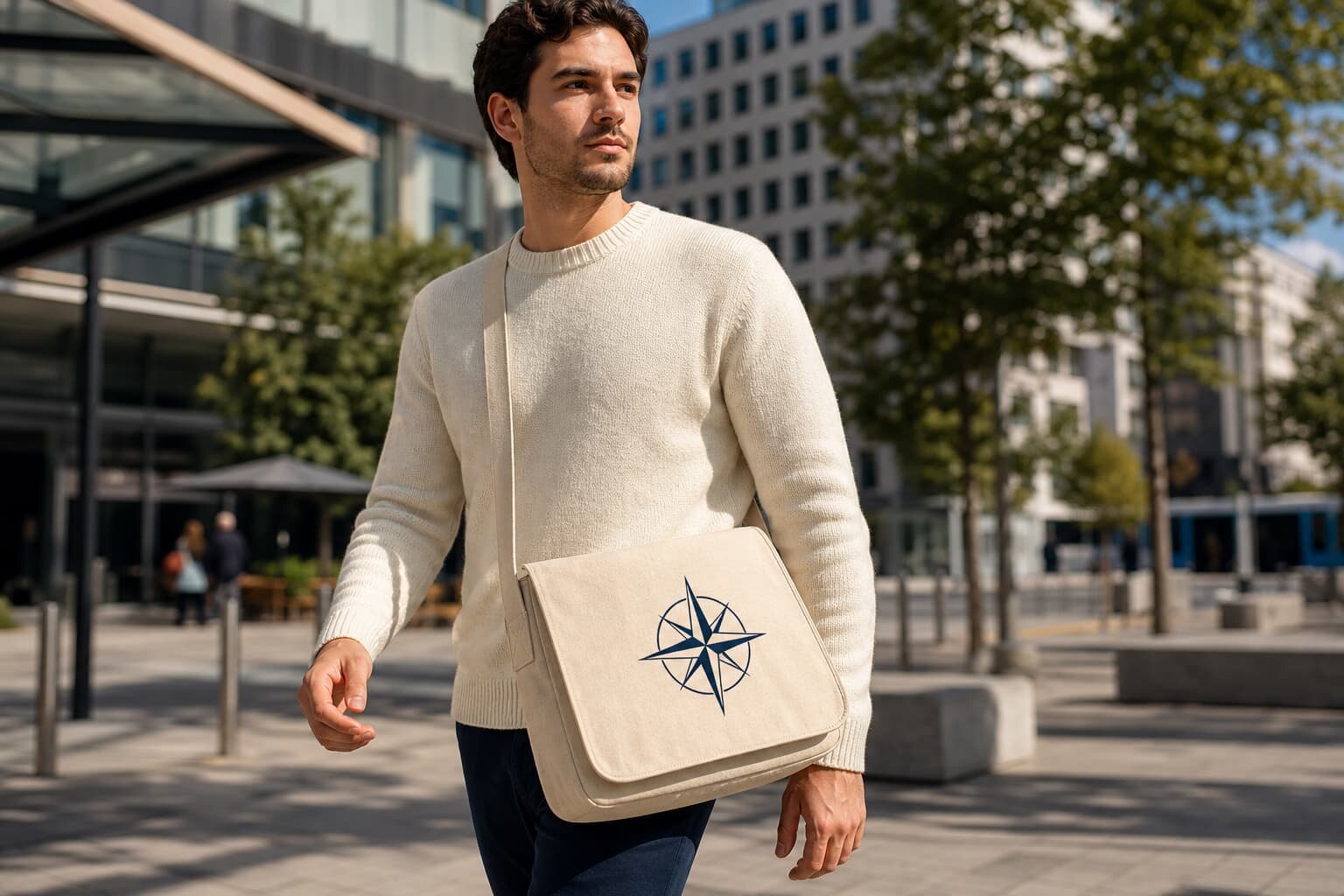
Why This Audit Matters Before You Place a Messenger Bag PO
A canvas messenger bag looks simple in a quotation sheet, but it combines heavy fabric, strap load, front-flap branding, hardware, pockets, and export packing. Small supplier weaknesses usually appear after deposit: the quoted fabric feels lighter, the strap pulls out during inspection, the flap logo shifts because the sewing allowance was not considered, or the carton fold leaves a permanent crease through the printed logo.
The purpose of a supplier audit is not to create paperwork for its own sake. It is to verify whether the factory can make the exact bag you intend to buy at the quoted cost, within the agreed lead time, and with predictable quality. Procurement teams should use this checklist before comparing prices, not after selecting the lowest offer.
- Audit the production route: fabric sourcing, cutting, logo application, sewing, trimming, inspection, packing, and export carton control.
- Audit the product risk: canvas weight, strap strength, flap alignment, hardware quality, print durability, and packing compression.
- Audit the quote logic: MOQ by material, setup charges, sample charges, carton data, and when lead time actually starts.
- Audit the approval file: sample, specification sheet, artwork proof, packing photo, carton mark, and inspection criteria.
Start With Factory Identity, Not a Polished Product Photo
Many messenger bag quotations come from trading offices, promotional product agents, or mixed-product bag suppliers. Some are useful partners, but your audit should identify who is controlling the sewing line and who is responsible for defects. A supplier that only coordinates production may still quote competitively, but they must be transparent about which steps are outsourced.
Ask for the production address, business scope, main bag categories, monthly capacity by bag type, and current production photos. You are not looking for a perfect factory brochure. You are looking for evidence that the supplier regularly handles thick canvas panels, flap bags, adjustable straps, and logo work without treating your order as an experiment.
- Confirm whether cutting, printing, embroidery, sewing, washing, and packing are in-house or outsourced.
- Ask for photos of current canvas bag production, not only finished catalog samples.
- Check whether the same factory has made flap bags, messenger bags, laptop bags, or canvas shoulder bags before.
- Request the name of the person responsible for technical clarification, not only the salesperson.
- If using an agent, define who pays for remake, sorting, or air freight if the factory misses an approved specification.
Verify Canvas Weight, Finish, and Shrinkage Before Comparing Prices
Canvas weight is one of the biggest cost drivers. A 10 oz canvas messenger bag and a 16 oz canvas messenger bag may look similar in a small photo, but they behave differently in structure, sewing difficulty, packing volume, and perceived retail value. If one quote is lower, first check whether the supplier quoted the same fabric weight, same finished size, same lining, and same reinforcement.
Buyers should request fabric weight in oz and GSM where possible. Some suppliers quote 12 oz canvas without clarifying whether it is greige fabric, dyed fabric, washed fabric, or finished fabric. For messenger bags, this matters because flap shape, seam bulk, and strap attachment strength depend on the finished material. If the bag will be washed, enzyme treated, pigment dyed, or garment dyed, shrinkage and shade variation must be approved before bulk.
- Common light-duty option: 10 oz to 12 oz canvas for event, school, and budget retail bags.
- Common retail option: 14 oz to 16 oz canvas for a firmer flap, better handfeel, and stronger body panels.
- Heavier option: 18 oz or more for premium rugged bags, but expect higher sewing difficulty and slower output.
- Ask for fabric GSM tolerance, such as plus or minus a small agreed range, instead of accepting a vague description.
- Check shrinkage after wash or steam pressing if final dimensions are important for laptop, document, or catalog sizing.
- Record whether fabric is cotton canvas, recycled cotton blend, organic cotton, poly-cotton, or waxed canvas because each affects price and care labeling.
Audit Pattern, Structure, and Load-Bearing Points
The messenger bag pattern should match the intended use. A bag for documents needs a flat body and stable flap. A bag for retail lifestyle use may need a gusset, lining, inner pocket, and adjustable strap. A promotional bag may prioritize large logo area and low packing volume. If the supplier uses one standard pattern for every inquiry, you may receive a sample that looks acceptable empty but fails when filled.
During audit, focus on stress points. The shoulder strap carries most of the load, but the failure can happen at the strap end, box stitch, seam allowance, webbing quality, metal slider, or the canvas panel behind it. The front flap also needs attention because it is both a functional closure and the main branding area. Poor flap balance makes the bag look cheap even if the fabric is good.
- Check strap width, webbing thickness, adjuster size, and whether strap ends are folded and bar tacked.
- Review stitch density for heavy canvas; too few stitches reduce strength, too many can perforate the fabric.
- Require reinforcement patches or hidden backing behind magnetic snaps, buckles, and strap joins.
- Check flap length when the bag is filled, not only when the sample is flat on a table.
- Inspect zipper ends, pocket mouths, and binding corners for loose threads and weak backstitching.
- Confirm whether the bottom gusset has enough structure to hold the intended load without sagging.
Logo Method Audit: Match Branding to Fabric and Bag Construction
Canvas messenger bags often use the front flap as the main logo position. This is a good branding area, but it is also the most exposed area during folding, packing, and daily wear. The logo method must fit the artwork, canvas texture, color, and construction. A fine-line logo may not print cleanly on coarse heavy canvas. A large embroidery may pucker the flap unless backing and tension are controlled.
Before bulk production, ask the factory to explain why they recommend a specific logo process. A practical supplier should discuss screen mesh, ink type, curing, embroidery backing, patch edge finishing, woven label density, or heat-transfer suitability. If the answer is only that all methods are available, the supplier may not be thinking through the risk.
- Screen print: best for solid logos and larger flat areas; check ink coverage on textured canvas and curing strength.
- Embroidery: useful for premium small logos; check puckering, thread color, backing, and needle damage.
- Woven label: good for consistent brand marks; check label size, fold type, seam placement, and MOQ.
- Cotton or leather patch: good for heritage styling; check edge finishing, stitch alignment, and colorfastness.
- Heat transfer: possible for detailed artwork; check adhesion on canvas texture and folding resistance.
- Avoid placing logos across seams, snap backs, flap bends, or high-pressure carton fold lines unless tested.
MOQ Logic: Separate Fabric, Hardware, Logo, and Packing Minimums
A single MOQ number can hide several different minimums. The sewing factory may accept 500 pieces, but the dyed canvas mill may require a higher fabric MOQ per color. The woven label supplier may have its own minimum. Custom hardware, zipper pullers, lining color, and retail packaging can each change the order logic. This is why two suppliers may quote the same quantity with very different assumptions.
For procurement comparison, ask the factory to state MOQ by component. This prevents a common problem: the supplier accepts your trial order, then changes the fabric color, label type, or hardware finish to stock options after deposit. If you need brand consistency across repeat orders, component MOQ and re-order availability are as important as the first unit price.
- Fabric MOQ: confirm by color, weight, finish, and whether stock fabric is available.
- Webbing MOQ: confirm matching color, width, thickness, and dye lot with the main canvas.
- Lining MOQ: confirm stock colors versus dyed-to-order options.
- Hardware MOQ: confirm buckle, slider, snap, zipper, rivet, and plating finish.
- Logo MOQ: confirm screen print setup, embroidery digitizing, woven label weaving, patch molding, or custom puller tooling.
- Packing MOQ: confirm printed polybag, paper sleeve, hangtag, barcode sticker, insert card, and master carton mark requirements.
Sample Audit: What to Approve Before Bulk Production
Do not approve a canvas messenger bag sample only because the shape looks close. A sample should prove the material, construction, logo, packing, and measurement controls. If the first sample uses available fabric or substitute hardware, label it as a fit sample, not a pre-production sample. The final pre-production sample should use the same fabric weight, color, lining, webbing, logo method, hardware, and packing planned for bulk.
Keep the approval process staged. A material swatch can confirm handfeel and color before cutting a full sample. A blank sample can confirm size and structure. A logo proof can confirm print or embroidery quality. A full pre-production sample becomes the production standard. This staged approach may feel slower, but it prevents expensive bulk mistakes that are difficult to repair after sewing.
- Measure body width, height, gusset, flap length, strap minimum and maximum length, and pocket placement.
- Weigh the finished sample and compare it with the expected material specification.
- Fill the bag with a realistic load to check strap comfort, flap coverage, and bottom shape.
- Fold and pack the sample as bulk units will be packed, then inspect for logo cracking or permanent flap creasing.
- Photograph approved front, back, inside, strap joint, hardware, logo, label, and packing details.
- Sign off changes in writing so the bulk factory does not follow an earlier sample by mistake.
Quote Data: What a Useful Supplier Quotation Must Include
A good quote is not just a unit price. For canvas messenger bags, the quote should explain what the price includes and what is excluded. Without this data, your team cannot compare suppliers fairly or forecast landed cost. Missing carton size, gross weight, packing method, setup charges, or lead time assumptions can create surprises after the supplier has already been selected.
Ask for alternate pricing only when the specification changes are controlled. For example, request one quote using 12 oz canvas and another using 16 oz canvas, with all other details the same. Or request screen print versus woven label using the same bag construction. This lets your team decide whether the cost increase is buying real product value or only adding complexity.
- Unit price with trade term, such as FOB port, and quote validity period.
- Fabric specification including composition, weight, color, finish, and tolerance.
- Logo cost separated from bag cost where setup or run charges apply.
- Sample cost, sample lead time, and whether sample cost is refundable or credited.
- Bulk lead time with clear start point: after deposit, material approval, or pre-production sample approval.
- Packing method, units per carton, carton size, gross weight, net weight, and carton marks.
- Payment terms, inspection arrangement, and responsibility for failed inspection rework.
Packing and Export Risk: Prevent Damage Before Shipment
Messenger bags are easy to damage during packing because the flap is visible and usually carries the logo. If bags are folded through the printed area, tightly compressed, or packed with hardware pressing against canvas, they can arrive with creases, ink transfer, shiny pressure marks, or rust stains. Packing should be tested during sample approval, not decided at the end of production.
The right packing depends on the sales channel. Retail buyers may need individual polybags, paper sleeves, hangtags, barcodes, and carton labeling. Distributor orders may prefer bulk packing to reduce cost. If sustainability targets apply, paper-based packaging can be considered, but it must still protect against moisture and abrasion during sea freight and warehouse handling.
- Confirm folding method and ensure the fold line does not cut through the main logo.
- Use tissue, paper insert, or controlled stacking if hardware can mark the flap.
- Check carton strength and avoid overpacking heavy canvas bags into weak export cartons.
- Add desiccant or moisture controls when shipping during humid seasons or using heavy cotton fabric.
- Confirm barcode sticker placement on unit bag, hangtag, or carton according to retailer instructions.
- Ask for packed carton photos before shipment and compare carton marks with the shipping document requirements.
Lead Time Audit: Find the Real Critical Path
Canvas messenger bag lead time is often delayed by materials rather than sewing. Dyed canvas, custom webbing, special hardware plating, woven labels, embroidery programs, and printed retail packaging can all sit outside the sewing factory schedule. A supplier may quote 30 days for production, but if fabric dyeing takes 15 days after lab dip approval, the real timeline is longer.
Procurement teams should build the timeline from approval steps. The clock should not start vaguely from order confirmation if artwork, fabric color, sample, or payment is still pending. A professional supplier can provide a sequence and explain which approvals can run in parallel. This helps the buyer manage launch dates, vessel booking, warehouse delivery, and retailer compliance deadlines.
- Sampling: material swatch, blank sample, logo proof, and full pre-production sample may need separate timing.
- Lab dip: required for custom color fabric, webbing, lining, or printed brand colors.
- Material purchasing: starts only after deposit and specification approval in many factories.
- Logo preparation: screen making, embroidery digitizing, woven label production, or patch tooling can delay production.
- Bulk sewing: depends on pattern complexity, lining, pockets, hardware, and daily line capacity.
- Inspection and packing: include time for trimming, cleaning, pressing, carton packing, and possible rework.
Specification comparison for buyers
| Spec decision | Recommended option | When it fits | Buyer risk to check |
|---|---|---|---|
| Main canvas weight | 14 oz to 16 oz cotton canvas, pre-shrunk if wash is required | Retail messenger bags, laptop-style promo bags, brand merchandise with a structured handfeel | Quote may state oz but not actual GSM; ask for measured GSM and tolerance before approval |
| Budget canvas weight | 10 oz to 12 oz cotton canvas with reinforcement at stress points | Event bags, light daily carry, distributor programs with tight target cost | Bag may collapse, wrinkle, or fail strap pull tests if pattern and reinforcement are not adjusted |
| Lining choice | 210D or 300D polyester lining, or unlined bound seams for a natural look | Lined version fits electronics and retail bags; unlined version fits eco-style casual bags | Lining adds labor and can create seam bulk; check puckering and internal seam finish |
| Logo method | Screen print for solid logos, embroidery or woven label for premium branding | Screen print fits large flat flap logos; embroidery fits smaller marks and textured designs | Printing over uneven seams causes broken edges; embroidery can distort light canvas if backing is wrong |
| Closure and hardware | Magnetic snap, metal buckle, or hook-and-loop depending on use | Magnetic snap for retail clean look, buckle for heritage style, hook-and-loop for school or utility orders | Low-grade magnets and thin plating can rust or pull out during packed carton compression |
| Shoulder strap | Adjustable cotton webbing with box stitch and bar tack reinforcement | Most adult unisex messenger bag programs and retail private label lines | Supplier may quote narrow webbing to cut cost; confirm width, thickness, colorfastness, and pull strength |
| Packing format | Individual polybag or paper sleeve, export carton with moisture control if needed | Retail buyers need scannable units; distributors may accept bulk packing | Wrong folding can crease printed flap or bend magnetic hardware before arrival |
Buyer checklist before sampling
- Confirm the supplier is auditing the actual sewing factory, not only a trading office or sample room.
- Request fabric composition, yarn type if relevant, GSM or oz weight, color tolerance, shrinkage tolerance, and whether fabric is pre-shrunk or reactive dyed.
- Check whether the quoted canvas weight is for greige fabric, finished fabric, or finished bag panel after washing.
- Ask for real production photos of cutting, sewing, printing, finishing, metal detection if used, packing, and carton staging.
- Review at least one messenger bag sample with final fabric weight, final strap width, final hardware, final print method, and final packing method.
- Measure bag dimensions flat and filled; record tolerance for body width, height, gusset, flap length, strap length, and pocket placement.
- Inspect stress points including strap attachment, flap corners, zipper ends, pocket mouths, buckle tabs, magnetic snap backing, and bottom gusset seams.
- Check print adhesion, color accuracy, edge sharpness, registration, curing, and whether logo placement is away from seams and folds.
- Confirm MOQ by fabric color, logo method, lining color, hardware finish, and packing style rather than accepting one general MOQ number.
- Require quote data that separates fabric, accessories, logo, packing, sample cost, mold or screen charges, carton data, and production lead time.
Factory quote questions to send
- Are you the factory sewing the canvas messenger bags, or are you quoting through another workshop? Which processes are in-house?
- What canvas weights can you run reliably for this pattern, and what is the GSM tolerance after finishing?
- Is the fabric dyed to order or from stock? What is the MOQ per color for fabric, lining, webbing, and binding?
- Can you quote 12 oz, 14 oz, and 16 oz versions using the same size and hardware so we can compare cost and structure?
- What reinforcement is included at strap joins, flap corners, zipper ends, buckle tabs, magnetic snaps, and pocket mouths?
- Which logo methods do you recommend for this placement and artwork: screen print, heat transfer, embroidery, woven label, leather patch, or debossed patch?
- What logo setup charges apply for screens, embroidery digitizing, woven labels, metal trims, rubber patches, or custom zipper pullers?
- What sample type will you make first: material swatch, blank fit sample, logo sample, or full pre-production sample?
- How many days are needed for sampling, lab dip, print proof, pre-production sample, bulk production, and packing after approval?
- What are your normal in-line and final inspection points for canvas messenger bags, and what defect list do you use?
Quality-control points to confirm
- Fabric weight matches approved specification within agreed tolerance and does not feel thinner than the approved sample.
- Color shade is consistent across bag body, flap, gusset, webbing, binding, and pocket panels unless contrast colors were approved.
- Bag dimensions are within tolerance after pressing and packing, including flap length and bottom gusset depth.
- Strap attachment passes agreed pull test and shows no skipped stitches, broken threads, or seam tearing.
- Logo position matches approved artwork proof and remains readable when the flap is closed and the bag is filled.
- Screen print is cured, does not crack during folding, and does not transfer to packing material.
- Embroidery or patch application does not pucker the canvas or expose backing on the visible side.
- Hardware finish is consistent, snaps close correctly, zippers run smoothly, and buckles do not deform under normal adjustment.
- Interior lining, if used, is clean, correctly attached, and free from loose threads, stains, or trapped fabric dust.
- Carton packing protects the front flap and logo area from hard creases, pressure marks, and moisture.