Why messenger bag RFQs fail for startup buying teams
Most startup procurement briefs are written around a mood board, not a carrying function. The result is a quote that looks attractive on price but hides construction gaps: no bottom reinforcement, no laptop padding, thin strap webbing, reduced fabric weight, or smaller print coverage than expected. In messenger bags, those omissions matter because the product is load-bearing and shape-sensitive. A tote can survive a vague RFQ more easily; a messenger bag usually cannot.
The buying problem is not finding a supplier willing to make a canvas messenger bag. It is getting three or four comparable quotes that refer to the same build. If one factory prices a 280 GSM shell with no lining and another prices a 380 GSM shell with 210D lining, foam sleeve, and magnetic closure, the unit price difference is not a negotiation gap. It is a spec mismatch. A good RFQ removes that noise before price review.
- Bad RFQ phrase: 'Need premium canvas laptop messenger bag with logo'
- Usable RFQ phrase: '14 oz cotton canvas body, 210D lining, padded 13 inch sleeve, 38 mm webbing strap, flap with hidden magnet, 1-color white screen print on flap, 500 pcs navy + 500 pcs black'
- Messenger bags need more than artwork and quantity; they need load, device fit, and closure use case
Start with the use case before you write dimensions
Tech startups usually buy canvas messenger bags for one of four reasons: employee onboarding, conference gifting, partner kits, or resale merchandise. Each use case changes the right dimensions and construction. An onboarding bag carrying a laptop, charger, notebook, and water bottle needs more depth and stronger anchor stitching than a conference bag meant for brochures and light accessories. A retail program needs better finish consistency and lower defect tolerance than an internal HR issue run.
Before locking the bag size, define the largest carried item and the expected daily load. A common mistake is specifying a 15-inch class exterior while expecting a padded 14-inch laptop sleeve inside. Once padding and lining are added, usable internal width shrinks. If the product team approves size from a flat sketch without a filled sample, the first complaint usually appears after landing, when end users find the sleeve too tight or the flap too short to close cleanly.
- Typical employee issue format: 36-40 cm W x 28-32 cm H x 8-10 cm D
- Tablet/event format: 30-34 cm W x 24-28 cm H x 6-8 cm D
- Useful RFQ note: state target device size and whether charger, mouse, notebook, and bottle must fit together
- For flap bags, request photos of the bag both empty and normally filled
Fabric and structure choices that change price and performance
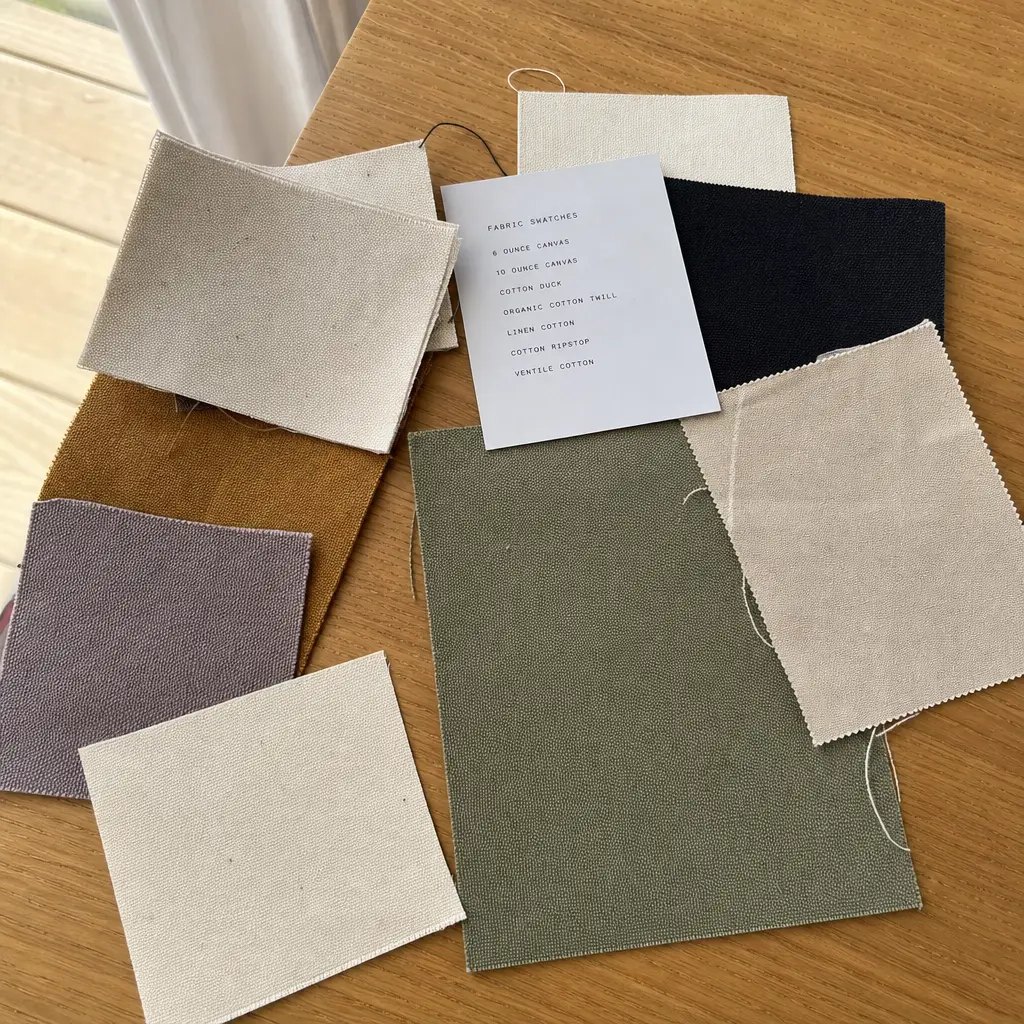
For wholesale canvas messenger bags, 12 oz to 14 oz cotton canvas, roughly 340-400 GSM, is a practical middle range. It gives enough body for the flap and front panel to hold shape while staying manageable for print and freight. Going down to 8 oz or 10 oz canvas lowers cost but can make the bag collapse, wrinkle heavily in packing, and wear faster at corners. Going above 16 oz increases stiffness and cost and can also create sewing challenges at folded seams, especially where webbing, piping, and flap layers meet.
Structure does not come from shell fabric alone. Lining, foam, and base reinforcement do most of the work in a laptop-oriented messenger bag. A 210D polyester lining is common because it improves interior finish and helps bags slide into cartons without grabbing. If the program aims to stay all-cotton, request clear confirmation because many factories default to polyester lining even when the shell is natural canvas. Foam padding in the back panel or sleeve changes user value more than another 20-30 GSM in the shell fabric.
- Entry promo build: 280-320 GSM canvas, unlined or simple lining, no foam, light use only
- Mainstream branded merch build: 340-400 GSM canvas, 210D lining, padded sleeve, reinforced bottom
- Premium retail-leaning build: 400 GSM+ shell, upgraded hardware, cleaner edge finishing, woven label branding
- Request if fabric is pre-washed, dyed, or raw; each affects shade consistency and shrink response
Logo method and trim decisions that impact quote accuracy
Screen printing is usually the most economical branding route for startup bulk orders, especially for one or two solid colors on a front flap. It works well on medium and heavy canvas as long as the print area does not cross bulky seams and the ink system matches the intended feel. For minimalist brand identities, a woven side label or inner neck-label style patch often gives a cleaner, more retail-ready result than a large front print. Heat transfer can work for detailed art, but it is less common for heavy-duty messenger bags where longevity and fabric hand matter.
Trim choices are another source of quote distortion. Decorative buckle straps can look premium in renders, but if users need to open the bag repeatedly in the office, hidden magnetic snaps under the flap are usually more practical. Metal hardware also affects landed cost because it adds material price and can trigger more scratch risk in transit. If the brief shows antique brass buckles but the quote is based on simple plastic adjusters and no magnets, the unit price cannot be compared.
- Screen print: best for bold logos, larger coverage, lower setup cost at scale
- Woven label: best for subtle branding and cleaner resale presentation
- Embroidery: possible but heavier canvas and flap thickness can distort small details
- Hardware must be listed by finish and material type: plastic, zinc alloy, iron, magnetic snap, D-ring, slider
MOQ logic: where flexibility is real and where it is not
Buyers often hear a low MOQ headline and assume every spec can be customized at that quantity. In practice, MOQ sits at several levels: base bag pattern, fabric color, print setup, and packaging. A factory may accept 300 pieces on one standard shape, but custom-dyed canvas in two colorways may still require a higher fabric commitment. If your startup wants black, olive, and natural in one order, the useful question is whether the total quantity can share one pattern while color MOQ is split by available stock fabric versus custom-dyed fabric.
The cheapest way to lower MOQ without damaging feasibility is to standardize the body construction and vary only logo or label application where possible. Changing dimensions, pocket layouts, or lining colors by variant creates separate cutting and sewing handling, which increases error risk and usually eliminates the supplier's willingness to be flexible. If the bag is for a pilot launch, keeping one body color and one hardware finish can save more money than trying to negotiate an unrealistic unit price reduction.
- Stock natural canvas usually supports lower MOQ than custom-dyed navy or black
- One-color screen print often allows smaller test orders than woven patch plus custom packaging
- Mixed color runs are possible if fabric is in stock; request proof of stock route versus dye route
- Ask if MOQ is per PO, per color, or per SKU including packaging differences
How to build an RFQ that produces comparable quotes
A useful messenger bag RFQ is part spec sheet, part usage note, and part packing instruction. You want the factory to price the same product you intend to buy, not the nearest standard bag in its sample room. Put dimensions, fabric, lining, padding, closure, pockets, branding, packaging, quantity split, and target shipping term on one sheet. Attach artwork and a reference sketch if you have one, but do not rely on photos alone because panel count and seam construction are often invisible in lifestyle references.
Quote data becomes commercially useful only when line items are separated enough to reveal cost drivers. Ask for EXW and FOB, sample charge, print setup charge if any, carton data, and lead time from approval. If your team may switch between event use and employee issue use, request an alternate quote: for example, a light unpadded version and a padded laptop version using the same exterior dimensions. That gives a true value comparison without forcing the supplier to reverse-engineer a vague brief.
- Minimum RFQ fields: size, shell GSM, lining, padding, strap width, pocket count, closure type, logo method, quantity by color, pack method, Incoterm
- Useful alternates: with or without padding, screen print versus woven label, stock fabric versus custom-dyed
- Request photos of similar internal construction, not only front-view finished bags
- State whether you need barcode stickers, hangtags, care labels, or polybag warning labels
Sample approval: what to evaluate before bulk deposit
The pre-production sample is the last cheap place to fix messenger bag problems. At this stage, do not review only color and logo. Load the bag with the real items it is designed to carry. Test whether the flap closes naturally when filled, whether the strap adjuster slips under weight, whether the laptop sleeve width and opening are usable, and whether the bag stands or collapses in a way that matches the intended customer experience. A bag that looks correct when flat can fail once loaded.
Measure the sample and document acceptance criteria in writing. If the factory used substitute canvas for the first proto sample, do not treat hand feel and structure as approved. Approval should state what is approved from this stage: dimensions, pattern, pocket positions, branding placement, hardware finish, and sewing method. If shell fabric or print process will change in bulk, require one more confirmation sample or production swatch. This is especially important for dark dyed canvas where print opacity can change significantly.
- Sample checks worth documenting: filled photos front, side, top, and inside sleeve fit
- Pull test by hand on both strap anchors and top seam areas
- Confirm magnet alignment and whether flap corners curl upward
- Review needle marks, seam straightness, loose thread trimming, and print edge quality
- Approve with comments, not just 'OK'; written notes reduce disputes later
QC thresholds for messenger bags before shipment
Messenger bags need practical QC criteria, not generic 'AQL only' language. The highest-risk defects usually involve dimensions, print placement, flap alignment, and strap strength. Slight body panel variation may be acceptable on soft goods, but a visibly off-center flap or crooked front logo damages perceived quality immediately. If the bag is sold or issued to staff carrying electronics, weak strap reinforcement becomes a functional failure, not a cosmetic issue.
Set thresholds tied to the product's use. For example, measurement tolerance of plus or minus 1 cm may be acceptable on overall width and height, but sleeve width for a laptop fit may need a tighter check if the design is already close. Similarly, color shade variance on natural canvas may be normal across lots, but mixed shades inside one carton or one shipment should be controlled. QC instructions should tell the inspector what matters most so they do not spend time on minor lint while missing load-bearing issues.
- Critical defects: broken strap anchor stitching, missing closure function, incorrect logo, severe size mismatch preventing device fit
- Major defects: crooked flap, off-center print beyond agreed tolerance, hardware rust, obvious lining bunching
- Minor defects: small removable thread ends, slight fold marks from packing if recoverable
- If possible, request random load test during final inspection on selected cartons
Packing plan and carton decisions that affect landed condition
Packing is not an afterthought for canvas messenger bags because flap shape, hardware scratches, and strap creasing show up at unboxing. Standard packing is one piece per polybag and 20-30 pieces per export carton, depending on size and padding. But the right carton quantity depends on whether the bag contains foam, rigid base support, or protruding buckles. If cartons are packed too tightly, the flap edge can crease permanently and the body may take on a compressed shape that makes the whole shipment look lower quality.
Retail buyers and distributors should also think about downstream handling. If the bag will be relabeled, barcoded, or redistributed in smaller lots, a slightly lower carton count can be more useful than maximizing pieces per carton. Gross weight matters too. A carton that saves a few cents in board cost but exceeds warehouse handling preference can create hidden labor issues. Messenger bags often look compact in sample photos, but padded styles occupy more cubic space than flat totes.
- Typical export carton target: keep gross weight manageable for manual handling and avoid over-compression
- Request folded method details: strap tucked inside, tissue between hardware and body if needed
- For dark canvas, ask whether bags are packed fully dry after printing to avoid set-off or odor buildup
- Ask for carton dimensions early so logistics can compare sea versus air cube impact
Lead time risks and how startup teams should schedule approvals
Lead time on canvas messenger bags is affected less by sewing complexity alone and more by material readiness and approval delays. Custom-dyed canvas, special webbing color, custom hardware finish, woven labels, and printed packaging can each add separate timing dependencies. If the buyer sends artwork late or approves the sample with unresolved comments, the nominal production lead time becomes meaningless. For startup launches tied to hiring waves, events, or product releases, the approval calendar matters as much as factory capacity.
A realistic schedule should separate development time from bulk production time. Example only: artwork and RFQ review, sample making, sample transit, revision, material booking, bulk sewing, final inspection, and shipment booking. If your launch date is fixed, ask suppliers to identify which inputs are on the critical path. Stock natural canvas and standard black webbing can remove weeks of uncertainty compared with custom-dyed shell and matched strap tones. The most reliable date is usually the one built on approved standard materials.
- Useful planning split: sample lead time, approval window, material prep, bulk production, inspection, booking
- Custom packaging often delays completion after bags are sewn; treat it as a separate milestone
- Holiday calendars and dyeing queue should be mentioned in the quote stage, not after deposit
- If delivery window is narrow, ask for partial shipment feasibility by finished color or packaging stage
Specification comparison for buyers
| Spec decision | Recommended option | When it fits | Buyer risk to check |
|---|---|---|---|
| Canvas fabric weight | 12 oz to 14 oz cotton canvas, about 340-400 GSM | Daily laptop carry, event kits, onboarding bags, and retail programs that need structure without heavy freight cost | Some suppliers quote lower GSM body panels and reinforce only the flap; request tested finished GSM tolerance and body panel confirmation |
| Main compartment padding | 3-5 mm EPE foam with 210D lining for laptop sleeve area | Tech startup gifting, employee issue bags, and corporate merch for tablets or 13-14 inch laptops | Unpadded bags get cheaper quotes but lead to user complaints; confirm whether padding covers full back panel or sleeve only |
| Closure style | Flap with hidden magnetic snap plus decorative buckle | Clean office look where speed of use matters more than vintage styling | Real metal buckles slow packing and use; hidden magnets vary in strength and may mark devices if poorly placed near sleeve |
| Logo method | Screen print for bold 1-2 color artwork; woven label for cleaner brand look | Screen print fits volume startup merch, woven label fits premium resale or investor gift kits | Large solid prints can crack on heavy canvas if ink deposit is poor; woven labels need stitch placement approval to avoid crooked branding |
| Strap construction | 38 mm cotton webbing with box-x reinforcement at load points | Programs expecting heavier use, commuting, and device carry | Thin straps reduce quote price but cut into the shoulder; request close-up photos of bartack or box-x stitching at both strap anchors |
| Bottom construction | Double-layer base or internal base board on larger formats | Bags carrying chargers, notebooks, bottles, and bundled starter kits | Single-layer bottom sags and abrades fast; ask whether base reinforcement is full-width or center patch only |
| Packaging route | Individual polybag, 20-30 pcs per export carton depending on size | Standard sea freight and distributor replenishment orders | Overpacked cartons crush flap shape and increase wrinkle complaints; confirm carton dimensions, gross weight, and whether straps are folded inside |
| Sampling route | Digital mockup, then pre-production sample in actual canvas and print | Most startup teams need quick alignment first, then a physical approval before deposit release | Color on screens does not predict fabric and ink result; do not approve production from artwork proof alone |
Buyer checklist before sampling
- Define end use: employee laptop bag, event giveaway, retail resale, or distributor channel pack-in
- State finished bag size in cm or inches, including gusset depth and flap coverage
- Specify target device fit such as 13 inch laptop, 14 inch laptop, or tablet only
- List canvas weight range in GSM or oz, not only 'thick canvas'
- Name required panels: main body, flap, sleeve, organizer pockets, bottle pocket if needed
- State lining requirement and whether foam padding is needed in full body or laptop sleeve only
- Define strap width, strap material, and minimum reinforcement type at anchor points
- Attach logo files and call out print size, colors, location, and branding method preference
- Request sample approval sequence: mockup, pre-production sample, and top sample if applicable
- Set packing method, carton quantity target, carton weight limit, and shipping mark format
Factory quote questions to send
- What exact canvas composition and finished GSM are included in your quote, and what tolerance do you allow per lot?
- Does the quoted construction include lining, foam padding, laptop sleeve, internal pockets, and reinforced bottom?
- What print method is included, what is the maximum logo size, and how many colors are covered in the unit price?
- What is your MOQ by colorway, by logo, and by bag size, and can mixed colors share one bulk order quantity?
- What sample stages do you provide, what are the sample charges, and can sample fees be credited back on bulk orders?
- What is the production lead time from approved pre-production sample and deposit, not from artwork receipt?
- How do you pack each bag, how many pieces per carton, and what are carton dimensions and gross weight?
- Can you provide close-up photos or video of strap anchor stitching, lining attachment, magnet or buckle installation, and print finish on similar canvas weights?
- What quality standard do you follow for measurement tolerance, print placement tolerance, and carton drop resistance?
- What export experience do you have with messenger bags for branded merchandise or retail programs, and can you show anonymized packing specs from similar builds?
Quality-control points to confirm
- Finished size within agreed tolerance, commonly plus or minus 1 cm on body dimensions and plus or minus 0.5 cm on pocket placement
- Canvas weight matches approved standard within reasonable production tolerance and does not mix visibly different fabric lots in one shipment
- Logo print color, edge sharpness, and placement match approved sample; no cracking, ghosting, offset, or visible misregistration
- Strap length adjustable through full intended range and strap anchors show clean bartack or box-x reinforcement without skipped stitches
- Flap alignment sits centered when bag is filled to normal use level; magnets, snaps, or buckles close without twisting the body
- Lining is secured smoothly with no exposed raw edges, bunching, or loose threads inside the main compartment
- Padding sits flat and does not migrate, especially around laptop sleeve opening and bottom support areas
- Metal hardware finish is consistent and free of sharp burrs, peeling plating, or rust marks
- Each bag is clean-packed, dry, and free from oil marks, needle damage, strong odor, and moisture risk before carton sealing
- Outer carton count, barcode or shipping mark, and carton gross weight match the packing list and booking plan