Why a Reorder Is Not a Repeat Order
A first order is a negotiation. A reorder is a verification. The factory has already proven it can make the bag. But fabric dye lots shift, thread colors change, and production teams rotate. If you treat a reorder as a simple copy-paste of the original PO, you risk receiving bags that look close but not identical. For a museum shop, where brand consistency and product quality reflect directly on the institution, even a slight shade difference or a weaker strap can damage trust and trigger returns from discerning visitors.
The key difference is that you now have a reference standard: the original approved sample. Use it. Do not assume the factory still has the same fabric roll or the same print screen. Ask for a pre-production sample made from current production materials. Compare it side by side with the original under controlled lighting. This single step eliminates most reorder surprises. Additionally, document every specification from the first order in a tech pack: fabric weight (GSM), finish (pre-washed or stonewashed), thread color (PMS or Tex number), stitch type (lockstitch, 8-10 SPI), and hardware finish (nickel-plated or antique brass). This tech pack becomes your reorder bible. Without it, you are relying on the factory's memory, which is a recipe for spec drift.
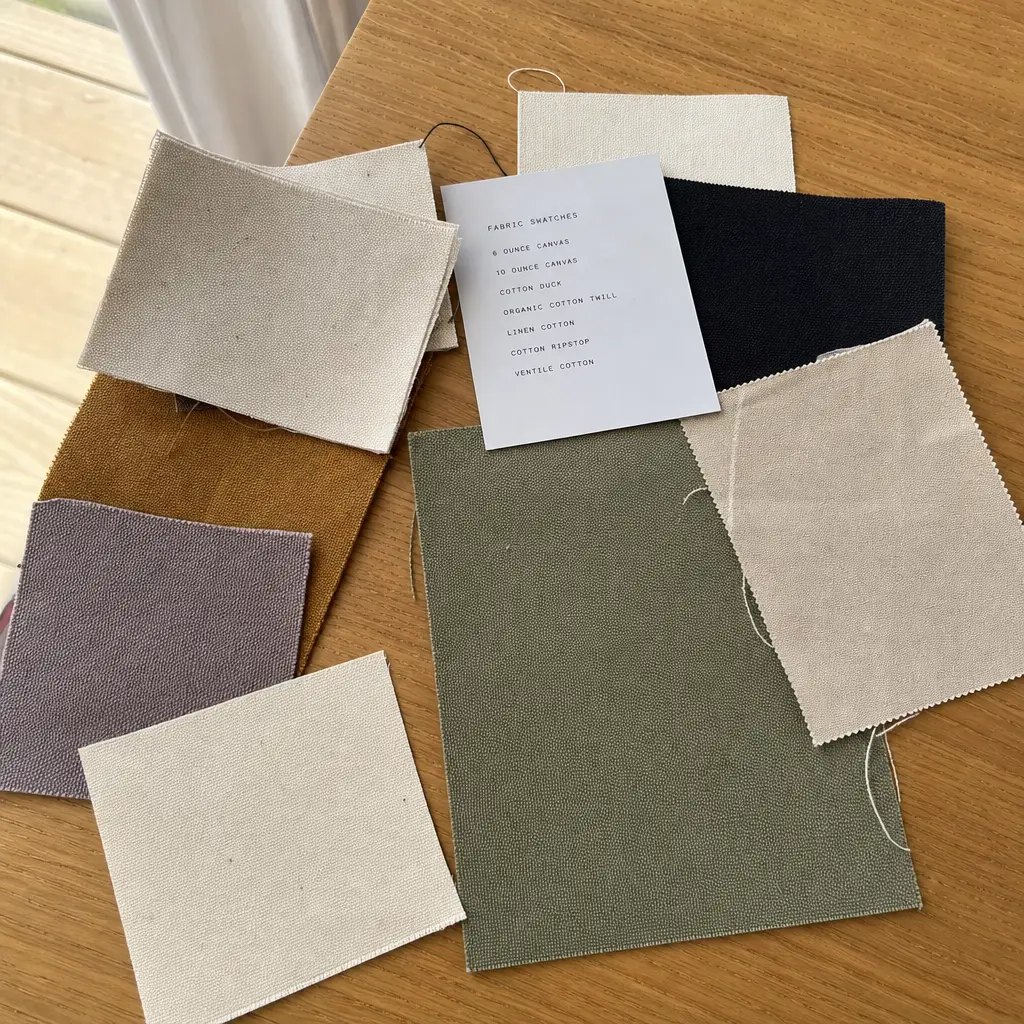
Procurement teams should also consider the human factor. The production manager who handled your first order may have moved on. The sewing line supervisor may be new. A detailed reorder package—including the original approved sample, a physical swatch card, and annotated photos of critical construction details—bridges this knowledge gap. It communicates your quality expectations unambiguously and reduces the back-and-forth that eats into lead time. For museum shops, this attention to detail is not just about quality; it is about protecting the brand's reputation.
- Always request a pre-production sample on current production fabric, not leftover stock
- Compare PPS to original approved sample under both D65 daylight and TL84 fluorescent light
- Confirm fabric supplier, mill name, and dye lot number before placing the PO
- Create a tech pack from the first order: fabric weight, finish, thread color, stitch type, hardware finish
- Include a physical swatch card and annotated construction photos in the reorder package
Fabric Weight and Finish: The Most Common Reorder Pitfall
Canvas fabric is natural and varies by harvest, mill, and finishing process. A 12 oz canvas from one lot may feel stiffer or softer than the same weight from another lot. If your original bag used a pre-washed finish, the reorder must use the same wash process. Unwashed canvas shrinks 3-5% after the first wash, which changes the bag dimensions and print alignment. For museum shops that sell to visitors who may wash the bag, this is a real complaint risk. A bag that shrinks unevenly can distort the logo placement and make the product look defective.
Ask the factory for a 10-yard cutting of the current fabric roll. Compare it to a swatch from the original production. If the shade or hand feel differs, request a wash test on the new fabric. If the difference is acceptable, document it in the PO as an approved variation with a tolerance range (e.g., ±1 step on AATCC gray scale). If not, ask the factory to source a closer match. This adds 5-7 days to the lead time but prevents a batch of 500 bags that look off. For weight verification, use a fabric GSM cutter and scale. A 12 oz canvas should measure approximately 407 GSM ±10. If the reorder fabric measures below 380 GSM, the supplier may have substituted a lighter weight to cut costs. Reject any fabric below 380 GSM.
Finish consistency is equally critical. Stonewashed canvas has a softer hand and a slightly faded appearance. If the reorder uses a different wash duration or enzyme concentration, the color and texture will differ. Request the factory to document the wash recipe from the original order and replicate it exactly. If the original wash recipe is unavailable, ask for a lab dip on the new fabric and compare it to the original sample before approving. For museum shops, the tactile experience of the bag is part of the product's appeal. A different hand feel can disappoint customers who expect the same quality as a previous purchase.
- Request a 10-yard fabric cutting for shade comparison before production
- If original was pre-washed, confirm the same wash process and recipe is used on reorder
- Document any approved shade variation in the PO with a tolerance range to avoid dispute later
- Verify fabric weight with a GSM cutter; 12 oz canvas should be approximately 407 GSM ±10; reject below 380 GSM
- Request a lab dip if the original wash recipe is unavailable
Print Method Decisions: Screen Print vs Woven Label
Screen print is cost-effective for 1-2 color logos on flat surfaces. But screen mesh wears over time, and a reorder may use a different mesh count than the original. A finer mesh (156) produces sharper detail but lays down less ink, which can look faded on textured canvas. A coarser mesh (110) deposits more ink but may lose fine detail. Always request a print strike-off on the current fabric before bulk production. Check the strike-off for ink adhesion by flexing the printed area 10 times; if the ink cracks, the cure temperature or ink formulation may be off. Specify the mesh count (110-156) and ink type (water-based) in the PO to avoid ambiguity.
If the museum logo has fine details or multiple colors, a woven label sewn on the flap may be more durable and consistent across reorders. Woven labels cost more per piece (typically $0.15-$0.30 extra) but eliminate print registration issues and last longer. A damask weave label with 100% polyester thread offers the best detail and colorfastness. Request a woven sample card from the factory before approving. Compare the label weave density and color to the original logo artwork under 10x magnification. A poor weave can make the logo look fuzzy or cheap. Also check the label's sew line: it should be straight, with matching thread color, and no more than 2 mm off-center.
If you switch from screen print to woven label on a reorder, the bag design may need a small adjustment: the label must be centered on the flap, and the stitching must match the bag thread color. This change should be reflected in the tech pack and communicated clearly to the factory. Consider the end-user experience: a woven label feels more premium and aligns with the museum shop's brand positioning as a purveyor of quality goods. For museum shops, the label is often the first thing a customer sees. A high-quality label reinforces the perception of value.
- Screen print: request a strike-off on current fabric; check registration, color match, and ink adhesion; specify mesh count (110-156) and ink type (water-based)
- Woven label: request a woven sample card; verify weave density, color accuracy, and sew line placement within 2 mm
- If switching methods, adjust bag design to accommodate label placement and stitching; update tech pack
- Specify screen mesh count (110-156) and ink type (water-based) in the PO
- For woven labels, specify damask weave, 100% polyester thread, and colorfastness requirements
MOQ Logic for Reorders: How to Avoid Minimum Quantity Penalties
Most factories set MOQ at 500 pieces per color per design for canvas messenger bags. On a reorder, if you need only 300 bags in one color, you may face a price increase or be forced to order a different design to fill the MOQ. Some factories offer carry-over terms: if you place a reorder within 90 days, they apply the previous MOQ rate. Others allow split shipments: you pay for 500 pieces but receive 300 now and 200 later. This can work if you have storage capacity and predictable future demand.
Negotiate MOQ flexibility before the first order. If you know your museum shop sells 300 bags per season, ask for a 300-piece MOQ with a 10% price premium. Alternatively, combine two designs into one production run: 300 of one messenger bag and 200 of another. This works if both designs use the same fabric and print method. Document the MOQ terms in the PO to avoid surprises on the next reorder. Also consider the total inventory carrying cost. Ordering 500 bags when you sell 300 per season ties up capital and storage space. The 10% premium on 300 bags may be cheaper than the carrying cost of 200 extra bags, which can be 15-20% of the inventory value annually.
Another strategy is to negotiate a blanket order. Commit to 1,000 bags over 12 months, with releases of 250 bags per quarter. This gives the factory volume assurance and gives you flexibility. The per-piece price may be slightly higher than a single 1,000-piece order, but it smooths cash flow and reduces inventory risk. Always include a clause that allows you to adjust release quantities within a reasonable range (e.g., ±20%) without penalty. For museum shops with seasonal demand, this approach aligns production with sales cycles and minimizes overstock.
- Negotiate carry-over terms: same MOQ rate for reorders within 90 days
- Combine multiple designs into one production run to meet MOQ without overstocking
- If MOQ is firm, ask for split shipment: pay for 500, receive in two batches
- Consider a blanket order with quarterly releases to smooth inventory and cash flow
- Calculate total carrying cost vs. MOQ premium to make data-driven decisions
Sample Approval: The Critical Gate for Reorder Success
The pre-production sample is the most important quality gate in a reorder. It confirms that the factory has the correct fabric, thread, print, and construction. Do not approve a PPS over email without seeing it in person or having a third-party inspector check it. If you are overseas, ask the factory to ship the PPS via express courier. The cost (typically $50-$100) is worth the peace of mind. A rejected PPS costs far less than a container of 500 bags that don't match.
Set a clear acceptance window: 5 business days after receiving the PPS to approve or reject. If you reject, specify the exact issue with photos and measurements. Request a revised sample and allow one revision at no extra cost. If the factory cannot match the original within two revisions, consider sourcing a different supplier for the next order. Document all sample approvals with photos, written sign-off, and a date stamp. This creates an audit trail that protects both parties.
For museum shops, the PPS should be evaluated not just for technical specs but also for aesthetic consistency. Does the bag look and feel like the original? Does it convey the same quality perception? Involve the museum shop manager or visual merchandiser in the approval process. Their eye for detail can catch subtle differences that a procurement checklist might miss. Finally, retain the approved PPS as the new reference standard for the next reorder. This ensures that every reorder builds on a consistent baseline.
- Request PPS on current production fabric, not leftover stock; mark it 'PPS Reorder' with date and PO number
- Set a 5-business-day acceptance window after receiving PPS
- Allow one revision at no extra cost; document all approvals with photos and written sign-off
- Involve the museum shop manager in aesthetic evaluation of the PPS
- Retain the approved PPS as the new reference standard for future reorders
Packing and Labeling for Museum Shop Retail
Museum shops often sell bags directly to visitors. This means each bag must be individually polybagged to protect it from dust, handling, and moisture. Specify polybag thickness: minimum 0.04mm to prevent tearing. The polybag should have a suffocation warning printed on it if required by local regulations. If the bags are for display only, bulk packing may be acceptable. But even bulk packs need inner dividers to prevent crushing during shipping. Crushed bags have permanent creases that make them unsellable at full price.
Carton marking is another detail that matters for efficient receiving. Each carton should show the PO number, quantity, net weight, gross weight, and a 'Museum Shop Reorder' label. This helps your receiving team identify the correct order quickly and reduces the risk of mis-shipment. If the bags are shipped to a third-party warehouse, include the warehouse address and a contact phone number on the carton. Also specify the carton drop test requirement: the packed carton should survive a 1-meter drop on any corner without damage to the contents. Perform this test on one carton per pallet.
Consider the unboxing experience. Museum shop customers expect a premium product. A bag that arrives in a crushed, dirty polybag creates a negative first impression. Specify that polybags must be clean, clear, and free of scratches. If the bag has a leather trim or metal hardware, add tissue paper or foam padding to prevent scratches during transit. These small details elevate the perceived value and reduce return rates. For museum shops, the packaging is part of the product experience. A well-packed bag signals quality before the customer even opens it.
- Individual polybag each bag if sold directly to visitors; specify 0.04mm minimum thickness
- Bulk pack with inner dividers if for display; request packing photo before shipment
- Carton marking: PO number, quantity, weights, and 'Museum Shop Reorder' label
- Specify carton drop test: survive 1-meter drop on any corner without damage
- Add tissue or foam padding for bags with leather trim or metal hardware
Lead Time and Schedule Risk Management
Standard lead time for a canvas messenger bag reorder is 45-60 days after sample approval. But this assumes the fabric is in stock at the mill. If the fabric is out of stock or the dye lot has changed, lead time can jump to 75 days or more. Always confirm fabric availability before placing the PO. Ask the factory for a written lead time commitment that breaks down each phase: fabric procurement (7-10 days), sample making (5-7 days), production (20-25 days), and finishing/packing (5-7 days). This transparency helps you identify bottlenecks.
Build a buffer into your schedule. If you need the bags for a holiday season or exhibition opening, place the reorder at least 90 days before the required delivery date. This gives time for sample approval, production, shipping, and customs clearance. If shipping by sea, add 20-30 days for transit. Air freight is faster but can double the landed cost. For time-sensitive reorders, consider a hybrid approach: ship 20% of the order by air to stock the shop for the opening, and the remaining 80% by sea. This balances speed and cost.
Include a penalty clause for late delivery. For example, a 2% deduction from the invoice for each week of delay, up to a maximum of 10%. This incentivizes the factory to prioritize your order. However, be reasonable: if the delay is caused by a force majeure event (e.g., port closure, natural disaster), the penalty may not apply. Define these terms clearly in the PO. Also, maintain regular communication with the factory during production. A weekly status update with photos of work-in-progress can catch delays early. For museum shops, missing a seasonal deadline can mean lost sales that cannot be recovered.
- Confirm fabric availability at the mill before placing PO
- Request written lead time commitment with phase breakdown and penalty for delays
- Place reorder 90 days before required delivery date for sea freight
- Consider hybrid shipping: air freight for 20%, sea freight for 80% for time-sensitive orders
- Request weekly production status updates with photos
Landed Cost Comparison: Reorder vs First Order
A reorder often has lower unit cost than the first order because the factory already has the tooling, screens, and patterns. But other costs can increase: fabric prices may have risen due to cotton market fluctuations, shipping rates may be higher due to fuel surcharges, and customs duties may change due to trade policy shifts. Calculate the landed cost per piece before approving the quote. Include FOB price, ocean freight, insurance, customs duty, and inland freight to your warehouse. Use a landed cost calculator template to ensure no hidden fees are missed.
Ask the factory for a price hold for reorders placed within 90 days. Some factories offer a 3-5% discount for repeat orders as a loyalty incentive. Others may increase the price if raw material costs have gone up. Compare the reorder quote to the original invoice line by line. If the price increase is more than 8%, ask for a breakdown of cost drivers: fabric, labor, hardware, packing, overhead. If the factory cannot justify the increase, consider negotiating or sourcing elsewhere. However, switching suppliers introduces new risks: new tooling costs, new sample rounds, and unknown quality consistency.
Also factor in the cost of quality. A cheaper reorder from a new supplier may have a higher defect rate, leading to returns, refunds, and brand damage. The true cost of a bag is not just the unit price; it's the unit price plus the cost of quality failures. A reliable supplier who delivers consistent quality may charge 5-10% more but saves you money in the long run by reducing inspection costs, return processing, and lost sales. For museum shops, the cost of a single returned bag includes shipping, restocking, and potential loss of a customer. A quality premium is often a wise investment.
- Calculate landed cost: FOB + freight + insurance + duty + inland freight; use a template
- Ask for a price hold for reorders within 90 days; negotiate loyalty discount
- If price increase >8%, request a cost breakdown from the factory
- Factor in the cost of quality: defect rate, returns, and brand damage
- Compare total cost of ownership, not just unit price, when evaluating suppliers
Supplier Evaluation for Reorder Reliability
Not all factories handle reorders well. Some prioritize new clients over repeat orders. Others cut corners on reorders because they assume the buyer will not check as thoroughly. Evaluate your supplier on three criteria: communication speed, sample accuracy, and on-time delivery. If the factory takes more than 48 hours to respond to a reorder inquiry, that is a red flag. If the PPS does not match the original within one revision, consider a new supplier for the next order.
Build a supplier scorecard for reorder performance. Track metrics like PPS approval time (days from request to approval), revision count (number of revisions needed), defect rate on arrival (percentage of bags with defects), and delivery timeliness (actual vs. promised delivery date). Use this data to decide whether to continue with the same factory or switch. For museum shops, consistency is more important than the lowest price. A reliable supplier who delivers the same quality every time is worth a 5-10% premium.
Conduct a mini-audit on the reorder. If possible, send a third-party inspector to the factory during production to check fabric, stitching, and assembly. This is especially important if the reorder quantity is large or if the previous order had quality issues. The inspector can verify that the factory is using the correct materials and following the approved construction methods. A few hundred dollars for an inspection can prevent thousands in losses.
Finally, build a relationship with your supplier. Regular communication, fair negotiations, and prompt payment create goodwill. A factory that values your business is more likely to prioritize your reorders and accommodate special requests. Treat the supplier as a partner, not just a vendor. For museum shops, a long-term supplier relationship ensures consistent quality and reduces the risk of supply chain disruptions.
- Track supplier reorder performance: response time, sample accuracy, on-time delivery
- Build a scorecard with metrics: PPS approval time, revision count, defect rate, delivery timeliness
- Prioritize consistency over lowest price for museum shop brand integrity
- Consider a third-party inspection during production for large or high-risk reorders
- Invest in supplier relationships through fair practices and regular communication
Final Checklist Before Placing the Reorder PO
Before you send the PO, run through this final checklist. Confirm the fabric dye lot and finish match the original. Verify the print method and artwork files are current and approved. Ensure the MOQ terms are documented and agreed. Set the sample approval timeline and acceptance criteria. Specify the packing method and carton marking. Confirm the lead time and shipping method. Calculate the landed cost and compare it to the original order. Check that all hardware (magnetic snaps, zippers, D-rings) matches the original spec and finish.
If everything checks out, place the PO with a clear reference to the original order number. Attach the original approved sample photo, the new PPS requirements, and the tech pack. This creates a paper trail that protects both you and the factory. A well-documented reorder is faster, cheaper, and less stressful than a first order. It also builds a stronger relationship with your supplier, which pays off on the next reorder.
After placing the PO, schedule check-in points: fabric approval (Day 7), PPS shipment (Day 14), production start (Day 21), mid-production inspection (Day 35), final inspection (Day 50), and shipment (Day 55). This proactive approach keeps the reorder on track and allows you to catch issues before they become problems. Remember, in museum shop retail, the product is an extension of the institution's brand. Every bag that leaves the shop carries the museum's reputation with it.
- Confirm fabric dye lot, finish, and print method match original
- Document MOQ terms, sample timeline, packing, and lead time in PO
- Attach original approved sample photo, PPS requirements, and tech pack to the PO
- Verify all hardware matches original spec and finish
- Schedule check-in points throughout production to monitor progress
Specification comparison for buyers
| Spec decision | Recommended option | When it fits | Buyer risk to check |
|---|---|---|---|
| Fabric weight | 12 oz cotton canvas (407 GSM ±10) | Museum shops needing balance of structure and softness | Supplier may substitute 10 oz to cut cost; verify GSM on reorder with a calibrated fabric weight scale; reject if below 380 GSM |
| Fabric finish | Pre-washed or stonewashed | If original order was washed; unwashed shrinks after first wash | Unwashed canvas can shrink 3-5%; request washed sample to confirm final dimensions and prevent customer complaints; document wash recipe from original order |
| Strap attachment | Bar tack reinforced stitching (minimum 28 stitches per tack, 10 mm length) | Any bag carrying more than 2 lbs regularly | Weak stitching leads to returns; ask for pull test data on reorder (10 kg for 30 seconds); test 3 bags per carton |
| Closure type | Magnetic snap with flap (10 mm diameter, nickel-plated) | Retail display where easy access matters | Magnet strength varies; test snap hold with 3 items inside (phone, wallet, map); request a 50-cycle open/close test report; reject if snap loosens after 30 cycles |
| Interior pocket | One zippered pocket (YKK #5, nylon coil) + two slip pockets (6" min depth, 5" width) | Museum visitors carry phone, wallet, map | Pocket depth and placement shift between production runs; confirm on pre-pro sample with a measurement jig; measure 3 bags per carton |
| Print method | Screen print (water-based ink, 110-156 mesh count, 2-color max) | Logo with 1-2 colors on flat flap | Screen mesh count changes; request a strike-off before bulk; check for ink cracking after 10 flexes; verify registration within 1 mm |
| Print method alternative | Woven label sewn on flap (damask weave, 100% polyester thread, 1.5" x 0.75") | Museum logo with fine detail or multiple colors | Label weave density degrades; request a woven sample card and check for loose yarns under 10x magnification; verify sew line straightness within 2 mm |
| MOQ per color | 500 pcs per color per design | Single museum location with one SKU | If reorder quantity drops below MOQ, ask for carry-over or split shipment terms; document in PO; negotiate 10% premium for 300-piece MOQ |
| Lead time | 45-60 days after sample approval (fabric procurement 7-10 days, sample 5-7 days, production 20-25 days, finishing 5-7 days) | Standard reorder without fabric dye lot change | If fabric is out of stock, lead time can jump to 75 days; confirm fabric availability and mill lead time before PO; include penalty clause for delays |
Buyer checklist before sampling
- Confirm current fabric dye lot matches original; request a 10-yard cutting for shade comparison under D65 lighting; reject if more than 1-step difference on AATCC gray scale
- Request a pre-production sample (PPS) with current production fabric and thread, not leftover stock; mark it 'PPS Reorder' with date and PO number
- Verify all dimensions against the original approved sample; allow ±1/8 inch tolerance; use a calibrated metal ruler; measure 5% of cartons
- Check closure strength: magnetic snap should hold with 3 typical items (phone, wallet, map); perform 50-cycle open/close test; reject if snap loosens after 30 cycles
- Inspect strap stitching: bar tacks must be present on both ends, minimum 28 stitches per tack, 10 mm length, no loose threads; test 3 bags per carton
- Request a wash test on the PPS if fabric finish changed from original; measure shrinkage after one cold wash cycle; reject if shrinkage exceeds 2%
- Confirm print color matches original PMS or hex code; request a print strike-off on current fabric; check under D65 and TL84 light; reject if registration is off by more than 1 mm
- Review packing method: polybag each bag individually if sold in retail; bulk pack if for display; specify polybag thickness (0.04mm min); request packing photo before shipment
- Ask about fabric inventory: if supplier has leftover rolls, negotiate a price hold or discount; confirm roll quantity and yardage; document in PO
- Set a clear acceptance window: 5 business days after PPS receipt to approve or reject; document all communication in writing with photos and measurements
Factory quote questions to send
- What is the current price per piece for a reorder of 500 canvas messenger bags in 12 oz natural canvas, FOB port? Include a breakdown of fabric, labor, hardware, and packing costs.
- Does this price include a pre-production sample, and how many revisions are allowed before extra charges apply? Specify cost per additional revision.
- Can you confirm the fabric supplier, mill name, and dye lot number for this reorder? Is the fabric currently in stock at the mill? Provide a written confirmation.
- What is the lead time from sample approval to shipment? Provide a phase breakdown: fabric procurement, sample making, production, finishing, and packing. Are there any potential delays for fabric, thread, or hardware components?
- What is the MOQ per color per design? Can we combine multiple designs into one production run to meet MOQ without a price penalty? If so, what is the combined MOQ?
- Do you offer a price hold for reorders placed within 90 days? If so, what is the discount percentage or price guarantee period? Document in writing.
- What is the cost for a woven label versus screen print for a 2-color museum logo, including setup and per-piece charges? Provide a side-by-side comparison.
- What is the packing cost per bag for individual polybag vs bulk pack, and what polybag thickness do you use? Include a sample of the polybag material.
- Can you provide a pull test report for the strap attachment on the previous production lot, with test weight (10 kg) and duration (30 seconds)? Include results for 3 samples.
- What is the landed cost estimate (FOB port) including packing, inspection, documentation, and any current surcharges? Provide a full landed cost breakdown.
Quality-control points to confirm
- Fabric shade: compare PPS against original approved sample under D65 daylight and TL84 fluorescent light; reject if more than a 1-step difference on AATCC gray scale; use a spectrophotometer for objective measurement
- Stitching tension: check for puckering, skipped stitches, or loose threads on flap, strap, and pocket seams; allow no more than 2 loose threads per bag; check SPI (stitches per inch) matches spec (8-10 SPI for canvas); use a stitch gauge
- Strap strength: pull test with 10 kg weight for 30 seconds; strap must not tear or detach; test 3 bags per carton; record results in a log
- Closure function: magnetic snap must engage fully with no gap; test 50 cycles; snap must not loosen or misalign; reject if snap fails before 30 cycles
- Print registration: screen print must align within 1 mm of approved strike-off; no bleeding or smudging; check under 10x magnification; perform a flex test (10 flexes) to check for ink cracking
- Woven label: label must be centered on flap within 2 mm, weave density consistent, no loose yarns; compare to approved woven sample card; check sew line straightness with a ruler
- Interior pocket: zipper must run smoothly without snagging; slip pockets must be at least 6 inches deep and 5 inches wide; measure 3 bags per carton with a calibrated ruler
- Final dimensions: length, height, gusset width must match spec within ±1/8 inch; measure 5% of cartons with a calibrated metal ruler; record measurements in a log
- Packing: individual polybag must be sealed, no holes, minimum 0.04mm thickness; bulk pack cartons must have inner dividers to prevent crushing; perform a 1-meter drop test on one carton per pallet
- Carton marking: each carton must show PO number, quantity, net weight, gross weight, and 'Museum Shop Reorder' label; check 100% of cartons; verify label is legible and durable