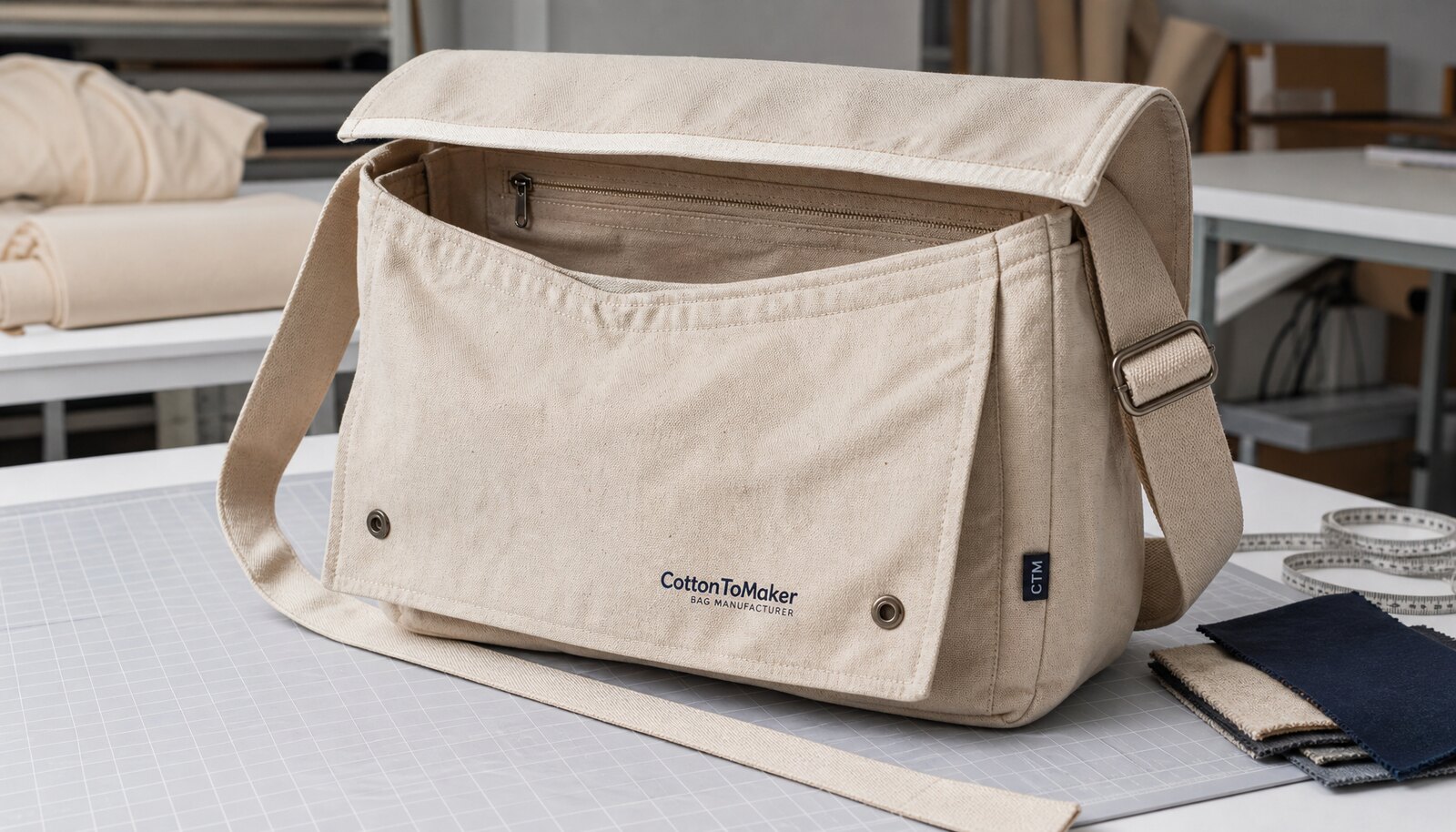
Why Pre-Shipment Inspection Matters for Canvas Messenger Bags
A canvas messenger bag has more failure points than a simple tote bag. The buyer is not only checking fabric and print. You are checking strap strength, flap alignment, pocket function, zipper quality, hardware finish, load-bearing seams, lining fit, carton packing, and the way the finished bag holds its shape. If these details are not controlled before shipment, the problem usually appears after the carton reaches the warehouse, retail store, or end user.
The main purpose of a pre-shipment inspection is not to find every minor loose thread. It is to confirm that bulk production matches the approved sample and purchase order closely enough to ship. For procurement teams, the inspection report should answer three commercial questions: did the factory use the materials quoted, did production follow the approved construction, and can the goods survive normal distribution and use?
- Use the approved pre-production sample as the physical standard, not only the PDF spec sheet.
- Inspect when 100% of goods are produced and at least 80% are packed, otherwise packing and SKU mix cannot be verified properly.
- Separate critical, major, and minor defects so the decision is practical rather than emotional.
- Do not allow the supplier to replace fabric, webbing, lining, or hardware without written approval, even if the appearance is similar.
Lock the Inspection Standard Before Production Starts
A strong inspection starts at RFQ stage. If the buyer only writes "canvas messenger bag with logo," the final inspection becomes a negotiation instead of a quality decision. The supplier may quote 12 oz canvas while another quotes 16 oz. One factory may include a cotton webbing strap and metal buckle, while another uses polyester webbing and thinner hardware. Both may look acceptable in photos, but they are not the same product.
Before bulk production, the buyer should issue a confirmed specification sheet with fabric weight, finished dimensions, color references, print method, hardware details, lining, pocket layout, label position, packing, and acceptable tolerances. The pre-shipment inspector should receive the same document and the latest approved sample. If the inspector is working from an old sample or incomplete artwork, the report can create confusion instead of control.
- State fabric as both oz and GSM, for example 16 oz cotton canvas, about 540 GSM, subject to supplier's actual fabric standard.
- Define finished size tolerances, commonly plus or minus 1 cm for main body dimensions and a tighter tolerance for logo placement.
- Specify whether the canvas is natural, bleached, dyed, washed, coated, laminated, or enzyme treated.
- Attach final artwork with size, Pantone color, print position, and direction of reading when the flap is closed.
- Confirm if the inspection standard follows general AQL practice or a buyer-specific defect limit.
Fabric Weight, GSM, and Hand Feel Checks
Canvas messenger bag fabric is often described by ounces, but procurement teams should also ask for GSM because different markets and suppliers use fabric weight descriptions differently. A 10 oz canvas messenger bag may work for a light promotional program, but it can feel weak for a retail commuter bag. A 14 oz or 16 oz canvas gives better structure and perceived value, but it increases material cost, sewing difficulty, carton weight, and sometimes MOQ.
During pre-shipment inspection, the inspector normally cannot run a full lab test on every fabric roll. However, the factory should provide retained material, cutting records, or fabric test data if requested. The inspector can compare the bulk goods with the approved sample by hand feel, thickness, weight impression, shade, and drape. If there is a large difference, the goods should be held for confirmation, especially when the buyer paid for a heavier construction.
- 10-12 oz canvas: lighter, easier to fold, lower cost, suitable for giveaways or lighter daily carry.
- 14 oz canvas: balanced option for many branded messenger bags, with better shape but still manageable cost.
- 16 oz canvas and above: stronger retail feel, better flap structure, but may require stronger needles and slower sewing.
- Dyed canvas can feel stiffer or softer depending on finishing, so weight alone does not define quality.
- Washed canvas may shrink and soften, so finished dimensions must be checked after the final process.
Construction Points That Cause Most Claims
Messenger bags usually fail at stress points first. The strap anchor, bottom corner, flap hinge, zipper ends, pocket openings, and buckle attachment carry repeated pulling force. A bag may look good on a table but fail after a few days of use if these areas are not reinforced. For a retail buyer, one broken strap is more serious than several minor loose threads because it creates return risk and customer complaints.
The inspection should include visual review and simple functional testing. Open and close the flap repeatedly. Pull the strap in the normal wearing direction. Check whether the slider grips the strap or slips under load. Inspect whether the lining is caught in the zipper. Look inside the bag for unfinished seam allowance, loose threads, and needle damage. The outside appearance matters, but the inside construction often tells more about factory control.
- Strap anchors should use box stitch, bar tack, rivet reinforcement, or another approved reinforcement method.
- Bottom seams should be straight and secure, especially when the bag has a gusset or square bottom.
- Flap should sit evenly when closed and should not twist because of uneven sewing tension.
- Zippers should run smoothly without catching lining fabric or loose thread.
- Pockets should match the approved depth and opening width, not only the visible outline.
Logo and Branding Inspection for Bulk Orders
Canvas surface texture affects logo quality. Screen print ink can sit unevenly on coarse canvas. Heat transfer may not bond well if the canvas is too rough or if the pressing temperature is wrong. Embroidery can pucker thinner fabric. Woven labels can look premium, but crooked sewing or wrong folding will make the bag look cheap. For this reason, logo inspection should be based on the approved production sample, not a digital artwork file only.
Buyers should give realistic tolerances before production. A print position tolerance of plus or minus 3 mm may be possible on a flat panel before sewing, but harder after a shaped flap or thick seam is involved. For larger bags, a tolerance of plus or minus 5 mm is often more practical, depending on the logo size and position. The important point is to define it before cutting and printing, not after the inspector finds variation.
- Screen print: check ink coverage, registration, curing, edge sharpness, cracking, and color consistency.
- Heat transfer: check bonding, peeling, shine difference, press marks, and edge lift after bending the fabric.
- Embroidery: check thread color, density, loose threads, puckering, and backing residue.
- Woven label: check fold type, direction, stitch line, label content, and whether it is centered or intentionally offset.
- Leather or PU patch: check emboss depth, stitch holes, edge paint, color transfer, and material compliance requirements.
Sample Checks Before Final Inspection
The pre-production sample is the buyer's strongest tool. It should not be treated as a showroom sample only. It should include the actual fabric weight, actual color, actual lining, actual webbing, actual hardware, actual logo method, actual label, and actual packing direction where possible. If the sample is approved with temporary hardware or substitute fabric, that exception must be written clearly, otherwise the final inspector may approve the wrong item.
For canvas messenger bags, sample comments should be specific. "Make better stitching" is not useful. A stronger comment is "add box stitch reinforcement at both strap anchors, stitch size 8-10 stitches per inch, thread color to match body fabric." This kind of instruction gives the factory production team a measurable target and gives the inspector a clear point to verify.
- Check sample weight and structure with the intended load, not empty only.
- Approve the flap angle, closure position, and whether the bag closes cleanly when filled.
- Confirm strap comfort, adjustment range, webbing width, and slider direction.
- Review inner pocket quantity, zipper pocket size, laptop sleeve dimensions, and lining color.
- Keep one signed sample at the buyer side and one sealed sample at the factory for inspection comparison.
Packing, Carton, and Moisture Control
Canvas bags can absorb odor and moisture during storage and shipment. Natural cotton canvas, dyed canvas, jute trims, paper hangtags, and cardboard cartons all react to humidity. A bag that passes sewing inspection can still arrive with mold smell, water marks, compression creases, or dirty edges if packing is weak. This is especially important for sea shipment, mixed container loading, rainy season production, and long warehouse storage.
Packing inspection should confirm both presentation and protection. Individual polybags reduce dust and moisture risk but may conflict with some retail or sustainability requirements. Paper wrap or belly bands look cleaner for eco-positioned brands but provide less moisture protection. The buyer should decide the packing method during quotation because it affects material cost, packing labor, carton size, carton weight, and sometimes the final freight calculation.
- Check that bags are fully dry before packing, especially after washing, dyeing, printing, or steam pressing.
- Use desiccant when shipment route, season, or destination humidity makes it necessary.
- Confirm carton quantity is consistent and not over-compressed to force lower freight volume.
- Verify barcodes, hangtags, suffocation warnings, carton marks, PO number, SKU, color, and quantity.
- Inspect carton board strength, tape sealing, gross weight, and whether the carton can be handled without bursting.
MOQ, Lead Time, and Why They Affect Inspection Risk
MOQ is not only a sales number. It is connected to fabric dyeing minimums, webbing color minimums, hardware plating, logo setup, cutting efficiency, and packing material purchase. A low MOQ order may use available stock fabric or stock hardware, while a higher MOQ order may justify custom dyeing and custom components. If the buyer does not understand this difference, the inspection may reveal small mismatches that were actually built into the sourcing plan.
Lead time also changes inspection risk. A rushed canvas messenger bag order may pass through fabric arrival, cutting, printing, sewing, trimming, inspection, and packing with little buffer. Screen printing needs curing time. Washed canvas needs drying time. Hardware replacement needs sourcing time. If the buyer schedules inspection too close to vessel closing, there may be no time for rework. A realistic production calendar should include at least one checkpoint before final inspection.
- Ask whether MOQ is based on fabric color, bag style, print artwork, hardware finish, or total order quantity.
- Clarify if the factory will use stock canvas or custom dyed canvas for your order.
- Build time for sample approval, material booking, logo setup, bulk production, final inspection, rework, and export packing.
- Avoid approving shipment before rework photos are checked when major defects are found.
- For repeat orders, compare new bulk production with the previous shipment sample, not only the new PO.
Quote Data Buyers Should Compare Before Inspection
A clean quotation reduces inspection disputes. If two suppliers quote the same canvas messenger bag with a 20 percent price difference, the reason is usually hidden in fabric weight, lining quality, hardware grade, printing method, packing, or inspection allowance. Procurement teams should request a quotation breakdown before placing the order. This does not mean the factory must reveal every internal cost, but the quote should be detailed enough to compare like with like.
For example, one quote may include 16 oz dyed canvas, cotton webbing, YKK-style zipper, metal buckle, woven label, individual polybag, export carton, and final inspection support. Another quote may include 12 oz natural canvas, polyester strap, generic zipper, no lining, direct print only, and bulk packing. Both may be called a canvas messenger bag, but the commercial value and defect risk are different.
- Request fabric weight, composition, color process, and whether fabric testing is included.
- Ask for hardware specification, including material, finish, size, and corrosion expectation.
- Separate logo costs by setup charge, unit print cost, number of colors, and position count.
- Confirm packing cost by unit packing, carton packing, barcode, hangtag, desiccant, and pallet requirement.
- Ask who pays for failed inspection, re-inspection, and urgent rework if defects exceed the agreed limit.
Pass, Hold, or Rework: Making the Shipment Decision
A pre-shipment inspection is useful only if the buyer has a clear decision rule. Critical defects should normally block shipment. Examples include unsafe sharp hardware, broken strap anchors, mold, wrong logo, wrong product, wrong fabric color, or a missing required label. Major defects may require sorting, rework, or a negotiated decision depending on quantity and market. Minor defects can often be accepted if they do not affect saleability or brand presentation.
The best decision is based on defect type, defect quantity, shipment schedule, retail requirement, and rework feasibility. If 3 percent of bags have loose threads, trimming may solve the problem. If 8 percent have crooked flap sewing, rework may be difficult and risky. If the logo color is wrong across the full production, the issue is commercial, not cosmetic. Buyers should avoid vague approvals such as "ship but improve next time" unless the risk is low and documented.
- Pass: defects are within the agreed limit and no critical issue is found.
- Hold: unclear material substitution, missing documents, wrong carton count, or defects requiring buyer decision.
- Rework: correctable issues such as thread trimming, repacking, barcode replacement, or minor hardware adjustment.
- Reject or remake: wrong fabric weight, wrong color, wrong logo, structural failure, mold, or large-scale sewing defects.
- Re-inspect after rework when the defect affects function, brand appearance, or packing accuracy.
Specification comparison for buyers
| Spec decision | Recommended option | When it fits | Buyer risk to check |
|---|---|---|---|
| Main body fabric | 14-16 oz cotton canvas, about 475-540 GSM | Retail messenger bags needing structure, durability, and a premium hand feel | Confirm actual GSM after finishing; washing, dyeing, or coating can change weight and shrinkage |
| Budget fabric | 10-12 oz cotton canvas, about 340-410 GSM | Promotional bags, lighter daily-use bags, and price-sensitive distributor programs | Check sagging at loaded corners, weaker flap shape, and whether buyer expected a heavier retail bag |
| Logo print | Screen print with approved Pantone and placement tolerance | Solid logos, one to three colors, larger flap branding, repeat bulk orders | Inspect ink coverage on textured canvas, registration, curing, cracking, and color shift after pressing |
| Brand label | Woven side label or sewn inner label with care information | Retail programs needing a cleaner brand finish than direct print alone | Check label orientation, folding method, stitch position, and whether legal origin or fiber wording is required |
| Closure | Metal snap, magnetic snap, zipper, or buckle based on target market | Retail bags where function and perceived value influence sell-through | Test pull strength, corrosion risk, alignment, noise, and whether magnet strength is too weak through thick canvas |
| Shoulder strap | 38-50 mm cotton webbing with reinforced box stitch and adjustable slider | Laptop, school, travel, and commuter styles carrying higher loads | Measure usable length, slider grip, strap twist, edge fraying, and seam strength at anchor points |
| Packing | Individual polybag or paper wrap, flat packed with desiccant and export carton | Import shipments where clean presentation and moisture control matter | Check carton strength, mold risk, barcode placement, carton marks, and bag deformation from over-compression |
Buyer checklist before sampling
- Confirm the approved pre-production sample, signed comments, artwork file, Pantone reference, and latest packing instruction are available to the inspector.
- Check carton count, PO number, SKU mix, color ratio, size ratio, and shipping marks before opening sample cartons.
- Measure finished bag size, flap size, strap length, pocket size, gusset, and tolerance against the purchase order, not against a sales photo.
- Verify main canvas GSM, color, hand feel, coating, lining, webbing width, zipper type, buckle finish, snap position, and label construction.
- Inspect logo method, print position, ink coverage, curing, embroidery density, woven label orientation, and brand color tolerance under consistent light.
- Load test representative bags using a realistic weight for the intended market and inspect strap anchors, bottom seams, rivets, and flap closures afterward.
- Check stains, oil marks, mold smell, loose threads, needle holes, skewed seams, broken stitches, shade variation, and fabric slubs beyond the approved standard.
- Review inner packing, desiccant use, hangtag, barcode, carton quantity, carton drop resistance, gross weight, and pallet or container loading instruction.
- Record defects with photos, carton numbers, sample size, defect classification, and clear pass, hold, rework, or re-inspection decision.
Factory quote questions to send
- What canvas weight in oz and GSM are you quoting, and is the weight before or after dyeing, washing, or coating?
- Is the quoted fabric greige, dyed, washed, pigment dyed, or enzyme washed, and what shrinkage tolerance should we approve?
- Which logo method is included in the price: screen print, heat transfer, embroidery, woven label, leather patch, or combination branding?
- What is the MOQ by fabric color, print color, hardware color, and lining color, and what surcharge applies below standard MOQ?
- Which hardware grade is quoted for snaps, buckles, zipper sliders, D-rings, adjusters, and rivets, and can you provide close-up sample photos?
- What finished size tolerance, strap length tolerance, print placement tolerance, and color tolerance will be written into the production order?
- How many days are required for material sourcing, pre-production sample approval, bulk cutting, sewing, inspection, packing, and shipment handover?
- What packing is included: individual polybag, recycled paper wrap, hangtag, barcode sticker, inner carton, master carton, desiccant, or palletization?
- Can you separate quotation lines for fabric, lining, hardware, logo, label, packing, testing, and inland delivery so we can compare suppliers fairly?
- At what production stage will you share inline inspection photos, and will final inspection be allowed when 100% is packed and at least 80% is carton-ready?
Quality-control points to confirm
- Fabric weight and construction match the approved sample, with no unapproved substitution from 16 oz to 12 oz canvas.
- Finished dimensions are measured at consistent points with agreed tolerances for body width, height, gusset, flap, pocket, and strap length.
- Stitching is straight, secure, and reinforced at stress points including strap anchors, bottom corners, pocket openings, and flap hinges.
- Logo position, color, scale, and method match the approved artwork and pre-production sample, with no cracking, bleeding, ghosting, or skew.
- Hardware is aligned, functional, corrosion-free, and strong enough for the expected load after repeated opening and closing.
- Color shade is consistent between body fabric, flap, strap, webbing, lining, and replacement panels within the approved tolerance.
- Bag shape is not distorted by sewing tension, uneven lining, overfilled seams, or poor pressing.
- Packing protects the bags from moisture, dust, compression marks, odor transfer, and carton damage during export handling.