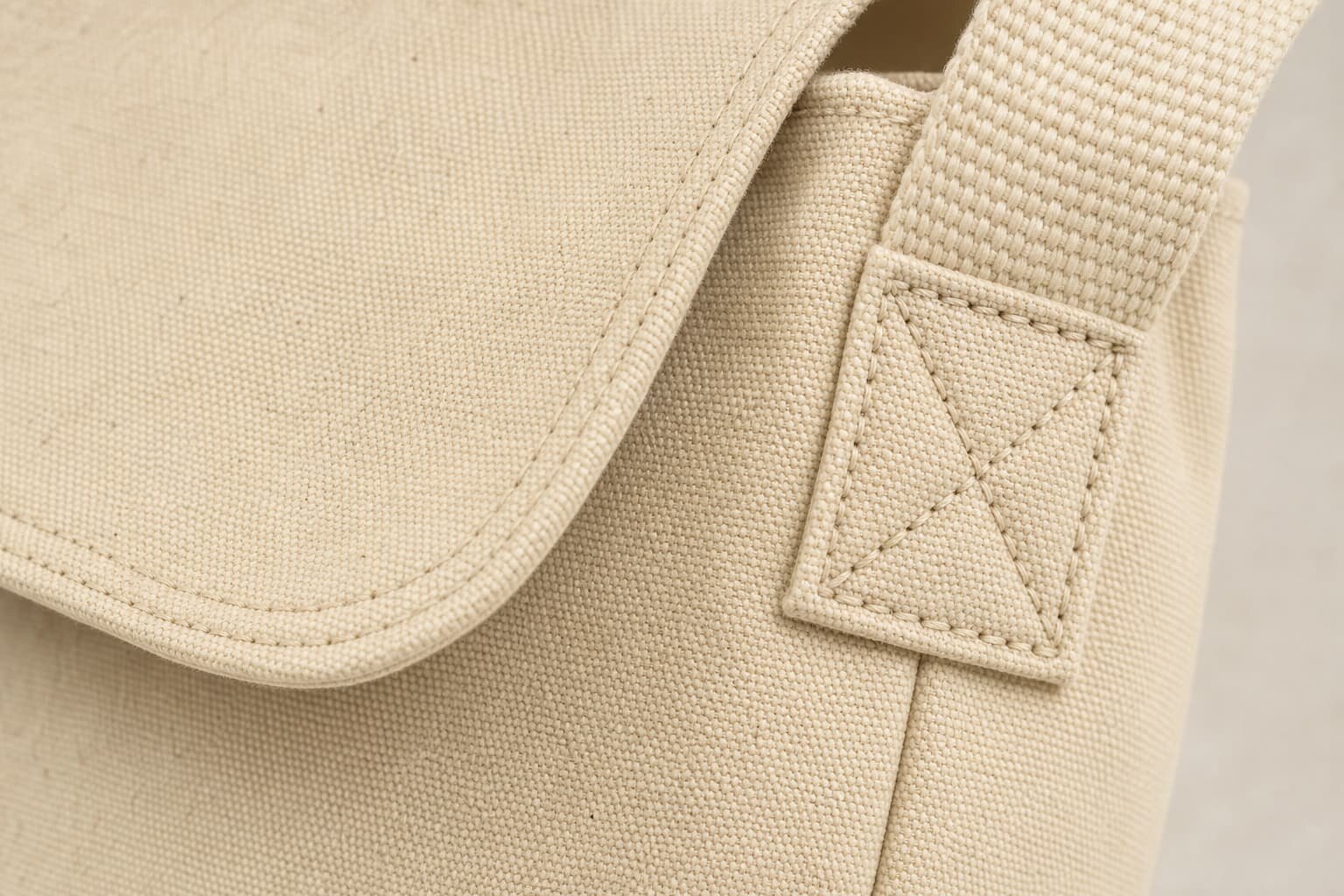
Why a pre-shipment inspection decides the real outcome
A canvas messenger bag can look acceptable on a sewing line and still fail the buyer's program at the end of the order. The pre-shipment inspection is the last practical chance to catch fabric shade issues, crooked branding, weak strap reinforcement, wrong carton counts, and packing errors before the goods move. For importers, the problem is not only quality; it is the cost of receiving a shipment that technically shipped on time but is not ready for retail or distribution.
This is why a canvas messenger bag pre-shipment inspection checklist has to do more than count pieces. It should compare the production lot against the approved sample, the artwork file, the purchase order, and the packing plan. If those four references do not match, a factory can argue that the shipment is fine because the bags are usable, while the buyer is left with a product that misses the agreed spec.
- Use the inspection to verify both workmanship and commercial readiness.
- Treat the approved sample as the reference, not the factory's memory.
- Check the lot before goods leave the factory, not after the carton seal is broken in your warehouse.
- Separate cosmetic issues from issues that affect retail sale, function, or safety.
Lock the spec sheet before anyone starts checking bags
Inspection only works if the target is defined in writing. For a canvas messenger bag, the spec sheet should state finished width, height, gusset depth, flap drop, strap length range, fabric weight, lining type, zipper grade, webbing width, hardware finish, print method, and packaging format. If the buyer leaves any of those items vague, the factory can produce something that is close enough for them but wrong for the channel you are selling into.
The most common mistake is assuming everyone is looking at the same approved sample. In reality, the sales team may have one sample, the technician may have another, and the factory may be using a changed version after a material substitution. Put the approved sample photos, artwork file, tolerance table, carton mark example, and packing instruction into one control set, then ask the factory to sign off before the inspection date is booked.
- State exact finished dimensions and allowed tolerances in millimeters.
- List the body fabric weight in oz or GSM and identify whether it is pre-wash or finished weight.
- Attach a clear artwork placement sheet with seam-based measurements.
- Define which defects are critical, major, and minor before the inspector arrives.
Check fabric weight, color, and cut accuracy first
Canvas messenger bags usually sit in a practical range between 12 oz and 16 oz, although some promotional programs go lighter and some premium styles go heavier. The question is not just whether the number is on the quote. You want to know whether the actual bulk fabric delivers the handfeel, body, and opacity that the product needs. A fabric that is technically close on paper can still feel limp, show lining shadows, or distort the flap if the weave density is too loose.
During inspection, ask the factory or third-party inspector to check roll labels, shade lots, and random GSM readings from finished production fabric. Then compare the cut panels for shape and symmetry. On a messenger bag, a small cut error can show up as a crooked flap, a pocket that sits low, or a gusset that looks uneven once the bag is sewn and turned. If the bag is dyed or garment-washed, inspect for shade breaks, oil marks, and unwanted abrasion at the fold lines.
- Confirm the finished fabric weight against the approved range, not just the mill certificate.
- Check shade consistency between body panels, straps, and lining.
- Measure a few cut panels before sewing to catch drift early.
- Reject visible oil stains, yarn slubs, broken threads, and panel skew.
Verify print, embroidery, labels, and brand placement
Branding is one of the easiest places for a bag to fail buyer approval. On a canvas messenger bag, screen print can soften on rough weave, embroidery can pucker thin canvas, and woven labels can be sewn a few millimeters too low or too high if the operator changes the seam allowance. A pre-shipment inspection should check not only whether the logo exists, but whether the size, color, position, and finish match the approved artwork.
The right way to review branding is to measure from fixed points on the bag, such as seam lines, top edges, pocket openings, and flap corners. Do not measure only from the center of the product, because a small shift can still make the logo look off. If the bag uses multiple brand elements, inspect each one separately: front print, woven side label, care label, hangtag attachment, and any embossed patch or applique.
- Measure logo placement from seams and edge references, not from the visual center only.
- Check print opacity, color registration, and edge bleed under normal light.
- Inspect embroidery for puckering, loose threads, and stitch density consistency.
- Confirm labels are sewn straight, trimmed clean, and not trapped in a seam.
Inspect zippers, buckles, strap length, and seam strength
Messenger bags fail in use when the hardware and reinforcement points are weaker than the rest of the bag. Open and close each sampled zipper, flex the buckles, and pull on the strap anchors with enough force to reveal sloppy construction. Look for skipped stitches, weak bartacks, loose thread ends, crooked topstitching, and webbing that twists when tension is applied. Cosmetic defects matter, but weak load points are what create returns and complaints after the bag is in use.
If the bag is designed to carry books, tablets, or laptops, the inspection checklist should ask the factory for a basic load test or at least a realistic pull check. You do not need a lab to notice a strap anchor that starts opening, a zipper that snags near the curve, or a flap that no longer aligns after a few opening cycles. The goal is to verify that the load path runs through the reinforced seam, not through a stressed decorative stitch line.
- Confirm strap adjustment range and finished strap length against the spec.
- Check bartack count and position at all load-bearing seams.
- Verify zipper pull smoothness, end stops, and teeth alignment.
- Inspect hardware for scratches, rust, plating variation, and sharp edges.
Measure the finished bag, not just the cut parts
A bag can pass visual inspection and still miss the actual end use. Buyers should measure the finished width, height, gusset depth, flap drop, and pocket opening on sampled products from different cartons. Messenger bags are often bought to carry a very specific item, such as a document folder, tablet, or slim laptop, so the true test is whether the item fits without distortion or zipper stress. A bag that is two centimeters too narrow may still look fine on the table and fail in real use.
Function checks should use a target insert if possible. That could be a sample device, a foam block, or a measured dummy pack that matches the target size. Load the bag, close the flap, adjust the strap, and check balance, tilt, and comfort. If the bag hangs oddly or the flap sits crooked when loaded, the customer will notice that immediately, even if the stitch count and fabric weight are correct.
- Measure finished size on random pieces from multiple cartons.
- Test fit against the real target item or a dimensioned dummy insert.
- Check pocket depth and opening width under load, not only when empty.
- Look for asymmetry, flap drift, and strap twist when the bag is worn.
Audit packing, carton counts, and shipping marks carefully
Packing errors are common because they happen at the end of the process when everyone is trying to close the order. For canvas messenger bags, the inspection should confirm how each bag is folded, whether the zipper is protected, whether the polybag is clean and dry, and whether the inserted card, barcode, and SKU label match the purchase order. A bag with no workmanship defects can still arrive in a condition that is hard to sell if the packing is sloppy or inconsistent.
Outer packing deserves the same attention as the product itself. Ask for the inner pack count, master carton count, carton dimensions, gross weight, and pallet plan if pallets are used. If your customer receives through retail distribution or scan-based warehousing, a wrong barcode or mismatched carton mark can stop receiving even when the bags are correct. The inspection checklist should include random carton opening, not just a glance at the top carton.
- Verify fold method, insert card placement, and polybag condition.
- Check carton quantities against the packing list and final order.
- Confirm shipping marks, SKU labels, and carton orientation arrows.
- Open random cartons to inspect for dampness, compression, and tape failure.
Use sampling and AQL in a way that matches the risk
A good inspection does not mean checking every bag by hand in the same way. It means using a sampling plan that fits the order size and the risk level of the product. Many buyers use an AQL-style approach for visual defects and then layer on extra checks for print, measurement, and packing. For example, some importers start with AQL 2.5 for major defects and 4.0 for minor defects, then tighten the standard when the bags are going into a retail launch or a branded program with low tolerance for visual issues.
The inspection report is only useful if the defects are recorded in a way the factory can act on. Ask for close-up photos of each issue, plus carton numbers, defect type, and whether the defect appears isolated or repeated across the lot. If the factory wants a chance to rework the shipment, define that path before inspection day: who sorts, who rechecks, what happens to the rejected pieces, and whether the lot needs a full reinspection after correction.
- Set critical, major, and minor defects before the lot is opened.
- Sample from top, middle, and bottom cartons rather than one easy stack.
- Keep photo evidence tied to specific cartons and defect categories.
- Treat repeated defects across cartons as a process issue, not a random miss.
Read the factory quote like an inspector, not just a buyer
The quote should tell you how the bag will actually be built. If the supplier only gives a single unit price, you do not yet have enough information to run a reliable pre-shipment inspection. Ask the factory to break out fabric weight, lining, print method, webbing width, zipper spec, accessory finish, packing format, carton size, and any special reinforcement. The more detail that is in the quote, the less room there is for a later substitution that creates inspection disputes.
MOQ and lead time should also be read with caution. A screen-printed canvas messenger bag may have a low per-piece price at scale but a setup charge for screens and artwork. Embroidery may need digitizing and a minimum stitch volume. Special dye lots, hardware color matching, or custom labels can raise MOQ even if the bag structure stays the same. Ask when the clock starts on lead time, because factory timelines can differ depending on whether they count from deposit, art approval, or sample approval.
- Request a cost breakdown for materials, decoration, packing, and cartons.
- Ask which spec changes trigger a new MOQ or a fresh sample.
- Confirm whether lead time includes fabric sourcing, printing, sewing, and packing.
- Check if the quote allows overrun or underrun, and by how much.
Decide whether to release, hold, or rework the lot
The final inspection outcome should be a decision, not a vague report. If the lot passes, release only the cartons and SKU mix that match the approved scope. If the issues are isolated and repairable, define the rework clearly: what gets fixed, who does the fixing, how the corrected goods are identified, and whether the same inspection level applies again after the rework. A lot can be technically repairable and still not be worth shipping if the defect pattern is too broad.
If the defects point to a process problem, hold the shipment and ask for root cause before you clear the cargo. Repeated issues such as wrong fabric weight, off-center branding, or mixed packing usually mean the factory changed material, operator method, or packing sequence without telling you. The goal is not to win one inspection; it is to create a repeatable production standard that protects the next order as well.
- Release only with a signed report, matching packing list, and photo record.
- Hold shipment when defects suggest a material swap or process change.
- Require corrective action before repeat orders are accepted.
- Carry the inspection lessons into the next PO and supplier scorecard.
Specification comparison for buyers
| Spec decision | Recommended option | When it fits | Buyer risk to check |
|---|---|---|---|
| Body fabric weight | 12 oz / 407 gsm, 14 oz / 475 gsm, or 16 oz / 542 gsm canvas | 12 oz for light promotional use; 14 oz for mainstream retail; 16 oz for heavier carry or a premium handfeel | Confirm actual finished GSM after dyeing or washing, not only mill paperwork |
| Logo method | Screen print, embroidery, woven label, or patch applique | Screen print for flat artwork and volume; embroidery or woven labels for a more premium finish; patches for textured branding | Check edge crispness, stitch density, color match, and whether the artwork shifts on coarse canvas |
| Structure and lining | Unlined body, 210D polyester lining, or cotton lining with insert board | Unlined for simpler value bags; lined versions for retail, laptop, or document carry | Ask where seams are concealed and whether lining shrinkage will distort the finished shape |
| Closure type | Zipper top, flap with buckle, or magnetic snap with inner zipper | Zipper for commuter use; flap for heritage styling; snap only for light-duty carry | Verify zipper smoothness, pull-tab size, and whether the closure stays aligned under load |
| Strap reinforcement | Cotton webbing, polyester webbing, or self-fabric strap with bartacks | Polyester webbing for durability; cotton webbing for softer handfeel; self-fabric straps for design continuity | Check strap twist, bartack count, and seam pull strength at the load points |
| Packing format | Bulk pack, single polybag, or polybag plus insert card and barcode | Bulk pack for wholesale cost control; retail-ready packing for stores and marketplaces | Confirm carton count, barcode readability, moisture protection, and label placement |
Buyer checklist before sampling
- Freeze the approved sample, artwork file, and spec sheet before inspection day.
- Confirm finished dimensions, tolerances, and target fabric weight in GSM or oz.
- Verify logo placement, size, color, and print or embroidery method against approval.
- Check strap length, bartacks, zipper movement, and all load-bearing seam points.
- Measure a random set of finished bags from multiple cartons, not only one carton.
- Inspect folding method, polybag condition, insert cards, barcodes, and carton marks.
- Ask the factory which defects are critical, major, and minor before sampling starts.
- Record photos of every nonconformance and tie them to carton numbers.
- Hold shipment if there is a material swap, artwork shift, or structural weakness.
- Release only after the packing list, carton count, and inspection report all match.
Factory quote questions to send
- What is the exact fabric spec for body, lining, webbing, and reinforcement, including GSM or oz?
- Which logo method is quoted, and what are the setup fees, stitch count limits, or screen charges?
- What is the finished size tolerance for width, height, gusset depth, and strap length?
- What MOQ applies to the quoted fabric, print method, and packaging format?
- What sample stages are included: pre-production sample, color swatch, and size approval sample?
- What is the quoted lead time, and does it start from art approval, deposit receipt, or sample approval?
- Are carton dimensions, master carton quantity, and gross weight included in the quote?
- What packing standard is assumed: bulk pack, single polybag, insert card, barcode, or retail carton?
- What overrun or underrun tolerance do you allow on the final shipment quantity?
- If a defect is found at inspection, who pays for rework, resampling, or reinspection?
Quality-control points to confirm
- Finished canvas weight matches the approved range and does not feel thinner than the sample.
- Shade lots are consistent across body panels, straps, lining, and any contrast trim.
- Cut parts are aligned and sewn square, with no visible skew at pockets, flap edges, or gussets.
- Logo placement matches the approved distance from seams and looks centered on the actual product.
- Print, embroidery, woven label, or patch is clean with no bleeding, puckering, or loose threads.
- Zippers run smoothly and stop correctly, with no broken teeth or crooked sewing lines.
- Strap anchors, bartacks, and seam reinforcements show no gaps, skips, or thread tails.
- Finished dimensions fall within tolerance and the bag fits the intended load or device.
- Packing is consistent: fold method, polybag protection, insert card, barcode, and carton count.
- Carton labeling, shipment marks, and outer pack condition match the PO and packing list.