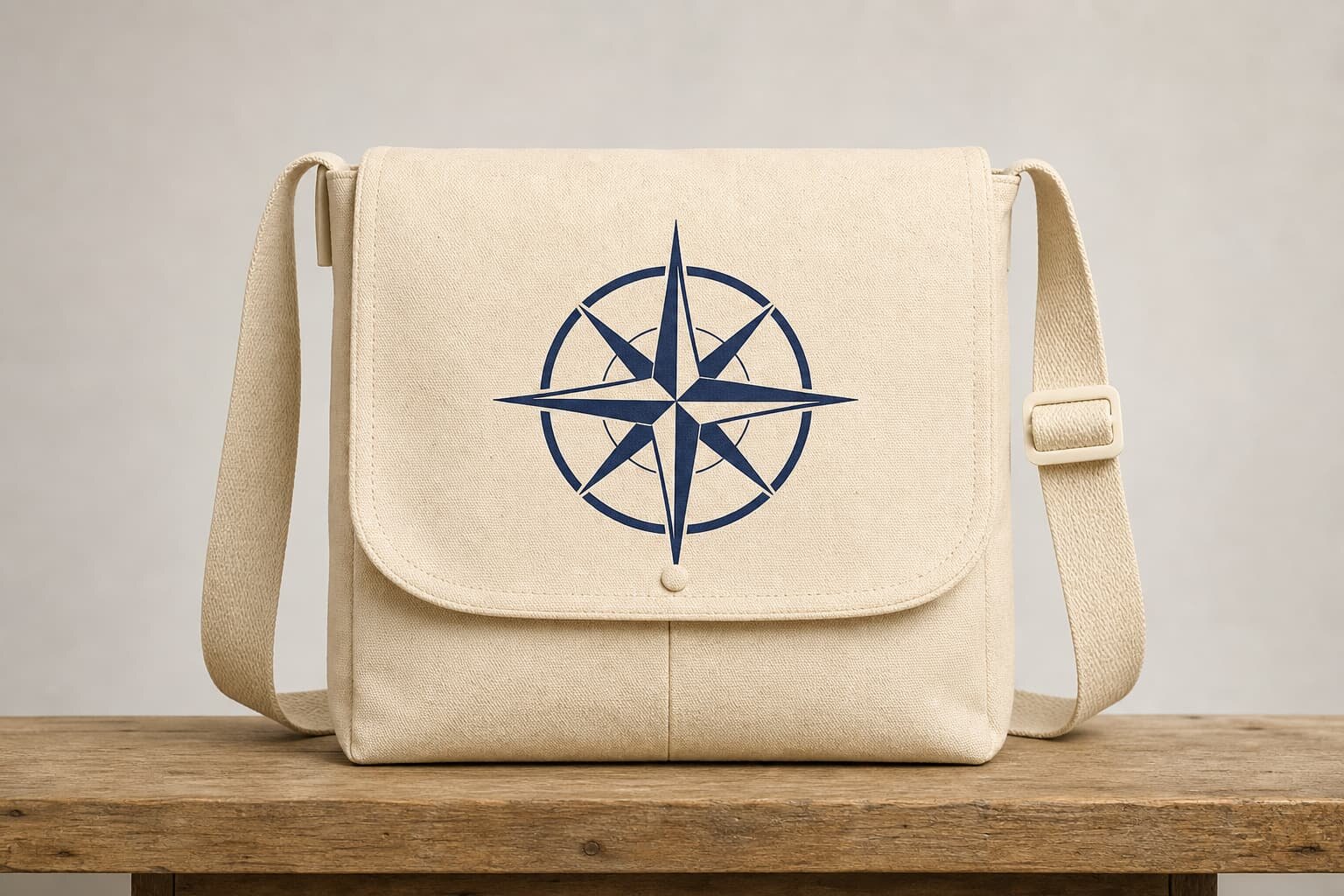
1. Why canvas messenger bag MOQ pricing is hard to compare
Canvas messenger bag pricing is rarely about one number. Factories are pricing the body fabric, the stitch time, the print setup, the trim package, the packing method, and the risk they take on material waste. That is why two quotes that look close at first glance can be built on very different assumptions. If you do not control the spec, the lowest quote can be the one that excludes the most items, not the one that produces the best bag.
For procurement teams, the real job is not to get a cheap price sheet. It is to force every supplier to quote the same bag in the same way so you can compare apples to apples. If one factory is pricing 10 oz canvas, single-color screen print, bulk fold packing, and no lining, while another is pricing 12 oz canvas, woven side label, and polybag packing, the unit price gap tells you very little about actual value.
- Treat MOQ pricing as a spec control problem, not just a negotiation problem.
- Ask each factory to quote the same fabric weight, same print method, same trim list, and same pack format.
- Separate what is included in the unit price from what is billed as a setup, tooling, or sample charge.
- Use one RFQ sheet for every supplier so hidden differences are easier to spot.
2. Lock the base spec before you ask for a price
Start with the finished use case. A simple promo messenger bag for events does not need the same build as a commuter bag for retail shelves. Decide the target size, the carry weight, the closure type, and whether the bag is meant to look soft and casual or more structured and premium. Once those basics are fixed, the supplier can quote the right fabric, lining, and reinforcement level instead of guessing from a vague brief.
Canvas weight matters more than many buyers expect. A common entry range is 10 oz to 12 oz canvas, around 340 to 400 GSM, which gives a practical balance of cost and body. Heavier builds, such as 16 oz canvas, can improve shape and perceived durability but also increase material cost, sewing load, and carton weight. If your buyer team does not define the canvas weight, one supplier may quietly downgrade the fabric to protect the quoted price.
- Define finished dimensions, pocket count, flap depth, and strap length before discussing price.
- Choose a canvas weight range and state it in both oz and GSM if possible.
- Decide whether the bag needs lining, a reinforced base, or a rigid board insert.
- State the end channel early: promo, wholesale, ecommerce, or retail.
3. Understand the real drivers behind MOQ breaks
MOQ breaks happen because a factory wants to spread fixed costs across enough pieces to make a run efficient. In canvas messenger bags, those fixed costs usually sit in fabric cutting, screen setup, trim sourcing, machine changeovers, and packing labor. A one-color logo with one fabric color and one hardware finish is easy to absorb. A bag with multiple print colors, mixed lining colors, special buckles, and branded woven labels creates more setup time and more material risk, so the MOQ climbs.
The important thing is that MOQ is not only about quantity. It is about how many different variables the production line must handle. If you ask for two body colors, three print colors, a custom zipper pull, and retail-level packing in a small run, the factory may still accept the order, but the cost structure will look very different from a single-spec bulk run. Buyers who understand this can decide where to simplify and where to keep the brand details.
- Ask whether the MOQ applies per color, per artwork version, or per hardware finish.
- Check if the factory wants a separate MOQ for body fabric, lining, and trim.
- Find out which changes create a new setup cost instead of a minor unit-price increase.
- Use the MOQ discussion to simplify the spec where the customer will not notice the difference.
4. Compare quote tiers by commercial outcome, not only by price
A useful way to review canvas messenger bag pricing is by production tier. At a lower MOQ, the factory will often push you toward a simpler build: one fabric color, one print position, and limited trim options. At a mid-range MOQ, you can usually ask for a cleaner retail look, such as a lining, a better internal pocket, or a woven side label. At a higher MOQ, the factory can run materials in a more efficient sequence and may be willing to support more complex branding or packing.
This is where many buyers make a strategic error. They chase the lowest unit number without checking what that tier allows them to do in the market. If the bag will sit next to competitor products in a retail environment, the lowest-cost build may feel too plain or too soft. If the bag is for a B2B promotion where the brand message matters more than the construction, a leaner tier may be the right choice. The goal is to buy the spec that matches the sales channel.
- Use tier comparisons to decide what you gain or lose at each MOQ level.
- Do not assume a lower MOQ quote is better if it removes lining, reinforcement, or branding options.
- Ask the supplier to quote at two or three quantity steps so you can see where the price curve bends.
- Keep the quote format identical across tiers so the difference is actually useful.
5. Demand line-item quote data, not a single lump sum
A lump-sum quote hides the information you need to manage risk. Ask the factory to break out body fabric, lining, stitching labor, printing, trim, packing, sample fees, and any setup charges. Even if the supplier will not fully itemize their internal costs, the response should still tell you what is included and what is excluded. That makes it easier to compare two factories that are using different assumptions for screens, labels, or carton packing.
This is also the point to lock in quote data that often gets ignored. Ask for fabric weight, panel count, strap width, strap length, print size, pocket count, and carton quantity per case. If the quote does not state those items, it is not a clean commercial document. It is just a rough number. A proper buyer quote should let you trace every price difference back to a specific construction choice.
- Request unit price plus separate sample, tooling, and setup charges.
- Ask the supplier to identify exclusions in plain language.
- Make the factory state the assumed fabric GSM, lining material, and hardware finish.
- Use one quote comparison sheet so every supplier answers the same way.
6. Choose print, label, and trim methods with MOQ in mind
The logo method can change the whole pricing story. On canvas messenger bags, screen print is usually the cleanest option for a simple logo, especially when the artwork is one color and the quantity is stable. Heat transfer can help when the design has more detail or when the run is too small to justify heavier setup. Embroidery or a woven patch gives a more premium feel, but both can increase labor and change the way the front panel or flap behaves. If the bag is supposed to look rugged and simple, a woven side label may be the best balance.
Do not forget the smaller trim decisions. A metal buckle, a matte snap, a custom zipper pull, or a branded side label can shift the quote more than the buyer expects. One reason is that small parts are rarely treated as generic stock once you ask for a specific finish or color. The factory may need a different source, a separate MOQ, or extra inspection time. If you want cleaner pricing, keep the branding system simple on the first order and add complexity after the base product is stable.
- Limit print colors if you want the quote to stay predictable.
- Decide whether the logo belongs on the flap, body panel, or side label.
- Confirm if a woven label or badge is cheaper than a multi-color print on your artwork.
- Ask whether special metal finishes or zipper pulls create a separate trim MOQ.
7. Review samples like a factory buyer, not like a design reviewer
The sample stage is where many production problems can still be removed. A good sample check for a canvas messenger bag starts with basics: actual fabric weight, color consistency, dimensions, and how the bag sits when empty and when loaded. Then move to stress areas. The shoulder strap should be reinforced where it joins the body, the flap should align correctly, the zipper or closure should run smoothly, and the print should land in the agreed position without distortion from the sewing line.
Ask for a pre-production sample or a full size sample that uses the actual body fabric, actual trim, and the final print method. If the supplier only shows a loose mockup or a rough prototype, you are still guessing about the real production behavior. The goal is to sign off on a sample that looks and handles like the bulk order. Once that sample is approved, treat it as the control standard for measurement, stitching, and appearance.
- Measure finished size, pocket dimensions, and strap length against the approved sample.
- Check stitching at all load points, especially strap joins and flap corners.
- Test print rub resistance and edge clarity before moving to bulk.
- Reject samples that hide construction shortcuts with better photography than execution.
8. Packing, cartonization, and shipping details can change the quote
Packing is a cost item, not an afterthought. A canvas messenger bag can be packed loose, folded with a simple polybag, or prepared in a more retail-ready format with a barcode sticker, insert card, and defined carton count. Each option affects labor, carton size, and the final shipping volume. If you leave packing vague, the supplier may use the cheapest acceptable method for them, not the best method for your channel.
This matters even more if the bags will go through ecommerce, wholesale distribution, or mixed retail programs. A fold line that is acceptable in a master carton may be a problem on a retail shelf. A carton count that looks efficient on paper may cause damage if the bag includes a rigid insert or metal hardware. Ask the factory to quote the packing method and carton spec as part of the order, then confirm one packed carton before mass production.
- State whether the bag ships bulk folded, polybagged, or retail ready.
- Confirm inner pack count, master carton count, and carton mark requirements.
- Ask if a dust bag, insert card, or desiccant is included or charged separately.
- Review the packed carton before bulk if the order will travel long distance or sit in storage.
9. Plan lead time around materials, approvals, and reorder timing
Lead time is only useful when it is broken into stages. For a canvas messenger bag, the factory may need time for sample development, print approval, fabric sourcing, cutting, sewing, packing, and final inspection. If your quote only gives one total number, you cannot see where the schedule can slip. A better approach is to ask for sample timing, approval timing, and bulk timing separately so your internal team can manage dependencies.
Reorder planning matters just as much as first-order timing. If you expect repeat demand, ask the supplier whether they can reserve the same fabric lot, trim color, or label format for a follow-up order. Even if the supplier cannot lock everything, it is useful to know which parts are likely to drift. The earlier you define a repeatable spec, the easier it becomes to avoid color mismatch, closure changes, or artwork edits on the next run.
- Ask for lead time by phase instead of accepting one broad promise.
- Flag any date that depends on fabric sourcing, artwork approval, or trim confirmation.
- If the bag will be reordered, keep the first approval package organized for the next RFQ.
- Confirm whether holiday shutdowns or peak-season congestion affect the quoted schedule.
10. The most common buyer mistakes and how to avoid them
The biggest mistake is comparing quotes that do not describe the same bag. Buyers often overlook fabric weight, lining, print method, and packing format, then wonder why the final samples look different. Another common problem is accepting a low MOQ quote that only works because the factory quietly removed reinforcement, simplified trim, or shifted packing responsibility to the buyer. Those gaps are hard to catch if the RFQ is too short or the sample approval is rushed.
A second mistake is treating the quote as complete when it is really conditional. If the supplier has not stated the fabric width, shrinkage allowance, print setup, carton count, or sample scope, there is room for surprise later. The cleanest way to avoid this is to force a written comparison before the PO. Once you have the same spec, the same sample, and the same exclusions on paper, you can make a far more confident sourcing decision.
- Never compare two quotes until the fabric, print, and packing specs match.
- Watch for hidden substitutions in lining, strap webbing, or hardware finish.
- Do not approve bulk from a weak sample just because the price is attractive.
- Keep one signed control sample and one signed quote sheet for the PO file.
Specification comparison for buyers
| Spec decision | Recommended option | When it fits | Buyer risk to check |
|---|---|---|---|
| Body canvas weight | 10 oz to 12 oz canvas, roughly 340 to 400 GSM | Most retail, promotion, and general carry programs where you want a balanced hand feel and quote stability | Do not compare a 10 oz quote with a 12 oz quote as if they are the same construction |
| Brand mark method | Single-color screen print or woven side label for first orders | When the artwork is simple and you want predictable setup cost | Confirm ink count, print size, and whether setup fees repeat across colorways |
| Closure system | Flap with Velcro or magnetic snap, or simple zipper top | When the bag needs faster sewing and lower hardware complexity | Check if the chosen closure changes labor time, metal parts, and MOQ |
| Interior structure | Unlined or 210D polyester lining with one pocket | For entry-level pricing or a standard commuter style | Lining adds cutting, stitching, and inspection points that can shift the quote |
| Packing plan | Bulk fold with polybag, or retail-ready polybag plus barcode sticker | When the channel is wholesale, ecommerce, or mixed | Packing details can affect carton count, labor, and the final shipping volume |
| MOQ strategy | One color, one print position, one hardware finish | When you want the cleanest price at the lowest acceptable risk | Mixed options can push the factory into separate cutting or setup batches |
Buyer checklist before sampling
- Confirm the finished size, canvas GSM, lining choice, closure type, pocket count, and strap length before asking for price.
- Ask the supplier to separate body, print, trim, packing, and sample charges so you can compare quotes line by line.
- State whether artwork is one-color, multi-color, or photo-like, and specify print placement and maximum print area.
- Request a sample method in advance: pre-production sample, print strike-off, or complete size sample with the correct trim set.
- Define acceptance rules for seam quality, strap reinforcement, zipper action, print alignment, and carton packing count.
- Ask for the MOQ by color, by artwork, and by hardware finish so you know where the real breakpoints sit.
- Confirm lead time by stage, not just one total number, including sample approval, material sourcing, and bulk production.
- Make the supplier state all exclusions such as inner label, hangtag, insert card, or carton mark changes.
Factory quote questions to send
- What canvas weight, weave, and shrinkage allowance are you quoting, and can you confirm the fabric in GSM or oz?
- What is the MOQ for this exact construction, and does it change if I alter print colors, lining, or hardware finish?
- Which costs are included in the unit price, and which are separate for samples, screens, plates, or embroidery setup?
- Can you provide a line-item quote for body fabric, stitching labor, print, lining, trim, packing, and cartonization?
- What sample can you send before bulk approval, and what details will it confirm or still leave open?
- What tolerances do you use for finished size, print placement, strap length, and seam alignment?
- What packing format do you recommend for this bag, and how many pieces per inner pack and master carton?
- What is your realistic bulk lead time after sample approval, and what parts of the order could move that date?
Quality-control points to confirm
- Verify the actual canvas weight, fabric hand feel, and whether the material matches the quoted GSM or oz level.
- Check strap reinforcement, bar-tack density, and the stitch quality at all stress points where the shoulder strap joins the body.
- Inspect print position, print opacity, edge sharpness, and rub resistance before the order moves past approval.
- Measure finished size, pocket placement, and flap alignment against the signed sample rather than against the artwork file.
- Test zipper movement, buckle function, snap strength, or Velcro hold if the bag uses any of those closures.
- Inspect thread trimming, stain control, oil marks, needle damage, and any panel distortion caused by sewing tension.
- Confirm packing count, polybag size, barcode placement, carton marks, and whether master cartons match the RFQ.
- Review one packed carton after the sample stage so you can catch packing drift before mass production.