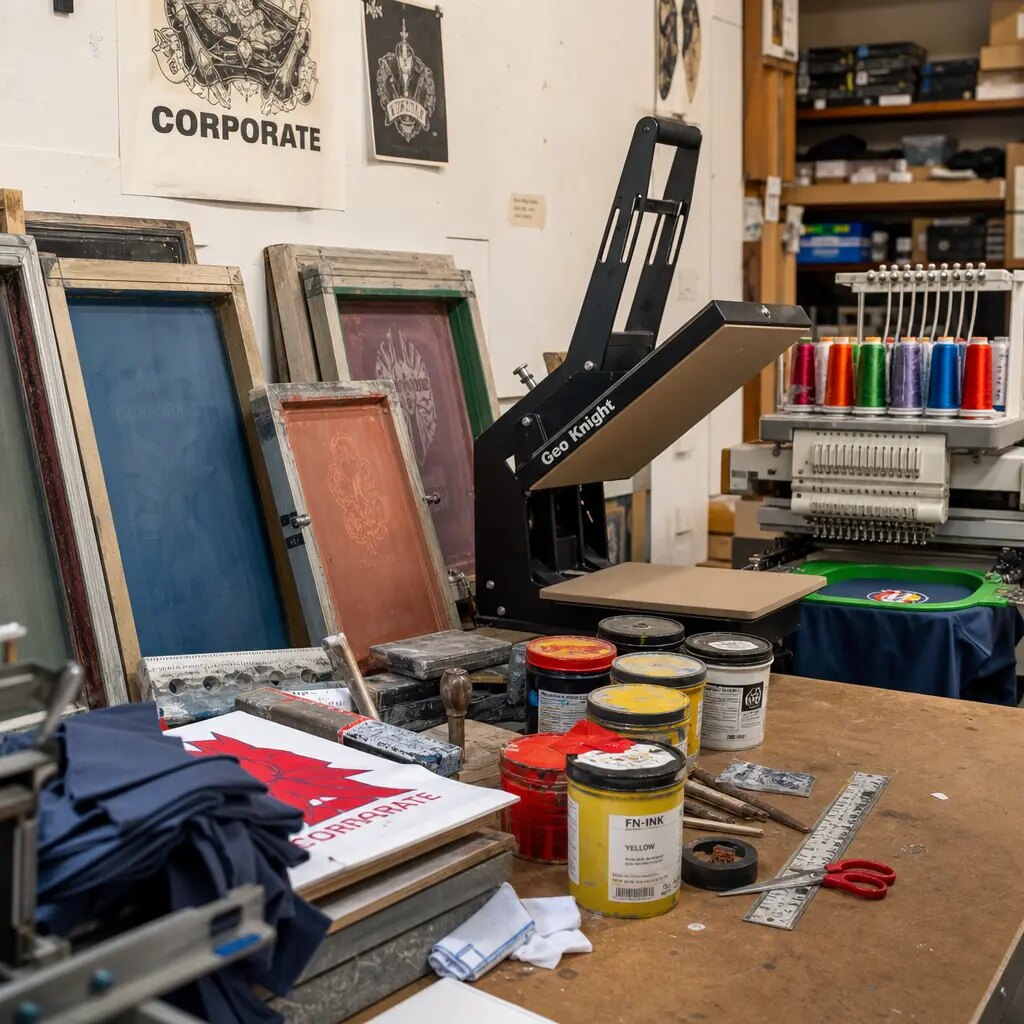
1. Define the Commercial Target Before Asking for a Lower MOQ
For eco apparel brands, canvas messenger bags often sit between accessory, merchandise, and retail product. That makes MOQ negotiation more complicated than ordering a simple tote. A factory is not only quoting fabric and sewing; it is judging whether your order can move through cutting, printing, trim preparation, sewing, finishing, packing, and inspection without too many line interruptions. The buyer’s first job is to make the commercial target clear enough that the supplier can offer a practical minimum rather than a protective one.
Start by separating your launch goal from your long-term product goal. If the first run is meant to validate sell-through, the right MOQ strategy is usually a controlled launch: one body color, one canvas weight, one logo treatment, and one packing method. If the bag is already part of a confirmed wholesale program, the negotiation can shift toward price breaks, fabric reservations, stronger QC terms, and repeat-order flexibility. The same canvas messenger bag spec can produce very different MOQ responses depending on whether the supplier sees a one-off project or a repeatable program.
A useful buyer statement sounds specific: “We are testing one natural 12 oz canvas messenger bag with a one-color flap print, standard cotton webbing strap, one internal slip pocket, bulk pack, and expected reorder within 60 days if sell-through is positive.” That gives the factory a real basis for reducing uncertainty. A vague statement such as “We need eco bags at low MOQ” does not help the factory calculate production risk, so the supplier may quote high MOQ, high sample cost, or padded unit pricing.
- Decide whether the order is a market test, wholesale launch, employee program, or repeat retail SKU.
- Keep the first run narrow if demand is unproven: one color, one artwork, one strap, and one carton plan.
- Use forecasted reorders as leverage, but do not promise volume you cannot support with purchase orders.
- Ask the supplier which specific spec change would lower MOQ fastest before asking for a blanket discount.
2. Realistic MOQ Ranges for Canvas Messenger Bags
MOQ ranges vary by country, factory size, material availability, and season, but buyers still need benchmarks. For canvas messenger bags, the lowest practical quantity is usually achieved with stock blanks or an existing factory pattern. True custom construction often requires more units because pattern work, cutting setup, sewing line training, fabric procurement, and decoration setup must be absorbed across the order. The number becomes higher when the buyer adds custom dyed canvas, multiple sizes, lining, zipper compartments, branded hardware, or several colorways.
As a working benchmark, stock blank programs may start around 50-300 pieces per artwork when the blank bag is already available. A semi-custom messenger bag based on an existing pattern may sit around 300-800 pieces per color or style. A fully custom cut-and-sew bag often becomes commercially efficient around 500-1,500 pieces per color or style. Some factories will accept a lower quantity with a surcharge, but the buyer should understand whether the surcharge covers real setup cost or hides a simplified build.
The most common buyer mistake is asking, “What is your MOQ?” as if one number answers everything. A better request is: “Please confirm MOQ by fabric color, by artwork, by label, by lining, by size, and by packing method.” A factory may accept 500 total pieces only if they are all natural canvas with the same print. The same 500 pieces split into five colors and three artworks may be treated as fifteen small production lots. That is why color and artwork discipline is one of the strongest negotiation tools.
- Stock blank plus decoration: often 50-300 pcs per artwork if inventory exists.
- Semi-custom existing pattern: often 300-800 pcs per color/style.
- Fully custom cut-and-sew: often 500-1,500 pcs per color/style for efficient pricing.
- Custom dyed canvas, custom lining, branded hardware, and multiple colorways can push practical MOQ higher.
- A lower MOQ may be possible with a surcharge, longer lead time, shared fabric, or simplified packing.
3. Canvas and Eco-Material Choices That Change MOQ
Canvas specification is not just a quality decision; it is an MOQ decision. Natural undyed cotton canvas is often easier to source in small or medium quantities because mills and factories may hold it in stock. Dyed canvas can require a fabric dye lot minimum, and that minimum may be larger than your first bag order. Organic cotton canvas, recycled cotton blends, or certified materials can add another layer because the factory must buy from approved sources and maintain documentation. If your sustainability claim matters, the certificate scope and transaction documentation must be discussed before the price is locked.
For messenger bags, 10-12 oz canvas is usually the flexible zone for first orders. It gives a recognizable canvas hand feel without making seams too bulky. A 14-16 oz fabric can create a more premium bag with better structure, but it may slow sewing and require stronger reinforcement at strap anchors and flap corners. Heavier canvas may also increase shipping weight and carton cube. A buyer chasing only unit price may miss that a heavier bag can raise landed cost even when the ex-factory price difference looks manageable.
Be careful with ounce and GSM conversions. Canvas described as 12 oz by one supplier may not feel identical to another supplier’s 12 oz because finishing, weave, washing, and measurement method can differ. Put the target in the spec sheet and request a tolerance. A practical starting point is plus or minus 5% of agreed fabric weight, but stricter requirements may be needed for repeat retail programs. Ask whether the fabric is pre-shrunk, washed, softened, water-resistant, or untreated. Each finish can affect printing, shrinkage, odor, color, and lead time.
- Natural undyed canvas may support lower MOQ than custom dyed canvas.
- Organic or recycled-content canvas requires document checks, not just a verbal eco claim.
- 10-12 oz is often the best first-run range; 14-16 oz fits premium or heavier-use bags.
- Ask for GSM/ounce, weave, finish, shrinkage target, and shade tolerance in the quote.
- If certification matters, confirm whether the factory, mill, or material supplier is within the certificate scope.
4. Build a Spec Sheet That Factories Can Price Accurately
A good MOQ negotiation starts with a spec sheet that removes guesswork. For canvas messenger bags, the spec should include body size, gusset depth, flap shape, strap width and length, shoulder drop, closure type, pocket count, lining, reinforcement method, decoration, labels, hangtags, packing, and carton rules. Without these details, factories will fill in the blanks differently. One supplier may quote a simple unlined bag; another may assume a lined bag with zipper pocket and reinforced strap anchors. The cheaper quote may not be cheaper at all; it may simply be a different product.
The details that most often create quote gaps are pocket construction, strap build, hardware, and decoration placement. A simple slip pocket is cheaper and faster than a zipper compartment. A cotton webbing strap is easier than a custom dyed adjustable strap with metal slider. A magnetic snap closure changes reinforcement and placement accuracy. Printing on a flat panel before sewing is easier than printing after the bag is assembled, but the production sequence must be planned early. Each of these details can affect MOQ because they change how the factory schedules sewing and decoration.
For eco apparel brands, the spec sheet should also define what “eco” means in commercial terms. Is the priority undyed canvas, organic cotton, recycled content, plastic-free packing, low-impact dyes, or reusable packaging? These choices are not interchangeable. Plastic-free packing may please brand teams but create moisture and abrasion risks in export cartons. Recycled cotton blends may have more shade and slub variation. Organic cotton may require higher material MOQ and documentation lead time. Put the sustainability requirement into the quote request so suppliers cannot substitute easier materials later.
- Include finished measurements, construction drawings, artwork size, placement, and color references.
- Specify reinforcement at strap anchors, pocket mouths, flap corners, and closure points.
- Identify which details are mandatory and which are negotiable for MOQ reduction.
- Define the sustainability requirement in sourcing language: material, certification, packing, or process.
- Attach reference photos, but never let photos replace written measurements and tolerances.
5. Normalize Quotes With a Landed-Cost Formula
Unit price is only one line in the buying decision. A canvas messenger bag with a low ex-factory price can become expensive after sample charges, setup fees, packing changes, carton cube, freight, duty, inspection, and destination handling. To compare factories fairly, normalize the quote. Use the same spec and ask each supplier to identify what is included and excluded. Then calculate landed cost per unit before choosing the lowest offer.
A practical landed-cost formula is: landed cost per unit = ex-factory unit price + amortized setup and sample charges + inspection cost per unit + inland/export charges per unit + international freight per unit + insurance per unit + duty/tax per unit + brokerage and destination handling per unit + special packing or compliance cost per unit. For example, if setup and approved sample costs total USD 450 on a 300-piece order, that adds USD 1.50 per bag before freight or duty. On a 1,000-piece order, the same cost adds USD 0.45 per bag. This is why MOQ negotiation and cost negotiation should be modeled together.
Ask factories for quote tiers such as 100, 300, 500, 1,000, and 2,000 pieces. The price break curve tells you whether the supplier is pricing true efficiency or simply pushing you to a preferred order size. If the unit price drops sharply from 300 to 500 pieces, the factory may be recovering setup cost. If the difference between 500 and 1,000 pieces is small, the extra inventory may not be worth the cash-flow risk. Eco apparel buyers should negotiate from the landed-cost model, not from the ex-factory number alone.
- Compare ex-factory price, FOB price, and landed cost separately.
- Amortize setup, sample, inspection, and documentation charges across the actual order quantity.
- Request carton dimensions, gross weight, and CBM before estimating freight.
- Do not accept a low quote that excludes printing setup, labels, barcode packing, or export documentation.
- Use price tiers to decide whether a higher MOQ actually improves margin enough to justify inventory risk.
6. Sample Costs, Approval Gates, and What Each Sample Must Prove
Samples are not souvenirs; they are control points. For canvas messenger bags, buyers usually need at least two sample stages. The proto sample checks shape, dimensions, carrying comfort, pocket logic, and decoration concept. The pre-production sample should be made with final or production-equivalent canvas, final trims, final label, final decoration method, and final packing. If the pre-production sample uses substitute fabric or a temporary strap, it cannot protect the bulk order.
Sample costs vary by supplier and complexity. As practical benchmarks, a simple stock blank with decoration may cost around USD 20-60 plus courier. A custom proto sample may fall around USD 50-150, depending on pattern work and trims. A production-like sample with final print, embroidery, label, or special packing can cost USD 80-250 or more if several outsourced processes are involved. Screen setup, embroidery digitizing, woven label development, and courier cost may be charged separately. These are not universal prices, but they give buyers a sense of which fees need explanation.
Negotiate sample fees carefully. Asking for free samples before the supplier understands the order can weaken your credibility. A better approach is to pay for the proto, then ask for sample cost credit after a confirmed bulk order. You can also ask the factory to waive repeated sampling fees if revisions are caused by supplier error. Put approval gates in writing: fabric swatch, artwork proof, print strike-off, proto sample, pre-production sample, packing sample, and final inspection. Each approval should have a date and a pass/fail checklist.
- Proto sample: verify size, silhouette, strap comfort, pocket function, and first branding direction.
- Strike-off: verify ink color, print edge, registration, placement, and adhesion on the actual canvas.
- Pre-production sample: verify final fabric, trims, sewing, logo, labels, measurements, and packing.
- Packing sample: verify fold, inner bag or wrap, hangtag, barcode, carton mark, and abrasion protection.
- Ask which sample charges are refundable and which are non-refundable setup costs.
7. Negotiation Concessions That Work on Canvas Messenger Bags
Effective MOQ negotiation is usually a trade, not a demand. The factory needs fewer changeovers, lower material risk, and smoother production. The buyer needs a commercially safe quantity and a bag that still meets retail expectations. Your strongest concessions are the ones customers will not notice or will not value enough to justify the extra MOQ. For example, keeping one natural canvas body color and one shared woven label can reduce supplier complexity without weakening the product story.
Concrete concessions include using an existing pattern, choosing stock natural canvas, reducing launch colors, keeping one artwork, replacing custom hardware with standard antique brass or nickel hardware, using a slip pocket instead of a zipper pocket, using bulk packing for the first shipment, or allowing a longer lead time so the factory can combine fabric purchasing with another order. Another useful concession is trim sharing: if the same woven label or cotton patch can be used across totes, messenger bags, and apparel accessories, the label MOQ becomes easier to absorb.
Avoid concessions that damage durability. Do not remove strap reinforcement, weaken seam construction, or accept uncontrolled fabric just to reduce MOQ. A messenger bag is carried under load, so failures become visible quickly. If the supplier proposes a lower MOQ only by removing bartacks, using thinner thread, or skipping QC, the price reduction is not a negotiation win. The best negotiation protects the consumer-facing quality while simplifying the production plan.
- Good concessions: fewer colors, standard canvas, existing pattern, shared label, bulk pack, standard hardware, longer lead time.
- Risky concessions: weaker strap anchors, thinner fabric without testing, no pre-production sample, skipped inspection, unknown substitute trims.
- Ask for a lower MOQ with a surcharge if cash flow matters more than unit margin on the launch order.
- Offer a reorder plan, but tie future volume to sell-through and quality performance.
- Negotiate setup fee credits after reorder instead of forcing the factory to hide setup cost in unit price.
8. QC Standards With Measurable Pass/Fail Criteria
QC for canvas messenger bags must be measurable. A direction such as “good stitching” is not enough for production. Define the inspection standard, sample size, defect categories, and physical tests before bulk begins. Many buyers use ANSI/ASQ Z1.4 or ISO 2859-1 general inspection level II with AQL critical 0, major 2.5, minor 4.0. This means critical defects are not accepted, while major and minor defects are limited by the sampling plan. Your retail channel may require stricter levels, but the key is to agree before the factory packs the shipment.
Set physical checks that match how the bag is used. Measurement tolerance may be plus or minus 1.0 cm for main body dimensions and plus or minus 0.5 cm for pocket or label placement. Print placement may be plus or minus 3 mm for a one-color mark, with multi-color registration often held to 1-2 mm if the artwork requires it. Fabric weight should be within the approved tolerance, commonly plus or minus 5%. Shrinkage should be tested if the canvas is washed, steamed, or likely to be exposed to moisture; a target of no more than 3% in warp or weft is a practical starting point unless the product is intentionally washed.
Structural tests are especially important. Inspect strap anchors, flap corners, pocket mouths, zipper ends, and side seams. A simple buyer load test may hang 5-8 kg in the bag for a defined period and then check for seam opening, thread breakage, hardware deformation, or strap distortion. The exact load should reflect your product promise, but it must be written down. For carton QC, verify carton compression readiness, units per carton, gross weight, barcode accuracy, and whether printed panels are protected from abrasion. A beautiful bag that arrives crushed, stained, or mislabeled still fails commercially.
- Use AQL with defined critical, major, and minor defects rather than informal inspection.
- Define measurement, print placement, fabric weight, shrinkage, and load-test tolerances in the purchase order.
- Classify open seams, broken strap reinforcement, sharp hardware, mildew odor, and wrong barcode as serious defects.
- Check both structural performance and retail-facing appearance.
- Require corrective action before shipment if inspection fails, not after goods arrive at the warehouse.
9. Packing, Cartons, and Freight: Where MOQ Savings Disappear
Packing decisions can quietly erase MOQ savings. Bulk packing is cheaper and easier: bags are folded or stacked in master cartons with minimal individual materials. Retail-ready packing adds hangtags, barcode labels, individual bags or paper wrap, inserts, size or color stickers, carton assortments, and sometimes inner cartons. Each step adds labor and material cost. If retail packing appears after the original quote, the supplier may reprice or push back on MOQ because the packing line now has more work and more error risk.
Messenger bags are also awkward to ship because straps, buckles, flaps, and gussets affect carton efficiency. A small change in fold method can change carton dimensions and CBM. Freight cost is driven by actual weight or volumetric weight, whichever is higher for the shipping mode. Ask for carton size, units per carton, net weight, gross weight, and estimated CBM during the quote stage, not after production. If the factory cannot provide a carton plan, you cannot calculate landed cost responsibly.
Eco packaging requires practical testing. Plastic-free packing may fit the brand, but the bag still needs protection from moisture, dust, hardware abrasion, and ink transfer. Kraft paper wrap can work, but it must not stain light natural canvas. Individual polybags may conflict with sustainability goals but may be required by some fulfillment centers. Compostable or recycled-content bags may have higher cost and supplier MOQ. Treat packing as part of the product specification and ask the factory to quote bulk, reduced-plastic, and retail-ready options separately.
- Quote bulk pack and retail-ready pack as separate line items.
- Confirm carton dimensions, units per carton, gross weight, and CBM before order approval.
- Test whether hardware, straps, or printed panels rub against visible canvas during transit.
- Check barcode and carton mark accuracy during final inspection.
- Do not assume eco packing is automatically lower cost or lower MOQ.
10. How to Challenge Supplier Quotes Without Damaging the Relationship
The best buyers challenge quotes with better information, not aggressive language. If one factory quotes a much lower price, ask what assumptions differ: canvas weight, fabric source, shrinkage control, print method, reinforcement, label, inspection, packing, or trade terms. If another quotes a much higher MOQ, ask which component drives it. The answer may be dyed fabric, woven label MOQ, hardware finish, or production line minimum. Once you know the constraint, you can negotiate a practical concession.
Use a quote normalization table internally. List each supplier’s MOQ by variant, unit price, sample fees, setup fees, lead time from pre-production approval, fabric type, included packing, carton CBM, AQL standard, and payment terms. Then calculate landed cost at the same quantity. This prevents a common error: choosing the supplier with the lowest visible unit price while ignoring a high trim MOQ, expensive freight cube, weak QC standard, or excluded packing materials.
Close the negotiation with a written purchase package. It should include the final spec sheet, approved sample references, artwork files, packing instructions, inspection standard, defect definitions, lead time, payment terms, Incoterms, and corrective-action process. MOQ negotiation is only successful if the factory can produce the agreed bag repeatedly. For eco apparel brands, the win is not merely getting the first canvas messenger bag order made; it is building a sourcing route that protects margin, sustainability claims, retail appearance, and reorder reliability.
- Ask suppliers to explain MOQ drivers component by component.
- Challenge quote gaps by referencing measurable spec differences, not by saying another factory is cheaper.
- Use landed cost and quality risk together when selecting a supplier.
- Put all negotiated concessions into the purchase order and pre-production sample comments.
- Keep records of approved fabric, trims, print strike-offs, labels, carton plans, and inspection results for reorders.
Specification comparison for buyers
| Sourcing or spec decision | Typical MOQ and cost impact | Lead-time impact | Best-fit buyer decision |
|---|---|---|---|
| Stock blank canvas messenger bag + logo decoration | Commonly 50-300 pcs per artwork if blanks are available; unit cost is often higher than custom bulk, but setup risk is low. Screen-print setup may add about USD 30-120 per color; woven or patch labels may require a small trim MOQ. | Fastest route: often 7-20 days after artwork approval if blank inventory is confirmed. Risk is stock color or size running out before reorder. | Use for market testing, pop-ups, employee kits, and low-risk first drops. Confirm load capacity, strap comfort, shrinkage, and decoration durability because the base bag may not be built to your retail standard. |
| Semi-custom existing pattern with changed canvas, label, or pocket | Commonly 300-800 pcs per color/style. Pattern cost is limited because the factory already owns the base shape. Fabric or trim MOQ may still apply, especially for dyed canvas or custom webbing. | Usually 25-45 days after pre-production sample approval, depending on fabric availability and decoration queue. | Best for eco apparel brands that want a branded product without paying for full pattern development. Keep the body pattern stable and negotiate flexibility on label, hangtag, or packing. |
| Fully custom cut-and-sew canvas messenger bag | Commonly 500-1,500 pcs per color/style for efficient pricing; lower quantities may be possible with a surcharge, simplified trim, or shared fabric lot. Custom hardware, lining, and dyed fabric can push practical MOQ higher. | Usually 35-70 days after final approval; more if the fabric is custom dyed, organic-certified, washed, or lab-tested before cutting. | Use when bag dimensions, pockets, closure, strap build, and brand details must be exact. Ask for MOQ by fabric color, artwork, lining, and packing format before negotiating price. |
| 10-12 oz cotton canvas, natural or undyed | Most flexible canvas range for first orders. Natural canvas may support lower MOQ because it avoids dye minimums. Cost is generally lower than dyed or washed heavy canvas, but fabric variation must be controlled. | Shorter fabric lead time if the mill or factory holds stock. Pre-shrink or wash steps can add several days. | Good balance for retail merchandise, promotional apparel add-ons, and lightweight daily use. Specify GSM or ounce tolerance and test print strike-off because natural canvas shade can vary by lot. |
| 14-16 oz canvas, dyed, washed, or premium hand feel | May increase unit price and practical MOQ because heavier fabric is harder to sew, slower to cut, and may require stronger needles, binding, and reinforcement. Dyed lots may require 500-1,000+ pcs per color equivalent depending on fabric supplier. | Longer lead time if fabric is custom dyed, washed, or finished. Production can slow at bulky seam intersections and strap anchor points. | Use for premium messenger bags, heavier carry requirements, or structured retail presentation. Negotiate by reducing color count, not by removing reinforcement that protects durability. |
| One-color screen print on flap or front panel | Economical for simple logos once quantity is high enough. Lower setup than multi-color print; practical MOQ can be aligned with bag MOQ if artwork is stable. Watch ink and screen fees in the quote. | Adds proofing and print queue time. A strike-off should be approved before bulk printing. | Best for clean brand marks and sustainability messaging. Require print placement tolerance, registration tolerance, rub test, and flex test before approving production. |
| Woven label, cotton patch, or embroidery | May reduce print registration risk but can add trim MOQ, sewing operations, and placement checks. Label MOQ from trim suppliers may exceed bag MOQ, so ask whether surplus labels are stored for reorder. | Trim development can add 7-20 days. Sewing labels during bag assembly is usually smoother than adding them after bags are finished. | Best for a retail look and repeat programs. Use the same label across multiple SKUs to absorb trim MOQ and negotiate a lower first bag MOQ. |
| Bulk pack versus retail-ready pack | Bulk pack lowers labor and material cost. Retail-ready pack with individual bag, barcode, hangtag, insert, and carton sorting can add material cost, labor, and a separate packing MOQ or surcharge. | Retail packing can add 2-7 days depending on label printing and carton marking requirements. Poor carton cube can raise freight cost more than expected. | Choose bulk pack for wholesale repacking or local kitting. Choose retail-ready only when the distribution channel requires it. Always compare landed cost, not factory unit price alone. |
Buyer checklist before sampling
- Define bag dimensions in centimeters and inches, including body width, height, gusset depth, flap length, strap length, shoulder drop, and pocket placement.
- Choose the canvas target clearly: for example 10 oz, 12 oz, 14 oz, or GSM equivalent, plus acceptable tolerance such as plus or minus 5% unless testing requires tighter control.
- State whether canvas must be conventional cotton, organic cotton, recycled cotton blend, undyed natural canvas, low-impact dyed canvas, or certified material with chain-of-custody documents.
- Ask for MOQ separately by fabric color, bag size, artwork, label type, lining color, hardware finish, and packing format.
- Request quote tiers at realistic quantities such as 100, 300, 500, 1,000, and 2,000 pcs, even if the factory’s headline MOQ is higher.
- Separate tooling and setup costs from unit cost: screens, embroidery digitizing, woven label development, cutting dies, pattern development, wash tests, and carton printing.
- Ask for sample pricing for proto sample, logo strike-off, pre-production sample, and courier cost; confirm whether sample charges are refundable against bulk order.
- Normalize quotes by using the same canvas weight, dimensions, pocket count, strap build, closure, print size, label position, packing, carton quantity, and inspection standard.
- Request a simple landed-cost worksheet including ex-factory price, inland freight if applicable, export fees, freight, insurance, duty, brokerage, inspection, and destination handling.
- Require pre-production approval for final canvas, shade, measurements, print or label placement, strap reinforcement, hardware function, and packing method.
Factory quote questions to send
- What is the MOQ by fabric color, bag size, artwork, label type, lining color, and hardware finish?
- Can you quote 100, 300, 500, 1,000, and 2,000 pcs so we can see the true price break curve?
- What canvas are you quoting by ounce and GSM, and what fabric weight tolerance will be accepted in bulk?
- Is the canvas in stock, mill-made to order, custom dyed, washed, pre-shrunk, organic-certified, recycled blend, or conventional cotton?
- What documents can you provide for eco claims, such as transaction certificate, scope certificate, material composition, or supplier declaration?
- Which processes are in-house and which are outsourced: fabric sourcing, cutting, sewing, screen printing, embroidery, washing, label making, inspection, and packing?
- Does the unit price include screens, embroidery digitizing, woven label setup, hangtags, barcode labels, inner bags, master cartons, carton marks, and export documents?
- What is the proto sample cost, production-like sample cost, logo strike-off cost, and courier cost? Are any charges credited after bulk order placement?
- What lead time applies to sample development, strike-off approval, fabric procurement, bulk cutting, sewing, decoration, packing, inspection, and shipment booking?
- What are your normal payment terms, and can a deposit be tied to approved pre-production sample rather than only purchase order date?
Quality-control points to confirm
- Fabric weight should be verified against the approved specification. A practical tolerance is often plus or minus 5% of the agreed GSM or ounce equivalent unless the buyer sets a tighter standard.
- Finished body measurements should be checked on a defined sample size. Common tolerance for bag body width and height is plus or minus 1.0 cm; pocket placement and flap alignment should usually stay within plus or minus 0.5 cm.
- Canvas shrinkage should be tested before cutting if the bag may be washed, steamed, or exposed to moisture. For stable retail bags, agree on a maximum shrinkage target, commonly no more than 3% in warp or weft unless a washed look is intentional.
- Seam strength and strap attachment must be tested at stress points. For daily-use messenger bags, inspect bartacks, box stitches, or reinforced crosses at strap anchors, and reject units with skipped stitches, broken thread, open seams, or loose reinforcement.
- Stitch density should be consistent with the approved sample. A common check is 7-10 stitches per inch for main seams, adjusted by fabric weight and thread; large variation, needle cutting, puckering, or unraveling should be treated as a defect.
- Load testing should reflect expected use. A practical buyer test is hanging the bag with a defined load such as 5-8 kg for a set period, then checking strap anchors, seams, hardware, and deformation against the approved standard.
- Print registration should stay within the approved artwork position. For one-color logo printing, placement tolerance is often plus or minus 3 mm; multi-color registration should usually stay within 1-2 mm depending on artwork size.
- Print durability should be checked by dry rub, light flexing over flap folds, and tape or scratch checks where appropriate. Reject cracking, peeling, heavy ink bleed, visible pinholes in solid logo areas, or print drift onto seams.
- Woven labels, patches, and embroidery should sit straight within the approved placement tolerance. Reject frayed patch edges, loose label corners, unstable embroidery backing, and labels sewn through the wrong panel layer.
- Hardware should function smoothly for a defined number of cycles. Zippers, snaps, magnetic closures, sliders, and buckles should open, close, and adjust without sharp edges, plating flakes, misalignment, or fabric snagging.