Start With The Retail Use Case, Not The Fabric Weight
A canvas messenger bag for a spa retailer is not one product by default. It may be a boutique resale item, a gift-with-purchase, a membership welcome bag, a staff training bag, or a distributor catalog item. Each use asks for a different balance of cost, finish, strength, and packing. A resale bag needs cleaner stitching, steadier color, and a better handfeel because customers will handle it before buying. A gift-with-purchase bag may need a simpler build, lower cost, and reliable repeatability. A staff bag often needs stronger strap reinforcement and a closure that stays secure during daily use.
Write the product job before asking for fabric quotes. What will the bag carry: skincare bottles, towels, treatment menus, notebooks, tablets, robes, or retail samples? Those contents decide the gusset, load target, lining, closure, and strap construction. If an RFQ says only "canvas messenger bag with logo," every supplier will fill in the blanks differently. One quote may include 12 oz unlined canvas and plastic hardware; another may assume 14 oz lined canvas with metal hardware. The prices will look like supplier competition, but they are actually different products.
The use case also affects what happens after delivery. A retail bag sits on a shelf, gets opened, refolded, and compared with other spa merchandise. A counter giveaway may be packed with product and carried home once. A staff bag may be pushed into lockers, used at events, and occasionally cleaned. Procurement teams that name the real use case early can build a specification that suppliers quote consistently and quality teams can inspect without guessing.
- For boutique resale, prioritize consistent fabric shade, smooth stitching, refined logo placement, and retail-ready packing.
- For gift-with-purchase, prioritize stock canvas, simple construction, lower MOQ, and a print method that can repeat quickly.
- For staff use, prioritize strap width, bar tacks, zipper or secure flap closure, and darker colors that hide handling marks.
- For spa welcome kits, test the bag with the actual product bottles and inserts before confirming the gusset.
Choose Canvas Weight By Function, Not By Price Alone
Canvas messenger bags are often quoted by ounce weight, but ounce weight is only part of the specification. Ask for GSM as well, and ask how the fabric is finished. A 10 oz canvas can work for a light document-style promotion, but it may feel too soft for a messenger shape unless lining or interfacing is added. For spa retail programs, 12 oz to 16 oz is usually the practical range. It gives the front flap enough body, supports strap attachment, and still keeps the bag comfortable to carry.
The difference between 12 oz and 14 oz may look small on a spreadsheet. In the hand, it is obvious. A 12 oz canvas can feel approachable and flexible for welcome kits or lighter retail goods. A 14 oz canvas gives more structure for boutique resale and daily use. A 16 oz canvas can feel premium, but it raises material cost, sewing difficulty, carton weight, and sometimes crease risk when folded for packing. Heavier is not automatically better; it has to match the contents, price point, and delivery method.
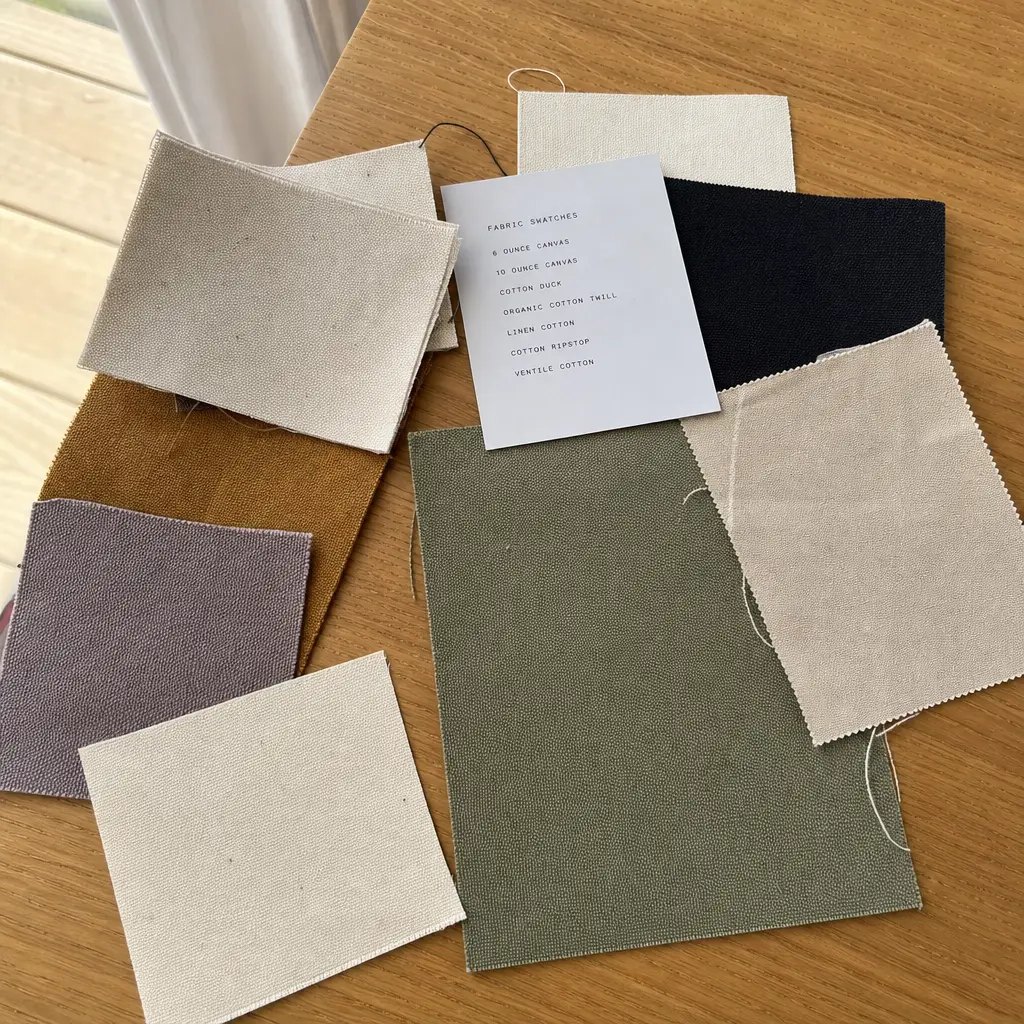
GSM does not tell the full story either. Washed canvas feels softer and may drape more. Untreated canvas can feel firm and slightly rough. Dyed canvas may change handfeel after finishing. Request swatches from the same finishing route planned for bulk production, then approve a pre-production sample in the actual weight. A showroom sample made from leftover fabric is useful for shape discussion, but it cannot validate the handfeel, sewing behavior, or packing result of the final material.
- 10 oz or about 340 GSM: suitable for light giveaways, flat document bags, and cost-sensitive programs.
- 12 oz or about 400 GSM: balanced option for spa kits and entry retail styles.
- 14 oz or about 470 GSM: stronger handfeel for boutique resale and everyday use.
- 16 oz or about 540 GSM: more premium and structured, but higher material cost and carton weight.
Natural, Dyed, Or Washed Canvas: Finish Changes The Whole Bag
Natural cotton canvas is popular with spa retailers because it supports a clean wellness look and usually avoids custom dye complexity. Still, natural does not mean identical. One batch may lean cream; another may look more beige. Cotton source, yarn, bleaching level, and finishing all affect shade. If the bag will sit beside branded cartons, robes, candles, or skincare packaging, treat natural canvas as a controlled material, not a casual default.
Dyed canvas creates a stronger shelf story for sage, charcoal, clay, navy, or seasonal spa collections. It also brings more approval work. A custom dyed color may require lab dips, dye house minimums, and longer lead time before cutting can start. The fabric MOQ can be higher than the sewing MOQ, which means a supplier may be able to sew 500 bags but still require more pieces to justify a custom fabric color. That difference should be clear before the buyer presents pricing internally.
Washed canvas gives a softer, relaxed retail feel. It can suit wellness boutiques, resort spas, and lifestyle assortments, but it needs tighter control on shrinkage and shade variation. Washing can change panel dimensions, so the pattern must account for shrinkage before bulk cutting. Ask whether the quoted price is based on stock natural canvas, stock dyed canvas, custom dyed fabric, or washed fabric. A late switch from stock natural to custom sage can change both cost and delivery.
- Use natural canvas when the logo and retail story can tolerate small shade variation.
- Use dyed canvas when the bag must match brand fixtures, packaging, or seasonal retail colorways.
- Use washed canvas when softness is more important than sharp structure.
- For repeat orders, keep an approved bulk swatch from each production lot for comparison.
Lining Decisions Affect Cost, Quality, And Inspection
An unlined messenger bag costs less and moves faster through sewing, but the inside will show seam allowances and the back side of the canvas. That can be acceptable for towels, catalogs, inserts, or low-cost promotions. For boutique resale or skincare gift sets, lining usually gives a cleaner interior and protects product cartons from rubbing against raw seams. Decide this early. Lining changes the cutting plan, sewing sequence, sample review, and inspection checklist.
Cotton lining fits a natural spa position and feels familiar to customers who expect soft materials. Polyester or RPET lining is smoother, often easier to wipe clean, and more stable in color. RPET can support a recycled-material claim only when the buyer has the documentation needed for that claim. If the claim will appear on a hangtag, carton mark, or online product page, ask for certification or traceability before approving the wording.
Quote comparisons need careful reading here. One supplier may write "lined" and mean a simple fabric panel sewn into the body. Another may include full drop-in lining, bound seams, an inner pocket, and a zip pocket. Those are not equal. Lining also adds inspection points: loose threads inside corners, trapped fabric near zippers, uneven pocket placement, and puckering where the lining joins the top edge. A lined bag can look beautiful outside and still fail customer expectations when opened.
- Unlined: lowest cost, lighter packing weight, but less refined interior.
- Cotton lined: better retail feel, natural positioning, moderate added cost.
- Polyester or RPET lined: smoother finish, easier cleaning, useful for travel or staff bags.
- Inner pocket: valuable for spa membership cards, receipts, or small samples, but adds sewing time.
Match The Logo Method To The Spa Brand Position
The best logo method depends on artwork, canvas color, price point, and order quantity. Screen print is practical for clean one-color or two-color logos on the flap or front body. It controls cost and works well on flat panels. But canvas is not paper. A fine serif logo, small treatment text, or thin line drawing may lose sharpness on a visible weave, especially on heavier canvas. Test the actual artwork at actual size before approving bulk production.
Embroidery adds texture and can make a bag feel more premium, but it is not right for every mark. It can pucker thin canvas, distort small lettering, and add cost through stitch count. Backing, thread tension, and stitch density matter. A spa logo with a simple icon or short wordmark may embroider well; a detailed botanical illustration may not. The sample should show the final stitch file, not a quick approximation.
Woven labels are often the quietest and most retail-friendly option for spa bags. A small side label, flap label, or interior label can make the bag feel finished without turning it into a large advertisement. Heat transfer can handle fine detail, but adhesion and handfeel must be tested on the selected canvas. Whichever method you choose, define logo size, placement, Pantone or thread color, tolerance, and approval process in the RFQ.
- Screen print: best for solid logos, simple icons, moderate order quantities, and clear cost control.
- Embroidery: best for short names or icons, not fine spa treatment text or delicate lines.
- Woven label: best for understated retail branding and repeat programs with stable artwork.
- Heat transfer: useful for fine detail, but test adhesion and handfeel on the selected canvas.
Straps, Closures, And Hardware Shape The Customer's First Impression
A messenger bag can look good on a product page and still feel wrong on the shoulder. Spa retailers often spend time on canvas color and logo placement, then let the supplier choose default strap and hardware details. That is where many bags start to feel like giveaways instead of retail merchandise. Strap width, webbing density, slider quality, and reinforcement stitching decide whether the bag feels comfortable, stable, and durable.
For most spa retail programs, a 3.2 cm to 4.0 cm cotton webbing strap is a sensible starting point. It has enough width for comfort without looking bulky. The strap should be adjustable unless the bag is designed for a very specific user group. Metal sliders and D-rings usually feel more durable than plastic, but they add weight and cost. If the bag will carry glass bottles, tablets, product manuals, or staff materials, test the strap attachment under real load.
Closures deserve the same attention. A magnetic snap can feel clean and boutique-ready when aligned well. A zipper under the flap adds security for travel or staff use. Hook-and-loop can work for cost-sensitive programs, but it may feel noisy and less refined in a spa retail setting. Specify hardware finish across every component: slider, D-ring, snap, zipper puller, and rivets if used. Mixed finishes are easy to notice and hard to explain.
- Specify strap width, total adjustable length, shortest drop, longest drop, and webbing color.
- Require bar tacks or reinforced box stitching at strap attachment points.
- Define hardware finish, such as antique brass, nickel, matte black, or color-matched plastic.
- Check whether metal hardware may scratch retail product packaging inside cartons.
Compare Quotes By Specification, Not Just Unit Price
Two quotes can carry the same product name and still describe very different bags. The common hidden differences are canvas weight, lining, number of pockets, logo method, hardware finish, strap material, reinforcement, and packing. A lower unit price may be completely valid for a short-term promotion. It may also mean thinner canvas, no lining, plastic hardware, fewer bar tacks, or bulk packing. Procurement needs to know which one it is.
Ask suppliers to quote comparable versions instead of one vague option. A useful structure is good, better, and best using the same finished size and artwork: 12 oz unlined with screen print, 14 oz lined with woven label, and 16 oz lined with embroidery or premium hardware. This makes cost decisions visible. If finance asks for a lower price, the team can discuss which feature to remove rather than pushing the factory to reduce quality invisibly.
Some cost drivers sit outside the line item. Custom dyeing may raise MOQ. Embroidery pricing depends on stitch count. Individual packing increases labor but may reduce dirt, scuffing, and warehouse handling issues. Heavier canvas increases carton weight and freight impact. A messenger bag pattern with a large flap and gusset can also use more fabric than buyers expect. The cleanest quote is the one that separates material, logo, packing, and freight assumptions so the buyer can compare real tradeoffs.
- Fabric: higher GSM increases material cost, sewing effort, needle wear, and carton weight.
- Color: custom dyeing can raise MOQ and extend lead time compared with stock natural canvas.
- Lining: adds material, cutting, sewing, inspection, and possible shrinkage control.
- Logo: embroidery cost depends on stitch count; screen print depends on color count and print size.
- Packing: individual retail packing costs more than bulk packing but reduces handling damage.
Separate Finished Bag MOQ From Component MOQ
MOQ is rarely just about sewing capacity. It can come from fabric roll quantity, dye vat minimum, webbing production, woven label setup, hardware finishing, print screens, or embroidery digitizing. A supplier may be willing to sew 500 pieces if all components are stock. The same design in custom dyed sage canvas with matching webbing and antique brass hardware may need a higher minimum because the components have their own production rules.
Ask for MOQ by component, not only by finished bag. The question "what is the MOQ for this bag?" is too broad until materials are defined. Ask what changes when the canvas is stock natural versus custom dyed, when the strap is stock cotton webbing versus color-matched webbing, and when the logo is screen print versus woven label. This prevents the common problem where a buyer approves a concept at one MOQ, then discovers the real material choices require a different order quantity.
Lead time follows the same logic. Stock natural canvas with screen print can move faster than custom dyed canvas with embroidery and special-finish hardware. Woven labels may need artwork approval before production. Custom dyed fabric needs lab dip approval, bulk dyeing, and finishing before cutting. If a seasonal spa program has a shelf date, the RFQ should include the target delivery date and ask the supplier to identify the critical path.
- Stock natural canvas usually gives the lowest MOQ and shortest material lead time.
- Custom dyed canvas may require lab dip approval before fabric production starts.
- Custom woven labels can require separate artwork approval and setup time.
- Embroidery sampling needs stitch file approval, especially for small lettering.
- Holiday retail programs should reserve extra time for sample revision and carton label approval.
Use Sample Approval To Catch Bulk Production Problems Early
A sample should prove the material system, not just the silhouette. For a canvas messenger bag, the approval sample should use the intended canvas weight, color, finish, lining, strap, hardware, logo method, and packing fold. If any part is substituted, label it clearly and do not use that sample as the final standard for the substituted part. A 10 oz showroom sample cannot validate the drape, seam behavior, or shelf presence of a 14 oz production bag.
Review the sample like a customer and a warehouse team, not only like a buyer at a desk. Fill it with the intended spa products. Carry it by the strap. Open and close the flap several times. Check whether the logo stays level when the bag is full, whether the strap twists, whether the flap gaps over bottles, and whether the bag can be folded without cracking the print. Many bulk issues show up at this stage if the sample is handled realistically.
Document approval with measurements and dated photos. Include front, back, side, interior, logo close-up, hardware close-up, strap attachment, and packed presentation. Measure width, height, gusset, flap drop, strap width, and adjustment range. If bulk production later raises a dispute about shade, size, logo placement, or stitching, the approved sample and approval record become the reference instead of relying on memory.
- Measure finished width, height, gusset, flap length, strap width, and strap adjustment range.
- Compare fabric handfeel and shade against the approved swatch under consistent lighting.
- Rub the printed area after curing and after folding to check ink transfer or cracking.
- Inspect inside corners, lining attachment, pocket position, and loose thread control.
- Take approval photos of front, back, side, inside, strap hardware, logo close-up, and packing.
Plan Packing And QC Before The Bags Leave The Factory
Canvas attracts lint, dust, and moisture, and light natural colors show marks quickly. Packing is not an afterthought; it protects the material choice the buyer paid for. Retail-ready bags may need individual polybags, paper sleeves, tissue, hangtags, or barcode labels. Internal staff programs may accept bulk packing, but the flap logo still needs protection. Define the folding method so the printed area is not creased in a visible place.
Carton data matters for landed cost and warehouse handling. A 16 oz lined messenger bag with metal hardware and individual packing will produce fewer pieces per carton than a 12 oz unlined version. Ask for carton dimensions, pieces per carton, and gross weight before finalizing the material spec, especially if air freight, distributor replenishment, or strict warehouse slotting is involved. A carton that is too heavy may create handling problems or repacking costs at destination.
Quality control should connect directly to the approved sample and RFQ. Inspect finished dimensions, canvas handfeel, shade, logo placement, stitching, strap reinforcement, hardware function, lining, loose threads, and packing. For ocean shipments, add moisture control. Natural cotton canvas can mildew or stain if condensation reaches the fabric, and metal hardware can tarnish if plating is weak. Simple protections such as silica gel, clean cartons, carton liners, and sealed inner packing can prevent expensive claims.
- Define folding method so the front flap logo is not creased through the printed area.
- Use moisture control for long ocean shipments, especially with natural cotton canvas.
- Set carton gross weight limits that warehouse teams can handle safely.
- Confirm barcode, hangtag, suffocation warning, and retail label position before bulk packing.
- Request one packed carton photo or packing video during production inspection.
Specification comparison for buyers
| Spec decision | Recommended option | When it fits | Buyer risk to check |
|---|---|---|---|
| Main canvas weight | 12 oz to 16 oz cotton canvas, roughly 400-540 GSM depending on weave and finishing | Boutique resale, spa welcome kits, staff training bags, and mid-weight retail merchandise | Do not compare only by oz. Request GSM, yarn count if available, and finished fabric handfeel because washed canvas and stiff greige canvas can feel very different at the same nominal weight. |
| Canvas finish | Unbleached natural, dyed solid, or enzyme-washed canvas with approved color standard | Natural fits wellness positioning; dyed colors fit brand collections; washed finish gives softer retail feel | Natural cotton shade varies by batch. For spa brands using cream, sand, sage, or charcoal, approve lab dip and bulk shade tolerance before cutting. |
| Lining choice | Unlined for low-cost promo, cotton lining for retail quality, or RPET/poly lining for easier cleaning | Unlined works for inserts and towels; lined works for skincare bottles, notebooks, and gift sets | Unlined bags expose seam allowances and loose fiber. Lined bags add cost and inspection points, especially at corners and inner pocket stitching. |
| Reinforcement points | Bar tacks at strap ends, flap stress points, side seams, and top opening | Any bag expected to carry bottles, catalogs, robes, tablets, or spa amenity kits | A beautiful canvas body can still fail at the strap. Specify load target and require photos or videos of reinforcement in the pre-production sample. |
| Closure system | Magnetic snap, metal snap, zipper under flap, or hook-and-loop depending on retail use | Magnetic snap suits boutique resale; zipper suits travel and staff use; hook-and-loop suits low-cost programs | Magnets can affect perceived quality if weak or poorly aligned. Hook-and-loop may feel noisy and less premium for spa boutiques. |
| Logo decoration | Screen print for flat solid logos, embroidery for premium texture, woven label for subtle branding | Screen print fits larger front flap marks; embroidery fits simple icons; woven label fits understated spa retail | Heavy ink on soft canvas can crack if cured poorly. Embroidery on thin canvas may pucker unless backing and stitch count are controlled. |
| Strap material | Cotton webbing 3.2-4.0 cm wide, adjustable with metal slider, or self-fabric strap for softer style | Adjustable webbing is best for mixed retail buyers and staff users | Narrow straps reduce cost but create shoulder discomfort. Confirm strap length range, webbing GSM, hardware finish, and color match. |
| MOQ planning | Separate MOQ for greige fabric, dyed canvas, lining, hardware color, and logo process | Private-label spa chains, distributors, and boutique retailers building seasonal assortments | A quoted bag MOQ may hide higher material MOQ. Confirm whether fabric is stock, custom dyed, or purchased only after deposit. |
| Packing format | Individual polybag or paper sleeve, silica gel when needed, master carton under export weight limits | Retail-ready resale needs cleaner packing; internal staff kits may accept bulk packing | Canvas attracts lint and moisture. Require carton dimensions, gross weight, folding method, and protection for printed flaps. |
Buyer checklist before sampling
- Define the exact use case: resale item, gift-with-purchase, spa welcome kit, staff bag, or distributor catalog item.
- State finished size, gusset depth, flap length, strap width, strap drop, and whether the bag must fit A4 documents, tablet, robe, towel, or product bottles.
- Request main fabric by oz and GSM, plus finish: natural, bleached, dyed, washed, brushed, or coated.
- Decide whether the bag is unlined, half-lined, or fully lined, and specify inner pocket requirements before sampling.
- Provide logo artwork with Pantone or thread colors, decoration size, placement, and acceptable print or embroidery tolerance.
- List hardware color and material preference, including slider, D-ring, snap, zipper, puller, and any metal-free requirement.
- Set acceptance criteria for shade difference, fabric defects, print registration, embroidery puckering, seam strength, and strap load.
- Require a pre-production sample made with bulk-intended fabric, lining, hardware, and logo process, not only a showroom sample.
- Confirm packing method, carton size, carton weight, retail barcode label position, and moisture control for long ocean shipments.
- Ask the factory to separate tooling, sample, material, logo, packing, and freight assumptions in the quotation.
Factory quote questions to send
- What is the proposed canvas weight in oz and GSM, and is it stock fabric or custom woven/dyed fabric?
- Can you provide fabric swatches for natural, dyed, washed, and lined options before sample approval?
- What MOQ applies to the bag, the canvas color, the lining, the webbing, the hardware finish, and each logo method?
- Which print or branding method do you recommend for our artwork, and what are the size, color, and curing limitations?
- Will the pre-production sample use the same fabric, lining, webbing, hardware, and packing method as bulk production?
- What load test or seam strength test can you perform for strap attachment and side seams?
- How will you control natural canvas shade variation and dyed color tolerance between batches?
- What is the estimated production lead time after sample approval, and which material decision could extend that lead time?
- How many pieces per export carton, what are the carton dimensions, and what is the estimated gross weight?
- Can you quote alternative versions side by side: unlined 12 oz, lined 14 oz, and premium 16 oz with embroidery or woven label?
Quality-control points to confirm
- Finished dimensions within agreed tolerance, especially width, height, gusset, flap drop, and strap length range.
- Canvas GSM and handfeel match approved swatch, with no unexpected stiffness, thin spots, weaving slubs beyond agreed standard, or heavy lint.
- Color shade matches approved lab dip or swatch under consistent light, with bulk shade variation controlled by batch.
- Logo placement is centered and level within agreed tolerance, with clean print edges, correct curing, no ink transfer, and no embroidery puckering.
- Strap attachment, bar tacks, side seams, bottom corners, and flap seams withstand agreed pull or load test.
- Hardware is aligned, functional, rust-free, and consistent in finish across production.
- Lining is clean, correctly attached, and free from loose threads, open seams, trapped fabric, or misaligned pockets.
- Packing protects the flap print and keeps light canvas clean during warehouse handling and export transit.