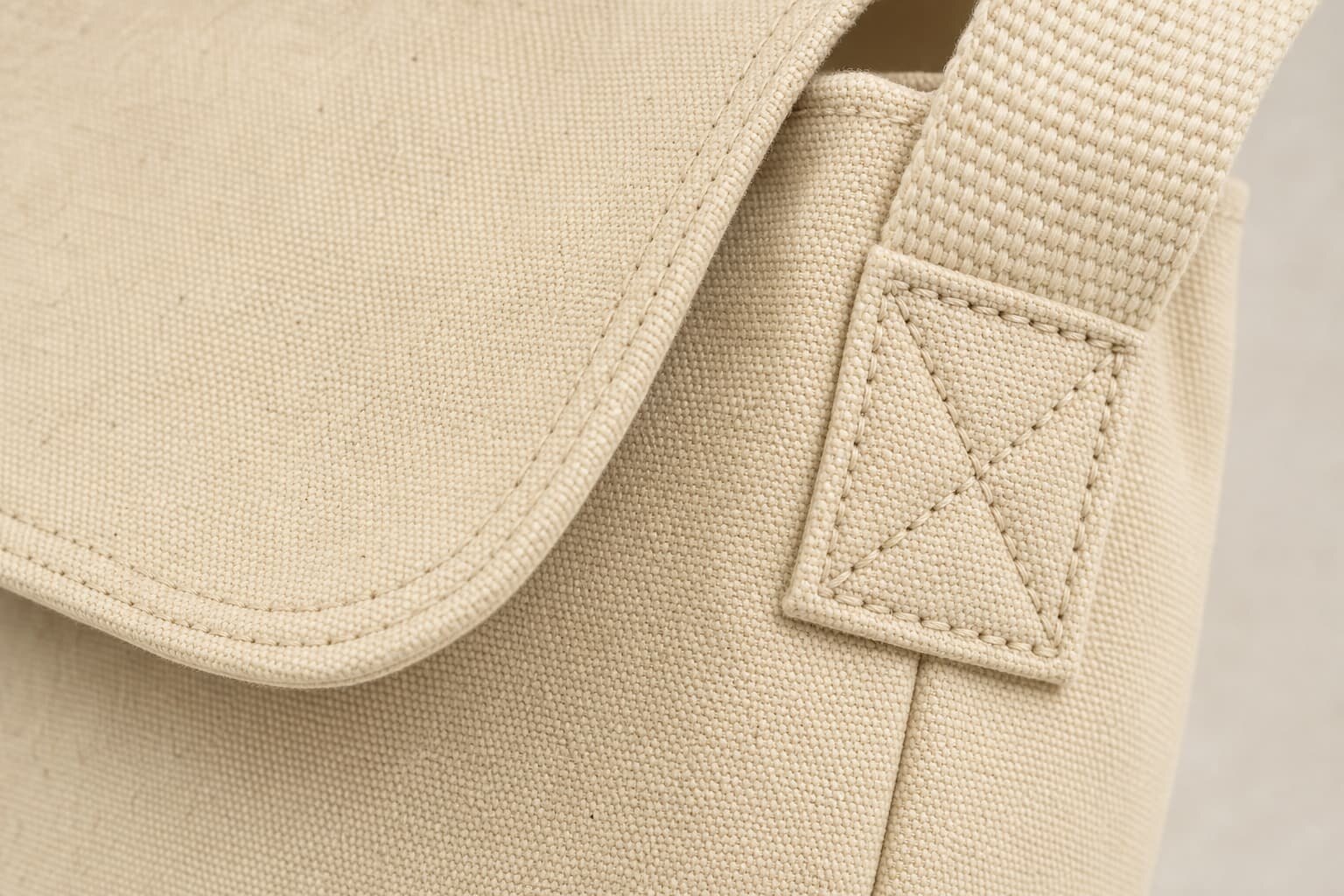
1. Decide the job before you choose the fabric
The fastest way to overspend on a canvas messenger bag is to start with fabric before you define the job. A bag meant for conference kits, notebooks, and light giveaways does not need the same shell weight as a commuter bag that carries a laptop, charger, water bottle, and daily documents. Once the use case is clear, the material choice becomes a practical cost and performance decision instead of a vague style debate.
For procurement teams, the goal is not to buy the heaviest canvas available. The goal is to buy a canvas construction that holds shape, takes decoration cleanly, survives normal use, and stays within target margin. If the bag is for retail, the material must also look stable on a shelf and in photos. If it is for corporate distribution, consistency and packing efficiency may matter more than a premium hand feel. Define the carry weight, brand position, and selling channel first, then build the fabric spec around that.
- Light use: event kits, brochures, tablets, and short-term giveaways.
- Medium use: daily office carry, notebooks, lunch items, and accessories.
- Heavy use: laptop carry, commuting, trade-show travel, and repeat retail use.
2. Shell canvas weight is the first real buying lever
When suppliers say 'canvas,' they may be talking about very different cloths. The most useful way to compare them is by finished weight and weave density. A 12 oz or about 400 gsm canvas is often enough for light promotional bags, but it can feel soft and may not stand up cleanly when the bag is filled. A 14 oz or about 475 gsm canvas is the most common middle ground because it usually gives enough structure without making sewing slow or expensive. A 16 oz to 18 oz or roughly 540 to 610 gsm canvas brings a more premium, rugged feel, but it also raises needle resistance, seam stress, and labor time.
Do not compare quotes only on GSM. Two fabrics can both be labeled 14 oz and still behave differently because of yarn count, weave tightness, finishing, and shrinkage control. Ask for a swatch, the finished fabric width, whether the cloth is enzyme-washed or pre-shrunk, and whether the bag will be cut on grain or with any rotation to manage panel fit. If the supplier cannot explain the cloth in plain terms, the number on the quote is not enough to hold production steady.
- 12 oz / 400 gsm: lower cost, softer body, better for lightweight carry.
- 14 oz / 475 gsm: balanced structure and cost, good default for most bulk orders.
- 16-18 oz / 540-610 gsm: premium hand feel, stronger stand-up shape, higher sewing cost.
3. Lining and reinforcement decide whether the bag feels finished
A messenger bag made from decent canvas can still feel cheap if the inside collapses or the seams distort. Lining adds more than aesthetics. It helps the bag slide open, improves perceived quality, hides seam allowances, and reduces abrasion on the inside. A 210D polyester lining is common when buyers want a clean interior at controlled cost. A cotton or cotton-twill lining can feel more natural and aligned with the shell, but it may add cost and require tighter color control. For unlined bags, the raw inside must be judged carefully because stitching, thread ends, and seam finish will be visible to the end user.
Reinforcement is where many RFQs are too vague. Ask where the bag is reinforced and how. Strap anchors, flap edges, bottom panels, and D-ring points need a real construction answer, not a generic 'strengthen' note. A bottom board can keep the base flat for retail display and improve load stability. Webbing reinforcement at the strap anchors spreads weight and reduces seam failure. If the bag is meant to carry a laptop or thick catalogs, a weak shell with no reinforcement creates returns later, even if the initial quote looked attractive.
- Use lining when you need a cleaner inside, better brand perception, or less abrasion.
- Use a bottom board when the bag must stand or stay visually square in cartons and on shelves.
- Use reinforced strap anchors for any bag expected to carry meaningful daily weight.
4. Print method should match the cloth, not fight it
Decoration choice affects both appearance and unit cost. Screen printing is often the most economical option for a simple logo on canvas, especially when the artwork is bold and the design uses one to three colors. It gives good coverage on flat panels, but very coarse weave can cause minor edge roughness. Heat transfer can work for more detailed graphics or smaller runs, yet the buyer needs to confirm wash resistance, adhesion, and whether the finish feels plasticky on canvas. Embroidery and woven labels are better if the brand wants a more premium, tactile look, but they add sewing time and can distort lighter fabrics if the backing is not handled properly.
The right print method depends on the bag's material and the way the bag is cut and sewn. A heavy canvas can support embroidery better than a thin one. A lighter canvas may be fine for screen print but less ideal for a dense stitched logo. If your artwork sits near a seam, pocket edge, or flap fold, ask the factory how they will position the logo in production. Some buyers lose brand consistency because the print placement changes after cutting, especially when the fabric has width variation or shrinkage. Always approve the logo position on a real sample, not only on artwork.
- Screen print: best for simple logos, better unit economics, clear bulk consistency.
- Heat transfer: useful for more detailed graphics, but test adhesion and hand feel.
- Embroidery or woven label: best for premium presentation and lower risk of ink-related issues.
5. Hardware and closures can change the whole spec budget
Hardware is not a minor add-on on a messenger bag. Buckles, snaps, magnets, zippers, sliders, and metal D-rings all influence both perceived quality and actual production cost. A simple flap with hook-and-loop closure may suit a price-sensitive order, but it can feel noisy, collect lint, and age quickly. A magnetic snap gives a cleaner user experience, yet it must be positioned accurately or the flap may not close consistently. Zippers add labor and part cost, but they help secure contents and can improve retail appeal if the bag is used for daily commuting.
Strap hardware should be matched to the load. If the bag is built from heavier canvas and expected to carry a real daily load, cheap plastic adjustment parts can create complaints even when the fabric itself is strong. Ask the supplier what finish they are quoting for metal parts, how the webbing width matches the slider or buckle, and whether the strap has shoulder padding. The bag may look simple on paper, but the combination of weight, stiffness, and hardware finish will define whether the final product feels balanced or awkward.
- Hook-and-loop: lower cost, simple, but noisier and less premium.
- Magnetic snap: cleaner user feel, but requires accurate flap alignment.
- Zipper or buckle closure: better security, usually higher cost and more labor.
6. Compare quotes by BOM logic, not by headline unit price
A useful quote comparison starts with a full bill of materials mindset. The bag price is shaped by shell fabric, lining, reinforcement, thread, print method, hardware, labor time, and packing. If two suppliers quote the same style name but one uses 12 oz canvas and another uses 16 oz canvas, the lower price is not automatically better. It may simply mean a softer bag, fewer reinforcement steps, or a cheaper decoration method. Ask for a material breakdown where possible, even if the factory keeps the final offer simple.
When you compare price, also compare quote risk. One supplier may include proto sample cost but charge separately for pre-production color matching. Another may quote a lower unit price but require a higher MOQ for the same fabric color. A third may promise a fast lead time because it is using stock canvas, while your brand needs a custom dyed shade that requires a separate mill run. The best quote is the one that matches the real spec with the fewest hidden assumptions.
- Ask what is included: fabric, lining, print, hardware, packing, and carton marks.
- Check whether the quote is based on stock material or custom sourcing.
- Compare setup charges separately from recurring unit cost so the real order value is clear.
7. MOQ and lead time should be tied to material decisions
Material choice affects MOQ more than many buyers expect. A standard black or natural canvas in a common weight may be available with a lower minimum because the factory can source it quickly. Custom dyed canvas, washed canvas, special lining colors, or branded hardware often raise the MOQ because the mill or trim vendor has to produce a separate batch. The same logic applies to print: a simple one-color screen print is easier to plan than multi-color artwork with strict registration requirements.
Lead time is usually a combination of fabric availability, sample approval speed, and line capacity. If the bag requires pre-shrunk canvas, custom lining, or a premium closure, give the factory enough time to source and test the inputs. A realistic RFQ should ask whether the factory is quoting a stock build or a custom build, because those are different schedules. Buyers often lose a week or two by discovering too late that the preferred cloth or hardware is not standard inventory.
- Common canvas colors and weights usually support lower MOQ and faster starts.
- Custom colors, wash finishes, and specialty trims usually increase MOQ and lead time.
- Sample approval speed matters: delayed approvals delay fabric reservation and production slots.
8. Sample checks should prove the material spec, not just the look
A good sample process protects the bulk order from material surprises. The proto sample should confirm the overall style, while the pre-production sample should lock the exact fabric, lining, hardware, stitch path, and print placement. For material selection, the sample must be handled like a test piece. Check whether the canvas stands upright, whether the flap closes properly after loading, whether the strap edge feels safe on the shoulder, and whether the print sits cleanly on the weave. If the sample has a raw smell, visible ripples, or uneven seams, those are signals that the production process is not fully stable yet.
Use a simple acceptance routine. Measure the bag, inspect the fabric face and reverse side, rub the print, load the bag with a realistic weight, and check the stress points after use. Ask for one sample with the exact intended logo application and one without, if you need to compare branding methods. Buyers should also ask whether the sample material came from the same lot planned for bulk production. If the sample is built from special stock but the bulk uses a different fabric batch, the sample approval gives false confidence.
- Approve the exact fabric lot or at least the exact fabric construction.
- Test the bag with real carry weight before signing off bulk production.
- Check the print after rubbing and light folding, not only when the bag is new.
9. Packing details matter because canvas bags are easy to distort
Canvas messenger bags can look fine in a sample room and still arrive wrinkled, crushed, or misshapen if the packing method is careless. Ask the factory how each bag is folded, whether it uses tissue, whether the strap is tucked in a controlled way, and whether there is an inner polybag for dust protection. For heavier or more structured bags, over-compressing units in a carton can flatten the body and create permanent fold lines. For lighter bags, loose packing can lead to messy cartons and higher freight volume.
Carton planning should be part of the material discussion because fabric weight changes carton count and gross weight. A 16 oz bag may pack fewer units per carton than a 12 oz bag if the bag holds more air and structure. If your shipment goes by sea, ask for carton dimensions and gross weight before approval so you can estimate container usage more accurately. The best factory quote will tell you how the bag is folded, how many units fit per carton, and whether carton compression is safe for the chosen material.
- Confirm folding method and whether the bag needs tissue or a polybag.
- Ask for carton count, carton size, and gross weight before confirming the order.
- Protect structured canvas from over-compression during packing and shipping.
10. Turn the material choice into a clean RFQ spec
The final RFQ should read like a production instruction, not a shopping note. Start with the intended use, then lock the shell fabric weight, lining type, reinforcement points, closure, decoration method, packing method, and target sample path. If your team only writes 'canvas messenger bag, good quality,' the factory will fill in the blanks with its own assumptions, and those assumptions may not match your margin or brand standard. A clear RFQ reduces back-and-forth, improves quote comparability, and lowers the chance of hidden change orders later.
The most useful buyer habit is to ask each factory to quote the same benchmark. That means the same dimensions, same canvas weight, same lining, same logo application, same hardware finish, and same pack count. Once the quotes are aligned, you can compare not only price but also lead time, sample quality, and the supplier's ability to explain material choices. In canvas messenger bag sourcing, the supplier who asks sharper questions often understands production better than the supplier who gives the fastest price.
- Write down the use case, load expectation, and brand tier before requesting prices.
- Require the factory to confirm each material layer and not just the outer canvas.
- Compare like-for-like quotes to avoid hidden spec drift.
Specification comparison for buyers
| Spec decision | Recommended option | When it fits | Buyer risk to check |
|---|---|---|---|
| Shell fabric weight | 12 oz / 400 gsm cotton canvas | Entry-level promos, light daily carry, lower target cost | Bag may collapse; print can look less premium if the weave is loose |
| Shell fabric weight | 14 oz / 475 gsm cotton canvas | Most retail and corporate orders that need body without heavy cost | Confirm yarn density and shrinkage control, not just the quoted GSM |
| Shell fabric weight | 16 oz to 18 oz / 540 to 610 gsm canvas | Premium retail bags, heavier loads, structured styles | Higher sewing difficulty, slower throughput, and more seam stress if reinforcement is weak |
| Lining option | 210D polyester or cotton twill lining | When buyers want cleaner interiors, better shape, and better perceived value | Check lining color, tear strength, and whether it adds hidden cost to labor |
| Reinforcement option | Bottom board plus webbing stress points | For laptop carry, catalog loads, or frequent commuter use | If reinforcement is skipped, quote may look cheap but warranty risk rises |
| Decoration method | Screen print for flat logos; woven label or embroidery for premium branding | Screen print suits simple large logos; woven labels and embroidery suit retail presentation | Ink cracking, stitch puckering, or logo distortion if fabric weight and decoration are mismatched |
Buyer checklist before sampling
- Confirm the target use case first: lightweight promo carry, commuter bag, school bag, or premium retail messenger.
- Lock the shell fabric spec in GSM or oz and ask for fabric construction, not only a generic 'canvas' description.
- State whether you need a lining, and define lining fabric, color, and any internal pocket requirements.
- Specify reinforcement at the flap, strap anchors, bottom panel, and stress points around D-rings or buckles.
- Choose one primary decoration method and one backup method in case the artwork or fabric texture changes.
- Ask for pre-production samples with the exact fabric, lining, hardware, print, and sewing construction.
- Request carton packing details, inner polybag if needed, and carton drop-safe stacking rules for export.
- Compare quotes on the same spec sheet, because different GSM, lining, and trim assumptions can hide a wide price gap.
Factory quote questions to send
- What exact fabric construction are you quoting, including GSM or oz, weave type, yarn count, and finished width?
- Is the quoted price based on greige canvas, dyed canvas, washed canvas, or a finished coated fabric?
- What reinforcement is included at the strap anchors, flap edge, and bottom panel, and is it sewn or inserted?
- Which print method is included in the quote, how many colors are covered, and what setup charges apply?
- What is the sample approval path: proto sample, pre-production sample, and final bulk approval?
- What MOQ applies to the shell fabric, lining color, hardware finish, and print method separately?
- What carton pack count, carton size, and gross weight should we expect for export shipment?
- What lead time do you need after sample approval, and what factors extend it, such as fabric sourcing or wash finishing?
Quality-control points to confirm
- Fabric weight tolerance: verify actual GSM or oz against the approved swatch and allow only a narrow variance.
- Color consistency: compare bulk fabric, lining, thread, and print ink against the approved reference under daylight.
- Stitch quality: check seam density, bartacks at stress points, and whether the strap anchors are double-stitched cleanly.
- Dimensional stability: measure bag width, height, gusset, and strap drop after sewing and after light loading.
- Print adhesion and clarity: rub-test screen prints, inspect edge sharpness, and confirm no cracking at fold lines.
- Hardware function: test buckles, snaps, zippers, and sliders for smooth operation and consistent finish.
- Packing integrity: confirm each unit count, folding method, carton marks, and moisture protection for ocean transit.
- Load test: fill the bag with a realistic weight and inspect handle pull, strap distortion, and base sag.