Start With the Buying Use Case
A canvas messenger bag for a university bookstore has to do more than carry a logo. It may be sold beside apparel, included in an orientation kit, ordered for an alumni weekend, stocked for a department store, or used as licensed campus merchandise. Each use changes the right logo size, decoration method, packing style, and acceptable price point. A bag meant for daily student use needs stronger construction and better wear testing than a one-day event item. A premium alumni piece may benefit from quieter logo placement, while a bookstore retail item usually needs a mark that reads clearly at shelf distance.
That is why logo placement should be treated as a procurement specification, not a late-stage artwork note. The first order might use the main bookstore logo. The reorder might carry a college name, athletics-approved graphic, graduation year, or campaign mark. If the approved file only says "logo on front flap," production can drift from run to run. A stronger file states the logo size, measurement points, tolerance, decoration method, artwork version, and sample approval standard.
Buyers should also think about where the bag will be seen. A logo that looks centered in a flat PDF can sit too low when the flap bends over the bag body. A lower-corner mark may look polished in a studio image but disappear when the bag is hung on a peg with straps falling over the flap. The practical test is simple: approve the logo on the closed finished bag, then check it hanging, stacked, folded, and lightly loaded.
- Define the sales channel before approving logo size: bookstore shelf, orientation kit, department order, alumni shop, or event table.
- Use millimeters for logo size, placement, and tolerance so the sample, purchase order, and inspection report match.
- Check logo visibility in the actual display method: shelf-facing, peg display, folded stack, counter bin, or packed kit.
- For licensed university marks, keep the approved artwork version and brand-rule notes in the production file.
- Treat reorders as part of the original specification, especially if departments may adapt the same bag style later.
Map the Bag Before Placing the Logo
Logo placement starts with the bag construction. A compact event messenger, a 13 inch student bag, and a padded 15 inch laptop messenger can all be made from canvas, but their flap proportions are very different. Ask for finished outer width, finished height, gusset depth, flap width, flap depth at center, flap depth at side, strap width, strap length range, pocket layout, lining, padding, and closure type. These measurements define the real logo area, not the flat mockup.
Finished dimensions are especially important on flap bags because the panel loses usable space during sewing. Seam allowance, binding, rounded corners, turned edges, foam, lining, topstitching, snaps, and buckle straps all reduce the clean decoration zone. If the factory decorates the flat panel before sewing, the artwork must be placed so it lands correctly after assembly. If the factory decorates the finished bag, the flap has to lie flat enough for the screen, press, embroidery hoop, or patch sewing operation.
Do not approve final artwork until the bag shape is known. A softly structured 12 oz canvas flap may relax over the front body. A padded flap with lining and magnetic snaps may sit more rigidly, but it can also create pressure points. A front pocket can push the flap outward and alter the visual center. When the pattern is new, approve a blank fit sample first. It is much cheaper to move a logo zone on paper than to explain a crooked-looking bulk order at receiving.
- Request finished bag dimensions and flat panel dimensions when available.
- Confirm flap depth at the center and both sides because curved flaps reduce lower-corner space.
- Identify snaps, Velcro, buckles, strap paths, pockets, rivets, and binding before setting the print box.
- Ask whether decoration happens before sewing or after sewing, and require the quote to state the process.
- For new patterns, approve the blank bag shape, closure behavior, and flap symmetry before final artwork approval.
Choose the Front Flap Logo Zone
For many 13-15 inch canvas messenger bags, a main logo width of about 120-180 mm is a sensible starting point. A common centered position is roughly 70-90 mm below the top flap seam, with at least 25-35 mm clearance from the lower flap edge. Those numbers are not universal rules. They are reference points for quoting and sampling. The final position must be checked against the actual flap depth, logo shape, closure style, and bookstore display plan.
The centered front flap logo is usually the safest default for university bookstore merchandise. It reads cleanly on a shelf, stays visible when the bag is worn crossbody, and works for official bookstore marks, department names, and many orientation designs. Lower-left or lower-right placement can look more subtle and premium, but it depends heavily on flap curve and strap angle. If the bag has buckle straps, the mark may need to fit between them. If it has a centered magnetic snap, avoid placing detailed artwork directly over the pressure area.
Write the logo zone as a box. State maximum logo width and height, distance from the top flap seam, left and right balance, lower-edge clearance, and clearance from hardware. When the lower edge is curved, name the measuring point: center of lower binding, lowest curve point, or side edge. For seals, crests, and small typography, add clear space around the mark. Crowding a university seal against binding or stitch lines makes the bag look cheaper, even if the print itself is technically acceptable.
- Centered flap logo: strong default for bookstore, department, alumni, and orientation programs.
- Lower-corner logo: useful for understated merchandise, but approve it on a closed finished sample.
- Between-strap logo: viable only when buckle spacing leaves enough clear width and visual balance.
- Body-panel logo: consider it only when the flap is short enough to leave the body panel visible in normal use.
- Side label or interior label: useful secondary branding, but not a substitute for the main visible retail mark.
Turn Artwork Into a Production Spec
University artwork often contains details that are easy to lose on canvas: seal rings, founding dates, mascot outlines, department names, thin rules, small type, and official color combinations. A low-resolution image pasted into a mockup is not enough. Send vector artwork such as AI, EPS, or editable PDF where possible. Include the approved logo version, PMS colors, clear-space rules, minimum size restrictions, licensing restrictions, and notes on whether the mark may be recolored, simplified, cropped, or used in one color.
Canvas texture affects detail. Screen printing on cotton canvas can produce a clean result, but very thin strokes and tiny reversed letters may fill in or break because the fabric surface is woven. Embroidery can close small type. Woven patches can preserve more detail, but the border and sewing line still need space. Ask the factory to confirm minimum line thickness and minimum letter height for the exact fabric weight and decoration method being quoted. Do this before sampling, not after the first sample disappoints everyone.
Color approval also needs discipline. PMS references are helpful, but natural canvas warms the final shade. Dyed canvas can mute bright colors. Washed canvas can soften both edge and color. For brand-sensitive orders, approve a strike-off on the final canvas color and weight. If the university has strict brand guidelines, send the relevant pages with the RFQ so the supplier can flag any production limits before price, sample, and timing are locked.
- Provide vector artwork and identify the exact approved logo version for production.
- Specify PMS colors and clarify whether the control reference is coated, uncoated, or fabric strike-off approval.
- Ask for minimum line thickness, minimum letter height, and knockout limits on the chosen canvas.
- Keep fine type away from seams, fold lines, hardware pressure points, and coarse fabric texture.
- Require physical brand approval when the mark is licensed or color-sensitive.
Select Decoration by Retail Risk
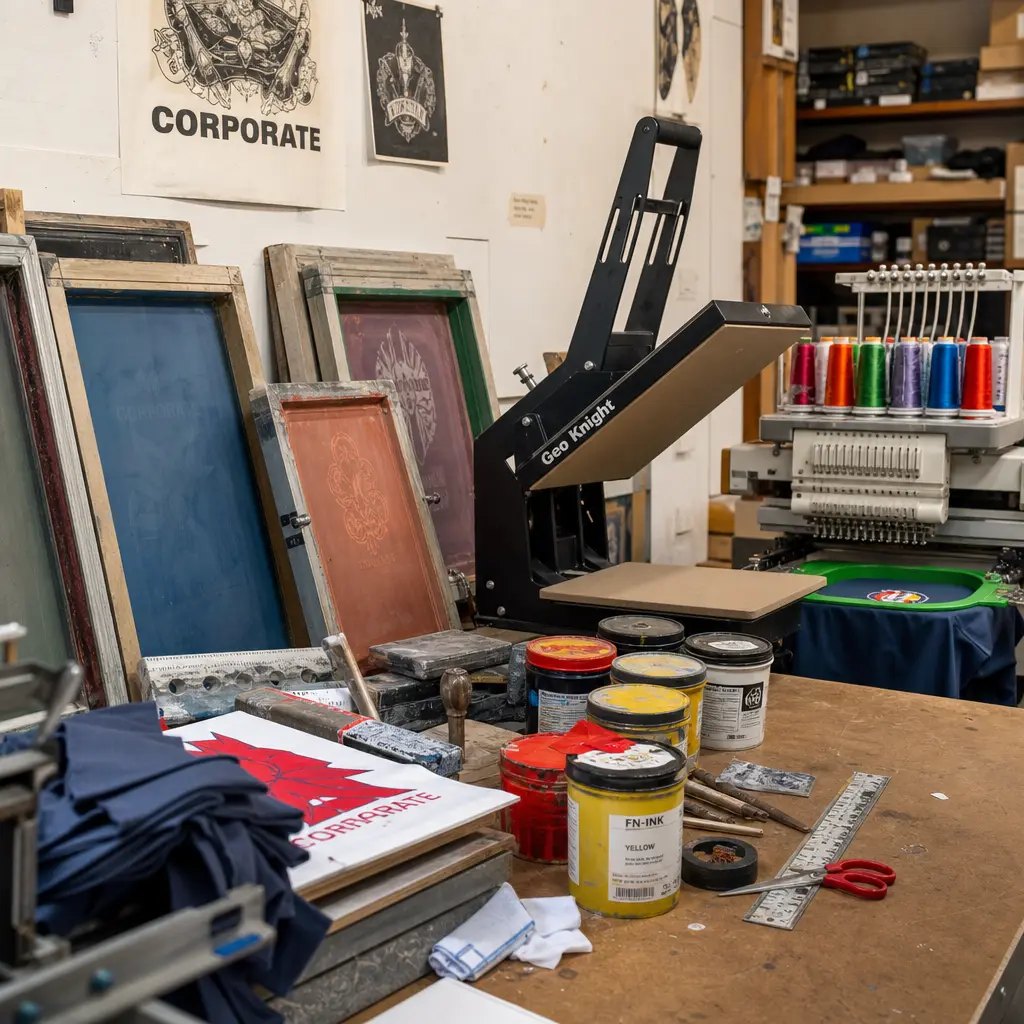
Screen printing is often the most practical choice for canvas messenger bags with one to three solid university colors. It works well for bookstore names, block lettering, simple mascots, and repeat orders. The specification should include ink color, logo size, print position, number of colors, and whether the supplier is quoting standard ink, high-opacity ink, water-based ink, discharge, or another supported system. On natural canvas, opacity matters. Pale inks can look warmer or weaker than expected.
Embroidery can add perceived value, but it is not automatically the better option. Dense stitching may pucker the flap, small letters may lose legibility, and backing can create stiffness inside the bag. Woven patches are useful for crests, mascot detail, and multicolor marks because they sit above the canvas texture. They also add patch tooling, patch MOQ, border choices, sewing tolerance, and a separate approval step. Leather and PU patches may suit premium collections, but material descriptions and brand approval should be checked carefully.
Heat transfers and digital transfers can reproduce full-color artwork, gradients, and detailed event graphics. They deserve extra testing on messenger flaps because the flap bends, rubs, and may be pressed by snaps, buckles, or carton folds. Check edge lift, cracking, handfeel, rub resistance, flex behavior, and pressure marks after packing. Whichever method you choose, approve the decoration on the final canvas, at the final size, in the final position, with the final packing method represented.
- Screen print: best for clean spot-color marks, block names, simple mascots, and repeat programs.
- Embroidery: good for texture, but check stitch count, puckering, backing, and small text legibility.
- Woven patch: useful for crests and detailed art; quote tooling, MOQ, border style, and sewing cost.
- Leather or PU patch: suitable for premium programs, subject to material description and brand approval.
- Heat transfer: useful for full-color art; test flexibility, edge lift, rub resistance, and packing pressure marks.
Specify Canvas Weight and Finish
Fabric choice changes the way the logo looks. A 10 oz cotton canvas can work for lightweight event merchandise, especially when the design is simple and the bag is not expected to carry heavy daily loads. A 12 oz canvas is a practical standard for many university bookstore programs because it balances structure, decoration surface, sewing efficiency, handfeel, and carton volume. A 14 oz or 16 oz canvas feels more substantial, but thicker seams can make the flap less flat and the printed texture more visible.
Ask for fabric weight in both ounces and GSM. Also ask whether the stated weight is before or after finishing. Washing, pigment dyeing, enzyme washing, water-repellent treatment, and pre-shrinking can change shade, shrinkage, surface texture, and print behavior. Washed canvas may fit a casual campus aesthetic, but it can introduce more panel movement and shade variation. Dyed canvas needs colorfastness and shade-lot control, especially if future reorders must match the original order.
A smoother canvas gives a sharper print edge. A rougher canvas shows more woven character in solid ink areas. Neither is automatically wrong. The buyer's job is to decide what is acceptable before bulk production. Approve fabric swatches, lab dips when relevant, and print strike-offs on the actual canvas. Do not judge navy, gold, burgundy, green, or white ink from a white-paper proof when the final bag is natural, dyed, or washed canvas.
- 10 oz canvas: lighter and easier to fold, but usually less structured for retail messenger bags.
- 12 oz canvas: balanced choice for standard bookstore programs and screen-printed flap logos.
- 14 oz canvas: stronger handfeel and structure, with thicker seams and higher carton volume.
- 16 oz canvas: substantial and premium, but decoration access and closure flatness need careful sampling.
- Natural canvas: warm base color; approve ink opacity and shade on fabric.
- Dyed or washed canvas: request shrinkage, colorfastness, shade variation, and logo-distortion checks.
Build an RFQ That Separates Cost Drivers
A clear RFQ keeps supplier comparisons fair. The simplest route is an existing messenger bag pattern, stock canvas color, standard strap, standard hardware, and a custom screen print on the front flap. Complexity rises with a new pattern, custom dyed canvas, special lining, padded laptop compartment, metal trims, woven side labels, custom patches, zipper pullers, hangtags, barcode labels, or custom carton marks. Put each item in the quote instead of letting it disappear into a vague unit price.
Decoration costs should be itemized. Screen printing may include screen charges per color plus a unit print cost. Embroidery usually depends on stitch count, size, and location. Woven patches and woven labels may include artwork setup, sample cost, loom or mold setup, MOQ, and sewing cost. Heat transfers can vary by size, finish, and application method. Packing can also change unit cost if the bookstore needs hangtags, barcode stickers, retail price labels, flat packing, paper bands, or reduced-plastic packaging.
Ask the supplier to state what is included and excluded. Otherwise, one quote may represent a basic printed blank while another includes retail-ready packing and labels. A useful quotation includes base bag construction, fabric, lining, hardware, decoration method, number of colors, label or patch items, sample charges, tooling, MOQ, lead time, packing method, carton dimensions, gross weight, net weight, CBM, inspection availability, payment terms, and quote validity. For campus programs, lead time should be counted from final approval, not from first inquiry.
- Lowest complexity: existing pattern, stock natural canvas, one-color flap screen print, standard packing.
- Moderate complexity: existing pattern with custom print, woven side label, hangtag, and barcode sticker.
- Higher complexity: new size, custom dyed canvas, padded lining, special hardware, woven patch, and custom packing.
- Quote separately: base bag, decoration, labels, patches, samples, tooling, packing, carton data, and inspection.
- Ask the supplier to list exclusions, especially extra colors, artwork changes, barcode labels, hangtags, and carton marks.
Approve Samples Like an Inspector
A digital mockup is useful, but it cannot approve production. The buyer should approve a print strike-off or decoration sample on the actual canvas, then a pre-production sample before bulk. The sample should represent final canvas weight, final canvas color, final logo dimensions, final decoration method, final stitching color, final closure hardware, final labels, final hangtag, and final packing method when possible. If the order includes a padded laptop sleeve, lining, snaps, buckles, or special webbing, include those details because they affect how the flap sits.
Measure the sample the way QC will measure bulk goods. Record logo width and height, distance from the top flap seam, distance from left and right side edges, distance from the lower edge or binding, and clearance from snap center, buckle strap, Velcro, pocket opening, or seam line. If the flap is curved, define the exact points. Then close the bag, hang it, and load it lightly with books or a laptop insert. Watch for tilt, wrinkles, edge crowding, or hardware pressure on the artwork.
Keep an approval record for reorders. Ideally, the buyer and supplier each retain a signed sample. When that is not practical, keep a measurement sheet with high-resolution photos of the front, back, side, inside, label, hardware, decoration close-up, and packed condition. Include a ruler in the placement photos. That file becomes the control standard when the same canvas messenger bag is reordered for another semester, department, or event.
- Approve the strike-off on actual canvas, not only on paper, screen, or mockup.
- Measure the logo with the flap closed, with the bag empty, and with the bag lightly loaded.
- Check visual centering when the flap has curved corners, angled closures, asymmetrical pockets, or buckle straps.
- Review small type, thin strokes, seal details, and mascot outlines at actual production size.
- Photograph the approved sample with a ruler and record the approval date.
- Write logo size, placement, tolerance, artwork version, and packing method into the purchase order.
Set Bulk QC Standards Before Cutting
Logo placement QC needs a written tolerance. For many stable canvas messenger bag constructions, +/-5 mm for printed flap artwork is a workable production target when measured from agreed references. Simple sewn labels may hold around +/-3 mm when sewing access is consistent. Curved flaps, washed canvas, thick seams, soft fabric, or decoration after sewing can require a wider tolerance. Ask the factory to confirm what it can hold before production begins.
Print QC should cover shade, opacity, edge definition, registration, curing, adhesion, and cleanliness. Canvas texture may show through solid ink areas, especially on natural or heavy fabric. That is different from unacceptable defects such as tacky ink, under-curing, lint contamination, visible pinholes in solid areas, blurred edges, heavy ink buildup, cracking, or obvious shade drift. Multi-color marks need registration checks around seal rings, mascot outlines, borders, and small letters because small offsets are easy to notice on official artwork.
Sewing and hardware alignment belong in the logo inspection because they affect presentation. A twisted flap can make a correctly printed logo look crooked. An off-center snap can draw the eye away from the mark. Uneven buckle straps can make a centered logo feel wrong. Final inspection should review flap symmetry, binding, topstitching, closure alignment, strap anchors, pocket placement, loose threads, fabric cleanliness, and hardware pressure points. Open packed units too; pressure marks can appear during folding or transit.
- Measure logo position from the references named in the PO: top seam, center line, snap center, pocket line, side edge, or lower binding.
- Compare bulk print color to the approved fabric strike-off under consistent neutral light.
- Check registration around seals, outlines, borders, and small type for visible offset or color halos.
- Rub and flex representative samples, especially for washed canvas, heavy canvas, large solids, and transfers.
- Inspect sewing alignment, flap symmetry, closure placement, strap anchors, loose threads, and pocket position.
- Open cartons from different pallet positions to check packing pressure, fold marks, abrasion, and barcode placement.
Plan Packing Around the Logo
Packing can protect the logo or damage it. Flat packing usually gives the best retail presentation because the flap stays smooth, but it increases carton dimensions and freight volume. Light folding can reduce CBM, but the fold line should not cross the logo, patch edge, transfer edge, embroidery area, or hardware pressure point. Thick prints, puff effects, heat transfers, patches, and embroidered areas are more sensitive to pressure marks. Approve a packed sample or final packing photos before shipment.
University bookstore receiving teams need predictable carton data. Ask for units per carton, carton dimensions, gross weight, net weight, CBM, inner packing method, carton marks, barcode label location, hangtag position, and any retail price-label requirement. Individual polybags protect natural canvas from dirt and moisture during export and warehouse handling, but some bookstores prefer reduced-plastic packing. Paper bands or tissue can reduce plastic use, though they provide less protection against dust, abrasion, and moisture.
Campus calendars are not flexible. Move-in, orientation, homecoming, admitted-student events, alumni weekends, graduation, and department deadlines leave little room for late artwork changes or repeated samples. Build the schedule backward from the selling date. Include artwork review, strike-off, sample approval, material booking, cutting, decoration, curing if printed, sewing, inline QC, final inspection, packing, export paperwork, and freight. For urgent orders, reduce variables: use stock canvas, an existing pattern, standard hardware, and simple spot-color artwork.
- Flat pack: best for protecting decorated flaps, with higher carton volume.
- Light fold: lower freight volume, but the fold line must avoid the logo and hardware.
- Individual polybag: strong protection for natural canvas, subject to bookstore packaging policy.
- Paper band or tissue: lower plastic use, but weaker protection against dust, moisture, and abrasion.
- Carton data: confirm quantity, dimensions, gross weight, net weight, CBM, carton marks, and barcode needs.
- Schedule control: count lead time from final sample and artwork approval, not from the first inquiry.
Specification comparison for buyers
| Spec decision | Recommended option | When it fits | Buyer risk to check |
|---|---|---|---|
| Main logo position | Centered on the front flap, often 70-90 mm below the top flap seam with at least 25-35 mm clearance from the lower flap edge on many 13-15 inch styles | Best for university bookstore retail because the logo remains visible on shelf, peg display, and normal crossbody wear when the flap is closed | Confirm the actual finished flap depth after seam allowance, binding, closure installation, and light loading; a curved or short flap can make a centered logo look high, low, or tilted |
| Alternative logo position | Lower-right or lower-left flap placement measured from the side edge and bottom edge, commonly with 30-45 mm edge clearance when the flap shape allows | Useful for alumni, lifestyle, premium, or understated bookstore merchandise where a smaller mark is preferred | Approve on a finished physical sample because flap corners curve, strap angle changes the visual balance, and lower placement can be affected by edge binding |
| Secondary branding | Small woven side label, interior label, zipper puller, hangtag, printed lining, or inside care/brand label | Good when the front artwork is a mascot, event graphic, department name, graduation year, or limited edition design | Label MOQ, tooling, color count, fold type, placement tolerance, and sewing access must be quoted separately from base bag production |
| Fabric weight | 12 oz cotton canvas for standard retail; 14-16 oz canvas for premium or more structured programs; 10 oz only for lightweight event use with suitable reinforcement | 12 oz usually balances structure, decoration surface, sewing efficiency, handling, and carton volume for bookstore programs | Ask for both oz and GSM, and confirm whether the weight is before or after finishing; heavier canvas creates thicker seams and can make ink texture more visible |
| Print method | Screen print for one to three solid university colors; woven patch, embroidery, or transfer for complex artwork | Screen printing is practical for repeat orders, spot colors, department marks, and clean bookstore logos | PMS colors shift on natural or dyed canvas; approve a strike-off on the final fabric, not only a digital proof or white-paper match |
| Logo size | About 120-180 mm wide for many 13-15 inch flap messenger bags, adjusted to flap width, clear space, artwork detail, and closure location | Large enough for retail visibility without overpowering the bag or colliding with snaps, straps, pockets, or stitch lines | Oversized logos may cross curvature, buckle strap paths, magnetic snap positions, pocket openings, or flap binding; measure the safe print box before quoting |
| Artwork color | One to three spot colors with PMS references, brand-guideline notes, and an agreed fabric-matched tolerance | Fits official university marks where repeatability and cost control matter | Clarify PMS coated, uncoated, or approved fabric strike-off as the control standard; natural canvas can warm white, gold, burgundy, green, and navy |
| Placement tolerance | Common target: +/-5 mm for screen print on stable flap construction; +/-3 mm for simple sewn labels where sewing access is consistent; wider tolerance may be needed for washed fabric or curved flaps | Useful for purchase orders, inspections, and reorders where the same bag construction will be repeated | Tolerance must identify the exact measuring references, such as top seam, center line, snap center, side seam, pocket line, or lower binding |
| MOQ logic | Use an existing bag pattern with stock canvas and custom flap decoration for lower MOQ; reserve custom dyed fabric, custom lining, hardware, and labels for confirmed programs | Works for test buys, orientation merchandise, alumni shops, department assortments, and replenishment | A supplier may quote a low print MOQ while custom fabric, woven labels, patches, zipper pullers, retail tags, or carton marks carry higher minimums |
Buyer checklist before sampling
- Define the bag purpose first: everyday student bag, laptop carrier, orientation giveaway, alumni merchandise, department retail item, or event program.
- Request finished outer width, height, gusset, flap width, flap depth, flap curve, strap width, strap length range, pocket layout, lining, padding, and closure type before approving logo size.
- Ask for fabric weight in both oz and GSM, and state whether the canvas is natural, bleached, dyed, pigment dyed, washed, enzyme washed, water-repellent treated, or pre-shrunk.
- Confirm whether decoration is applied to a flat flap panel before sewing or to the finished bag after sewing; this affects setup, cost, tolerances, and available logo size.
- Mark logo placement from stable construction points: top flap seam, flap center line, side seam, lower binding, snap center, buckle strap edge, pocket line, or flap stitching.
- Provide vector artwork with PMS colors, minimum line thickness, minimum text height, knockout details, clear-space rules, licensing restrictions, and approved logo versions.
- Choose the decoration method before comparing quotes; screen print, embroidery, woven patch, woven label, leather patch, PU patch, and heat transfer have different tooling, MOQs, and QC risks.
- Require a print strike-off or decoration sample on the actual canvas color, actual fabric weight, and final decoration method before approving bulk production.
- Set measurable placement tolerance, commonly +/-5 mm for printed flap artwork on stable construction and +/-3 mm for simple sewn labels when access allows.
- Specify acceptable print defects: no under-cured ink, no tacky surface, no obvious pinholes in solid areas, no blurred edges, no lint contamination, and no registration drift visible at normal inspection distance.
Factory quote questions to send
- What are the finished dimensions of the bag, flap, gusset, strap, pockets, laptop compartment if any, and visible logo area after the flap is closed?
- What is the actual canvas weight in oz and GSM after finishing, and is the fabric natural, bleached, dyed, pigment dyed, washed, pre-shrunk, or treated?
- What is the estimated shrinkage tolerance for the selected canvas and finish, especially if washing or pigment dyeing is used?
- Can the logo be printed on the finished flap after sewing, or must the flap panel be decorated before assembly to keep the surface flat?
- What is the maximum recommended logo size before it interferes with flap curvature, buckle straps, magnetic snaps, Velcro, pocket openings, binding, or seam lines?
- Which decoration method is quoted, how many colors are included, and what are the screen, mold, embroidery digitizing, patch tooling, or transfer setup charges?
- What PMS or fabric-matched color tolerance can you support on natural canvas, dyed canvas, and washed canvas?
- What minimum line thickness and minimum letter height do you recommend for this decoration method on the selected canvas?
- What is the MOQ for print-only customization compared with custom woven labels, custom patches, custom dyed canvas, custom lining, special hardware, or retail hangtags?
- What placement tolerance can the factory hold in bulk production, and from which fixed points will QC measure the logo?
Quality-control points to confirm
- Measure logo position from stable construction points on the approved pre-production sample and random bulk pieces, not from flexible corners only.
- For centered flap logos, check top seam to logo, left and right edge balance, lower edge clearance, and distance from snap, buckle, pocket, or Velcro positions.
- Compare print color against the approved fabric strike-off under neutral light; natural canvas can make white, gold, navy, burgundy, and green appear warmer or duller.
- Check that the print is not cracked, blurred, under-cured, sticky, over-thick, contaminated by lint, visibly uneven, or inconsistent across the solid logo area.
- Confirm multi-color registration around university seals, mascot outlines, small type, and border lines because minor offset is obvious on official marks.
- Perform rub and flex checks on representative samples, especially for washed canvas, heavy canvas, heat transfers, puff ink, or large solid print areas.
- Inspect whether logo edges remain visually straight when the flap is closed and when the bag is lightly loaded with books or a laptop insert.
- Check that embroidery backing, patch stitching, label ends, transfer edges, or applique corners do not scratch contents or create hard points inside the flap area.
- Verify that magnetic snaps, buckles, strap anchors, rivets, and other hardware do not create pressure marks on the decorated logo during packing or transit.
- Review sewing alignment around the flap, binding, side seams, snap center, pocket opening, and strap anchors because a twisted flap makes a correctly printed logo look crooked.