The Buying Problem: A Good Bakery Logo Can Still Look Wrong on a Messenger Bag
Custom canvas messenger bags are often ordered by artisan bakeries as retail merchandise, staff market bags, subscription delivery bags, or corporate gifting items. The logo placement looks simple on a flat drawing, but the actual bag has a flap curve, seams, snaps, strap attachments, gusset depth, and fabric texture. A bakery logo that is elegant on a bread sleeve can look crowded, low, or distorted once it is printed across a moving flap.
For procurement teams and importers, the main risk is not only whether the logo is printed correctly. The bigger issue is whether every supplier is quoting the same construction, fabric weight, logo area, print method, and packing format. If these details are missing in the RFQ, quotations will look cheaper than they really are, and the pre-production sample becomes the first time the buyer discovers the design is not production-ready.
- Use this guide when the buying problem is logo position, not a full general bag design exercise.
- Treat logo placement as a production specification with tolerances, not as a visual preference.
- Compare quotes by finished bag and printed area, not by product photo alone.
- Require an artwork proof on a bag template before approving any sampling charge.
Start With the Bag Size and Flap Geometry
Logo placement depends on the finished messenger bag shape. A common bakery retail size may be around 34-38 cm wide, 26-30 cm high, with a 7-10 cm bottom gusset. A staff or document bag may use a flatter body, while a premium retail bag may need a wider gusset for boxed pastries, catalogs, small jars, or bakery merchandise. The flap height and closure position decide how much clean print area is available.
The front flap is not the same as a tote bag panel. It bends over the bag body and may be pulled down by snaps, magnets, buckles, or hook-and-loop tape. If the logo sits too close to the bottom edge, it can curve under the bag when filled. If it sits too high, it may compete with the strap or look hidden when the flap is partially open. A factory should provide a dieline-style drawing showing the visible flap area after sewing.
- State finished size as W x H x D, not only flat cutting size.
- Define flap height from top seam to lower flap edge after sewing.
- Keep logos away from flap seams, snaps, buckles, and heavy fold lines.
- For most bakery logos, reserve at least 20-25 mm clearance from visible stitch lines.
- If the bag has a front pocket under the flap, confirm the pocket seam will not create a raised print surface.
Choose Logo Placement by Bakery Use Case
A bakery retail buyer may want a subtle logo that customers will carry outside the shop. A distributor selling to multiple bakery accounts may need a larger print area for account-specific branding. A brand owner using the bag for staff uniforms or farmers market selling may want immediate visibility from several meters away. These use cases should lead to different logo placement, not one default center print.
For artisan bakeries, the safest commercial option is usually a centered front flap print with moderate scale. It gives the logo enough presence without making the bag look like disposable event merchandise. A lower corner logo is more premium but needs stronger contrast and a cleaner bag shape. Side seam labels work well for lifestyle retail, but they do not replace a front-facing brand message if the bag is used for promotions.
- Center flap logo: good visibility, easiest for store merchandise and gifting.
- Lower corner logo: premium look, lower print cost, but weaker distance visibility.
- Side label: subtle retail branding, better for repeat production with stable label MOQ.
- Back panel print: useful for slogans or care messages, but less visible on display.
- Inside label: good for compliance and brand detail, not suitable as the main logo placement.
Fabric Weight Changes Both Print Quality and Landed Cost
For canvas messenger bags, buyers usually compare 10oz, 12oz, 14oz, and sometimes 16oz canvas. In GSM terms, 10oz is often roughly 330-350 GSM, 12oz around 390-410 GSM, and 14oz around 450-475 GSM, depending on yarn and weave. A 12oz canvas is a practical baseline for artisan bakery programs because it has enough body for a messenger shape while still folding and printing efficiently.
A heavier fabric may feel more premium, but it increases material cost, sewing load, carton weight, and shipping CBM. It may also make the flap stiffer, which affects how the printed logo sits when the bag is filled. If the bakery program involves retail shelves and customers paying for the bag, 14oz can be justified. If the order is for staff documents, subscription inserts, or promotional gifting, 12oz often gives a better cost-to-use balance.
- 10oz canvas: lighter, lower cost, less structure, better for budget promotional programs.
- 12oz canvas: balanced structure and printability for most custom canvas messenger bags.
- 14oz canvas: stronger handfeel, higher freight weight, better for retail merchandise.
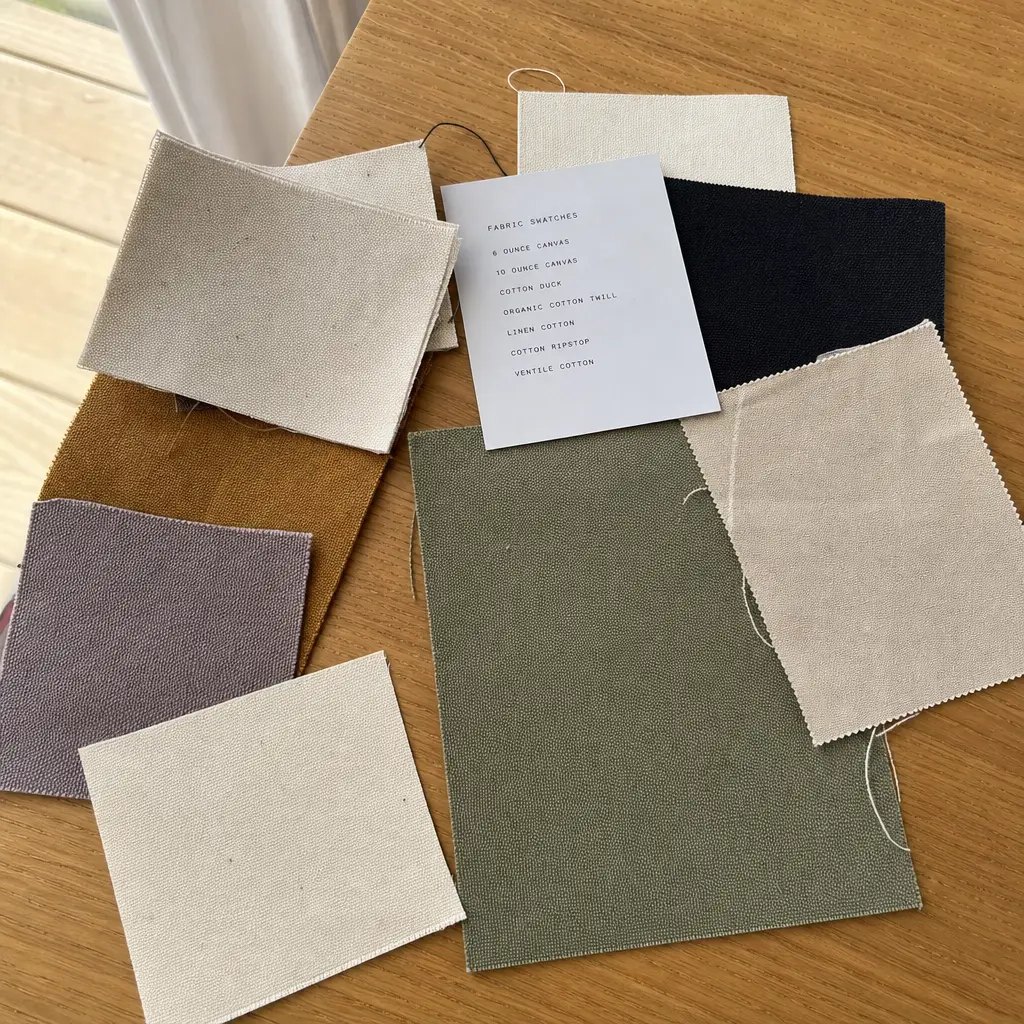
- Washed canvas: softer appearance, but shrinkage and shade variation need tighter sample approval.
- Natural canvas: suitable for bakery aesthetics, but cotton seed specks and shade variation should be accepted or limited.
Match the Print Method to the Artwork, Not the Sales Photo
Screen printing is usually the most reliable option for bakery logos on canvas messenger bags when the artwork uses one to three solid colors. It handles bold bakery marks, wheat icons, simple line art, and clean typography well. For small or medium runs, it keeps cost predictable and gives good opacity on natural canvas when ink coverage and curing are controlled.
Detailed illustrations, gradients, watercolor-style bread drawings, and very fine serif text can be harder on coarse canvas. Heat transfer or digital transfer may reproduce more detail, but the finish can feel less integrated with the fabric and may have different wash or abrasion behavior. Embroidery can look premium for small logos, but it is not ideal for large flap designs because stitch density can pucker canvas and add cost.
- Screen print: best for solid logos, slogans, simple bakery icons, and stable repeat orders.
- Heat transfer: useful for multicolor detail, but test edge feel and long-term adhesion.
- Embroidery: premium for small marks, side patches, or labels; avoid oversized filled areas.
- Woven label: consistent branding for repeat programs, but needs label MOQ and sewing control.
- Puff or metallic ink: possible, but should be treated as special development with a real strike-off.
Set Logo Size and Tolerance Before Sampling
A practical front flap logo width for many bakery messenger bags is 90-140 mm. Smaller than 70 mm can look too quiet unless the bag is positioned as premium lifestyle merchandise. Larger than 160 mm may dominate the flap or cross into curved areas, especially if the flap is narrow or has closures. The exact number should come from the finished bag drawing, not from the original logo file.
Production tolerances must be written into the approval standard. Canvas bags are cut and sewn products, so a print that is a few millimeters off may be commercially acceptable, while a print touching a seam or leaning visibly is not. A clear tolerance prevents subjective disputes during final inspection. For most orders, plus or minus 5 mm logo placement tolerance from the approved sample is a workable target, provided the bag itself has normal sewing tolerance.
- Set logo width in millimeters and do not rely on percentage scale.
- Define the measuring point, such as logo center to flap centerline and logo baseline to lower flap edge.
- Keep minimum 20 mm from snap caps, pocket seams, and flap edge unless the design is intentionally close.
- For multicolor screen print, define acceptable registration shift before bulk production.
- Approve a real fabric strike-off when fine lines are below about 0.4-0.5 mm.
MOQ and Cost Drivers Buyers Often Miss
The MOQ for custom canvas messenger bags is not only a factory preference. It is driven by fabric sourcing, cutting efficiency, print setup, label production, accessory purchasing, and packing labor. A simple 12oz natural canvas bag with one-color screen print can often be handled at a lower MOQ than a custom dyed bag with woven label, metal hardware, zipper pocket, hangtag, and individual barcode packing.
When comparing quotations, buyers should separate the cost elements that change with quantity from the fixed setup items. Screen charges, sample charges, label mold or setup costs, and artwork revision work may be one-time or amortized. Fabric, sewing, print labor, hardware, packing, and cartons scale with quantity. Without this breakdown, a buyer may choose a low unit price that later increases after the logo size, packing format, or accessories are finalized.
- Low MOQ usually fits stock canvas, standard strap colors, and simple screen print.
- Custom dyed canvas pushes MOQ higher because the mill has dye lot minimums.
- Woven labels can create a separate label MOQ even when bag MOQ is lower.
- Large print areas increase ink consumption, drying space, reject risk, and inspection time.
- Retail packing adds labor, polybags, stickers, carton sorting, and possible barcode verification.
- Metal buckles, snaps, or custom zipper pulls may add accessory MOQ and longer purchasing time.
Sample Approval Should Simulate Bulk Production
A couriered sample made from substitute fabric and hand-positioned print is not enough for a bakery buyer planning a retail launch. The pre-production sample should use bulk canvas, bulk strap webbing, real hardware, approved label, final thread color, and the actual print method. If the factory cannot provide these at sample stage, the buyer should document what is substituted and require a second approval before bulk cutting.
The sample review should cover more than appearance. Fill the bag with a realistic load, such as a notebook, folded apron, bakery catalog, or small boxed product, and see how the flap hangs. A logo that looks centered on an empty bag may tilt or curve when the bag has volume. Also rub the print with a dry white cloth and a slightly damp cloth to screen for poor curing or excess surface ink before production begins.
- Approve sample under the same lighting used for final inspection photos.
- Measure logo position on the sample and record the accepted numbers.
- Check whether the flap closure pulls the logo out of level when closed.
- Review strap length adjustment range for different users and retail expectations.
- Keep one sealed approved sample at the factory and one with the buyer or inspection team.
- Do not release bulk cutting if the fabric shade, print color, or placement is still marked as pending.
Packing and Carton Planning Protect the Printed Flap
Canvas messenger bags can be packed flat, folded once, or shaped with light paper support depending on structure and retail presentation. For bakery programs, the front flap is the visible selling surface, so packing should avoid hard creases through the logo. Bulk packing is cheaper and suitable for internal staff use, but retail buyers often need individual polybags, hangtags, barcode labels, and clean carton separation by color or design.
Carton planning affects landed cost and damage risk. A heavy 14oz canvas messenger bag with hardware can quickly push carton gross weight beyond comfortable manual handling. Overpacked cartons can crush flap edges and transfer ink if curing or drying was incomplete. The RFQ should require pieces per carton, carton dimensions, gross weight, net weight, CBM, and folding method so importers can compare freight cost before issuing a purchase order.
- Place tissue or paper separator if the printed flap touches metal hardware or dark straps.
- Avoid folding directly across the printed logo unless the buyer has approved the crease.
- Use individual polybags for retail cleanliness, but avoid oversized bags that look loose on shelf.
- Confirm carton marks include item number, color, quantity, gross weight, net weight, and country of origin if required.
- Request a packing photo set before shipment showing folded bag, inner pack, carton layout, and sealed carton.
- For distributor orders, specify mixed carton rules or forbid mixed cartons to simplify receiving.
Lead Time Risk: Artwork, Accessories, and Export Booking
A realistic schedule starts before bulk production. Artwork proofing may take one to three working days if the buyer provides vector files and placement instructions. A print strike-off can add several days. A pre-production sample may take one to two weeks depending on fabric and hardware availability. Bulk production time then depends on order size, season, factory capacity, and whether the bag uses stock or custom materials.
The most common schedule mistake is treating approval date and deposit date as the same production start. Factories usually start the clock after artwork, sample, material, payment, and packing details are all approved. If a bakery launch has a fixed retail date, the buyer should leave buffer for sample revision, inspection, export customs, and vessel or air booking. Late barcode data or hangtag artwork can delay packing even when the bags are already sewn.
- Build the timeline from approval of final sample, not from first quotation date.
- Reserve extra time for custom dyed canvas, woven labels, special hardware, or washed finishing.
- Lock barcode, carton mark, hangtag, and polybag warning text before bulk packing starts.
- Schedule inspection after full packing if carton count and retail labels must be verified.
- For seasonal bakery campaigns, avoid placing the order so late that air freight becomes the only option.
- Keep artwork version control tight so the factory does not print an outdated logo file.
Specification comparison for buyers
| Spec decision | Recommended option | When it fits | Buyer risk to check |
|---|---|---|---|
| Front flap logo placement | Center logo 90-140 mm wide, placed 55-75 mm above lower flap edge | Best for retail bakery merchandise, staff delivery bags, and gift-with-purchase programs where the bag is viewed from the front | Large logos may distort over flap seams or snaps; require an artwork proof showing seam clearance and flap curve |
| Lower corner logo placement | Small logo 55-85 mm wide on lower right or lower left flap corner | Good for premium artisan positioning where the bag should look more like lifestyle merchandise than a billboard | Low contrast inks can disappear on natural canvas; request a strike-off on actual fabric, not paper |
| Side label branding | Woven or printed cotton side label 25-40 mm wide sewn into side seam | Works for retail buyers who want subtle branding and fewer print defects on textured canvas | Labels add sewing steps and MOQ pressure; confirm label MOQ, color tolerance, and whether label cost is included |
| Fabric weight | 12oz canvas for most bakery messenger bags; 14oz if the bag carries catalogs, boxed goods, or glass jars | 12oz balances structure, printability, and freight weight; 14oz supports a more rugged retail product | Heavier canvas increases unit weight and carton CBM; compare landed cost, not only FOB unit price |
| Print method | Screen print for one to three solid colors; heat transfer only for detailed multicolor artwork; embroidery for small premium marks | Screen print is the usual choice for bakery logos, line art, and slogans on canvas flap panels | Fine bakery illustrations can fill in on coarse canvas; set minimum line width and approve a fabric strike-off |
| Bag construction | Flap with inner slip pocket, reinforced strap tabs, and boxed bottom 70-90 mm | Suitable for farmers market staff, bakery delivery documents, retail merchandise, and customer loyalty gifts | Weak strap bartacks create returns; specify bartack count or reinforced cross-stitch at stress points |
| MOQ logic | 300-500 pcs for simple screen print on stock fabric; 1000+ pcs for custom dyed canvas, woven labels, or multiple sizes | Allows importers to test bakery retail demand without forcing custom fabric development | Very low MOQ quotes may use substitute fabric, digital print, or hand-cutting with inconsistent dimensions |
| Packing format | Individual polybag only when retail display or clean storage is required; bulk pack for staff-use programs | Retail buyers often need barcode sticker space and clean presentation; distributors may prefer lower packing cost | Over-tight folding can crease the printed flap; request fold diagram and carton drop-safe packing |
| Quote comparison basis | Compare by finished bag size, fabric oz/GSM, print area, accessories, packing, carton CBM, and sample policy | Useful when several suppliers quote the same visual bag but different hidden specifications | Lowest unit price can hide thinner fabric, smaller logo, lighter strap webbing, or excluded label and packing charges |
Buyer checklist before sampling
- Define finished bag size in width, height, and gusset, and state whether dimensions are measured flat or after sewing.
- Specify canvas weight in oz and approximate GSM, such as 12oz around 390-410 GSM or 14oz around 450-475 GSM, allowing mill tolerance.
- Mark the logo placement on a bag drawing with distance from flap edge, side seam, snap, pocket seam, and stitch line.
- Set print artwork limits, including maximum logo width, Pantone references, minimum line width, and whether halftones are allowed.
- Require a pre-production sample using bulk fabric, bulk strap, real hardware, real label, and the approved print method.
- List acceptance criteria for logo position tolerance, print registration, color variation, seam strength, strap length, and carton packing.
- Request carton dimensions, gross weight, net weight, pieces per carton, folding method, polybag specification, and barcode label position.
- Compare supplier quotes using the same incoterm, sample charge rule, lead time start date, and included accessories.
- Reserve time for artwork revision, strike-off approval, pre-production sample approval, bulk production, inspection, and export booking.
- Confirm whether bakery retail compliance needs warning labels, recyclable packaging claims, fiber content labels, or country-of-origin marking.
Factory quote questions to send
- What exact canvas weight, yarn count, and shrinkage tolerance are included in the quote?
- Is the quoted fabric greige, bleached, natural, dyed, or washed, and will the bulk shade match the approved sample?
- What is the maximum logo size included in the quoted print charge, and what is the added cost for a larger print area?
- Which print method is quoted, what is the minimum printable line width on this canvas, and will you provide a fabric strike-off?
- Are strap webbing, metal buckles, snaps, zipper pockets, woven labels, hangtags, and barcode stickers included or quoted separately?
- What MOQ applies to the bag body, print color count, custom dyed fabric, woven label, and retail packing?
- How many days are needed for artwork proof, strike-off, pre-production sample, bulk production, and packing after approval?
- What are the carton size, pieces per carton, gross weight, net weight, and estimated CBM for the quoted packing plan?
- Which in-line and final inspection points do you control for logo placement, seam strength, color, size, packing, and metal accessories?
- If the buyer rejects the pre-production sample for print position or fabric mismatch, what is the remake process and timing?
Quality-control points to confirm
- Logo placement tolerance should normally stay within plus or minus 5 mm from the approved sample for front flap printing.
- Screen print edges should be clean, with no visible pinholes, ink cracking, heavy bleeding, or registration shift on multicolor logos.
- Finished size tolerance should be agreed before production, commonly plus or minus 10 mm for sewn canvas bags unless tighter control is priced.
- Strap tabs, handle joins, and flap corners should have reinforced stitching or bartacks with no skipped stitches at stress points.
- Canvas shade should be checked under consistent light because natural cotton canvas can vary between lots and washing treatments.
- Hardware should open and close smoothly, with no rust, sharp burrs, plating peel, or snap misalignment affecting the flap position.
- Cartons should resist crushing in export handling, with the printed flap protected from abrasion and ink transfer.
- Random inspection should include measurement, logo position, print adhesion rub test, seam pull check, packing count, and carton marking.