Start With the Actual Trade Show Load
A canvas messenger bag for trade show exhibitors is not inspected the same way as a light cotton tote giveaway. It may carry brochures, sample packs, a charger, a badge holder, a tablet, a water bottle, and staff paperwork for several days. The quality inspection checklist should begin with the filled-use condition, because this determines the fabric weight, strap width, seam strength, closure choice, and packing method.
For RFQ purposes, describe the event use before asking for a quote. A distributor supplying 5,000 economical attendee bags can accept a simpler structure than a brand owner preparing 500 executive meeting kits. The factory cannot judge the right canvas messenger bag construction from quantity and logo size alone.
- For light literature packs, a 10 oz to 12 oz canvas may be acceptable if the bag is not overfilled.
- For staff or VIP messenger bags, 12 oz to 16 oz canvas is usually a more practical starting range.
- For laptop-style use, add a reinforced bottom, wider webbing strap, and stronger closure instead of relying only on heavier fabric.
- For retail or distributor resale, evaluate shape retention, edge finishing, label placement, and carton presentation more strictly.
Fabric Weight and Canvas Construction
Canvas weight is often quoted in ounces, while many factory records and inspection reports use GSM. The two are related, but they are not enough by themselves. A loose 14 oz fabric can feel weaker than a tightly woven 12 oz fabric, and washing or coating can change handfeel, shrinkage, and print behavior. For a trade show messenger bag, the main panels should feel stable enough to hold a flat logo area without collapsing around the flap.
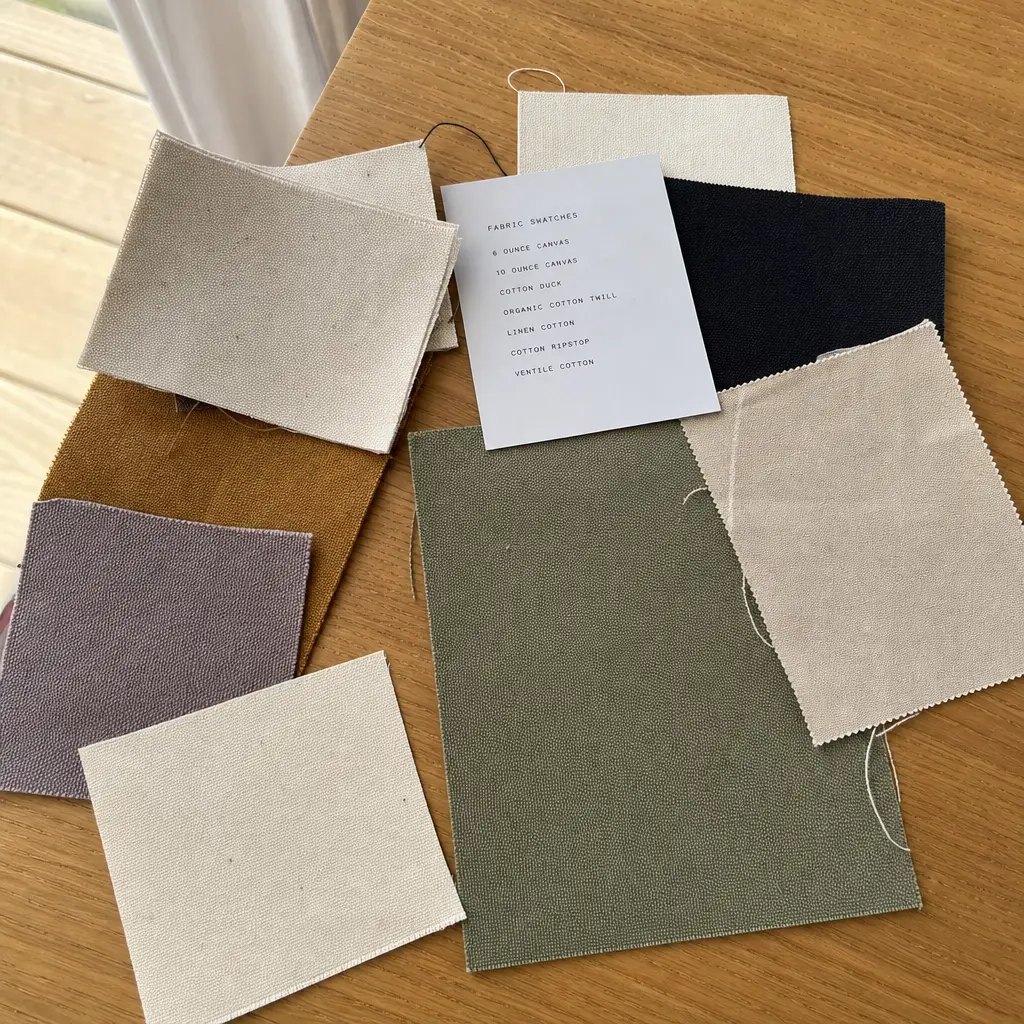
When comparing supplier quotes, require both the nominal ounce weight and the approximate GSM. Also request whether the canvas is natural, bleached, dyed, washed, pigment dyed, or coated. Dyed canvas adds color control risk. Washed canvas creates a softer hand but may bring more size variation and a casual wrinkled look. Natural canvas is cost-efficient, but seed flecks and shade variation must be accepted or controlled in the specification.
- Common practical range: 12 oz to 16 oz cotton canvas for event messenger bags.
- Approximate GSM range: about 400-550 GSM, depending on weave and finishing.
- Natural canvas: economical and suitable for many screen-printed exhibitor programs.
- Dyed canvas: better brand color control when approved carefully, but higher MOQ and shade risk.
- Washed canvas: softer and more retail-like, but less suitable when a perfectly flat logo panel is required.
Construction Points That Fail First
Most messenger bag complaints do not start with the main fabric tearing in the middle of the panel. They start at stress points: the strap attachment, bottom corner, flap edge, pocket opening, closure area, or zipper end. A buyer-side inspection checklist should separate appearance defects from functional defects. A slightly long thread is not the same risk as a weak strap join on a bag that will carry catalogs across an exhibition hall.
The strap deserves special attention. A narrow cotton tape may save cost, but it can feel uncomfortable and twist during use. A 38 mm to 50 mm webbing strap is more stable for trade show use. If the strap is adjustable, the slider must hold under load, and the webbing thickness must match the hardware. If the strap is sewn directly into the side seam, the attachment area should have bar tack reinforcement or a reinforced stitch box.
- Strap join: no skipped stitches, no loose ends, no tearing after pull test.
- Bottom seam: straight, secure, and reinforced if the bag has a gusset.
- Flap edge: even shape, clean topstitching, no wavy binding or puckering.
- Pocket opening: reinforced ends to prevent splitting when users insert brochures or phones.
- Closure area: aligned snaps or magnets, no fabric distortion around the installation point.
Logo and Print Inspection
Trade show bags are brand carriers, so print inspection should be written into the RFQ before sampling. Screen printing is usually the most practical method for solid one-color or two-color logos on canvas messenger bags. It gives good cost control at bulk quantity and works well on natural or dyed canvas when the ink system is chosen correctly. Heat transfer is useful for gradients or fine detail, but it can look less integrated with coarse canvas and must be tested for adhesion.
Logo approval should include size, placement, color reference, print method, and the condition of the fabric panel underneath. A logo that looks straight on an empty flat sample may look skewed after the flap is folded or the bag is filled. For flap prints, define the distance from the flap edge and center line. For body prints, confirm whether the strap or flap covers any part of the artwork during normal use.
- Screen print: best for solid logos, event marks, simple sponsor branding, and high-volume programs.
- Heat transfer: useful for gradients or photographic art, but requires adhesion and edge testing.
- Embroidery: premium look, but may pucker lighter canvas and adds stitch-density constraints.
- Woven side label: good for subtle retail branding, but not a replacement for a large exhibitor logo.
- Inspection focus: color consistency, registration, straightness, curing, rub resistance, and transfer marks.
Sample Approval Before Bulk Cutting
A showroom sample is not enough for a trade show order with a fixed event date. The approved pre-production sample should use bulk fabric or a confirmed substitute, final webbing, final hardware, final logo method, and the proposed packing. If the sample is made from available stock material, label it clearly as a reference sample, not a production approval sample.
Sample review should be more than a photo approval. Measure the bag flat, fill it with the intended contents, check how the flap sits, wear it over the shoulder, and inspect the print after handling. If the bag will be distributed from a booth or packed inside event kits, test how it looks after one day in the proposed carton packing. Canvas can crease, and dark prints can mark against neighboring fabric if protective packing is poor.
- Measure width, height, gusset, flap depth, strap length, and pocket size.
- Load the sample with the real catalog or kit weight for at least several minutes.
- Photograph the filled bag from front, side, and top to approve the actual shape.
- Rub the print lightly with a dry white cloth and, if needed, a damp cloth.
- Approve carton packing using the same fold direction and printed-panel protection planned for bulk.
MOQ Logic and Cost Drivers
MOQ for canvas messenger bags is shaped by fabric availability, dyeing, hardware sourcing, print setup, cutting efficiency, and sewing line arrangement. A natural canvas bag with one-color screen print can usually be quoted at a lower MOQ than a custom-dyed canvas bag with metal hardware, multiple pockets, zipper closure, and branded woven labels. Buyers should not treat MOQ as a fixed number across all specifications.
The biggest cost drivers are not always visible in a product photo. More pockets add cutting and sewing labor. Binding around the flap adds handling time. Adjustable straps require hardware and extra assembly. Heavy canvas raises material cost and carton weight. A large multi-color print adds setup and inspection time. When quotes differ sharply, compare the construction line by line before assuming one supplier is simply cheaper.
- Lower-complexity route: stock natural canvas, standard size, one-color screen print, simple flap, fixed strap.
- Mid-range route: heavier canvas, adjustable strap, inner pocket, magnetic snap, two-color print.
- Premium route: custom dyed canvas, padded section, metal hardware, woven label, zipper pocket, retail packing.
- Hidden cost item: higher carton volume from structured bags can increase freight more than expected.
- Useful quote comparison: request unit price, sample fee, mold or screen fee, packing cost, carton data, and estimated CBM.
Inspection Thresholds for Bulk Orders
A good canvas messenger bags quality inspection checklist for trade show exhibitors should define what is critical, major, and minor. Critical defects make the bag unsafe or unusable. Major defects affect function, brand presentation, or sellable quality. Minor defects are small appearance issues that do not affect normal use. Without this separation, inspection arguments become subjective and slow, especially when shipment timing is tight.
For many promotional and event orders, buyers use AQL inspection with defined defect categories. The exact AQL level depends on the buyer's risk tolerance, order value, and brand standard. Even if a formal third-party inspection is not used, the factory should know the acceptance rules before packing. Clear thresholds reduce rework disputes and help production teams focus on the defects that matter most.
- Critical: broken strap, sharp hardware edge, missing closure on functional design, severe contamination, wrong logo.
- Major: crooked logo, open seam, weak snap, wrong fabric weight, obvious stain on front panel, incorrect carton mix.
- Minor: small loose thread, slight internal chalk mark, tiny slub on non-logo area, small variation within approved fabric character.
- Suggested size tolerance: define per project, often around plus or minus 0.5 cm to 1 cm for soft bags depending on construction.
- Print tolerance: define logo position deviation from center line and edge distance before mass production.
Packing and Carton Handling
Packing is part of quality, not an afterthought. Canvas messenger bags can arrive with flap creases, strap marks across the logo, ink transfer, moisture odor, or carton deformation if the packing method is not specified. Trade show exhibitors often receive goods shortly before an event, so there may be no time to air out, steam, repack, or sort damaged pieces.
Flat packing is often best for a clean logo panel, but it increases carton size. Folding reduces freight volume, but it can create creases on the flap or printed area. If the order uses dark ink or heat transfer, separate the printed panels with tissue or a protective sheet during the first packing stage. For distributor orders with multiple event locations, carton marks and SKU labels are as important as the bag itself.
- Define individual packing: no polybag, individual polybag, paper band, belly band, or retail-ready packing.
- Protect printed panels from direct rubbing against straps, hardware, or another printed surface.
- Limit carton compression to avoid flap deformation and permanent creasing.
- Request carton quantity, gross weight, net weight, carton dimensions, and CBM before shipment booking.
- Use clear carton marks for event name, PO number, item code, color, quantity, and destination.
Lead Time and Schedule Risk
Trade show schedules are unforgiving. The bag can be good, but if it arrives after booth setup, it has failed commercially. Lead time should be counted from the last approval needed for production, not from the first inquiry. Artwork confirmation, sample revision, fabric booking, hardware availability, printing queue, sewing capacity, inspection, packing, and freight booking all affect the real delivery plan.
Buyers should build a timeline that separates sample lead time, bulk production lead time, inspection time, and logistics time. Custom color canvas and special hardware add schedule risk because the factory may depend on upstream mills and component suppliers. Peak seasons before major exhibitions or holiday retail programs can also stretch capacity. A reliable quote should state what is included in the lead time and what is waiting for buyer approval.
- Artwork approval: confirm vector file, Pantone references, print size, and logo placement.
- Sample stage: allow time for first sample, comments, and one possible revision.
- Material booking: confirm whether fabric and hardware are in stock or made to order.
- Bulk production: start only after sample approval and deposit terms are settled.
- Final inspection: schedule before final payment or before goods leave the factory.
- Freight buffer: reserve time for customs, warehouse receiving, and event kit assembly.
Quote Data That Makes Comparison Easier
A low unit price is not a complete buying decision. For canvas messenger bags, two quotes can describe very different products while using similar words. One supplier may quote 12 oz natural canvas with a fixed strap and hook-and-loop closure. Another may quote 14 oz dyed canvas with an adjustable strap, magnetic snap, inner zipper pocket, and individual polybag. Without structured quote data, procurement teams may compare unlike items and choose a product that does not meet event needs.
A practical RFQ should request the data needed for landed-cost planning and quality control. This includes material details, sample conditions, print setup, packing method, carton data, defect standards, and lead time assumptions. It also helps to request photos of similar construction details, but photos should support the quote, not replace specifications.
- Item dimensions: finished width, height, gusset, flap depth, strap width, and strap length range.
- Material: canvas ounce, approximate GSM, weave, color, finish, lining if any, and webbing material.
- Branding: print method, number of colors, print size, placement tolerance, setup fee, and approval sample type.
- Construction: pocket count, closure type, reinforcement method, hardware finish, and stitch details.
- Commercial data: MOQ, price breaks, sample fee, production lead time, payment terms, carton quantity, carton size, GW, NW, and CBM.
Specification comparison for buyers
| Spec decision | Recommended option | When it fits | Buyer risk to check |
|---|---|---|---|
| Main fabric weight | 12 oz to 16 oz cotton canvas, roughly 400-550 GSM depending on weave and finishing | Good balance for trade show bags carrying catalogs, tablets, samples, and daily booth materials | Low-GSM canvas may look fine in photos but collapse after packing; compare actual GSM, not only the quoted ounce value |
| Bag structure | Flap messenger style with reinforced bottom panel and boxed or gusseted base | Useful when exhibitors need a professional-looking bag that can stand partly open during event use | Flat envelope-style bags may reduce cost but can wrinkle, overstuff, and distort the logo area |
| Strap construction | 38-50 mm cotton webbing or polyester webbing with bar-tacked stress points and adjustable slider | Best for event staff, VIP kits, sales reps, and visitors carrying heavier material across a show floor | Narrow straps cut into the shoulder; weak slider hardware slips under load and creates complaints after distribution |
| Logo method | Screen print for solid logos; heat transfer for gradients; woven side label for premium small branding | Screen print fits most exhibitor programs with one to three spot colors and clear brand visibility | Ink cracking, poor registration, or color shift can happen if artwork, fabric color, and curing method are not approved together |
| Closure | Magnetic snap, metal snap, or hook-and-loop based on noise, security, and budget | Magnetic snap looks cleaner for retail-style programs; hook-and-loop suits high-volume giveaway use | Weak magnets open when bag is full; hook-and-loop can catch fabric fibers and feel less premium |
| Inside organization | One inner slip pocket or zipper pocket, with optional pen slot only when requested | Works for trade show exhibitor kits where buyers want simple organization without slowing production | Too many compartments increase labor cost and QC failure points; pocket dimensions must match intended items |
| Sample approval route | Pre-production sample using bulk fabric, actual logo process, final hardware, and final packing method | Needed when the logo position, flap shape, strap length, and carton packing affect the brand presentation | A showroom sample made from available fabric can hide bulk-production differences in shade, handfeel, and shrinkage |
| Packing format | Flat pack or light fold with tissue or protective sheet over printed panels; export carton with moisture control | Suitable for clean booth distribution and distributor warehouse handling | Over-compression can leave flap creases, transfer marks, or strap indentation across the logo |
Buyer checklist before sampling
- Define the filled-use case: catalog weight, laptop or tablet use, giveaway quantity, VIP kit quantity, and expected carrying time.
- Specify main fabric by ounce and approximate GSM, and require a lab dip or fabric swatch if the color is dyed canvas.
- State bag dimensions as width x height x gusset, and include tolerance expectations for finished goods.
- Confirm whether the flap, body, bottom, and strap use the same canvas or mixed materials.
- Set logo method, logo size, placement from edges, ink color reference, and whether the print must pass rub or wash resistance checks.
- Require reinforced stitching at strap joins, flap corners, pocket openings, and bottom stress points.
- Approve hardware by material, color, size, and function: slider, buckle, snap, magnetic closure, zipper, or rivet.
- Approve a pre-production sample made with bulk materials before mass cutting begins.
- Define AQL level or inspection quantity, plus critical, major, and minor defect examples.
- Include packing instructions for individual polybags, paper bands, carton quantity, carton marks, and printed-panel protection.
Factory quote questions to send
- What is the exact fabric specification in oz and approximate GSM, and is the canvas greige, dyed, washed, or coated?
- Is the quoted fabric stock fabric or made-to-order fabric, and what is the MOQ impact for custom color?
- Which parts of the bag are reinforced: strap attachment, bottom seam, flap edge, pocket opening, and closure area?
- What print method is included in the quote, how many colors are included, and what is the maximum print area?
- Can the pre-production sample use bulk fabric, final hardware, final logo method, and final packing?
- What are the finished size tolerances and the allowed fabric shade tolerance between sample and bulk?
- What inspection standard will be used for stitching defects, print defects, stains, size deviation, and hardware function?
- How many pieces fit per export carton, what are the carton dimensions, and what is the estimated CBM for the order?
- What is the production lead time after sample approval and deposit, and what conditions could change that schedule?
- Are spare pieces, replacement parts, or overage percentages included for urgent event programs?
Quality-control points to confirm
- Fabric GSM and handfeel match the approved sample, with no obvious slubs, stains, holes, shade bands, or weaving faults on visible panels.
- Finished size remains within the agreed tolerance, usually tighter for premium retail programs and slightly wider for giveaway quantities.
- Logo position follows the approved artwork placement, with no visible skew, bleeding, cracking, ghosting, pinholes, or transfer marks.
- Print color is visually matched against the approved sample or Pantone reference under consistent light conditions.
- Seams are straight on visible panels, with no open seams, skipped stitches, loose threads, broken threads, or raw edges exposed.
- Strap attachment points are bar-tacked or reinforced and can withstand the agreed pull or load test without tearing.
- Closure components align correctly and open and close smoothly without damaging the canvas or printed area.
- Inner pockets, zipper pockets, and pen slots are correctly placed and do not distort the outside panel.
- Metal hardware is free from rust, sharp edges, heavy scratches, and plating inconsistency.
- Each carton is packed to protect printed panels from abrasion, moisture, over-compression, and mixed-SKU confusion.