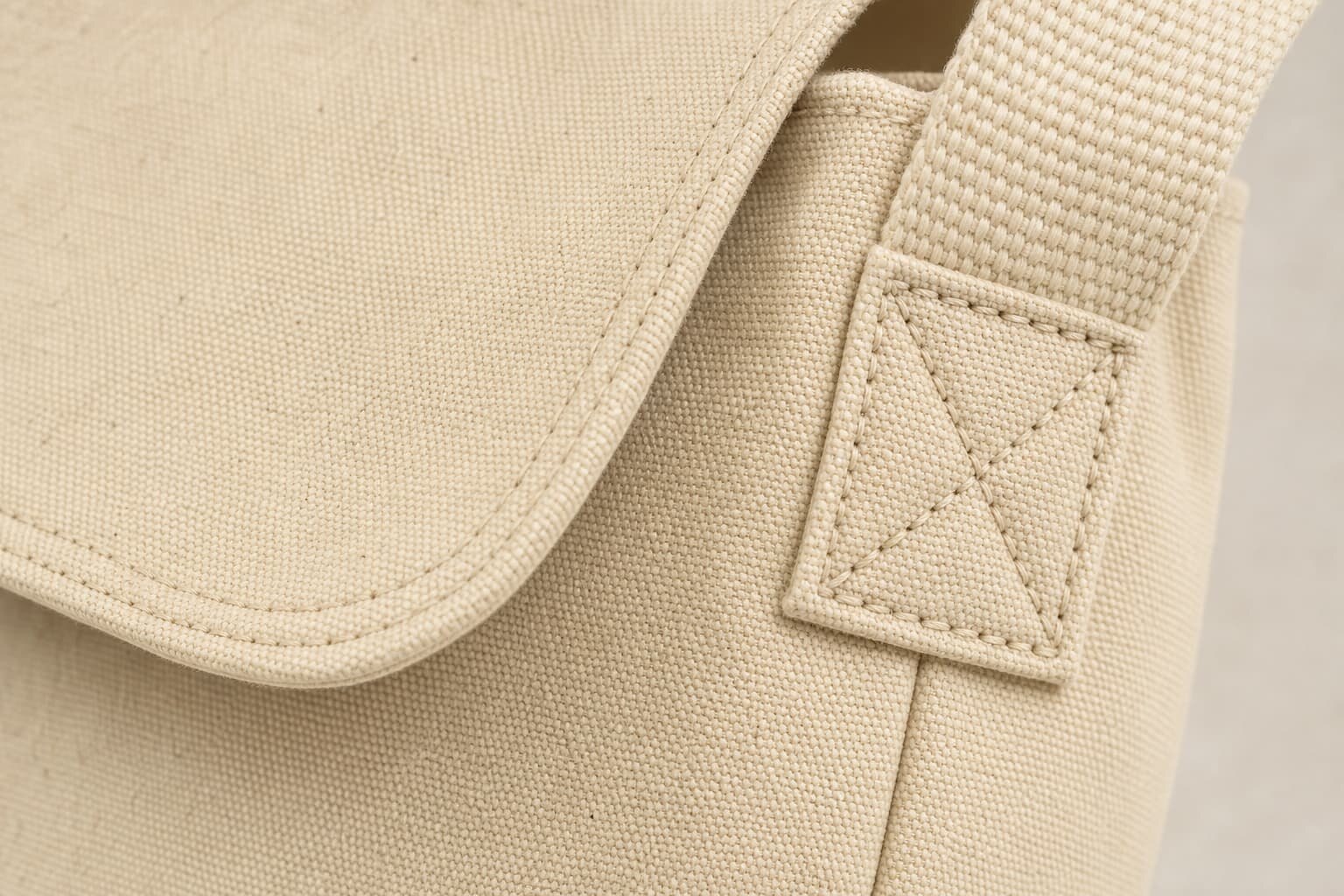
Why Handle Seam Failure Deserves Its Own Buying Checklist
A canvas messenger bag can look correct in a showroom photo and still fail at the handle seam after a few days of use. The handle attachment carries repeated pulling force every time the user lifts the bag from a chair, car seat, retail counter, or shoulder height. If the seam design is weak, the first visible complaint is usually loose stitching, tearing canvas, or a handle that leans to one side.
For procurement teams, this is not just a quality issue; it is a specification issue. Many RFQs describe size, fabric color, logo, and packing but say only "canvas handle" or "strong stitching" for the attachment. That leaves the factory to choose the cheapest workable construction. A better buyer checklist defines load expectation, fabric weight, reinforcement, stitch type, and sample testing before the price is locked.
- The handle seam is a stress point, not a decorative detail.
- A low quote may remove reinforcement that was assumed but never written.
- A photo sample cannot prove internal patch size or thread strength.
- Handle seam defects often appear after delivery, when rework is impossible.
Start With Load Requirement Before Fabric or Logo
The first practical question is what the bag is expected to carry. A messenger bag for conference documents is different from a retail work bag for laptop, charger, drink bottle, and samples. If the buyer does not state a target load, the supplier may quote the same seam construction for both, because the outside appearance is similar.
For RFQ purposes, give the factory a realistic use case and a load range. For example, a light promotional messenger bag may only need to carry 2 to 3 kg of documents. A retail canvas messenger bag may need to carry 5 to 8 kg repeatedly. Some buyers request a higher static hanging test as a safety margin, but the exact method should be agreed with the factory so all quotes are comparable.
- Light document bag: ask for basic reinforcement but do not overbuild the bag unnecessarily.
- Retail daily-use bag: specify box stitch, cross stitch, and reinforcement patch.
- Laptop-style messenger bag: confirm handle seam plus shoulder strap anchor strength.
- Distributor stock item: choose a construction that can handle unknown end-user behavior.
Match Canvas GSM to Handle Stress
Canvas weight affects both the bag body and the seam holding power. A common range for canvas messenger bags is 12 oz to 18 oz, roughly about 400 to 610 GSM depending on yarn, weave, finishing, and supplier measurement method. For many branded retail messenger bags, 14 oz to 16 oz is a practical middle range because it gives body structure without making the bag too stiff or expensive to sew.
Do not compare quotes only by saying "canvas bag" or "heavy canvas." Ask whether the quoted GSM is for raw fabric, dyed fabric, washed fabric, or coated fabric. Dyeing and washing can change hand feel and shrinkage. If the handle seam is sewn into fabric that stretches, frays, or distorts, a heavier number on paper may not solve the problem. The buyer should review actual swatches and seam samples, not just the GSM claim.
- 10 oz / about 340 GSM: suitable for lighter promotional use, but risky for heavy handle loads.
- 12 oz / about 400 GSM: acceptable for medium bags when reinforced properly.
- 14 oz to 16 oz / about 475 to 540 GSM: common for stronger retail messenger bags.
- 18 oz / about 610 GSM: strong appearance, but higher sewing difficulty and cost.
Choose the Right Handle Construction
Messenger bag handles are usually made from cotton webbing, self-fabric canvas, or a synthetic or leather-look material. Cotton webbing is stable, efficient to sew, and predictable for bulk production. Self-fabric handles match the bag body better, but they need careful folding, internal reinforcement, and consistent edge stitching. A leather-look handle may improve perceived value, but it changes needle selection, seam thickness, and testing requirements.
The attachment pattern matters more than the handle material alone. A single row of stitching may be acceptable for a small pouch, but it is weak for a messenger bag handle. A box stitch with cross stitch spreads force across a larger area. Bar tacks at the top or bottom of the handle base help stop seam opening. For higher-load bags, the handle should extend into a seam or connect to an internal patch rather than sitting only on the outer face.
- Specify handle width, such as 38 mm or 50 mm, instead of only saying "standard handle."
- Ask whether the handle end is heat cut, folded, bound, or hidden inside the seam.
- Confirm whether bar tacks are included in the quoted sewing time.
- Approve the handle feel because stiff webbing can make a premium canvas bag feel cheap.
Reinforcement Details Buyers Often Miss
The reinforcement patch is one of the most common hidden differences between two supplier quotes. One factory may include an internal canvas patch behind the handle attachment, while another may sew directly through the front panel. Both bags may look the same from the outside, but the second version carries more risk when loaded.
Ask for the reinforcement size, material, and position. A patch that is too small only adds thickness without spreading load. A patch that is not fully caught by the seam can shift inside the bag. If the bag has lining, the reinforcement may be hidden, so the buyer should request construction photos before lining is closed. For unlined bags, the inside seam appearance becomes part of the finished product and should be neat enough for retail inspection.
- Use matching or stronger canvas for internal reinforcement, not random scrap fabric.
- Keep patch edges secured so they do not curl after use.
- Confirm whether reinforcement is included at both carry handle and shoulder strap anchors.
- Ask the factory to mark reinforcement on the tech pack drawing.
Printing and Label Placement Around the Handle Seam
Logo placement can weaken or spoil a handle seam if the artwork crosses the sewing area. Screen printing over a seam line may crack when folded or punctured by the needle. Heat transfer can lift if sewn through or pressed too close to bulky handle layers. Embroidery near the handle base adds more needle holes and can concentrate stress in an already loaded area.
A safer approach is to keep the main logo on the flap or front panel with enough clearance from handle stitching. If the brand requires a label at the side seam or handle base, use a woven label or small cotton label caught cleanly in a seam. For factory quotation, state the print method, print size, number of colors, print position, and whether the logo is printed before or after sewing. These details affect cost, reject rate, and lead time.
- Screen print: economical for solid artwork, but needs flat panel access before sewing.
- Heat transfer: useful for detailed logos, but test adhesion on textured canvas.
- Embroidery: durable look, but avoid dense stitches near load-bearing seams.
- Woven label: good for small branding without disturbing large printed panels.
MOQ Logic Behind Seam and Material Choices
MOQ is not only about the total number of bags. It may come from fabric dyeing, canvas color availability, webbing color, metal hardware, label production, printing setup, or cutting efficiency. A buyer asking for custom-dyed 16 oz canvas, custom webbing, and a low quantity will usually face a higher unit cost or a supplier suggestion to use stock fabric.
Handle seam reinforcement also affects MOQ logic. A standard factory pattern can be produced in smaller quantities more easily. A special reinforcement patch, unusual stitch pattern, custom handle width, or special shoulder strap anchor may require a new sample, new sewing guide, and more line training. This does not mean the buyer should avoid reinforcement; it means the RFQ should separate must-have strength requirements from cosmetic preferences.
- Stock natural canvas usually supports lower MOQ than custom dyed canvas.
- Custom webbing color may have a separate MOQ from the bag body.
- Special label production can delay sampling even when fabric is ready.
- A stronger seam may add sewing time but reduce after-sales complaints.
Sample Checks Before Approving Bulk Production
The pre-production sample should use final fabric weight, final handle material, final thread, final print method, and final reinforcement. A salesman sample made from available fabric is useful for shape discussion, but it should not be treated as production approval for handle strength. If the sample is missing the actual patch or uses substitute webbing, the buyer still has an open risk.
Inspect the handle seam from outside and inside. Pull the handle by hand, hang the bag with weight, and check whether the fabric distorts around the stitch lines. Measure handle alignment from fixed points on the bag, because a slightly twisted handle may not be obvious when the bag is empty. If the bag has a flap, confirm the handle does not interfere with flap closure or create a bulky ridge that changes the bag silhouette.
- Take close-up photos of approved seam construction for the QC file.
- Record the sample weight and fabric GSM if available from the supplier.
- Check stitch density on the sample and compare it with bulk production.
- Approve one sealed sample for the buyer and one for the factory line.
Quote Data That Makes Supplier Prices Comparable
A low price is not meaningful if the seam construction is not defined. Ask suppliers to quote against the same specification: canvas weight, bag dimensions, handle width, reinforcement patch, stitch pattern, print method, label, hardware, packing, and test requirement. If one quote includes bar tacks, internal patch, individual polybag, and screen print setup while another does not, the unit prices cannot be compared fairly.
It is also useful to ask which items are cost drivers. For a canvas messenger bag, cost may change with fabric consumption, canvas weight, dyeing, washing, printing colors, hardware, zipper quality, lining, and sewing complexity. Handle seam reinforcement usually adds material and labor, but it is often a small cost compared with the damage caused by returned goods or a failed retail inspection.
- Request a quote version number so changes are traceable.
- Ask whether sample fee is refundable, credited, or separate.
- Confirm whether export carton, inner polybag, hangtag, and barcode label are included.
- Ask for lead time based on sample approval date, not only PO date.
Packing and Lead Time Risks Linked to Handle Seams
Packing can damage a good handle seam if the bag is folded in the wrong place. A sharp fold across the handle base can create a permanent crease, especially on heavier canvas or printed panels. If the handle is forced under carton pressure, the seam may arrive distorted even if it passed factory inspection. For retail programs, ask for a packing photo or packing sample before bulk shipment.
Lead time should include fabric preparation, printing, sewing, trimming, inspection, packing, and any rework buffer. If the buyer approves a handle seam change after sample approval, the factory may need to remake sewing guides or retrain operators. This can affect schedule more than a simple logo color adjustment. Build enough time for first-piece inspection and buyer review of production photos before the line finishes all units.
- Flat packing protects handle shape better than aggressive compact folding.
- Individual polybags reduce dirt risk but add labor and packaging cost.
- Carton size should allow the handle area to sit naturally.
- First finished pieces should be checked before the full line continues.
Specification comparison for buyers
| Spec decision | Recommended option | When it fits | Buyer risk to check |
|---|---|---|---|
| Canvas body weight | 14 oz to 16 oz cotton canvas for most retail messenger bags | Brand merchandise, work bags, school bags, medium daily carry | Thin 10 oz canvas may pass appearance review but deform around handle attachment under load |
| Handle material | 38 mm to 50 mm cotton webbing or self-fabric handle with internal reinforcement | Buyers needing a natural cotton look and comfortable hand feel | Self-fabric handles without reinforcement can tear at the folded edge |
| Handle seam construction | Box stitch with cross stitch plus bar tack at stress points | Bags expected to carry laptop, documents, samples, or retail purchases | Single straight stitch may look clean but concentrates stress on one seam line |
| Reinforcement patch | Inside canvas patch or webbing extension hidden under lining or flap seam | Heavy-duty orders, distributor programs, corporate gifting with repeat use | Patch size must be shown on tech pack; factories may reduce it to save labor |
| Thread selection | High-strength polyester thread, matched color or contrast as approved | Most canvas messenger bags, especially printed or dyed bags | Weak cotton thread can break during load testing or after washing |
| Print method near handle | Screen print or heat transfer placed away from seam stress area | Logo on flap or front panel with handle attached above or behind | Print cracking and needle holes occur if artwork crosses folded handle seams |
| Sample test | Pre-production sample with loaded hanging test and seam photo record | Any order where bag will carry more than light promotional documents | A photo sample alone cannot confirm seam strength or reinforcement position |
| Packing method | Flat pack with handle laid naturally, not sharply folded over seam | Export cartons, retail-ready polybag packing, ecommerce prep | Tight folding can crease handle base and weaken print or stitch appearance |
Buyer checklist before sampling
- Define the expected carrying load in kilograms, not only the bag dimensions.
- Specify canvas weight in oz and GSM, such as 16 oz / about 540 GSM, and confirm whether weight is before or after washing or dyeing.
- State handle width, handle length, handle material, and whether the handle is cotton webbing, self-fabric, or leather alternative.
- Require a handle seam drawing showing stitch pattern, seam allowance, reinforcement patch size, and bar tack position.
- Confirm thread type, thread thickness, stitch density, and color approval method.
- Keep print artwork at least a practical clearance away from handle seams unless the factory confirms the sewing sequence and needle impact.
- Request a pre-production sample with the final fabric, final handle, final printing method, and final reinforcement.
- Ask the factory to send close-up photos of inside and outside handle attachments before bulk cutting.
- Include load test expectations in the purchase order or quality file, not only in email discussion.
- Check that carton packing does not sharply fold the handle base or crush the reinforced seam area.
Factory quote questions to send
- What canvas weight are you quoting in oz and GSM, and is it greige, dyed, washed, or finished fabric weight?
- What handle material and width are included in the quote, and can you provide a photo of the exact webbing or self-fabric handle?
- What stitch construction will be used at the handle attachment: straight stitch, box stitch, cross stitch, bar tack, or another method?
- Is there an internal reinforcement patch or extended webbing under the handle seam, and what is its size and material?
- What load test can your factory perform on the handle seam, and how will results be recorded for the buyer?
- Does the quoted price include screen printing, heat transfer, embroidery, woven label, or only a blank bag?
- Will the logo placement interfere with the handle seam, flap fold, or top edge stitching?
- What MOQ applies to the canvas color, handle color, printing method, and custom label separately?
- What is the sample lead time for a correct pre-production sample using final fabric and final sewing construction?
- What is the estimated bulk lead time after sample approval, artwork approval, and deposit or PO confirmation?
Quality-control points to confirm
- Handle attachment must match the approved sample in seam pattern, stitch density, and reinforcement position.
- No skipped stitches, broken threads, loose bar tacks, open seam ends, or needle cutting at the handle base.
- Left and right handle ends must be aligned within the buyer-approved tolerance so the bag hangs straight.
- Reinforcement patch must be present, centered, and caught fully inside the seam, not floating loose inside the panel.
- Canvas around the handle seam must not show tearing, excessive puckering, fraying, or fabric distortion.
- Print or label near the handle must not be sewn through unless approved in the artwork and sewing sample.
- Loaded hanging test should be performed on random samples from bulk production, not only on the salesman sample.
- Finished bags must be packed so the handle seam is not crushed, sharply creased, or bent against carton edges.