Why Salon Chains Need a Factory Audit for Canvas Messenger Bags
Salon chains order canvas messenger bags for two main uses: stylist kits that carry tools and products daily, and client gift bags that represent the brand. Both use cases demand consistent quality across thousands of units. A factory audit is the only way to verify that the factory can deliver on fabric weight, print durability, stitching strength, and packing standards before you commit to a bulk order.
Without an audit, you risk receiving bags that fade after three washes, straps that tear under the weight of a hair dryer, or logos that peel off in transit. For a salon chain with 50+ locations, a bad batch of 5,000 bags means wasted budget, unhappy stylists, and a damaged brand image. A factory audit costs a fraction of that risk.
- Stylist kits need durable fabric (340+ GSM) and reinforced straps for daily use.
- Client gift bags require clean print and secure closure to maintain brand perception.
- An audit confirms the factory has the right equipment, QC process, and capacity for your order size.
Fabric GSM: The First Spec to Verify
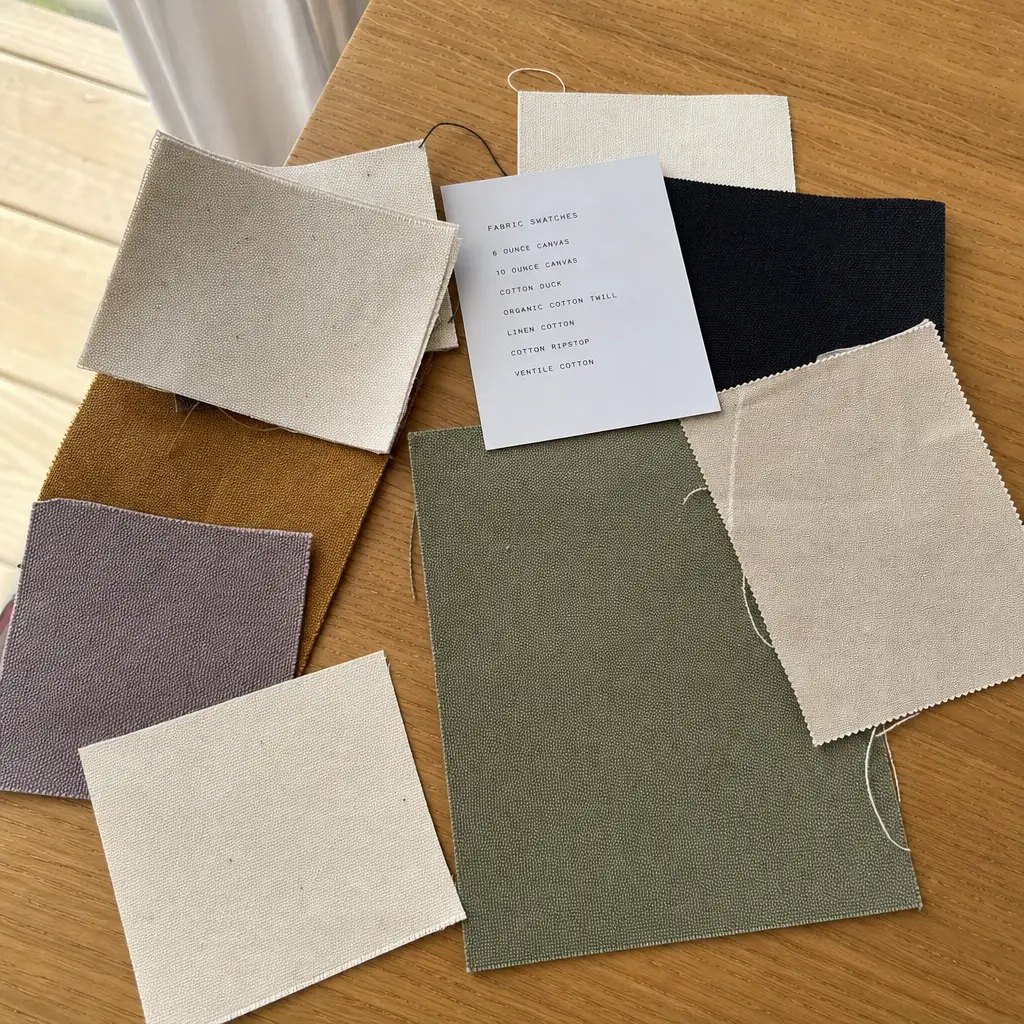
Canvas messenger bags for salon chains should use fabric between 340 and 400 GSM. Below 300 GSM, the bag lacks structure and will sag when carrying bottles or product boxes. Above 400 GSM, the bag becomes heavy and expensive, adding $0.50-0.80 per unit in material cost. Ask the factory for a GSM certificate from their fabric supplier, and request a swatch sample to weigh yourself.
During the audit, cut a 10x10 cm piece from the fabric roll and weigh it on a precision scale. Multiply the weight by 100 to get the GSM. If the result is more than 10% below the claimed GSM, reject the roll. Also check for fabric density: a loose weave means the bag will stretch over time, especially at the bottom gusset.
- Request a GSM certificate from the fabric supplier before production.
- Weigh a swatch sample during the audit; reject rolls with more than 10% deviation.
- Check weave density: a tight weave prevents stretching at stress points.
Print Method: Screen Print vs. Heat Transfer vs. Embroidery
For salon chain logos, screen print is the most durable and cost-effective option for orders of 500+ units. It bonds the ink into the fabric fibers, lasting 50+ washes without fading. Heat transfer is a good alternative for smaller orders or multi-color logos, but it may peel after 20 washes if the factory uses low-quality transfer paper. Embroidery looks premium but adds $1.00-1.50 per bag and is not suitable for small text or fine details.
During the audit, ask the factory to show you samples of each method on the same fabric. Rub a wet white cloth on the print 20 times; if any ink transfers, the print is not properly cured. For heat transfer, check the edges: peeling or lifting means the temperature or pressure was wrong. Insist on a print durability test in the QC plan.
- Screen print: best for 500+ units, 1-2 colors, and long-lasting logos.
- Heat transfer: acceptable for small orders but test for peeling after 20 washes.
- Embroidery: premium look but adds cost and limits design complexity.
Strap Attachment and Seam Strength: Where Bags Fail First
The strap attachment point is the most common failure location on canvas messenger bags. A single straight stitch will tear under 5-8 kg of load. Bar-tack stitching, which uses a zigzag pattern across the stress point, can hold 15 kg or more. During the audit, inspect the strap attachment on 10 random bags. Pull the strap at a 90-degree angle; if you see any gap or loose thread, the stitching is insufficient.
Also check the main seam along the bottom and sides. The seam should have 8-10 stitches per inch. Fewer stitches mean weaker seams that can burst under weight. Ask the factory for a seam strength test report from a previous order. If they cannot provide one, request a pull test on your sample bag during the audit.
- Bar-tack stitching is mandatory for strap attachments; single stitch is unacceptable.
- Seam density: 8-10 stitches per inch for bottom and side seams.
- Request a pull test report or perform one on-site during the audit.
Bottom Gusset and Closure: Practical Design for Salon Use
A flat bottom gusset allows the bag to stand upright, which is essential for stylists who need to access tools quickly. The gusset should be at least 6 cm wide and double-stitched at the corners. Without a gusset, the bag collapses and items spill out. During the audit, measure the gusset width on 5 sample bags; all should be within 0.5 cm of the spec.
For closure, magnetic snaps are the most popular choice for salon messenger bags. They are easy to open with one hand and last for years. Zippers add $0.30-0.50 per bag but provide better security for client gift bags. Velcro is cheaper but wears out after 6 months of daily use. Avoid it for stylist kits. Check the snap alignment: misaligned snaps cause the flap to gap, which looks unprofessional.
- Bottom gusset: min 6 cm wide, double-stitched at corners.
- Magnetic snap: best for stylist kits; zipper: better for client gifts.
- Avoid Velcro for daily-use bags; it loses grip within 6 months.
Inner Pockets: Organize Scissors, Clips, and Phone
A canvas messenger bag for salon stylists needs at least three inner pockets: one zippered pocket for valuables (phone, wallet) and two open pockets for scissors, clips, and combs. The pockets should be at least 15 cm deep to prevent items from falling out when the bag is carried. During the audit, check the pocket stitching: the top edge must be double-stitched to prevent tearing.
Also verify the pocket placement. Some factories place pockets too low, making them hard to reach. The zippered pocket should be on the back panel, and the open pockets on the front panel. Measure the pocket depth on 5 bags; if any are less than 14 cm, request a design revision before production.
- Minimum 3 pockets: 1 zippered + 2 open, all at least 15 cm deep.
- Double-stitch top edge of all pockets to prevent tearing.
- Verify pocket placement: zippered pocket on back panel for easy access.
Sample Approval: The Most Overlooked Step
Many salon chains skip the sample approval step to save time, only to discover issues after production. A proper sample approval process takes 7-10 business days for the first prototype, plus 3-5 days for revisions. Request two rounds of samples: the first for design and fit, the second for production quality. During the audit, ask the factory how many sample revisions they include in the sample fee.
Check the sample against your spec sheet: fabric GSM, print color (use a Pantone reference), stitch density, strap length, and pocket dimensions. Take photos of the sample and compare them to the production units during the pre-shipment inspection. If the factory cannot produce a sample that matches your spec within two rounds, consider a different supplier.
- Allow 7-10 business days for first prototype; request 2 rounds of samples.
- Use a Pantone reference for print color; check against sample under daylight.
- Reject the factory if they cannot match your spec within two sample rounds.
Packing and Lead Time: Avoid Last-Minute Surprises
Packing is often the last thing buyers think about, but it can make or break the product experience. Each canvas messenger bag should be individually polybagged with a silica gel pack to prevent moisture damage during shipping. The bags should be packed in export cartons with a maximum weight of 20 kg per carton for easy handling. During the audit, inspect the factory's packing line: are they using the correct polybag thickness (min 0.05 mm)? Are the cartons double-walled?
Lead time for 5,000 canvas messenger bags is typically 30-45 days from sample approval. Anything under 25 days is a red flag: the factory may rush production and skip QC steps. Ask for a production schedule that includes fabric procurement, cutting, sewing, printing, packing, and inspection. Request a weekly progress report during production. If the factory cannot provide a schedule, find another supplier.
- Individual polybag + silica gel pack for each bag; polybag thickness min 0.05 mm.
- Export cartons: double-walled, max 20 kg per carton for easy handling.
- Lead time: 30-45 days for 5,000 units; reject any factory offering under 25 days.
Pre-Shipment Inspection: Your Final Quality Gate
A pre-shipment inspection (PSI) is non-negotiable for bulk orders. Use AQL 2.5 level II as the minimum acceptable quality level. For a 5,000-unit order, inspect 200 random bags. The acceptable defect count is 14 or fewer. Defects include fabric flaws, stitching errors, print defects, zipper malfunction, and incorrect dimensions. Hire a third-party QC company or send your own inspector.
During the PSI, check 10% of the cartons for packing quality: are the polybags sealed? Are the silica gel packs dry? Are the cartons labeled correctly with the shipping mark? If more than 5% of the cartons have packing issues, request a re-pack. Do not accept a factory's own inspection report without third-party verification.
- Use AQL 2.5 level II: inspect 200 bags from a 5,000-unit order; max 14 defects.
- Check 10% of cartons for packing quality: polybag seal, silica gel, labeling.
- Hire a third-party QC company; do not rely on the factory's own inspection report.
Specification comparison for buyers
| Spec decision | Recommended option | When it fits | Buyer risk to check |
|---|---|---|---|
| Fabric weight (GSM) | 340-400 GSM for daily salon use | Stylist kits, client gifts, or retail bags that need structure | Below 300 GSM bags sag under a hair dryer or product weight |
| Print method | Screen print or heat-transfer for logos | Large orders (500+ units) with 1-2 color logos | Digital print fades after 10 washes; avoid for reusable bags |
| Strap attachment | Bar-tack stitching at stress points | Any bag carrying 2+ kg of salon products | Single stitch fails under load; insist on bar-tack reinforcement |
| Bottom gusset | Flat gusset with double stitch | Bags that hold bottles, combs, or bulky items | No gusset = bag can't stand upright; check width (min 6 cm) |
| Closure type | Magnetic snap or zipper | Client gift bags need secure closure | Velcro wears out; zipper adds $0.30-0.50 per bag but lasts longer |
| Inner pocket | One zippered pocket + two open pockets | Stylist bags that organize scissors, clips, and phone | No pockets = bag becomes a jumble; check pocket depth (min 15 cm) |
| Sample approval lead time | 7-10 business days for first proto | Any order with custom print or size | Rushed samples (<5 days) often skip QC; request 2 rounds of approval |
| MOQ per color | 500-1,000 units per color | Salon chains with 10+ locations and uniform branding | Low MOQ (<300) may mean higher per-unit cost or limited color options |
Buyer checklist before sampling
- Confirm fabric GSM with a swatch test: cut a 10x10 cm piece and weigh it; reject if below 300 GSM for messenger bags.
- Request a seam strength test: pull the strap at 90 degrees; bar-tack stitching should hold 15 kg without tearing.
- Verify print durability: rub a wet white cloth on the logo 20 times; no ink transfer means acceptable adhesion.
- Check bottom gusset width: must be at least 6 cm for bags intended to hold bottles or product boxes.
- Inspect inner pocket stitching: all pockets should be double-stitched at the top edge; single stitch rips in 3 months.
- Review the packing list: each bag should be individually polybagged with a silica gel pack; no polybag = risk of moisture damage.
- Request a lead time commitment in writing: 30-45 days for 5,000 units is standard; anything under 25 days is a red flag.
- Ask for a pre-shipment inspection report: AQL 2.5 level II is the minimum; reject if the factory offers only final inspection.
Factory quote questions to send
- What is your standard MOQ for canvas messenger bags with screen print? Can you offer a lower MOQ for a single color logo?
- Do you use 340 GSM or higher fabric as standard? Can you provide a GSM certificate from your fabric supplier?
- What is your sample approval process? How many rounds of revisions are included in the sample fee?
- Do you offer bar-tack stitching on strap attachments at no extra cost? If not, what is the upcharge per bag?
- What is your typical lead time for 5,000 units? How many days do you need for sample approval before production starts?
- Can you provide a pre-shipment inspection report from a third-party QC company? If yes, which company do you use?
- What is your packing standard? Do you use individual polybags and silica gel packs for each bag?
- Do you offer a warranty or replacement for defective bags? What is your acceptable defect rate (AQL level)?
Quality-control points to confirm
- Fabric inspection: check for weaving defects, stains, or uneven dyeing; reject if more than 2 defects per 10 meters.
- Stitching audit: all seams must have 8-10 stitches per inch; loose stitches or skipped stitches are unacceptable.
- Print adhesion test: apply heat press at 160°C for 10 seconds; no peeling or bubbling means good quality.
- Strap pull test: hang a 15 kg weight from the strap for 30 seconds; no tearing or stitching failure allowed.
- Zipper function test: open and close the main compartment 50 times; no jamming or misalignment.
- Pocket depth check: inner pockets must be at least 15 cm deep; measure 5 random bags from the batch.
- Packaging inspection: each bag must be folded neatly, polybagged, and packed in export cartons with proper labeling.
- Final random sampling: inspect 200 bags from a 5,000-unit order using AQL 2.5 level II; reject if defect count exceeds 14.