Why Coffee Roasters Need a Factory Audit Before Messenger Bag Production
A canvas messenger bag is more complex than a basic tote because it includes load-bearing strap anchors, a flap, closures, hardware, pockets, and often lining. For coffee roasters, it is also a brand item that may sit beside roasted coffee, brewing gear, mugs, and apparel. If the construction feels weak or the logo print looks cheap, the problem reflects directly on the roaster, not on the factory.
A useful factory audit does not need to be a large corporate compliance exercise. For this product, the audit should prove that the supplier can control canvas weight, cutting shrinkage, sewing reinforcement, printing on textured fabric, hardware consistency, and export packing. The goal is to prevent a low unit price from becoming expensive through rejected samples, late delivery, or bags that customers return.
- Audit the actual production route, not only the sales office presentation.
- Focus on product capability: canvas handling, messenger bag sewing, print control, and packing discipline.
- Use the audit result to tighten the RFQ before comparing final quotes.
Start the Audit with the Intended Bag Use, Not Only the Artwork
Coffee roasters buy messenger bags for different reasons. A bag sold in a cafe retail area needs better hand feel, cleaner stitching, and more controlled packing than a one-day event giveaway. A staff bag for wholesale sales teams may carry cupping spoons, sample packs, order forms, a tablet, and a laptop, so strap strength and internal layout matter more than decorative details.
Before the factory quotes, define the carrying load and channel. A 14oz natural canvas unlined messenger bag may be acceptable for low-cost cafe merchandise. A 16oz washed canvas bag with lining, internal sleeve, metal adjuster, and woven side label is a different product with a different MOQ and production risk. The audit should verify whether the factory has made the second type before, not only whether it can sew cotton bags.
- Retail merch: prioritize fabric hand feel, logo finish, clean packing, and hangtag presentation.
- Wholesale sales kit: prioritize strap anchor strength, gusset capacity, inner pockets, and closure security.
- Event giveaway: prioritize stable unit cost, stock fabric, simple printing, and predictable lead time.
- Distributor program: prioritize repeatability, carton marking, barcode control, and reorder fabric availability.
Fabric Audit: Canvas Weight, GSM, Shrinkage, and Finish
Canvas weight is one of the easiest places for quotes to become misleading. Some suppliers quote by ounces, some by GSM, and some use broad words like heavy canvas. For messenger bags, common workable choices are 12oz, 14oz, and 16oz cotton canvas. In practical terms, 12oz can work for light promotional bags, 14oz gives a better balance of structure and cost, and 16oz is stronger and more retail-ready but raises sewing difficulty, shipping weight, and sample cost.
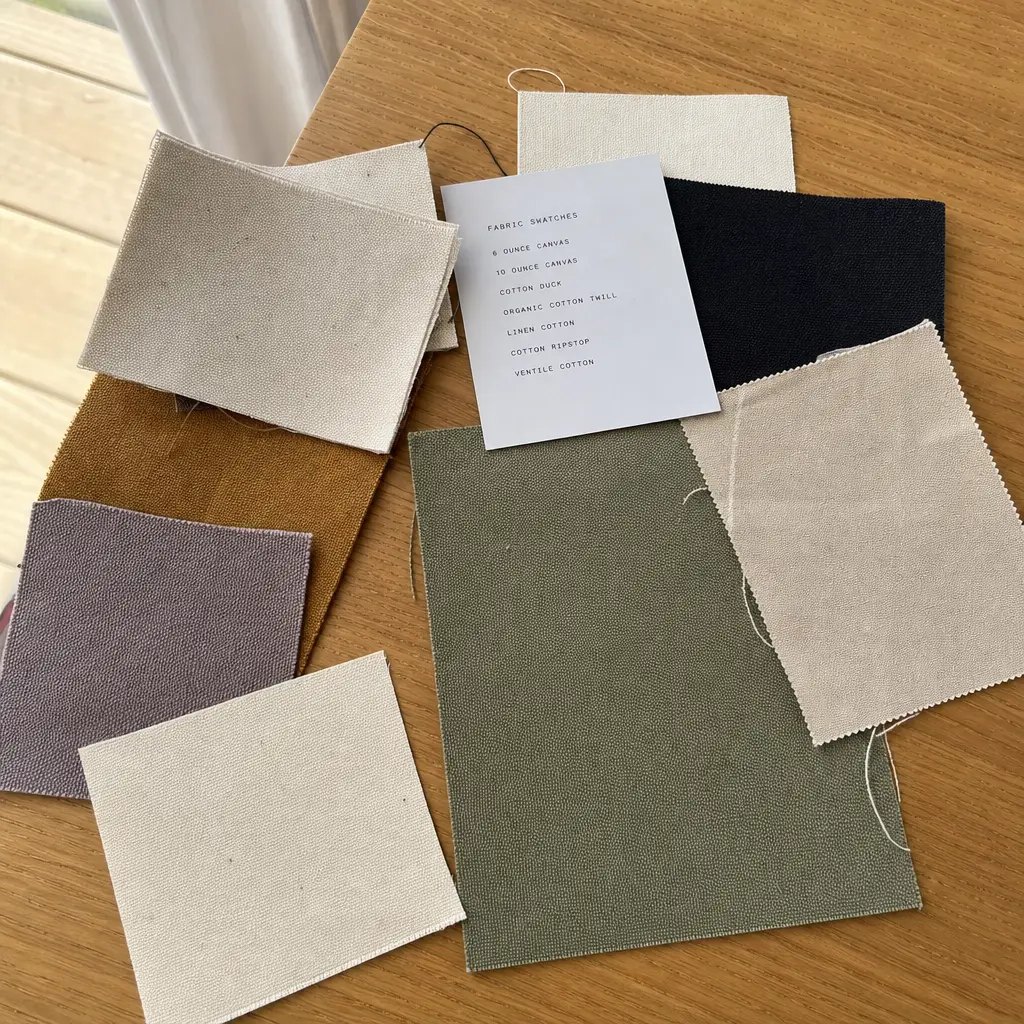
The audit should include fabric swatch review and, when possible, a GSM test record. If the bag is washed after sewing or uses washed canvas, dimensions may shrink and panels may twist. If the canvas is custom dyed in a dark coffee-related color such as charcoal, espresso, rust, or forest green, colorfastness and shade consistency become important. A factory that cannot explain shrinkage allowance during cutting is not ready for a controlled messenger bag order.
- Request both oz and GSM on the quote, with tolerance if available.
- Compare swatches under natural light and store lighting, not only under factory fluorescent lights.
- For washed canvas, measure the finished sample after wash and after pressing.
- For dark colors, review rub-off risk against light clothing and light lining.
Construction Audit: Seams, Reinforcement, Strap Anchors, and Hardware
Messenger bag failures usually happen at stress points. The strap anchor tears, the flap corner stitching opens, the pocket corner frays, or the buckle slips. During the audit, inspect sample pieces or production photos that show how the factory reinforces these areas. A clean topstitch line is not enough; load-bearing points need bartacks, cross-stitching, box stitching, or another agreed reinforcement method.
Hardware is another common quote gap. Metal adjusters, D-rings, magnetic snaps, buckles, and zipper pulls all change cost and quality. A bag with thin alloy hardware may look fine in a photo but feel weak in hand. For coffee roasters positioning the item as premium merchandise, hardware finish and smooth operation affect perceived value as much as fabric thickness.
- Specify strap width, commonly 38mm or 50mm, and whether the webbing is cotton or polyester.
- Require reinforcement at both strap ends and any detachable handle points.
- Review buckle adjustment under load, not only appearance.
- Avoid sharp hardware edges that can damage fabric, lining, or retail packaging.
Print and Branding Audit for Coffee Logos on Canvas
Coffee roaster logos often include fine type, origin references, small icons, curved marks, or vintage textures. Those details do not always reproduce well on coarse canvas, especially on washed or dark fabric. Screen printing is usually the most stable method for one- or two-color branding on a flap or front pocket. Embroidery gives a premium result but can pucker thin fabric and may lose small lettering. Woven labels work well when the design is small and repeat orders are expected.
The audit should verify that the factory prints on canvas regularly and can control registration, ink coverage, and curing. A paper artwork proof is not enough. The buyer should approve a strike-off on the actual fabric color and texture. If the logo sits on the flap, confirm that print placement remains straight after the flap is folded and sewn. If the print crosses a seam, expect distortion unless the supplier has planned the process carefully.
- Use vector artwork with Pantone references, not low-resolution cafe menu files.
- Avoid very small type on rough 14oz or 16oz canvas unless tested first.
- For dark canvas, confirm whether the quote includes underbase printing.
- For washed bags, decide whether printing happens before or after wash and approve the final effect.
MOQ Logic: When a Low Minimum Quantity Is Realistic
A factory may advertise low MOQ, but the real minimum depends on fabric, dyeing, printing, labels, hardware, and packing. If the roaster accepts stock natural canvas, standard black or cotton webbing, common metal hardware, and a simple one-color screen print, 300 to 500 pieces may be workable for many factories. If the bag uses custom dyed canvas, washed finish, custom lining, branded metal hardware, and multiple labels, the practical MOQ often moves higher.
The audit should separate sewing MOQ from material MOQ. A sewing line may be willing to make 300 bags, but the fabric mill may require more dyed canvas than that. The same issue applies to custom woven labels and metal accessories. A quote that appears attractive at 200 pieces may include leftover fabric, substitute hardware, or inflated setup fees. Procurement teams should compare the total landed cost for the same confirmed specification.
- Stock fabric route: lower MOQ, faster sampling, less shade control.
- Custom dyed route: higher MOQ, better brand color, longer lead time.
- Washed canvas route: better hand feel, higher shrinkage and color variation risk.
- Custom hardware route: premium appearance, longer development time, higher tooling or minimum charges.
Sample Approval: What the Pre-Production Sample Must Prove
A messenger bag sample should not be treated as a rough shape approval only. It should prove the finished size, fabric hand feel, strap length range, logo result, hardware function, pocket layout, and packing method. If the supplier sends a sample made from substitute fabric or approximate hardware, it can still help with layout review, but it cannot approve bulk production.
For coffee roasters, the most useful approval sample is made with actual canvas, actual color, actual print method, actual webbing, and actual closure. If budget or time does not allow that on the first prototype, the factory should clearly label what is temporary. Before mass production, a pre-production sample should be sealed with date, revision number, and signed comments so both buyer and factory compare bulk goods against the same standard.
- Measure body width, height, gusset, flap drop, pocket opening, and strap length minimum and maximum.
- Load the bag with realistic items such as coffee sample packs, notebook, tablet, or small laptop if that is the intended use.
- Rub the logo area with a dry white cloth to identify obvious ink transfer or curing problems.
- Photograph all approved details, including inside seams and packing fold, not only the front view.
Factory Evidence That Is Worth More Than a Polished Catalog
Many suppliers can show tote bag photos. Fewer can show controlled messenger bag production. During a remote or in-person audit, useful evidence includes cutting tables handling thick canvas, sewing machines suitable for multiple fabric layers, operators making strap anchors, in-line QC records, print curing equipment, and final inspection tables with measurement tools. Photos of finished samples alone do not prove production control.
Procurement teams should also review communication quality. A reliable factory can explain why a spec increases MOQ, why washed canvas changes tolerance, or why a print needs a larger minimum line width. If every requested change receives only a yes without technical comments, the buyer carries more risk. The best commercial discussion is not always the cheapest; it is the one that makes the production consequences visible before the deposit.
- Request current workshop photos showing canvas messenger bags or similar multi-part bags in production.
- Look for measurement records, defect sorting areas, needle detection if relevant, and carton packing control.
- Verify whether printing is in-house or outsourced; outsourced print adds schedule and color control risk.
- Ask who approves first bulk output before the line continues: merchandiser, QC, line leader, or factory owner.
Packing, Labeling, and Warehouse Details That Prevent Avoidable Claims
Canvas messenger bags can crease, deform, or stain if packing is treated as an afterthought. Heavy hardware can press into the front flap during ocean shipment. Dark canvas can pick up lint from cartons or paper. A retail order may also need hangtags, barcodes, individual sleeves, carton marks, and sometimes inner carton sorting by color or design. These details affect labor cost and should be included in the quote.
For importers and distributors, carton planning matters because messenger bags are bulkier than flat totes. A carton with too many pieces may exceed practical handling weight or crush the bottom bags. A carton with too few pieces increases freight cost. The buyer should request carton size, gross weight, net weight, packing method, and photos of a packed carton before shipment. If the bags will go to retail stores, include barcode placement and tag attachment method in the approval sample.
- Choose individual polybag, recycled paper sleeve, or bulk packing based on channel and sustainability policy.
- Protect metal hardware from marking the canvas during compression.
- Confirm carton marks, SKU labels, country of origin marking, and barcode scannability.
- Do not approve vacuum-compressed packing unless creasing is acceptable for the selling channel.
Lead Time Risks: Where Canvas Messenger Bag Schedules Slip
The production schedule is usually longer than buyers expect because several processes must happen in sequence. Fabric sourcing or dyeing comes first, then cutting, printing or embroidery, sewing, trimming, final inspection, packing, and export booking. If the logo is printed before sewing, the cutting and print alignment must be controlled early. If printing is after sewing, the factory needs fixtures or experience to keep the flap flat under the screen.
A realistic RFQ separates sample lead time, material lead time, bulk production time, inspection time, and shipping handover. Coffee roasters ordering for a holiday gift set, expo, subscription launch, or cafe opening should not count only sewing days. Artwork revisions, strike-off approval, custom label production, and carton mark changes can each add days. The audit should identify which processes are inside the factory and which depend on outside vendors.
- Stock fabric and simple screen print are the fastest route.
- Custom dyed or washed canvas needs extra time for lab dip, dyeing, drying, and shade approval.
- Embroidery and woven labels require separate artwork setup and sample approval.
- Late changes to barcode, hangtag, or carton marks can delay packing even when bags are finished.
Specification comparison for buyers
| Spec Decision | Recommended Option | When It Fits | Buyer Risk to Check |
|---|---|---|---|
| Canvas Weight | 14oz to 16oz cotton canvas (~475–540 GSM before washing) | Coffee roasters selling reusable merch bags or staff field bags needing structure without excessive weight | Factories may quote 12oz as heavy canvas; request GSM test result, fabric swatch, and finished bag weight |
| Canvas Finish | Natural, dyed, or enzyme-washed canvas with shrinkage allowance in cutting | Lifestyle retail bags where hand feel and color depth matter more than lowest cost | Washed canvas can shrink and twist; review panel dimensions after wash and confirm colorfastness for dark shades |
| Lining Choice | Unlined for rugged promo use; 210D/300D polyester lining for retail finish | Unlined suits simple cafe merchandise; lining suits higher-ticket bags with internal pockets | Cheap lining can tear at pocket corners; require seam allowance and bartack or reinforcement at stress points |
| Print Method | Screen print for solid coffee logos; embroidery or woven label for premium; heat transfer for detailed small-color artwork | Roaster logos usually work well as 1–2 color screen print on flap or front pocket | Print on textured canvas can lose fine detail; approve strike-off on actual canvas, not paper proof |
| Strap and Hardware | 38mm or 50mm cotton webbing with metal adjuster for retail; polyester webbing for cost-sensitive projects | Messenger bags for laptops, sales kits, or daily commute need stronger webbing and stable adjustment | Thin webbing and plastic sliders reduce cost but fail load tests; specify strap width, material, and hardware finish |
| Reinforcement | Bartacks at strap anchors, flap corners, pocket edges, and handle attachment points | Needed when bag carries coffee samples, notebooks, tablets, or event materials | Decorative stitching is not reinforcement; inspect bartack count, position, and thread tension on pre-production sample |
| MOQ Logic | 300–500 pcs for standard canvas/color/print; 800–1,000+ pcs for custom dyed fabric or hardware | Smaller roasters can start with stock fabric and standard hardware; distributors often justify custom dyeing | Low MOQ quotes may hide fabric substitutions or high setup charges; compare total cost by confirmed spec, not unit price only |
| Packing Method | Individual polybag or recycled paper sleeve; 20–40 pcs per export carton depending on bag size and hardware | Retail buyers need clean shelf-ready units; event buyers may accept bulk packing | Overcompressed cartons crease flaps and distort buckles; require carton dimensions, gross weight, and packing photos before shipment |
Buyer checklist before sampling
- Define intended use: retail sale, staff gear, cafe loyalty gift, trade show giveaway, or distributor bundle.
- Specify finished bag dimensions, not only approximate laptop size; include flap depth, gusset, strap length range, and pocket layout.
- State canvas weight in oz and GSM, and request fabric composition and finish: natural, dyed, washed, organic, recycled blend, or conventional cotton.
- Attach logo artwork in vector format and identify exact print position, print size, Pantone colors, and whether the logo crosses seams or flap curves.
- Choose reinforcement standard for strap anchors, pocket openings, flap corners, and inner laptop sleeve if applicable.
- Set sample approval rules: actual fabric, actual print method, actual hardware, actual lining, and production packaging if retail presentation matters.
- Request evidence of similar canvas messenger bag production, including in-line sewing photos, hardware inventory, and QC records with defect categories.
- Clarify MOQ by spec route: stock canvas, custom dyed canvas, washed canvas, custom woven label, or special hardware.
- Confirm packing format, carton strength, carton marks, barcodes, hangtags, silica gel policy, and palletization needs for your warehouse.
- Build a lead time buffer for fabric dyeing, washing, print strike-off, pre-production sample approval, inspection, and export booking.
Factory quote questions to send
- What canvas weight in oz and GSM is included in your quoted price, and can you send a swatch from the same fabric lot before sample making?
- Is the canvas greige, dyed, washed, enzyme washed, stone washed, or water-repellent finished, and what shrinkage rate do you allow during cutting?
- Which parts of the messenger bag are reinforced with bartacks or cross-stitching, and how many stitches per inch do you use on main seams?
- What print method is included in the quote, and will the print strike-off be made on the actual production canvas color and texture?
- What is the MOQ for this exact bag if we use stock canvas, and what changes if we request custom dyed canvas, custom lining, or branded hardware?
- Can you provide photos or short videos of your cutting, sewing, printing, and final inspection process for similar canvas messenger bags?
- What is the sample fee, sample lead time, and revision policy if the first sample fails on print color, dimensions, or strap construction?
- How will each bag be packed, how many pieces per carton, what are the estimated carton dimensions and gross weight, and can you meet our barcode or carton mark rules?
- What defects are considered major or critical in your factory inspection, and what AQL level or internal sampling standard do you normally use?
- Which quote items are not included: artwork setup, mold or screen charge, custom label charge, packing upgrade, export carton, pallet, testing, inspection, or inland freight?
Quality-control points to confirm
- Finished dimensions must stay within approved tolerance, typically ±1 cm for body width and height, with tighter control for pocket opening alignment.
- Finished bag weight should match the approved sample range; a noticeable drop often means lighter fabric, thinner lining, or hardware substitution.
- Canvas surface should be free of oil stains, large slubs in visible logo areas, color streaks, mildew odor, and excessive creasing from wet packing.
- Logo print should pass dry rub and tape-pull checks appropriate to the ink system, with no obvious pinholes, ghosting, cracking, or misregistration.
- Strap anchors, handle points, flap corners, and pocket corners should have bartacks or equivalent reinforcement with no skipped stitches.
- Metal hardware should be free of rust, sharp burrs, plating flake, and unstable adjustment under load.
- Zippers, snaps, buckles, and magnetic closures should operate smoothly for repeated cycles before carton packing.
- Internal lining and pocket seams should not expose raw edges unless this is an approved design feature.
- Packing should keep flaps flat and hardware protected; cartons should not be overloaded beyond practical warehouse handling weight.
- Carton labels, barcodes, country of origin marks, and retail tags must match the purchase order and buyer routing instructions.