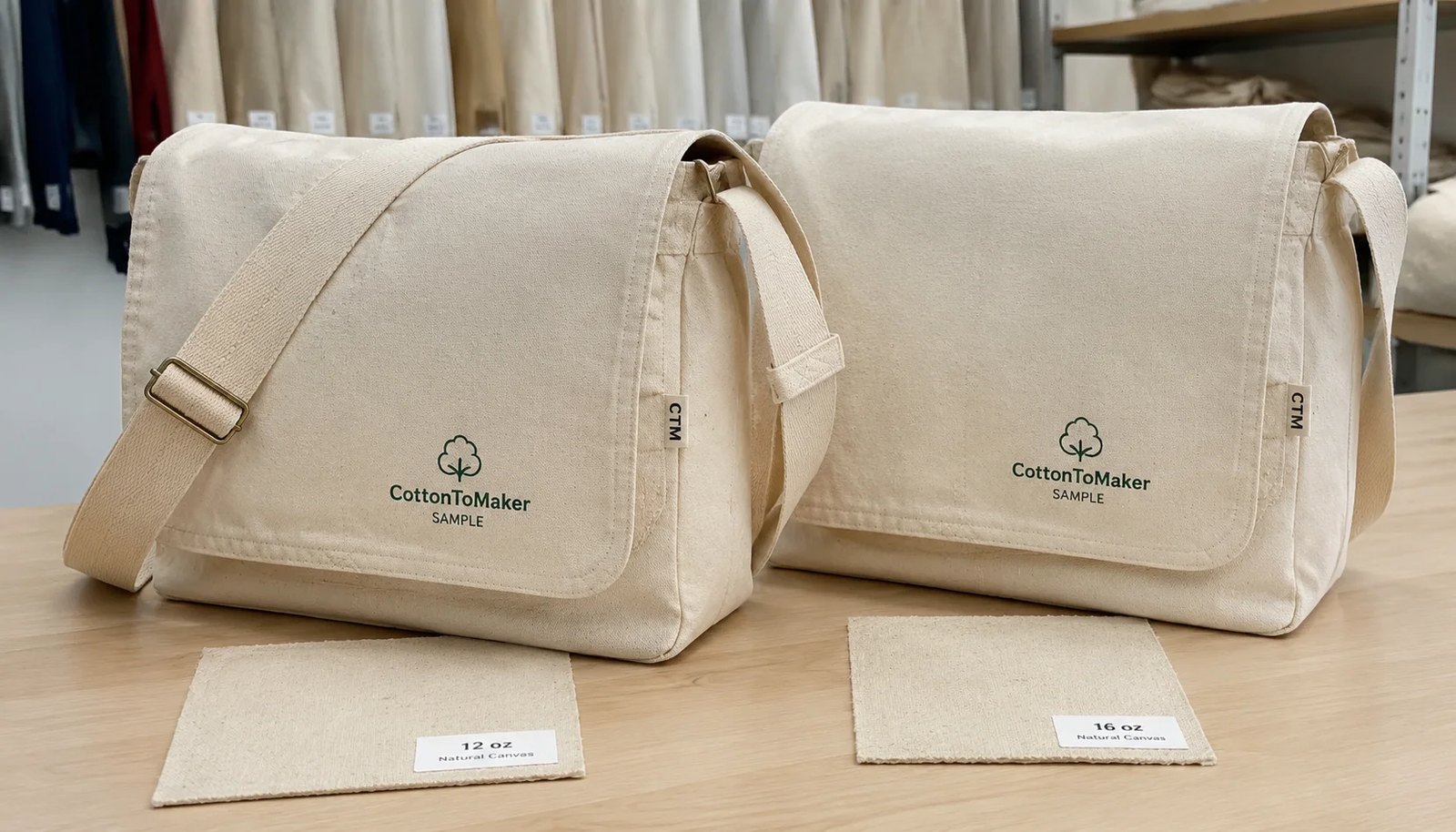
Start with the load, not the fabric number
For natural grocers, a canvas messenger bag is rarely just a fashion accessory. It may be sold near checkout as a reusable daily bag, used by staff for documents and scanners, packed as a loyalty gift, or offered by distributors as a sampling bag for wellness products. Each use case puts different stress on the fabric, strap, flap, and bottom seam. If the RFQ only says “canvas messenger bag, natural color, logo printed,” suppliers will quote different weights and constructions while making the same item look similar in a photo.
The most practical starting point is the expected load and handling environment. A bag carrying brochures and a light lunch can use a different canvas than a bag carrying glass jars, bottled drinks, catalogues, and staff tools. For grocer retail programs, the fabric weight should also support the shelf presentation. A bag that collapses in a display basket may look cheaper even if the stitching is acceptable.
- Light promotional use: 10 oz canvas can work if the strap and seams are reinforced.
- General retail resale: 12 oz canvas is usually the safer balance of cost, feel, and structure.
- Premium or staff utility use: 14 oz to 16 oz canvas gives better body and longer wear.
- Heavy daily carry: fabric weight alone is not enough; specify strap width, bar tacks, bottom reinforcement, and closure strength.
How canvas oz and GSM translate into a real bag
Factories may quote canvas by ounces per square yard, GSM, or both. In export sourcing, this creates confusion because one supplier may call a fabric 12 oz while another lists 390 GSM, and both may be close enough commercially. For buyer control, include both terms in the RFQ and allow a sensible tolerance after the approved swatch is signed off. A common reference is 10 oz at about 310-340 GSM, 12 oz at about 380-420 GSM, 14 oz at about 450-480 GSM, and 16 oz at about 520-560 GSM.
The same GSM can also feel different depending on yarn count, weave tightness, finishing, washing, and whether the cotton is natural, bleached, or dyed. Natural unbleached canvas often has visible cotton seed flecks and a drier handfeel, which many natural grocers like. Dyed dark canvas may feel slightly firmer after finishing and may require different ink selection for logo opacity.
- Do not approve a fabric weight only from a photo; request a swatch or blank sample.
- Record the approved swatch weight and appearance with a physical reference, not only an email note.
- If using organic or recycled cotton, verify whether the GSM and color are stock-supported before setting the launch date.
- For dyed canvas, allow extra time for lab dip approval and shade variation control.
Recommended fabric weights for natural grocer messenger bags
For most natural grocer programs, 12 oz canvas is the default starting point. It has enough body for a messenger silhouette, takes screen printing well, and usually keeps the unit price and freight weight within a practical range. It is suitable for retail bags sold at checkout, employee welcome kits, wellness program bags, and small distributor campaigns where the bag needs to feel durable without becoming too stiff.
A 16 oz canvas gives a more premium product but should be chosen deliberately. It raises material cost, may require stronger needles and slower sewing, and makes the packed cartons heavier. Some buyers choose it because the bag sits better on the shelf and feels more giftable. Others regret it when the landed cost rises and store teams complain about bulky cartons. Between these two, 14 oz can be a useful compromise if the supplier has stable stock.
- Use 10 oz only when the bag is for light-duty promotion and price sensitivity is high.
- Use 12 oz when you need the best balance for retail and general-purpose grocer programs.
- Use 14 oz when the buyer wants a firmer handfeel but must manage carton weight.
- Use 16 oz when the bag is positioned as premium, staff utility, or long-service merchandise.
- Avoid mixing fabric weights across repeat orders unless the retail buyer accepts visible handfeel changes.
Construction details that matter more as fabric gets heavier
A heavier canvas does not automatically make a stronger messenger bag. The failure point is often the strap anchor, the side seam, the bottom corner, or the flap closure area. For a messenger bag used in grocery retail, the strap is pulled at an angle while the body carries uneven items. That is different from a tote bag load, where the handles usually pull upward. The RFQ should describe how the strap is attached and reinforced.
For 12 oz and above, a 38 mm or 50 mm cotton webbing strap is more credible than a narrow strap made from the same body fabric. If the strap is adjustable, metal or plastic hardware must be sized to the webbing and tested so it does not slip under load. A simple box-x stitch plus bar tack at each anchor is a practical factory standard for better performance.
- Specify strap width, total strap length, and whether it is fixed or adjustable.
- Use reinforcement patches inside the bag when the body fabric is lighter or the load is higher.
- Set stitch density expectations, for example neat lockstitch with no skipped stitches at stress areas.
- For flap bags, confirm whether the flap is single-layer, double-layer, or lined.
- For a gusseted bag, check bottom corners and side seams after a load test, not only visually.
Print method choices on different canvas weights
Natural grocer logos are often simple: green, black, brown, white, or muted earth-tone artwork. Water-based screen printing is usually the best match for this style because it keeps a soft handfeel and looks appropriate on cotton canvas. For natural canvas, dark green or black prints can work well, but the weave texture may break very fine lines. If the logo has small certification icons, thin type, or dense text, the artwork needs adjustment before the screen is made.
Heat transfer can reproduce gradients and small detail, but it changes the surface feel and may look less natural on a reusable canvas product. Embroidery gives a premium look on heavier canvas but increases cost, can pucker lighter fabric, and is not ideal for large filled logos. Woven side labels are useful when the buyer wants subtle branding or when a large front print is not allowed by the retail program.
- Screen print: best for one to three solid colors and medium to large logos.
- Discharge or pigment print: depends on fabric dye and should be sampled before bulk.
- Heat transfer: acceptable for complex artwork, but test adhesion and flexing on canvas.
- Embroidery: suitable for small logos on 14 oz or 16 oz canvas with backing.
- Woven label: useful for understated retail branding and repeat SKU consistency.
MOQ logic and why quotes vary between suppliers
MOQ is not only a factory preference. It is linked to fabric sourcing, dyeing, cutting efficiency, print setup, hardware purchasing, and packing materials. If the buyer uses stock natural 12 oz canvas with a one-color print and standard strap, MOQ can be much lower than a custom dyed 16 oz canvas with matching webbing, branded metal hardware, lining, inner pocket, hangtag, and barcode labels. Two quotes may look inconsistent because one supplier is pricing stock inputs while another is assuming custom material.
For natural grocer programs, the most economical specification is often natural cotton canvas, standard cotton webbing, screen printed logo, and simple flap closure. If the brand requires organic cotton or recycled cotton claims, the MOQ can shift because the mill must provide compliant fabric and the factory may need to segregate materials. Buyers should separate the must-have requirements from the nice-to-have features before requesting a final quotation.
- Lower MOQ route: stock natural canvas, standard strap color, one-color print, no lining.
- Medium MOQ route: stock canvas weight with custom print, pocket, label, and retail packing.
- Higher MOQ route: custom dyed canvas, special webbing, custom hardware, or certified material.
- Repeat-order route: lock the fabric reference and construction to avoid handfeel drift across seasons.
- Cost-saving route: keep the same bag body and change only print artwork for different store groups.
Sample approval should test the final fabric, not a convenient substitute
A common production mistake is approving a messenger bag sample made from available fabric while the bulk order uses another weight or finish. The size may be correct, but the flap drape, print sharpness, stitch tension, and strap strength can change after the real fabric is used. For this product, the pre-production sample should use the actual canvas weight, actual strap material, actual logo method, final closure, and intended packing fold.
The sample should be reviewed as a buyer tool, not just a sales photo. Load it with the type of items expected in store use. Wear it across the body and over the shoulder. Open and close the flap repeatedly. Look at whether the bag twists when loaded. For natural canvas, compare seed flecks, shade, and surface slubs with the approved swatch, because retail buyers may reject shipments that look too grey, too yellow, or inconsistent between cartons.
- Approve a material swatch before the full sample if timing is tight.
- Measure finished size after the sample is flattened, not while it is hanging.
- Photograph print placement with a ruler from flap edge and side seam.
- Do a simple rub test on the logo using a dry white cloth and a slightly damp cloth.
- Keep one sealed approved sample with the factory and one with the buyer for final inspection reference.
QC thresholds for fabric, stitching, and finished appearance
Messenger bags are highly visible products. A minor tilt in a tote print may pass unnoticed, but a crooked flap or off-center front logo on a messenger bag is obvious on a retail shelf. The inspection standard should include functional checks and appearance checks. For fabric, the buyer should define acceptable shade range, visible contamination limits, and whether natural cotton seed flecks are allowed. For stitching, stress areas need closer attention than long straight seams.
Finished dimensions should have agreed tolerances because canvas can shrink or relax after cutting and sewing. A practical approach is to set tighter tolerances for print placement and strap length than for overall body dimensions. The bag must look consistent when displayed in a stack or hanging from a peg. If the program includes multiple stores, carton-to-carton consistency matters as much as the average measurement.
- Fabric GSM: compare against approved swatch within agreed commercial tolerance.
- Body dimensions: measure width, height, gusset, flap length, and strap drop.
- Print placement: control distance from flap edge, center line, and side seams.
- Stitching: no skipped stitches, broken threads, loose backstitching, or open seams.
- Flap alignment: front flap should sit straight without twisting under normal load.
- Load test: use a realistic weight based on the buyer’s application and inspect strap anchors after hanging.
Packing decisions affect creasing, freight cost, and store handling
Canvas messenger bags are usually packed flat, but the fold method matters. A hard crease through the printed flap can create a retail complaint even when the bag itself is well made. Heavier canvas resists folding and increases carton volume. Lighter canvas compresses more easily but can arrive wrinkled if cartons are overfilled. The RFQ should include preferred packing style, individual protection, carton gross weight limit, and whether retail labels are applied at the factory.
Natural grocers may prefer reduced plastic, but completely unprotected natural canvas can pick up dust, moisture, and carton odor during transport. A common compromise is an individual recyclable polybag, a paper belly band, or bundle packing with a master poly liner inside the carton. If store teams receive mixed SKUs, carton marks and inner labels must be clear enough for quick distribution.
- Avoid placing the main fold directly across a large screen print when possible.
- Set carton gross weight so store staff can handle cartons safely.
- Request estimated CBM with the quote because heavier fabric can change freight economics.
- Use moisture protection for natural canvas, especially during ocean freight or humid seasons.
- If using paper bands, test whether they rub or mark the fabric during carton movement.
Lead time risks buyers should build into the sourcing plan
Lead time depends on more than sewing capacity. Fabric stock, dyeing, lab dips, print artwork approval, hardware availability, sample shipping, and packing material printing can all affect schedule. A stock 12 oz natural canvas messenger bag with one-color screen print can move faster than a custom dyed 16 oz bag with lining and special hardware. Buyers planning a store reset, seasonal wellness campaign, or new store opening should not treat every canvas messenger quote as equal on timing.
The safer workflow is to approve material first, then logo position, then full pre-production sample. Rushing straight to bulk production based on a digital mockup increases the chance of mismatched fabric weight, wrong print scale, and poor flap alignment. If the delivery date is fixed, reduce specification complexity instead of compressing sampling and QC.
- Fastest route: stock natural canvas, standard strap, standard closure, simple screen print.
- Moderate route: custom pocket, woven label, hangtag, and retail packing with stock fabric.
- Slower route: custom dyed canvas, organic or recycled material sourcing, special hardware, or multi-color print testing.
- Schedule buffer: allow time for swatch approval, print strike-off, pre-production sample, bulk inspection, and freight booking.
- Critical risk: artwork approval delays often push production more than sewing capacity does.
Specification comparison for buyers
| Spec decision | Recommended option | When it fits | Buyer risk to check |
|---|---|---|---|
| Main body fabric weight | 12 oz canvas, about 380-420 GSM | Most natural grocer retail merchandise, staff welcome kits, loyalty program bags, and promotional resale items needing a firm but not overly heavy handfeel | If the bag carries glass jars, laptops, or bottled products, 12 oz may need reinforcement at strap anchors and bottom seams |
| Heavier-duty body fabric | 16 oz canvas, about 520-560 GSM | Premium reusable messenger bags, higher retail price points, staff field use, and distributors wanting a more structured silhouette | Higher fabric cost, larger carton weight, slower sewing speed, and possible MOQ increase if the mill does not stock the shade |
| Lightweight budget option | 10 oz canvas, about 310-340 GSM | Short-term campaigns, low-load merchandising, events, or orders where freight cost and unit price matter more than long service life | Flap may wrinkle, bag may collapse on shelf, dark print may show more texture gaps, and strap stress points need extra bar tacks |
| Interior lining | Unlined canvas or 210D recycled polyester lining | Unlined for natural material positioning and easy cost control; lining for laptop, catalog, or staff bag programs where inside finish matters | Unlined bags show raw seam quality; lined bags add labor and can hide loose threads unless inspected before final closure |
| Logo print method | Water-based screen print for solid natural grocer logos; heat transfer only for complex gradients | Best for one to three brand colors on natural, black, or dyed canvas with a soft retail handfeel | Canvas texture can reduce edge sharpness; factory should test ink opacity and rubbing before bulk printing |
| Strap construction | 38 mm or 50 mm cotton webbing with box-x stitching and bar tacks | Messenger bags expected to carry produce guides, pantry items, employee tools, or market purchases | Thin straps reduce cost but can look cheap and fail before the body fabric; metal adjusters raise cost and should be rust-tested |
| Closure choice | Flap with magnetic snap, hidden button, or hook-and-loop depending on retail positioning | Magnetic snap for cleaner premium look; button for plastic-free positioning; hook-and-loop for staff utility bags | Magnets can leave pressure marks on lighter canvas; hook-and-loop can snag lining and attract lint in store display |
| Packing method | Flat packed individually in recyclable polybag or paper belly band, then export carton | Retail-ready programs where cartons are opened at store level and bags must stay clean during DC handling | Over-compression causes flap creases; paper bands need moisture control; carton gross weight should stay manageable for store teams |
Buyer checklist before sampling
- Define the use case first: retail resale, staff bag, event giveaway, loyalty reward, or distributor sample kit.
- Specify fabric in both oz and GSM where possible, for example 12 oz canvas, approximately 380-420 GSM.
- State whether the fabric must be natural unbleached, dyed, washed, organic cotton, recycled cotton blend, or conventional cotton canvas.
- Set load expectations in practical terms, such as daily carry of 3-5 kg or occasional carry of light grocery items.
- Include finished bag dimensions, gusset depth, flap length, and strap width, not only a reference photo.
- Confirm reinforcement at strap anchors, side seams, flap corners, and bottom corners before approving the sample.
- Match print method to artwork: screen print for solid logos, transfer for gradients, embroidery or woven label for small premium branding.
- Require a pre-production sample using the actual fabric weight, actual strap, actual logo color, and final closure hardware.
- Set carton packing limits by units per carton, gross weight, carton size, and whether individual polybags or paper bands are needed.
- Request quote breakdown for fabric weight, print, closure, strap, inner pocket, packing, sample cost, MOQ, and lead time separately.
Factory quote questions to send
- What exact canvas weight are you quoting in oz and GSM, and is it current stock fabric or mill-dyed to order?
- Is the quoted fabric natural cotton, bleached cotton, dyed cotton, recycled cotton blend, or another composition?
- What tolerance do you allow for fabric GSM, finished dimensions, and print placement on the messenger bag?
- Which print method is included in the quote, how many colors are included, and what is the print area limit?
- Will strap anchors receive box-x stitching, bar tacks, or both, and what thread count and stitch density are standard?
- What closure hardware is included: magnetic snap, button, buckle, zipper, hook-and-loop, or no closure?
- Does the price include an inner pocket, lining, woven label, hangtag, barcode sticker, or retail packaging?
- What is the MOQ for this canvas weight and color, and what changes if we choose 10 oz, 12 oz, 14 oz, or 16 oz canvas?
- What sample types can you provide before bulk production: material swatch, blank sample, logo sample, and pre-production sample?
- What carton size, units per carton, gross weight, and estimated CBM are used for freight calculation?
Quality-control points to confirm
- Fabric GSM checked against approved swatch with a reasonable commercial tolerance agreed before production.
- Finished dimensions measured flat, including body width, height, gusset, flap length, and strap drop.
- Strap anchors reinforced with consistent box-x stitching or bar tacks and no skipped stitches at stress points.
- Print color, opacity, registration, placement, and rubbing resistance compared with the approved logo sample.
- Seams inspected for loose threads, raw edges, puckering, needle holes, and uneven seam allowance.
- Closure alignment checked so flap sits straight and magnetic snap or button closes without twisting the bag.
- Metal hardware inspected for sharp edges, poor plating, corrosion marks, and weak adjuster grip.
- Carton packing reviewed for clean folding, crease risk, individual protection, carton strength, and correct marks.
- Random load test performed using a weight appropriate to the buyer’s stated use case, especially for staff or premium retail bags.
- Final packed quantity, SKU labels, hangtags, and barcode placement verified against the purchase order.