Start With the Selling Use, Not the Fabric Roll
The right canvas weight for a hotel retail messenger bag depends on where the bag will be sold and how the guest is expected to use it. A bag sold in a resort boutique beside apparel and beach accessories needs more body, cleaner finishing, and better shape retention than a low-price conference bag. A bag used as a welcome amenity may need to look good at check-in but does not always need the same load strength as a retail item expected to carry a laptop, water bottle, and travel purchases.
Procurement teams often lose time because the first RFQ says only "canvas messenger bag". That leaves the supplier to assume a weight, lining, strap quality, and print method. Two quotes can look far apart in price while both suppliers believe they are quoting correctly. Before discussing price, define the retail shelf position, expected load, and acceptable handfeel.
- Hotel gift shop or boutique: usually 12 oz to 16 oz canvas, better strap hardware, and cleaner packing.
- Conference retail or event resale: often 10 oz to 12 oz canvas, simple screen print, and controlled cost.
- Premium resort merchandise: 14 oz to 16 oz canvas, lining option, woven label, and stronger shape retention.
- Guest amenity pack: weight can be lighter if contents are controlled and the bag is not sold as a durable retail accessory.
How Canvas Weight Changes the Bag
Canvas weight is normally discussed in ounces per square yard, while many factory cost sheets and import documents also reference GSM. A practical conversion range is that 10 oz canvas is about 340 GSM, 12 oz is about 400 GSM, 14 oz is about 475 GSM, and 16 oz is about 545 GSM. These numbers are not exact for every mill, but they give buyers a way to compare supplier quotes without relying on subjective words like heavy, thick, or premium.
For messenger bags, fabric weight affects more than durability. It changes the way the flap folds, how the gusset stands, how much bulk is created at side seams, and how neat the bag looks after carton packing. A 16 oz canvas may look premium on a flat swatch but can create thick folded corners and slower sewing. A 10 oz canvas may print cleanly and pack flat but may collapse on the shelf unless the design includes reinforcement or lining.
- 10 oz canvas: cost-friendly and flexible, but needs reinforcement for messenger bag stress points.
- 12 oz canvas: common balanced choice for hotel retail where price and perceived quality both matter.
- 14 oz canvas: stronger handfeel and better shelf presence, suitable for higher retail price points.
- 16 oz canvas: premium and rugged, but increases sewing difficulty, carton weight, and fold bulk.
A Practical Weight Recommendation for Hotel Retail
For most hotel retail programs, 12 oz canvas is the safest starting point. It gives enough body for a messenger silhouette, accepts screen printing well, and does not create excessive bulk at the flap, gusset, and strap joint. If the bag has a wide flap, adjustable shoulder strap, and no full lining, 12 oz canvas usually gives a good compromise between retail appearance and landed cost.
Move to 14 oz or 16 oz only when the brand position supports it. Heavier fabric makes sense for a resort lifestyle collection, a premium corporate gifting project, or a bag designed to be used after the trip. It is less suitable when the order is mainly price-driven, when multiple hotel properties need distributed inventory, or when the retail buyer needs a soft foldable bag that stores easily behind the counter.
- Default RFQ option: 12 oz natural or dyed canvas, unlined or lightly lined, with reinforced strap points.
- Premium option: 14 oz canvas with cotton lining, metal slider, and woven side label.
- High-durability option: 16 oz canvas with simplified construction to control seam bulk.
- Cost-control option: 10 oz canvas with bartacks and possible base reinforcement.
Construction Details That Matter More Than One Extra Ounce
A heavier canvas cannot compensate for weak construction. Messenger bags fail first at strap anchors, side seams, flap corners, and closure points. If the RFQ specifies only fabric weight, a supplier may quote a heavier fabric but use narrow straps, light thread, minimal seam allowance, and no bartacks. The result feels strong in the hand but does not survive normal retail use.
The better approach is to pair the fabric weight with construction standards. For hotel retail, a 12 oz canvas bag with 38 mm cotton webbing, bartacked strap anchors, neat binding, and reliable metal hardware often performs better than a 14 oz bag with weak reinforcement. Buyers should treat fabric weight as one part of the specification, not the full quality standard.
- Use 38 mm or wider shoulder webbing for comfort if the bag carries books, tablets, or retail purchases.
- Require bartacks at strap anchor points and high-stress side seams.
- Define stitch density and thread color so production does not switch to a cheaper visible finish.
- Review flap shape after packing because heavy fabric can curl or crease if folded incorrectly.
- Use internal binding or lining when visible raw seams would lower retail value.
Print Method by Fabric Weight
Screen printing is usually the most practical logo method for canvas messenger bags with solid hotel logos, destination marks, or simple artwork. It works well on 10 oz and 12 oz canvas and remains cost-effective for bulk orders. On heavier 14 oz and 16 oz canvas, the rougher fabric texture can break fine lines, so artwork may need thicker strokes, fewer small letters, and a slightly larger safe margin from seams and flap edges.
Heat transfer can handle more colors or gradients, but buyers should test adhesion and handfeel on the actual canvas. Embroidery gives a premium appearance but can pucker light canvas and become expensive on large flap logos. Woven labels are often a good hotel retail solution because they look retail-ready, avoid large print cracking concerns, and can be used across multiple bag colors.
- Screen print: best for simple logos, solid colors, and stable unit cost in larger quantities.
- Heat transfer: useful for multi-color artwork, but needs wash, rub, and peel testing.
- Embroidery: premium for small marks, not ideal for very large flap graphics on lighter canvas.
- Woven label: strong choice for boutique hotel branding and repeat programs across different bag styles.
MOQ Logic and Why Quotes Vary
The MOQ for canvas messenger bags is driven by more than sewing quantity. Fabric availability, dyeing, hardware sourcing, strap color, label type, and print setup all influence the real minimum. A factory may accept a lower bag MOQ if natural canvas, stock webbing, standard metal hardware, and a one-color print are used. The same design in custom-dyed canvas with matching strap and custom hardware may require a higher MOQ because each material has its own minimum.
Quote comparison becomes clearer when buyers separate bag MOQ from material MOQ. For example, a factory might produce 500 bags, but the custom fabric dye lot may require more fabric than 500 units consume. The unused fabric cost still appears somewhere in the quote. If a hotel group wants several property names under one design, using the same base fabric and changing only labels or prints can reduce waste and simplify ordering.
- Lower MOQ route: stock natural canvas, standard webbing, one logo position, and simple packing.
- Higher MOQ route: custom dyed fabric, matched strap, custom lining, molded hardware, or multiple print colors.
- Multi-property route: same bag construction with property-specific woven labels or small print changes.
- Retail test route: one fabric weight, one base color, limited logo versions, and reorder-ready artwork files.
Sample Approval Should Test Load, Shape, and Retail Finish
A messenger bag sample should not be approved only from a front photo. The buyer needs to inspect the bag filled with realistic contents: a tablet, small water bottle, folded garment, hotel brochure, or retail amenity set. This shows whether the flap covers properly, the strap pulls cleanly, and the gusset keeps shape. A canvas swatch can look right, but the finished bag can still feel too soft, too stiff, or poorly balanced.
The pre-production sample should represent the actual bulk materials. If the sample uses available 12 oz canvas but production will use custom-dyed 14 oz canvas, the approval is incomplete. Fabric weight, color, shrinkage, printing, strap hardware, and packing method should all be reviewed before mass cutting. For hotel retail, visual consistency across cartons matters because products may be displayed in multiple properties.
- Weigh the sample fabric or request a cutting from the same roll used for sample sewing.
- Load the bag and hang it for several hours to observe strap pull and flap alignment.
- Rub the printed logo with a dry and slightly damp cloth to catch poor curing early.
- Measure the flap, body width, gusset, strap range, and opening after the sample is filled.
- Pack and unpack the sample to see whether creases, hardware marks, or strap tangles appear.
Cost Drivers Buyers Should Separate in the RFQ
The cleanest quote is not always the lowest quote. A supplier who bundles all assumptions into one unit price may be hiding differences in fabric quality, print setup, packing, or hardware. Buyers should request a quote structure that separates the main cost drivers enough to make decisions. This is especially important when comparing 10 oz, 12 oz, 14 oz, and 16 oz options.
For a hotel retail program, landed cost is affected by fabric consumption, sewing time, print complexity, packing volume, carton weight, and distribution method. A heavier bag may increase perceived value, but it also increases freight and storage cost. A lined bag may justify a higher retail price, but it adds inspection points and production time. The buyer's job is to select the specification that fits retail positioning, not simply choose the thickest fabric.
- Fabric cost: weight, dyeing, shrinkage allowance, and fabric MOQ.
- Labor cost: lining, flap shape, closures, seam binding, bartacks, and hardware installation.
- Branding cost: screen count, artwork size, label type, embroidery stitch count, or transfer film.
- Packing cost: individual wrapping, hangtags, barcode stickers, inner cartons, and carton labeling.
- Logistics cost: carton CBM, gross weight, destination handling, and multi-location distribution.
Packing Choices Affect Shelf Presentation and Claims
Canvas messenger bags are easy to damage in appearance even when the fabric is not damaged. Heavy canvas can hold compression creases. Metal sliders or buckles can leave marks if they press against the flap during transit. Natural canvas can pick up dust or carton particles if packed loose. These issues do not always fail a technical inspection, but they create retail complaints when stores receive products that need cleaning, steaming, or reshaping.
Packing should be quoted with the same seriousness as fabric weight. Bulk packing may be acceptable for amenity distribution, but retail programs often need individual bags, hangtags, barcode labels, and consistent folding. If the bag is sold in hotel gift shops, receiving teams need cartons that are easy to count, identify, and replenish. A small increase in packing cost can reduce handling labor and protect display appearance.
- Use consistent strap folding so receiving staff do not waste time untangling shoulder straps.
- Place protective paper around metal hardware if it can mark natural canvas.
- Avoid over-compressed cartons for 14 oz and 16 oz bags because flap creases can remain visible.
- Specify carton marks by SKU, color, hotel property, PO number, and quantity.
- For retail resale, include barcode placement and hangtag attachment method in the approved sample.
Lead Time Risks Around Fabric, Artwork, and Approvals
Production lead time for canvas messenger bags normally depends on when the final sample, artwork, material availability, and deposit are all confirmed. Buyers sometimes count lead time from the RFQ date, but factories count from complete production approval. If custom-dyed canvas, custom labels, special hardware, or multiple property logos are involved, each pending approval can delay cutting and printing.
Hotel retail calendars create extra pressure because product may need to arrive before a season opening, event, or campaign launch. The safest schedule includes time for fabric swatch review, sample production, sample shipping, revision, pre-production sample approval, bulk production, inspection, and freight. A rushed approval often leads to avoidable mistakes such as wrong print scale, inconsistent strap color, or packing that does not match retail receiving needs.
- Stock fabric programs can move faster than custom-dyed canvas programs.
- Artwork approval should include print size, position, color reference, and safe distance from seams.
- Sample revision time should be planned if comparing more than one fabric weight.
- Bulk cutting should not start until the buyer approves the final fabric and logo method.
- Inspection booking should be arranged before production finishes, not after cartons are already sealed.
Specification comparison for buyers
| Spec decision | Recommended option | When it fits | Buyer risk to check |
|---|---|---|---|
| Main body fabric weight | 12 oz canvas around 400 GSM for most hotel retail programs | Good balance for gift shop, resort boutique, conference merchandise, and everyday guest use | Too light may sag at the flap and corners; too heavy may feel stiff and raise freight cost |
| Premium retail upgrade | 14 oz to 16 oz canvas around 475-545 GSM | Higher ticket hotel retail, resort lifestyle shops, corporate gifting, or leather-trim styles | Needs stronger needle setup, longer sewing time, and careful sample approval for fold bulk |
| Budget or event-driven version | 10 oz canvas around 340 GSM with reinforcement at stress points | Seasonal hotel promotions, low-price retail bundles, or high-volume conference sales | May not hold a structured messenger shape unless flap, base, and strap points are reinforced |
| Lining decision | Unlined for simple retail; cotton lining or 210D polyester lining for more finished interiors | Unlined suits natural eco style; lining suits tech storage, giftable retail, and darker interiors | Lining changes labor cost, inspection points, shrinkage behavior, and internal seam cleanliness |
| Print method | Screen print for solid logos; heat transfer for complex color; embroidery for small premium marks | Screen print works best on flat flap panels; embroidery suits woven labels and subtle hotel branding | Heavy canvas texture reduces fine print detail; embroidery can pucker lighter canvas |
| Strap and hardware | 38 mm cotton webbing with metal slider for retail-grade adjustability | Messenger bags expected to carry tablets, amenities, brochures, or small travel items | Weak plastic hardware or narrow straps can make a heavy canvas bag feel cheap |
| Closure style | Magnetic snaps or buckle detail with hidden snap for clean hotel retail handling | Boutique retail display where quick opening and neat appearance matter | Magnets need placement tolerance; buckles add labor and can scratch during bulk packing |
| Packing method | Individual polybag or paper wrap, flap shaped flat, straps folded consistently | Retail distribution to multiple hotel locations or marketplace resale | Over-compression can crease heavy canvas; loose straps can tangle and slow receiving |
| MOQ planning | Start with one base fabric and limited colorways before splitting weights | First hotel retail launch, test order, or multi-property rollout with uncertain sell-through | Too many SKUs below fabric MOQ can create surcharge, dye lot variation, or delayed cutting |
Buyer checklist before sampling
- Define the selling use first: boutique retail, guest amenity, conference merchandise, or staff resale item.
- Select one target fabric weight in oz and GSM; do not quote only as cotton canvas without weight.
- Specify finished bag dimensions, flap depth, gusset width, strap width, strap length range, and closure type.
- State whether the bag is unlined, self-fabric lined, cotton lined, or polyester lined.
- Place the logo on the flap or body panel with maximum print size and Pantone or thread references.
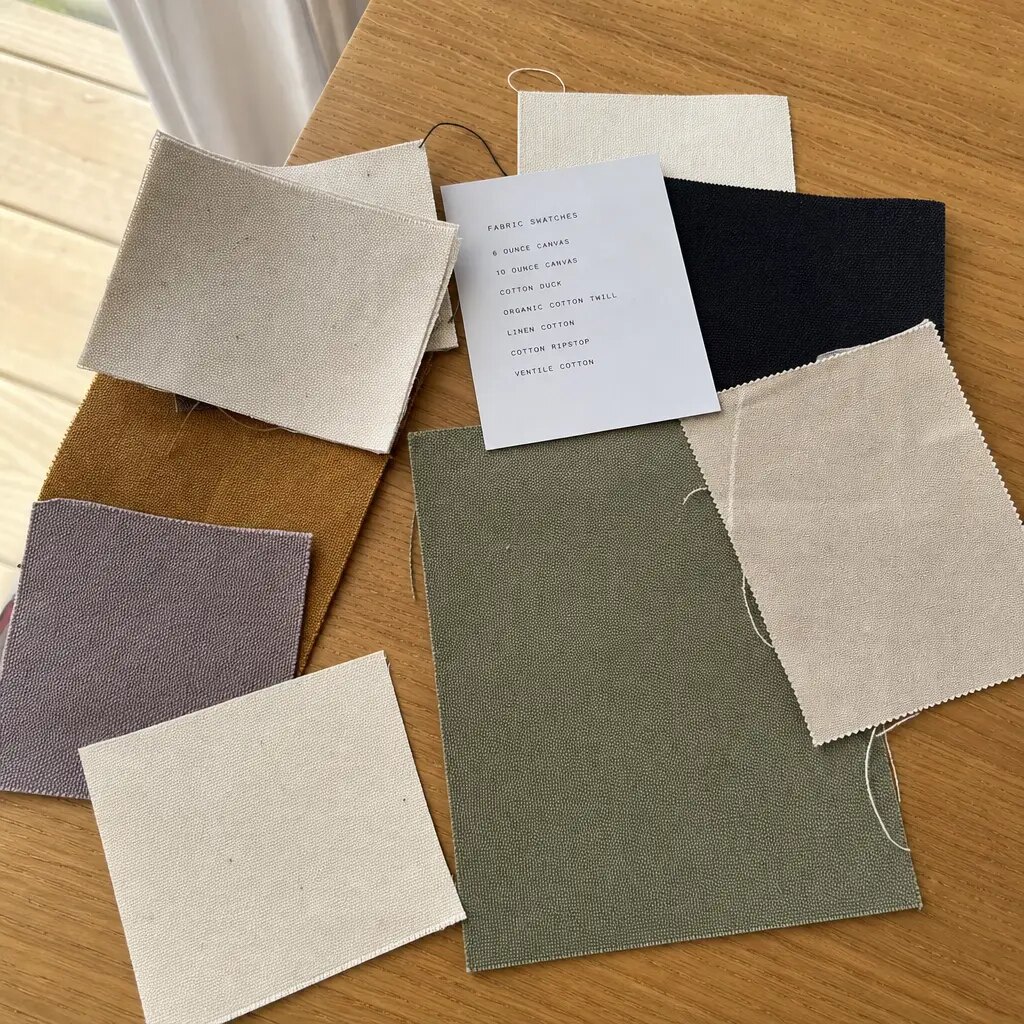
- Request fabric swatches before full sample if comparing 10 oz, 12 oz, 14 oz, and 16 oz canvas.
- Approve a physical sample carrying realistic load weight, not only a flat photo sample.
- Confirm seam allowance, bartack locations, stitch density, and reinforcement at strap anchors.
- Lock packing requirements before quotation, including individual bags, hangtags, barcode labels, cartons, and carton marks.
- Ask suppliers to separate fabric, sewing, printing, packing, and inland freight assumptions in the quote.
Factory quote questions to send
- What is the exact fabric weight in oz and GSM, and is it greige, dyed, washed, or pre-shrunk canvas?
- Is the quoted canvas stock fabric or custom-dyed fabric, and what fabric MOQ applies per color?
- What tolerance applies to fabric weight, finished dimensions, and strap length?
- Which print method is included, how many colors are quoted, and what is the maximum printable area on the flap?
- Are reinforcement bartacks included at strap joints, flap corners, and side stress points?
- Is the price based on unlined construction, and what is the add-on cost for cotton or polyester lining?
- What sample fee, sample lead time, and pre-production sample approval process are included?
- What packing method is quoted: bulk pack, individual polybag, paper belly band, hangtag, barcode, or retail carton?
- What carton size, gross weight, and estimated CBM are expected for the quoted specification?
- What production lead time applies after sample approval, deposit, artwork approval, and fabric availability?
Quality-control points to confirm
- Fabric weight test should match the approved swatch within agreed tolerance, typically allowing normal mill variation rather than a vague visual match.
- Finished bag dimensions should be measured after sewing and pressing, with special attention to flap alignment, gusset depth, and opening width.
- Strap anchors should pass a practical pull test using the intended carrying load, with no skipped stitches or fabric tearing at bartacks.
- Logo print should be checked for position, color, edge sharpness, curing, rubbing resistance, and distortion over canvas texture.
- Magnetic snaps, buckles, sliders, and zippers should open and close smoothly without staining, rust marks, or sharp edges.
- Interior seams should be clean enough for retail use, especially on unlined bags where seam binding is visible to the buyer.
- Carton packing should protect flap shape and prevent hardware from marking neighboring bags during sea freight or courier transit.
- Random inspection should include loading the bag with realistic hotel retail contents, not only measuring flat empty units.