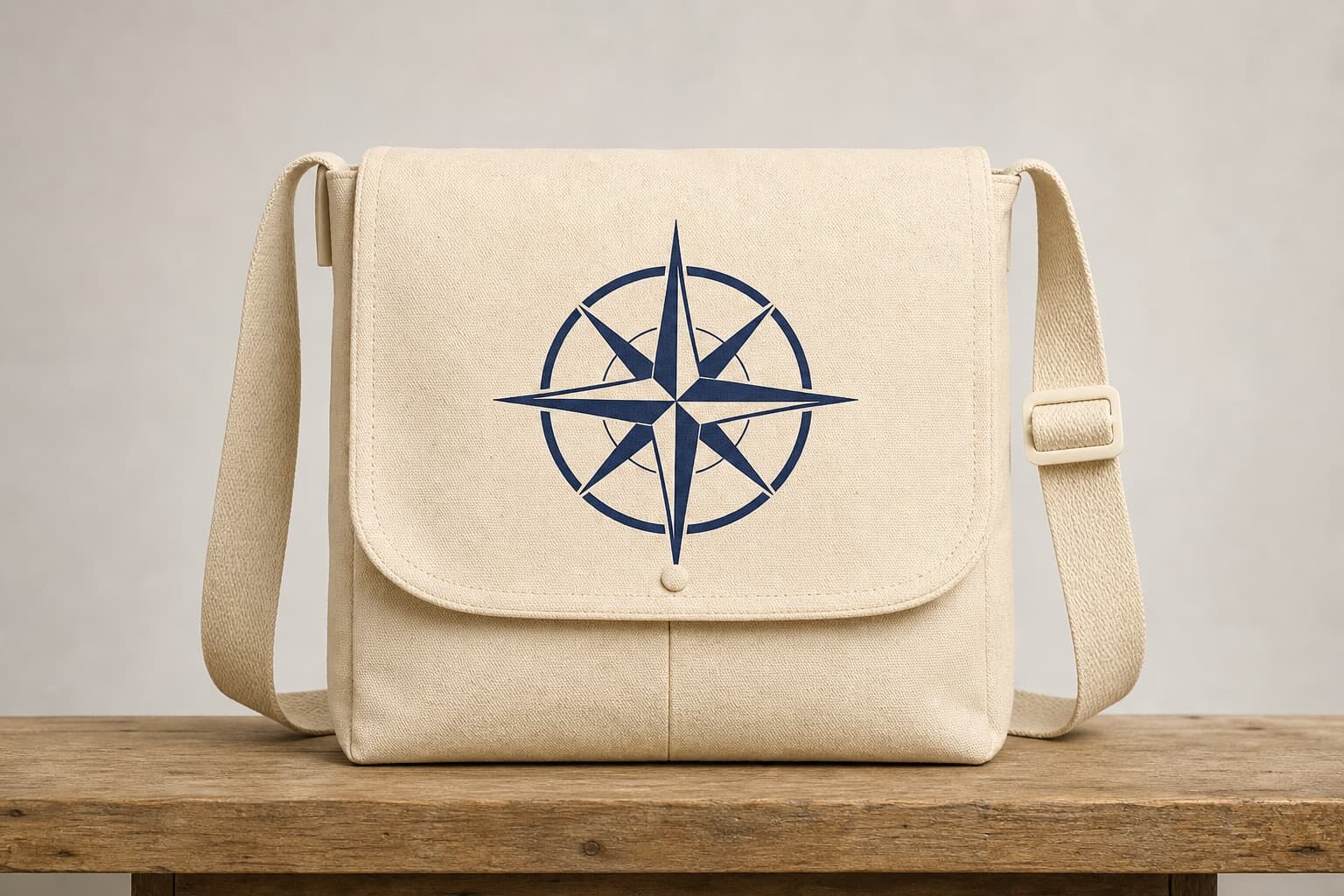
Why Color Tolerance Becomes a Buying Problem
Canvas messenger bag color tolerance is not a design detail. It is a sourcing control that affects returns, markdowns, chargebacks, and whether a buyer can reorder the same item with confidence. On a woven canvas surface, color can look different because of yarn shade, weave density, finish, and even the carton it ships in. A bag that looks acceptable in the sample room can arrive looking slightly off when the light changes, the fabric lot changes, or the printer adjusts ink coverage.
For procurement teams, the real issue is not whether the bag is pretty. It is whether every stakeholder is judging the same reference. If the buyer is comparing against a monitor image, the factory is matching a Pantone fan, and the merchandiser is holding a sealed sample, the order already has three standards. The fix is to define one approved color reference, one tolerance method, and one approval condition before bulk starts.
- Use color tolerance to reduce rework, not to argue after shipment.
- Treat fabric shade, print shade, and trim shade as separate risks.
- Write the tolerance rule into the RFQ before the first sample is approved.
Lock the Reference Before You Discuss Price
The fastest way to get a clean quote is to make the color reference impossible to misread. For a canvas messenger bag, that means sending a physical swatch if you have one, a Pantone reference if the program uses PMS, and a clear note on whether the factory must match the body cloth, the logo ink, or both. A screen image alone is weak because canvas texture absorbs light differently from flat packaging stock or a phone display. If the bag is for a retail line, the buyer should also state the lighting condition used for approval, such as D65 or a controlled sample room setting.
A good RFQ does not say match the sample closely. It says what sample, what side, what component, and what condition. The approval standard should identify whether the standard is a sealed golden sample, a lab dip, a strike-off, or a physical production reference. If the bag has natural canvas body and a printed logo, the buyer should define both separately, because the body cloth and print ink rarely drift in the same way. That is how you prevent one side of the factory from claiming the other side approved a different target.
- Attach the exact approved sample to the PO or tech pack.
- State the light source used during visual approval.
- Separate body color approval from logo color approval.
How Canvas Weight Changes the Color Read
Canvas weight matters because heavier cloth usually looks deeper and more stable in color, while lighter cloth can look brighter, more open, or more uneven. A buyer comparing 12 oz and 16 oz messenger bags should not expect the same tone even when the dye formula is unchanged. On a coarse weave, the valleys between yarns show more shadow, so the bag can appear darker than the lab swatch. On a tightly woven cloth, the surface reflects more evenly and the same color can look flatter and cleaner. That is why the quote should always state GSM, weave density, and finish, not just canvas type.
In practical buying terms, a 280 to 340 GSM body may work for lightweight promotional or fashion carry programs, while a 380 to 480 GSM bag usually gives a more structured retail feel. Higher GSM or coatings can also make the surface less forgiving, which means small color deviations become easier to notice. If the order includes washed or garment-dyed canvas, ask whether the approved standard is before or after washing, because post-wash color can shift in both value and saturation. That detail belongs in the quote, the sample note, and the inspection checklist.
- Quote GSM, weave, and finish together.
- Ask whether the fabric is dyed before sewing or after sewing.
- Check color on the actual construction, not only on swatches.
Choose the Color Method That Fits the Risk
Not every canvas messenger bag uses the same color process. A natural canvas bag with a one-color screen print has a different risk profile than a fully dyed fashion bag with colored straps, binding, and pocket trim. Screen print is usually the most buyer-friendly method for simple logos because the color target is limited to the printed area and the body cloth can stay neutral. But screen print on canvas has its own challenge: the weave can pull ink into the valleys, making the same ink look denser or thinner depending on pressure and mesh choice. That is why a strike-off on real fabric is more valuable than a paper proof.
If the body itself is colored, the buyer should ask how the factory controls dye lot consistency, whether the fabric is pre-dyed or piece-dyed, and whether trims are matched from the same shade family. Embroidery, woven labels, rubber patches, and embossed patches all avoid body color print drift, but they introduce their own visual differences. For example, a woven label may look correct in thread chart form and still clash against the body cloth once sewn onto a dark canvas flap. Choose the method based on the visual risk you can tolerate, not just the unit cost.
- Use screen print for simple logos where body color matters more than graphic color.
- Use woven or sewn labels when you want to reduce ink-related shade disputes.
- Do not approve a print color on paper if the final surface is textured canvas.
Build a Proofing Chain That Catches Drift Early
A strong proofing chain starts before the factory buys bulk cloth. If the bag body is dyed, ask for a lab dip or a small dyed swatch from the same fabric base. If the logo is printed, ask for a strike-off on the actual canvas and, if needed, the actual underbase. Then request a pre-production sample that includes the real body, real trim, real thread, and real label placement. The purpose is not only to confirm color. It is to confirm that the chosen method still looks right after cutting, stitching, and finishing. Many color disputes start because the supplier approved a swatch, then built the bag on a different material stack.
Once the pre-production sample is approved, keep a sealed golden sample and use it as the production reference. A buyer should not rely on a photo of the approved bag because photos change with exposure and white balance. The sealed sample should travel with quality documents and should be used for in-line, final, and reorder comparison. If the supplier proposes a bulk substitution, such as a different lining, zipper tape, or binding color, ask for a new strike-off or mini proto before accepting the change. That extra step is cheaper than a container dispute.
- Lab dip for dyed fabric, strike-off for printed logo, proto for full bag fit and color.
- Seal one golden sample for the PO file and the reorder file.
- Reject component substitutions unless the change is reapproved under the same light.
Set Acceptance Criteria the Factory Can Follow
Tolerance needs to be written in a way the factory can inspect. If the buyer uses Delta E, specify the instrument, the observer angle, the light source, and which points on the bag must be measured. If the buyer uses visual comparison, specify that the sample is judged under D65 light against the sealed standard and that the body, flap, pocket, and strap are checked separately. Avoid loose wording like close enough or same as previous order. Those phrases create room for interpretation and inconsistent inspection. On canvas messenger bags, a small shift in saturation can be acceptable on the inner lining but not on the front panel that faces the customer.
A practical acceptance note should also define what matters most. For a basic retail bag, the buyer may accept small variation in hidden components if the front body and logo are stable. For a premium brand, the buyer may want tighter matching across body, binding, thread, and trim. Put that priority in writing. If you expect colorfastness after rubbing or moisture exposure, say which test method applies and what level is acceptable. The more the standard is split by component and use case, the less the supplier will overprotect a weak area while ignoring the visible one.
- Define the measurement method, light source, and sample points.
- State which areas are high priority, such as front panel and logo.
- Write the pass rule for rub, moisture, and shade consistency in the same document.
What a Good Quote Must Show on the Page
A quote is only useful if it compares the same thing. For a canvas messenger bag, the supplier should state fabric weight in GSM, yarn count or weave description, dye or print method, bag dimensions, strap construction, and the exact packing method. If the factory only gives an all-in price, the buyer cannot tell whether a lower quote comes from a lighter fabric, weaker print, simpler trim, or weaker shade control. Ask for separate lines when the color process adds cost, such as strike-off approval, custom dyeing, extra print colors, or carton shade segregation.
The quote should also show the sample path and the production path. Sample lead time, bulk lead time, and packing lead time are not the same thing. Nor are MOQ for the bag style, MOQ for each colorway, and MOQ for each print version. If the supplier tells you a color change requires a larger minimum, you need that information before releasing artwork. The point is not to chase the cheapest offer. It is to compare equivalent risk. A quote that looks lower but hides a loose color process is usually the more expensive order later.
- Request fabric, print, trim, and packing details on separate lines when possible.
- Ask for MOQ by style, by colorway, and by print version.
- Make sample timing and bulk timing visible in the same quote.
MOQ and Lead Time Depend on Color Complexity
Color complexity affects the economics of canvas messenger bags more than many buyers expect. One body color with one logo color is easier to stabilize than a bag with colored body, contrast flap, matching straps, and multiple print locations. Every additional color can add setup work, extra approvals, and more chance of lot mismatch. If the order has several colorways, it is smart to ask whether the factory can hold the same fabric lot across the program or whether each color will use a different lot. The answer affects not only consistency but also reorder risk, because a repeat order may not match the first run if the original lot is gone.
Lead time should also be separated by stage. Sampling, fabric booking, dyeing or printing, sewing, packing, and final inspection each take time. A supplier who only states one total lead time may be hiding where the schedule can slip. Buyers should ask whether the factory has pre-dyed stock, whether new dye lots are needed, and whether shade approval must happen before cutting. For launch programs, keep a little buffer between sample approval and commercial release. For reorders, ask the factory to reserve or duplicate the same color standard so the second shipment does not become a new shade story.
- More colorways usually mean higher MOQ pressure and more approval points.
- Separate sample lead time from bulk lead time.
- Ask if the factory can reserve or repeat the same fabric lot for reorders.
Packing Can Change How the Color Looks on Arrival
A bag that passed approval can still disappoint if it is packed poorly. Canvas is sensitive to moisture, pressure, and contact with darker materials during transit. If the bag sits tightly compressed in cartons, the surface can look flatter or slightly burnished when unpacked. If the polybag is too thin or the carton is exposed to humidity, the fabric can change appearance before the buyer ever opens the shipment. This is why color approval is not complete until packing is also approved. The packing spec should include the polybag type, carton count, ventilation or desiccant needs, and any separation between shades or colorways.
For mixed programs, ask the factory to label shade groups clearly and keep each lot isolated. That matters even more when one order has natural canvas, dyed canvas, and printed canvas in the same shipment. If cartons are mixed, warehouse teams and stores may receive slight shade differences in one delivery and assume the supplier made a mistake. In reality, the mistake was usually weak carton discipline. Put the shade band on the master carton mark if you expect multiple lots, and require a packing photo before shipment if the order is high risk.
- Approve packing as part of color control, not as an afterthought.
- Use lot labels and shade segregation for any multi-lot shipment.
- Protect canvas from moisture and over-compression in transit.
Common Mistakes and the Buyer Workflow to Close Cleanly
The most common mistake is approving a sample without naming the exact reason it passed. Buyers may say the color looks good, but that gives the factory no measurable target. The second mistake is changing one trim, one strap material, or one print method after approval and assuming the color will stay the same. The third mistake is comparing later bulk cartons against the memory of a sample instead of the sealed sample itself. A fourth mistake is letting different teams use different references, such as marketing using a screen image while procurement uses a swatch. Those inconsistencies create avoidable disputes.
A cleaner workflow is simple: define the reference, approve the sample under the right light, freeze the material list, lock the quote, and then inspect the first output against the sealed golden sample. If the factory needs a change, make it before bulk cutting or printing, not after. For repeat orders, reopen the original reference file and check whether the same fabric lot, print ink, and packing method are still available. That is how buyers keep a canvas messenger bag line stable across seasons instead of treating every order like a new experiment.
- Do not approve color from memory or from a product photo.
- Freeze fabric, print, trim, and packing before bulk release.
- Recheck the original standard on every reorder.
Specification comparison for buyers
| Spec decision | Recommended option | When it fits | Buyer risk to check |
|---|---|---|---|
| Fabric weight / GSM | 12-16 oz canvas, stated in GSM and finish | Most retail messenger bags, from casual promo to structured carry | Same color can read darker on heavier weave or coated cloth |
| Base cloth color | Natural greige or pre-dyed bulk fabric matched to a sealed standard | Programs where body color matters more than print complexity | Greige variation, yarn shade drift, and finishing can shift the final tone |
| Logo color method | 1-2 color screen print with approved strike-off | Buyer logos, school programs, and simple retail graphics | Ink opacity, edge bleed, and weave fill can change the look on canvas |
| Approval standard | Lab dip or strike-off plus golden sample and written tolerance | Repeat orders and multi-batch production | Without a sealed reference, each production lot becomes its own standard |
| Packing method | Individual polybag, carton shade segregation, lot labels, and moisture control | Long transit lanes, humid destinations, and mixed-color orders | Heat, pressure, and moisture can alter how the bag looks on arrival |
Buyer checklist before sampling
- Confirm the exact canvas weight in GSM, the weave type, and whether the tolerance is set before or after finishing.
- Attach a physical color standard, Pantone code if relevant, and a lighting condition for approval in the RFQ.
- Require a lab dip, strike-off, or sewn proto sample before bulk cutting starts.
- Ask the factory to state the color tolerance method, not just a vague promise to match sample.
- Check the body panel, flap, pocket, strap, binding, and thread color under the same light source.
- Confirm the logo print method, ink system, number of colors, and whether an underbase is needed.
- Request lot numbers for fabric, print, trims, and packing so shade issues can be traced later.
- Lock the packaging spec, including polybag type, carton count, and any moisture protection.
- Compare quotes on the same fabric weight, same print count, same accessories, and same packing level.
- Keep the approved golden sample sealed and referenced on the PO and quality checklist.
Factory quote questions to send
- What is the exact fabric weight in GSM, yarn count, and finish for the quoted messenger bag?
- Is the body cloth natural, piece-dyed, yarn-dyed, or finished after sewing?
- Which print method will you use for the logo, and what strike-off will I approve before bulk?
- What color tolerance standard do you follow for the body cloth and printed logo?
- Can you quote the same style with the same fabric lot, or will a new lot be used for bulk?
- What is the MOQ per colorway, and does the MOQ change if we use more print colors or trim colors?
- What is the sample lead time, bulk lead time, and packing time, each quoted separately?
- How will you pack, label, and segregate shade lots to prevent mixed cartons?
Quality-control points to confirm
- Approve color under the same light source used for the buyer standard, ideally with a controlled daylight reference.
- Measure the body, pocket, flap, binding, and straps separately because each component can shift in tone.
- Check print opacity, edge sharpness, and registration on the actual canvas weave, not on a smooth swatch.
- Review first, middle, and last cartons to catch shade drift across the production run.
- Verify that sewing thread, zipper tape, and webbing do not clash with the approved body color.
- Inspect for color transfer after rubbing, packing compression, and short moisture exposure during transit simulation.
- Record fabric lot, dye lot, print batch, and packing lot on the inspection report.
- Hold back one sealed golden sample for repeat orders and dispute resolution.