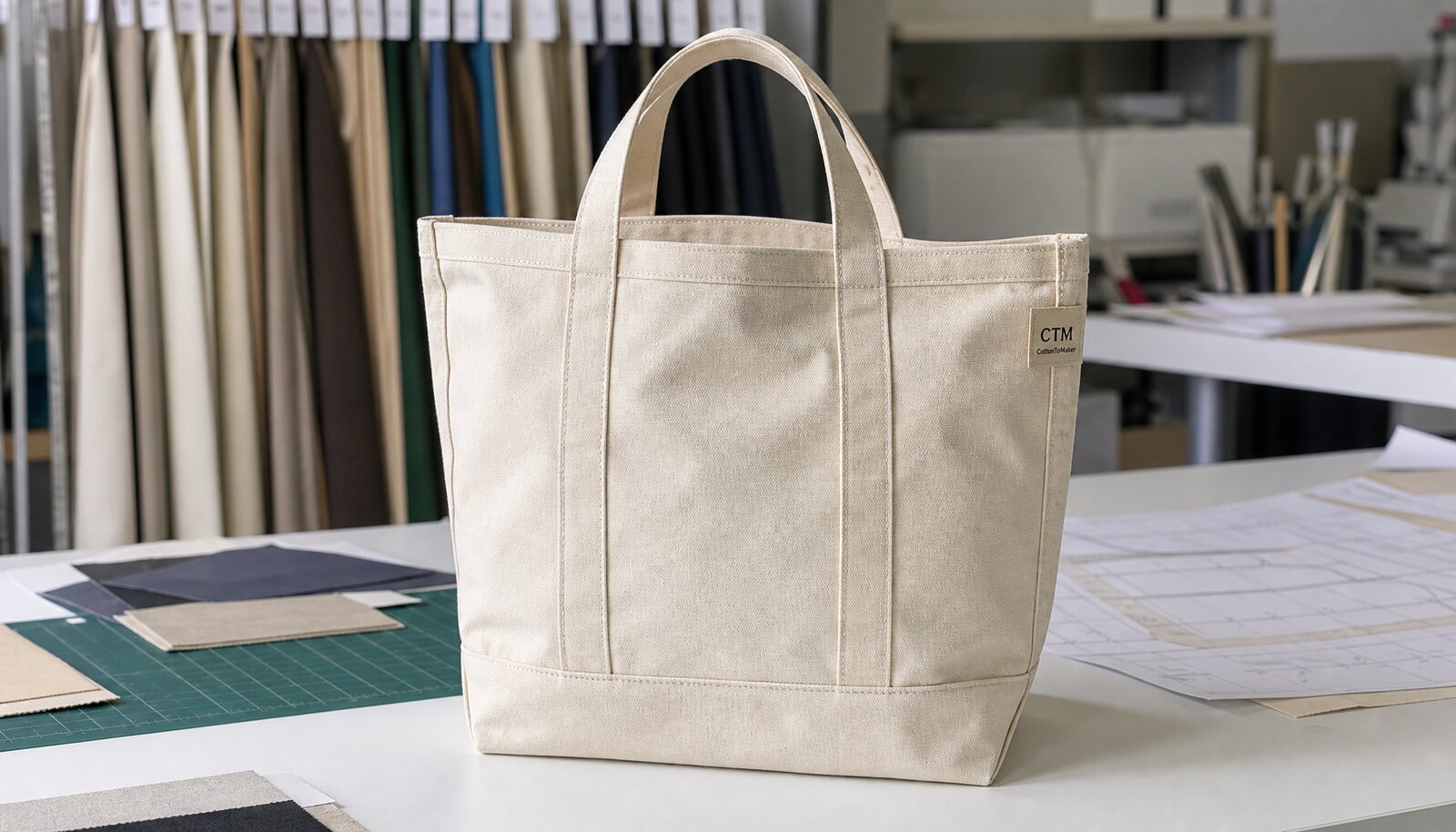
Start With the School Use Case
A school library tote is not a lifestyle tote. It has to carry books, folders, and sometimes a lunch box without turning into a soft sack that folds in on itself. The material choice should start with actual use: how many books the bag needs to hold, how often it is reused, whether children will carry it by hand or on a shoulder, and whether the bag has to survive being stuffed into a cubby every day.
That is why a useful RFQ for canvas library tote bags for schools should describe the user and the load before it mentions color or artwork. A tote for a reading program can be lighter and cheaper than a tote for a school bookstore or a take-home library initiative. If you do not define the use case, you will get quotes that look comparable on paper but perform very differently in the classroom.
- State the target user age and how the bag will be carried.
- List the real load, not just the bag dimensions.
- Say whether the tote must stand upright, fold flat, or both.
- Specify whether washing, spot-cleaning, or no-cleaning is acceptable.
Choose Canvas Weight by Load, Not by Trend
For school use, canvas weight is the first decision that changes both performance and cost. In practical sourcing terms, 8-10 oz canvas is the entry level, 10-12 oz is the common working range, and 12-14 oz is the heavier option when the tote needs a more structured hand. A lighter fabric can be fine for flyers, thin readers, and event handouts, but it starts to deform once hardcovers and notebooks are stacked inside.
The safest middle ground for most school library programs is usually 10-12 oz finished canvas. It gives enough body for repeated use without making the tote so stiff that it becomes awkward for children to fold, store, or carry. If the supplier quotes only mill weight, ask whether that figure is before washing, coating, or brushing. Finished weight is what matters once the bag is sewn and packed.
- Use 8-10 oz when the tote is mainly for light reading materials or one-time distribution.
- Use 10-12 oz when the bag needs to survive repeat use and mixed book sizes.
- Use 12-14 oz only when the tote must feel premium or carry heavier loads.
- Do not compare quotes unless the weight basis is the same on every sample.
Finish, Color, and Shrinkage
Natural unbleached canvas is usually the lowest-cost route and works well for simple logos. The tradeoff is visual inconsistency: small flecks and a warmer base color can make fine detail look less sharp. Bleached or off-white canvas gives a cleaner background for school branding and makes light logos easier to read, which is useful when the design needs to look formal across many schools or districts.
Dyed canvas is useful when the school color is part of the program identity, but the buyer should expect a higher risk of shade variation and a higher MOQ threshold. Washed or enzyme-softened canvas feels better in hand and folds more easily, yet it can move more in size and texture from lot to lot. If the tote will be used by children and stored in classrooms, specify a finished appearance that can tolerate some variation instead of chasing a fashion-grade color standard.
- Use a lab dip or approved shade sample for dyed canvas.
- Ask for shrinkage data on the finished fabric, not just the roll.
- If print contrast matters, prefer bleached or even-toned canvas.
- If the bag may get dirty often, check colorfastness and rub resistance.
Design Handles and Gussets for Books
Handle design matters as much as the canvas itself. Self-fabric handles are common and cost-effective, but they need enough width and fold depth to avoid cutting into small hands. Cotton webbing handles cost more, but they usually feel cleaner in use and hold up better when the bag is loaded repeatedly. For a school tote, the handle should be chosen for comfort under weight, not just for appearance in a product photo.
The gusset changes how the tote behaves with books. A flat bag works for handouts, but a bottom gusset helps the tote stand up and prevents books from collapsing into a narrow stack. Reinforcement at the handle anchors and top edge is critical. Most failures happen at the stress points where the handle joins the body, so ask the factory how the bar-tacks, seam allowance, and topstitching are built before you approve the spec.
- Use wider handles when children will carry hardbacks or multiple books.
- Prefer a bottom gusset when the bag must hold mixed book sizes.
- Check the handle anchor structure on the physical sample, not just the drawing.
- Load-test the tote with the real book stack before approval.
Pick a Print Method That Survives Reuse
For school totes, screen printing is still the most dependable option when the artwork is simple. It gives solid coverage on canvas, keeps unit cost under control at volume, and is easy to repeat on reorder. Heat transfer is useful for smaller orders, multiple names, or full-color artwork, but it needs a real durability check because the printed layer can crack or lift after repeated abrasion. Embroidery is durable, but on lightweight canvas it can distort the fabric and add unnecessary cost for a simple school logo.
The artwork placement has to respect the construction of the bag. A large logo that crosses a seam, gusset fold, or handle anchor can look acceptable in a digital proof and still fail in production. For multi-school programs, lock the print file, the mesh count or transfer spec, and the exact print area so every reorder matches the first lot. If the school wants variable names or grades, decide early whether that personalization happens in the factory or after import, because the routing changes the MOQ and the lead time.
- Use screen print for simple logos and repeat orders.
- Use transfer print only when artwork complexity or short-run flexibility matters.
- Keep logos away from stress seams and fold lines.
- Run a rub test and a visual hold-up check on the sample.
Separate Fabric Cost from the Landed Cost
The cheapest quote on an ex-factory basis is often not the cheapest tote in your warehouse. Canvas weight, dyeing, print color count, handle type, packing format, and carton size all affect the real delivered cost. A heavier fabric may reduce complaints, but if it expands carton cube and freight charges, the landed cost can become worse than a lighter bag with smarter reinforcement. Buyers need to compare like with like, not compare a basic tote to a premium tote simply because both are called canvas bags.
Ask every supplier for line-item quote data. You need the fabric GSM, the print setup fee, the sample fee, carton quantity, gross weight, and whether labels or barcodes are included. That makes it possible to separate one-time charges from recurring unit cost and to compare direct factory, trader, and stockist routes on the same basis. If the quote cannot be broken down, it is not ready for procurement review.
- Compare ex-factory, FOB, and delivered cost, not just unit price.
- Include carton cube in the comparison because freight can erase fabric savings.
- Separate tooling and setup charges from the recurring bag cost.
- Ask for quote validity dates so pricing does not move during sampling.
Choose the Right Supplier Route
Different sourcing routes change the bag spec in different ways. A direct factory gives the most control over fabric, sewing, and print, but it needs a clean brief and is less forgiving when the order has many variants. A trading company can coordinate multiple materials or packaging instructions, but you need to know who actually owns the fabric control and who is only passing along a sample. Stock distributors move quickly, yet they limit your ability to lock exact dimensions, canvas weight, and color.
For a school program, the right route depends on what the buyer is protecting. If consistency across many districts matters, a direct factory with in-house cutting and printing usually gives the most repeatable result. If speed matters more and the tote is a short-term giveaway, stock blank bags with local print can work. What matters is evidence: actual sample photos, production room photos, cut panels, print tests, and a clear statement of who controls the fabric and who owns the final QC.
- Request photos from the actual production line, not only from the sales office.
- Ask whether the sample came from the same fabric lot as the bulk order.
- Confirm who owns the print screens, files, and reorder records.
- Verify whether the bag is cut-and-sewn in-house or outsourced.
Approve a Production Sample, Not a Sales Sample
A sales sample can hide a lot of problems. It may use a different fabric lot, a cleaner print setup, or a tighter seam finish than the bulk run. For school totes, approval should be based on a production-intent sample made from the actual bulk fabric, using the final print method and the final packing spec. If the bag is meant to carry books, load it with real books and handle it the way a child or teacher would use it in practice.
The sample should answer real procurement questions, not just visual ones. Does the tote stand properly with books inside? Does the handle length feel right in hand? Is the logo readable after rubbing, folding, and unboxing? Record the exact fabric code, print file version, carton count, and label position when you approve the sample. That record becomes the only reliable reference if the first production lot arrives with a different hand-feel or a shifted print.
- Use the same fabric and print process intended for bulk production.
- Load the sample with real books to test shape and stress points.
- Check print rub resistance, odor, and seam appearance before signoff.
- Freeze the sample record so reorder disputes are easier to resolve.
Plan Packing and Lead Time Around the School Calendar
Packing needs to match the distribution path. If the bags are going to school libraries, classrooms, or retail shelves, decide whether they should be folded flat, polybagged, nested in bundles, or packed with barcode labels. A poor packing spec can flatten the tote too hard, leave permanent crease lines on the print, or inflate carton size in a way that raises freight. It can also slow down receiving if the distribution team has to count and relabel every carton by hand.
Lead time risk usually comes from fabric sourcing and sample approval, not from sewing alone. A blank stock bag can move quickly, but custom color, custom dye, or custom print will extend the clock. Build the schedule backward from the school distribution date and leave space for one round of sample correction. For repeat orders, keep the approved fabric code, print file, carton spec, and packing method in a reorder file so the second buy is not treated like a fresh development project.
- Set a packing format before production starts.
- Leave time for sample review, not just for sewing.
- Hold the approved fabric code and print file for reorders.
- Build a buffer before the school term begins.
Specification comparison for buyers
| Spec decision | Recommended option | When it fits | Buyer risk to check |
|---|---|---|---|
| Low-cost school giveaway | 8-10 oz unbleached canvas with one-color screen print | Best for handouts, reading fairs, and lighter books | Can sag with hardcovers; test handle stitching and print opacity on flecked fabric |
| Standard library tote | 10-12 oz natural or bleached canvas with a bottom gusset | Most school programs and bookstore resale | Confirm finished GSM, not only mill sheet weight; check seam strength at gusset corners |
| Premium reuse program | 12-14 oz bleached canvas with reinforced handles and bound top | When the bag must last multiple semesters | Higher freight and folding stiffness; make sure landed cost still works |
| Color-branded campaign | Dyed canvas with spot print or woven label | When school colors need to show clearly | MOQ can rise and shade matching may drift between lots |
| Simple logo at scale | Direct factory screen print | Large runs with one or two colors | Ask who owns screens and whether reorders use the same ink and mesh |
| Small urgent order | Stock blank bags plus local print | Short deadline or pilot run | Blank stock may not match exact dimensions or fabric hand-feel across suppliers |
| Complex art or variable data | Factory transfer print or local personalization after import | School names, grade levels, or full-color artwork | Durability can drop; run rub and wash tests before approval |
| Eco-positioned program | Recycled cotton or certified cotton route | When procurement has sustainability criteria | Need evidence of traceability and finished quality, not just claims |
Buyer checklist before sampling
- Define the real load: number of books, folder size, and whether the tote must carry hardcovers daily.
- Lock the finished fabric spec: canvas weight, weave, color, and whether the weight is prewash or finished.
- Choose handle construction: self-fabric or webbing, handle width, length, and reinforcement method.
- Confirm gusset depth and body dimensions so books sit upright instead of collapsing at the bottom.
- Set the print method, print size, color count, and exact placement relative to seams and handles.
- Require a production-intent sample made from the actual bulk fabric and final print process.
- Specify packing: folded size, polybag or no polybag, inner bundle count, and carton quantity.
- Request quote lines for sample fee, print setup, packaging, and any label or barcode costs.
- Compare MOQ by color and by artwork version, not just the headline unit price.
- Document acceptance criteria for inspection, including fabric weight tolerance, size tolerance, and print quality.
Factory quote questions to send
- What is the finished GSM of the bulk fabric, and is that measured before or after washing and finishing?
- What handle material, width, length, and reinforcement method are included in the quoted price?
- Which print method is quoted, how many colors are included, and what is the setup charge for screens or plates?
- What is the MOQ by color and by artwork version, and does a reorder keep the same spec and same toolings?
- Can you quote the same bag as ex-factory, FOB, and packed carton price so we can compare landed cost properly?
- What are the sample lead time and bulk lead time after sample approval, and what typically delays release?
- What carton size, gross weight, and bundle count are included, and can you adjust packing for school distribution?
- What inspection records, fabric test notes, or in-line QC photos can you provide before shipment?
Quality-control points to confirm
- Finished fabric weight matches the approved spec within the agreed tolerance on bulk fabric, not only on the supplier's spec sheet.
- Finished bag dimensions, gusset depth, and handle length stay within the agreed dimensional tolerance across random cartons.
- Handle anchors use consistent reinforcement stitching with no skipped stitches, loose loops, or pulled seam edges.
- Print placement, registration, and opacity match the signed-off sample, with no cracking, smearing, or edge lift after a rub test.
- A loaded tote using real books shows no seam slippage, bottom distortion, or handle pull-out in a practical carry test.
- Carton count, bundle count, and barcode labels match the packing list exactly, with no mixed sizes in the same carton.
- No visible oil stains, mildew, odor, or fabric contamination appears on panels, seams, or inside folds.
- If dyed or washed fabric is used, shade variation stays within the approved lot standard across all panels of the bag.