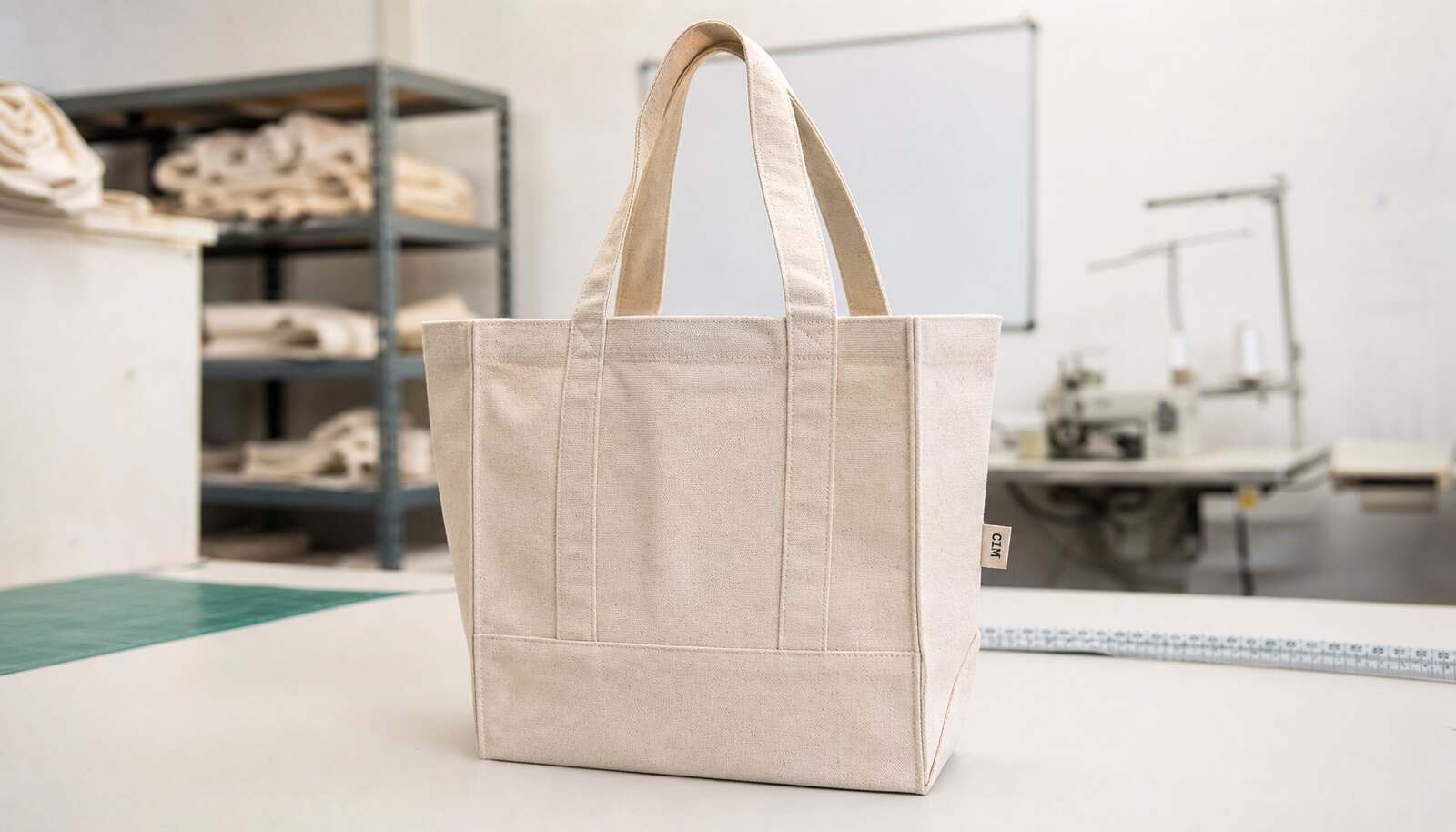
1. Start With The Load, Not The Logo
Museum buyers usually lose time when they start with artwork instead of use. A tote for member mailers or event leaflets is a different product from a tote that needs to carry hardbacks, exhibition catalogs, and retail merchandise. Put the load requirement in writing first. If the bag must handle books, a thin promotional tote is the wrong starting point, no matter how clean the logo looks.
For procurement, the useful question is not whether the bag looks sturdy in a photo. It is whether the bag will keep shape, hold weight, and present well after repeated use in a shop or membership program. A museum tote often needs to do three jobs at once: carry, sell, and represent the institution. That means the spec should cover performance, shelf appeal, and branding in one sheet.
- State the expected contents: paperback books, catalogs, retail items, or mixed merchandise.
- Set a target load in kilograms or pounds and whether the bag must stand upright.
- Separate giveaway use from retail use, because the acceptable fabric weight is not the same.
- Decide early whether the bag must fold flat for stockroom efficiency or keep structure for shop display.
2. Use Canvas Weight As Your First Cost Filter
For this category, canvas weight is the fastest way to narrow quotes. A 10 oz bag is around 340 gsm and can work for light retail use or brochures. A 12 oz bag, around 400 gsm, is the safer baseline for museum bookstores because it balances body, print quality, and cost. If the tote will carry heavier books or needs a premium feel, 16 oz, around 545 gsm, gives more structure but increases material cost and sewing effort.
Do not compare suppliers only on fabric weight without checking finishing details. Two 12 oz bags can feel very different if one uses a tighter weave, longer handle reinforcement, or a better base seam. For museum buyers, the best value is often a 12 oz bag with reinforced handles and a clean top edge rather than a thicker bag with weak stitching. If the tote is for a premium shop line, a heavier fabric is justified only if the visual and functional upgrade is clear.
- 10 oz suits light handout use and lower-cost museum programs.
- 12 oz is a practical default for bookstore and gift shop carry bags.
- 16 oz makes sense when the tote must support heavier books or a premium retail price point.
- Ask for the fabric weight in both oz and gsm so the quote is easy to compare across suppliers.
3. Build Details Matter More Than Most Buyers Expect
A museum tote fails at the seams long before the logo fails. Pay attention to handle width, handle length, handle drop, side gusset, bottom gusset, and where the stress lands when the bag is full. A self-fabric handle can look clean, but if the tote carries weight, a webbing handle or a double-layer fabric handle with reinforced stitching is usually a safer choice. If the bag will be sold retail, it should also look balanced when empty, not collapse into a soft tube.
The cleanest quote is the one that names each structural choice. If you want a gusset, say how deep it should be. If you want a bottom board or insert, specify it. If you want inner binding, top-stitching, or a turned edge, list it. These details change labor time, sewing complexity, and carton pack. They also change whether the bag looks like a promotional giveaway or a proper museum shop item.
- Use reinforced handle attachment for any tote expected to carry books or boxed merchandise.
- Specify gusset depth in centimeters or inches, not just as a drawing note.
- If structure matters, ask for a base board, bottom insert, or heavier seam allowance.
- Make the bag construction part of the spec sheet, not an informal note in the email thread.
4. Choose The Print Method By Run Size And Artwork
For most museum logos, screen printing remains the most reliable option because it gives strong opacity on canvas and holds up well in repeat production. One to three spot colors is the sweet spot. If the artwork is a simple wordmark, a screened logo or woven side label usually gives a cleaner result than trying to reproduce fine detail across a textured canvas weave. Full-color artwork can be done, but it should be treated as a separate process decision, not a default.
The print method should match both budget and brand standards. Heat transfer may suit smaller orders or complex graphics, but it can feel less durable on a bag that will be rubbed, folded, and carried daily. Embroidery can work for small marks, but on a large tote face it can pull the fabric and distort the panel. For museum programs, the practical rule is simple: use the least complicated decoration that still preserves brand clarity and survives handling.
- Provide vector artwork and state Pantone references if color accuracy matters.
- Specify print size and placement with a drawing or marked mockup.
- If printing on dyed canvas, clarify whether an underbase or extra ink pass is needed.
- Keep the decoration simple if the tote is expected to be packed flat and handled repeatedly.
5. Compare Quote Structures Before You Compare Unit Prices
A useful wholesale quote breaks the tote into real cost drivers: fabric, cutting, stitching, printing, label, packing, carton, and any special finishing. If one supplier includes screens in the unit price and another lists them separately, those numbers are not comparable until you normalize them. The same is true for sample fees, artwork setup, and the way overs or shortages are handled. A low unit price can disappear once setup, packaging, and freight are added.
MOQ logic also matters. A simple one-color tote in a standard size often carries a lower MOQ than a bag with multiple colors, lining, or custom packing. If the supplier pushes the MOQ up, find out whether the constraint is fabric purchase, print setup, sewing line efficiency, or carton packing. That answer tells you whether the quote is reasonable or just padded to cover uncertainty. For museum buyers, the right quote is the one that can be repeated on reorder without surprise costs.
- Compare quotes only after aligning fabric weight, bag size, print count, and packing format.
- Separate one-time setup charges from repeat-order unit costs.
- Check whether overs, under-runs, or extra cartons are allowed and who absorbs them.
- Ask for the same spec in blank, printed, and retail-packed form if you need landed-cost comparison.
6. Match The Sourcing Route To The Buying Situation
The cheapest factory is not always the best sourcing route for a museum program. Direct factory buying works well when the buyer has a stable spec, can wait for sampling, and wants repeatable pricing. A trading company can be useful if the order includes several products or if the buyer needs one point of contact across different factories. A local printer on imported blanks is better when the deadline is tight and the decoration is simple. Each route has a different failure mode, and good procurement teams price that in before the PO goes out.
For this product, the biggest risk is not the bag body alone. It is the handoff between cut-and-sew, printing, packing, and final shipping. If those steps sit with different vendors, the chance of mix-ups, print damage, or shade mismatch rises. If the project is for a museum store launch, a single accountable factory usually beats a fragmented chain. If the project is a short-run campaign, a hybrid route may save time, but it needs tighter sample control.
- Direct factory is best for repeat business and stable museum programs.
- Local printing on blanks is best when speed matters more than unit cost.
- Trading companies are useful only when the buyer values coordination more than transparency.
- Split sourcing should be used only when the chain of custody is documented clearly.
7. Approve The Sample Like A Receiving Clerk
A sample should be judged as a working product, not as a presentation piece. Measure the finished size, handle length, and handle drop. Load the tote with the kind of items it will carry in real use, then see whether the seams stay flat and the bag keeps its shape. If the museum shop sells the tote as a premium item, check whether the fabric lies cleanly and whether the top edge looks even from every angle. That is the difference between a merch item and a product that belongs on a shelf.
Keep one approved sample as the gold standard and mark it clearly. The sample should include the final print position, the approved color reference, the handle construction, and the packing method if that matters to the retail program. If the factory offers a preproduction sample, use it to catch problems before bulk cutting starts. A minor adjustment in the sample stage is cheap; the same correction in bulk production is expensive and usually visible.
- Check size, handle symmetry, print position, and seam finish on the sample.
- Load the bag with books or catalogs, not just light merchandise.
- Record the approved color, material, and packing method in writing.
- Treat any sample revision as a new approval point, not a verbal agreement.
8. Packing And Cartons Decide Your Damage Rate
Packing is easy to ignore because it looks like a logistics detail, but for canvas totes it affects resale quality. A tote that arrives folded too tightly can hold a permanent crease or transfer ink if the print is still not fully cured. If the museum sells the bag directly from the carton, the pack format should let the shop team pull, scan, and display it quickly. If the tote is bulk-shipped to a distributor, the carton count and pallet pattern matter more than the retail look of each individual unit.
The quote should state how each tote is folded, whether it is polybagged, whether tissue is included, and how many units go into a carton. For cotton canvas, excessive moisture sealing is not always ideal, so use packing that protects the print without trapping problems. Mark the carton with SKU, color, size, quantity, and destination label. If the order will move through several hands, clear carton marks save more time than almost any other packing detail.
- Specify folded dimensions if the bag must fit a shelf, bin, or counter display.
- Match carton count to the store or warehouse receiving process.
- Use master carton marks that identify SKU, color, quantity, and purchase order number.
- Avoid overpacking if the print needs curing time or if folds are likely to crease the front panel.
9. Plan Lead Time Around Approval, Not Just Sewing
Many tote orders run late because the buyer schedules only the sewing time and ignores approval time. Fabric purchase, screen preparation, sample correction, and carton printing all sit before the bulk line can run cleanly. If the artwork is new or the color needs a close match, build in extra time for corrections. Museum programs tied to exhibition openings or holiday shop launches should work backward from the retail date, not forward from the deposit date.
Lead time also changes with order complexity. A repeat order on a locked spec is faster than a first run with custom labels, multiple colors, or new packing. If the buyer changes the artwork after sample approval, the schedule can slip even if the sewing capacity is available. For that reason, the best timeline control is a frozen spec sheet. Once the bag structure, logo, and pack format are frozen, the factory can quote a real production window instead of a guess.
- Work backward from the museum opening, not from the factory start date.
- Assume extra time for first-time artwork, color matching, or custom labels.
- Keep revision control tight so the approved sample and bulk order stay aligned.
- Separate repeat-order timing from first-order timing when planning inventory.
10. Use Landed Cost And Reorder Rules To Protect Margin
The final buying decision should be based on landed cost, not just factory price. Add freight, duty, inland transport, inspection cost, sample fees, and any packing upgrades before you compare suppliers. A slightly higher factory price can still win if the cartons are smaller, the defect rate is lower, or the quote includes decoration and labels that another supplier treats as extras. For importers and distributors, the real margin is made or lost in those hidden lines.
Reorder control is equally important. Once the museum approves the tote, lock the golden sample and record the exact spec revision. If a supplier changes fabric shade, stitch count, or handle width on the next run, the product may look close but still fail retail consistency. Good buyers do not just place orders. They manage the spec history so the second order matches the first one and the customer never notices a drift.
- Compare total landed cost, not factory price alone.
- Track sample fees, freight, duty, packing, and rework risk in the same sheet.
- Lock the approved spec and label it clearly for reorder use.
- Treat any unapproved change in fabric, size, print, or pack as a new revision.
Specification comparison for buyers
| Spec decision | Recommended option | When it fits | Buyer risk to check |
|---|---|---|---|
| Sourcing route: factory direct | Best for a steady museum program with repeat colors and sizes | You want lower unit cost and can manage samples, artwork, and revision control | Confirm who owns the final spec, artwork files, and approved sample |
| Sourcing route: trading company | Useful when you need one contact across several factories or product types | You buy bags plus other gift shop items and want simpler coordination | Check factory identity, commission structure, and whether quotes are truly comparable |
| Sourcing route: local printer on imported blanks | Good for urgent replenishment or short domestic lead times | You need fast decoration and the base bag is already approved | Verify blank quality, seam strength, and whether the blank can carry books without distortion |
| Sourcing route: domestic cut-and-sew supplier | Best for low MOQ, local content needs, or tighter communication | The order is small, the schedule is tight, or the buyer prefers local oversight | Compare fabric cost and labor cost against imported options before accepting the quote |
| Decoration route: in-house screen print | Best for one to three spot colors and repeat museum orders | The logo is simple and you need strong opacity and consistent placement | Check screen fee policy, color control, and what happens if prints misalign |
| Decoration route: outsourced printing | Only if the bag factory is strong and the print partner is proven | The base bag spec is right but the print process needs a specialist | Confirm who pays for rework if cracking, smudging, or shade drift appears |
| Order structure: ready stock with logo add-on | Use for simple giveaways or emergency campaigns | You cannot wait for a custom cut-and-sew run | Make sure stock shade, size, and handle construction are consistent across lots |
| Order structure: split production and local finishing | Works for complex programs with labels, inserts, or shelf-ready packing | You need factory pricing on bags but local kitting before store delivery | Control chain-of-custody so bags are not damaged or mixed during transfer |
Buyer checklist before sampling
- Define the bag use case first: books, catalogs, gift shop merchandise, or visitor giveaways, then set a realistic load target.
- Lock finished size, gusset depth, handle length, and handle drop before requesting prices.
- Choose canvas weight in oz or GSM and state whether you want natural, bleached, or dyed fabric.
- Specify print method, print size, color count, Pantone targets, and whether the logo must stay sharp on a textured weave.
- Decide on reinforcement, lining, pockets, closures, and label type before sampling.
- Set packing format, carton count, barcode labels, and whether the bag should arrive flat, folded, or tissue-wrapped.
- Request a preproduction sample or gold sample and approve it against a written tolerance sheet.
- Align the target ship window, reorder forecast, and any exhibition or store opening deadline before placing the PO.
Factory quote questions to send
- What canvas weight or GSM are you quoting, and is that before or after finishing?
- What is the MOQ at one color, two colors, and multiple bag sizes?
- Are screen fees, plate fees, sampling fees, and artwork setup included or separate?
- Which steps are done in-house and which are outsourced?
- What size tolerance, stitch tolerance, and print registration tolerance do you allow in bulk production?
- What is your standard carton pack, carton size, and gross weight for this tote?
- How many days do you need for sample approval, bulk production, and packing after deposit?
- Can you quote the same bag as blank, printed, and retail-packed so we can compare landed cost cleanly?
Quality-control points to confirm
- Finished width, height, gusset, and handle drop should match the approved sample within the agreed tolerance band.
- Handle attachment should use bar-tacks, X-box stitching, or an equally strong reinforcement with no loose thread ends.
- Print placement should sit within the agreed centerline and not drift visibly between front and back panels.
- Fabric weight, weave, and shade should be consistent across the lot and should not vary from panel to panel.
- Seams should remain flat under load with no open stitches, puckering, or broken seam lines.
- There should be no oil stains, dirt marks, needle holes, broken threads, or sharp metal residue in the finished goods.
- Carton counts, inner pack counts, SKU labels, and shipping marks should match the purchase order exactly.
- Keep one sealed golden sample and a signed spec sheet for reorders so future lots do not drift.