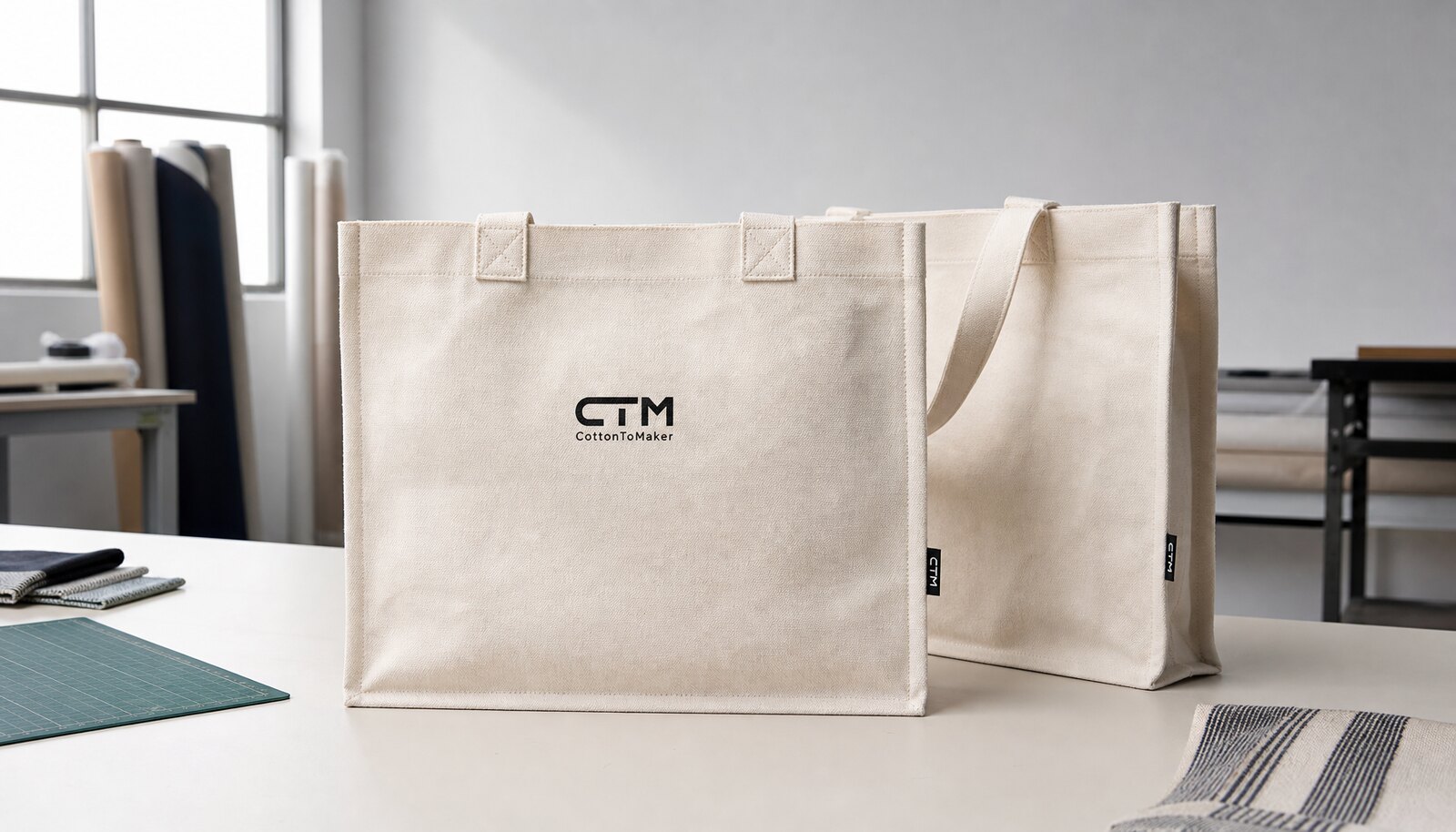
Why print method matters on museum totes
Museum library tote bags are judged in retail conditions, not on a spec sheet. The customer sees the bag hanging on a hook, stacked on a shelf, or folded in a museum shop bin long before they learn what canvas weight it uses. That means the print method affects the product’s perceived value as much as the logo itself. A crisp, opaque mark on natural canvas reads as intentional retail merchandise. A blurry transfer, a puckered embroidery badge, or a logo that shifts off center makes the bag look like an afterthought.
The right method also depends on how the tote is sold. A museum shop bag meant to carry books, postcards, and a catalog needs more than a decorative front panel. It has to survive folding, customer handling, and repeat use while still looking presentable. That is why print choice should be evaluated with the artwork, the bag construction, and the sales channel together. If those three variables are not aligned, the cheapest quote often becomes the most expensive problem after delivery.
- Museum buyers usually need retail visibility first, not just a decoration that looks good in a file proof.
- On canvas, the texture of the fabric can soften detail, so the method has to match the artwork instead of forcing the artwork to fit one method.
- A good first question is not what is cheapest, but which method preserves the museum’s brand on the actual tote.
Lock the bag spec before comparing methods
Print quotes are only useful after the bag spec is fixed. If the supplier is asked to price a logo before the canvas weight, body size, gusset depth, handle construction, and color are locked, the quotes will not be comparable. A 10 oz bag and a 14 oz bag can take the same artwork, but they will not behave the same in print, fold, shipping weight, or shelf appearance. The lighter bag may drape and crease more. The heavier bag may look better in retail but cost more to sew and freight.
For museum programs, a practical starting point is often natural canvas in the 12 oz to 14 oz range, roughly 400 to 475 GSM. That usually gives enough body for books and merch without making the bag feel overbuilt. From there, the buyer should decide whether the tote is meant to sit upright in a gift shop, fold flat for ecommerce, or function as a premium edition tied to an exhibition. The print method should follow that decision, not the other way around.
- Fix the full bag spec before asking for print pricing, or the quote comparison will be distorted.
- Use the final artwork file, not a rough draft, because small type and thin linework can behave very differently on canvas.
- Leave a safe print margin from seams, folds, and handle stitches so the design does not disappear into construction lines.
How the four methods compare on canvas
Screen print is usually the strongest baseline for museum tote programs with simple branding. It gives reliable opacity on natural canvas, works well for one-color or two-color logos, and scales cleanly when the museum reorders the same item through the year. Because the image is built with screens, the setup is worth it when the order is repeatable and the artwork is stable. For a museum shop that wants a clean wordmark, a calendar of exhibition colors, or a recognizable membership retail tote, screen print is often the most practical commercial choice.
Transfer and digital methods solve a different problem: detail. When the artwork includes gradients, fine illustration, or multi-tone exhibit graphics, they can preserve more of the original image than a standard screen print. The tradeoff is that the print can sit more on top of the canvas than into it, so the buyer needs to check feel, fold wear, and edge lifting. Embroidery is a premium accent, not a general replacement for a front graphic. It is useful for small marks, side placement, or limited-edition shop pieces where the museum wants a tactile finish rather than a flat print.
- Use screen print for bold museum logos, repeat replenishment, and simple color counts.
- Use transfer or digital when the artwork would lose too much detail under a limited screen setup.
- Use embroidery only when the mark is small enough that stitch density will not distort the canvas panel.
Match the method to the artwork and the selling channel
The same tote can need different methods depending on what the museum is selling. A shop bag with a one-color institution name is a screen-print job almost by default. An exhibition tote with a complex poster image may be better suited to transfer or digital, especially if the print needs to preserve gradients or a tight illustration. If the tote is part of a premium retail range, a small embroidered badge or woven patch can add perceived value without trying to embroider the entire front panel.
Channel matters too. Retail shelf programs care about visual consistency, edge finish, and how the tote folds. Ecommerce fulfillment cares about packability, label placement, and whether the print survives carton compression. Event or opening-night bags may prioritize speed, so a method with lower setup friction can be more valuable than the one with the lowest unit price. Procurement should choose the process that protects the buyer’s actual use case, not the one that sounds best in a sales presentation.
- Simple logo plus retail shelf display usually points to screen print on medium-weight canvas.
- Complex exhibit art plus a small launch quantity usually points to transfer or digital.
- Premium limited editions often work best with a small embroidered or patched detail rather than a large stitched front panel.
Read the quote like a production file
A useful quote separates the bag body, decoration, packing, and freight assumptions. If the supplier gives one lump price, the buyer cannot tell whether the cost difference comes from the canvas, the print method, setup, or retail packing. That matters because the museum may care more about unit consistency than about squeezing a few cents from the bag body. If the print method is the real decision driver, it needs to be visible in the quote.
The quote should also describe the decoration assumptions in plain terms. How many colors are included? Is there a setup charge per screen, per plate, or per artwork version? Is the print area fixed or adjustable? Is the decoration in-house or subcontracted? Those details make a direct screen-print factory meaningfully different from a bag maker that outsources decoration. When the quote hides those differences, the buyer is comparing headlines rather than production reality.
- Ask for separate lines for blank bag cost, decoration, sample charges, packing, and freight.
- Confirm the number of colors, print locations, and whether repeat orders carry lower setup cost.
- If the artwork is complex, ask where the break point is between screen print and a transfer or digital route.
Sample approval rules that avoid print disputes
The sample stage should prove the full bag, not just the artwork. A loose print proof can tell you the ink color or image sharpness, but it cannot tell you how the design sits across seams, gussets, and handle stress points. For museum totes, the best approval sample is the finished bag in the final canvas weight, with the final decoration method, final color, and final packing format. That is the only sample that reflects what the shopper will actually receive.
Sample review should be done in conditions close to real use. Check the bag under retail lighting, fold it the way the warehouse will fold it, and load it with books or catalog weight before sign-off. If the print looks good only when stretched flat on a worktable, it may fail once the tote is hanging, packed, and handled. Keep the signed sample with the revision code and the exact artwork file name so the reorder reference is unambiguous.
- Approve the finished bag sample, not only the art file or a loose strike-off.
- Review the sample on the correct fabric lot whenever possible, because canvas texture and color can shift the final look.
- Test the tote folded and loaded, not only empty, so seam stress and print distortion are visible before production.
QC thresholds that catch retail-visible defects
Museum buyers usually spot a logo problem first, but the defects that trigger complaints are often in the sewing and packing. A sensible QC plan checks the fabric, print, construction, and carton count as separate items. The fabric weight should be close to the approved spec, the body dimensions should not drift enough to move the artwork out of place, and the print should not show obvious misregistration or patchy coverage when viewed at normal shelf distance. If the tote is meant to sell as a retail item, these are not cosmetic extras. They are the definition of acceptable.
Practical thresholds help the team avoid vague reject decisions. For a standard canvas tote, body size tolerance around plus or minus 1 cm and front logo placement within plus or minus 5 mm are reasonable starting points. A common on-the-floor test is a dry rub check followed by a light wet rub check after curing. If your organization uses AQL inspection, a common starting point is 2.5 for major defects and 4.0 for minor defects, but the actual standard should match the museum’s risk tolerance and order size.
- Reject fabric that is clearly below the approved weight or feels too soft for the intended retail use.
- Reject prints with visible ghosting, pinholes, edge lift, or color falloff at normal viewing distance.
- Reject stitch work with skipped bartacks, open seams, or thread tails that make the bag look unfinished.
- Match carton labels to SKU and revision code so mixed lots do not reach the shelf unnoticed.
Packing and retail presentation are part of the product
Packing changes how the print looks more than many teams expect. A hard fold can leave a crease line across a transfer print, and a sloppy bundle can make a clean screen print look off-center when the bag is first opened. For museum shops, the bag should usually be folded in a repeatable way so the artwork is visible and the tote opens without looking crushed. If the bag is going to ecommerce or fulfillment, then the pack has to protect the print and support fast scanning, not just shelf appeal.
The correct packing format depends on the route to market. Bulk packing may be acceptable for backroom stock, but retail-ready packs often need a consistent fold, inner bundle count, barcode label, and carton marking. That should be defined before the quote is accepted. If the buyer waits until after production to decide on fold direction or labeling, the supplier will either rework the order or ship a pack format that is inconvenient to store, count, or sell.
- Specify the fold direction so the print lands in the visible panel rather than in the crease.
- Decide early whether the museum wants bulk packing, inner bundles, or shelf-ready individual packs.
- Set carton weight and carton count so receiving teams can handle the boxes without repacking.
Lead time and reorder control without spec drift
Lead time is not just sewing time. It includes fabric sourcing, decoration setup, sample approval, packing, and final carton prep. A supplier quote that gives one total number without showing the step timing hides where delays happen. That is risky for museum launches because a shop opening or exhibition date is usually fixed long before the tote is made. If the artwork changes after the approval sample, the schedule can reset because screens, films, or digital files may need to be rebuilt.
Repeat orders should be simpler, but only if the buyer keeps the spec locked. Store the approved artwork file, canvas weight, print method, revision code, and packing diagram in a single record. Confirm whether the supplier keeps screens or print files for reorder use. If the museum wants the same tote back in six months, the second order should feel like a controlled repeat, not a fresh sourcing exercise with the same item name.
- Ask for separate sample, setup, bulk, and reorder timing instead of one vague delivery promise.
- Expect any artwork change, fabric change, or packing change to add time even if the bag shape stays the same.
- Keep a spare approval sample for quality control and one for merchandising or store reference.
How to choose the method with the least commercial risk
The cheapest decoration line is not always the cheapest landed result. A screen-print job with a modest setup cost can still lose to a transfer or digital option if the art is too detailed for the fabric, because rework, reject risk, or long approvals erase the savings. Embroidery can be a smart premium choice for a small badge, but it becomes poor value if the buyer tries to use it for a full graphic. The real comparison is landed cost plus acceptable risk, not unit price in isolation.
For most museum library tote bags, the decision tree is straightforward. If the artwork is simple and the order will repeat, screen print is usually the first option to price seriously. If the art is complex, the run is small, or the museum needs a fast pilot before committing to a larger shop program, transfer or digital becomes more practical. If the goal is premium retail presentation, use embroidery or a woven patch only where the design size and canvas weight support it. The method should protect the museum’s brand, the tote’s durability, and the reorder path at the same time.
- Choose screen print when the artwork is simple and the program is repeatable.
- Choose transfer or digital when detail matters more than the lowest setup cost.
- Choose embroidery or a patch only when the mark is small enough to stay clean and legible on canvas.
- Do not approve a method until the quote, the sample, and the QC plan all point to the same production outcome.
Specification comparison for buyers
| Print method | Best use on museum totes | Cost and MOQ profile | Lead time profile | Durability on canvas |
|---|---|---|---|---|
| Screen print | Best for one-color or two-color museum logos, shop branding, and repeat replenishment | Lowest setup burden at scale; strongest value once setup is spread across a larger run; MOQ is often practical for standard logo programs | Usually predictable once screens are approved; faster on repeat orders because the artwork is stable | High when the ink is cured correctly; strong resistance to handling and shelf wear |
| Transfer / heat transfer | Best for short runs, exhibit artwork, and designs that need more detail than screen print can hold | Setup is often moderate but unit cost can stay reasonable for small batches; MOQ can be lower than screen print for complex art | Useful when the art is ready late or the order is small, because there are no screens to build | Medium; the printed layer can sit on top of the fabric and may show edge lift or fold wear sooner than screen print |
| Digital print / DTF or direct-to-fabric | Best for full-color artwork, short-run trials, and designs that would need too many screens | Higher unit cost than screen print in most cases, but little or no screen setup; MOQ can be flexible for pilot programs | Often the fastest route for artwork changes, provided the supplier has the right equipment and color-control process | Medium; performance depends on the ink, pretreatment, and cure, and the print may feel more layered than screen print |
| Embroidery | Best as a premium accent for small museum marks, initials, or side labels | Higher cost because stitch count drives price; MOQ is usually less attractive for large front graphics but fine for small badges | Can be efficient for simple badge-style logos, though digitizing and stitch approval still add time | High for small motifs; the stitches are durable, but dense embroidery can pucker lighter canvas |
| Woven patch or applique | Best for premium retail editions where the museum wants a tactile label or badge effect | Often sits between embroidery and print on cost, depending on patch size and attachment method | Adds an extra production step, so lead time is usually longer than a plain print | High if the patch is attached cleanly; the patch itself is durable, but the stitching still needs review |
| Material | 8-12 oz cotton canvas, 120-220 gsm cotton, recycled cotton, or blended fabric selected by use case and target price | Before price comparison | Different cloth weights, backing, or certification claims make quotes hard to compare | |
| Construction | bag size, gusset, handle drop, seam allowance, stitch density, reinforcement patch, and loading expectation | Before sampling | Weak stress points create returns and failed inspections | |
| Decoration | screen print, heat transfer, embroidery, woven label, or hangtag matched to fabric texture and brand durability needs | Before artwork approval | The wrong method can crack, bleed, pucker, or fail on the chosen fabric |
Buyer checklist before sampling
- Lock the final bag size, canvas weight, color, handle width, handle drop, gusset depth, and seam reinforcement before asking for price.
- Define the artwork version by method: screen print for simple museum branding, transfer or digital for detailed exhibit art, embroidery only for small accent marks.
- Keep the print area away from seams and top edges; a 10 to 15 mm safe margin is a practical starting point for most canvas totes.
- Request a finished sample on the final fabric, not just a loose print proof, and review it folded the way the bag will ship or sit on shelf.
- Ask for overrun and underrun tolerance in writing so the final carton count is not left to a generic production promise.
- Confirm whether decoration is in-house or subcontracted and name the actual production site that will run the print or embroidery.
- Verify carton count, carton dimensions, gross weight, barcode label format, and country-of-origin marking before production starts.
- Save the signed master sample with revision code, artwork file name, date, and packing method so reorders do not drift.
Factory quote questions to send
- Which print method are you quoting for this artwork, and why is it the best fit for the canvas weight and design detail?
- What is the smallest line weight, smallest gap, and smallest reverse text you will guarantee on this tote fabric?
- Are you matching to a Pantone reference, a CMYK proof, or a visual standard, and where will the final color approval happen?
- What are the setup charges for screens, films, plates, embroidery digitizing, or other decoration prep, and what repeats on reorder?
- What is the MOQ by color and by artwork version, and can mixed sizes or mixed handle colors be combined in one order?
- Is the print or embroidery done in-house, and if not, which subcontractor or factory actually runs the decoration step?
- What curing or fixation test do you use before packing, and what rub or scuff check do you run on the finished tote?
- Can you supply a blank sample, a decorated strike-off, and a finished pre-production sample on the final bag construction?
- What are the sample lead time, bulk lead time, and reorder lead time if the artwork and bag spec stay unchanged?
- If the artwork is museum exhibit art rather than a logo, at what point does the cost or quality profile favor transfer or digital over screen print?
Quality-control points to confirm
- Fabric weight should match the approved spec within about plus or minus 5 percent; if the target is 12 oz or roughly 400 GSM, a clearly lighter lot should be rejected unless the buyer approves a substitution.
- Body dimensions should stay within about plus or minus 1 cm of the approved pattern; handle drop should stay within about plus or minus 0.5 cm so shelf presentation stays consistent.
- Front logo placement should stay within about plus or minus 5 mm for small marks; larger exhibit graphics can allow a slightly wider tolerance if the approved sample shows it is visually centered.
- Printed areas should show no visible misregistration, pinholes, patchiness, ghosting, or edge lift under normal retail lighting at about 1 m viewing distance.
- Ink or transfer should pass a practical rub check after curing; a common procurement spot-check is 10 dry cloth passes with no visible transfer and 5 light wet passes without smearing.
- Handle attachment should use reinforced stitching or bartacks at every load point, with no skipped stitches, broken bartacks, or loose thread tails longer than 10 mm.
- Seams should close cleanly with no open stitch gaps at stress points, no significant puckering, and no fraying that would be visible to a retail buyer.
- Cartons should match the approved SKU, pack count, revision code, and label format; no mixed lots should ship unless the purchase order explicitly allows it.