1. Start with the retail job the tote has to do
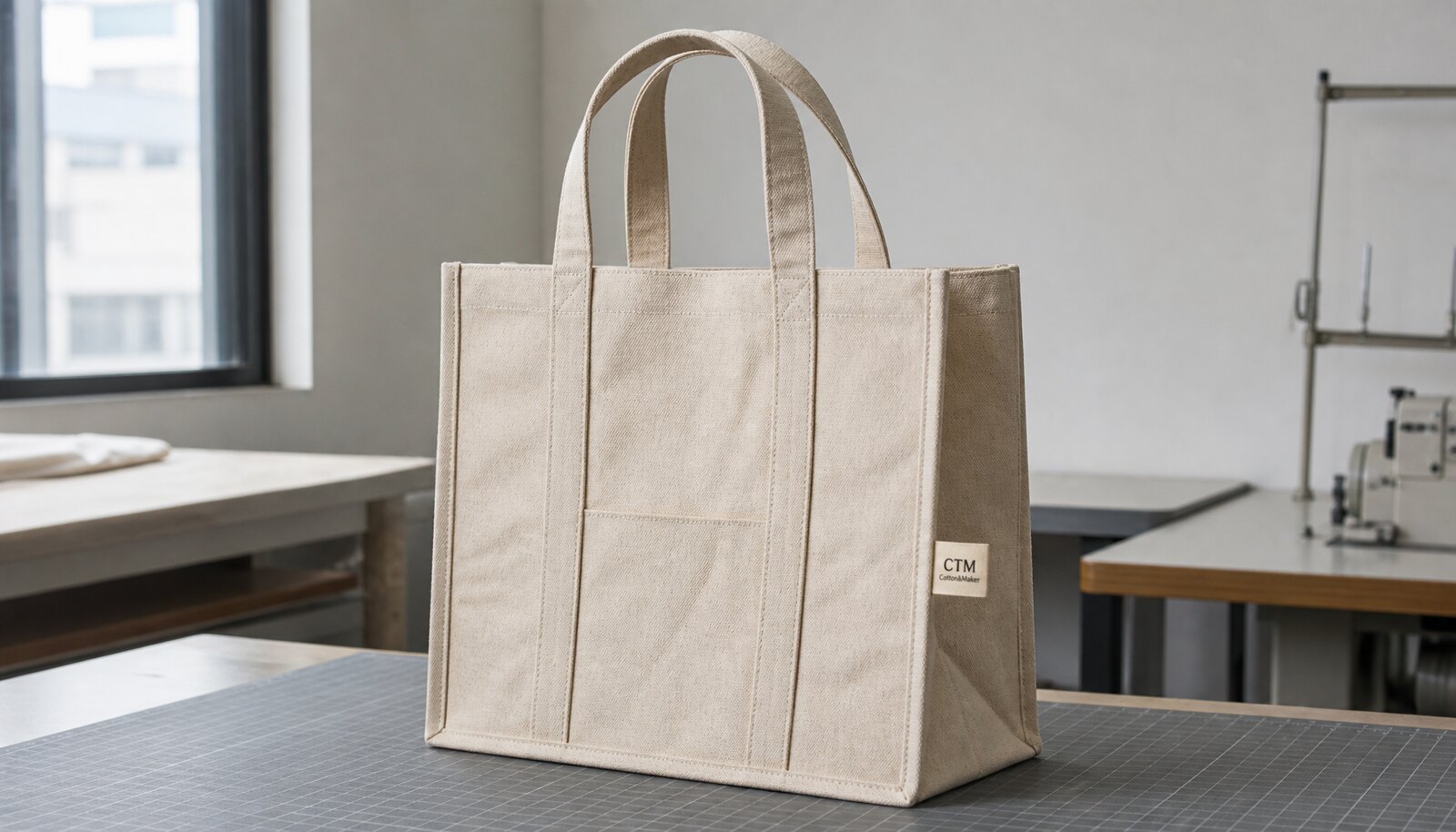
Canvas library tote bags for hotels sit in a different category from throwaway promotional totes. In a hotel retail launch, the bag is part of the shop assortment, which means it has to do three jobs at once: hold up in use, look worth paying for, and arrive at a cost that still leaves margin after freight, packing, and any local handling. That is why procurement should begin with the use case, not with a logo mockup. A tote meant to sit beside books, candles, maps, or other gift items needs different construction from a tote that is simply handed out at check-in or used as a low-cost souvenir.
The fastest way to lose control of the program is to compare quotes before the bag is clearly defined. If one supplier prices a light promotional canvas and another prices a denser retail-grade build, the unit numbers may look close while the actual product is not comparable at all. Buyers then spend time reconciling samples, asking for revised artwork placement, and discovering that packing or carton size changed the economics. For a retail launch, the bag should be treated like a small commercial product line, not a one-line accessory.
That means defining the product role in plain language. Is it a mid-price shelf item with broad guest appeal, a premium branded piece that supports a higher ticket price, or a volume driver for seasonal hotel merchandising? Once that role is clear, the team can make the right tradeoff between fabric weight, handle style, decoration, and packing. The budget conversation becomes more honest too: a stronger bag may need a slightly higher unit price, but it can also support a better shelf presentation and fewer post-delivery complaints.
- Define the tote’s retail role before asking for price.
- Do not compare quotes unless the bag size, cloth, handles, decoration, and packing method are the same.
- Treat shelf appeal, durability, and landed cost as one decision, not three separate ones.
2. Translate the concept into a production spec procurement can defend
A hotel retail launch needs a spec that a factory can actually build to, not a descriptive brief full of marketing language. The procurement document should include finished dimensions, gusset depth, handle length and drop, canvas weight, body color, seam allowance, decoration area, and packing format. If the bag needs to stand upright on shelf or hold a specific product bundle, that should be written into the brief as well. The goal is to reduce interpretation. Every detail that affects price, quality, or presentation should be explicit before sampling starts.
Artwork should follow the spec, not lead it. A logo can look clean on one canvas weight and messy on another. A simple brand mark may be best as a screen print on a natural body, while a smaller logo or a more premium program might justify embroidery, a woven label, or a sewn patch. The right method depends on the brand position and the shelf price, not on whichever decoration is easiest to quote. If the artwork is submitted before the product spec is locked, the supplier may price a different build than the one procurement intends to buy.
For sourcing teams, the best habit is to write the brief as though it will become the PO annex. If a hotel property wants a retail-ready bag, say that. If the tote must fold flat, fit into a display tray, or leave room for an insert card or barcode sticker, say that too. Small omissions become expensive once a factory has purchased materials and started sewing.
- Specify the bag as if it were a production drawing, not a creative brief.
- Lock the handle, gusset, print area, and fold style before quote comparison.
- State whether the bag is shelf-ready, gift-ready, or bulk-shipped.
3. Choose fabric weight and canvas quality with evidence, not habit
The most common purchasing mistake with canvas library tote bags for hotels is treating fabric weight as a one-size-fits-all decision. Around 8 oz, 10 oz, and 12 oz are all commercially plausible, but each supports a different retail outcome. Lighter canvas can work for a lower-price souvenir line, especially if the tote is meant to fold easily and carry modest loads. A 10 oz build often sits in the sweet spot for many hotel retail programs because it balances cost, appearance, and day-to-day durability. A 12 oz bag may be worth the added cost when the product needs a firmer feel, a more upright shelf presence, or better performance for books, bottles, and heavier guest gifts.
The key point is to verify what the supplier is actually quoting. Some factories talk about raw fabric weight, others quote finished bag weight, and others use a shorthand that does not make the comparison easy. Buyers should also ask whether the canvas has been pre-shrunk, washed, dyed, or softened, because finishing can change both appearance and handling. A bag that looks fine in a swatch may arrive with a different drape, a different shade, or more shrinkage than expected after print and sewing.
Fabric sourcing deserves more than a passing note. Procurement should ask where the canvas is sourced, whether the supplier can identify the mill or source region, and what traceability records are available for the body fabric, webbing, lining, thread, and packaging. If the hotel sells into markets with restricted-substance or labeling requirements, request the relevant declarations early. It is easier to check documentation before the PO than to chase it after the goods are packed.
- Verify whether the quoted weight refers to raw cloth or the finished bag.
- Ask about pre-shrinking, washing, dyeing, and finishing because these affect appearance and size stability.
- Request source and traceability details for the main fabric and all visible components.
4. Compare supplier routes by control, not by name
A quote from a factory, a trading company, and a stocked distributor can all look comparable at first glance, but they are not the same commercial offer. Factory direct usually gives procurement the clearest path to material control, sampling detail, and production evidence. That is useful when the hotel wants private-label branding, custom packing, or repeat replenishment with consistent presentation. A trading company may reduce coordination burden, especially if the buying team wants one point of contact across multiple product types, but the buyer should be careful to separate the trader’s service value from the actual factory spec. A stocked distributor can be the fastest option for a simple program, yet it usually offers less room for customization and may not match the exact retail finish the hotel wants.
The better comparison is landed cost and operational certainty. A low ex-works number is not useful if it excludes setup, retail folding, barcode labels, carton marks, or destination handling. A quote with a slightly higher unit price can still be the cheaper option once freight cube, packing labor, and any repacking at destination are included. Buyers should ask every supplier to quote the same Incoterm and to show exclusions separately so the comparison is honest.
It also helps to ask suppliers how they will prove the goods match the sample. Request production photos, sample references, and carton photos from a current or recent order with a similar construction. This is not about demanding perfection; it is about checking whether the supplier can consistently build and pack the type of tote being launched. For a hotel retail program, consistency often matters more than squeezing the last few cents from the unit price.
- Compare route, capability, and landed cost separately.
- Ask for the same Incoterm from every bidder.
- Request production evidence, not only sales samples or catalog images.
5. Build the RFQ so suppliers quote the same tote
A strong RFQ prevents the most common sourcing problem in canvas tote programs: each supplier quietly filling in missing details their own way. If the brief does not specify handle material, seam allowance, print placement, or packing style, the factory will make assumptions that change the price and the end product. One may quote self-fabric handles, another webbing. One may include a simple bulk fold, another may price a retail-ready fold with barcode sticker and insert card. The numbers then appear comparable when they are not.
For hotel retail launches, the RFQ should read like a build sheet. Include the intended use, finished size, canvas weight and finish, exact body color, handle width and drop, gusset depth, decoration method, number of colors, print size and placement, any lining or pocket, and the packing format. If the bag must fit a display tray, a shelf bay, or a bundled gift set, add those dimensions too. If the hotel does not want certain substitutions, say so clearly. The more the buyer defines up front, the fewer change orders appear later.
It is also worth including commercial detail in the RFQ itself. Tell suppliers the target market, the destination country, whether you need compliance documents, and whether the order is for a single property or a group rollout. Those factors influence packing, labeling, and sometimes the materials the supplier can use. A clean RFQ is not more work for the factory; it is the fastest way to get a quote that procurement can trust.
- Use production terms, not marketing language, in the RFQ.
- List every visible part: fabric, handles, labels, print, insert card, barcode, and fold style.
- State the destination market and any documentation requirements up front.
6. Ask for compliance documents and lab evidence early
For hotel buyers, documentation is part of the product. A quote that lacks basic compliance support may still be usable for a sample, but it is risky for a retail launch. Depending on the destination market, procurement may need azo dye declarations, REACH-related statements, CPSIA documentation, Proposition 65-related support, fiber composition labeling, or other textile and chemical compliance records. The point is not to demand paperwork for its own sake; it is to avoid discovering a missing document after the goods are already in transit or sitting in a warehouse awaiting release.
A useful sourcing habit is to ask for evidence tied to the actual materials being proposed. If the tote uses natural canvas, ask what the canvas is made from, whether the supplier can identify the source of the fabric, and whether any third-party tests or in-house checks are available for colorfastness, seam strength, dimensional stability, and restricted substances relevant to the market. If the bag includes a print, ask whether the inks or transfer materials have supporting documentation. If the bag has a lining, webbing handle, or insert card, those materials should be documented too when the market requires it.
Buyers should also be careful not to overstate what a vendor can provide. Not every factory will have the same testing package, and not every retail market requires the same certificates. The practical approach is to define the minimum documentation package for the launch market, request it before PO approval, and keep copies in the purchasing file. That protects both compliance and replenishment speed later.
- Match the document request to the destination market and retail channel.
- Ask for evidence tied to the actual materials being used, not just generic declarations.
- Keep compliance files with the approved sample and the signed spec sheet.
7. Use the sample to prove production, not to redesign the bag
A pre-production sample should answer one question: can the factory reproduce the agreed tote at production quality? It should not become an open-ended design review. The approved sample needs to confirm the details that affect customer acceptance and repeatability: body size, handle symmetry, seam finish, logo placement, fold style, color, and packing presentation. If the sample is not dated, labeled, and tied to a signed spec, it can become hard to use as a reference later. Both sides should keep a controlled sample whenever possible.
The sample review itself should be practical. Load the tote with the kinds of items a hotel guest would actually buy or carry. Check whether it stands reasonably flat, whether the handles sit evenly, whether the logo is centered, and whether the bag looks neat after folding. If the product includes a woven label, patch, pocket, or lining, inspect those elements separately. In many launch programs, the first issue is not the main body fabric; it is a small trim detail that moved during bulk sewing or packing.
Where available, ask for first-batch production photos or a short video before bulk packing is completed. That is especially useful if the program has a fixed opening date or if the bag is moving across borders with limited recovery time. The goal is to catch a mismatch while it is still editable, not after the whole lot is packed and labelled.
- Keep a controlled approved sample and tie it to a signed spec sheet.
- Test the tote with real retail items, not only visually.
- Approve print, trim, fold, and pack presentation as separate checkpoints when needed.
8. Define QC checkpoints that the factory and inspector can both follow
Quality control for canvas tote bags becomes reliable when it is measurable. Vague instructions such as “good workmanship” or “nice finish” may sound sensible, but they are difficult to enforce during inspection. Procurement should define the standard in terms the factory can follow: accepted size tolerances, acceptable stitch appearance, logo placement tolerance, color reference, carton count, and packing accuracy. The more visible the standard, the less room there is for dispute after shipment.
A practical QC structure has three layers. First is workmanship: no oil stains, no broken needle marks, no loose threads on visible panels, no twisted seams, and no raw edges showing where they should be enclosed. Second is dimensional control: the bag must stay within the agreed tolerance for height, width, gusset, and handle drop. Third is branding control: the logo must stay in the approved position, with clean edges and no obvious color drift. For hotel retail, consistency matters from first carton to last carton because the guest sees the product as part of the brand experience.
If the program is large enough to justify it, add a simple inspection method to the purchase order or QC note. That can include the number of units checked per carton, how cartons are selected, what counts as a reject, and what happens if the defect rate crosses the agreed threshold. This does not need to be complicated; it needs to be repeatable. The best QC systems for tote bags are not elaborate—they are just specific.
- Write tolerances for dimensions, logo position, and handle drop.
- Define visible defect limits so inspection is not subjective.
- Ask for carton-level checks on count, labeling, and pack presentation.
9. Treat packing and carton design as part of margin control
Packing can make a tote program look profitable or weak on paper. A bulk-packed bag may have the lowest assembly cost, but a hotel retail launch often needs bags that are folded neatly, labelled correctly, and ready to display. That adds labor and can increase the carton size, which in turn affects freight and warehouse handling. The unit price may rise only modestly, while the landed cost changes more than expected. For procurement, that means packing has to be evaluated as a commercial variable, not a cosmetic one.
The right packing format depends on the distribution path. If the bags are going to a hotel gift shop or property-level store, retail-ready folding with a barcode sticker and insert card can save destination labor and improve shelf presentation. If the bags are going to a central warehouse, bulk packing may be more sensible because the warehouse can handle the final fold and labeling. Neither method is automatically better; the better method is the one that fits the downstream process. Buyers should ask for carton dimensions, gross weight, and pack count before they approve the order so freight estimates are not built on guesswork.
Packaging material details matter too. If the bags are wrapped individually, ask what the polybag thickness is and whether the material meets the buyer’s internal sustainability standard. If insert cards are used, ask for card stock thickness, print quality, and barcode legibility. These details are small individually, but they can affect the shelf look, complaint rate, and even the ability to scan stock accurately.
- Decide who does the final fold and label step before you choose the packing method.
- Request carton dimensions, gross weight, and pack count before PO release.
- Specify packaging materials if sustainability, recyclability, or retail presentation matters.
10. Sequence MOQ, lead time, and replenishment so the launch does not slip
MOQ and lead time are often quoted as fixed numbers, but in practice they move with fabric availability, decoration complexity, packing type, and the supplier’s workload. A standard tote may fit into a roughly 45-60 day production window after sample approval, but that should be treated as a planning assumption, not a promise. If the order includes special lining, multiple decoration steps, custom packaging, or a busy seasonal slot, the timeline can stretch. The biggest delay is often not sewing; it is waiting for sample sign-off, artwork correction, or packaging approval.
MOQ behaves in a similar way. A standard tote might be available at a few hundred pieces per color or artwork, but the real breakpoint depends on whether the factory can use stock canvas, whether the print setup is simple, and whether the bag is retail-packed. Lower MOQs are useful for pilots and smaller properties, but the unit price usually rises because setup is spread across fewer pieces. Larger MOQs can improve pricing, yet they are only helpful if the hotel can actually sell through or store the inventory without tying up cash and space.
For launch planning, procurement should request a step-by-step schedule: material booking, sample approval, bulk production, inspection, packing, and dispatch. This makes the risk visible. If the hotel’s opening date is fixed, the order should be placed with buffer time, not just the factory’s first estimate. That is especially important when the tote is part of a larger retail assortment and must arrive alongside other launch items. A simple replenishment file with the approved sample, carton spec, and artwork version will also make repeat orders faster and less error-prone.
- Treat lead time as a sequence of gates, not one delivery promise.
- Ask the supplier to state MOQ by size, color, artwork, and packing style.
- Build buffer for artwork approval, packaging changes, and seasonal production pressure.
Specification comparison for buyers
| Procurement choice | When it fits best | Tradeoffs to watch | Buyer verification step |
|---|---|---|---|
| 8 oz canvas | Low-price souvenir programs, light retail carry, large-volume launches where shelf presence matters more than load capacity | Lower material cost and easier folding, but softer body, less structure, and greater risk of a flimsy retail impression if the bag carries books or bottles | Ask for a physical sample with the intended print and load it with real retail items before approving |
| 10 oz canvas | Most hotel retail launches where the tote needs to feel sturdy without moving too far up the shelf price ladder | Balanced cost and durability, but performance depends heavily on weave tightness, finishing, and handle reinforcement | Request finished-bag weight, weave description, and a sample after print and finishing, not only raw fabric swatch |
| 12 oz canvas | Premium gift shop placement, book-carry use, or launches where a firmer, more substantial hand feel supports a higher ticket price | Better structure and perceived value, but higher material cost, more cube in freight, and more sewing effort | Confirm carton count, gross weight, and whether the supplier is quoting finished canvas weight or raw fabric weight |
| Self-fabric handles | Clean, natural look for branded hotel merchandise and library-style tote programs | Can look elegant, but strength depends on handle width, fold method, and reinforcement; weak stitching can become a warranty issue | Check handle width, drop length, and stitch pattern at the attachment point |
| Webbing handles | Higher-strength use cases and repeat guest use where grip and durability matter | Often more durable and comfortable, but can look less refined unless color and width are chosen carefully | Request a handle material spec and photo of the actual webbing color against the canvas |
| Screen print | Bold logos, one- or two-color artwork, and repeat orders where cost control matters | Strong for simple branding, but fine detail, gradients, and too many colors can drive setup and registration issues | Approve a strike-off or pre-production print on the exact canvas color |
| Embroidery or sewn patch | Premium positioning or smaller marks where texture and depth add value | More expensive and sometimes slower; thick stitching can distort lighter canvas if the base is not suitable | Ask for stitch density, backing material, and an image of the reverse side |
| Retail-ready fold with barcode and insert card | Hotel shop shelves, chain retail rollouts, and destination distribution where display readiness matters | Adds labor, increases carton volume, and can affect freight cost, but reduces destination handling | Request carton dimensions, pack count, barcode placement, and a finished folded sample |
| Bulk packed cartons | Warehouse distribution or replenishment programs where final folding happens after receipt | Lowest packing labor, but more destination handling and a higher chance of presentation inconsistency | Clarify who does the final fold, labeling, and shelf prep before the PO is released |
Buyer checklist before sampling
- Write the bag brief as a production spec: finished size, gusset depth, handle drop, seam allowance, fabric weight, and decoration method.
- Ask the supplier to state whether the quoted canvas weight is raw fabric weight or finished-bag weight.
- Confirm the exact branding method, number of colors, print placement, and the minimum line thickness that must stay legible.
- Specify whether the bag is a shelf-ready retail product or a bulk-packed amenity, because packing and carton specs differ.
- Request carton dimensions, gross weight, pack count, and whether barcode labels, insert cards, or retail folds are included.
- Ask for fabric source information, including mill name or source region when available, plus traceability details for the main body fabric and any webbing or lining.
- Request compliance documents relevant to your market, such as REACH, CPSIA, Proposition 65, azo dye declarations, or country-specific textile declarations where applicable.
- Ask whether third-party lab tests are available for colorfastness, dimensional stability, seam strength, and any restricted-substance checks relevant to your market.
- Require pre-production sample approval and ask for production photos of the first sewn batch before bulk packing begins.
- Set a written pass/fail standard for stitch quality, print position, color match, fold accuracy, and carton labeling.
Factory quote questions to send
- What exact fabric weight, weave, and finish are included in the price, and are you quoting raw fabric weight or finished-bag weight?
- Can you identify the fabric source or mill, and do you have traceability records for the canvas, thread, handles, and any lining or pocket material?
- Which compliance documents can you provide for the target market, such as azo dye declarations, REACH statements, CPSIA certificates, Prop 65-related documentation, or other applicable test reports?
- What third-party or in-house tests can you share for seam strength, colorfastness, dimensional stability, and print durability?
- What is included in decoration pricing: setup, screens or plates, strike-off, repeat order charges, and one-sided or two-sided print?
- What changes in MOQ or unit price if we add lining, a pocket, embroidery, a woven label, or retail-ready folding?
- Is the MOQ based on total order quantity or on each color, size, and artwork version separately?
- Which packing method is included in the quote: bulk carton, individual polybag, insert card, barcode sticker, or retail fold?
- What carton size, carton count, and gross weight per carton should we expect, and can you provide a packing list format?
- Can you share a production-spec photo or video showing the exact handle reinforcement, seam finish, logo placement, and fold style?
Quality-control points to confirm
- Finished dimensions should be checked against the agreed size with a written tolerance band for height, width, gusset depth, and handle drop.
- Canvas weight should be verified against the agreed spec, and the buyer should confirm whether the factory is measuring raw cloth, finished cloth, or finished bag weight.
- Handle reinforcement should be inspected at both attachment points, including stitch pattern, stitch density, and symmetry under load.
- Seam quality should show no skipped stitches, raw-edge exposure, twisted panels, puckering, or loose thread ends on visible surfaces.
- Print placement should be measured from reference seams so the logo does not drift carton to carton or sit too close to an edge.
- Color should be approved against the signed sample under consistent light, especially for natural canvas shades, off-white fabrics, and dark logo prints.
- Packing accuracy should match the packing list for piece count, carton marks, barcode position, and insert-card placement if used.
- Retail fold consistency should be checked so the bag still looks presentable after bulk packing, transit, and shelf replenishment.
- A load test should be defined for the intended use case so the bag is evaluated with real books, bottles, or gift items rather than by appearance alone.
- If the bag includes lining, a pocket, or trim, those features should be inspected for seam cleanliness and alignment because they often shift in bulk production.