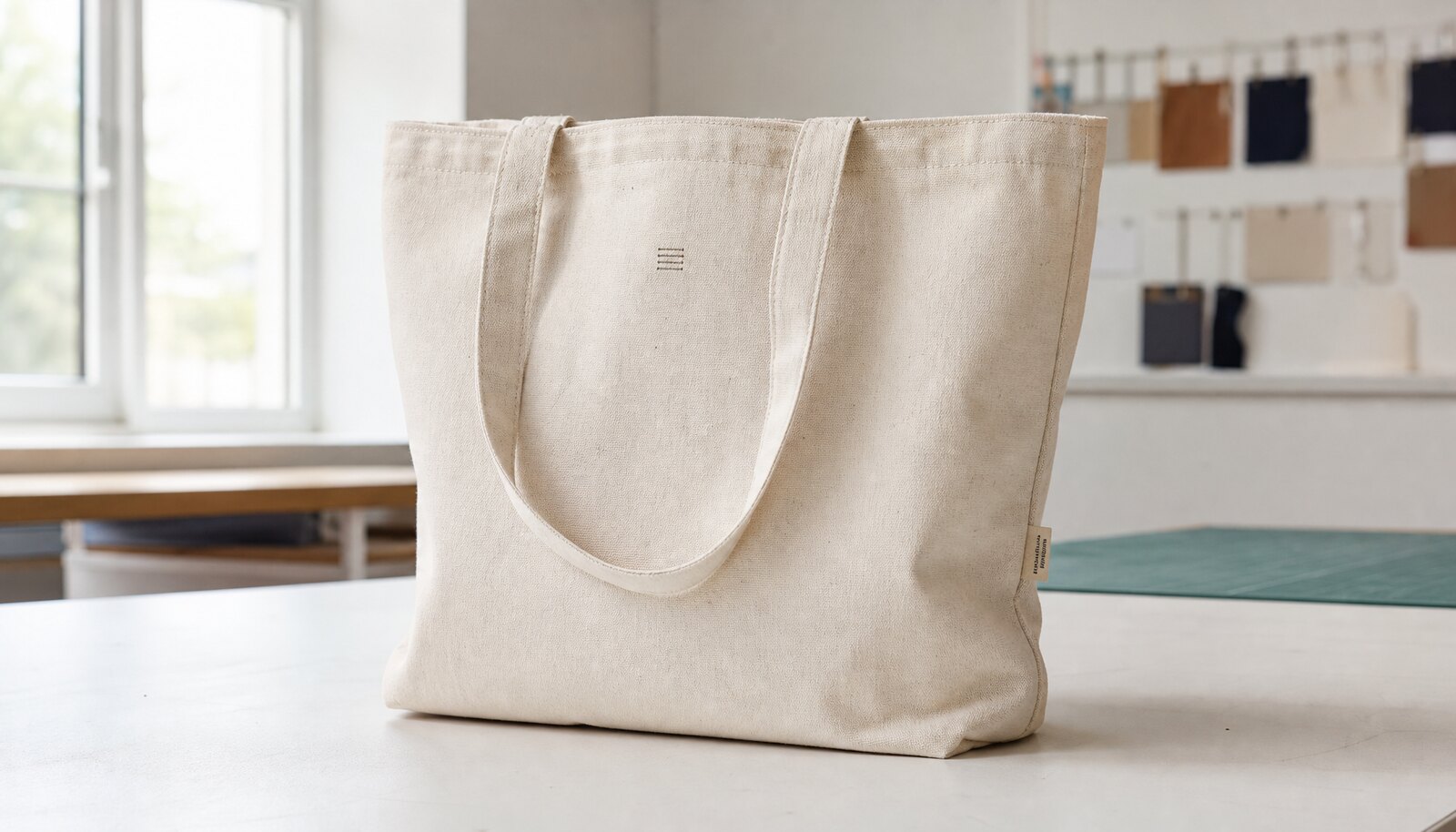
Start with the real use case, not the tote style
For canvas library tote bags for hotel and event giveaway planning, the first sourcing mistake is treating every tote as the same product. A hotel welcome kit, a conference handout bag, a gift shop purchase bag, and a sponsor giveaway all place different demands on the same basic silhouette. If the tote is carrying brochures and a notebook, the buyer cares about flat packability and a clean print zone. If it is meant for retail use, structure, seam finish, and fabric hand matter more. If the bag is a room-drop item, the priority may be a neat first impression rather than maximum load capacity.
That distinction changes how you write the brief. Define what the guest or attendee will actually put inside the bag, how the bag will be handed out, and whether it needs to look premium in a lobby, at a registration desk, or in a gift shop. A tote for a one-time conference set is not the same as a tote that will be reused during a multi-night hotel stay. Once the use case is clear, the supplier can recommend the right weight, handle length, and packing method instead of filling in the gaps with a generic quote.
- State whether the tote is for room drops, conference registration, retail checkout, or branded giveaways.
- List the intended contents and approximate load weight if the bag must hold more than paper items.
- Decide whether the bag needs a soft promo feel or a more structured retail-style hand.
Write the physical spec before the artwork
A good tote spec starts with the bag structure. Finished size, gusset depth, handle length, seam type, and top hem reinforcement should all be locked before the supplier prices decoration. If you ask for a logo quote first, you may get a cheap print on a bag that is too small, too thin, or too weak for the intended use. That creates a false comparison between suppliers because the base product is not the same. The art can be correct and the program can still fail if the tote cannot actually carry the contents you planned.
For most hotel giveaway programs, a bag around 14 x 16 x 4 in or 15 x 16 x 3 in is a practical starting point, but the right size depends on the handout contents and packing format. Handle length matters more than many buyers expect. A tote with handles that are too short can feel awkward even when the fabric and print are acceptable. Put these dimensions in the RFQ so the factory has one clear target instead of three interpretations. If the tote must fit letter-size folders, say so directly. If it must stand up on a registration table, call out the gusset and base behavior.
- Write the finished dimensions, not just the cut size or approximate size.
- Call out gusset depth if the tote must stand up or carry bulkier items.
- Specify handle drop or finished length so the bag is comfortable to carry over the shoulder.
Choose fabric weight and finish to match the campaign
For most hotel and event giveaway programs, 8 oz canvas around 240-270 GSM is the most balanced choice. It is heavy enough to print cleanly, hold shape reasonably well, and survive repeated folding, while still keeping fabric usage and freight under control. If the campaign needs a more substantial hand, 10 oz canvas is a reasonable upgrade. Very light canvas can reduce cost, but it often wrinkles quickly and can make the whole program feel less considered. If the tote will sit in a guest room for multiple days before use, a little extra body can improve the perception of quality.
Fabric finish matters as much as the weight. Ask whether the canvas is raw natural, bleached, dyed, washed, or pre-shrunk, because those choices affect appearance, shrink behavior, and print clarity. If a supplier offers an unusually low price, confirm whether the weave density, finishing step, and washing process are the same as the sample. A bag can be technically the right weight and still perform poorly if the weave is loose or the finishing is inconsistent. For programs where the tote will be sold in a gift shop, the hand feel and color consistency usually deserve more attention than a pure giveaway order.
- 8 oz / 240-270 GSM: best default for most hotel event giveaway use.
- 10 oz / 280-340 GSM: better structure and a more premium hand, with higher cost and freight.
- Lighter than 8 oz: only for price-sensitive handouts where appearance and softness matter more than durability.
Match the decoration method to the artwork, not the budget alone
One-color screen print is usually the safest choice for hotel giveaways because it balances cost, clarity, and repeatability. It works well for hotel logos, event names, and sponsor marks where the art is simple and the goal is a clean, durable impression. If the artwork uses fine text, thin lines, or small reversed-out details, confirm the minimum line thickness and the acceptable print tolerance before approving the design. A cheap print that shifts, bleeds, or closes in on textured canvas can cost more in complaints than the original setup fee saved.
Heat transfer can work for smaller runs or more detailed artwork, but it needs tighter process control and may feel less integrated into the canvas. Embroidery and woven labels can add a premium touch, though they are not always the right fit for broad giveaway programs because cost and lead time rise quickly. The practical rule is to choose the method that can reproduce the artwork reliably on the actual fabric, not the one that looks best in a presentation deck. If the bag will be photographed in a lobby or at an event, get a strike-off that reflects the real canvas surface and ink behavior.
- Use screen print for simple logos, event marks, and medium to larger runs.
- Use heat transfer only when the art complexity or quantity makes it worthwhile.
- Use embroidery or woven labels for premium gifting, but verify cost and lead time before committing.
Screen suppliers for capability and regional compliance
Not every supplier route gives you the same control. A direct factory usually offers better visibility on fabric source, stitching, and packing, which matters when the tote becomes a standard hotel item or an annual event asset. A trading company can be useful when you need mixed-category sourcing or faster communication, but you should still require the same technical detail. A local decorator may be appropriate for rush orders, but if they buy blanks, the blank quality becomes part of your risk whether you see it or not. Ask who actually cuts, prints, sews, and packs the tote before you compare quotes.
Compliance questions should be tied to your market and your internal policy. For EU or UK programs, request the current chemical documentation your compliance team requires, typically centered on REACH-related restrictions and supplier declarations. For US resale or consumer-facing programs, ask whether any label or test expectations change if the tote is sold rather than given away; if the program is child-directed, the requirements tighten further. California-facing programs may also need Prop 65 review depending on the materials and inks used. If the supplier claims organic cotton, recycled content, or another material attribute, ask for traceable proof rather than a verbal assurance. A hotel handout bag can still trigger import or resale issues if the paperwork is vague.
- Ask whether the factory or a subcontractor will actually cut, print, and sew the order.
- Request current test reports only for the markets and claims that matter to your program.
- If the supplier makes material claims, ask what document proves the claim and who issued it.
Build the quote for true landed-cost comparison
A usable quote for canvas library tote bags for hotels event giveaway planning should be specific enough that two suppliers can be compared without interpretation. At minimum, the quote should show the fabric weight, finished size, handle length, print method, color count, packing format, sample cost, lead time, and trade terms. If any of those are missing, the price may look competitive while quietly excluding important costs or lowering the quality standard. The unit price alone is rarely enough because sewing quality, packing density, and freight cube can change the landed cost faster than a small material difference.
Ask for a cost breakdown that separates fabric, sewing, decoration, packing, and cartonization. That detail reveals where the price is actually moving. A slightly heavier bag with a simpler print may be more economical than a thinner bag with a more expensive decoration method once freight and handling are included. Ask the supplier to quote the same spec at 500, 1,000, and 3,000 pieces so you can see whether the pricing curve is real or just a one-off number. If the supplier cannot explain why the price changes, the quote is not ready for procurement use.
- Separate base tote cost from print, packing, and carton charges.
- Require the quote to name the exact dimensions and fabric weight used for pricing.
- State the trade term clearly as EXW, FOB, or DDP so landed-cost comparisons stay valid.
Use samples to catch manufacturing shortcuts before bulk order
The sample is where most avoidable tote problems can still be fixed cheaply. Measure the actual bag, not just the sample photo. Check the width, height, gusset depth, and handle length against the approved spec. Look at the bag flat and filled. If the body twists, the seams do not line up, or the print sits too low, those issues tend to repeat in bulk unless you document the correction clearly. A clean-looking photo is not the same as a production-approved sample.
Keep a sealed approval sample and, if possible, a separate strike-off for print reference. That gives both sides a common standard if the bulk production deviates. Do not approve a sample just because it looks clean in isolation. Test it with the items it will actually carry, because a tote that looks fine empty may feel wrong once brochures, water, and notebooks are added. For hotel or event programs, sample approval should answer a simple question: is this the bag the property or organizer actually wants to hand to guests? If not, revise it before the bulk run starts.
- Measure the sample against a ruler and the written spec, not against memory.
- Test the tote with the intended contents and carry method before approval.
- Approve print placement and color visually in writing so the factory has a reference.
Set a QC plan with AQL, load tests, and acceptance criteria
Bulk quality control should not start after shipment. It should be defined before the order enters production. For canvas totes, the key controls are fabric consistency, cut accuracy, stitch quality, print position, stain control, and carton count. If the buyer and factory do not agree on what counts as a defect, the dispute usually appears only when the goods arrive at the warehouse. That is the worst time to discover a shared definition problem. Put the defect list and the pass-fail standard in the PO or quality annex.
A practical inspection plan for a standard promotional tote often uses General Inspection Level II with AQL 2.5 for major defects, AQL 4.0 for minor defects, and zero tolerance for critical issues such as unsafe construction or serious compliance failures. If the tote is higher risk or more visible, tighten the acceptance threshold. Add a simple load test tied to the real use case, such as a measured working load that matches the brochure kit or welcome pack. If you need lab support, ask for relevant textile evidence instead of a generic assurance, such as seam strength, colorfastness to rubbing, and dimensional stability after wash when washing performance matters. The point is to define the test before anyone starts arguing over the result.
- Define acceptable size tolerance, stitch quality, and print placement in writing.
- Agree on how many defects trigger replacement, credit, or rework.
- Require defect photos and count sheets before shipment if the supplier reports issues.
Treat packing, cartons, and freight as part of the product
Packing decisions affect the total cost as much as the tote itself. Bulk packing is usually the most efficient option for hotel giveaways because the bags are soft, easy to count, and often distributed from a warehouse rather than a retail shelf. If the order is destined for a gift shop, lobby display, or sponsor kit, you may need individual polybags or a more presentation-oriented fold, but that should be a deliberate choice, not a habit from a previous order. Bulk packing also keeps plastic use lower, which can matter for sustainability reviews.
Ask the supplier for carton dimensions, gross weight, and pack count because freight and receiving speed depend on those numbers. For example, 100 pcs of an 8 oz tote in a 14 x 16 x 4 in format may pack into a carton around 45 x 35 x 30 cm with roughly 12-15 kg gross weight, while a heavier 10 oz bag or individual polybags will push both cube and weight upward. If cartons are overfilled or folded too tightly, the canvas can retain crease lines or print pressure marks. If cartons are underfilled, you pay to move air. The right packing spec is the one that protects the tote, supports the distribution model, and keeps warehouse intake fast and predictable.
- Use bulk pack 50-100 pcs/carton when freight efficiency is the priority.
- Specify carton marks with style, color, quantity, and PO number.
- Only require polybags when dust control, retail display, or redistribution needs it.
Plan lead time around artwork freeze and event date
Standard canvas tote schedules are often 5-10 days for sampling and 20-35 days for bulk after approval, but that only holds when the artwork is final, the fabric is available, and the packing plan is fixed. The biggest schedule risk is usually not sewing capacity. It is scope drift. A logo revision, size change, or packaging update after sample approval can easily consume the time buffer that the event calendar needs. If the tote is tied to a hotel opening, conference, or seasonal campaign, late changes should be treated as formal schedule changes, not minor tweaks.
Freeze the critical path first: size, fabric weight, decoration method, and carton pack count. If you still have options on artwork colors or packaging inserts, keep them separate from the core tote approval. Buyers often focus on shaving a few cents off unit price while ignoring that a delayed arrival can cost far more than the supposed savings. The most valuable lead-time control is a clean sign-off process. Once the sample is approved, the PO, artwork file, and pack plan should all point to the same version so the factory is not forced to guess which instruction is current.
- Get final artwork approved before asking for the production schedule.
- Treat packaging changes as timeline changes because they affect labor and carton planning.
- Leave buffer time for strike-off approval and one sample revision round.
Specification comparison for buyers
| Spec decision | Recommended option | Relative cost pressure | Performance tradeoff | Buyer risk to check |
|---|---|---|---|---|
| Fabric weight | 8 oz / 240-270 GSM canvas | Medium: usually the best balance of material and freight cost | Good structure for brochures, notebooks, and light retail items without feeling flimsy | Confirm the supplier is quoting the same GSM or oz after finishing, not a lighter base cloth |
| Decoration method | 1-color screen print for most hotel and event programs | Low to medium: setup is usually efficient at scale | Clean repeatability and strong value for simple logos or event marks | Fine text or thin lines may fill in on textured canvas |
| Construction | Turned seams, bar-tacked handles, and reinforced top hem | Medium: a small sewing premium buys better durability | Better shape retention and lower risk of handle failure | Weak bartacks or skipped stitches are hard to spot in a photo but fail in use |
| Handle length | 22-26 in finished length, or about 9-11 in drop depending on body height | Low: usually a minor pattern change | More comfortable for guests carrying the tote across a lobby or event floor | Short handles make a tote feel smaller and less premium than the same bag with longer handles |
| Bag size | Around 14 x 16 x 4 in or 15 x 16 x 3 in | Low to medium depending on fabric yield and gusset depth | Fits library-style handouts, welcome kits, and lightweight retail bundles | Overly narrow bags limit usable volume; oversized bags increase fabric use and cube |
| Supplier route | Direct factory with sample control and photo evidence | Low if the factory is truly integrated; medium if extra coordination is needed | Best for repeatable hotel programs where consistency matters more than one-off speed | Make sure the quote separates fabric, sewing, print, and packing instead of bundling everything together |
| Compliance docs | Market-specific test reports and traceable material claims where needed | Medium: documentation itself is cheap, but failure can be expensive | Protects imports, onboarding, and resale programs across regions | Different markets care about different rules, so a generic certificate may not be enough |
| MOQ logic | 500-2,000 pcs for standard custom runs | Low unit price risk at 1,000+ if the spec stays stable | Works for single-property hotel campaigns and regional event giveaways | Very low MOQ can hide higher unit pricing or a weaker choice of fabric and finishing |
| Packing format | Bulk pack 50-100 pcs/carton with clear carton marks | Low: the cheapest way to move soft goods when retail display is not required | Supports efficient warehouse intake and lower freight cube | Loose folding, inconsistent carton counts, or oversized cartons slow receiving and raise cost |
Buyer checklist before sampling
- Confirm the exact use case: room drop, conference handout, welcome kit, gift shop purchase bag, or sponsor giveaway.
- Lock finished size, gusset depth, and handle length, and state whether the tote must fit A4 or letter-size materials.
- Specify fabric weight in GSM or oz, plus whether the canvas should be natural, bleached, dyed, washed, or pre-shrunk.
- State decoration method, artwork size, number of colors, print placement, and acceptable registration tolerance.
- Define reinforcement requirements for handles, seams, and top hem, and say whether you need a gusset or a flat body.
- Ask for market-specific compliance documents if the tote will be sold, imported, or handled under a formal vendor program.
- Set packaging rules: bulk pack count, carton labeling, polybag requirement, and whether pallets are needed.
- Request a pre-production sample, a print strike-off, and one sealed approval sample to use as the production reference.
- Agree in writing on defect handling, replacement terms, and the claim window before the order ships.
Factory quote questions to send
- What exact fabric weight are you quoting, and is it before or after finishing or washing?
- What is the finished bag size, handle length, and gusset depth you have priced?
- Is the fabric raw natural, bleached, dyed, or pre-shrunk, and can you provide a swatch or shade reference?
- Which decoration method is included, how many colors are covered, and what setup charges apply?
- What size tolerance do you hold on body width, height, handle length, and print placement?
- What is the MOQ at this specification, and how does unit price change at 500, 1,000, and 3,000 pcs?
- What sample cost applies, what is the sample lead time, and is the sample fee credited after order confirmation?
- What carton pack count, carton dimensions, and gross weight should we expect for freight planning?
- What inspection standard do you use for stitching, stains, print alignment, and handle strength?
- What documents can you provide for compliance, fabric origin claims, or recycled content claims if we need them?
Quality-control points to confirm
- Fabric weight matches the agreed GSM or oz range and feels consistent across the lot.
- Shade, weave density, and surface finish stay within the approved sample range.
- Body dimensions stay within tolerance on width, height, and gusset depth.
- Handle attachment uses reinforced stitching with no skipped stitches, loose ends, or weak bartacks.
- Print placement is centered or positioned within the approved artwork tolerance, with no major smudging, bleeding, or color shift.
- No visible oil stains, holes, broken yarns, or severe slubs beyond the agreed standard.
- Carton count matches the packing list, and carton marks match the PO and style code.
- If polybags are used, they are clean, correctly sized, and not sealed in a way that traps moisture.
- A practical acceptance plan should set an AQL target before production, such as AQL 2.5 for major defects, AQL 4.0 for minor defects, and zero tolerance for critical safety or compliance failures.
- Define a simple use-case load test, such as carrying the intended brochure kit or a measured working load, and record whether the handles, seams, and print survive handling without visible damage.