Why Farmers Market Buyers Need a Different Tote Plan
Farmers market buyers do not usually need a decorative tote first. They need a bag that survives repeated loading, folds flat for display, and still looks acceptable after it has been dragged across a parking lot, stuffed with produce, and re-used for the next weekend. That is why the phrase canvas library tote bags for farmers markets bulk pricing plan should be treated as a sourcing problem, not a marketing concept. The same tote can be quoted as a giveaway bag, a retail bag, or a custom brand piece, and the price gap between those routes is large.
The cheapest quote is rarely the best one for this use. A market tote has to balance cost, carry strength, print durability, and pack efficiency. If the bag is too light, the handles stretch and the bottom sags. If it is too heavy, the landed cost climbs and the customer may not buy it at shelf. The right plan starts with use case: event handout, resale at market stalls, or premium branded merchandise. That use case drives every other decision.
- Define the carry load before you compare prices.
- Treat re-use and shelf appeal as part of the spec, not as an afterthought.
- Compare the quote against the actual market behavior of the bag, not just the unit price.
Set the Body Spec Before You Price the Run
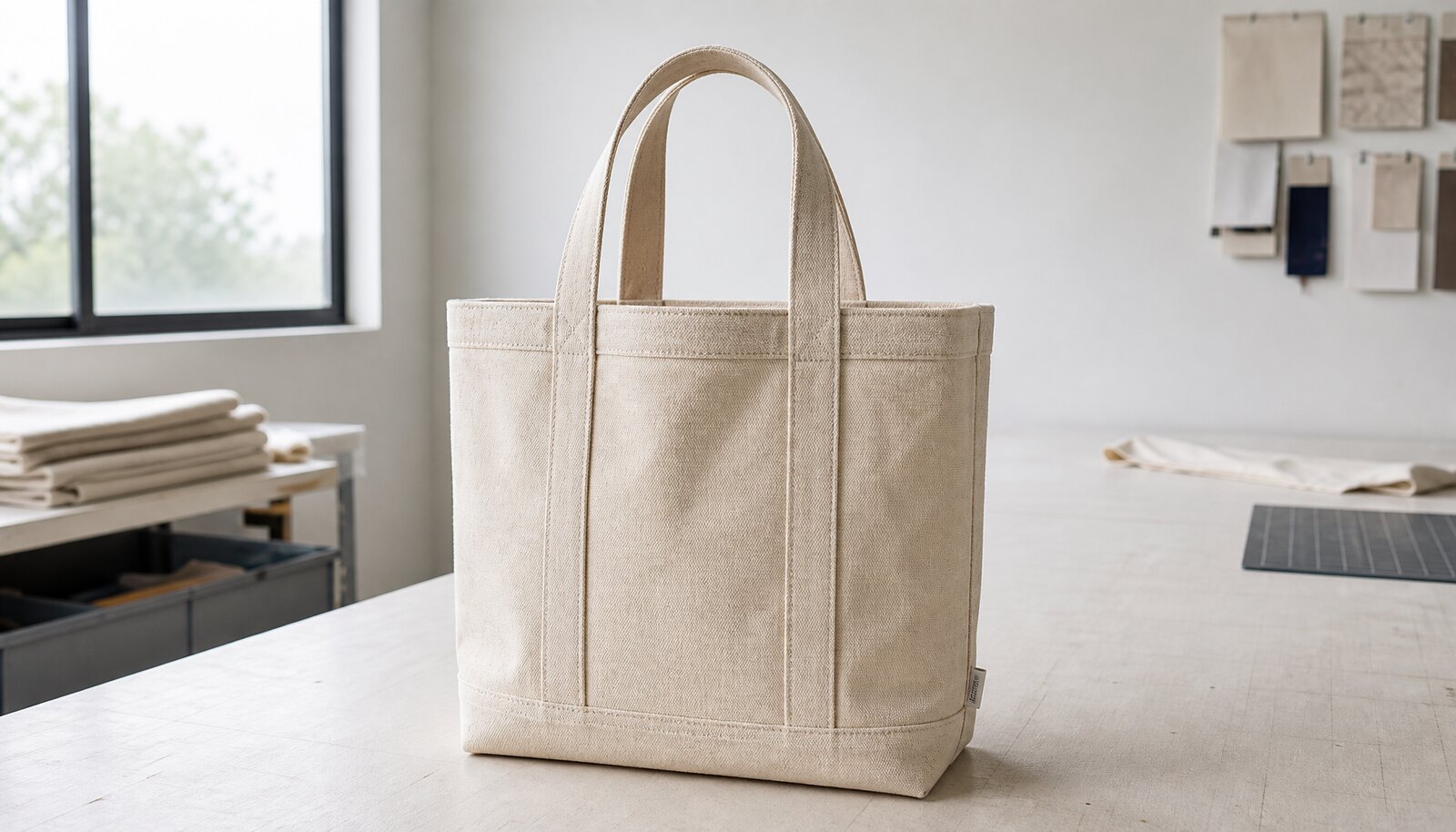
For most farmers market programs, the body spec should be locked before you send an RFQ. A common library-style tote shape is open top, rectangular body, gusseted sides, and long handles for shoulder carry. That format is easy to stack, easy to print, and easy for the buyer to compare across factories. Where buyers get into trouble is changing the size after the first quote. A one-inch difference in width or gusset can affect fabric consumption, print registration, and carton fit, which makes the first quote useless.
Fabric weight is the first commercial decision. Around 10 oz canvas, or roughly 340 gsm, is suitable for lighter promotional use or low-cost retail. Around 12 oz, or roughly 405 gsm, is usually the practical middle ground for farmers market resale because it feels sturdier without becoming too expensive. Around 14 oz, or roughly 475 gsm, fits heavier produce loads or premium branding, but it will push both sewing cost and freight weight up. For most buyers, the sweet spot is a reinforced 12 oz build with bar-tacked handles and a double-folded top hem.
- Use one approved body size for the first order and hold it for reorders.
- Choose the fabric weight based on actual load, not just the look of the weave.
- Keep handle length long enough for shoulder carry if the tote will be sold at market stalls.
Material and Decoration Choices That Move Unit Cost
Canvas bag pricing is usually driven by four things: fabric weight, decoration method, construction details, and pack format. Print is often the easiest place to save or overspend. A one-colour screen print on one panel is the most efficient route for bulk. It gives a durable finish and low setup cost when the run is large enough. Two-colour printing raises setup and registration risk, while full-face coverage or fine-detail art can slow production and increase rejects. For a farmers market tote, clear artwork usually outperforms a busy design anyway.
Decoration should follow the buyer's sales channel. If the tote is a giveaway, a simple one-colour print and a woven side label are usually enough. If it will sit on a retail shelf, a better handfeel, cleaner edge finishing, and a more precise print placement can justify a higher quote. Embroidery on canvas can look premium, but it stiffens the front panel and raises cost. Heat transfer can work for short runs, but buyers should test fold lines and rub resistance before approving it. The goal is not the fanciest decoration; the goal is a decoration method that survives handling and still supports the margin.
- One-colour screen print is usually the best cost-to-durability option for bulk.
- More print colours mean more setup, more registration control, and more yield loss.
- Use embroidery only if the brand value supports the extra cost and stiffness.
How MOQ Logic Should Shape the Pricing Plan
MOQ should be read as a pricing structure, not a fixed barrier. Most factories will price the same tote differently depending on body colour, print colour count, label type, and carton configuration. If you split a program into three tote colours, two print placements, and multiple label versions, the price will climb even if the total units stay the same. The factory is paying for separate setup, separate material pulls, and sometimes separate cutting waste. A buyer-friendly plan keeps the first run focused: one body colour, one decoration area, one base carton spec.
The best bulk pricing plan is usually tiered around the same finished product. Ask the supplier to quote the identical spec at a few volume levels so you can see where the real break points sit. That means the same canvas weight, the same handle length, the same print coverage, and the same packing format at every tier. If the quote jumps sharply at the first threshold, the buyer can decide whether the extra units are worth the lower unit cost. If the buyer expects seasonal demand, it is often smarter to order a slightly larger lot once than to pay setup twice for a smaller run.
- Keep the first order spec simple so MOQ works in your favour.
- Ask for the same tote at several volume bands, not a different spec at each band.
- Separate sample and setup costs from repeat production pricing.
Supplier Routes and What Each Quote Really Buys
Different supplier routes hide different costs. A direct factory quote is usually the cleanest when you want body, print, and packing controlled in one place. A trading company can be useful if you need benchmarking across multiple factories, but the buyer must normalise the quote carefully because mark-up, sampling fees, and freight handling may sit in different places. A local decorator using imported blanks is often fastest, but the blank may not match the exact weight or finish used in the sample, which creates problems when the buyer reorders later.
For canvas library tote bags for farmers markets bulk pricing plan work, the safest route is the one that gives you traceability on material and decoration. That means you want to know where the fabric came from, who sews the body, who applies the print, and who packs the cartons. If one supplier controls the full chain, it is easier to hold them responsible for a defect. If the work is split across suppliers, the buyer needs separate approval points and better documentation. A low headline price is not useful if it hides a packaging mistake or a print failure that turns into chargebacks later.
- Normalise every quote to the same fabric, print area, packing, and incoterm.
- Prefer suppliers who can show recent production photos, not only sample-room images.
- Treat split sourcing as a managed process, not as a cheaper shortcut.
Sample Approval and QC Thresholds That Prevent Rework
A good sample process has more than one stage. For this bag type, the buyer should expect at least a pre-production sample and a print strike-off or artwork approval. If the tote is for resale, it is worth checking the physical sample against the approved spec sheet for size, fabric weight, handle length, and print placement. A sample that only looks similar is not enough. Once bulk begins, the factory will follow the approved sample, so any ambiguity becomes expensive. This is where many small orders lose margin: the buyer approves an attractive sample without defining measurable acceptance criteria.
For bulk QC, set the thresholds before production starts. A common structure is to separate major defects from minor defects and use an AQL-based inspection plan, such as AQL 2.5 for major defects and 4.0 for minor ones, depending on the risk profile. The exact standard matters less than consistency. Measure body size, check seam strength, inspect the handle bar-tacks, and rub-test the print on a folded sample. If the bag will be sold at a market rather than used once, a weak seam or brittle print is not a small defect; it is a return risk.
- Approve size, print placement, and stitching against a written sample spec.
- Separate major defects, minor defects, and cosmetic variation in the inspection plan.
- Test the bag under fold and rub conditions before bulk approval.
Packing, Carton Count, and Shelf-Ready Delivery
Packing is part of the product cost, not just the logistics cost. For market totes, buyers often want a clean fold, a stack that holds shape, and cartons that survive transit without crushing the print face. If the tote is sold in a store, inner packing may be needed so the bag opens cleanly on shelf. If the tote is distributed to market vendors or event teams, bulk packing may be better because it reduces carton count and lowers freight volume. The right answer depends on whether the buyer is selling a finished item or moving inventory internally.
Carton planning matters because canvas is bulky. A slightly thicker bag or longer handle can change how many pieces fit in a carton and how many cartons fit on a pallet or container. Buyers should request carton dimensions before approving the final spec, not after production starts. If the supplier can only fit a low piece count per carton, the apparent unit savings can disappear in freight. Also confirm whether the factory will use moisture protection, edge boards, or outer marks that keep the cartons readable in a warehouse. These small details save time on receipt and reduce damage claims.
- Choose bulk packing or retail packing based on the final selling channel.
- Lock carton count and carton size before bulk approval.
- Keep prints protected from carton compression and moisture.
Lead Time, Seasonal Risk, and Production Controls
Farmers market programs are seasonal, which means the production calendar matters as much as the spec. Spring and early summer usually compress demand, and factories that also serve other canvas buyers can get tight on sewing and print capacity. The buyer should not wait until the retail season is already live to approve art or samples. Every day lost in the sample stage can push the order into a more expensive freight mode or a less favourable production slot. Lead time should be treated as a managed risk, not a promise written in a quote.
Production control starts with freezing the spec early. Once the sample is approved, avoid changing the print location, handle length, or carton format unless the margin can absorb the delay. If the buyer expects a repeat order, reserve raw material or keep a replenishment note in the file so the supplier does not substitute fabric on the second run. For market-driven business, a small safety stock is often cheaper than a rushed air shipment. A stable tote program is built by repeating the same build, not by reinventing the tote every season.
- Approve samples early enough to leave room for bulk production and transit.
- Freeze the spec before the factory buys fabric or cuts bulk.
- Hold a small reorder buffer if the tote is tied to a market calendar.
Compare Quotes on Landed Cost, Not Just the Unit Price
A buyer who compares only the unit price will usually misread the deal. The real number is landed cost: bag price, print setup, packing, inland freight, export handling, ocean or air freight, duty, and any destination charges. A quote that looks cheaper at the factory can become more expensive once it is packed into smaller cartons or shipped under a less favourable incoterm. That is why the first step in quote comparison is to normalise all suppliers to the same terms and the same product definition.
A clean quote should show line items the buyer can audit. For this tote, those lines often include fabric cost, sewing labour, print setup, print run cost, label or tag cost, packing cost, sample cost, and shipping basis. If a supplier only gives one number and refuses to break it down, the buyer has less leverage on reorders and less visibility on where savings can be found. The most useful quote is not always the lowest one. It is the one that shows how the factory reached the number and which variables will move on the next order.
- Compare every offer under the same incoterm and packing spec.
- Separate one-time setup charges from repeat production cost.
- Use the quote to predict the reorder price, not only the first shipment.
Specification comparison for buyers
| Spec decision | Recommended option | When it fits | Buyer risk to check |
|---|---|---|---|
| Direct factory with in-house sewing and print | Best for repeat bulk orders where you want one party responsible for body, print, and packing | You already know the target spec and expect reorders in the same season | Verify export experience, production photos, and whether print and sewing share the same QC gate |
| Trading company or sourcing agent | Useful when you need multiple factories compared under one RFQ | You are early in the process or buying several tote programs at once | Normalise every quote to the same fabric, print, carton, and incoterm before comparing margins |
| Stock blank bag plus local print | Good for fast launch and small assortment tests | You need speed more than exact custom construction | Confirm the blank fabric weight, handle reinforcement, and whether the print will crack on the actual canvas finish |
| Full custom cut-and-sew factory | Best for retail-ready brand programs with consistent reorders | You need a specific size, gusset, label, and print placement | Watch setup fees, MOQ by colour, and waste from multiple size or colour variants |
| Domestic decorator on imported blanks | Practical for urgent market-season restocks or regional distribution | Lead time matters more than lowest landed cost | Check blank availability, print area limits, and whether the blank is truly the same on each reorder |
| Factory with woven label and hangtag line | Good when branding and shelf presentation matter | You want the tote to feel like a finished retail product | Make sure label placement is consistent and does not interfere with seam strength or print area |
| Mixed route: offshore body, local decoration | Can reduce risk when duty, freight, or schedule is volatile | You have a strong logistics team and clear handoff control | The handoff between suppliers can create colour mismatch, transit damage, or packing errors |
| Vendor-managed seasonal stock program | Works when farmers market demand repeats each spring and summer | You need fast replenishment without rebuilding the spec every order | Confirm reserve stock rules, colour rotation, and whether stored inventory stays within approved shade tolerance |
Buyer checklist before sampling
- Lock the bag size, gusset depth, and handle drop before requesting price bands.
- Choose one fabric weight first, then decide whether the program needs 10 oz, 12 oz, or 14 oz canvas.
- Keep the first order to one body colour and one print position unless the margin can absorb extra setup.
- State whether the bag is for giveaway, resale, or heavy produce carry, because the load requirement changes the build.
- Specify print method, ink colour, and acceptable registration tolerance in the RFQ.
- Separate sample charges, print setup, carton cost, and freight in the quote review.
- Approve a pre-production sample against measurement, stitching, and print placement, not just appearance.
- Confirm carton pack count, carton size, and pallet or container plan before bulk approval.
- Request recent production photos and a packing photo from the same factory, not only showroom images.
- Set a reorder plan with the supplier so the second order does not restart the spec from zero.
Factory quote questions to send
- What is your unit price at 500, 1,000, 3,000, and 5,000 pieces on the same spec?
- Which fabric weight are you quoting, and is that measured as oz, gsm, or both?
- Does your price include screen setup, plate setup, or logo digitising, and how many colours are included?
- What are the exact body dimensions, handle length, and gusset allowance you will hold in production?
- Can you supply a pre-production sample, a print strike-off, and a shipping sample from bulk?
- What carton pack count, carton size, and outer carton marking standard are included in the quote?
- Which incoterm are you quoting, and what costs are excluded from the headline price?
- What inspection standard do you use for major and minor defects, and can you share the QC report format?
Quality-control points to confirm
- Fabric weight should stay within a tight tolerance of the approved spec; if the buyer wants 12 oz, do not accept a lighter handfeel that only looks similar.
- Body dimensions should stay within about 1 cm of the approved size, and handle drop should remain consistent across the carton.
- Stitching must not skip at stress points, and bar-tacks on the handle ends should be even and fully caught.
- Seams should be clean inside and outside, with no loose thread bundles, broken needles, or exposed raw edges at the top hem.
- Print registration should stay within a small tolerance and the ink should not flake when the bag is folded and rubbed by hand.
- Logo placement should match the approved sample on the first and last piece of each run, not just the middle of the line.
- Carton count must match the packing list exactly, with no mixed sizes or unlabelled cartons in the same shipment.
- Carton compression should not crush the print face or distort the gusset during ocean transit.
- Bulk shade variation should remain within the approved lot range; a small tone drift is normal, but mixed lots in one carton are not.
- If the order includes retail packing, polybags and inserts should be clean, dry, and free from trapped lint or oil marks.