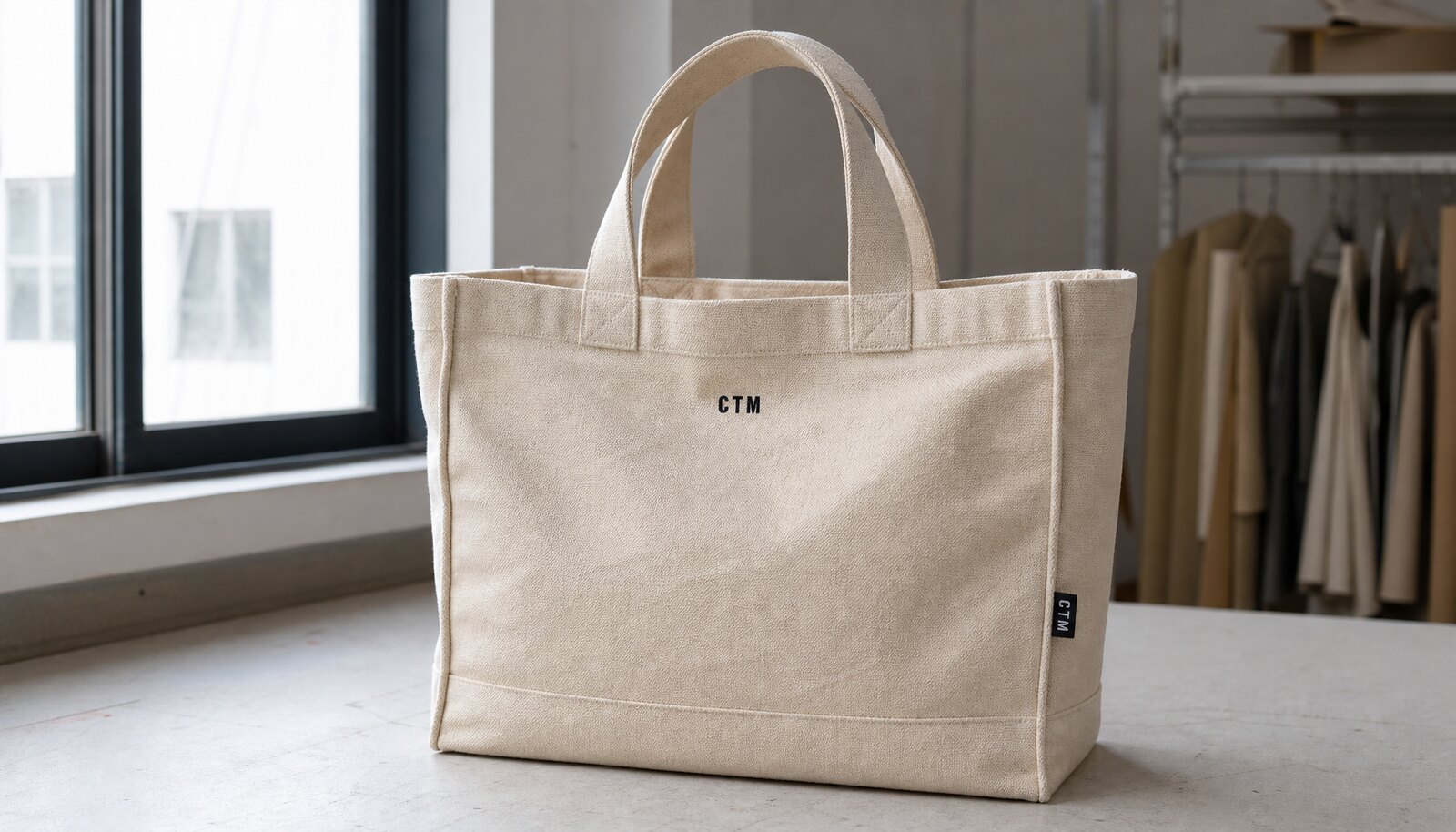
Start With the Use Case, Not the Tote
A canvas library tote bag is not a single product category. For ecommerce brands, it can be a retail SKU, a bundling carrier, a book club gift, a bookstore add-on, or a reusable package that ships inside a larger parcel. Each use case changes the spec. A tote that only needs to look good on a shelf can be lighter and simpler. A tote that ships folded in a fulfillment carton needs a tighter pack size, more predictable crease recovery, and a cleaner label plan. If the buyer starts with style instead of function, the quote usually comes back vague and hard to compare.
The first page of the spec should describe the job the bag must do in the supply chain. State who handles it first, how it is packed, what it carries, and what the receiving team needs to see on arrival. For ecommerce brands, this often means a bag that can survive pick-pack, stay flat enough for carton efficiency, and still open with a decent presentation at the customer end. That is a packaging specification problem as much as a product one. The supplier needs to know whether the priority is structure, speed, shelf appeal, or landed cost.
The same tote can have very different requirements depending on the channel. A bookstore checkout bag may need a large front print and a quick fold. A DTC campaign bag may need insert cards, a barcode, and a precise folded size that fits a set mailer. A wholesale replenishment bag may need more robust carton markings and a lower defect tolerance because it goes straight to receiving. Define the route before you define the bag. That keeps the rest of the spec honest.
- Write the channel, load, and pack route before discussing price.
- State whether the bag must look retail-ready after unpacking or only survive inbound handling.
- Define the first touchpoint in the supply chain so the pack-out spec matches reality.
Choose Fabric Weight and Body Structure by Load, Not by Preference
Canvas weight drives almost every other decision. A lighter 8 oz canvas can work for promotional programs, but it softens quickly and may not stand cleanly in a carton. A 10 oz canvas is often the practical entry point for ecommerce brands that want enough structure for books, notebooks, or bundled accessories without making the tote difficult to fold. A 12 oz canvas is usually the safer choice when the bag needs to look more premium, hold shape better, or carry heavier content repeatedly. A 14 oz canvas is appropriate when the bag must feel substantial and keep a more rigid silhouette, but it also raises unit cost and pack volume.
The right choice is not just fabric weight. Buyers should specify weave type, finished width, color, and whether the fabric is natural, bleached, piece-dyed, or pigment-dyed. Those details change hand feel and shade consistency. If the tote is meant to be reused often, ask for a tighter weave and a controlled finish so the fabric does not look limp after the first unpack. If the bag is designed for print, the fabric surface should be smooth enough for clear coverage without excessive ink bleed. The supplier should quote against the exact cloth and not a generic canvas name.
Structure belongs in the spec too. Handle attachment, seam allowance, bottom construction, and gusset depth should be written out rather than assumed. A common mistake is specifying only the final bag size while leaving the seam margin and reinforcement open. That creates surprises when the bag arrives smaller than expected or when the handle anchors sit too close to the edge. For library-style totes, a square base or reinforced gusset corner is often worth the extra control because it improves fill behavior and shelf stability.
- Use 10 to 12 oz canvas for most ecommerce tote programs that need a balance of cost and structure.
- Specify finished fabric width and weave so the factory does not substitute a similar-looking cloth.
- Write the seam allowance and reinforcement pattern into the quote request, not just the drawing.
Lock the Measurable Construction Fields
This is where tote specs usually become commercially useful. Buyers need measurable fields that survive quote comparison and sample approval. Start with finished dimensions, then add gusset depth, handle length, handle width, and seam allowance. If the bag is meant to carry books or bundled goods, define the acceptable loaded shape as well. For example, a tote may be acceptable if the body width stays within tolerance, the gusset opens evenly, and the handles do not twist under a standard load. Without those fields, a supplier can technically hit the artwork while missing the actual product need.
The handle spec deserves more attention than it usually gets. A narrow strap can look fine in a photo and still fail comfort or strength requirements in use. Cotton webbing handles in the 25 to 50 mm range are common, with 38 mm often landing in the middle for ecommerce buyers who want a comfortable carry without excessive bulk. If the bag will hold books or a mixed kit, ask for exact handle width, attachment length, and stitch pattern. A box-X or double-bar reinforcement should be named, not implied. If the bag uses self-fabric handles, specify the fold width and edge finish so the supplier cannot simplify the construction.
Stitch density and seam allowance are the hidden quality levers. For structural seams, many buyers specify around 7 to 9 stitches per inch, or an equivalent factory standard, because it balances hold and flexibility. The seam allowance should be called out, often around 10 to 12 mm for a conventional cut-and-sew tote, unless the factory proposes a different standard and proves it on sample. These are not cosmetic details. They determine whether the tote stays intact when the load shifts and whether the bag still looks aligned after repeated folding.
- Specify finished dimensions, gusset depth, handle width, handle length, and seam allowance together.
- Name the handle reinforcement pattern and the stitch density target.
- Include the loaded shape or carry test expectation if the tote will hold books or bundled goods.
Match Decoration to Wear, Folding, and Volume
Decoration should be selected against handling, not just appearance. Screen print remains the most reliable option for many canvas library tote bags because it is durable, legible, and efficient for one to three solid colors. It is usually the first choice when the artwork is simple and the order will repeat. The buyer should still define the print area, exact placement, ink coverage, and curing method. On canvas, slight shifts in placement or under-cured ink show up quickly after folding and abrasion. A supplier that can only discuss art files without talking about cure and rub behavior is not ready for a serious quote.
Digital print, heat transfer, and hybrid methods can be useful when the artwork is detailed or multi-color, but they should be tested on the exact fabric and fold. A clean sample laid flat is not enough. The bag has to be folded, rubbed, and handled the way it will be in the warehouse and the consumer's hands. If the print sits close to a seam, the spec should state a no-print zone so the factory does not place critical art where the seam will distort it. This matters even more when the tote has a gusset or a rounded corner. What looks centered on a flat panel may shift once the bag is assembled.
Embroidery has a place, but it should be used deliberately. It can work well for a small premium logo or a simple brand mark, but it can stiffen the fabric and affect how the tote folds. For many ecommerce brands, a woven label, side label, or small woven patch is the better branding tool because it preserves the body fabric and keeps the pack profile cleaner. The right choice is the one that survives use and packing, not the one that looks most expensive in isolation.
- Use screen print for durable, low-color artwork that repeats across orders.
- Require a folded and rubbed sample before approving heat transfer or digital print for bulk.
- Use woven labels when the brand mark should stay visible without stiffening the body panel.
Write the Pack-Out Like a Warehouse Instruction
Pack-out is where tote programs often become expensive without the buyer noticing. A bag that is easy to sew can still be awkward to fold, bag, label, and carton. The quote should tell the factory exactly how the tote must be packed: flat or folded, handles inside or outside, polybag or no polybag, label position, insert count, and master carton count. If the bag is going to fulfillment, the pack-out should minimize warehouse labor and protect the product from dust and crush. If the bag is going to retail, the front face and opening sequence may matter more than cube efficiency.
Carton dimensions should be written as a target, not a casual suggestion. The tote should fit the carton without overstuffing, because overpacking distorts the fold, slows receiving, and creates avoidable freight cost. Ask the supplier to provide inner pack dimensions, master carton dimensions, and a gross weight target that the warehouse can lift comfortably. A carton that is technically within weight but awkwardly oversized will cost more in handling and may be flagged at receiving. For ecommerce brands, the packed unit is the real product the logistics team sees first.
If the program includes inserts, hangtags, or barcodes, treat those as part of the production plan. State who supplies them, who applies them, and at what point in the line they are inserted. The best quotes separate bag making from pack-out labor so the buyer can see where cost and risk sit. That is the difference between a usable procurement document and a sales estimate.
- Write fold direction, handle placement, polybag rule, barcode location, and carton count in sequence.
- Set a target carton size and a gross weight ceiling that the warehouse can handle cleanly.
- Separate product making from pack-out labor so the quote can be compared line by line.
Set Tolerances Before the Sample Is Approved
A sample only reduces risk when the approval criteria are specific. The buyer should define the tolerance band before the factory cuts bulk. A practical starting point is +/- 0.5 cm for key finished dimensions on a controlled tote program, with a wider band only if the product is intentionally soft or unstructured. Handle length, print placement, and carton count should also have explicit tolerances. If the supplier does not know the target band, they will usually use their own internal standard, which may not match the buyer's receiving needs.
Sample approval should test fit, finish, and packability together. Measure the bag flat, then load it with the expected contents or an agreed test weight. Look at seam tension, handle stretch, bottom squareness, and whether the bag folds cleanly back to the target pack size. If the bag is approved only as a blank or only in a photo, the final bulk can still drift. The pre-production sample should match the final fabric, final decoration, and final packing method. Anything less is a partial approval, not a release.
The sample-to-bulk lock matters as much as the sample itself. The approved sample should be tagged and retained on both sides, with a note saying what exactly is frozen: fabric lot, print file, label size, fold method, carton count, and allowable substitute items. If the supplier changes a trim, paper insert, or carton spec later, the buyer should be able to compare it against the lock. This is how procurement avoids the common problem of a good sample turning into a slightly different bulk order.
- Approve tolerance bands before sample sign-off.
- Test a sample under real load, not only as a visual piece.
- Freeze the sample-to-bulk lock for fabric, decoration, fold, and pack-out.
Compare Sourcing Options by Spec Control, Not by Sales Pitch
The right sourcing path depends on how much control the buyer needs over fabric, decoration, and packing. A direct cut-and-sew factory usually offers the clearest control on the bag itself and can be the best route once the spec is stable. A trading company can help when the order includes labels, inserts, cartons, and shipping coordination, but buyers should ask who actually owns the production line and who approves substitutions. A full-service packer can simplify kitting and retail-ready output, but the added convenience should be priced against transparency and defect ownership.
For canvas library tote bags, supplier verification should go beyond a showroom sample. Ask for the mill source for the canvas, the dye lot method, and evidence that the bulk fabric matches the approved shade. Request production photos from cutting, sewing, print, and packing, not just a polished final sample. If the supplier uses subcontractors, ask which steps are in-house and which are not. The point is not to make the supplier jump through hoops. The point is to make the risk visible before the PO is issued. A buyer cannot control what is hidden behind the quote.
The most useful sourcing question is whether the supplier can hold the same spec on a reorder. That means asking how the factory locks the approved sample, whether it keeps fabric lot records, and what happens if the original canvas is unavailable. If the answer is vague, the buyer should expect drift. A good supplier can explain how it manages mill traceability, shade control, and production photos for each lot. That is a stronger signal than a low first quote.
- Ask who owns the mill relationship, the dye lot, and the final pack-out approval.
- Request production photos from the actual bulk line, not just showroom samples.
- Confirm what changes require buyer approval before substitution or reorder.
Read Quotes as a Cost Build, Not a Unit Number
A tote quote is only useful when the buyer can see how it was built. Compare blank bag cost, decoration cost, pack-out labor, carton material, and shipping terms separately. If one supplier quotes EXW and another quotes FOB packed cartons, the numbers are not comparable until they are normalized. The same is true for label scope, insert cost, and carton print. A lower line price can hide a more expensive packing method or a larger freight footprint. Procurement should force the same basis before making a decision.
Ask for the exact assumptions behind the unit price. What fabric weight is included? How many print colors? What is the stitch standard? What is the carton size? What is the order validity period? If the supplier cannot answer those questions clearly, the quote is probably built on stock assumptions and may change later. A detailed quote is not just about price accuracy. It is a record of what the factory promised to make. That is what allows the buyer to compare offers and later hold the supplier to the same build.
For ecommerce brands, landed cost is often driven by freight cube and packing labor as much as by sewing cost. A cheaper tote that ships in a larger carton can erase the savings. A more structured tote that packs efficiently may actually be the better commercial choice. That is why the comparison has to include pack size, carton count, and master carton dimensions, not only the fabric and print rate.
- Normalize all quotes to the same incoterm, pack-out, and carton basis.
- Ask for the assumptions behind fabric weight, print count, and packing method.
- Compare freight cube and packing labor alongside the bag unit price.
Set QC Around Defects, Load Tests, and Receiving Reality
Quality control should be specific enough that a factory inspector and a buyer inspector would reject the same bad bag. Start with critical defects: wrong size outside tolerance, wrong fabric, wrong color family, open seam, broken handle, missing decoration, wrong label, wrong carton count, or mixed shade lots. Then separate major defects, such as crooked print, loose structural stitching, visible stain, or carton damage. Minor cosmetic variation should only be tolerated if it does not affect use, safety, or retail appearance. If the buyer uses AQL, map these categories into the inspection plan so the release decision is consistent.
Load testing should be written into the approval standard. A common buyer-side benchmark is to hang or carry the intended test weight, such as 5 kg, for a defined time such as 30 minutes, then inspect handle anchors, side seams, and the bottom for failure or deformation. That does not replace the factory's own internal testing, but it gives procurement a concrete release rule. For print durability, ask for a dry rub test and a wet rub test on the same fabric and ink combination. For a canvas tote, the acceptance threshold should be no visible heavy transfer, no flaking, and no print lift at the edges after the agreed number of rub cycles.
Final inspection should also cover pack-out integrity. The tote should be folded the same way across cartons, carton marks should match the PO, barcode labels should scan, and the sealed master cartons should not contain mixed sizes or hidden substitutions. A tote that passes sewing but fails receiving still creates cost. Good QC is not abstract. It is a list of observable conditions that stop the wrong goods from reaching the warehouse.
- Define critical, major, and minor defects before bulk starts.
- Require a simple load test, such as 5 kg for 30 minutes, on the approved build.
- Test print adhesion with a buyer-approved rub or tape method and set a clear pass rule.
- Inspect folded orientation, barcode readability, and carton count at pre-shipment stage.
Specify Reorder Control So the Second Run Matches the First
The first bulk often gets the most attention. The reorder is where sloppy control shows up. If the tote is going to be replenished, the spec should include a reorder lock that freezes the approved fabric, shade, print file, fold, label, and carton format. Without that lock, factories may quietly swap canvas lots, adjust a label source, or simplify packing to keep lead time moving. Those substitutions can be acceptable only if the buyer has pre-approved them. If not, they are a spec breach, even when the bag still looks close enough on casual inspection.
Keep the evidence trail with the order. The buyer should retain the signed tech pack, the golden sample, the pre-production sample photos, the final approved carton image, and the inspection report. If the factory offers a production record, ask for lot numbers, shade records, and the date when bulk approval was released. This is especially important for dyed canvas, where lot variation can be visible, and for programs with several SKUs that need the same print alignment and packing logic. A reorder should feel boring. That only happens when the original approval is documented tightly enough to repeat.
For ecommerce brands, reorder control has real financial value. It reduces receiving disputes, keeps the tote consistent across campaigns, and limits rework at the warehouse. That is why the spec should not stop at a pretty sample. It should end with a repeatable build and a record of what has been frozen.
- Freeze fabric lot, shade, print file, label, fold, and carton format for reorders.
- Keep the signed tech pack, golden sample, and bulk approval photos together.
- Treat any unapproved substitution as a spec breach, even if the tote still looks acceptable.
Specification comparison for buyers
| Spec choice | Best fit | Why a buyer would choose it | Commercial risk to check |
|---|---|---|---|
| 8 oz canvas, 25 mm handles, simple single-color print | Light retail use, low carry weight, promo programs | Lowest material cost and easiest folding | Can feel soft, wrinkle easily, and lose structure under books |
| 10 oz canvas, 38 mm cotton webbing handles, screen print | Balanced ecommerce tote with moderate book or gift load | Good structure-to-cost ratio and reliable decoration performance | Need to confirm seam allowance and handle reinforcement under load |
| 12 oz canvas, 38 to 50 mm handles, reinforced gusset corners | Core program tote with repeat orders and stronger shelf presence | Better body, cleaner fold, and more premium hand feel | Higher freight cube and a tighter fold spec to avoid carton bloat |
| 14 oz canvas, 50 mm handles, double-stitch reinforcement | Premium carry tote or heavier pack-out | Best shape retention and strongest perceived value | Can become bulky in packing and more expensive to decorate |
| Self-fabric handles | Lower-cost programs with lighter loads | Simpler sourcing and a cleaner visual match | Lower comfort and higher risk of edge stretch if the bag is heavily loaded |
| Cotton webbing handles | Books, stationery bundles, or heavier ecommerce kits | Better comfort, more predictable strength, easier load testing | Need exact width, color, and stitch pattern locked in the spec |
| Screen print | One to three solid colors and repeatable runs | Strong opacity and stable unit economics at scale | Requires defined print position, mesh, and cure standard |
| Woven label or side label | Minimal branding or premium finish without heavy print coverage | Keeps the body clean and avoids stiff hand feel | Label placement, size, and stitch quality must be fixed before bulk |
| Clear polybag plus barcode label | Warehouse receiving and shelf protection | Improves scanability and keeps bag clean in transit | Adds labor, plastic cost, and packing time |
Buyer checklist before sampling
- Define the tote's real job first: retail display, direct-to-consumer shipment, bookstore bundle, or event kit.
- Lock finished size, gusset depth, handle width, handle length, and target filled load before asking for price.
- Specify fabric weight in gsm or oz, weave type, color target, and whether the canvas must be bleached, natural, dyed, or pigment-dyed.
- State seam allowance, stitch density, reinforcement pattern, and whether the bottom must be box-stitched or fully enclosed.
- Write the decoration method, artwork size, print position, color count, and any no-print zones near seams or handles.
- Set the fold style, inner pack count, master carton count, carton dimensions, and maximum gross carton weight.
- Decide on barcode format, label location, insert rules, and whether the tote ships loose, bagged, or boxed.
- Approve a golden sample and a sample-to-bulk lock before the factory books full material and packing runs.
Factory quote questions to send
- What exact fabric weight, weave, and finished width are you quoting, and is that before or after washing or finishing?
- What are the finished dimensions, gusset depth, handle width, handle length, and seam allowance included in your quote?
- What stitch density are you building to, and how are the handle anchors reinforced?
- What is your tolerance band for finished size, handle length, print position, and carton count?
- Can you identify the canvas mill, lot number, and dye lot control method for the quoted material?
- What parts of the order are standard stock and what parts require buyer approval before substitution?
- Can you send pre-production photos of the cutting, sewing, print, and packing stages for the actual bulk line?
- What sample-to-bulk lock procedure do you follow so the approved sample is the reference for production and reorders?
- What are the carton dimensions, gross weight limit, and master carton test standard you use before dispatch?
- Which costs are separate line items for screens, plates, labels, inserts, carton print, and repacking?
Quality-control points to confirm
- Finished dimensions stay within +/- 0.5 cm for the body, gusset, and handle length unless the spec allows a wider band.
- Seam allowance is consistent, with no open seams, skipped stitches, frayed stress points, or loose thread tails longer than 5 mm.
- Stitch density holds the approved target, typically 7 to 9 stitches per inch for structural seams unless otherwise specified.
- Handle anchors use the approved reinforcement pattern, such as box-X or double-bar stitching, with no twisting or pulled stitches.
- A loaded tote holds the agreed test weight, such as 5 kg for 30 minutes, without seam failure, handle tear, or base collapse.
- Dry rub and wet rub tests meet the agreed threshold with no visible flaking, heavy offset, or smear that transfers to a second surface.
- Print adhesion passes a tape test or equivalent buyer-approved method, with no lifting at edges or cracking after folding.
- Carton count, folded orientation, barcode placement, and master carton markings match the approved packing sheet exactly.
- No mixed shade lots, oil marks, needle damage, broken threads, or hidden carton substitutions appear in pre-shipment inspection.