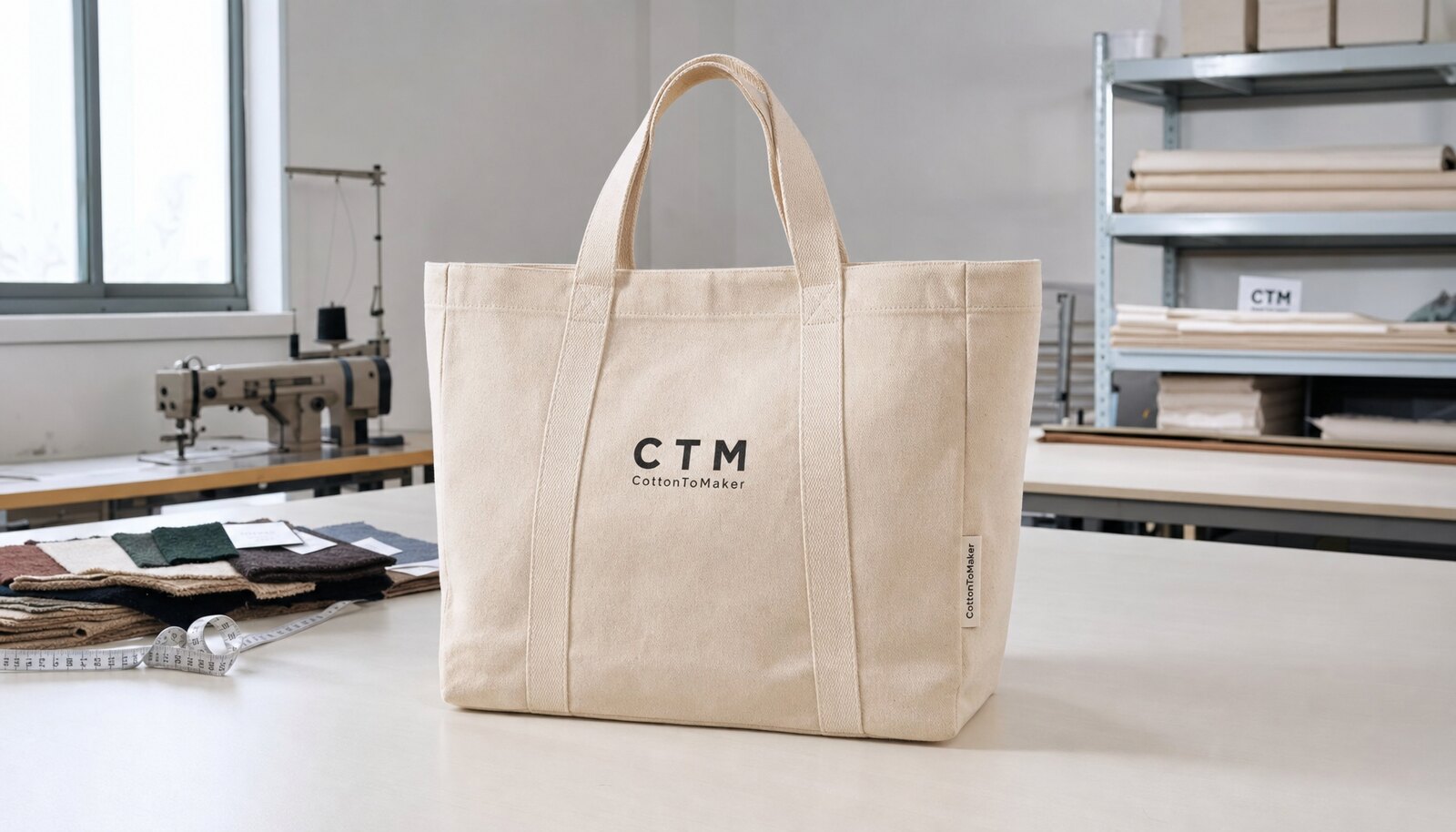
Why canvas library tote bags fit cosmetic packaging better than many buyers expect
Canvas library tote bags have become a useful packaging format for cosmetic brands because they sit between a disposable promo bag and a premium retail carrier. They are structured enough to hold boxed skincare, fragrance samples, catalogs, or launch kits, but they are still simple enough to source at a competitive cost when the spec is controlled. For procurement teams, that makes them a practical option for PR mailers, gift-with-purchase programs, in-store events, and seasonal retail packaging where the bag itself contributes to brand perception.
The commercial value is not just that the tote is reusable. It is that the tote gives the brand a visible surface area for logo placement and a tactile material that supports a more thoughtful unboxing experience. Buyers often use canvas library tote bags when they want a reusable package that feels more intentional than paper shopping bags but does not require the cost structure of a fully customized fashion tote. The catch is that cosmetic packaging is judged quickly: if the fabric feels flimsy, the seams twist, or the print looks soft and misregistered, the bag can undermine the premium message rather than support it.
This is why the sourcing conversation should start with use case. A tote for influencer mailers does not need the same load-bearing performance as a tote that will be used at retail or reused by consumers for errands. Likewise, a campaign bag carrying paper inserts and one compact set can be specified differently from a tote carrying boxed skincare or glass jars. Once the use case is clear, the buyer can define fabric weight, print method, reinforcement, and pack format with far less guesswork.
- Best-fit uses: launch kits, PR sends, retail counter bags, seasonal gift packaging, and reusable shopping bags for beauty boutiques.
- Poor-fit uses: ultra-low-cost giveaways where appearance does not matter, or heavy-duty carry use that needs much thicker canvas and stronger reinforcement.
- Packaging role: the tote often becomes part of the customer-facing presentation, so stitching, print quality, and fold appearance matter as much as the raw material price.
Start with the bag structure: size, weight, and how the tote will actually be used
Before comparing suppliers, procurement should define the structure of the bag in operational terms. For cosmetic brands, the relevant questions are not just height and width. They are whether the bag needs a gusset, how much it must carry, whether it should stand upright on shelf or in a mailer box, and whether the handles need to fit over a shoulder or only in the hand. Those decisions affect fabric consumption, sewing time, carton size, and freight cost.
The practical fabric range for most canvas library tote bags is usually 10 oz to 12 oz, or about 280 to 340 GSM. At the lower end of that range, the bag can work for lighter kits, inserts, and small cosmetic sets. At the higher end, it has more body and a cleaner retail presentation, especially when it needs to carry boxed skincare or repeated-use consumer loads. If the tote is too light, the weave can look sparse after printing and the bag may collapse. If it is too heavy, the tote can become stiff, expensive to sew, and less suitable for mailer-style packing.
Buyers should also define the usable loading condition. A tote can look adequate when empty but fail when loaded with jars, glass bottles, or boxed palette sets. Ask the supplier how the handle attachment and body seam behave under a realistic hand-pull or weight test, and tie that test to the actual contents the cosmetic brand plans to ship. The specification should reflect the product inside the bag, not just the bag on its own.
- 10 oz / about 280 GSM: suitable for lighter kits, inserts, and short promotional use.
- 11 oz / about 320 GSM: balanced choice for many retail and PR packaging programs.
- 12 oz / about 340 GSM: better when the tote must hold more weight or keep a crisper shape.
- If the supplier quotes only ounces, request GSM, yarn count, and shrinkage allowance so the comparison is not distorted.
Commercial comparison table: supplier type, fabric weight, print method, and hidden cost drivers
A procurement article needs more than a basic spec list. The real issue is how one sourcing choice changes landed cost, defect risk, and reordering speed. The table below compares typical options that cosmetic brands encounter when buying canvas library tote bags. The goal is not to pick a winner in the abstract; it is to show what each route is good at and where it commonly fails.
When you compare suppliers, keep the spec identical across bids. Same fabric weight, same bag dimensions, same handle reinforcement, same print placement, and same carton quantity. If one supplier quotes a 10 oz bag with loose handles and another quotes a 12 oz bag with reinforcement, the unit price difference is not meaningful. Procurement should strip out those differences before making a commercial decision.
- Use one purchase specification for all bids so you can compare apples to apples.
- Do not compare price alone; compare route, risk, and the cost of approvals and rework.
- If a supplier cannot explain where fabric, sewing, and printing happen, that quote is not procurement-ready.
Fabric, weave, and surface finish: the details that make a cosmetic tote look expensive or cheap
Canvas is often discussed as if it were one material, but buyers know that the feel of the bag depends on more than just the ounce weight. Yarn count, weave tightness, finishing, and natural shade variation all change the visual result. A 10 oz bag with a tight weave and controlled finishing can look more premium than a heavier bag with loose structure and uneven surface texture. For cosmetic brands, that matters because the bag is often judged at first touch, not after extended use.
Natural canvas is popular because it supports a clean, sustainable packaging story and prints well without heavy surface treatment. However, “natural” is not a quality grade by itself. Procurement should ask for the exact cotton content, whether the canvas is bleached or unbleached, whether any softener or resin finish is used, and what shrinkage is expected after cutting and sewing. If the supplier cannot explain those basics, the buyer may end up with inconsistent shade, excessive shrinkage, or an unpredictable hand-feel between runs.
A good spec sheet should also describe the surface appearance. Cosmetic brands often care about whether the bag has a clean, even field for the logo or whether the fabric shows flecks, slub, or uneven yarn marks. Some natural variation is normal in canvas, but the acceptable range should be stated in advance so the supplier knows what will be accepted and what counts as a defect. That is especially important when multiple factories quote on the same design and one sample appears significantly cleaner than another.
- Ask for cotton composition, weave count, and expected shrinkage, not just “canvas.”
- Define whether the look should be clean and retail-ready or intentionally natural and rustic.
- If the bag will carry heavy cosmetics, verify that the weave is tight enough to support the load without visible distortion at the seams.
Print method choice: appearance, lead time, and what can go wrong in production
For most cosmetic brand programs, screen printing remains the most reliable option when the artwork is a clean logo, a simple slogan, or a limited-color campaign mark. It works well on canvas because it delivers stronger opacity and clearer edges than many low-cost digital methods. It also scales efficiently if the brand plans repeat orders across multiple seasons. That is why it is often the preferred method for library-style tote bags used in retail and PR contexts.
Heat transfer and digital transfer can be useful when the artwork changes frequently or the order quantity is too low to justify full screen setup. But buyers should not treat these as interchangeable with screen print. Transfers can show edge lift after folding, may need careful curing or pressing, and can feel more like an applied layer than part of the fabric. If a brand wants a softer premium look, it may still need to test whether the chosen method holds up under handling and transit.
Embroidery gives a premium tactile effect, but on tote bags it often changes the cost and lead-time profile significantly. It can also reduce print area or interfere with the clean visual language that cosmetics buyers often want. For most packaging use cases, embroidery is better treated as a special premium option rather than the default. The key procurement point is to match artwork complexity to the print method, not to ask the factory to rescue a design that is simply too detailed for the bag format.
- Screen print: best for repeatable artwork and larger runs.
- Heat transfer: better for short runs or changing campaigns, but verify rub resistance and fold durability.
- Embroidery: premium feel, but often costlier and slower; use only when the design and budget justify it.
- Woven label or sewn side label: useful when the brand wants restrained branding instead of a full front-panel print.
MOQ, pricing tiers, and how to avoid hidden setup charges
Minimum order quantity should be treated as a production formula, not as a vague supplier rule. For canvas library tote bags, MOQ usually moves with fabric color, print color count, and finishing complexity. Natural canvas with one-color print is typically simpler to scale than dyed fabric with multiple colors and special labels. A supplier that offers a very low MOQ may still be pricing in high setup fees, special packing fees, or less favorable shipping assumptions. Procurement needs the whole picture.
A more useful approach is to request three quantity tiers: a pilot run, a standard order, and a replenishment volume. That reveals whether the price curve makes commercial sense and whether the supplier is actually built for repeat business. It also helps a cosmetic brand decide whether to launch cautiously and reorder later or consolidate volume from the start. If the quote only shows one quantity, the buyer cannot tell where the real cost step-down happens.
The same logic applies to multi-SKU brand programs. If the tote body is identical but the artwork changes for different product lines or regions, ask whether MOQ is driven by fabric color, print screen, or artwork version. Some suppliers price each logo variant as a separate production run even when the bag itself is unchanged. That may be acceptable, but it should be explicit before the order is approved.
- Ask for MOQ by fabric color and print color, not only by total quantity.
- Request pricing at pilot, standard, and replenishment quantities.
- Clarify whether different logos in one order are treated as one run or separate runs.
- Check whether low MOQ comes with higher carton charges, sample fees, or print setup fees.
Sample approval and quality control: what should be measured, tested, and rejected
A tote bag sample should be judged as a production tool, not as a presentation prop. The purpose of the sample is to confirm that the factory can reproduce the agreed structure, print, and finish at scale. For cosmetic packaging, that means the approved sample must match the final fabric, final size, final handle length, final print method, and final packing format. If any of those change after approval, the buyer should expect risk in color, fit, or line quality.
A strong sample process usually has at least two checkpoints: a first sample or strike-off for artwork and dimensions, and a pre-production sample that reflects the final build. Some suppliers also use a sealed bulk sample to keep everyone aligned during production. Procurement should keep a buyer-side reference sample and ask the supplier to keep a factory-side reference as well. That helps prevent disputes if the bulk run varies from the approved standard.
Operationally, the inspection should not stop at a visual look-over. Buyers should measure body width, height, gusset, handle drop, and print placement with a tape. They should inspect the inside seam finish, the corner reinforcement, and the trim quality at the handle base. If possible, load the bag with the actual cosmetic items to see whether the bag stands properly, twists at the seam, or distorts under a realistic package weight. Simple handling tests catch more issues than a purely visual approval process.
Inspection rules should be written before production starts. For example, critical defects such as open seams, missing handles, holes, or severe print misregistration should be zero tolerance. Major defects might include noticeable stains, broken stitching at stress points, or dimension errors beyond the agreed range. Minor defects may include loose threads or slight shade variation, but only if they do not affect retail presentation. If the supplier has an AQL plan, ask for the exact level used for critical, major, and minor categories instead of accepting a generic “standard inspection.”
- Approve a pre-production sample made with final materials and final packing.
- Measure all critical dimensions rather than judging by eye.
- Define rejectable defects by category before bulk production starts.
- Use a buyer-side reference sample and a factory-side reference sample for dispute control.
Packing format and carton planning: where landed cost quietly changes
Packing is one of the most overlooked cost variables in tote bag sourcing. A bag that looks inexpensive at the factory can become more expensive once the carton count, carton size, and packing method are added. If each bag is individually polybagged, the order may look cleaner and better protected, but freight cost can rise because the carton volume expands. If the bags are packed too loosely, carton count becomes less reliable and the receiving team may face sorting labor at destination. For wholesale cosmetic packaging, flat bulk packing is often the better balance.
Procurement should ask the supplier to quote the bag and the packing format together. That means units per carton, carton dimensions, gross weight, and whether cartons are single-wall or double-wall. It also means clarifying whether the tote will be folded in a simple, repeatable way or whether each unit requires a branded insert, belly band, or individual polybag. Those details affect not just the factory price but also warehouse handling, pallet stacking, and shipping efficiency.
For retail-facing gift packaging, a little finishing can matter more than excess material. A neat fold, a consistent insert card, or a clean belly band can make the tote look ready for presentation without adding the volume and labor cost of full individual packaging. The buyer should tie packaging to the end channel: direct-to-consumer, distributor receiving, retail shelf, or event handout. The wrong packing format can make the bag harder to count, harder to store, and more expensive to move.
- Bulk flat packing is usually best for wholesale and distribution-center receiving.
- Individual polybagging should be used only when shelf protection or dust control is required.
- Ask for carton dimensions and gross weight so freight cost can be compared accurately.
- If the order will be stacked or shipped by sea, ask for carton compression or stacking guidance.
Sustainability comparison: when canvas makes sense, and when the claim needs restraint
Cosmetic brands often choose canvas because it communicates reusability and feels more aligned with lower-waste packaging goals than single-use alternatives. That said, procurement should keep the sustainability message accurate and specific. “Eco-friendly” is too vague to help a buyer compare options. A stronger approach is to describe the material honestly: cotton canvas tote, reusable carrier, natural or undyed body, optional recycled content if documented, and limited packing waste where applicable. The more specific the claim, the safer it is for packaging review and marketing approval.
Canvas is not automatically the most sustainable choice in every scenario. If the bag is heavy, uses complex printing, or is over-specified for a one-time campaign, it can create more material use than the brand actually needs. On the other hand, if the tote is reused many times by consumers or retail staff, the functional life can justify the material input better than a disposable package. Procurement should compare packaging formats based on actual reuse potential, not just the emotional appeal of cotton.
If a supplier claims recycled content, organic fiber, or certification, request the underlying documentation before you use the claim in packaging copy. Buyers should also confirm whether the claim applies to the whole bag or only to a component such as the canvas body. A clean sustainability comparison is usually better than a bold claim that later needs to be withdrawn from the artwork or sales deck. For B2B buyers, accurate packaging language protects both compliance and brand trust.
- Use specific material facts instead of broad eco language.
- Only repeat recycled, organic, or certified claims when documentation is available.
- Compare the tote against other packaging options by reuse potential, not by slogan alone.
- Avoid over-specifying a bag that will be used only once in a short campaign.
How to compare supplier quotes like a procurement team, not like a design buyer
A good quote comparison is built on identical assumptions. The buyer should collect a written spec sheet and require each supplier to quote the same bag body, same handle spec, same fabric weight, same print method, same packing method, and same shipment basis. Without that discipline, the lowest unit price may simply be the quote that left out the most work. For tote bags, that missing work often shows up later as sample charges, setup charges, or freight penalties.
The most useful commercial comparison is landed cost, not factory price. That means adding shipping, import handling, sample freight, carton adjustments, and any rework exposure the buyer can reasonably anticipate. A quote that is 5% lower at the factory but requires a second sample round, weaker packing, or a slower lead time may lose once the operational cost is included. Procurement should also compare the supplier’s responsiveness: if it takes days to answer a simple measurement question before order placement, the same delay may appear again during production.
Red flags are usually visible early. Be cautious if the supplier cannot explain yarn or fabric weight, refuses to specify who prints the bag, gives a vague MOQ without a cost ladder, or offers a quote that is too simple for a custom product. Also watch for quotes that omit packing details or shipping assumptions. Those omissions are not small gaps; they are often where margin gets added later. A reliable vendor should be comfortable documenting the line items that matter to buyers and should not rely on the buyer to infer the missing parts.
- Compare factory price and landed cost separately.
- Require all suppliers to quote from the same specification sheet.
- Watch for missing line items such as setup fees, packing, or freight basis.
- Treat vague answers about printing or sewing as a commercial risk, not just a communication issue.
Specification comparison for buyers
| Buying decision | Recommended spec for cosmetic brands | Best-fit use case | Procurement risk to control |
|---|---|---|---|
| Fabric weight | 10 oz to 12 oz natural canvas, roughly 280 to 340 GSM | Launch kits, PR mailers, retail counter bags, and reusable gift-with-purchase packaging | Too-light fabric can look thin after print, lose shape, or show contents through the weave |
| Fabric construction | Tight plain weave cotton canvas with documented yarn count and shrinkage allowance | Brands that need a cleaner print surface and a more premium unboxing look | Loose weave can distort logo edges, absorb ink unevenly, and shrink unpredictably after washing or humid storage |
| Handle construction | Self-fabric handles with X-box reinforcement or dense bar-tack reinforcement at stress points | Totes carrying skincare sets, catalogs, sample boxes, or multiple product units | Weak handle attachment can fail first, especially when the bag is lifted from the end of the handle rather than by the body |
| Side and bottom seams | Double-needle seam with trimmed and locked thread ends; stress areas reinforced | Repeated use bags that will go from event table to customer home to retail carry | Single-row seams or poor backtacking can open under load or after repeated folding |
| Print method | 1 to 3 color screen print for stable artwork; heat transfer only for small runs or frequent artwork changes | Clean logo work, brand marks, campaign messages, and repeat replenishment orders | Gradients, small type, or soft-touch effects may not hold up after handling, stacking, or long transit |
| Artwork format | Vector file, Pantone references, print area marked on a tech pack, and minimum line thickness defined | Brands that need consistent logo placement across several tote SKUs or markets | Raster artwork or unclear placement can create registration issues and approval delays |
| Supplier route | Direct factory with in-house sewing and printing, plus documented QC checkpoints | Annual demand, controlled quality, and orders where repeatability matters more than a one-time low quote | Outsourced printing or sewing can hide capacity bottlenecks and make defect responsibility unclear |
| MOQ logic | MOQ by fabric color and print color count, not just by bag size | Multi-SKU programs sharing one body spec but different brand marks or seasonal artwork | Low MOQ quotes may hide setup fees, screen fees, packing surcharges, or color change costs |
| Packing format | Flat packed in bulk with carton labels by SKU, color, and count; polybag only when required | Wholesale, distributor, and DC receiving programs where speed and count accuracy matter | Loose folding, mixed lots, or unclear carton markings can trigger warehouse disputes and extra labor |
Buyer checklist before sampling
- Confirm final bag size, gusset depth, handle drop, usable loading weight, and whether the tote must stand upright when packed.
- Specify fabric type, GSM or ounce weight, yarn count if available, color tolerance, and any expected shrinkage after production or light washing.
- Send vector artwork, print placement diagram, Pantone references, minimum text size, and approved line thickness for the logo.
- Request one pre-production sample using final fabric, final print method, final handle construction, and final packing format before bulk release.
- Ask for a clear quote split: bag body, printing setup, packing, sample charge, carton cost, and freight basis.
- Define inspection checkpoints for stitching, print adhesion, stains, measurement tolerance, and carton count before the order ships.
- Get photo evidence of sewn samples, print strike-offs, and carton packing before approving mass production.
- Write down what defect types are rejectable, what can be reworked, and what counts as acceptable cosmetic variation in natural canvas.
Factory quote questions to send
- What exact canvas specification are you quoting, including GSM or ounce weight, weave type, and shrinkage allowance after cutting and sewing?
- Is printing done in-house, and if not, which step is outsourced and how do you control color matching and registration between sample and bulk run?
- What is the MOQ by fabric color, print color, and logo version, and what cost changes if we reduce quantity or split the order into multiple campaigns?
- Please quote the same bag body, handle length, handle reinforcement, and packing format for every price tier so landed cost can be compared cleanly.
- What are the setup charges for screens, plates, color separations, lab dips, or mockups, and which of those charges are refundable at volume?
- Can you provide a pre-production sample with final fabric, final print, final stitching details, and final master carton label before production starts?
- Which dimensions, stitch lines, and print attributes do you inspect inline and at final inspection, and what defect threshold do you apply by category?
- What carton count, carton dimensions, gross weight, and palletization or stacking guidance do you recommend for export and warehouse receiving?
- If there are multiple SKUs in one shipment, how do you keep cartons and packing lists sorted so the distribution center does not receive mixed lots?
- What is your standard lead time from sample approval to ex-factory shipment, and what steps commonly extend that timeline?
Quality-control points to confirm
- Fabric weight tolerance should stay within plus or minus 5 percent of the agreed GSM or ounce specification; if the tote is specified at 320 GSM, the buyer should not accept a run that materially drops below that without written approval.
- Handle attachment should use a defined reinforcement method, such as X-box stitching or dense bar-tack stitching, with no skipped stitches, no loose bundles at the seam edge, and no visible lifting when the handle is pulled by hand.
- Side seams, bottom seams, and gusset joints should use a consistent stitch type, typically double-needle or equivalent reinforced construction, with thread tension balanced so the seam does not pucker or tunnel.
- Stitch security should be checked at stress points: handle roots, side seam tops, gusset corners, and the upper opening where repeated folding tends to weaken the structure.
- Print registration should hold within 2 mm for simple logos and should not drift enough to blur outlines, crop letters, or misalign multicolor blocks; any line work below the agreed minimum thickness should be rejected if it fills in or breaks.
- Color tolerance should be assessed against the approved lab dip, strike-off, or signed production sample using a consistent reference light source; natural canvas variation should be defined in advance so the buyer knows what level of shade range is acceptable.
- Bag dimensions should stay within plus or minus 0.5 cm for smaller promotional totes and plus or minus 1.0 cm for larger shopping or gift bags, with special attention to handle drop, gusset depth, and opening width.
- Defect thresholds should be written by category: for example, no oil stains, no broken needles marks, no fabric holes, no missing stitches, no open seams, and no print smudging on retail-facing panels; minor thread ends may be reworked if the supplier trims them before final packing.
- AQL should be agreed before shipment. For example, use a reasonable final inspection plan based on lot size, with critical defects at zero tolerance, major defects at a low acceptance level, and minor defects capped tightly enough that retail presentation is not damaged.
- Cartons should be checked for count accuracy, dry condition, label accuracy, and crush resistance; any carton damage, mixed SKU packing, or quantity mismatch should stop release until rework is complete.