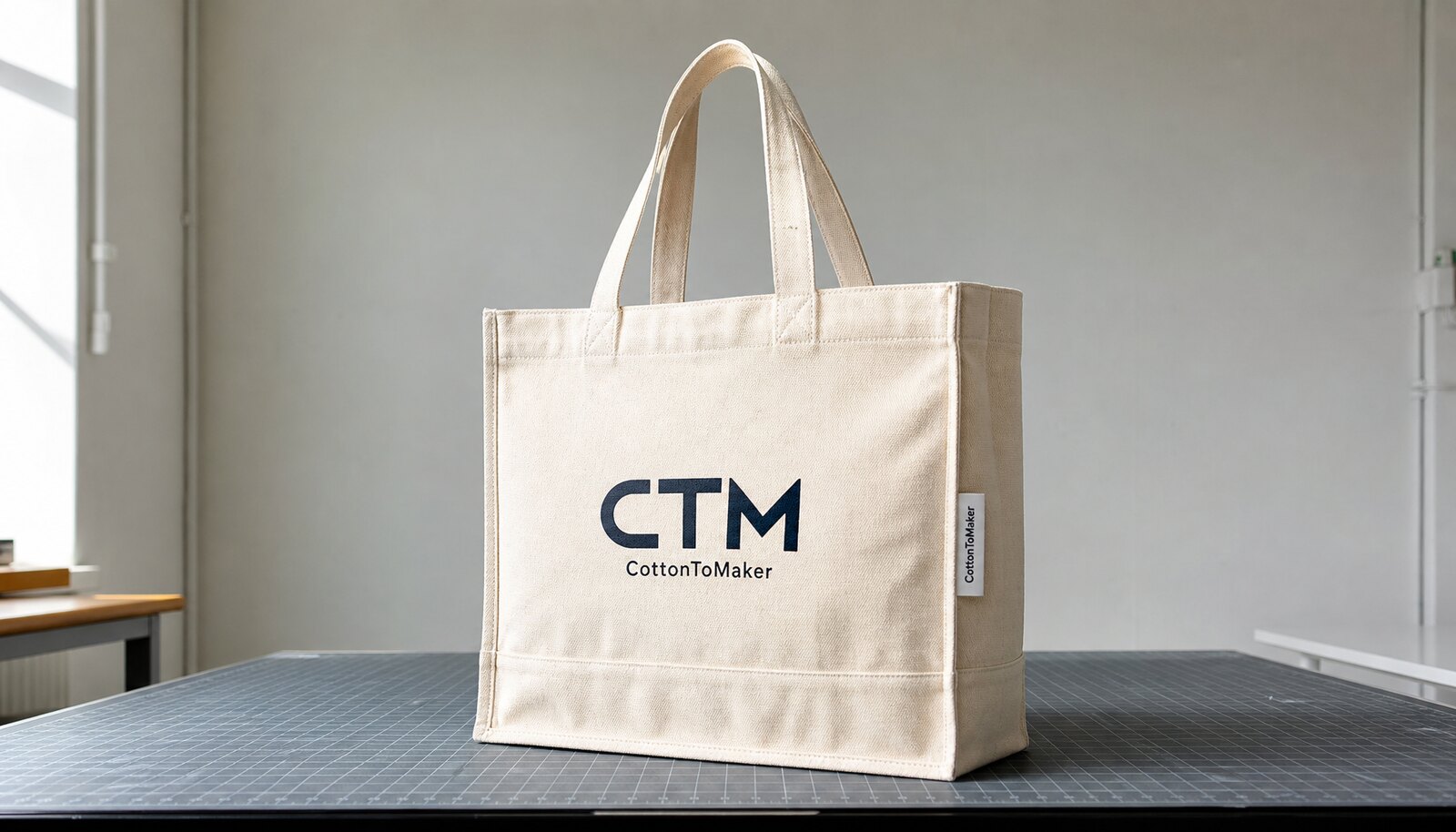
Why This Tote Fails at Events
A canvas library tote for a corporate event is not a generic shopping bag. It has to look clean on a registration table, hold brochures or books without distorting, and survive being folded, stacked, handed out, and carried home. Most production problems start when buyers treat it as a simple low-cost bag and do not define the inspection standard until the bulk order is already moving. By then, the factory is sewing to a loose reference and the buyer is comparing finished goods against a mental image that nobody wrote down.
For this product, the real risk is inconsistency. One bag can look fine, but a pallet of 2,000 bags with different shades, crooked logos, and loose handles becomes an event problem, not just a factory problem. A good checklist should force the team to lock the commercial spec, the print method, the packing format, and the QC threshold before production starts. If the tote will carry books, the seam standard matters more than a cheap unit price. If it will carry brochures and giveaways, print clarity and carton count may matter more than extreme fabric weight.
- Define the bag as an event handout item, not a generic retail tote.
- Write down the load target, finish quality, and packing expectation before sampling.
- Treat print alignment and seam strength as acceptance items, not style preferences.
Set the Base Spec Before You Compare Quotes
Most quote confusion comes from unfinished specifications. For a standard corporate event library tote, a 280-340 GSM canvas is a practical starting point because it gives enough body for brochures, notebooks, and a light welcome kit without pushing the bag into a stiff, overbuilt feel. If the tote will regularly carry books or bottled items, move upward into the 340-450 GSM range and tell the factory why. Buyers should also decide whether the fabric needs a pre-shrunk finish. If the bag size must stay stable after steaming, washing, or long storage, pre-shrunk canvas is worth specifying because the finished dimensions will otherwise move in production and use.
Size and handle geometry matter just as much as fabric. A common event-friendly shape is a medium rectangular body with a gusset that gives the bag internal volume without making it bulky to store. Handles should be long enough for shoulder carry if the event audience expects to move around a venue, but not so long that the tote drags on the floor. The buyer should fix the handle width, handle drop, and top hem allowance in the RFQ, because those details determine whether the bag feels promotional or professional once it is filled.
- Use 280-340 GSM for standard brochure and notebook loads.
- Move higher only when the tote must hold books, bottles, or heavier kits.
- Freeze finished dimensions, gusset depth, and handle drop before artwork is approved.
Construction Details That Protect the Event Run
The bag body can pass a visual check and still fail in use if the construction is weak. For event totes, the handle attachment is the first stress point to inspect. A simple sewn join is rarely enough when the bag will be filled, lifted, and carried all day. Look for bar tacks or an X-box reinforcement at the handle ends, a clean top hem, and seam allowances that are consistent from first bag to last. Loose threads are not the main issue; skipped stitches, uneven tension, and handle twist are the defects that create returns and complaints after the event.
The bottom and side seams also need a practical standard. If the tote must stand on a table or fit into a display stack, a neat gusset and straight seam line matter more than decorative construction. Ask the factory how it trims seam allowance, whether it overlocks raw edges, and how it prevents puckering on thicker canvas. If the bag is meant to look premium, the inside finish should still be tidy. Buyers often overlook the inside because the bag is open-top, but event attendees notice poor trimming as soon as they open the tote and see loose fibers or uneven folds.
- Require reinforcement at handle attachment points.
- Inspect top hem consistency and seam straightness across the run.
- Use a load test to confirm the seam package matches the intended use.
Print Method Choice Drives Both QC and Cost
For corporate events, most buyers want a clear logo, stable color, and low setup risk. A one- or two-color screen print is usually the most efficient route because it gives strong opacity on canvas and holds up well when the bag is folded or packed flat. The key is to treat the print as a production process, not a graphic file. The factory needs the final artwork size, placement reference, ink choice, and drying or curing standard. Buyers should ask for the actual print position in centimeters from the top edge and side seam so the logo does not drift across batches.
If the branding needs a more premium finish, a woven label, embroidered patch, or sewn badge can be better than a large printed field. Those options reduce the risk of cracking, but they introduce new checks: patch placement, thread tension, backing material, and edge finish. Heat transfer can work on selected runs, but it should be judged on rub resistance and folding behavior, not only on first-look color. For an event tote, the best decoration method is the one that survives repeated handling while still looking intentional when the bag is photographed on the registration desk.
- Screen print is usually the best balance for simple logos and bulk orders.
- Premium labels or patches need placement and edge-quality checks.
- Treat print placement tolerance as a QC item, not a design note.
How Supplier Route and MOQ Change the Buying Decision
The quote looks different depending on who is making the bag. A direct factory is usually the strongest option when the order is repeated, the size spec is fixed, and the buyer wants control over sewing and print consistency. A trading company can help when the tote is part of a wider event kit or when the buyer needs one point of contact for mixed SKUs, but the tradeoff is less direct visibility into the sewing line. A local decorator or print shop can be useful for rush replenishment and very small runs, though the unit cost is usually higher and the fabric selection may be narrower.
MOQ logic should be explicit. Some factories quote a low bag MOQ but push the real threshold into fabric color, print setup, or patch embroidery. Others will accept a small order only if the buyer uses stock canvas, one print color, and standard packing. That is not a problem if it is written clearly. What causes trouble is when the supplier gives one number and then adds charges for every change. For this product, compare the MOQ against the actual event risk: a modest overrun is better than a rushed reprint, but excess inventory is wasteful if the campaign is one-off.
- Use direct factory sourcing for repeatable quality and better process control.
- Use a trading company only if the service model adds real value to your program.
- Treat MOQ as a function of fabric, decoration, and packing, not just bag style.
Sample Approval Should Simulate the Real Event Load
A sample is not approved because it looks acceptable on a desk. It is approved when it matches the production spec and survives the intended use. Start with a pre-production sample from the exact fabric, handle material, and print route that will run in bulk. Measure the finished dimensions, check the logo position, and inspect the stitching under good light. Then load it with the actual items the event team will distribute. If the tote is supposed to carry books, include books. If it will hold a notebook, brochure set, and a small gift, test that exact mix rather than a generic weight estimate.
The sample should also be used to settle the small details that cause bulk disputes later. Fold the bag to see how creasing affects the print. Open and close it several times to make sure the handle seams do not distort. If there is a woven side label or sewn brand tag, make sure it sits flat and does not curl. Once the sample is approved, keep one sealed reference sample with the PO file. That sample becomes the comparison point for incoming goods, and it is the fastest way to stop a factory from treating a soft tolerance as permission to drift.
- Approve the exact fabric, decoration method, and trim, not a substitute sample.
- Test the tote with the intended event contents, not a random weight.
- Keep one sealed golden sample for bulk inspection and dispute resolution.
QC Points That Matter at Inline and Final Inspection
A useful inspection plan separates critical, major, and minor defects. Critical defects are the ones that make a bag unusable or visibly wrong: wrong size, missing handle, broken seam, severe stain, or the wrong logo. Major defects are the ones an attendee would notice immediately, such as print misplacement, open stitching, or handle asymmetry. Minor defects are the details that reduce perceived quality but do not make the bag unusable, such as loose threads or a slight crease that can be flattened. For event bags, the buyer should be stricter on visual consistency than on generic utility bags because the tote is part of the brand presentation.
A practical buyer standard is to inspect size, seam quality, print placement, fabric shade, and carton count at minimum. If the bag is a light color, check for contamination from sewing oil or storage marks. If the logo sits close to the edge, verify centering and the exact offset from the top hem. If the order is large enough to justify an inspection, sample enough cartons to see whether the issue is isolated or systematic. The inspection report should not just say pass or fail; it should tell you whether the defect came from cutting, sewing, printing, or packing so the corrective action is meaningful.
- Use separate criteria for critical, major, and minor defects.
- Measure size, placement, and carton count, not just visual appearance.
- Trace defects back to cutting, sewing, print, or pack-out.
Packing, Labeling, and Carton Control
Packing is part of the product for a corporate event tote because the bags usually arrive in a compressed stack and go straight from carton to handout table. Flat packing is common because it saves space, but the folds should not distort the print or create hard creases at the logo. If the tote is shipping by sea, use packaging that protects against moisture and rub marks. Polybags, tissue, or a simple inner wrap may be necessary depending on fabric finish and print type, but the factory should not overpack the carton just to reduce shipping volume. A damaged presentation on arrival costs more than a slightly larger carton.
Carton marks need to be consistent and easy for the warehouse to read. Include style, color, quantity, PO number, carton count, and gross weight if your receiving team uses that information. If the tote is part of a larger event kit, add a carton sequence so the fulfillment team can reconcile quantities quickly. Buyers should also decide whether the cartons need a drop test or compression standard based on the ship mode. The right packing spec is not about making the carton pretty; it is about making the goods arrive in a state that passes receiving without manual rework.
- Pack flat only if folding does not damage the print or shape.
- Use clear carton marks so receiving can reconcile quantities fast.
- Set a pack-out standard that matches the shipment method and handling risk.
Lead Time Risk Is Usually Hidden in Artwork and Rework
The production timeline for canvas library totes is often longer than buyers expect because the schedule is not driven by sewing alone. Sample approval, print plate or screen preparation, fabric lot allocation, carton artwork, and final sign-off can all add time. A realistic factory plan should separate sample lead time from bulk production lead time and show where the approval gate sits. If the event date is fixed, the buyer should work backward and leave room for one correction cycle. That matters even more when the tote uses multiple print colors, special labels, or custom packaging, because each added feature increases the chance that one detail slips.
Seasonal congestion can stretch the schedule without warning. Peak gifting periods, year-end event calendars, and export congestion can all push a clean order into a late dispatch if approvals are slow. The safest approach is to freeze the spec early, approve the pre-production sample quickly, and avoid changing artwork after the factory has started screens or labels. Buyers who want schedule control should ask the supplier to identify the longest lead item in the job. Often it is not sewing time at all; it is waiting on final artwork, trim, or carton confirmation.
- Separate sample time, bulk time, and shipping time in the schedule.
- Leave one correction cycle before the event date.
- Treat artwork and packaging approval as the usual schedule bottlenecks.
Compare Quotes on Landed Cost, Not Unit Price
Two quotes can look similar on paper and still produce very different outcomes. One supplier may include the canvas GSM you need, flat packing, carton labels, and basic inspection, while another may quote a lower unit price but exclude setup, labels, or pack-out. To compare them properly, put the same spec into each quote request and ask the supplier to break out fabric, sewing, print setup, packaging, carton cost, and inland charges. If the quote is export-ready, include the freight assumption and the delivery term so the buyer can see whether the margin is hiding in logistics. A lower factory price is not better if it creates a second invoice for details that should have been in the first quote.
The landed-cost view should also account for risk. If one supplier has cleaner samples, better communication, and a clearer inspection report, that may be worth more than a small unit discount because event totes are visible brand assets. Buyers should compare the reject rate they expect, the amount of rework they can tolerate, and the cost of a late delivery against the savings on the unit line. The final award decision should go to the supplier who can hit the spec, pack the goods properly, and document the inspection path, not simply the one with the lowest headline number.
- Ask every supplier to quote the same fabric, print, packing, and inspection scope.
- Separate unit price from setup, packaging, and logistics costs.
- Award on total landed cost plus quality risk, not on the lowest headline figure.
Specification comparison for buyers
| Spec decision | Recommended option | When it fits | Buyer risk to check |
|---|---|---|---|
| Sourcing route | Direct factory with in-house cutting, sewing, and print control | Best for repeat corporate events and buyers who need consistent shade, stitch, and packing control | Confirm whether the quote includes print setup, carton marking, and rework for rejects |
| Sourcing route | Trading company or sourcing office with factory network | Useful when the tote is one item in a larger welcome kit or you need multiple SKUs under one PO | Check who actually owns QC and whether samples come from the same factory that will run bulk production |
| Sourcing route | Local decorator or regional print shop | Fits very small runs, rush event replenishment, or when freight timing matters more than unit cost | Risk of inconsistent fabric lots, weaker sewing, and higher per-unit cost on repeat orders |
| Fabric weight | 280-340 GSM canvas for standard event use | Works for brochures, notebooks, and moderate giveaway loads without feeling flimsy | Check for shrinkage, fabric stiffness, and whether the GSM is finished weight or greige weight |
| Fabric weight | 340-450 GSM canvas | Fits heavier books, gift sets, or premium corporate programs that need a sturdier hand-feel | Higher cost, longer sew time, and more risk of bulky seams if the pattern is not adjusted |
| Print method | 1-2 color screen print with controlled placement | Best for clear logos, event branding, and budget-sensitive bulk orders | Verify ink opacity, cure quality, and registration tolerance on the actual bag size |
| Print method | Woven label, embroidered patch, or sewn badge | Fits premium programs where the tote must feel durable and keep branding intact after heavy handling | Check patch alignment, thread tension, and whether the label changes lead time or MOQ |
| Construction standard | Top hem plus X-box or bar tack at handle stress points | Needed when bags will carry catalogs, brochures, or books across a full event day | Require a load test and inspect for seam pop, skipped stitches, and handle twist |
Buyer checklist before sampling
- Freeze the finished bag size, fabric GSM, gusset depth, and handle length before requesting quotes.
- State the expected load and use case, such as brochures only, books, or mixed event kits.
- Choose the decoration method first, because print setup and MOQ change with each method.
- Request pre-production samples from the same fabric and the same print route planned for bulk order.
- Define acceptable size tolerance, color tolerance, and print placement tolerance in writing.
- Confirm carton quantity, carton label format, and whether bags ship flat or folded with tissue.
- Ask for a load test, seam inspection, and print rub test on the approved sample.
- Compare landed cost, not just unit price, before awarding the order.
Factory quote questions to send
- What exact GSM, weave, and finish are you quoting for the canvas, and is that finished weight or base fabric weight?
- Is the MOQ based on bag style, fabric color, print color count, or a combination of those factors?
- Which print method will you use for my artwork, and what are the setup charges, screen charges, or patch charges?
- What size tolerance and stitch tolerance do you apply during production and final inspection?
- Will the pre-production sample come from the same sewing line and print line that will make the bulk order?
- How are the bags packed, how many per carton, and what carton drop or compression test do you use?
- What is the realistic production lead time after sample approval, and what could extend it?
- Which costs are excluded from the unit price, such as labels, insert cards, polybags, export cartons, or rework?
Quality-control points to confirm
- Measure finished width, height, and gusset against the approved sample; common buyer tolerance is tight enough that the bag still stacks and packs correctly.
- Inspect the fabric for weave gaps, oil stains, shade variation, and yarn slubs that would be visible on a light-colored tote.
- Check handle symmetry, handle drop, and bar tack or X-box reinforcement at both attachment points.
- Verify print placement, logo size, and registration against the approved artwork sheet, including any side label or woven tag.
- Perform a load test with the expected event contents and watch for seam opening, handle stretch, and bottom deformation.
- Rub-test the print and inspect for cracking, smearing, or ghosting after folding.
- Count cartons and loose pieces at pack-out to make sure the shipping quantity matches the PO and carton mark.
- Reject any bag with broken stitches, exposed raw edges, severe wrinkling, or odor contamination that could affect event presentation.