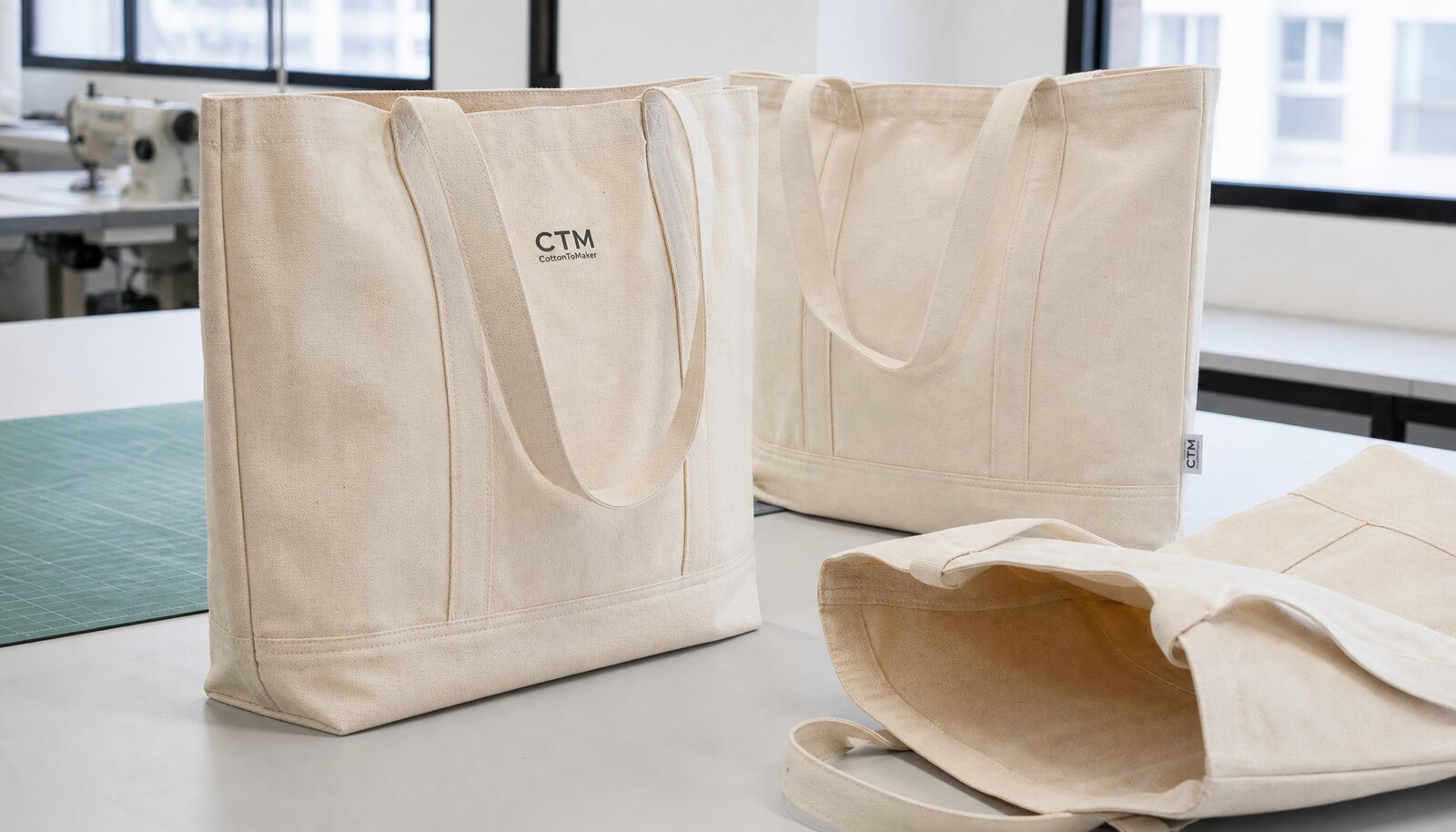
Start With the Event Use Case, Not the Tote Name
The phrase canvas library tote bags for corporate events sounds straightforward, but the buying requirements change as soon as the bag becomes part of a branded event program. A conference handout bag, a client onboarding tote, a staff welcome pack, and a retail-style giveaway all demand different fabric weight, construction, print size, and packing. If you start with the product name instead of the use case, suppliers will fill in the gaps differently and your quotes will not be comparable.
The right first question is what the bag must carry and how it will be handed out. If the tote only needs to hold brochures and a notebook, a lighter build may be acceptable. If it must survive a full event kit, travel through registration, and still look presentable afterward, the buyer should demand a stronger body, more consistent stitching, and a print method that stays legible after repeated use. The event context also drives whether the bag should be folded flat for cartons, pre-filled with inserts, or shipped ready for display.
- Define the contents by weight and dimensions, not just by item names.
- State whether the tote is for same-day distribution, pre-kitted shipping, or reusable office use.
- Specify whether the bag must stand upright on a table or can remain soft and flat.
Choose Fabric Weight for Performance, Not Just Price
Fabric weight is one of the easiest places for a quote to look better than it is. Two suppliers can both say canvas, but the actual feel, stiffness, and durability can differ materially because of yarn count, weave density, finishing, and whether the cloth was bleached or left natural. For branded event totes, a practical buyer range is often around 240 to 360 GSM for lighter promotional uses, with heavier cloth used when the bag must hold shape or carry a fuller load. The number alone does not guarantee quality, but it gives procurement a measurable starting point.
Weight should be paired with weave and finish. A tighter plain weave usually prints cleanly and looks more structured, while a looser weave can feel softer but may show more texture under solid ink coverage. If the event is premium, ask for a fabric swatch and a description of the finishing process. If the program is cost-sensitive, ask whether the supplier can meet the visual target without moving to a heavier cloth than the use case requires. That is where a lot of avoidable cost lives.
- Use GSM or oz/yd2 in the RFQ, not just words like light, medium, or heavy.
- Ask for a swatch or mill reference to validate hand feel and weave density.
- If the bag will carry bottles or catalogs, prioritize seam strength and base structure over headline price.
Verify Fabric Origin and Recycled-Content Claims
A procurement buyer should treat fabric origin and recycled-content claims as verification items, not marketing language. If the supplier says the tote is made from recycled cotton or recycled polyester, ask what document supports the claim and whether that document applies to the actual production lot. The most useful answers are usually a specification sheet, certificate number, or traceable lot reference tied to the quoted material. If the claim matters to your brand story, include the exact wording you are allowed to use on the product, hangtag, or packaging.
Fabric origin can also affect consistency. A supplier sourcing from a stable mill or a known fabric stock program is usually easier to manage than one buying opportunistically from whatever cloth is available. If color consistency matters, ask whether the fabric is from one lot or mixed lots, and whether the supplier can hold dye shade across a repeat order. For natural canvas, slight variation is normal; the issue is whether that variation stays within an agreed visual band and does not produce obvious shade differences across cartons or replenishment runs.
- Ask for mill name, lot reference, or equivalent traceability for the fabric used in your order.
- Require documentary support for any recycled-content, organic, or certification-based claim.
- Confirm whether the bulk order will come from one cloth lot or multiple lots, especially for repeat programs.
Match the Print Method to the Artwork and the Run Size
The decoration method should be chosen from the artwork, not from the supplier's preference. Screen printing works well when the logo is bold, the color count is limited, and the buyer wants a durable, familiar finish on canvas. Heat transfer can be useful when the logo has fine detail, gradients, or a small order volume that does not justify screen setup complexity. Embroidery can create a premium look on a sturdy tote, but it is not the right answer for every logo size or every fabric weight. The wrong process can distort the mark, flatten fine text, or create a decoration that feels detached from the bag.
For procurement, the most important control is not the method name but the constraints around it. Ask the supplier for the minimum line thickness, minimum text size, color matching method, and how they will position the art on the panel or gusset. A useful sample should show the actual ink density, edge quality, and registration at the chosen size. If the order has multiple logo versions for different regional teams or sponsors, confirm whether each version needs its own setup and MOQ. That detail often changes the economics more than the unit price does.
- Use screen print for simple, repeatable logos with strong fill and limited color count.
- Use heat transfer when artwork detail is important and the quantity does not support full screen setup economics.
- Use embroidery only if the fabric weight and logo size can support a clean stitched result without distortion.
Use a Comparison Table That Helps You Shortlist Vendors
A useful comparison is not supplier type versus supplier type. For a buyer, the better comparison is the bag specification itself: fabric weight, weave density, construction method, print method, and packing configuration. Those are the variables that change visual quality, freight cost, and acceptance risk. If you compare only by supplier category, you miss the reasons one offer is actually cheaper or safer than another.
Build the shortlist around decision thresholds. For example, ask which suppliers can hold a single fabric lot, which can prove color consistency across repeat runs, which can supply in-house carton labeling, and which can meet your inspection standard without multiple handoffs. A factory that makes the bag, prints it, and packs it in one controlled workflow is usually easier to manage than a quote assembled from different subcontracted steps. The quote should make that workflow visible.
- Compare bag specs first, then compare the supplier route that can deliver them reliably.
- Ask each vendor to quote the same fabric, same logo method, same packing format, and same trade term.
- Treat unclear answers about who owns sewing, printing, or packing as a sourcing risk, not a minor detail.
Price the Real Cost Drivers, Not Just the Headline Unit Price
A tote quote can look inexpensive until the buyer unpacks what is not included. Fabric setup, print screens, artwork correction, sample charges, special packing, carton labeling, and freight volume can all move the real cost. If you only compare the unit price at one quantity tier, you may select the quote with the most hidden assumptions. The more customized the tote, the more important it is to break the pricing into visible drivers.
For corporate event programs, the cost driver is often not sewing but setup and handling. A single-color logo on stock canvas may be straightforward. A multi-color logo, custom weave, special tag, or kitting requirement can turn the lowest factory quote into the most expensive landed program. Ask suppliers to separate base bag cost, decoration cost, sample cost, packing cost, and freight-relevant carton data. That makes it much easier to compare offers on equal terms and to explain the award internally.
- Request quantity tiers so you can see where price breaks actually occur.
- Separate sample, artwork, decoration, and packing charges in the quote.
- Compare carton dimensions and gross weight, because they affect freight and warehouse handling cost.
Set MOQ Rules That Support Both Price and Flexibility
MOQ is usually a function of fabric roll usage, decoration setup, and packing labor, not a random number. The right MOQ for a branded event tote is the one that aligns with your ordering pattern. If you need one large annual buy for a flagship conference, a higher MOQ may be acceptable if it reduces cost and ensures consistent material. If you are testing a new event format or splitting across regions, a smaller MOQ may be worth the higher unit price because it limits inventory risk and allows faster changes.
What matters is whether the supplier can explain the step-ups. If the price changes sharply at one quantity level, ask what actually changed: fabric roll utilization, print screen count, manual packing time, or a packaging upgrade. Also ask whether mixed sizes, mixed print versions, or mixed destination splits count as one run or separate runs. Those rules determine whether the program can be consolidated or must be broken into smaller purchases. Buyers who clarify this early avoid a lot of late-stage re-quoting.
- Ask for MOQ by fabric color, artwork version, and packaging format, not just by total pieces.
- Confirm whether mixed sizes or regional logo variants can share the same production run.
- Compare the cost of holding inventory against the cost of a smaller, more flexible first run.
Demand Artwork and Sample Controls Before Bulk Approval
The production sample is the control standard, not a cosmetic extra. For canvas tote programs, the sample should show the exact fabric, seam construction, logo size, handle length, and pack format that will appear in bulk. If the sample is made from a different cloth or a different print process, it can hide real problems. A photo proof alone is not enough if the order depends on logo placement, shade consistency, or a specific feel in hand.
A stronger approval path uses three checkpoints. First, approve the artwork proof so there is no ambiguity about logo size, placement, or color reference. Second, review a blank fabric sample or swatch if the bag surface, weave, or color matters. Third, approve a pre-production sample that matches the bulk material and packing plan. If the supplier cannot support those steps, the buyer carries all the risk when the bulk run starts. That is a poor trade-off for a branded program that will be seen by customers or employees.
- Require vector artwork and agree on how the supplier should handle strokes, outlines, and color breaks.
- Check logo position with actual measurements, not only by visual judgment.
- Approve a pre-production sample only when it matches the bulk fabric, print method, and packing format.
Write Packing, Carton, and Pallet Specs Like They Matter
Packing is not a warehouse afterthought. For event programs, it determines whether the bags arrive clean, flat, and ready to distribute. If the bags are over-compressed, they can crease badly. If the inner pack count is too high, cartons become heavy and difficult to handle. If the supplier folds the tote without preserving logo visibility, the event team loses time opening and sorting cartons. The packing line should be treated as part of the product specification.
A practical packing instruction should define inner pack count, master carton count, carton dimensions, maximum gross weight, and carton mark format. If the tote will be kitted with inserts or other items, specify who does the kitting and whether there is space allowance to prevent distortion. For larger shipments, add pallet height, pallet count, and label requirements. Buyers often overlook these details until receiving day, where a weak packing spec turns into labor cost and damage risk.
- Set a gross-weight limit that your warehouse team can handle safely.
- State whether the tote should be folded flat, rolled, or packed to keep the logo visible.
- Define carton labels, pallet height, and receiving marks before the production order is released.
Ask for the Documents That Prove the Supplier Can Hold the Standard
When a buyer asks for quality assurance on tote bags, the useful question is not whether the factory has a quality system, but whether it can prove control on this order. Request a specification sheet, artwork proof, approved sample reference, and the inspection standard that will be used on the bulk lot. If the supplier claims compliance with a restricted-substance rule, textile certification, or sustainability standard, ask for the document that applies to the current production material. Historical certificates do not reduce current risk unless they map to the actual lot.
It is also worth asking how the supplier classifies defects. A loose thread is not the same as a print shift, a seam failure, or a carton shortage. For a corporate event, the relevant issue is whether the bag still looks and functions correctly when it reaches the recipient. Ask the supplier to define critical, major, and minor defects and how those are handled at inspection. If they cannot describe a defect policy clearly, they are unlikely to manage exceptions well when something goes wrong.
- Request the document set that ties the quote to the actual production lot.
- Ask how defects are classified and what the acceptance plan is for major versus minor issues.
- Confirm whether the supplier will provide production photos or final inspection records before shipment.
Specification comparison for buyers
| Spec decision | What to specify | Why it matters to procurement | Buyer risk to check |
|---|---|---|---|
| Fabric weight and weave | State GSM or oz/yd2, weave type, and whether the cloth is bleached, natural, or dyed | This drives hand feel, print opacity, shape retention, and how well the bag survives a full event load | Ask for the actual mill spec or swatch; do not accept a generic 'canvas' description |
| Fiber content and claims | Confirm cotton, cotton/poly blend, recycled-content percentage, and any certification used to support the claim | A recycled-content or organic claim can change cost, lead time, and document requirements | Require traceable documents for any sustainability claim and confirm the wording on the hangtag or carton label |
| Print method | Choose screen print, heat transfer, embroidery, or woven label based on artwork and run size | Decoration determines color accuracy, tactile feel, setup cost, and tolerance on small text | Check minimum line weight, color count, and how the supplier handles artwork revisions |
| Handle and construction | Specify handle width, handle drop, bar-tacks, seam type, gusset, and bottom reinforcement | Construction affects shoulder carry comfort and whether the tote keeps shape after packing | Verify handle symmetry, stitch density, and reinforcement at stress points |
| Packing format | Set bulk pack, individual polybag, tissue wrap, insert card, carton count, and carton labels | Packing affects labor cost, crease risk, warehouse handling, and event readiness | Ask for gross weight, carton dimensions, and whether bags are folded with the logo visible |
| Compliance and test docs | Request fabric composition, colorfastness, azo or restricted-substance statements where relevant, and any third-party certificates | Documentation matters if the tote is going into regulated markets or branded onboarding kits | Confirm the documents apply to the quoted production lot, not just a historical sample |
| Lead time and source control | Clarify in-house sewing, print, dyeing, and packing versus outsourced steps | The longer the chain, the more delay and mismatch risk you carry | Ask which step is on the critical path and what triggers a schedule slip |
| Freight and palletization | Define cartons per pallet, max carton weight, pallet height, and labeling standard | This affects warehouse receiving, damage risk, and shipping cost | Make sure palletization matches your destination warehouse rules and carton mark format |
Buyer checklist before sampling
- Define the actual event use case first: registration handout, onboarding pack, client gift, conference giveaway, or retail-style reusable tote.
- Lock the target load: brochure set only, notebook and pen, water bottle, or a full event kit with inserts.
- Specify fabric weight, weave, and fiber content in measurable terms, not just 'premium canvas' or 'heavy canvas'.
- Ask the supplier to identify fabric origin at mill level when possible, including any recycled-content claim and the document used to support it.
- Set the logo method, number of colors, artwork size, and exact placement on the front panel, gusset, or pocket.
- Require artwork files in vector format and define what the supplier must return: proof, stroke conversion note, and Pantone or reference color match approach.
- Approve a blank sample or material swatch before approving the decorated sample if fabric shade or weave consistency matters.
- Set packing requirements early: bulk pack, polybag, insert card, barcode label, or event kit kitting.
- Define carton standards: inner pack count, master carton count, carton mark format, gross weight limit, and destination receiving rules.
- Ask for palletization details if the order ships to a warehouse with height, stack, or label restrictions.
Factory quote questions to send
- What is the exact fabric spec, including GSM or oz/yd2, weave type, composition, and whether the cloth is pre-shrunk or treated?
- Where is the fabric sourced, and can you identify the mill or at least provide a traceable lot reference for the production material?
- If the quote mentions recycled content, what document supports that claim, and does it apply to the fabric in this order or only a base material?
- Is sewing, printing, packing, and carton labeling done in-house, or are any steps outsourced?
- Which print method is quoted, what is the included color count, and what changes the price if the artwork is adjusted?
- What are the MOQ and price breaks by fabric color, print version, and packaging format?
- What is the sample sequence and cost for artwork proof, fabric swatch, blank sample, and pre-production sample?
- What tolerance do you hold for bag dimensions, handle length, logo placement, and color consistency?
- What is the expected lead time after sample approval, and which steps are most likely to extend it?
- What packing format is included, and what are the added costs for polybags, inserts, kitting, carton labels, or palletization?
Quality-control points to confirm
- Fabric weight matches the approved spec within an agreed tolerance and does not drift to a visibly lighter or looser cloth.
- The weave is uniform, without thin spots, slubs that were not approved, or inconsistent yarn density across panels.
- Fiber-content and sustainability claims are backed by a document that matches the quoted production lot, not just an older sample.
- Color shade is consistent against the approved sample, with an agreed method for judging visible mismatch in daylight.
- Logo placement, size, and alignment match the approved artwork proof, with no skew, smearing, broken lines, or off-center print.
- Stitching is straight and dense enough for the load, with bar-tacks or equivalent reinforcement at handle joins and stress points.
- Handle length and symmetry are consistent so the bag hangs evenly and carries without twisting.
- No loose threads, skipped stitches, oil marks, discoloration, or needle damage are visible on finished goods.
- Carton count, bundle count, and label information match the shipping instruction and are not mixed without approval.
- AQL or inspection standard is defined before shipment, including how to classify critical, major, and minor defects.