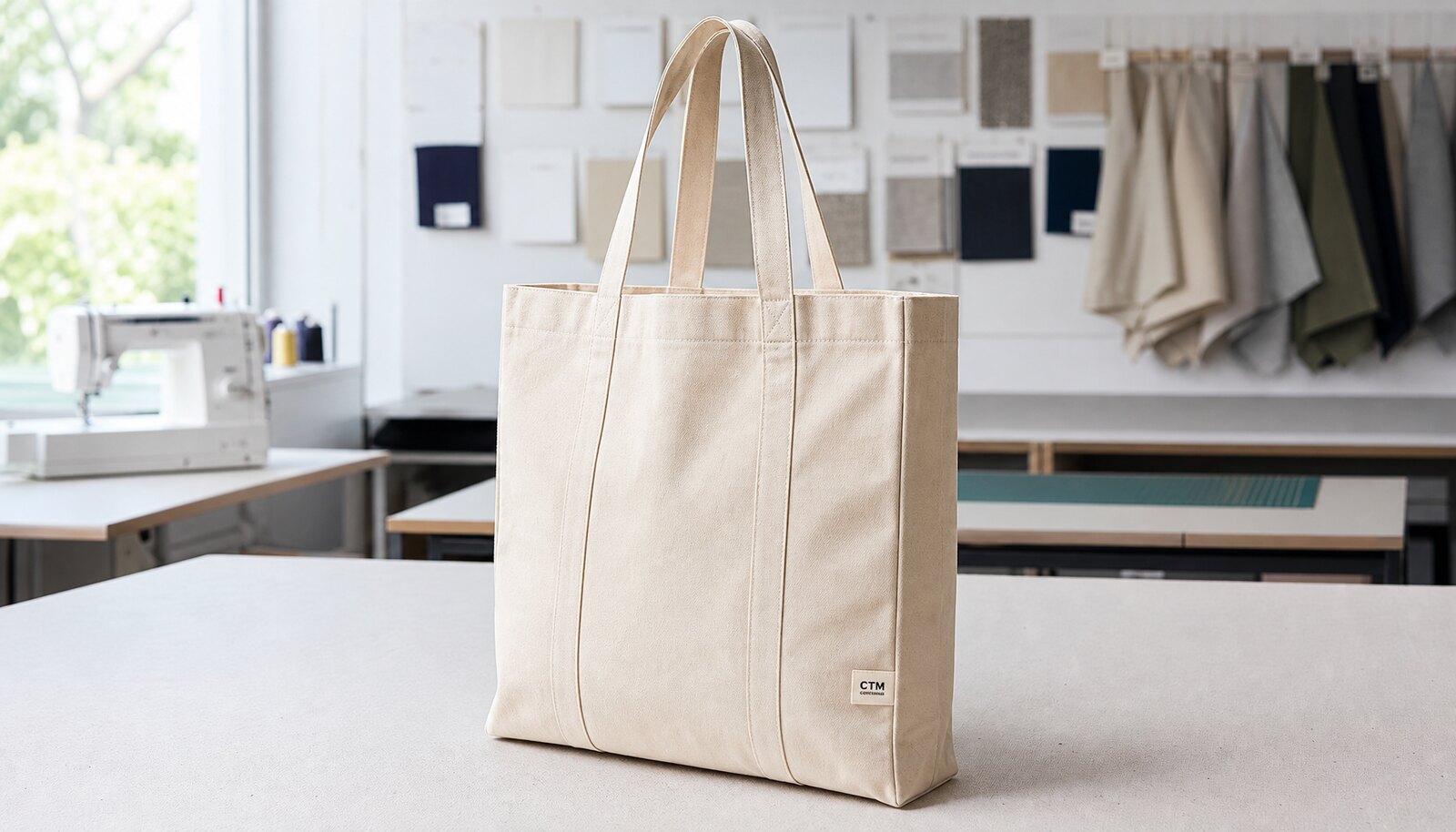
What Coffee Brands Are Really Buying
A canvas library tote for a coffee brand is not just a carry bag. It is retail merchandise, a brand signal, and a functional shopper bag that has to survive daily use without feeling flimsy. Buyers usually underestimate how much the bag has to do: sit neatly on a shelf, carry beans, books, notebooks, and a cup, then still look premium after repeated handling. That is why the wrong choice is often not the price point, but the spec. A thin tote with a good logo can still fail if it collapses on display, twists under load, or wrinkles so badly that the print looks cheap.
Start by defining the bag's real job. If it is for a cafe merch wall, the bag needs a strong visual face, a decent hand feel, and a shape that photographs well for e-commerce. If it is for wholesale distribution, the spec needs to be repeatable across cartons and easy for store staff to receive, hang, and resell. The buying problem is simple: choose a construction that matches the brand promise without paying for features the shopper will never notice.
- Define the use case before asking for a price.
- Decide whether the bag is a retail item, a promo item, or a resale SKU.
- Set the maximum load and shelf presentation standard in the brief.
- Avoid approving a sample that only looks good in a flat lay and fails in handling.
Choose Fabric Weight and Structure That Match the Use
For coffee brands, the most useful canvas range is usually 8 oz to 12 oz, or about 270 to 405 GSM depending on weave and finishing. An 8 oz tote can work for lighter merch, gift-with-purchase programs, or low-ticket retail, but it will look and feel softer. A 10 oz or 12 oz tote gives the bag more body, improves shelf presence, and handles books or multiple retail items better. If the bag is meant to be a hero product in store, 12 oz is often the safer commercial choice because it holds shape and prints cleanly. If the line is price sensitive and the brand is fine with a more relaxed drape, 8 oz may be enough.
Structure matters as much as fabric weight. A library-style tote usually benefits from a rectangular base gusset, reinforced side seams, and long handles with box stitching or a bar-tack at the top. A bottom gusset of around 3 to 5 inches gives usable volume without making the tote look oversized. For natural canvas, pre-shrunk or controlled shrinkage is worth specifying if the bag will be sold as a reusable item rather than a disposable promo piece. If the supplier only quotes fabric weight and ignores seam build, you are not comparing real bags.
- 8 oz / about 270 GSM: lower cost, lighter body, better for promo use.
- 10 oz / about 340 GSM: balanced choice for most coffee retail programs.
- 12 oz / about 405 GSM: better shape retention and a more premium feel.
- Ask for pre-shrunk fabric or a shrinkage limit if the bag may be washed.
Pick the Branding Method for Shelf Appeal and Durability
Most coffee-brand totes should be printed, not overcomplicated. Screen printing is usually the first option because it handles simple logos well, keeps unit cost under control, and produces a sharp, retail-friendly result on cotton canvas. It works best for one to three spot colors, especially if the logo is bold and has enough space around it. If the design relies on fine gradients, small type, or photographic detail, the print method needs to change or the artwork needs to be simplified. Buyers often lose money by forcing a complex design onto a low-cost print method and then rejecting the whole run because the result looks muddy.
Placement should be treated as a merchandising decision. Center front is the safest for visibility, but some coffee brands do better with a smaller chest-style logo and a woven side label because the bag feels more premium and less promotional. Embroidery can work for a small mark, but on canvas it often adds stiffness and cost without improving the retail story enough to justify it. Heat transfer is useful for short runs or multi-color art, but it can feel less permanent if the bag will see heavy use. The right method is the one that matches your quantity, art complexity, and the expected life of the product.
- Use screen print for most one-color and two-color coffee brand logos.
- Use woven labels or sewn patches when the brand wants a quieter, premium look.
- Use embroidery only when the logo is small and the texture supports the price.
- Avoid tiny text and thin lines if the bag will be screen printed on textured canvas.
Compare Supplier Routes Before You Compare Prices
Supplier type changes everything about the quote. A direct factory can usually give the best control over fabric, sewing, and print, but only if your team can handle spec discipline and lead time. A trading company makes communication easier and can bundle several bag categories, but you need to strip out the margin and make sure the factory is actually capable of the spec. Domestic decorators can be the fastest route for a launch or test order, yet they usually rely on imported blanks and therefore have less flexibility on fabric weight, color, and handle construction. Stock importers are useful when speed matters more than customization.
For canvas library tote bags for coffee brands wholesale buying checklist decisions, MOQ logic is tied to how many variables you lock. Standard natural canvas with one print color is easier to source in lower quantity than a custom dyed fabric with multiple labels and special packing. A factory may quote a low unit price and then add costs for screens, labels, carton changes, or extra samples. A fair comparison starts with one agreed spec and one agreed incoterm. If a supplier resists quoting that way, they are not ready for an apples-to-apples bid.
- Use direct factory sourcing when you want real control over fabric and sewing.
- Use a domestic decorator when speed beats unit cost on a small launch order.
- Use a trading company only if they show the factory spec and quote structure clearly.
- Treat MOQ as a function of fabric, print complexity, and packaging, not just order volume.
Build the RFQ So Quotes Can Actually Be Compared
Most tote bag quote problems come from weak RFQs, not bad suppliers. A proper request should include finished size, gusset depth, handle drop, fabric weight in GSM, weave or yarn count if known, color, print method, logo size, label type, packing method, carton count, and the target shipment window. If you want the right answer, do not send a loose reference image and ask for a price. That creates subjective quoting and makes it impossible to tell whether the supplier understood the same product you meant. The more exact the spec, the less room there is for surprise after order placement.
Ask for a quote breakdown, not just a single unit number. At minimum, the supplier should separate base bag cost, print setup, sample charge, packaging, and any tooling or plate fees. You also want the quote on a clear trade term such as EXW or FOB, because shipping and inland handling can distort the comparison if one supplier includes them and another does not. For coffee brands and distributors, the useful number is not ex-works alone. It is landed cost per sellable unit, including cartons, freight, duty assumptions, and any inspection fee you expect to pay.
- Send one complete spec sheet to every bidder.
- Use one Incoterm across all quotes.
- Separate unit cost from setup, tooling, and packing charges.
- Ask the supplier to restate the spec back to you before sampling starts.
Use Samples to Prove the Bag, Not Just the Artwork
A sample is only useful if it tests the production risks. The first sample often proves shape and print position, but the pre-production sample should confirm the actual fabric lot, handle build, stitching, and label placement you will ship. Do not approve based on a screen mockup alone. On canvas, a logo can look fine digitally and still fail once it meets the real weave, ink load, and stitch tension. A good sample review checks dimensions, print opacity, seam symmetry, handle comfort, and how the bag stands when empty and when loaded.
If the tote is intended for repeated use, add a practical test before approval. Load it with the weight you expect in retail use and see whether the handles cut into the hand, the top edge collapses, or the bottom seam pulls. If the bag might be washed, run a wash cycle and recheck shrinkage, wrinkling, and print cracking. Write down the acceptable tolerance before approval so the factory knows what success looks like. Without a written standard, sample approval turns into opinion rather than production control.
- Check finished size, print placement, and handle symmetry on every sample.
- Test the tote with the real intended load, not just a few items.
- Confirm fabric hand feel, odor, and any shrinkage after wash if relevant.
- Approve only after the sample matches the BOM and artwork file.
Pack the Tote for Warehousing, Not Just for Shipping
Packing can protect margin or quietly destroy it. Canvas totes are bulky, so the folding method matters. A flat, consistent fold reduces carton waste and makes the bag easier for retailers to count, but a bad fold can create permanent creases across the logo panel. Some buyers want each bag polybagged; others prefer bulk packing to reduce plastic and improve unboxing speed at the warehouse. There is no universal answer. The right choice depends on how the bags will be received, stored, and resold. If the tote is a retail item, the customer experience usually improves when the bag is packed cleanly and arrives ready to hang or stack.
Carton sizing deserves the same attention as print. Oversized cartons waste freight, while overpacked cartons crush handles and create return risk at the store level. Ask for carton count, net and gross weight, and outer carton markings that match your PO. If the route is humid or long transit, a moisture barrier inner bag can help protect natural cotton from pickup stains and warehouse odors. For multi-SKU orders, carton discipline matters even more because a missing size code or label can slow receiving and create unnecessary chargebacks.
- Choose fold style based on how the tote will be displayed or stored.
- Keep carton weight manageable for warehouse handling.
- Match carton markings to the purchase order and packing list.
- Use inner protection only when it solves a real transit or storage problem.
Price the Lead Time and Production Risk Up Front
A realistic schedule starts with sampling, not with bulk sewing. A typical custom tote program may need one to two weeks for sampling and artwork confirmation, then roughly four to six weeks for bulk production after sample approval, depending on fabric stock, decoration complexity, and factory queue. Shipping time is separate and can easily add another week or several weeks depending on the route. Buyers who promise a launch date before the fabric is confirmed usually end up paying more for expedited production or air freight. The smarter move is to lock the spec early and leave time for one correction cycle.
Schedule risk is usually created by three things: late artwork changes, fabric procurement delays, and packaging changes after approval. If the brand team keeps moving the logo or changing the tone of natural canvas, the factory has to rework screens, labels, or even the fabric order. If you need a launch window, freeze the artwork first, then approve the sample, then release the PO. When coffee brands plan a wholesale tote, they should think like merchandisers, not just buyers. The bag has to arrive on time, in the correct carton mix, and in a condition the store can put straight onto the shelf.
- Allow time for sampling before bulk start.
- Treat artwork changes after approval as a schedule risk, not a minor edit.
- Keep one stable spec if you expect reorders.
- Do not mix launch urgency with untested custom fabric or special packaging.
Set QC Limits and Landed Cost Before You Place the PO
The final buy should be controlled by written acceptance criteria. For canvas totes, that means fabric weight, finished size, stitch quality, print quality, label placement, smell, and carton condition. Critical defects are easy to name: wrong logo, open seams, holes, major shade mismatch, or a wrong size that changes the retail presentation. Minor defects can be tolerated only if they are clearly defined in advance, such as small loose threads or slight fold marks. AQL inspection is useful, but only if the defect definitions are specific enough to support a pass or fail decision.
Landed cost is where many tote programs get misunderstood. A low factory price can still produce an expensive bag once you add setup, inner packing, cartons, freight, duty, warehouse handling, and inspection. Compare suppliers on sellable-unit cost, not just unit cost at the factory gate. For repeat orders, keep the approved sample, BOM, and quote record together so the next replenishment uses the same assumptions. That is the simplest way to stop quality drift and price drift from creeping into a product that should be easy to reorder.
- Define critical, major, and minor defects before production starts.
- Inspect the bag against the approved sample and BOM, not memory.
- Compare suppliers on landed cost per sellable unit.
- Keep a repeat-order file with spec, quote, sample, and packing details.
Specification comparison for buyers
| Spec decision | Recommended option | When it fits | Buyer risk to check |
|---|---|---|---|
| Direct factory cut-and-sew | Best for custom size, fabric weight, and branded label control | Repeat programs, 1,000 pcs plus, and buyers who can wait for sampling and bulk production | MOQ can rise fast if you change fabric, handle color, or logo placement after the first quote |
| Factory with in-house print | Use when you want one supplier to manage sewing and decoration | Standard canvas tote with one to three spot colors and moderate volume | Confirm whether screens, color matching, and setup fees are included in the unit price |
| Trading company or sourcing agent | Use when your team needs one contact to manage multiple factories | Teams that want simpler communication or are buying several bag lines at once | Margin is often hidden inside the price, so compare the same spec and Incoterm across all quotes |
| Domestic decorator using imported blanks | Good for launch tests and fast replenishment in small runs | Under 300 to 500 pcs, urgent retail deadlines, or market validation orders | Unit price is usually higher and blank availability can create color or size mismatch |
| Stock importer with private label | Good when you can accept a standard tote shape and limited customization | Short lead time programs, giveaways, or seasonal promo buys | The bag may not match your preferred GSM, handle drop, or print area |
| Nearshore cut-and-sew supplier | Useful when transit time and inventory risk matter more than lowest factory cost | Regional distribution programs and buyers who want faster replenishment cycles | Fabric options and decoration capabilities are often narrower than offshore factories |
| Dual-source program | Primary offshore bulk supplier plus domestic backup for emergency reorders | Coffee brands with launch dates, retail commitments, or uncertain demand | Spec drift is common if both sources do not work from the same approved sample and BOM |
| Sample-only vendor before bulk award | Good for first-time buyers who need multiple prototypes before committing volume | When the brand team has not finalized size, color, or decoration | A good sample supplier is not always the best bulk supplier, so do not skip a production-capable quote |
Buyer checklist before sampling
- Define the tote's job: retail merch, café resale, gift-with-purchase, bookstore cross-sell, or event carry bag.
- Lock the finished size, gusset depth, handle length, and handle drop before asking for pricing.
- Choose the canvas weight in GSM and decide whether you need pre-shrunk or washed fabric.
- Specify the print method, logo size, Pantone references, and artwork placement in millimeters.
- State whether you want natural, bleached, dyed, or garment-washed fabric, because each changes cost and lead time.
- Set a target MOQ and tell suppliers whether you will accept overrun, underrun, or mixed cartons.
- Request the quote on the same basis from every supplier: EXW, FOB, or DDP, but not a mix.
- Ask for a pre-production sample after artwork approval and before bulk cutting starts.
- Confirm packing method, carton count, carton size, and whether inner polybags are required.
- Write down your acceptance limits for fabric weight, print registration, stitching, shrinkage, and carton quality.
Factory quote questions to send
- What canvas weight do you recommend for this size and retail use, and what is the actual GSM tolerance?
- Is the fabric greige, dyed, bleached, or pre-shrunk, and how does that affect shrinkage after washing?
- What is the MOQ by fabric color, print color count, and logo method?
- What exactly is included in the unit price: handles, label, sewing, print setup, packing, carton, and samples?
- Which print method will you use, and what is the expected hand feel and wash resistance?
- Can you quote the same bag as 8 oz and 12 oz so we can compare landed cost and shelf feel?
- What is the pre-production sample timeline, and when does bulk production start after approval?
- What overrun or underrun policy applies, and how do you handle a PO variance?
- How do you pack each bag and what are the carton dimensions, gross weight, and master carton count?
- What are your critical, major, and minor defect definitions for this tote program?
Quality-control points to confirm
- Fabric weight should stay within an agreed tolerance, commonly plus or minus 5 percent.
- Finished dimensions should match the approved spec, usually within plus or minus 1 cm unless the style allows more variation.
- Handle lengths and handle drop should be consistent across the batch, with reinforced stitching at the stress points.
- Print registration should stay aligned and the ink should cover evenly without pinholes, smearing, or weak edges.
- Seams should be straight, secure, and free from skipped stitches, loose threads, and needle damage.
- A load test should verify that the tote can carry the agreed weight without seam failure or major deformation.
- If the bag is washable, shrinkage and distortion after one wash cycle should stay within the approved limit.
- Panels, labels, and print colors should not show shade mismatch, oil marks, odor, or contamination.
- Carton count, inner pack count, and carton markings should match the purchase order and packing list.
- Final inspection should use an agreed AQL standard, often 2.5 for major defects and 4.0 for minor defects, unless your company uses a stricter rule.