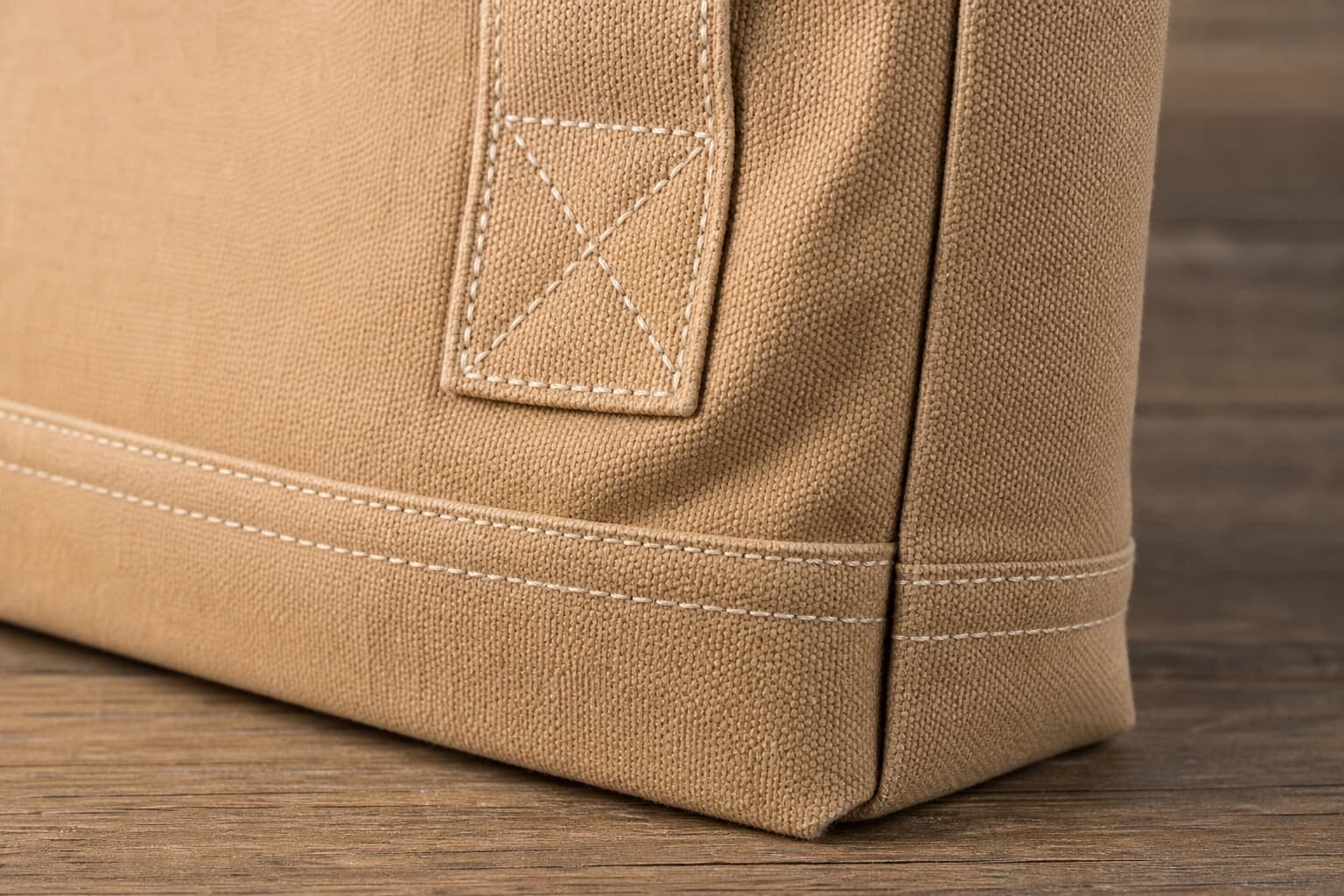
Start With the Real Library Use Case
A canvas library tote bag looks simple, but the correct imprint specification depends on how the buyer expects the bag to be used. A library circulation bag that carries five hardback books needs different fabric, handle reinforcement, and print durability than a one-day reading campaign giveaway. If the RFQ only says canvas tote with logo, factories will quote different weights, different print inks, and different reinforcement methods. The cheapest quote may not be comparable to the more reliable one.
For procurement teams, the first decision is not the logo. It is the load, the handling route, and the expected life of the bag. Library bags are often reused, folded into backpacks, placed on rough tables, and exposed to ink transfer from books or catalogs. A clean imprint on day one is not enough if the print cracks, rubs off, or sits too low after sewing variation. Describe the usage clearly and the supplier can recommend a practical construction instead of guessing.
- For a public library loan program, prioritize stronger handles, darker print colors, and rub resistance.
- For bookstore retail merchandise, prioritize fabric hand feel, print sharpness, and retail packing presentation.
- For university or school libraries, prioritize carton marking, repeat order consistency, and color control.
- For event distribution, prioritize MOQ, lead time, simple artwork, and efficient bulk packing.
- For distributor stock, avoid custom features that slow reorders unless the customer will pay for them.
Choose Canvas Weight Before Discussing Imprint
The fabric weight controls the bag feel, the print surface, and the cost. For most canvas library tote bags, buyers usually compare 8 oz, 10 oz, and 12 oz canvas. In GSM terms, this often sits around 240 to 340 GSM depending on the mill standard and finishing process. A lighter canvas can work for a reading event giveaway, but it may collapse under books and show more wrinkling around the print. A heavier canvas gives better perceived value and load support, but it increases material cost, carton weight, and sometimes sewing difficulty.
Do not compare quotes by ounce rating alone. Some suppliers quote greige fabric weight before dyeing or washing, while others quote finished fabric weight. Custom dyed cotton can lose or gain apparent weight after finishing. If your RFQ requires 12 oz canvas but one factory quotes finished 12 oz and another quotes greige 12 oz, the final bags may not feel the same. Ask for GSM, fabric composition, and whether the weight is measured before or after processing.
- 8 oz canvas: acceptable for light giveaway totes, but not ideal for heavy book use.
- 10 oz canvas: a common balance for library programs and branded retail tote orders.
- 12 oz canvas: better structure and durability, useful for premium bookstore or membership bags.
- 14 oz canvas: strong but heavier, higher cost, and may be too stiff for some folded packing styles.
- Natural canvas usually prints more easily than dark dyed canvas because it needs less ink coverage.
Match the Print Method to the Artwork
Most library tote imprints are best handled by screen printing. It is practical for solid logos, text, sponsor marks, campaign slogans, and one to three color artwork. On canvas, screen printing can produce a strong, readable logo without turning the bag into a plastic-feeling promotional item. The factory still needs to check mesh, ink type, curing temperature, and the roughness of the fabric surface. A design that looks perfect on coated paper may lose sharpness on woven canvas.
Water-based ink gives a softer hand and can look natural on cotton canvas, especially on natural or light-colored fabric. Plastisol can provide stronger opacity, especially on dark colors, but the print may feel thicker. Heat transfer is useful for gradients, small multicolor details, or artwork that cannot be separated cleanly, but it should not be chosen only because it looks sharp on the first sample. Transfers must be checked for edge lifting, cracking, and flexibility after folding.
- Use screen print for solid library logos, text blocks, simple icons, and repeat reorder programs.
- Use water-based ink when soft hand feel and a natural retail look are more important than heavy opacity.
- Use plastisol or high-opacity ink when printing light colors on black, navy, or dark green canvas.
- Use heat transfer only when the artwork detail justifies it and durability tests are agreed.
- Avoid tiny reversed text, thin hairlines, and QR codes unless the factory confirms they can print cleanly.
Control Imprint Size, Placement, and Sewing Tolerance
A common production mistake is approving the artwork without approving its physical position on the finished bag. Library totes are often photographed front-facing, so a logo that is 10 mm too low or slightly off center is easy to notice. The factory needs a placement drawing showing print width, print height, distance from the top edge, and horizontal center reference. If the bag has a gusset, pocket, or seam variation, the print panel may not behave like a flat rectangle.
Placement tolerance should be realistic. Cotton canvas is cut and sewn, not molded. A tolerance of plus or minus 5 mm may be possible for simple flat totes with controlled production, while larger bags, washed fabric, or thick canvas may need wider tolerance. If the buyer requires tight placement for retail artwork, say that in the RFQ before quote confirmation. The factory may need better fixtures, slower printing, or additional inspection, which affects cost and lead time.
- Provide artwork in AI, PDF, EPS, or high-resolution vector format when possible.
- State print dimensions in millimeters or inches, not only as a percentage of the bag front.
- Measure placement from sewn finished edges, not from the cut panel.
- Confirm whether printing happens before or after sewing; most flat front panels are printed before assembly.
- Keep important artwork away from seams, folds, gusset edges, and handle stitch boxes.
Build MOQ Logic Into the RFQ
MOQ for a canvas library tote bag is not only a factory policy. It is affected by fabric availability, dyeing minimums, print setup, cutting efficiency, and packing requirements. A natural canvas tote with one-color screen print may have a much lower practical MOQ than a custom dyed bag with four-color artwork, inner labels, hangtags, and individual retail polybags. If the buyer asks for one MOQ number without listing the spec, the answer may change after sampling.
For quote comparison, separate MOQ by decision point. Ask the factory what changes if you use stock natural canvas instead of custom dyed canvas, one print color instead of two, or a standard size instead of a custom size. This helps buyers protect the budget without removing the features that matter. Many library programs can save cost by keeping the bag size standard and spending more attention on print quality and handle strength.
- Lowest MOQ usually comes from stock canvas color, standard bag size, and one-color screen print.
- Custom dyed fabric may require a separate fabric mill MOQ before bag production starts.
- Multiple print colors increase setup work, screen charges, registration risk, and approval time.
- Special labels, hangtags, barcodes, and retail packing can raise the effective production minimum.
- Split shipments or mixed artwork versions should be quoted clearly because each version may need separate setup.
Ask for Samples That Answer Production Questions
A sample should not be treated as a decoration approval only. For library tote procurement, the sample should answer whether the selected fabric holds books, whether the imprint is readable on canvas texture, and whether the handles feel comfortable under load. A blank existing sample can confirm size and sewing quality quickly, but it does not confirm the actual imprint. A print strike-off can confirm ink, color, and artwork detail, but it may not show the finished bag shape. A full pre-production sample is slower and more expensive, but it gives the strongest approval reference.
When timing is tight, buyers can use a staged sample plan. First approve a similar blank sample for construction, then approve a print strike-off on the correct fabric, then approve a final pre-production sample if budget and lead time allow. Keep the approved sample sealed or clearly marked. During inspection, compare bulk production against that approved reference instead of relying only on digital proofs.
- Blank sample: useful for size, handle drop, fabric hand feel, and sewing quality.
- Fabric swatch: useful for color, GSM, shrinkage, and dye lot approval.
- Print strike-off: useful for Pantone color, opacity, edge sharpness, and ink hand feel.
- Pre-production sample: useful for final approval of size, construction, print, label, and packing.
- Top-of-production sample: useful when the buyer cannot attend production but wants early bulk confirmation.
Set Practical Imprint Acceptance Criteria
Print approval should be measurable. Buyers often reject bulk goods because the imprint looks weak, crooked, or rough, but the original PO did not define pass and fail criteria. On canvas, some texture show-through is normal, especially with water-based ink. Slight irregularity at the edge can be acceptable if the design is large and rustic. However, broken letters, heavy pinholes, visible registration shift, and poor ink curing are production defects, not natural fabric character.
Before production, define what matters most. For a library logo with fine serif text, edge clarity and text readability may be the main criteria. For a bold tote sold in a bookstore, color consistency and position may matter more. For dark canvas, opacity and underbase control are critical. If the imprint will be folded in packing, test whether the fold line damages the print before approving the packing method.
- Color: compare against approved strike-off under consistent lighting, not only under warehouse light.
- Position: set vertical and horizontal tolerance from finished bag edges.
- Opacity: check whether fabric color shows through more than the approved sample.
- Adhesion: use a tape pull or dry rub test agreed with the factory.
- Curing: check for tacky ink, odor, offset marks, or ink transfer between folded bags.
- Detail: inspect small text, registration, and edges before cartons are fully packed.
Understand the Main Cost Drivers
The largest cost driver is usually fabric, followed by sewing labor, print setup, print colors, packing, and inland handling. A heavier canvas library tote may look better and perform better, but it increases material consumption and shipping weight. A complicated print can also add cost through screens, ink layers, registration time, drying time, and reject risk. Buyers should not only ask for a lower unit price; they should ask what spec change would reduce cost without damaging the product purpose.
A useful quote should make these trade-offs visible. If two factories quote very different prices, check whether both include the same fabric weight, the same finished dimensions, the same imprint size, the same packing, and the same sample process. One supplier may exclude screen charges or label costs. Another may quote a lighter canvas. Another may plan bulk packing while the buyer expects individual bags with barcodes. Quote clarity prevents commercial disputes later.
- Fabric cost changes with canvas weight, cotton type, dyeing, shrinkage allowance, and fabric width.
- Cutting cost changes with bag size, gusset structure, and fabric utilization.
- Sewing cost changes with handle reinforcement, pockets, lining, zipper, and stitch density.
- Printing cost changes with color count, print area, ink type, underbase, and artwork complexity.
- Packing cost changes with folding method, individual bagging, hangtags, barcodes, and carton strength.
- Freight cost changes with carton volume, gross weight, and whether bags are packed flat or folded.
Plan Packing for Imprint Protection
Packing is part of imprint quality. A good print can still arrive with crease marks, ink transfer, moisture stains, or abrasion if packing is not controlled. Canvas bags are often folded to reduce carton volume, but the fold line should not pass through a thick or fresh imprint unless testing shows it is safe. If the bag is sold at retail, the buyer may need a cleaner fold and a barcode label. If the bag is used for library distribution, efficient bulk packing may be better.
For sea freight, moisture control matters because cotton canvas absorbs humidity. A carton liner or inner polybag can help, but buyers should also avoid trapping moisture from under-cured ink or damp fabric. Ask for the carton quantity, carton size, gross weight, and packing method during quotation. This data affects freight cost and warehouse handling, and it gives the inspector a clear packing reference.
- Avoid folding directly across the main logo unless the approved sample confirms no cracking or crease damage.
- Use tissue or separator sheets only when necessary; they add cost and packing labor.
- Specify maximum carton weight so warehouse teams can handle cartons safely.
- Confirm carton marks, SKU labels, PO number, and destination details before bulk packing.
- For retail, define hangtag, barcode, sticker placement, and whether polybags are required.
- For sustainability programs, confirm whether individual polybags are allowed or should be avoided.
Confirm Lead Time Around Approvals, Not Only Production
Lead time for a printed canvas library tote bag has several stages: artwork check, material sourcing, sampling, sample approval, bulk cutting, printing, sewing, inspection, packing, and shipment. Buyers often count only bulk production days and forget that artwork changes or delayed sample feedback can move the ship date. If the fabric is stock natural canvas and the print is simple, the schedule is much easier. If the fabric is custom dyed or the artwork needs several print trials, build more time into the launch plan.
For seasonal library campaigns, bookstore openings, university orientation, or grant-funded programs, late delivery can make the order less valuable even if the bags are correct. Put approval deadlines into the purchase order. If the buyer will need internal brand approval, legal approval, or sponsor approval, plan that before the factory starts sample work. A practical supplier can help with timing, but they cannot recover days lost to unclear artwork or late comments without cost and risk.
- Artwork review should happen before sample production, especially for fine text and multicolor logos.
- Material lead time depends on stock canvas availability, dyeing, and any special cotton requirement.
- Sample lead time depends on whether the buyer needs a blank sample, strike-off, or full pre-production sample.
- Bulk lead time starts after final approval, not after the first RFQ email.
- Inspection should be scheduled before final carton sealing or before goods leave the factory.
- Shipment planning should use actual carton data, not estimated data from an old tote order.
Specification comparison for buyers
| Spec decision | Recommended option | When it fits | Buyer risk to check |
|---|---|---|---|
| Fabric weight | 10 oz or 12 oz canvas, about 270-340 GSM before finishing | Library, bookstore, campus, museum, and retail merchandise bags that must hold books without looking too industrial | Confirm whether the GSM is greige, finished, or washed; finished weight can differ after dyeing and shrinkage |
| Bag construction | Flat tote or small bottom gusset with lockstitched seams and handle reinforcement | Book loans, member welcome kits, retail purchase bags, and distributor stock programs | A flat bag may look cleaner for print, but a gusset handles stacked books better; ask for dimensions after sewing |
| Imprint method | Screen print for solid logos and text, water-based or plastisol depending on hand feel and color coverage | Most library logos, campaign slogans, sponsor marks, and one to three color designs | Fine serif text and thin lines can fill in on coarse canvas; require a print strike-off before bulk production |
| Premium imprint | Heat transfer only for gradients or photographic artwork, with wash and flex testing | Retail gift programs or licensed artwork where detail is more important than a natural hand feel | Transfers may feel heavier and can crack if the film and curing are not suitable for canvas flexing |
| Color fabric | Natural, black, navy, forest green, or custom dyed canvas with print color matched by Pantone reference | Brand-aligned programs and bookstore merchandise lines | Dark fabric needs underbase or thicker ink; compare hand feel, opacity, and rubbing resistance |
| Packing | Individual fold only when needed; otherwise bulk flat pack with carton liner and moisture control | Import cartons, distributor fulfillment, and retail backroom handling | Over-tight folding can crease the imprint; specify fold position and maximum carton weight |
Buyer checklist before sampling
- Define the actual use case: book lending, retail sale, membership gift, event giveaway, or distributor stock.
- Specify finished bag size, handle drop, gusset requirement, fabric weight, fabric color, and tolerance.
- Send vector artwork with Pantone references, print size, exact placement, and minimum line thickness.
- State whether the imprint must survive washing, only dry rubbing, or normal retail handling.
- Ask whether quoted fabric weight is before or after dyeing, washing, or finishing.
- Request a physical pre-production sample or at least a fabric swatch plus print strike-off before approving bulk.
- Confirm MOQ by fabric color, print color count, bag size, and packing style, not only total order quantity.
- Require carton packing details, carton marks, barcode or hangtag needs, and moisture protection for sea freight.
- Set inspection points for fabric shade, print position, ink adhesion, seam strength, handle reinforcement, and packing.
- Keep one approved sealed sample and one approved print strike-off as the production reference.
Factory quote questions to send
- What canvas weight and GSM are you quoting, and is it measured before or after finishing?
- Is the quoted fabric stock fabric, custom dyed fabric, organic cotton canvas, recycled cotton canvas, or conventional cotton canvas?
- What is the minimum order quantity for this exact bag size, fabric color, and imprint method?
- Which print method do you recommend for the submitted artwork, and why?
- Can you confirm maximum print area, minimum line thickness, and whether an underbase is needed?
- What sample options are available: blank sample, similar existing sample, print strike-off, or full pre-production sample?
- What are the estimated sample lead time and bulk lead time after artwork and sample approval?
- What print durability tests can you support, such as tape test, rub test, wash test, or crocking check?
- How will the bags be folded and packed, and what is the estimated carton size, carton quantity, and gross weight?
- Which quote items are included or excluded: mold or screen charge, sample fee, packing, labels, inner bags, freight, and duty?
Quality-control points to confirm
- Finished bag dimensions should be checked flat after sewing, not estimated from cut panels.
- Canvas GSM should be verified against the approved material reference with an agreed tolerance.
- Print position should be measured from the top edge and side seams using the approved placement drawing.
- Print color should be compared under consistent light against Pantone target or approved strike-off.
- Ink adhesion should pass a basic tape pull or rub check agreed before production.
- Fine text, small icons, QR codes, and sponsor logos should be checked for blocked details and broken edges.
- Handle stitching should include reinforcement suitable for books, not only apparel-grade tote usage.
- Seams should be checked for skipped stitches, loose threads, seam allowance, and puckering near the print panel.
- Cartons should be inspected for moisture protection, fold consistency, label accuracy, and carton strength.
- Random finished bags should be loaded with a realistic book weight to check handle comfort and seam stress.