Start inspection at RFQ stage
Canvas grocery totes for trade show exhibitors are judged under pressure. Procurement reviews them against the purchase order, inspectors compare them with the approved sample, booth teams unpack them on a fixed schedule, and visitors carry them through a crowded venue. A small weakness in specification can become visible in every bag: limp fabric, short handles, crooked logos, stained panels, or cartons that cannot be identified at the event warehouse.
The most common failure is not a mysterious factory error. It is an RFQ that says only “natural canvas grocery tote with logo.” That phrase leaves too many decisions open. One supplier may quote 8 oz cotton, another may quote 12 oz canvas, and a third may quote a fabric blend with a canvas appearance. They may all look similar in a spreadsheet, but the finished bags will feel, print, fold, pack, and carry differently.
A procurement-ready RFQ should describe what the bag must do, not only what it should look like. A tote for brochures has different risk from a tote carrying jars, sample boxes, apparel, or multiple thick catalogs. The checklist should connect use, construction, print, packing, and inspection before any supplier locks price. This is especially important when the event date cannot move and air freight or remake costs would erase savings from a low quote.
- State the intended contents: brochures, catalogs, bottles, retail samples, apparel, boxed kits, or mixed booth giveaways.
- Separate visual requirements from strength requirements so factories can quote fabric, seams, and handles correctly.
- Require suppliers to repeat the full specification in the quote instead of relying only on artwork attachments or email history.
- Treat the approved sample as the inspection standard only if it uses production fabric, production print method, production handle construction, and approved packing.
- Add inspection timing to the purchase order, including when goods must be ready for final random inspection and when rework time ends.
Specify canvas by weight, weave, color, and tolerance
Fabric is the largest quality signal in a canvas grocery tote. For exhibitor bags that need a firm handfeel and enough structure to carry samples, 10 oz to 12 oz cotton canvas is a practical starting range. In metric terms, that is roughly 340 to 407 GSM, depending on weave and finishing. An 8 oz fabric can work for light brochure bags, but it often feels soft, collapses on the booth table, and carries less perceived value. A 14 oz fabric feels premium but increases material cost, sewing difficulty, carton weight, and freight volume.
Buyers should not compare prices until fabric language is aligned. “Canvas” can describe different constructions, including plain cotton canvas, duck canvas, cotton sheeting with a heavier finish, or cotton-poly blends. Weight can be listed in ounces per square yard or GSM, and suppliers may not convert the numbers consistently. To reduce confusion, write both oz and GSM in the RFQ and define an acceptable tolerance, commonly plus or minus 5% unless the brand or load requirement needs tighter control.
Color also deserves a written standard. Natural cotton canvas may include seed flecks, yarn texture, and slight shade variation. Those traits can be acceptable, but oil stains, mildew, colored yarn contamination, and heavy slubs in the logo area should not be. Bleached canvas gives a cleaner print background and brighter color appearance, but it may show dirt faster. Dyed canvas supports brand blocking, yet it requires lab dip approval and rubbing fastness checks, especially for black, navy, red, forest green, and other saturated colors.
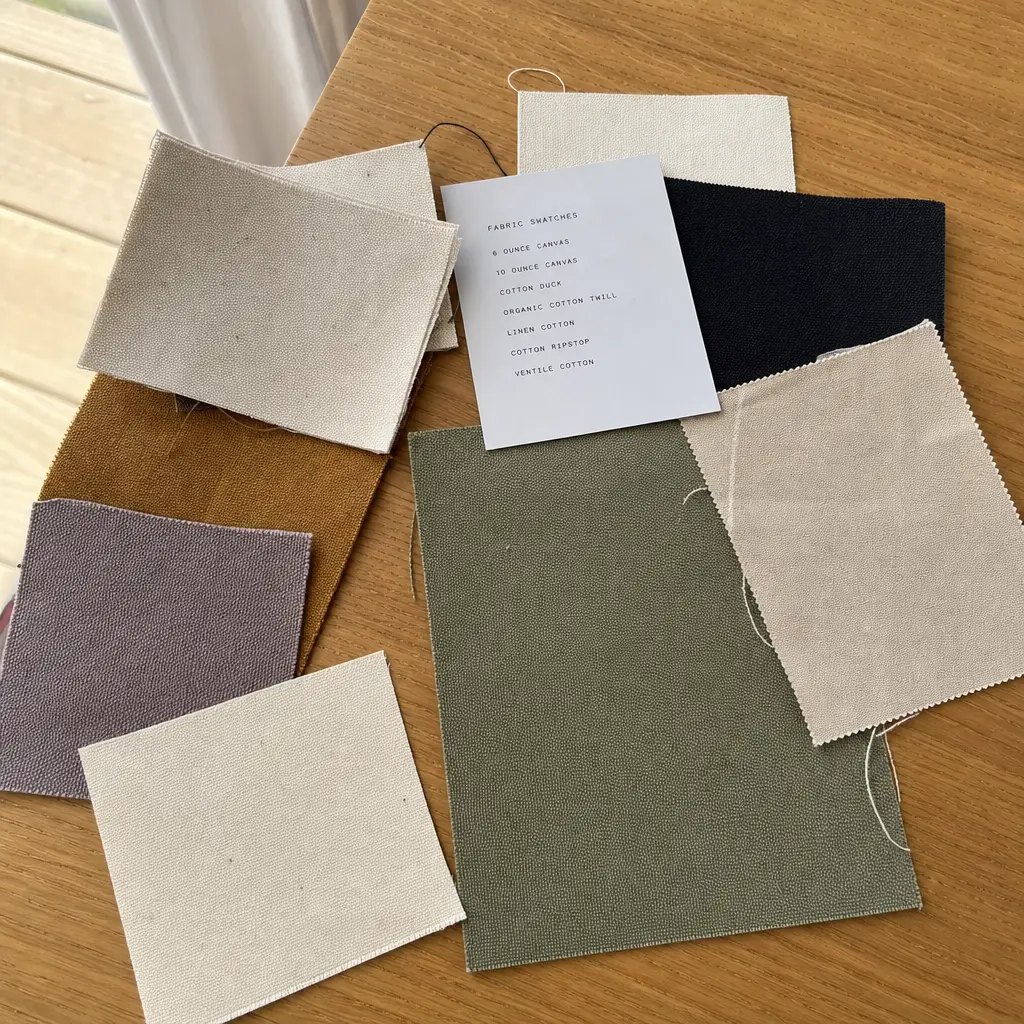
- Ask for a fabric swatch large enough to judge shade, handfeel, thickness, weave density, and print surface.
- Write fabric as both oz and GSM, for example: 12 oz cotton canvas, approximately 407 GSM, tolerance plus or minus 5%.
- Clarify whether fabric is natural, bleached, dyed before cutting, garment washed, or treated after sewing.
- Define unacceptable natural canvas defects: oil spots, mildew odor, colored yarns, heavy slubs across the logo, large dark flecks, and panel shade mismatch.
- Request certification or sustainability documentation separately if needed; do not assume natural cotton means organic, recycled, traceable, or certified.
Build the tote around actual booth loads
A grocery tote is not simply a flat tote made larger. Its value comes from usable volume, stable bottom shape, comfortable carry, and enough strength to handle uneven contents. A 38 x 42 cm flat tote may suit leaflets, but it will not behave like a grocery bag when loaded with catalogs, sample boxes, drink bottles, or retail packs. For many exhibitor orders, a finished size around 35-40 cm wide, 35-42 cm high, and 10-15 cm gusset gives a more practical starting point, but the right size should be tested with the actual contents.
The gusset and bottom seam are key inspection areas. A wide gusset helps the bag stand better on a booth table and makes it easier for staff to insert giveaways quickly. It also increases stress at the bottom corners. If the tote will carry dense printed material, specify reinforced top hem, secure side seams, and strong bottom construction. Interior finishing can be overlocked, bound, or French seamed depending on budget and appearance goals, but the approved construction must be visible on the pre-production sample.
Handles are another frequent source of buyer disappointment. Shoulder handles around 60 to 65 cm work for most adults, including visitors wearing jackets. A shorter hand-carry handle can be acceptable for a retail-style bag, but it should be a deliberate choice. Handle width usually needs enough surface area for comfort, often 2.5 to 3.5 cm depending on fabric and load. Self-fabric canvas handles look consistent with the bag, while cotton webbing can reduce bulk and create a clean strap edge. Either option needs reinforced attachment points.
- Specify finished bag size, gusset width, handle length, handle drop, handle width, and whether the bag must stand when partly filled.
- Use box stitch, cross stitch, bar tack, or another approved reinforcement at handle attachments.
- Inspect the bottom gusset corners because failures often appear where seam allowance, load weight, and fabric bulk meet.
- Test with realistic booth contents instead of only paper sheets or empty weight blocks.
- Check shoulder comfort with a filled bag, including clearance over a coat sleeve and whether the handle twists under load.
Control print quality before mass production
For most canvas grocery totes with solid exhibitor branding, screen printing is the practical commercial choice. It handles one-color and two-color marks well, gives good opacity, and keeps cost predictable at bulk quantities. Heat transfer or digital print can be useful for full-color artwork or smaller runs, but buyers should check edge durability, handfeel, gloss, and whether the transfer sits awkwardly on textured canvas. Embroidery can be attractive for small premium marks, but it is usually not the best method for large event graphics.
Print approval should be more specific than a visual PDF. The artwork file should define print size, number of colors, Pantone or other color reference, print location, print side, and whether logo placement is measured from the top hem, side seam, or bag centerline. On a booth giveaway, a logo that is visibly tilted or 1.5 cm off-center can make a correct bag look careless. Placement tolerance should be written in centimeters so inspection teams can measure it consistently.
Large print areas need extra attention. Heavy ink coverage on canvas can feel stiff, crack if under-cured, smell if curing is incomplete, or transfer to other bags when packed too soon. Fold lines should not run through thick ink if they can be avoided. For high-coverage artwork, request a print strike-off on the actual fabric, then inspect opacity, edge sharpness, pinholes, ink build, curing odor, rub resistance, and whether the texture of the canvas breaks the design in an acceptable way.
- For one-color and two-color logos, approve a strike-off on actual canvas before mass printing.
- State logo size and placement tolerance, such as center alignment within plus or minus 0.5 cm and 12 cm below top edge within plus or minus 0.5 cm.
- Define acceptable color difference using a reference standard, approved strike-off, or physical Pantone guide when exact brand color matters.
- Check large solid prints for cracking, stiffness, pinholes, uneven coverage, curing smell, and ink transfer after stacking.
- For two-sided printing, confirm whether both sides use the same artwork, whether placement differs, and whether ink can offset inside folded packing.
Compare quotes by specification, not only unit price
MOQ and price are often misunderstood in tote procurement. The minimum is not only a sewing quantity. Canvas grocery totes may have separate minimums for fabric purchase, dyeing, screen printing, label production, custom packing, and carton marking. A factory may accept 300 pieces, but the unit price may be high because setup, cutting, artwork handling, and carton preparation are spread across a small order. At 1,000 to 3,000 pieces, pricing often becomes more stable if the specification uses standard materials.
The lowest quote may reflect a real efficiency, but it can also hide a lighter fabric, smaller finished size, shorter handle, thinner webbing, fewer stitches, lower print coverage, or cheaper carton. Procurement teams should ask suppliers to repeat the complete specification line by line in the quote. This reduces the risk of comparing a 10 oz flat tote against a 12 oz wide-gusset grocery tote or comparing a blank sample price with a printed production order.
Landed cost matters more than FOB unit price when show delivery is involved. Heavy canvas increases carton weight. Wide gussets increase carton volume. Individual polybags increase cost and labor but may be needed for clean distribution. Event warehouse delivery may require special labels, pallet limits, appointment windows, or carton marks on multiple sides. A quote that includes carton dimensions, gross weight, CBM, sample timing, and packing support is more useful than a cheaper quote that leaves those details blank.
- Ask for price breaks at 500, 1,000, 3,000, 5,000, and 10,000 pieces using the exact same specification.
- Separate setup costs for screens, artwork adjustment, samples, labels, lab dips, individual polybags, and special carton marks.
- Compare estimated freight per piece and CBM per 1,000 pieces, not only FOB price.
- Record quote exclusions, including testing, certificates, inspection fees, palletization, local delivery, or event warehouse handling.
- Confirm quote validity because cotton fabric, freight, and dyeing costs can change before a slow internal approval is completed.
Approve samples like an inspector
A sales sample proves a supplier can make a similar product. It does not prove that your bulk order will match unless the sample uses the same fabric, same print method, same size, same handle construction, and same finishing. For trade show grocery totes, the safer approval sequence is fabric swatch, artwork proof, print strike-off if needed, pre-production sample, then sealed approval sample. The final sample should be clearly identified and kept both by the factory and the buyer or inspection team.
Sample comments should be measurable. “Make it stronger” is not enough. Procurement should specify, for example, “increase fabric to 12 oz,” “change handle length to 62 cm,” “move logo 1 cm lower,” or “use box stitch reinforcement at handle attachment.” The factory can only control what is defined. A photo approval can help speed decisions, but it cannot confirm handfeel, fabric weight, stitch security, odor, ink curing, or true handle comfort.
The sample should also test packing assumptions. A tote that looks excellent on a table can arrive with hard fold creases across the logo if the carton plan is approved late. When possible, ask the factory to show the proposed fold method, pieces per bundle, carton quantity, and whether printed panels touch each other. If timing allows, request one packed sample or packing photo set before mass packing begins.
- Measure and record sample width, height, gusset, handle length, handle drop, handle width, print size, and print placement.
- Count stitches per inch in key areas such as top hem, handle attachment, side seam, and bottom gusset.
- Smell the sample for mildew, chemical odor, or under-cured ink, especially when bags will be packed soon after printing.
- Do not approve a blank sample for a printed order unless a separate print strike-off is also approved.
- Confirm whether bulk lead time starts after sample approval, deposit, fabric booking, artwork approval, or all of these conditions together.
Use AQL plus tote-specific quality tests
AQL inspection is useful, but a generic soft goods checklist is not enough for canvas grocery totes. The inspection plan should define critical, major, and minor defects in a way that matches event risk. Critical defects include unsafe contamination, sharp objects, mildew, wrong logo, wrong product, or severe structural failure. Major defects include open seams, broken stitches, handle detachment, wrong fabric weight, wrong size outside tolerance, obvious print defects, heavy stains, and incorrect packing. Minor defects may include small thread ends or slight natural slub variation within the approved standard.
Procurement should define measurable inspection thresholds before production. Finished dimensions might allow plus or minus 1 cm for width and height, while handle width may need tighter control. Print placement should be measured from fixed construction points. Fabric weight should be checked against the approved swatch or test report. Inspectors should not have to decide on-site whether a crooked logo is acceptable because the PO said only “center print.”
Load testing is especially important for grocery-style bags. Select random finished bags, fill them with the agreed test weight or representative contents, then hang or carry them for a defined period. After the test, inspect handle seams, top hem, bottom gusset, and side seams for stitch popping, fabric tearing, distortion, or thread breakage. The test does not need to become overcomplicated, but it should be repeatable and recorded with photos.
- Classify defects before inspection so the factory, buyer, and inspector use the same acceptance logic.
- Measure fabric GSM or verify against a retained swatch when the order is weight-sensitive.
- Run dry rub checks on printed areas and inspect adjacent packed bags for ink transfer.
- Perform a loaded hang or carry test using the agreed weight and duration.
- Photograph failed handles, open seams, print defects, stains, carton marks, and measurement tools as part of the inspection report.
Plan packing around event receiving rules
Trade show delivery is less forgiving than ordinary warehouse replenishment. If cartons arrive with unclear marks, mixed counts, crushed corners, or moisture damage, the exhibitor may have little time to fix the problem. Packing should be approved before mass production ends, not after the goods are already folded. The plan should cover flat pack versus half-fold, pieces per carton, inner bundle method, polybag use, moisture protection, carton strength, carton dimensions, gross weight, and shipping mark layout.
Canvas totes can become heavy quickly. A carton quantity that reduces handling cost may exceed venue, distributor, or courier weight preferences. Over-compression can create permanent creases, especially across screen printed areas. For natural cotton packed during humid seasons or shipped by sea, moisture protection may be necessary. If individual polybags are used, buyers should confirm thickness, warning text if required, and whether bags need to be distributed one by one at the booth.
Carton marks should match the delivery path. Goods moving to an event warehouse may require show name, exhibitor name, booth number, PO number, carton count, and delivery address in a specific format. Goods moving through a distributor hub may need SKU, barcode label, country of origin, or routing guide compliance. Missing or inconsistent carton marks can turn a quality product into an operational headache at receiving.
- Approve carton quantity, carton size, net weight, gross weight, and CBM before freight booking.
- Place shipping marks on at least two carton sides when cartons will move through event warehouses or third-party handlers.
- Avoid fold lines across heavy ink coverage when possible, or test the packed fold before approving mass packing.
- Use moisture protection for cotton canvas moving by sea freight or packed during humid production periods.
- Check carton count and packing list accuracy because short cartons are difficult to resolve once goods reach a show venue.
Work backward from the show date
A trade show date is fixed, so planning must begin from the required in-hand date rather than the factory’s preferred shipment date. The calendar should include internal artwork approval, supplier proofing, sample making, sample courier time, fabric booking, lab dip if dyed, print strike-off, bulk cutting, printing, curing, sewing, trimming, inspection, packing, export handling, freight, customs clearance, local delivery, and event warehouse receiving cutoff. Each step needs an owner and a deadline.
The largest schedule risks usually come from late decisions. A logo size change after screens are made can delay printing. A dyed fabric change after lab dip approval can reset the fabric calendar. A failed inspection close to courier cutoff may leave only expensive sorting or air freight options. Procurement can reduce risk by putting approval deadlines and inspection windows directly into the purchase order, then keeping sample comments specific and consolidated.
Repeat orders also need confirmation. A buyer may assume the same fabric, screen, label, or carton plan is still available, but suppliers change fabric mills, screens wear out, and carton requirements can shift when routing changes. For reorders, ask the factory to compare the new swatch and print strike-off against the previous approved sample. If exact repeat matching matters, state how much variation is acceptable before production restarts.
- Build a reverse schedule from event warehouse deadline, not from estimated factory completion.
- Reserve time for inspection and rework before final shipment release.
- Add lab dip and possible re-dye time for dyed canvas orders.
- Freeze artwork, print size, and bag construction before cutting begins.
- For repeat programs, confirm previous fabric, print screen, label, carton marks, and approved sample are still valid.
Turn the PO into a practical inspection checklist
The purchase order should function as the source document for inspection. If the PO states only item name, quantity, and price, the inspector must rely on assumptions or email attachments that may not travel with the order. A stronger PO includes finished size, fabric weight, material, color, print method, artwork reference, print size, print placement, handle construction, seam finishing, packing method, carton data, inspection level, defect classification, and approved sample reference.
A useful checklist is not only a list of defects. It tells the factory what to control and tells the inspector what evidence to collect. For example, “handle strength acceptable” is vague. “Randomly select finished bags, load each with 8 kg for 2 minutes, inspect handle attachments and bottom gusset for tearing or stitch popping” is more actionable. The exact weight should match the buyer’s real use, but the method should be written before production.
The final document should also define what happens if goods fail. Can the factory trim threads, re-pack cartons, clean minor marks, replace defective pieces, or reprint panels? How much time is available? Who approves rework photos? For fixed-date trade show orders, a failure process is part of risk management. It prevents last-minute negotiation when the shipment window is closing.
- Reference the sealed approved sample number, approval date, and location in the purchase order.
- Attach artwork with revision control so the factory does not print an old logo file.
- List critical, major, and minor defects with examples specific to canvas grocery totes.
- Require inspection photos for measurements, print placement, handle reinforcement, load testing, carton marks, and packed goods.
- State the rework, replacement, or sorting process for failed print, weak handles, stains, wrong count, or incorrect carton marks.
Specification comparison for buyers
| Spec decision | Recommended option | When it fits | Buyer risk to check |
|---|---|---|---|
| Fabric weight | 10 oz to 12 oz cotton canvas, roughly 340-407 GSM, confirmed by swatch or test report | Exhibitor grocery totes carrying catalogs, boxed samples, bottles, or retail packs while still feeling reusable after the show | Quotes may list oz only, use lighter cotton sheeting, or substitute blended fabric; verify both physical handfeel and GSM tolerance before bulk approval |
| Bag construction | Wide-gusset or box-bottom tote with reinforced top hem and clean inside seam finishing | Booth giveaways that need to stand on a table, hold mixed contents, and look more valuable than a flat brochure bag | Flat tote pricing can look attractive but may collapse, distort the logo, and carry less usable volume than a grocery-style tote |
| Handle length | 60-65 cm shoulder handles, 2.5-3.5 cm wide, self-fabric or cotton webbing, reinforced with box stitch, cross stitch, or bar tack | Most adult visitors carrying the bag over a jacket or while moving through a crowded exhibition hall | Short or narrow handles reduce cost slightly but create comfort complaints; test clearance and seam strength with the expected filled load |
| Print method | Screen print for solid brand marks; heat transfer or digital print only when full-color artwork requires it; embroidery for small premium marks | Bulk exhibitor branding where logo clarity, color consistency, and repeatable placement matter across hundreds or thousands of bags | Large ink coverage can crack, feel stiff, smell under-cured, or transfer during packing if ink type, curing, and fold line are not controlled |
| Interior finishing | Overlocked, bound, or French seams as approved, with 8-10 stitches per inch as a common target and trimmed thread ends | Standard promotional orders where durability and clean presentation matter more than lined fashion construction | Loose threads, open bottom seams, and weak gusset corners are common failure points when bags carry dense catalogs or samples |
| Color choice | Natural, bleached, black, or dyed canvas with approved swatch or lab dip and stated shade tolerance | Natural supports a simple cotton look; bleached improves print contrast; dyed fabric supports stronger brand color blocking | Dyed canvas can vary between batches and may rub onto light contents; natural canvas can show seed flecks, panel shade difference, and yarn contamination |
| Packing method | Flat packed or controlled half-fold packing, moisture protected, with carton marks aligned to event warehouse or distributor requirements | Orders shipping to show warehouses, exhibitor service desks, distributor hubs, or multiple booth locations | Over-compressed cartons can crease printed logos; unclear carton marks can delay receiving when the event window is narrow |
| Inspection level | AQL final random inspection plus special checks for GSM, finished size, print placement, handle load, odor, carton count, and packing marks | Bulk orders tied to fixed show dates where rework time is limited and brand visibility is high | Generic soft goods inspection may miss load testing, print rub checks, and fold damage unless the purchase order defines them clearly |
Buyer checklist before sampling
- Define finished width, height, gusset, handle length, handle width, fabric weight in oz and GSM, expected contents, and target load before asking factories for price.
- Clarify whether dimensions are measured flat before filling, across the finished bag, or as usable internal volume after sewing and gusset formation.
- Require the quote to state cotton type, weave, fabric color, finishing, print method, number of print colors, print area, handle construction, packing method, carton quantity, and lead time.
- Request a pre-production sample made with actual bulk fabric, actual print method, actual handle reinforcement, actual label if any, and the proposed fold or carton packing method.
- Measure the sample and record width, height, gusset, handle drop, handle width, fabric handfeel, print size, print placement, stitch density, and any odor or shade concern.
- Check fabric weight from a cut swatch, supplier test report, or third-party lab report when the order value, brand risk, or repeat program justifies the cost.
- Approve logo placement using measurable tolerances from the top edge and side seam, not only a visual centered layout in a PDF proof.
- Test print opacity, edge sharpness, ink color, misregistration, curing smell, dry rub resistance, and whether folds run across heavy ink coverage.
- Inspect handle attachment for box stitch, cross stitch, bar tack, or other approved reinforcement, then run a loaded hang or carry test using the intended show contents.
- Set acceptable and unacceptable natural canvas variation, including shade range, seed flecks, slubs, stains, yarn contamination, and panel-to-panel mismatch.
Factory quote questions to send
- What exact fabric is included in the quote: cotton type, weave, oz weight, GSM, yarn character, shrinkage range, and whether it is greige, natural, bleached, dyed, or washed after sewing?
- Is the quoted bag size measured flat, measured after sewing, measured with gusset included, or measured as usable inside capacity when filled?
- What are the handle length, handle drop, handle width, handle material, stitching pattern, reinforcement size, and stitch density included in the price?
- Which print method is quoted, how many colors are included, what is the maximum print area, what ink or transfer type is used, and what color tolerance standard will apply?
- Will the factory provide a fabric swatch, lab dip if dyed, print strike-off, pre-production sample, and sealed approval sample before bulk production?
- Does the price include sample cost, screen setup, artwork adjustment, label production, packing approval, carton marks, export carton, moisture protection, and inspection support?
- What MOQ applies separately to fabric purchase, dyeing, bag sewing, print color, custom label, individual polybag, and carton customization?
- What unit price applies at 500, 1,000, 3,000, 5,000, and 10,000 pieces using the same approved specification?
- How many days are needed for artwork proof, sample making, sample courier, fabric preparation, printing, sewing, trimming, inspection, packing, and export handover?
- What is the carton quantity, carton size, net weight, gross weight, estimated CBM, and estimated carton count per 1,000 finished bags?
Quality-control points to confirm
- Fabric GSM should match the approved specification and sealed sample, commonly within plus or minus 5% unless the buyer sets a tighter tolerance.
- Finished width, height, and gusset should remain within agreed tolerances, often plus or minus 1 cm for width and height and plus or minus 0.5 cm for handle width.
- Handle length and handle drop should be measured consistently from the agreed points, with shoulder handles checked for coat clearance and comfort under load.
- Logo placement should be centered and level within a stated tolerance, measured from the top edge, side seams, or other fixed construction references.
- Print should show acceptable opacity and edge definition, with no obvious cracking, pinholes, ink bleeding, misregistration, under-curing odor, or transfer to adjacent bags.
- Printed panels should pass a dry rub check and, where relevant, a light wet rub or colorfastness check based on the approved artwork and end use.
- Handles should be sewn straight, fully caught into the top hem or panel, reinforced as approved, and able to hold the agreed test weight without stitch popping or fabric tearing.
- Top hem, side seams, bottom seam, and gusset corners should be even, secure, and free from open seams, skipped stitches, raw edges beyond approval, or loose seam allowance.
- Natural canvas should be checked for excessive slubs, oil stains, mildew marks, colored yarn contamination, heavy seed flecks in logo areas, and strong shade difference between panels.
- Dyed canvas should be checked against the approved lab dip or shade band, with attention to rubbing fastness on dark colors and shade consistency between production lots.