Start With the Hotel Retail Use Case
A canvas grocery tote for hotel retail is not the same as a conference giveaway bag. It may be sold in a resort shop, used in an in-room market, bundled with local food products, or offered as a reusable shopping bag for guests. That means the bag has to look retail-ready, carry real weight, and survive repeated use after the guest leaves the property.
The buying problem is supplier control. Many quotes will look similar when the line only says 'canvas tote with logo', but the production result can vary sharply in fabric weight, handle strength, print durability, and packing presentation. A good compliance checklist makes every supplier quote answer the same commercial questions before price comparison starts.
- Define the selling environment: hotel gift shop, resort market, spa boutique, airport hotel retail, or branded grocery corner.
- Define the expected contents: snacks, bottles, folded apparel, towels, amenities, books, or mixed grocery items.
- Define the retail standard: natural canvas casual, premium boutique canvas, dyed brand-color canvas, or eco-positioned unbleached cotton.
- Define the replenishment plan: one seasonal order, multi-property rollout, or repeat monthly program.
Canvas Specification That Prevents Quote Confusion
The most common RFQ mistake is using words like 'thick', 'premium', or 'heavy duty' without a measurable fabric reference. For grocery totes, the practical range is usually 10 oz to 12 oz canvas, roughly 340-410 GSM depending on finishing and weave. An 8 oz canvas can work for light retail packaging, but it may feel too soft for grocery use. A 14 oz canvas feels substantial, but it raises cost, carton weight, freight volume, and sewing difficulty.
Natural canvas, bleached canvas, black canvas, and custom dyed canvas do not price the same way. Natural canvas usually gives the most flexible MOQ and fastest lead time because mills and bag factories keep it available. Custom dyed canvas requires fabric MOQ, shade approval, and more time for lab dips or bulk dyeing. If the hotel brand requires a specific Pantone body color, the buyer should treat fabric color as a separate development item, not a simple quote note.
- Entry retail option: 8 oz to 10 oz canvas for lighter items and lower landed cost.
- Balanced grocery option: 10 oz to 12 oz canvas with bottom gusset and reinforced handles.
- Premium option: 12 oz to 14 oz canvas for higher retail price points and stronger handfeel.
- Fabric tolerance: include ounce or GSM tolerance in the quote, because canvas weight varies by batch.
- Shrinkage and finishing: request supplier comments if the bag will be washed, enzyme treated, or garment dyed.
Size, Gusset, and Handle Details
A grocery tote needs volume, not only panel area. A common hotel retail size may sit around 35-40 cm wide, 35-42 cm high, with a 10-15 cm bottom gusset. The exact size should come from the expected contents and shelf presentation. A bag used for wine, snacks, and local produce needs a stronger base and better balance than a flat promotional tote.
Handle drop is another area where small differences matter. A short hand-carry handle can look neat on a shelf but may frustrate guests carrying heavier purchases. A shoulder-length handle around 55-65 cm total length, depending on bag height, is more versatile. Reinforcement should be specified because the handle attachment is usually the first failure point when a guest loads the tote.
- Use a bottom gusset for grocery-style loading; flat totes are better for brochures and apparel.
- Specify handle width, material, length, and drop, not only 'long handles'.
- Require cross-stitch, bartack, or reinforced box stitching at handle attachment points.
- For premium retail, consider self-fabric handles; for heavier utility, cotton webbing may give better strength.
- Keep artwork away from heavy fold lines if the bag will be folded for packing.
Print and Branding Choices
For hotel retail canvas grocery totes, screen printing is usually the most stable and cost-effective branding method for solid logos, line artwork, and one to three colors. It gives good opacity on natural canvas when the ink and mesh are set correctly. The tradeoff is that very fine lines, small serif text, and distressed artwork may lose detail on textured fabric.
Heat transfer can help with full-color artwork or small complex designs, but it changes the surface feel and may not match the natural retail look some hotel brands want. Embroidery works well for small premium marks or side labels, but large embroidery on grocery totes can distort the panel and add cost. Woven side labels are a practical way to add brand identity without printing every colorway differently.
- Approve print strike-offs on actual production canvas, not only digital artwork proofs.
- Provide Pantone references, artwork file format, print dimensions, and placement from seams.
- For dark canvas, confirm underbase requirements and ink opacity before bulk printing.
- For natural canvas, accept that small cotton seed flecks may show through light ink areas.
- Specify whether the CTM/CottonToMaker sample logo or final buyer logo is used for sampling.
Supplier Compliance Evidence
Compliance for a canvas grocery tote is not only a certificate folder. It is proof that the supplier can control material, sewing, printing, packing, and shipment documents consistently. Hotel groups and retail distributors often need supplier information before purchase order release, especially when the bags enter formal retail channels or multi-property procurement systems.
The buyer should separate mandatory documents from preference documents. For example, restricted substance compliance, azo-free dye statement for dyed fabric, product material declaration, and factory audit records may be required by internal policy. Organic cotton, recycled content, or social audit claims should only be used when the supplier can provide valid evidence connected to the actual material and factory.
- Request factory business license or profile showing bag production capability.
- Request material composition declaration and country-of-origin statement.
- For dyed canvas, request azo-free dye or restricted substance statement where relevant.
- For organic or recycled claims, require transaction documents or certificates tied to the order.
- For retail shipments, confirm carton marks, labels, and packing documents match buyer compliance rules.
- For needle control, ask whether the factory has broken-needle procedure and metal detection if required.
MOQ and Cost Drivers
MOQ is not only a supplier preference; it is connected to fabric sourcing, printing setup, cutting efficiency, and packing labor. A natural canvas grocery tote with one-color print may be practical from 500 to 1,000 pieces at many factories. Custom fabric colors, multiple print colorways, special labels, or individual retail packaging can push the economic MOQ higher.
When comparing quotes, look beyond the unit price. A cheaper quote may use lighter fabric, smaller handles, no print strike-off, thinner cartons, or bulk packing that does not work for hotel retail distribution. The correct quote comparison should include the same fabric GSM, same finished size, same print method, same reinforcement, same packing, and same Incoterm.
- Fabric weight is usually one of the biggest material cost drivers.
- Large print coverage increases ink, screen setup, drying time, and defect risk.
- Custom dyed canvas adds lab dip, dyeing MOQ, shade control, and longer lead time.
- Retail packing adds labor, hangtags, barcode labels, tissue, polybags if allowed, and carton sorting.
- FOB quotes need carton size and gross weight before landed cost can be compared.
- Small split shipments may increase handling cost and create shade-lot differences.
Sample Approval Workflow
A sample is useful only when it represents the production method. A showroom sample made from available fabric can help early design discussion, but it should not be treated as approval for bulk production. The buyer should move from reference sample to pre-production sample, then approve bulk only after fabric, print, stitching, label, and packing are locked.
The approved sample should be kept as a control sample at both sides. During final inspection, the inspector should compare bulk units against the approved sample for handfeel, shade, print color, print placement, stitching quality, and packing. Without a sealed reference, quality disputes become opinion-based and slow to resolve.
- Reference sample: confirms size concept, handle length, and general construction.
- Print strike-off: confirms logo color, opacity, placement, and curing on actual canvas.
- Pre-production sample: confirms final fabric, final sewing, final branding, final label, and final packing.
- Sealed approval: both buyer and factory keep a dated sample or signed photo record.
- Change control: any later change in fabric lot, print process, or packing should be documented before bulk production continues.
QC Thresholds for Grocery Use
Hotel retail buyers should set practical acceptance criteria before production starts. For canvas grocery totes, the highest-risk points are fabric defects, handle strength, print quality, seam strength, and packing accuracy. A beautiful bag with weak handles will fail in guest use; a strong bag with poor print alignment may fail on the retail shelf.
Use inspection standards that match the order value and distribution risk. AQL inspection can be applied, but the buyer should also define product-specific checks. Load testing is especially useful because grocery totes are meant to carry weight. A simple agreed test, such as hanging a loaded bag for a set time and checking handle attachment, can prevent avoidable claims.
- Finished size tolerance: commonly plus or minus 1 cm for main dimensions unless a tighter standard is agreed.
- Handle load test: define load weight based on intended use, such as light retail or grocery contents.
- Print rub test: check curing and color transfer after rubbing with dry and slightly damp white cloth.
- Seam inspection: no open seams, skipped stitches at stress points, or loose handle attachment.
- Fabric defects: reject visible holes, oil marks, mildew odor, severe stains, and heavy shade variation.
- Carton inspection: verify quantity, assortment, barcode, carton mark, and gross weight.
Packing for Hotel Retail Distribution
Packing should be chosen for the retail handling route, not only for the factory's convenience. A hotel group may ship totes to a central warehouse, several properties, or a retail distributor. If the packing does not support receiving and replenishment, the store team may waste time sorting mixed designs, relabeling cartons, or steaming crushed bags.
Flat packing reduces creases and improves presentation, but it may increase carton volume. Folded packing lowers freight cube, but the fold line must avoid damaging the print or creating a poor shelf appearance. If polybags are restricted by the hotel brand's sustainability policy, tissue wrap, paper bands, or carton dividers may be considered, but each option changes labor and carton arrangement.
- Decide flat pack, half-fold, or compact fold before carton testing.
- Keep the print area protected from hard fold pressure and wet ink transfer risk.
- Separate SKUs by carton when possible; mixed cartons need a clear packing list and inner separation.
- Set carton gross weight limits so warehouse teams can handle cartons safely.
- Use moisture protection for long sea freight, especially with natural cotton canvas.
- Confirm barcode label location if the bag is sold as an individual retail item.
Lead Time and Schedule Risk
A realistic schedule starts after sample approval, not after the first email inquiry. Natural canvas with simple print can move faster than custom dyed canvas or multi-SKU retail packing. Buyers should allow time for RFQ clarification, swatch review, artwork proof, print strike-off, pre-production sample, bulk fabric preparation, cutting, printing, sewing, final inspection, and export booking.
The largest schedule risks usually come from late artwork changes, unclear compliance documents, custom fabric shade approval, and packing decisions made after production. Hotel retail programs often have opening dates, seasonal launches, or holiday windows, so approval discipline matters. Every change after sample approval should be treated as a schedule event.
- Quote stage: collect complete specs and supplier evidence before shortlisting.
- Sample stage: allow time for fabric swatch, print strike-off, and courier transit.
- Production stage: start bulk cutting only after written approval of final sample.
- Inspection stage: book final inspection before the cargo is sealed or delivered to forwarder.
- Shipment stage: request carton data early so the forwarder can estimate freight and warehouse space.
- Reorder stage: record fabric lot, print ink reference, and label details for consistency.
Specification comparison for buyers
| Supplier option | What to verify | Commercial advantage | Buyer risk to control |
|---|---|---|---|
| Direct sewing factory | fabric swatch, approved sample, seam close-ups, logo test photos, packing pilot, and final inspection evidence | Better sample-to-bulk control and faster production feedback | May be weaker on export paperwork or branded packing unless checked early |
| Trading company | Factory name, production photos, trim-source proof, and who owns QC decisions | Can coordinate small mixed orders and extra services | Markup can hide real factory capability and slow defect decisions |
| Specialized bag workshop | bag size, gusset, handle drop, seam allowance, stitch density, reinforcement patch, and loading expectation | More practical for detailed construction, trims, and repeat programs | Capacity may be limited during peak seasons |
| Low-price general supplier | 8-12 oz cotton canvas, 120-220 gsm cotton, recycled cotton, or blended fabric selected by use case and target price | Useful for simple promotional runs with loose specs | Material downgrades, weak packing, and vague inspection scope can erase savings |
| Retail-ready supplier | fold method, inner bundle, carton count, carton mark, moisture protection, SKU separation, and warehouse receiving needs | Can handle labels, SKU separation, carton marks, and receiving rules | Higher unit cost must be compared against reduced warehouse work |
| Compliance-focused supplier | Fabric records, labeling review, test plan, and production traceability | Safer for retail programs and repeat brand orders | Documentation claims need evidence, not only sales language |
| Local sample room plus bulk factory | Signed sample, bulk factory handoff, first-piece photos, and deviation owner | Good for complex branding before large production | Sample room quality may not match bulk line unless handoff is controlled |
Buyer checklist before sampling
- Define the final tote size with width, height, bottom gusset, side gusset if any, and handle drop measured in centimeters.
- State fabric type and weight clearly, for example natural cotton canvas 10 oz or 12 oz with GSM tolerance, not only 'heavy canvas'.
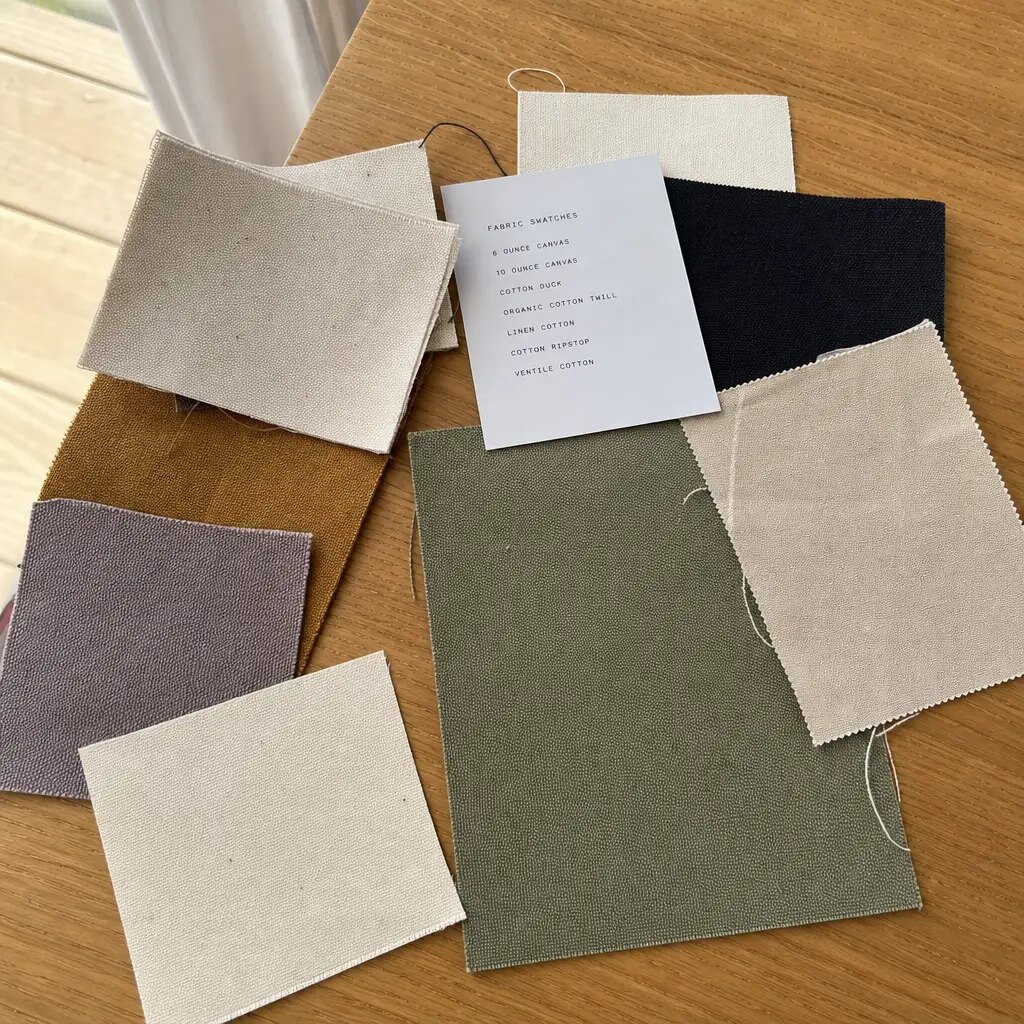
- Request fabric swatches from the supplier before approving artwork placement or retail price positioning.
- Set handle reinforcement requirements such as cross-stitch, bartack, or double row stitching at the attachment point.
- Confirm print method, Pantone colors, print size, print position, and whether the artwork will be printed on actual production fabric for approval.
- Separate mandatory compliance documents from nice-to-have certificates so suppliers can quote accurately.
- Require the quotation to include MOQ by design, MOQ by color, sample cost, sample lead time, bulk lead time, packing method, carton size, and carton gross weight.
- Approve a pre-production sample with final fabric, final print, final label, final stitching, and final packing before releasing bulk fabric cutting.
- Set QC acceptance criteria for fabric stains, print defects, stitch strength, size tolerance, needle detection if required, and carton marking.
- Confirm whether the hotel retail shipment needs individual barcode labels, hangtags, price stickers, country-of-origin labeling, or polybag restrictions.
Factory quote questions to send
- Are you quoting as the direct sewing factory, a print workshop, or a trading company coordinating production?
- What is the exact fabric composition, weave, ounce weight, GSM range, and shrinkage expectation after finishing?
- Is the quoted fabric stock fabric or made-to-order fabric, and what is the reorder risk after the first shipment?
- What size tolerance do you apply for finished canvas grocery totes after sewing and pressing?
- Which print method is included in the price, and what is the maximum printable area on this tote size?
- Can you provide a print strike-off on actual production canvas before bulk production?
- What handle webbing or self-fabric handle construction is included, and how is the handle attachment reinforced?
- What compliance documents can you provide for fabric, dyes, printing ink, factory audit, and final inspection?
- What is the MOQ per design, per fabric color, and per print colorway?
- What is the sample lead time and bulk lead time after sample approval and deposit?
Quality-control points to confirm
- Finished size should stay within agreed tolerance, commonly plus or minus 1 cm for width and height and plus or minus 0.5-1 cm for gusset depending on construction.
- Fabric GSM should match the approved swatch and quote, with no substitution from canvas to lighter plain cotton unless buyer approves in writing.
- Canvas panels should be free from visible oil stains, large slubs, holes, mildew odor, and severe shade variation across one carton.
- Handles should carry the agreed reinforcement method and pass a practical load test based on intended grocery use.
- Print color, position, opacity, edge sharpness, and curing should match the approved strike-off under normal lighting.
- Stitching should be straight enough for retail sale, with no loose thread clusters, skipped stitches at stress points, or open seams.
- Labels, hangtags, barcodes, and country-of-origin markings should match the buyer's packing file and destination requirements.
- Cartons should use the approved quantity, inner separation, carton marks, gross weight limit, and moisture protection if sea freight is used.
- Final inspection should include random carton opening, product measurement, load testing, print rub testing, packing verification, and photo records.