Start with the business use case, not the logo
Canvas grocery totes look simple, but procurement problems usually start when the buyer treats them as generic promotional bags. An eco apparel brand may use the tote as a retail SKU, a gift-with-purchase, an e-commerce pack-in, a wholesale merchandising item, or a reusable grocery carry bag. Each use case changes the acceptable cost, fabric weight, handle construction, packing method, and quality standard.
A tote sold in a store needs a better front-panel appearance, cleaner folding, and more consistent labeling than a bulk giveaway. A tote used for groceries needs stronger handles and gusset capacity. A tote shipped with apparel may need dust protection, barcode labels, and carton discipline. Before sending an RFQ, define the commercial role of the product: is it supposed to reduce disposable packaging, extend the apparel brand, drive campaign visibility, or become a paid accessory?
This decision keeps the RFQ from becoming overbuilt or underbuilt. A 12 oz gusseted tote with retail packing may be justified for a premium brand drop, but it can be too expensive for a low-cost giveaway. An 8 oz flat tote may meet a promotion budget, but it should not be described as a durable grocery bag unless the construction supports that claim.
Procurement teams should also set a target landed-cost logic early. Ask suppliers to quote against a value spec and, if needed, a premium spec. The comparison becomes more useful when the factory shows the cost impact of fabric weight, gusset, print colors, labels, and packing rather than hiding all choices inside one unit price.
- Define the tote role: retail SKU, gift, grocery bag, apparel pack-in, or campaign item.
- Set the target channel and receiving requirements before finalizing construction.
- Ask for a value and premium option only when both are clearly specified.
- Do not let visual mockups replace a written construction brief.
Price bands and the cost drivers buyers should watch
Target prices for canvas grocery totes vary with cotton markets, exchange rates, location, order size, print method, and packing. Still, buyers need planning benchmarks. For simple natural cotton canvas totes at higher quantities, an 8–10 oz flat or lightly gusseted bag may often fall around USD 1.20–2.20 ex-factory. A 10–12 oz tote with gusset, reinforced handles, better stitching, screen print, and retail packing can commonly move into the USD 2.20–4.50+ range. Heavy canvas, custom dyeing, embroidery, woven labels, low MOQ, or retailer-ready packing can push the price higher.
These are not universal quotes. They are planning bands for RFQ discipline. If a supplier quotes far below the band, ask what changed: fabric weight, canvas quality, handle reinforcement, print method, packing, inspection, or incoterm. If a supplier quotes far above the band, ask which value-added elements are included: certified material, prewashed finish, lab testing, retail labels, palletization, or tighter QC.
The biggest cost drivers are fabric weight, dyed or custom-finished fabric, print complexity, MOQ, labor intensity, and packing. A simple one-color screen print on natural canvas is usually more economical than a custom-dyed canvas with multi-color artwork and individual barcode packing. A wider gusset, bottom reinforcement, or bound seams add sewing time. Retail pack-out adds materials, carton volume, and labor.
A strong RFQ asks suppliers to show these cost drivers line by line. Do not accept only a single number if you need to compare factories. Request the base bag price, print setup, label cost, packing cost, sample charges, testing charges, carton data, and freight assumptions. This gives procurement, finance, and merchandising the same decision basis.
- Use price bands as a sanity check, not as a final sourcing promise.
- Ask low-price suppliers what has been simplified or excluded.
- Separate base bag, branding, packing, testing, and logistics charges.
- Compare landed-cost impact, not only ex-factory unit price.
Lock the physical specification before requesting firm pricing
The physical specification determines most of the tote’s cost and performance. The RFQ should state body width, body height, gusset depth, handle drop, handle width, seam style, fabric weight, finish, and whether the tote must stand upright or fold flat. Avoid terms such as sturdy, premium, large, or eco-friendly unless they are supported by measurable details.
For grocery and apparel use, 10 oz canvas is a practical middle point. It gives more body than lightweight promotional fabric without immediately moving into premium cost. Twelve ounce canvas is better when the bag is intended to feel substantial or hold shape on shelf. Eight ounce can be acceptable for light campaigns, but buyers should not expect the same structure or carry confidence.
Gusset depth is one of the most important differences between a flat tote and a real grocery tote. A 3–6 inch gusset can improve usable capacity and make the bag more practical for folded apparel, bottles, or food items. If the bag needs to sit open or stand cleanly, the supplier may recommend heavier canvas, a boxed bottom, or bottom reinforcement. These choices should be priced before sampling.
Measurement method also matters. A tote measured flat before finishing may not match a finished, pressed, or washed product. State whether dimensions are measured after final sewing, pressing, or washing. This avoids disputes when a prewashed tote shrinks or a heavy canvas tote shifts during finishing.
- Specify body size, gusset, handle drop, and handle width in inches or centimeters.
- Use GSM or oz/yd² for fabric weight, with an agreed tolerance.
- State whether measurements apply before or after washing, pressing, or final finishing.
- Match the structure to the load and channel, not only to the design mockup.
Fabric, finishing, and verified sustainability claims
Natural cotton canvas is popular with eco apparel brands because it looks straightforward and reusable. However, natural canvas can show slubs, seed flecks, yarn variation, and shade differences. These are not automatically defects unless the buyer defines where variation is acceptable. For example, small natural flecks may be acceptable on the body but not through a white logo area or a high-visibility print panel.
Dyed, bleached, prewashed, or enzyme-washed canvas adds control and sometimes a softer retail hand, but it also increases sourcing complexity. Dyed fabric requires shade approval and may need lab dips. Prewashed fabric requires shrinkage control. Bleached fabric may make stains and yarn defects more visible. The RFQ should ask the supplier to state the finish clearly and identify what tolerance they can hold.
Sustainability language needs careful handling. A tote made from cotton canvas is not automatically organic, low-impact, recycled, plastic-free, or certified. If the brand wants to use organic cotton, recycled cotton, GOTS, GRS, OEKO-TEX, or similar language, the RFQ must ask for the exact proof required for that claim. Depending on the claim, this may include scope certificates, transaction certificates, fiber-content declarations, test reports, or chain-of-custody documents. The documents must apply to the supplier, material, quantity, and product being ordered.
For ordinary non-certified cotton totes, request at minimum a fiber-content declaration and care guidance. For claim-bearing products, involve compliance or legal review before artwork, hang tags, or product pages are finalized. Unsupported sustainability claims create risk for both procurement and marketing.
- Define acceptable natural canvas variation before bulk production.
- Request lab dips for custom color and physical swatches for natural canvas.
- Ask for fiber-content documentation on all orders.
- Only use certified, organic, or recycled claims when the supplier provides order-relevant proof.
Supplier qualification criteria for B2B tote programs
A low unit price is not enough qualification. A supplier for canvas grocery totes should demonstrate experience with cotton canvas cutting, tote sewing, handle reinforcement, print alignment, export packing, and sample control. Buyers should ask for the factory profile, production location, available sewing capacity, main tote materials, standard QC process, and whether production is in-house or subcontracted.
Procurement teams should also evaluate quote behavior. A capable supplier answers the RFQ against the written spec, calls out assumptions, and identifies production risks. A weak supplier may return a very low price without confirming fabric weight, print method, carton data, or inspection tolerance. That kind of quote creates work later and often leads to disputes.
For repeat programs, ask whether the supplier can retain the approved specification, artwork revision, carton configuration, and sample reference for reorders. Reorder consistency is especially important for apparel brands that may sell totes seasonally or use them across multiple stores. If a supplier cannot control fabric lots or repeat a handle construction, the first order may look different from the second.
Qualification should include document capability. If you need country-of-origin labeling, fiber-content statements, retailer routing labels, social compliance documents, or material certifications, ask before price approval. Documentation gaps are easier to solve before production than when goods are packed.
- Request factory profile, tote experience, production location, and subcontracting status.
- Shortlist suppliers that answer spec details rather than only quoting a price.
- Check whether they can maintain approved samples and revisions for reorders.
- Confirm documentation capability before issuing the purchase order.
Artwork, print testing, and brand presentation standards
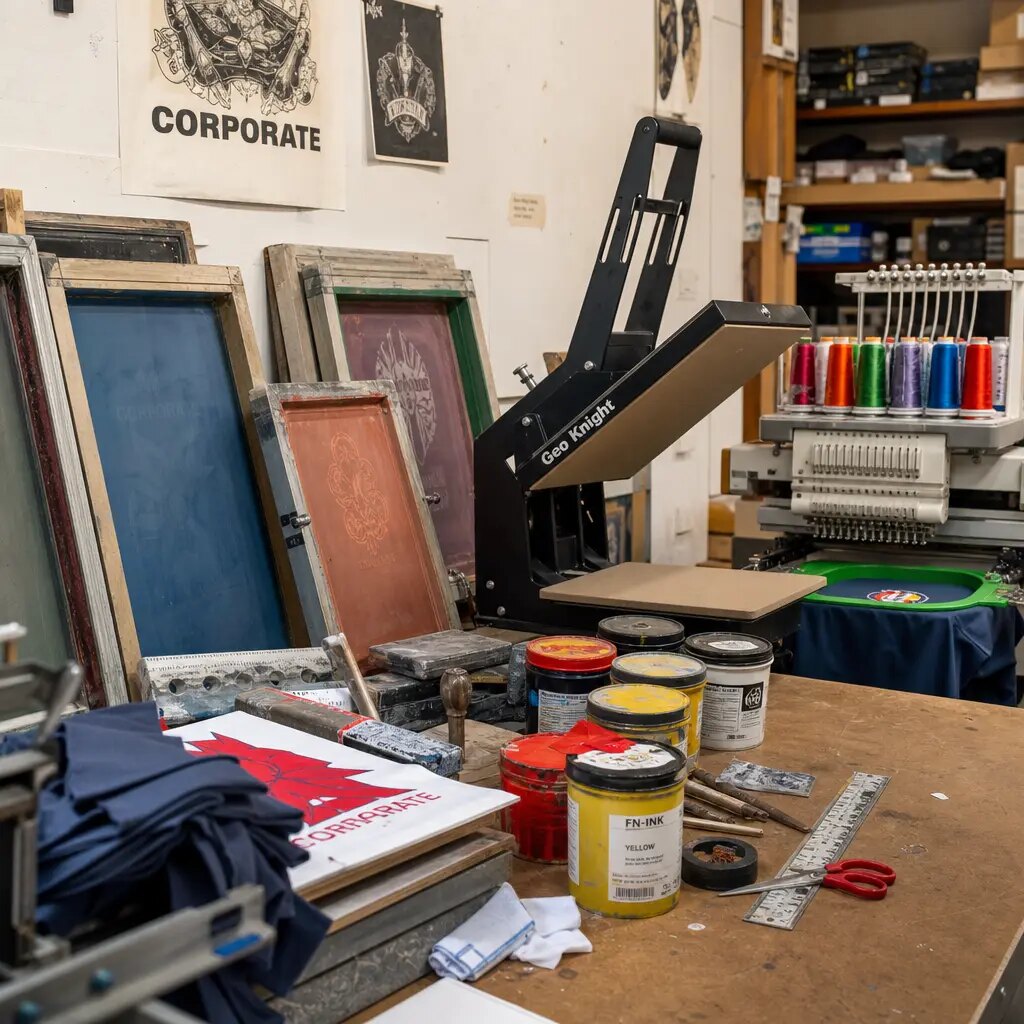
Screen printing is often the most practical method for canvas grocery totes with bold logos and limited colors. It can produce strong opacity on natural canvas and works well at commercial quantities. However, textured canvas is less forgiving than smooth paper or polyester. Fine lines, small text, gradients, and tight registration can lose clarity unless the artwork is adjusted for production.
Heat transfer may suit short runs or complex artwork, but buyers should ask about fold durability, edge lifting, rub resistance, and how the transfer behaves on rough canvas. Embroidery and woven labels can create a more premium brand expression, but they add cost and can affect hand feel. A small woven side label plus a clean front print can often look more intentional than a large overworked graphic.
The RFQ should include file format, print size, placement measurements, Pantone references, ink type if relevant, and whether the factory may adjust artwork. Ask the supplier to state minimum line thickness and registration tolerance. If the tote will be sold, request a print strike-off on the actual canvas or a production-equivalent fabric, not only a digital mockup.
Where print durability matters, ask for practical verification. Depending on the claim and channel, this may include dry/wet rub assessment, adhesion checks, colorfastness references such as ISO 105 or AATCC methods, and care-instruction review. The buyer should define acceptable failure: no obvious cracking, no severe ink transfer under normal handling, no visible smudging, and print placement within the agreed tolerance.
- Use screen print for simple bold artwork and larger runs.
- Approve a strike-off on actual canvas before bulk print.
- Define placement tolerance, commonly ±3–5 mm for simple layouts unless tighter control is agreed.
- Ask how the print will perform when folded, rubbed, packed, and reused.
MOQ, sampling stages, and lead-time control
MOQ is usually tied to fabric availability, dye lots, print setup, cutting efficiency, label runs, and packing requirements. A low MOQ may be possible with stock natural canvas, standard handles, and one-color printing. Custom fabric color, special finishing, woven labels, multi-SKU packing, or individual retail packaging can raise MOQ and unit cost.
Buyers should request MOQ by constraint: fabric color, print design, label, hang tag, barcode, and packing method. This makes it easier to plan assortment decisions. For example, one tote body color with two print versions may be easier than two dyed body colors with two label sets. If the buyer needs a launch test, the design should stay close to the supplier’s standard build.
Sampling should be staged to avoid expensive ambiguity. A fabric swatch confirms weight, hand, shade, and surface. A blank sample confirms construction and dimensions. A print strike-off confirms color and artwork behavior. A pre-production sample confirms final material, final construction, final branding, and final packing. The sealed golden sample should then become the inspection reference.
Lead time should be quoted by milestone, not as one optimistic number. Ask for material sourcing time, sample time, buyer approval time, bulk cutting and sewing, print production, finishing, inspection, packing, and export booking. Seasonal apparel launches fail when sampling and packing are treated as invisible time.
- Ask for MOQ separately by fabric, artwork, label, and packing.
- Use staged samples: swatch, blank, strike-off, pre-production, golden sample.
- Request lead time by production milestone.
- Build buyer approval time into the calendar, not only factory production time.
Packing, labeling, and logistics details that change landed cost
Packing can change the economics of a tote order. Bulk cartons are cheaper and efficient for giveaways or internal distribution. Individual polybags, insert cards, barcode labels, hang tags, and retailer-specific carton marks add cost but may be necessary for retail, e-commerce, or wholesale receiving. If packing is not specified, suppliers will quote different assumptions.
Ask for units per carton, carton dimensions, gross weight, net weight, and estimated CBM. A heavier canvas tote with a gusset may occupy more carton space than expected, especially if it is folded to preserve presentation. Small changes in fold method can affect freight cost, warehouse handling, and how the product looks when unpacked.
Labeling should be defined before production. Requirements may include country of origin, fiber content, care instructions, barcode placement, retail price stickers, carton marks, purchase order number, and destination information. If a retailer routing guide applies, share it with the supplier at RFQ stage. Retroactive labeling after inspection adds labor, delays, and error risk.
Incoterm and destination must be consistent across quotes. FOB, EXW, CIF, DDP, and delivered warehouse quotes are not directly comparable. Buyers should also state who pays for inspection, testing, inland freight, document fees, palletization, and local delivery.
- Quote bulk pack and retail pack separately when both are possible.
- Request carton dimensions, weight, units per carton, and CBM.
- Share barcode, care label, origin, and retailer routing requirements early.
- Compare quotes using the same incoterm and destination.
QC benchmarks, test references, and acceptance thresholds
A practical QC plan for canvas grocery totes should be measurable and simple enough for both factory and third-party inspectors to apply. Many buyers use ANSI/ASQ Z1.4 or ISO 2859-1 sampling logic with AQL levels such as critical 0, major 2.5, and minor 4.0. If your retailer or internal standard differs, use that standard. The important point is to define defects before inspection.
Critical defects should have zero tolerance. Examples include holes through the fabric, broken handle attachment, unsafe sharp objects such as needles or pins, wrong product, incorrect required label, or cartons that cannot be traced to the purchase order. Major defects may include visible stains, wrong fabric weight beyond tolerance, print outside placement tolerance, wrong color, seam failure, missing label, incorrect packing, or measurements outside the agreed limit. Minor defects may include small loose thread tails, light removable dust, or minor fold marks that do not affect saleability.
Common practical thresholds include fabric weight within ±5% of the approved spec, body measurements within about ±1 cm for larger dimensions, handle drop within about ±0.5 cm, and print placement within ±3–5 mm for simple front-panel artwork. These numbers should be adjusted for the product, but they are stronger than leaving tolerances undefined.
Testing depends on claim and channel. For colorfastness and rubbing, buyers may reference ISO 105 or AATCC methods where appropriate. For fiber content, use recognized textile composition testing when claims are important. For washable products, define dimensional-change limits after the agreed wash method. For handle strength, set a practical load requirement based on the intended use and state it in the PO. A grocery tote that will carry bottles needs a higher functional expectation than a flat event giveaway.
Inspection should cover incoming fabric checks, in-line sewing checks, pre-pack inspection, and final random inspection. The final inspection should verify the golden sample, measurement tolerances, print, stitching, stain limits, labels, carton marks, barcode scan, packing list, and carton condition.
- Use AQL with defined critical, major, and minor defects.
- Set measurement and print tolerances before production starts.
- Reference ISO, AATCC, ANSI/ASQ, or ISO 2859-1 methods when testing is needed.
- Treat unsupported sustainability or fiber claims as a documentation failure, not a marketing detail.
Copy-ready RFQ structure for procurement teams
A strong RFQ should make every supplier price the same product and disclose any assumptions. Use the structure below as a working format for canvas grocery totes. It is not a substitute for a full tech pack, but it gives procurement a consistent way to request comparable quotes.
Start with the commercial summary: product name, intended use, target channel, quantity, target price band, launch date, destination, and incoterm. Then list the technical specification: fabric composition, weight, finish, color, dimensions, gusset, handle construction, seams, reinforcement, branding, and packing. Attach artwork and call out Pantone references, placement, print size, and file format.
Next, include qualification and compliance requirements. Ask for factory profile, sample process, QC process, available test reports, fiber-content documents, and any certification documents needed for claims. If the tote will carry organic or recycled language, state the exact document standard required before order confirmation.
Finally, tell the supplier how to submit the quote. Require separate lines for unit price, setup, samples, printing, labels, packing, cartons, testing, inspection, freight assumptions, MOQ, lead time by stage, payment terms, and quote validity. Ask suppliers to list exclusions clearly. This turns the RFQ from a vague product request into a buyer-controlled sourcing document.
- Commercial fields: use case, quantity, target price band, launch date, destination, incoterm, and quote validity.
- Technical fields: dimensions, gusset, canvas weight, finish, color, handles, seams, print, labels, and packing.
- Quality fields: tolerances, defect classification, AQL level, test expectations, and golden sample control.
- Compliance fields: fiber content, country of origin, care label, certification proof, and retailer requirements.
- Quote format: unit price, setup, sample cost, packing cost, testing, freight assumptions, MOQ, and lead time by stage.
Specification comparison for buyers
| Spec decision | Recommended option | When it fits | Buyer risk to check |
|---|---|---|---|
| Target ex-factory price band | Planning range often around USD 1.20–2.20 for simple 8–10 oz natural canvas totes at higher MOQs; USD 2.20–4.50+ for 10–12 oz with gusset, reinforced handles, retail packing, or better finishing | Early budgeting before freight, duty, inspection, and local handling are added | Bands vary by market, cotton cost, exchange rate, order size, print colors, and packing. Use only as a benchmark, not a guaranteed quote. |
| Fabric weight | 8 oz for light promotional use; 10 oz for practical grocery and apparel add-on programs; 12 oz for stronger retail feel; 14 oz only when structure and premium hand justify cost | Eco apparel brands balancing reusable function, shelf presentation, and unit cost | If weight is not fixed by GSM or oz/yd², suppliers may quote fabrics that look similar in photos but differ materially in strength, opacity, and price. |
| Bag size and gusset | Common range: 14 x 16 in to 16 x 18 in; grocery-style gusset often 3–6 in; define body width, height, gusset depth, and handle drop | When the tote must carry folded apparel, bottles, groceries, or campaign inserts | A flat promotional tote may quote cheaper but fail the grocery use case. Missing gusset details create non-comparable pricing. |
| Handle construction | Cotton webbing or self-fabric handles, 1–1.5 in wide, with box-X, bar tack, or reinforced cross-stitch attachment | Orders needing comfortable shoulder carry and reduced seam failure risk | Weak handle attachment is a common functional defect. Ask for stitch pattern, stitch density, and load-test expectation. |
| Print and branding | Screen print for bold one- to three-color logos; transfer for short runs or complex artwork; woven label or embroidery for premium detail | When brand presentation matters and the tote is reused, sold, or included with apparel orders | Fine lines, gradients, low-opacity inks, and small text can fail on textured canvas unless print limits are approved in advance. |
| Supplier qualification | Shortlist suppliers with tote production history, stable fabric sourcing, sample discipline, export packing capability, and willingness to quote against written tolerances | B2B buyers needing repeatable orders rather than one-off promotional sourcing | A cheap quote from an unqualified supplier can hide weak QC, inconsistent fabric lots, missing documentation, or poor packing control. |
| MOQ structure | Request separate MOQ by fabric color, print design, label, and packing method; common custom programs may start around 300–1,000 units, with better cost efficiency above that | Buyers planning launch quantities, reorders, or multiple colorways | Very low MOQ may require stock fabric, simplified handles, limited print options, or higher unit cost. |
| Sample approval | Fabric swatch, blank construction sample, print strike-off, pre-production sample, and sealed golden sample | Retail, wholesale, e-commerce, or brand campaign orders where consistency matters | Approving only a photo can miss handle symmetry, fabric weight, print rub risk, carton marks, and folding method. |
| QC acceptance | Use AQL sampling, commonly critical 0, major 2.5, minor 4.0 unless the buyer’s standard differs; define measurement and print tolerances | Pre-shipment inspection before balance payment or shipment release | AQL without defect definitions is weak. The RFQ must state what counts as critical, major, and minor. |
Buyer checklist before sampling
- Confirm intended use: grocery load, apparel add-on, retail SKU, staff uniform accessory, wholesale gift, or promotional giveaway.
- Set target quantity, reorder expectation, and planned price band before asking suppliers to engineer the product.
- Specify body dimensions, gusset depth, handle drop, handle width, fabric weight, finish, color, seam type, and reinforcement method.
- State target ex-factory price band and ask suppliers to flag which spec changes would reduce or increase cost.
- Provide artwork files with print size, placement reference, Pantone or brand color references, minimum line thickness, and whether artwork adjustment is allowed.
- Define supplier qualification requirements: factory profile, tote production experience, sample lead time, export packing capability, QC process, and available compliance documents.
- Request MOQ separately for fabric color, print design, label, and packing style.
- List sample stages: fabric swatch, blank sample, print strike-off, pre-production sample, and sealed approval sample.
- Set measurable QC: body size tolerance, handle length tolerance, print placement tolerance, stain limits, stitch defects, carton accuracy, barcode rules, and AQL level.
- Ask for test expectations where relevant: fabric weight verification, colorfastness, print rub, seam/handle strength, dimensional stability, and fiber-content confirmation.
Factory quote questions to send
- What exact canvas weight are you quoting in oz/yd² and GSM, and what tolerance will you hold before cutting?
- Is the fabric raw natural, bleached, dyed, prewashed, enzyme-washed, or otherwise finished?
- What is the quoted fabric composition, and can you provide a fiber-content declaration?
- If we need organic or recycled-content claims, which certificates, transaction documents, or scope documents can you provide for this order?
- What are the bag body dimensions, gusset depth, handle width, handle drop, and measurement method?
- What handle material and attachment stitch pattern are included, and what load or seam-strength check do you normally perform?
- Which seams are single stitched, double stitched, bound, or overlocked?
- Which print method is included, how many colors are covered, and what setup or screen charges apply?
- What are your artwork limitations for minimum line thickness, ink coverage, registration, print placement, and Pantone matching?
- What is your MOQ by fabric color, print design, woven label, hang tag, barcode, and packing style?
Quality-control points to confirm
- Verify fabric weight before cutting using the agreed oz/yd² or GSM tolerance; a practical tolerance is often ±5% unless the buyer sets a stricter standard.
- Check fabric composition against the approved declaration or certification scope; do not approve organic or recycled claims from marketing wording alone.
- Measure body width, height, gusset depth, handle drop, and handle symmetry after final finishing; common tolerance is ±0.5 cm for small dimensions and ±1 cm for larger body measurements unless otherwise agreed.
- Inspect handle attachment for the approved box-X, bar tack, or reinforcement pattern, with no skipped stitches, broken threads, loose tension, or missed catch at the stress point.
- Run a practical handle/seam strength check suitable to the use case; for grocery totes, define a load target and hold time in the purchase order or inspection checklist.
- Check print placement against the approved sample; common tolerance is ±3–5 mm for placement on simple totes, depending on artwork size and construction.
- Check print quality for opacity, registration, cracking, pinholes, smudging, ink bleeding, and poor edge definition on the canvas texture.
- For printed or dyed totes, request relevant colorfastness or rub checks when the product will be sold or repeatedly handled, such as ISO 105 or AATCC colorfastness methods where appropriate.
- For washable or prewashed totes, confirm dimensional stability after the agreed wash or finishing process; define maximum shrinkage before bulk approval.
- Classify defects before inspection: critical defects include holes, broken handles, unsafe pins/needles, wrong product, or wrong label; major defects include visible stains, print off tolerance, size outside tolerance, seam failure, and incorrect packing; minor defects include small loose threads or light fold marks within the accepted limit.