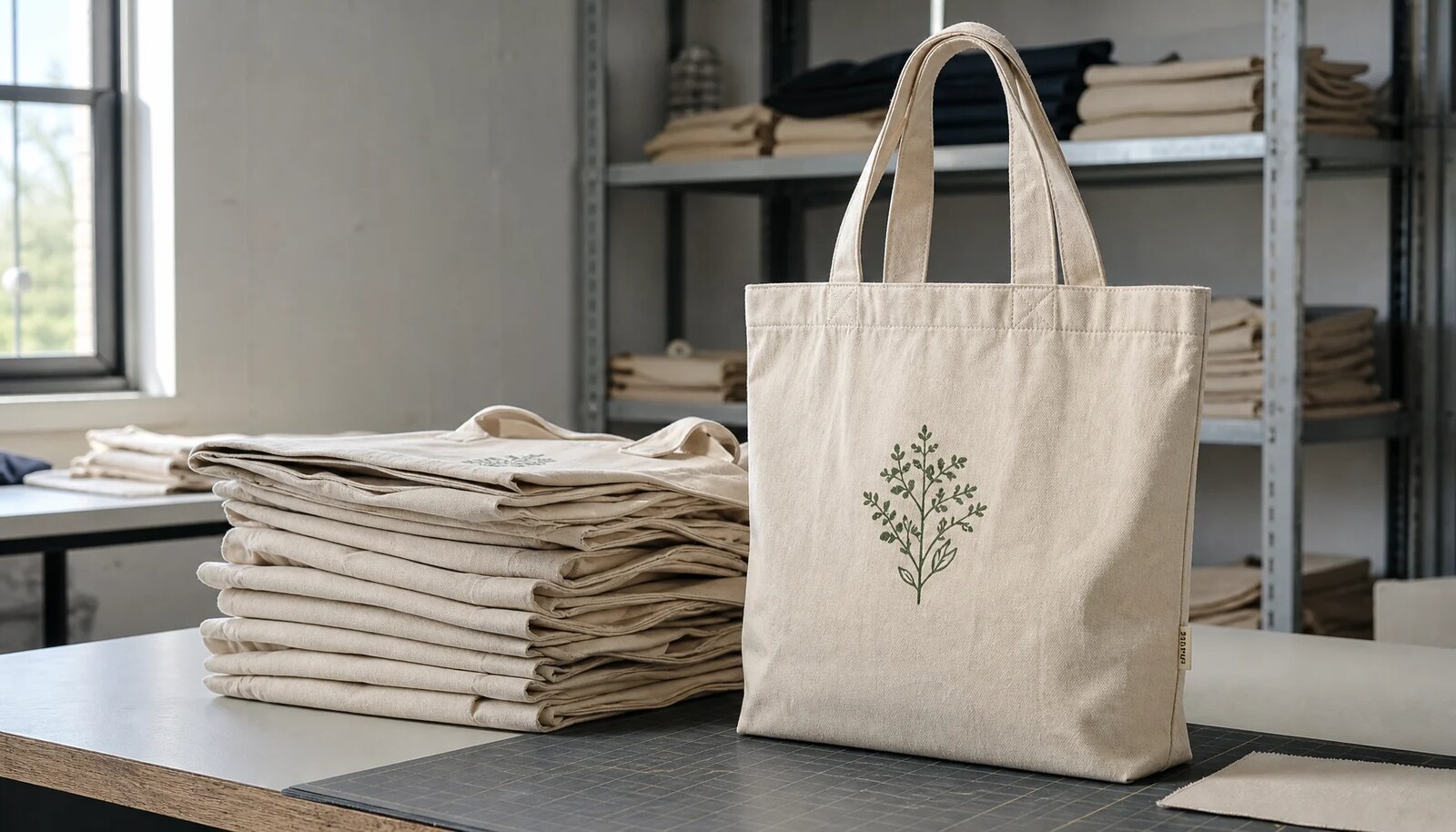
Why tote quality quickly becomes an event problem
Canvas grocery totes look simple on a quotation. Fabric, handles, seams, print, label, carton. That simplicity is exactly why quality issues are easy to miss during sourcing. A bag can look acceptable in a supplier photo and still arrive with lighter fabric than requested, uneven handle drops, weak reinforcement, off-center sponsor logos, fabric odor, loose thread ends, inconsistent folding, or carton counts that do not match the purchase order.
For event planners, there is less room to recover than in normal retail replenishment. The receiving date may be tied to a venue delivery window, a kit-packing line, a sponsor review, or a registration deadline. If defects are found after arrival, the team may have to sort cartons by hand, relabel mixed versions, trim threads, replace stained units, or explain the issue to a client who expected the tote to be the easy part. The cost is not just the unit price. It is the friction around the event.
A useful canvas grocery totes quality inspection checklist for event planners should connect product details to the actual workflow. Can the bag carry the planned contents? Does the print represent the sponsor cleanly? Can the warehouse count, fold, and kit the bags quickly? Does the approved sample truly match the bulk order? Those questions belong in the RFQ and PO, not in a rushed message after production is complete.
- For attendee giveaways, prioritize clean print, acceptable fabric appearance, trimmed threads, and correct carton count.
- For sponsor kits, control fold size, logo version, insert fit, destination labels, and packing sequence.
- For grocery-style reusable totes, specify fabric weight, gusset depth, handle reinforcement, seam strength, and realistic load expectation.
- For retail or merchandise programs, tighten shade consistency, hangtag placement, presentation packing, label accuracy, and visible workmanship standards.
Translate the event use into measurements
Start with what the tote needs to do. A bag carrying a badge, agenda, and brochure does not need the same construction as a grocery-style tote holding boxed samples, drink bottles, packaged food, apparel, or sponsor merchandise. The intended contents should guide fabric weight, finished size, gusset type, handle style, and reinforcement. When this information is missing, suppliers fill the gaps themselves, and every quote can quietly represent a different bag.
Use finished dimensions, not casual descriptions. A procurement-ready spec might read: 38 cm W x 42 cm H x 10 cm bottom gusset, 25 cm handle drop, 2.5 cm handle width, finished measurement tolerance +/- 1 cm. That is much stronger than large natural canvas tote. If the bag must fit into a kit box, mailer, shelf display, or insert line, add folded dimensions and maximum thickness after folding. If attendees will carry it over the shoulder, check the handle drop on a physical sample rather than relying only on a drawing.
The structure matters as much as the size. A flat tote is economical and works for papers or light giveaways, but it has limited volume for bulky contents. A bottom gusset or boxed bottom gives better usable capacity and helps the bag stand open during packing. Side gussets change the silhouette and may affect print placement. Pockets, zipper tops, snaps, custom woven labels, and reinforced bases can add value, but only when they match the event use. Each feature also adds a sampling and inspection point.
- State finished width, height, gusset depth, handle drop, and handle width in the RFQ.
- Confirm whether dimensions are measured after sewing, not before hemming or folding.
- Set measurement tolerances before sampling so small variation is handled consistently.
- Tell the supplier what the bag will carry and whether shoulder carry is required.
- Define structure in plain terms: flat, bottom gusset, side gusset, boxed bottom, reinforced base, pocket, or closure.
Control canvas weight, finish, and fabric claims
Fabric is usually the largest cost driver in a canvas grocery tote, and it is one of the easiest places for quotes to drift. Canvas may be quoted by ounce weight, GSM, or both. For many event, sponsor, and light retail grocery-style totes, 10 oz to 12 oz canvas is a practical sourcing range because it balances hand feel, print coverage, sewing cost, durability, and freight volume. Lighter fabric may suit very light giveaways, but it can feel limp, show contents more easily, and provide a weaker print surface. Heavier fabric can feel more substantial, but it raises material cost and may need a stronger sewing setup.
Ask for the fabric construction in writing. At minimum, the quote should state oz or GSM, color, finish, and whether the canvas is natural, bleached, dyed, washed, recycled-content, organic, or blended. If the event requires sustainability language, request documentation before that wording appears in sponsor decks, landing pages, or printed materials. Terms such as eco, green, recycled look, or natural style are not the same as verified fiber content or certification.
Fabric inspection should combine measurement and judgment. The supplier should compare bulk fabric to the approved swatch or sample for shade, hand feel, weave, and odor. Natural unbleached cotton can vary by lot, so acceptable shade variation should be agreed before production. Dyed canvas may need rubbing and colorfastness discussion if the tote will contact light clothing. Rejectable defects include holes, oil marks, mildew odor, heavy stains, contamination, major shade panels, and severe weaving faults, especially in visible print zones.
- Require fabric weight in oz or GSM and keep the same standard from sample to bulk.
- Ask whether the quoted fabric is stock, custom dyed, washed, recycled-content, organic, or blended.
- Keep a fabric swatch or approved sample as the shade and hand-feel standard.
- Avoid sustainability claims unless the supplier can support them with relevant documentation.
- Inspect bulk fabric for odor, stains, shade panels, holes, heavy slubs, and contamination before sewing where possible.
Lock the artwork and print method early
Print defects are highly visible because event totes often carry the main sponsor, event mark, or campaign message. For simple one- or two-color logos, screen printing is commonly the most stable and economical method on canvas. It can provide strong coverage and repeatable placement when the artwork is suitable. Heat transfer, digital print, or other methods may be better for gradients, photographs, very small runs, or complex artwork, but they need different inspection controls for edge lift, cracking, texture mismatch, transfer marks, and durability after folding.
The print specification should include vector artwork, Pantone or color target, print size, number of colors, number of sides, placement reference points, and tolerance. Placement should be measured from clear points such as the top edge, side seam, centerline, or bottom of the bag. For a simple front logo, a placement tolerance of +/- 5 mm to +/- 10 mm may be appropriate depending on size and construction, but the buyer and supplier should agree before bulk printing. If the tote has a gusset, pocket, seam, or label near the artwork, confirm the real printable area on the sample.
Inspection should look at print quality the way an attendee sees it and the way a warehouse handles it. Review ink coverage, clean edges, registration, color consistency, pinholes, bleeding into the weave, ghosting, smudges, scorching, and transfer marks. Fold the tote the way it will be packed, then perform a light rub check on sampled units after curing. A print can look clean when flat and still crack, mark another bag, or pick up fold lines when packed too tightly or too soon.
- Use vector files for logos and record final print dimensions in the PO.
- Specify print placement from the top edge, side seam, centerline, or another measurable reference.
- Request a strike-off or printed pre-production sample when color or sponsor approval matters.
- Inspect print after folding because event totes are packed, stacked, opened, and handled quickly.
- Separate logo versions by SKU, carton mark, inner label, or destination to prevent sponsor mix-ups.
Inspect handles, seams, and stress points
Handle failure is one of the fastest ways a tote defect becomes public. The bag may pass a quick appearance check, but if the handle pulls loose while a guest is carrying event materials, the failure is visible and awkward. The RFQ should specify handle material, handle width, handle drop, thread color, reinforcement method, and whether the handle is self-fabric, cotton webbing, or another webbing type. The sample should be checked against all of these points.
Reinforcement can be done in several ways: box stitch, cross stitch, bar-tack, folded seam capture, reinforcement patch, or a combination. The right choice depends on bag style and expected load, but the construction must be consistent. Look for stable thread tension, sufficient stitch coverage, no skipped stitches, no broken threads, no loose ends in load-bearing zones, and no stitch line placed too close to the fabric edge. Handles should be symmetrical, untwisted, and equal in drop from side to side.
Seam inspection should cover the whole tote, not only the front panel. Review top hems, side seams, bottom seams, gusset corners, pocket seams, labels, and inside finishing. Open seams, fabric caught incorrectly, puckering, needle damage, broken stitches, and uneven topstitching should be classified by severity. For grocery-style totes, bottom seams and gusset corners deserve extra attention because they take the strain from bulky contents. A practical load check with representative event items can reveal seam stress or handle slippage before shipment.
- Measure handle drop on both sides of sampled bags and compare with the approved tolerance.
- Check handles for twisting, uneven length, incorrect angle, weak seam capture, and loose ends.
- Inspect bar-tacks, box stitches, and cross stitches for skipped stitches and thread breaks.
- Review bottom seams and gusset corners for open seams, weak folds, and puckering.
- Use a representative load check based on expected event contents instead of relying only on appearance.
Compare quotes by what is actually included
Two canvas tote quotes can look similar while pricing very different products. One supplier may assume 10 oz canvas while another prices 12 oz. One may include a one-color screen print while another adds setup charges later. One may quote bulk packing only while another includes inner bundles, carton marks, and inspection photos. If the RFQ does not standardize these details, the lowest unit price may simply mean missing work, looser controls, or a lighter construction.
Build a quote grid that separates body size, fabric weight, finish, handle construction, reinforcement, print method, number of colors, number of sides, labels, hangtags, MOQ, sample charges, setup charges, packing, carton quantity, freight terms, and inspection support. This lets procurement see where the cost is coming from. Reducing fabric from 12 oz to 10 oz may be a reasonable value decision for a light giveaway. Removing reinforcement from a grocery-style tote is usually a much higher-risk saving.
MOQ also needs detail. Ask whether the minimum applies to the total order or separately by body color, print version, label version, packing format, and destination split. Multiple sponsor logos can change screen setup, sample approval, and version-control risk. Custom-dyed fabric may require a higher minimum than stock natural canvas. Individual polybags, hangtags, barcodes, or retail packing add labor and carton volume. None of this should be discovered after the PO is issued.
- Compare quotes line by line for fabric, size, gusset, handle, print, packing, and inspection support.
- Ask whether screen setup is charged per artwork, color, side, or production run.
- Clarify whether sample charges are credited after bulk order confirmation.
- Check whether labels, hangtags, carton marks, barcodes, and inner bundles are included.
- Review landed cost and carton volume instead of only ex-factory unit price.
Choose suppliers for repeatability
Supplier selection should focus on whether the supplier can repeat the approved tote at production scale. A direct factory can be useful for higher-volume or repeat programs because fabric booking, cutting, sewing, in-line QC, and packing may be easier to trace. A trading company can still be practical for smaller mixed-product orders or consolidated sourcing, but procurement should ask more detailed questions about the actual production site, inspection responsibility, and corrective-action process.
A capable supplier should be able to explain the production route: fabric sourcing, sample making, print strike-off, cutting, printing, sewing, trimming, in-line checks, final inspection, packing, and shipment handover. They should also be able to state tolerances they can realistically hold. Broad language such as best quality or premium workmanship does not help an event buyer. Useful answers include fabric weight, measurement tolerance, reinforcement type, print placement tolerance, carton count, and inspection method.
Communication discipline matters because event orders often involve procurement, marketing, sponsors, warehouse teams, and freight partners. Version control should be strict. Artwork files, sample approvals, PO revisions, carton marks, and destination labels should reference the same style number or version name. If the supplier cannot manage revisions during sampling, the risk rises during bulk production, especially when multiple sponsor logos or regional shipments are involved.
- Ask whether the quoting company owns production or uses a named factory or subcontracted workshop.
- Request process photos for fabric, printing, sewing, trimming, inspection, packing, and sealed cartons.
- Confirm whether the supplier can hold an approved sample as the production standard.
- Ask how defects found in-line are repaired, sorted, rechecked, and documented.
- Favor suppliers who answer with measurements, tolerances, photos, and process detail.
Approve the sample as the production standard
The pre-production sample is not just a design preview. It is the physical standard for bulk production. For a canvas grocery tote, the approved sample should use final fabric weight, final fabric finish, final thread, final handle material, final reinforcement, final print method, final label method, and intended fold where practical. If the supplier sends a handmade sample using substitute fabric or a showroom bag with similar construction, mark it clearly as a non-production reference and do not release bulk production from it.
Inspect the sample in a fixed order. First, compare it to the written specification: size, gusset, handle drop, fabric weight, body color, print dimensions, print placement, label, and packing fold. Second, inspect workmanship: seams, top hem, handle reinforcement, trimming, fabric defects, odor, and print clarity. Third, test function: load the sample with representative contents, fold it as it will be packed, rub the print lightly, and check whether handles shift, seams strain, or print surfaces mark.
Record the approval carefully. Photograph the front, back, inside seams, handles, gusset, print close-up, label, and folded state. Note any accepted deviation in writing, such as a small natural shade variation or revised print placement. If the sample is rejected, state the correction required and request a revised sample or clear corrective evidence before bulk cutting. Final inspection should reference the approved sample and the written PO, not memory or scattered email comments.
- Measure width, height, gusset depth, handle drop, handle width, and print placement.
- Compare fabric hand feel, shade, and odor to the approved swatch or prior production.
- Check logo clarity at close range and at normal attendee viewing distance.
- Load the sample with representative event contents and observe handle and seam behavior.
- Keep an approval file with photos, measurements, comments, and approved deviations.
Set inspection thresholds before shipment
Quality control works best when the supplier understands defect definitions before production begins. Many disputes happen because the buyer says quality is poor and the factory says the result is within normal tolerance. An AQL-style approach does not need to be complicated for event tote orders, but it should include sampling across multiple cartons, measurement checks, visual checks, function checks, print checks, and packing verification. The point is to define what will be accepted, repaired, sorted, replaced, or rejected.
Classify defects by business impact. Critical defects are issues that make the tote unsafe, unusable, or clearly wrong for distribution, such as wrong artwork, broken handle, open bottom seam, mold, strong mildew odor, contamination, or incorrect product version. Major defects are visible or functional issues likely to create complaints, such as print placement beyond tolerance, skipped stitches in handle zones, heavy stains, wrong size beyond tolerance, mixed colors, or incorrect carton counts. Minor defects are small issues that do not affect use or brand appearance at normal distance, such as a short loose thread outside a load-bearing area.
Inspection should not rely on a single supplier photo of the top carton. Samples should be pulled from different cartons across the packed lot. Check fabric, measurements, handle reinforcement, seams, print, trimming, fold method, carton labels, and count. If issues are found, corrective action should be specific: trim loose threads, sort stained units, rework carton marks, replace wrong logo versions, repack mixed cartons, or hold shipment until reinspection evidence is provided.
- Critical defects: wrong artwork, broken handle, open bottom seam, mold, severe odor, contamination, or wrong product version.
- Major defects: off-center print beyond tolerance, skipped handle stitches, heavy stain, wrong size, mixed versions, incorrect count, or wrong carton mark.
- Minor defects: small loose thread, slight natural slub, minor wrinkle, or tiny print imperfection outside the main logo area.
- Measurement checks: finished size, gusset, handle drop, handle width, print location, and carton quantity.
- Function checks: handle stress, seam behavior, fold-and-rub print review, and representative loading.
Control packing, carton marks, and receiving
Packing is not an afterthought for event planners. It determines how fast the warehouse can receive, count, sort, kit, and ship the totes onward. Bulk packing may be cost-effective, but only when carton quantity, fold method, inner bundles, and labels are consistent. If cartons arrive with mixed logo versions, unclear marks, variable counts, or unplanned fold sizes, the receiving team has to open and verify more cartons under deadline pressure.
Define packing before production begins. State pieces per inner bundle, pieces per master carton, target carton dimensions if relevant, gross weight range, fold method, moisture protection, carton label content, and shipping marks. If the totes will be inserted into kit boxes, test the folded size against the kit process. If they are being sent to multiple cities, booths, sponsors, or regional offices, carton marks should show event name, style number, color, logo version, quantity, and destination.
Request packing evidence before shipment release. Useful photos include folded units, inner bundles, open cartons showing the count method, carton labels, sealed cartons, and pallet presentation when applicable. Photos are not a replacement for inspection, but they can catch preventable errors before goods leave the factory. For event-critical orders, carton count verification and version separation should be part of final QC, not a receiving surprise after the shipment lands.
- Fix pieces per carton and do not allow variable counts unless approved in writing.
- Use separate carton marks for different sponsor logos, body colors, product versions, or destinations.
- Specify fold method when totes must fit a kit box, mailer, shelf display, or insert line.
- Check carton strength, moisture protection, and gross weight for long-transit shipments.
- Request sealed carton photos, open carton photos, and carton label photos before shipment release.
Specification comparison for buyers
| Sourcing decision | Procurement-ready specification | Typical tolerance or check | Buyer risk to control |
|---|---|---|---|
| Finished size | State finished width, height, gusset depth, handle drop, handle width, and whether measurements are taken after sewing and pressing | Finished-size tolerance is often around +/- 1 cm; print placement may need tighter control such as +/- 5 mm to +/- 10 mm depending on artwork | Quotes based on vague terms such as large tote or grocery bag can create capacity, packing, and logo-placement surprises |
| Fabric weight | Quote canvas by oz and/or GSM, with an approved swatch or sealed sample kept as the standard before bulk cutting | 10 oz to 12 oz canvas is a practical range for many grocery-style event totes; verify actual hand feel and weight against the approved sample | A supplier may quote a heavier feel while using lighter fabric unless weight and finish are written into the PO |
| Fabric finish | Define natural, bleached, dyed, washed, recycled-content, organic, or blended fabric, and confirm the shade target | Natural cotton shade variation should be accepted by swatch or sealed sample; dyed fabric may need rubbing and colorfastness discussion | Uncontrolled finish can cause shade panels, odor, shrinkage, weak print contrast, or sustainability language the buyer cannot support |
| Handle construction | Specify self-fabric or cotton webbing handles, handle width, handle drop, thread color, and reinforcement method | Inspect box stitch, cross stitch, bar-tack, folded seam capture, thread tension, and stitch consistency in load-bearing zones | Handle pullout is one of the most visible event failures because it happens while attendees are carrying the bag |
| Gusset structure | Choose flat, bottom gusset, side gusset, boxed bottom, or reinforced base according to the items being packed | Measure gusset depth on multiple samples and review how the tote folds and stands after packing | Incorrect gusset depth changes usable volume, kit fit, carton cube, and distribution speed at the event or warehouse |
| Print method | Use screen print for simple solid logos; consider transfer or digital print only when artwork or run size requires it | Check PMS target, ink coverage, curing, rub resistance, edge quality, registration, and placement from agreed reference points | Poor print registration, bleeding, cracking, ghosting, or mixed logo versions can damage sponsor presentation |
| Sampling path | Approve a pre-production sample made from final fabric, final handle, final thread, final reinforcement, final print method, final label, and intended fold where practical | Photograph and measure the sample; record accepted deviations before bulk cutting or printing begins | A showroom sample may look better than mass production and may not represent the quoted construction |
| MOQ structure | Clarify MOQ by body color, print version, label version, packing format, and destination split | Confirm whether stock fabric lowers MOQ and whether setup charges apply per color, side, screen, or artwork | A low MOQ can hide setup fees, mixed production risk, limited fabric control, or version confusion |
| Inspection plan | Use AQL-style sampling with written definitions for critical, major, and minor defects | Inspect multiple cartons across the lot for fabric, measurements, handles, seams, print, trimming, odor, folding, and carton count | A top-carton photo is not a quality inspection and will not catch lot-wide variation |
Buyer checklist before sampling
- Define the event use case: attendee giveaway, sponsor kit, retail merchandise, grocery-style reusable bag, booth handout, warehouse-packed kit, or regional shipment.
- State intended contents and approximate load, such as brochures only, boxed samples, bottled drinks, apparel, packaged food items, or mixed sponsor materials.
- Specify finished width, height, gusset depth, handle drop, handle width, seam allowance expectation, and measurement tolerance before requesting quotes.
- Write fabric weight in oz and/or GSM, fabric finish, body color target, shrinkage expectation if relevant, and any recycled, organic, or certification requirement that must be documented.
- Confirm bag structure: flat tote, bottom-gusseted tote, side-gusseted tote, boxed-bottom grocery tote, reinforced base, pocket, zipper, snap, or label placement.
- Send vector artwork with Pantone references, final print dimensions, number of colors, number of sides, print placement distance from top edge and side seams, and approved print method.
- Ask whether the quote includes screen setup, strike-off sample, PMS matching attempt, sample freight, labels, hangtags, trimming, folding, inner bundling, carton marks, and inspection photos.
- Require a pre-production sample made with final fabric, final thread, final handle, final reinforcement, final print method, final label, and intended packing fold where practical.
- Measure the sample, photograph key details, record tolerances, and approve or reject deviations in writing before bulk fabric cutting starts.
- Set defect criteria for fabric stains, holes, shade panels, odor, heavy slubs, loose threads, skipped stitches, twisted handles, print defects, wrong logo version, and mixed cartons.
Factory quote questions to send
- What exact canvas construction are you quoting: ounce weight, GSM, yarn count if available, weave density if available, finish, and fabric source or stock status?
- Is the fabric natural, bleached, dyed, washed, recycled-content, organic, or blended, and what documentation can you provide for any sustainability claim?
- What is the finished bag size, gusset type, seam allowance, handle drop, handle width, and acceptable production tolerance for each measurement?
- Which print method is included, how many colors and sides are priced, what is the setup charge per artwork or screen, and how will PMS color matching be handled?
- Will you provide a strike-off or printed pre-production sample for approval before bulk printing, and is that cost included or separate?
- Will the pre-production sample use the same fabric, thread, handle, reinforcement, print, label, and packing fold as the bulk order?
- What is the MOQ by body color, print version, label version, and packing format, and does MOQ change if we use stock fabric instead of custom-dyed fabric?
- What reinforcement is included at the handle attachment: box stitch, cross stitch, bar-tack, extra patch, folded seam capture, or another construction?
- What stitch type, stitch density, thread type, and needle setup do you normally use for this canvas weight?
- What checks do you run for fabric weight, shade, odor, print rub, ink curing, handle pull, seam strength, measurement tolerance, trimming, and carton count?
Quality-control points to confirm
- Fabric weight should be checked against the approved spec by oz or GSM and compared to the sealed sample for hand feel, shade, odor, weave, and finish.
- Finished dimensions should be measured flat for width, height, gusset depth, handle drop, handle width, and print placement using agreed tolerances.
- Fabric defects should be classified for stains, holes, weaving faults, heavy slubs, shade panels, oil marks, mildew odor, contamination, and major creases in print areas.
- Handle attachment should show consistent reinforcement, stable thread tension, secure seam capture, no skipped stitches, no seam slippage, and no loose thread ends in load-bearing zones.
- Side seams, bottom seams, gusset seams, top hems, and label seams should be straight, fully caught, and free from open seams, puckering, broken stitches, and obvious needle damage.
- Print registration should be centered or placed according to spec, clean-edged, cured, and consistent across the lot, with no major ink bleed, cracking, ghosting, color mismatch, scorching, or transfer marks.
- Print rub and fold checks should be performed on inspected samples, especially when bags are folded tightly for carton packing or printed across a textured weave.
- Logo version control should confirm the correct artwork, color, size, side, sponsor version, and carton grouping for each SKU or destination.
- Trimming should remove loose threads and fabric dust without cutting seams, labels, or handle reinforcement.
- Packing should match the PO for carton count, inner bundle count, fold method, carton label, style number, color, print version, destination, and shipping mark.