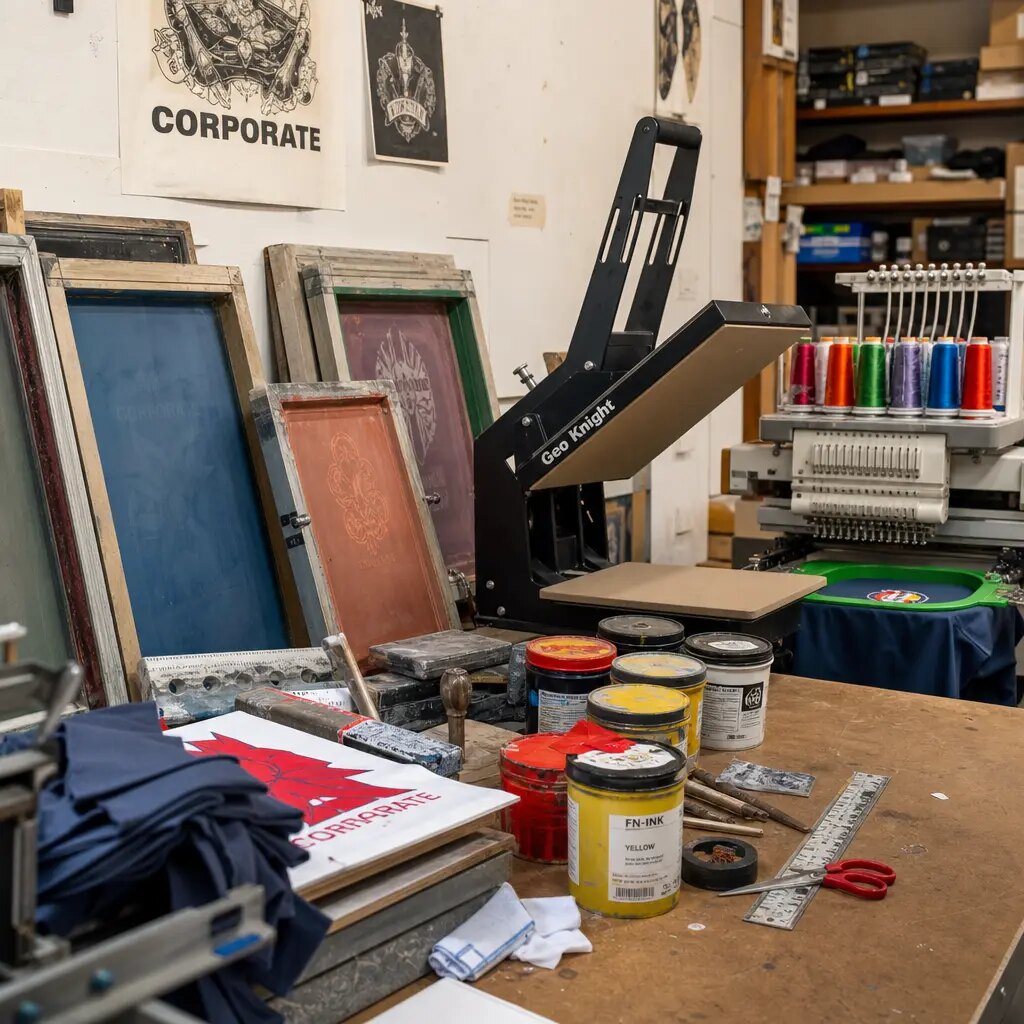
Why print proofing matters more on craft-fair canvas grocery totes
Craft fair buyers often begin with the front graphic because the artwork is what attracts shoppers at a booth. For procurement, however, the print proof is not just a design sign-off. It is the point where fabric, cutting, sewing, print method, curing, folding, and carton packing all need to match the commercial expectation. A canvas grocery tote that looks acceptable on a PDF can still arrive with crooked placement, dull ink, twisted seams, weak handles, or a permanent fold through the logo.
Craft fair programs also have a different risk profile from generic promotional giveaways. These totes may be sold as merchandise, bundled with handmade goods, used as reusable grocery bags, or offered by retailers during seasonal events. That means the buyer is not only checking whether the logo is visible. The buyer is checking whether the bag looks retail-worthy when stacked, carried, photographed, and handled repeatedly over a weekend.
The most useful print proofing process starts before artwork approval. First confirm the blank tote construction, including canvas weight, finish, dimensions, handle drop, and reinforcement. Then confirm the artwork size, print location, ink color, and method on a sewn sample. Finally, confirm how the approved tote will be folded, packed, counted, and inspected. When those three layers are connected, the proof becomes a production control document rather than a decorative mockup.
- Proof the blank first, then the printed tote, then the packed carton.
- Treat seam location, gusset folds, handle attachment, and carton fold line as part of print placement.
- For natural canvas, allow reasonable shade variation but define the acceptable range in writing.
- Do not approve a PDF layout as the only standard for a retail or resale craft-fair program.
Build the tote spec before you review artwork
A strong print proof starts with a strong blank specification. The factory cannot place artwork accurately if the finished tote size, handle length, fabric finish, or gusset construction is still undecided. For most craft-fair grocery totes, a practical fabric range is 10 oz to 12 oz canvas, approximately 340–410 GSM. This range usually gives enough body for a retail presentation while keeping the tote foldable and freight-efficient. If the bag is expected to carry jars, candles, books, bottled goods, or heavier market purchases, lean toward the upper end and reinforce the handles accordingly.
Do not accept a quote that says only “canvas tote” or “cotton bag.” Canvas weight can be stated in ounces or GSM, but it should also be clear whether the number is before or after finishing. Natural, bleached, dyed, washed, and pre-shrunk canvas can all print differently. A bleached canvas may make ink look brighter; natural canvas may create a warmer, more muted print; washed canvas may feel softer but can change shrinkage and panel shape. These choices affect appearance, cost, freight weight, and production consistency.
The tote structure also changes the proof. A flat tote offers a simpler print field, while a grocery-style tote with gussets or a boxed bottom may create folds that visually shift the artwork. Handle placement matters too. If the handle attachment sits too close to the print area, the logo can look crowded or the stitching can interrupt the design. Buyers should ask for a technical layout showing the finished body size, safe print area, and handle attachment points before artwork is released for sample making.
- Specify finished width, height, gusset depth if any, handle width, handle length, and handle drop.
- State canvas weight in oz or GSM and identify the fabric finish: natural, bleached, dyed, washed, or other.
- Confirm whether the fabric is pre-shrunk or whether size tolerance accounts for possible shrinkage.
- Use heavier fabric or stronger reinforcement for bags intended to carry dense craft-fair products such as jars, books, pottery, candles, or wine.
- Keep key artwork away from seams, gusset folds, bottom folds, and handle stitch boxes.
Match the print method to the artwork, quantity, and durability expectation
For B2B craft-fair tote programs, screen printing is usually the safest option for one-color or two-color graphics. It can produce clean edges, solid ink coverage, and repeatable results across a larger production run when the artwork is suitable. This is especially important for logos, event names, simple illustrations, slogans, and booth merchandise that must read clearly from a short distance. A good screen-print proof should show the actual ink color, opacity, edge sharpness, and curing result on the same canvas used for production.
Heat transfer, digital printing, and other methods can be useful, but they should not be treated as automatic substitutes. Heat transfer may work for short runs, detailed graphics, or variable artwork, but buyers should check edge adhesion, cracking, gloss level, hand feel, and resistance to folding. Digital print can reproduce complex art, but rough canvas texture may soften fine detail or reduce color density. If a supplier proposes a different print method to reduce MOQ or lead time, require a revised physical sample and updated cost breakdown.
Artwork complexity should be reviewed before the factory makes a screen or print setup. Very thin lines, small reversed text, fine serif fonts, QR codes, and multi-color registration are higher risk on textured canvas. Natural canvas is not a coated paper surface. The weave can absorb or break up tiny details. Procurement teams should ask the factory for minimum line thickness, minimum text height, and registration tolerance for the selected method. This prevents the common problem of approving a beautiful digital design that cannot be produced cleanly on a practical grocery tote.
- Use screen print for simple 1–2 color logos, event graphics, and reorder programs.
- Ask for minimum line thickness and minimum text height before releasing final artwork.
- For transfers, inspect adhesion, cracking, gloss difference, edge lift, and fold resistance.
- For digital prints, review color density and readability on actual canvas, not only on a paper proof.
- Do not approve a print-method substitution without a new sample and written approval.
Read the proof as a production document, not a design mockup
A useful proof should answer measurable production questions: How wide is the print? How tall is it? How far is it from the top edge? Is it centered to the finished tote body or to the cut panel before sewing? How far is it from the side seam, gusset edge, or handle attachment? What color reference is approved, and what tolerance is acceptable on natural canvas? If the proof does not answer these questions, it is not complete enough for bulk production.
The safest approval set includes both a digital layout and a sewn physical pre-production sample. The digital layout should carry dimensions, artwork file name, color references, placement measurements, and revision date. The physical sample should prove how the artwork sits on the actual tote after sewing, trimming, handle attachment, and folding. This matters because a print that looks centered on a flat cut panel can shift visually after the side seams are closed or the bottom gusset is formed.
Buyers should also check the proof under realistic conditions. View the tote flat on a table, hanging by the handles, and folded as it will be packed. Check whether the print appears level when the handles are held. Look at the print from one to two meters away, because craft fair shoppers often see the design from booth distance before they inspect details. Then inspect close-up for ink bleed, pinholes, uneven fill, and loss of detail. Both viewing distances matter: one confirms selling impact, the other confirms manufacturing quality.
- Record print width, print height, top-edge distance, side-seam distance, and revision date.
- Confirm whether placement is measured to the finished sewn tote or to the cut fabric panel.
- Review the proof flat, hanging, and folded to catch alignment and crease issues.
- Approve color by Pantone, lab dip, physical ink drawdown, or closest achievable match on the selected canvas.
- Keep one signed physical sample at the factory and one with the buyer or inspection team when possible.
Set sample approval tolerances before bulk production begins
The pre-production sample should become the production standard, but it still needs written tolerances. Without tolerances, the buyer and factory may both believe they are being reasonable while judging the shipment differently. A buyer may reject a logo that shifts 12 mm from the approved sample; a factory may consider that acceptable unless a placement tolerance was defined. Tolerances reduce argument because they turn appearance into measurable acceptance criteria.
For canvas grocery totes, the core tolerances usually include finished bag size, handle drop, print placement, print color, print density, and fabric shade. They should also include workmanship criteria such as skipped stitches, crooked labels, thread tails, stains, odor, and seam twisting. The tolerance does not need to be overly complicated, but it must be specific enough for a production line and an inspector to apply. For example, “print centered” is weaker than “print centerline within agreed tolerance from bag centerline, measured on the finished front panel.”
Retail-facing criteria should be included because craft-fair totes are often handled and displayed in public. Ask whether the tote lies flat enough when stacked, whether the logo reads clearly from normal booth distance, whether the side label is straight, and whether folding creates a crease through the main artwork. If the bag will include a barcode, hangtag, or SKU label, scanning and placement should be checked on the sample rather than discovered during receiving.
- Define finished tote size tolerance for width, height, gusset depth, handle length, and handle drop.
- Define print placement tolerance from top edge and side seam on the finished sewn tote.
- Define acceptable fabric shade variation for natural canvas rather than expecting every panel to look identical.
- Reject samples with loose thread ends, visible stains, strong odor, crooked labels, uneven ink fill, or weak handle stitching.
- Add barcode, hangtag, and retail label checks if the tote will move through distributor or retailer receiving.
Use quote questions to separate complete suppliers from loose estimates
Canvas grocery totes can look similar in photos while being very different products in production. A low quote may be based on lighter fabric, narrower handles, fewer reinforcement stitches, a cheaper print process, weaker cartons, or a less controlled sample stage. Procurement teams should require every supplier to quote against the same written RFQ so unit prices can be compared fairly.
A complete quote should show the fabric specification, finished size, handle construction, print method, print color count, sample type, MOQ basis, packing method, carton dimensions, carton count, production lead time, and inspection support. If a supplier leaves out any of these items, the missing detail often returns later as an added charge, production compromise, or delay. For seasonal craft fairs, this can be costly because missed dates reduce selling time.
The goal is not to ask endless questions. The goal is to remove assumptions before money is committed. If a supplier responds with clear technical answers, sample timing, and tolerance language, that is a stronger signal than a low price alone. If the supplier cannot say whether the MOQ is per design, per fabric color, or per print color count, the buyer should pause before approving the order.
- Compare quotes only after normalizing fabric weight, finish, print method, handle reinforcement, and packing.
- Ask whether sample cost is refundable, included in bulk pricing, or charged separately.
- Confirm whether MOQ applies per artwork, per body color, per print color count, or total order quantity.
- Ask what is included in the base price and what is optional: polybag, hangtag, barcode, inner carton, inspection photos, or stronger cartons.
- Require revised pricing if the supplier changes fabric, print method, carton packing, or sample standard.
Inspect stitching, handles, and load-related details before focusing only on the logo
The print may sell the tote, but the handles determine whether the customer trusts it. Craft fair shoppers often use a grocery tote immediately after purchase, filling it with dense or irregular items. Handles, side seams, and bottom corners are therefore not secondary details. They are central to perceived quality and complaint prevention.
Self-fabric handles are common and usually suitable when they are wide enough, stitched securely, and reinforced at the attachment points. X-box stitching or bar-tack reinforcement helps distribute stress and is generally preferable to a simple single stitch line for grocery-style use. The handle drop should match how the bag is intended to be carried. A short drop works for hand carry; a longer drop may allow shoulder carry but can change the look and carton fold.
QC should include a simple load check aligned with the intended use. The goal is not to invent an unrealistic claim, but to confirm that the seams, handle stitching, and bottom corners do not fail under a reasonable sample load. Inspectors should also look for uneven stitch tension, skipped stitches, broken threads, loose tails, distorted handle boxes, and asymmetrical handle placement. These defects can make even a clean print look low-grade.
- Confirm handle width, handle length, handle drop, and reinforcement method in the approved spec.
- Use X-box or bar-tack reinforcement for bags expected to carry groceries, books, jars, or other dense goods.
- Check both front and back handle attachments for symmetry and stitch security.
- Inspect bottom corners and side seams after a light use-appropriate load check.
- Do not accept strong artwork on a weak blank; handle failure creates a bigger customer problem than minor print variation.
Control packing, folding, and carton marks before shipment
Packing can protect a good tote or damage it before it reaches the fair. Canvas totes folded too tightly can develop a hard crease across the print. Totes packed too loosely can rub against each other and create scuffs, lint transfer, or dirty edges. For many B2B craft-fair programs, the best balance is a consistent flat fold with the print protected from rough carton surfaces, packed by a fixed quantity in a strong export carton.
Individual polybags are not always necessary. They add cost, handling, and material, but they can be useful when the tote must remain clean for retail display, warehouse storage, or e-commerce fulfillment. If polybags are used, define size, warning text if required by the market, ventilation if relevant, and whether the bag must include a barcode or SKU label. If the totes are sold loose at a booth, bulk packing with clean handling may be more practical.
Carton planning affects landed cost and receiving accuracy. Ask for carton dimensions, gross weight, net weight, units per carton, and carton mark layout before order confirmation. A carton that is too large increases freight volume; a carton that is too tight can crush handles and mark the print. If the order includes multiple artwork versions, carton marks should prevent mixed-SKU errors. Warehouse staff should be able to identify the design, quantity, and PO without opening every carton.
- Approve the fold method and confirm the fold does not create a permanent crease through key artwork.
- Use consistent carton counts by SKU and design version.
- Request carton dimensions, gross weight, net weight, and carton mark sample before production is packed.
- Add polybags, hangtags, or barcode labels only when the sales channel requires them and include placement instructions.
- Require open-carton photos before shipment to verify folding, count method, SKU separation, and carton protection.
Plan MOQ, lead time, and approval gates around the craft-fair selling window
Printed canvas totes move through several steps: fabric confirmation, cutting, sample making, artwork approval, print setup, sewing, finishing, curing, trimming, packing, inspection, and shipment. The schedule often slips not because sewing is difficult, but because artwork changes arrive after setup, fabric shade is not confirmed early, or the buyer approves a PDF but later requests a physical sample. A procurement timeline should include approval gates so production does not start on an incomplete standard.
MOQ should be tied to the real drivers of cost. A one-color screen print on standard natural canvas can usually be more efficient than a complex multi-color design on dyed canvas with special packing. MOQ may apply per artwork, per fabric color, per print color count, or per packing configuration. If the buyer wants several small designs for different craft fairs, the supplier may need to split screens, cartons, labels, and inspection lots. That should be priced transparently rather than hidden in a vague total MOQ.
Seasonal orders need a backward schedule from the event date. Include time for pre-production sample review, possible correction, bulk production, inspection, export or domestic freight, warehouse receiving, and booth distribution. If the tote must be delivered to multiple fair locations, carton labels and shipment split instructions should be included early. Late packing or label changes are a common avoidable delay.
- Define MOQ by design version, fabric color, print color count, and packing format.
- Build time for sample correction instead of assuming the first sample will be perfect.
- Freeze artwork before screen making or transfer production begins.
- Confirm whether lead time starts from deposit, artwork approval, fabric approval, or signed sample approval.
- Prepare carton labels, destination split, and warehouse routing before goods enter final packing.
Compare landed cost and QC risk, not just the lowest unit price
The lowest unit price is not always the lowest total cost. A cheaper tote may create higher freight volume, more receiving labor, more defects, more repacking, or more customer complaints. For B2B buyers, the practical comparison is landed cost plus risk: factory price, sample cost, print setup, packing extras, carton efficiency, inspection cost, freight basis, duty if applicable, and the cost of correcting a failed shipment.
A stronger supplier may quote slightly higher but include clearer fabric control, a true pre-production sample, reinforced handles, better cartons, and a usable QC report. That can be a better procurement outcome than a low quote with unclear tolerances. This is especially true for craft fairs because the selling window is short. If the totes arrive late, dirty, poorly printed, or weak at the handles, there may not be enough time to reprint or replace them before the event.
When comparing quotes, create a simple evaluation sheet. Score each supplier on spec completeness, sample quality, print clarity, stitch reinforcement, packing control, MOQ fit, lead time realism, and communication quality. Then compare the financials. This prevents price from hiding production weaknesses. It also gives buyers a clearer reason for choosing a supplier when internal teams ask why the lowest quote was not selected.
- Compare only like-for-like quotes: same fabric weight, finish, print method, reinforcement, packing, and carton spec.
- Include sample cost, setup charges, packing extras, freight volume, and inspection support in landed cost.
- Apply a risk premium to quotes with vague fabric, print, MOQ, or carton details.
- Review the cost of a reprint or missed selling window before removing QC steps to save money.
- Keep the approved sample, RFQ, quote, PO, and inspection checklist aligned under the same revision number.
Specification comparison for buyers
| Spec decision | Recommended option | When it fits | Buyer risk to check |
|---|---|---|---|
| Fabric weight | 10 oz to 12 oz canvas, approximately 340–410 GSM, confirmed after finishing | Best for craft fairs when the tote needs a better hand feel, moderate structure, and repeat use | Too-light fabric can show ink strike-through, panel distortion, weak corners, and a lower-value retail feel |
| Fabric finish | Natural, bleached, dyed, or washed finish stated in the quote and matched in the sample | Needed when artwork color, shrinkage, and fabric shade affect brand presentation | A finish change after proofing can alter ink color, print sharpness, shrinkage, and final tote dimensions |
| Print method | 1–2 color screen print for simple logos; transfer or digital only when design complexity requires it | Use screen print for repeatable logos, event graphics, and higher-volume reorder programs | Substituting print method after approval can change hand feel, durability, color density, and unit cost |
| Artwork placement | Physical pre-production sample plus digital layout showing print size, top-edge distance, side-seam distance, and safe area | Needed when logo placement matters, the tote has gussets, or the body has natural variation | A centered PDF can hide seam interference, panel skew, handle obstruction, and size drift |
| Handle style | Self-fabric handles with X-box or bar-tack reinforcement at stress points | Good for grocery-style carry loads, resale booths, books, jars, candles, and packaged food | Thin handles or minimal stitching often fail before the body fabric, especially under repeated load |
| Supplier route | Direct tote factory or factory-led supplier with sewing and print control | Best when you need control over fabric, stitch specs, print registration, and packing consistency | General promotional traders may quote lower but miss fabric finish, correction allowance, QC detail, or carton strength |
| MOQ logic | MOQ defined by artwork, fabric color, print color count, and packing format | Fits seasonal craft fairs, retail tests, and reorder planning | Overly low MOQs can mean stock fabric substitutes, inefficient print setup, mixed lots, or higher hidden charges |
| Packing format | Flat folded, counted by SKU, bulk packed or individually polybagged only when the sales channel requires it | Good for distributor receiving, craft fair replenishment, retailer back rooms, and booth setup | Loose or inconsistent packing increases wrinkling, print abrasion, carton miscounts, and handling time |
| Carton spec | 5-ply export cartons with carton mark, SKU, quantity, gross weight, net weight, and carton dimensions shown | Needed for ocean freight, mixed SKUs, warehouse receiving, and pallet planning | Weak cartons can crush handles, scuff prints, collect moisture, and create receiving disputes |
Buyer checklist before sampling
- Lock the canvas weight in GSM or oz before artwork proofing; do not approve print size until the fabric blank, finish, and shrinkage expectation are confirmed.
- Approve one exact print method, ink type, color count, and curing requirement; do not allow the factory to substitute transfer, digital, pigment, discharge, or heat-applied graphics without written approval.
- Request a sewn physical pre-production sample made with the actual fabric, handle width, handle length, stitching method, label position, and print process intended for bulk production.
- Measure logo placement from fixed references: top edge, side seam, bottom fold, gusset edge, and handle attachment point where relevant.
- State the expected use case: groceries, books, candles, jars, wine, souvenirs, apparel, or mixed fair purchases, because load expectation changes handle and seam requirements.
- Confirm whether the tote will be sold loose, folded, hangtagged, barcoded, individually polybagged, bundled by count, or master-packed for retail replenishment.
- Align MOQ with print complexity and fabric allocation; ask what happens if the fabric shade, roll width, or available stock changes before production is complete.
- Get carton dimensions, carton quantity, gross weight, net weight, carton mark format, and pallet plan before confirming the purchase order.
- Define photo evidence required before shipment: front, back, inside seam, bottom gusset, handle attachment, label, print close-up, carton mark, and open-carton packing view.
- Write acceptance tolerances into the PO or approval sheet, including print position, color range, tote size, handle drop, stitch defects, loose threads, stains, odor, and carton damage.
Factory quote questions to send
- What exact canvas weight, yarn construction if available, finished width, finish type, and fabric color are included in the quote, and can you show the stock fabric option used for this order?
- Is the quoted weight measured before or after finishing, and what tolerance should we expect across the bulk fabric lot?
- Which print method is quoted, how many colors are included, what ink or transfer system is used, and what happens to unit cost if we change from 1 color to 2 colors?
- What minimum line thickness and minimum text height do you recommend for this canvas surface and print method?
- Is the sample a true sewn pre-production sample, a fabric strike-off, or only a digital layout, and what lead time do you need for each sample type?
- What stitching standard is included at the handles and stress points, and are bar-tacks, X-box reinforcement, seam binding, or double-needle stitching part of the base price?
- What is the MOQ by fabric color, print design, print color count, packing format, and shipment destination?
- How many units fit per carton, what is the carton size, gross weight, net weight, and is an inner polybag, paper interleaf, barcode label, or hangtag included or optional?
- What are the approval tolerances for print position, color variation, print density, fabric shade, panel size, handle drop, and natural canvas slubs?
- What production lead time is quoted after sample approval, and which steps can delay shipment: fabric sourcing, fabric cutting, print setup, sewing, curing, trimming, packing, inspection, or export booking?
Quality-control points to confirm
- Fabric weight must match the quoted spec within an agreed tolerance, and the hand feel should not vary materially across the bulk lot or between cartons.
- Canvas weave should be even enough for the selected artwork, with no major slubs, holes, thin spots, oil marks, mildew odor, or panel shading that makes print registration look uneven.
- Finished tote dimensions should stay within the written tolerance after sewing, especially width, height, gusset depth if any, handle length, and handle drop.
- Print edges must be clean and readable; ink should not bleed into the weave so far that small lettering, QR codes, web addresses, or fine lines lose clarity.
- Artwork placement should stay within the approved tolerance from top edge and side seam on front panels and, if used, on the back panel or pocket.
- Print color should match the approved standard within the agreed range, with clear handling of natural canvas shade variation and lighting conditions during review.
- Ink or transfer should pass agreed rub, scratch, fold, and light wash checks where relevant to the sales channel; curing should not leave tackiness, odor, or blocking between folded bags.
- Handle stitching must be even, secure, and symmetrical, with no skipped stitches, loose thread tails, broken threads, or weak attachment points.
- Seams should lie flat without twisting the tote body, and bottom corners must hold shape after a light load test appropriate to the intended use.
- Any side label, woven label, hangtag, barcode, or printed brand mark must be straight, legible, scannable where required, and placed consistently across cartons.