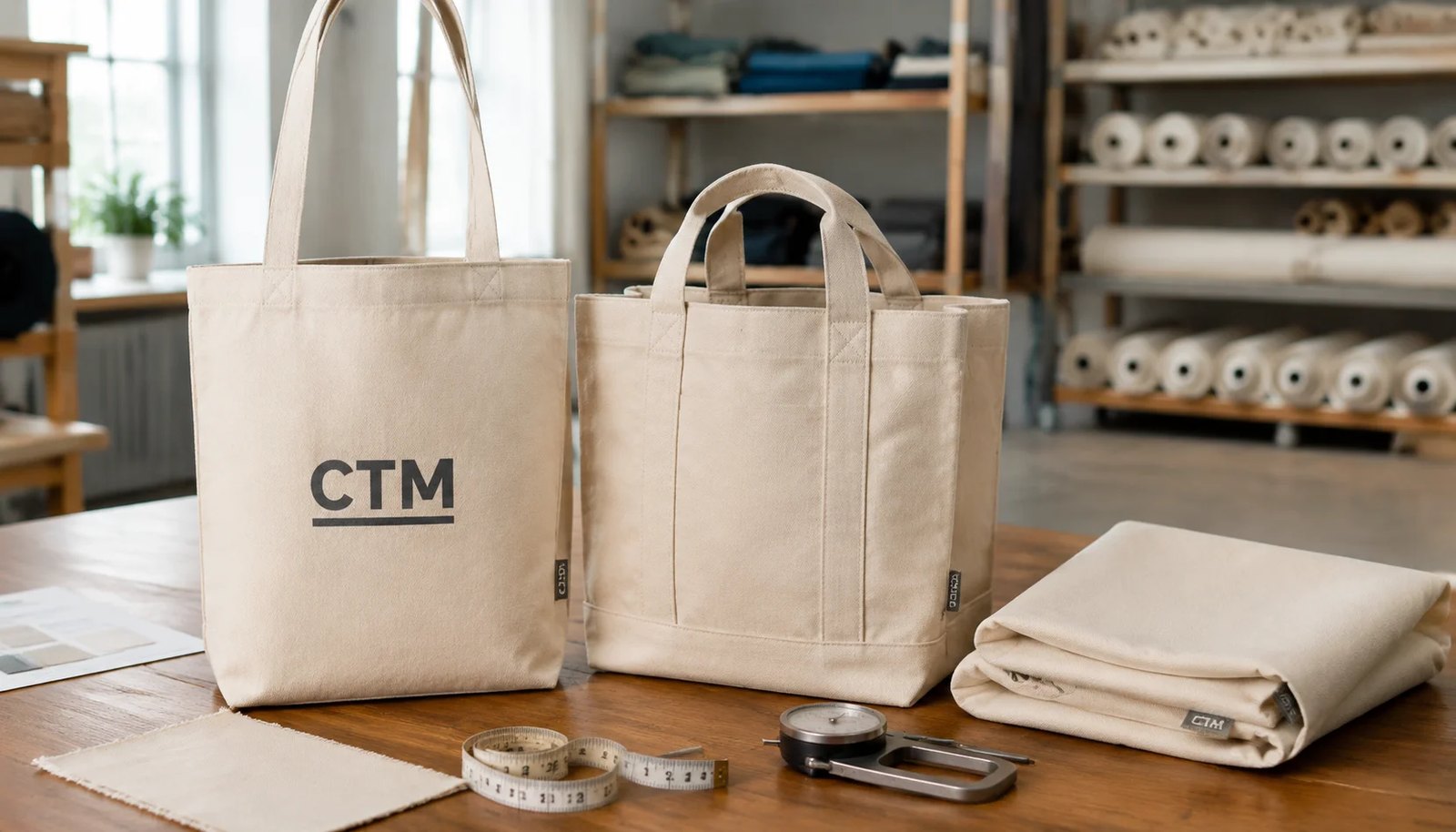
Why MOQ becomes the main cost issue on canvas grocery totes
Natural grocers usually do not buy canvas totes like a fashion brand. They buy for checkout programs, loyalty campaigns, private-label retail, regional store launches, or resale near the register. That creates moderate order quantities, frequent artwork changes, and pressure to hit a target retail price. In this situation, MOQ is not just the factory's minimum production rule. It is a mix of mill fabric availability, cutting efficiency, print setup time, labor content, and packing economics.
Many buyers focus only on unit price and miss the more expensive problem: paying for a low MOQ on the wrong specification. A factory can agree to a small run but recover margin through heavier print setup charges, downgraded fabric, inefficient packing, or a long lead time that increases freight cost later. A better negotiation starts by identifying which parts of the tote need to stay fixed and which parts can be standardized across SKUs.
- MOQ pressure is highest when you combine custom dyed fabric, heavy canvas, large gussets, and multi-color print.
- MOQ pressure drops when you use stock natural canvas, one body size, and one print method across several logos.
- The best negotiated MOQ is often tied to a repeat-order plan, not just the first PO.
- Factories are more flexible when the bag uses common fabric width and standard handle construction.
Set the spec correctly before you negotiate quantity
A vague RFQ creates fake pricing. If one supplier assumes 8 oz fabric, another assumes 10 oz, and a third quotes plain cotton instead of true canvas, your MOQ discussion becomes meaningless. For grocery totes, start with the use case: daily checkout carry, heavier pantry goods, bottle carry, or premium reusable program. Then tie that use case to GSM, gusset size, handle strength, and print coverage.
For most natural grocer programs, 280-300 GSM finished cotton canvas is the working middle ground. It feels substantial, holds shape better than lightweight cotton shopping bags, and still folds reasonably for flat packing. If the bag is meant for repeated heavy grocery loads, 340-360 GSM may be justified, but only if the retail price and freight budget can support it. Higher GSM increases not only fabric cost but also carton weight, sewing time, and sample approval scrutiny.
- Typical grocery tote body: 38-45 cm wide x 35-40 cm high x 10-15 cm gusset.
- Common handle drop: 25-30 cm for shoulder carry, with 60-70 cm total handle length depending on attachment method.
- Recommended entry spec for many grocery programs: natural cotton canvas, 10 oz class, self-fabric handles, 1-color front print, gusseted body.
- If bottle carry is a major use, consider wider gusset and reinforced bottom seams before upgrading to a much heavier fabric.
How fabric weight and stock color change factory MOQ logic
Fabric is the first real MOQ lever. If the factory or its mill already stocks natural canvas in your target weight, they can often accept a lower bag MOQ because no fresh weaving or dye run is required. Natural unbleached or standard bleached stock is usually the easiest route. Once you request a special dyed shade, washed finish, organic-only segregated stock, or a non-standard heavy weight, the material supplier starts imposing its own minimums, and the tote factory passes that pressure to you.
Buyers should separate 'factory MOQ' from 'mill MOQ.' A tote factory may be willing to sew 1,000 bags, but if the custom fabric order requires enough yardage for 3,000 bags, your real MOQ is no longer the sewing minimum. This is why natural grocer buyers often get better results by choosing stock natural canvas for launch orders, then moving to differentiated fabric only after sell-through is proven.
- Stock natural canvas usually gives the most flexible MOQ and shortest raw-material lead time.
- Heavier or uncommon GSM may need a separate mill booking even if the bag itself is simple.
- If you need multiple logo versions, keeping one fabric color and one fabric weight helps combine volume.
- Request estimated fabric consumption per bag so you can understand how mill minimums translate into piece MOQ.
Print method decisions that either help or hurt MOQ
For canvas grocery totes, screen printing remains the most practical choice for bulk retail use. It handles simple logos well, keeps repeat quality manageable, and usually gives the lowest per-unit cost after setup. It is also the easiest method for MOQ negotiation because the process is familiar and can run efficiently on standard production lines. Heat transfer, digital print, or discharge effects can make sense for special artwork, but these methods often raise setup costs or reduce throughput, so factories become less flexible on small runs.
Artwork coverage matters as much as color count. A one-color logo with a modest print area can often run on a low to moderate MOQ without resistance. A large flood print covering most of the front panel is different. It uses more ink, may require extra drying time, and increases the risk of inconsistent fill on textured canvas. In negotiation terms, that means even if the supplier accepts the same MOQ, the quoted unit price may no longer be comparable.
- Best MOQ-friendly option: 1-color or 2-color screen print on natural canvas.
- Large solid areas are harder to print cleanly on canvas than on smooth synthetic fabric.
- Printing on both sides may not double MOQ, but it often increases setup, handling, and rejection risk.
- Request artwork size in actual centimeters and note whether edge distance from seams is fixed.
Practical MOQ negotiation tactics buyers can actually use
The strongest MOQ negotiation tactic is not pressure; it is standardization. If three regional grocers each want their own logo, do not quote three separate bag constructions. Hold the body size, fabric, handle, gusset, and packing the same, then vary only the print screens. This allows the supplier to bulk buy fabric and run one cutting plan. Even if the factory still charges separate screen costs, they are more likely to reduce the effective MOQ per logo because the sewing side of production stays consolidated.
Another workable tactic is to negotiate around total annual volume rather than first-order volume. Many suppliers will not reduce the stated MOQ in writing, but they may accept a smaller launch order if you provide a realistic reorder framework tied to store rollout or seasonal replenishment. This works best when your RFQ includes target repeat cadence, not vague future potential. Procurement teams should present expected quarterly usage, not just a request for 'best MOQ.'
- Combine multiple logo variants under one shared body bag specification.
- Use stock natural canvas before requesting dyed or specialty fabric versions.
- Reduce front print coverage if the quote is being pushed up by setup and reject risk.
- Offer rolling releases against one approved master sample if your internal demand planning supports it.
- Do not over-customize inner labels, hangtags, and individual packing on the first order unless retail compliance requires it.
Read the quote like a merchandiser, not just a buyer
Two canvas tote quotes can show similar unit prices but carry very different commercial value. One may include a true 300 GSM finished canvas, reinforced handles, pre-production sample, and export-grade cartons. Another may assume lighter fabric, no bartacks, looser size tolerance, and a carton count that saves packaging cost but increases crushing risk in transit. If you negotiate MOQ aggressively without reading these details, the supplier may protect margin in places that become quality disputes later.
A useful quote review isolates variable costs from fixed costs. Fixed costs include screens, sample fees, and sometimes custom labels. Variable costs include fabric, sewing labor, printing, and packing. When a factory says the MOQ cannot move, ask which cost element is blocking flexibility. If the real issue is print setup, the answer may be one shared print position across variants. If the issue is fabric procurement, moving to stock material may unlock a lower run.
- Request a quote breakdown by fabric, print, sewing, packing, sample, and setup where possible.
- Confirm whether the quoted fabric weight is finished GSM, not greige or nominal ounce only.
- Check if individual polybags are included by default; some factories include them unless you remove them.
- Clarify whether sample fees are refundable against bulk order and at what order quantity.
Sample approval should test production risk, not just appearance
A good sample process for grocery totes is staged. First approve the fabric swatch, especially if the quote is tied to a target GSM and natural canvas tone. Then approve a printed strike-off or sample panel if the logo color is sensitive. Finally approve the pre-production sample made with actual construction details. Buyers who jump straight to a visual sample often miss whether the bulk material will match the feel, weight, and print holdout they expect.
The pre-production sample should be evaluated like a working bag, not just a sales sample. Load it, hang it, fold it, and inspect the inside seams. Natural grocer programs often live or die on repeat use. Handle comfort, seam stability, and standing shape matter as much as the front logo. If the sample uses substitute fabric or unfinished print because the supplier wanted to save time, it should not become your production approval standard.
- Measure actual finished width, height, gusset, and handle drop after sewing.
- Weigh the sample and compare it to expected fabric class and finished construction.
- Inspect print edge sharpness, opacity, and whether ink sinks unevenly into the canvas weave.
- Pull lightly on handle joints to reveal skipped stitches or weak reinforcement.
- Check if the bag folds flat enough for the intended carton count and store backroom storage.
QC thresholds for natural canvas grocery totes
Natural canvas is less visually uniform than many promotional buyers expect. Tiny cotton specks, slight tone variation, and weave irregularity can occur, especially on unbleached fabric. The right move is not to demand unrealistic perfection; it is to define what is commercially acceptable on visible panels. Procurement teams should align internal stakeholders before production so quality inspectors are not rejecting normal canvas character as if it were laminated paper or synthetic fabric.
That said, some issues are not normal and should be screened tightly: oil contamination, severe slub concentration in the print zone, crooked side seams, and handle mismatch. Canvas grocery totes often look simple, which makes defects more visible. A bag with a slightly skewed print or uneven handle drop reads low quality at retail even if the fabric itself is strong. Your QC standard should focus on functional durability and shelf consistency.
- Define major versus minor natural-fabric appearance variation before inspection begins.
- Set visible front-panel stain tolerance to zero for major marks, especially on natural canvas.
- Use a simple load test standard appropriate to the bag size and intended use.
- State allowable print registration shift if more than one color is used.
- Reject bags with twisted handles, open seam ends, or missing reinforcement stitches.
Packing decisions can wipe out savings from a lower MOQ
Packing is often treated as an afterthought, but it directly affects landed cost and store operations. Individually polybagging every grocery tote may look tidy in a quote, yet it adds material, labor, and waste. For many natural grocer programs, flat packing in bundles inside export cartons is the better route. It lowers cost, reduces unnecessary plastic, and makes shelf replenishment easier. The key is to define bundle count and carton fill so the bags do not become badly creased or compressed.
Carton planning also matters for import efficiency. If a heavy 12 oz canvas tote is packed too densely, carton gross weight rises quickly and warehouse handling becomes less practical. If cartons are too underfilled, container utilization suffers. Buyers should request bag weight and proposed carton dimensions early, especially when comparing suppliers from different sourcing regions or factories with different packing habits.
- Typical commercial route: flat pack, counted bundles, master export carton, no retail insert unless required.
- If individual protection is needed, consider bundle-level poly instead of one polybag per piece.
- Request carton gross weight and dimensions before approving final packing.
- Specify whether carton marks need SKU, PO, destination store code, or bilingual labeling.
Lead time, capacity windows, and schedule risk during MOQ negotiation
MOQ and lead time are connected. A supplier may agree to a lower quantity but place your order into an open slot between larger runs, which can extend completion time. Another factory may promise fast delivery on a small order but only if standard material is used and the print schedule is simple. Procurement teams should avoid treating the MOQ discussion as separate from capacity planning. A slightly higher MOQ from a factory with stable scheduling can be cheaper overall than a lower MOQ that misses your retail reset date.
The most common schedule mistake is approving the purchase before sample closure and packing details are finalized. Small unresolved points, such as changing the handle drop or shifting from one-color to two-color print, can push the order back because screens, markers, or carton planning must be revised. Build enough time for sample review, correction, and final approval before your ex-factory target. That is especially important if the bags are tied to store openings, Earth Day promotions, or seasonal private-label launches.
- Break lead time into material, sampling, print setup, sewing, inspection, and booking stages.
- Ask if your order will run on a dedicated line or be inserted between larger customer orders.
- Confirm whether the quoted lead time starts after sample approval or after deposit receipt.
- Leave buffer for artwork revision and print strike-off on textured natural canvas.
Specification comparison for buyers
| Spec decision | Recommended option | When it fits | Buyer risk to check |
|---|---|---|---|
| Base fabric weight | 10 oz canvas (about 280-300 GSM) | Best balance for natural grocery retail bags that need structure without oversized carton weight | Some suppliers quote lower GSM plain weave and still call it canvas; require finished GSM tolerance and fabric swatch approval |
| Heavy-duty fabric upgrade | 12 oz canvas (about 340-360 GSM) | For larger basket-style shopping totes, bottle carry use, or premium store programs with repeated reuse claims | MOQ may rise if the mill does not stock that weight in natural color; handle seam reinforcement becomes more critical |
| Bag construction | Bottom and side gusset, boxed grocery shape | Works for produce, packaged goods, and checkout use where fill volume matters more than flat promo appearance | Quoted size may ignore finished seam loss; confirm finished width x height x gusset after sewing, not cut-panel size |
| Print method | 1-2 color screen print on natural canvas | Most cost-efficient route for chain grocers, co-ops, and distributors ordering repeat runs | Large ink coverage can increase reject risk on uneven canvas texture; request print placement tolerance and strike-off |
| Artwork complexity | Keep logo under 30% front panel coverage | Helps lower setup waste and keeps unit pricing stable at moderate MOQ | Dense flood areas can require underbase or extra passes, pushing both MOQ and unit cost higher |
| Handle specification | Self-fabric handles, 2.5-3 cm wide, cross stitch plus bartack | Standard choice for grocery bags carrying medium loads and for easier factory sourcing | Some quotes omit bartacks or use shorter stitch length savings; request handle attachment photos from pre-production sample |
| Packing route | Flat packed in export carton, no individual polybag unless required | Best for lower landed cost and sustainability-focused retail programs | Without clear bundle count and carton fill limit, bags may arrive creased or cartons may exceed warehouse handling limits |
| MOQ negotiation strategy | One body size across multiple logo variants | Useful when store groups or regional grocers want separate branding but shared construction | Some factories count each print colorway as a separate MOQ if print setup changes; settle this before PO issue |
| Lead-time planning | Bulk order after approved pre-production sample and print strike-off | Reduces dispute risk when natural canvas shade and artwork placement are sensitive | Trying to compress sampling into production usually causes rework, delayed vessel booking, or unauthorized substitutions |
Buyer checklist before sampling
- Define finished bag size in centimeters or inches and state that dimensions are after sewing, not cut-panel size.
- Specify fabric as cotton canvas with target finished GSM range, such as 280-300 GSM for 10 oz class.
- State whether the bag must be natural canvas, dyed canvas, or recycled content, because material choice changes MOQ logic.
- Include gusset requirement and whether the gusset is side only or bottom plus side.
- Set handle length, width, attachment method, and whether bartack reinforcement is mandatory.
- Provide artwork size, print colors, print side count, and maximum acceptable placement tolerance.
- Note if ink must meet a retailer restricted substances policy or if low-odor water-based ink is preferred.
- Request sample path: blank material swatch, printed lab-dip equivalent if dyed, then pre-production sample.
- Define packing method, carton size target, bundle quantity, and whether individual polybags are prohibited.
- State order split needs if multiple store brands or SKUs will share one fabric and construction run.
Factory quote questions to send
- What is the true MOQ by bag construction, by fabric color, and by print colorway?
- Is the quoted fabric from stock greige or a fresh mill run, and what finished GSM tolerance will you guarantee?
- Does the price include screen charges, print setup, and pre-production sample, or are these billed separately?
- How many print passes are included for the artwork coverage shown in the RFQ?
- What handle reinforcement is included: box stitch, cross stitch, bartack, or a combination?
- Can one shared body bag be split across multiple logo versions without separate full MOQ per logo?
- What carton quantity and carton dimensions are assumed in the quote?
- What is the estimated bag weight per piece and carton gross weight for freight planning?
- What lead time applies after artwork approval and deposit, and what factors can extend it?
- What quality standard is used for print placement, seam tolerance, and visible stains on natural canvas?
Quality-control points to confirm
- Finished fabric GSM within agreed tolerance, typically plus or minus 5% unless otherwise specified in the PO.
- Finished bag dimensions within agreed tolerance, commonly plus or minus 1 cm on width and height and plus or minus 0.5-1 cm on handle drop depending on design.
- Print placement centered within approved tolerance, often plus or minus 5 mm to 10 mm based on artwork size.
- Print color matched to approved visual standard under agreed light source; note that natural canvas tone affects perceived color.
- No major oil marks, mildew smell, rust stains, or dark weaving contamination on visible front panels.
- Handle attachment must show required stitch pattern and no skipped stitches, loose thread chains, or seam opening under light load test.
- Gusset seams straight and balanced so the bag stands properly when opened; severe twisting should be rejected.
- Carton packing count must match PO and bundle method must prevent top-handle distortion during transit.