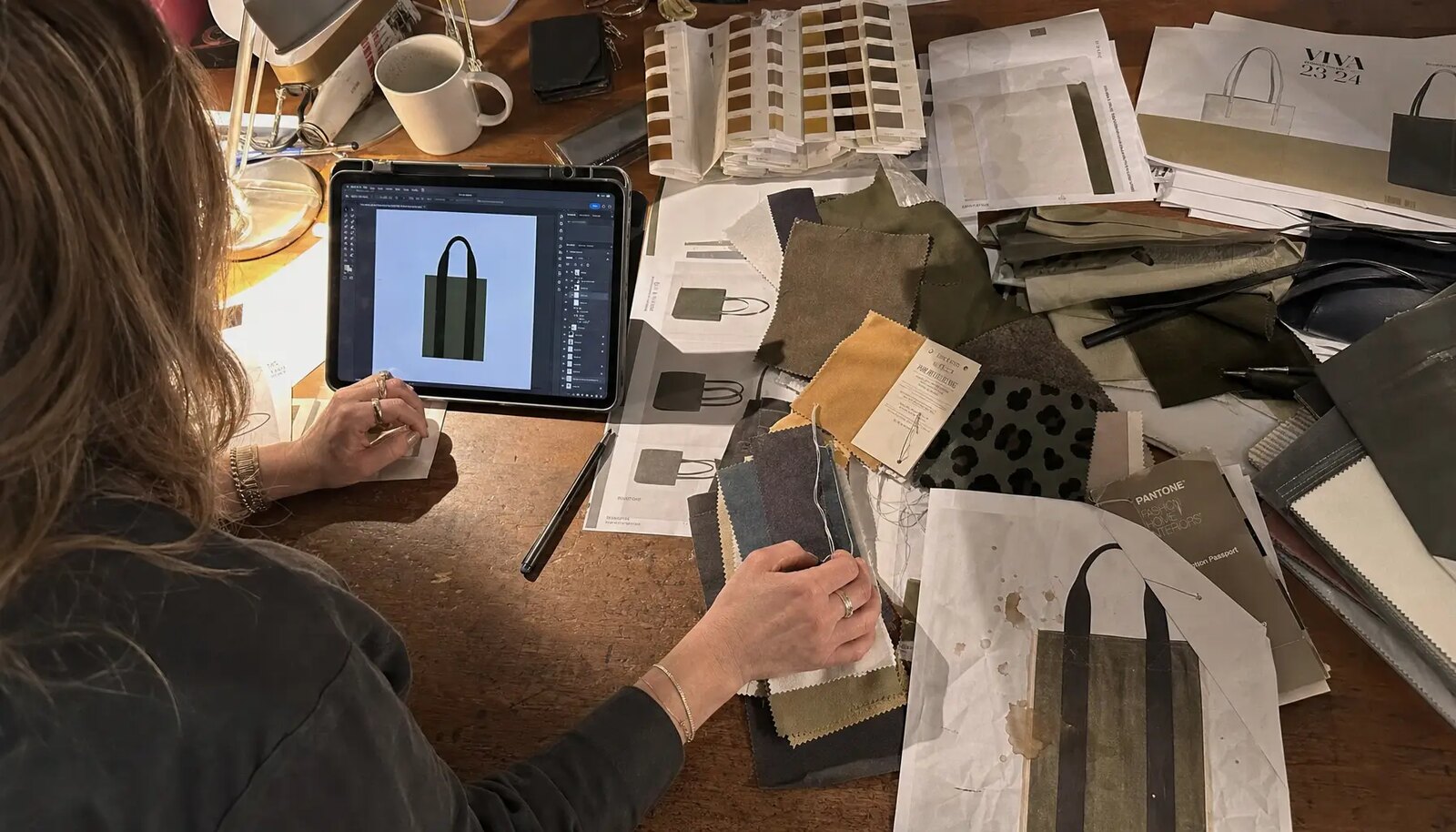
Start with the tote’s commercial job
A coffee roaster may buy the same general product name, canvas grocery tote, for very different programs. A café resale tote has to look good on a merch wall and survive repeated use. A gift-with-purchase tote must feel credible under the roaster’s logo but may not need retail hangtags. A holiday bundle tote may need to hold coffee bags, syrups, cups, and a brewer box without collapsing. An event tote may prioritize delivery date, clean print, and simple receiving.
MOQ negotiation improves when the supplier understands this job. If the tote will be sold, protect the visible and functional features: canvas hand-feel, handle comfort, seam strength, print alignment, and clean folding. If it is used for a one-time promotion, simplify decoration and packing first, not the reinforcement that keeps the bag usable. Customers remember a torn handle more than they remember whether the tote had an inside pocket.
The goal is not the lowest possible unit count at any quality. It is the lowest repeatable MOQ for a bag that can be sampled, inspected, received, and reordered without drifting away from the approved standard. Tie every negotiation to the in-hand date, sales channel, target landed cost, and reorder plan.
- Define the program type before asking for price.
- Separate resale, gifting, event, subscription, and wholesale requirements.
- Protect fabric, handles, seams, and print quality before optional features.
- Negotiate a repeatable specification, not a one-off cheap run.
Build an RFQ that removes quote ambiguity
Terms like heavy canvas, premium tote, and strong grocery bag create inconsistent quotations. One supplier may price 10 oz cotton, another may price 12 oz finished canvas, and another may quote 12 oz greige fabric before finishing. All three may look similar in a spreadsheet while representing different products.
Write the RFQ as a compact technical brief. Include finished width, height, gusset depth, handle length, handle width, shoulder drop, fabric weight in oz and GSM, print method, artwork size, print location, packing format, carton marks, and target Incoterm. State whether dimensions are measured flat, opened, or as finished outside dimensions after sewing and pressing.
For coffee roasters, the bag size should be tested against actual products. A common grocery-style starting point is around 14 in. wide x 16 in. high x 6 in. deep, but it should be checked against 12 oz coffee bags, 1 lb bags, canned coffee, bottles, cups, brewer boxes, and gift sets. Oversizing feels safe on paper but can increase fabric use, carton cube, freight, and shelf bulk.
Ask suppliers to quote the same specification at several quantities. A quote ladder at 300, 500, 1,000, and 2,000 pieces often shows whether the MOQ pressure comes from fabric purchase, print setup, sewing efficiency, or commercial preference.
- Give finished dimensions, not only a mockup image.
- State fabric weight in both oz and GSM.
- Define handle length, width, shoulder drop, and reinforcement.
- Specify print method, color count, artwork size, and placement tolerance.
- Request quantity breaks on the same specification.
Use realistic MOQ bands as a benchmark, not a promise
MOQ varies by supplier, country, material availability, season, and decoration method, so no universal number is safe. Still, procurement buyers need benchmarks to judge whether a quote is reasonable. For stock blank totes decorated domestically, very small runs can sometimes be possible, but the buyer usually accepts limited control over fabric, handle construction, gusset size, and packing. For custom overseas production, the first practical band is often higher because fabric sourcing, cutting, sewing, export packing, and inspection must be coordinated.
As a working benchmark, a stock-color unlined canvas grocery tote with one-color print may be negotiable around 300 to 500 pieces with some suppliers, especially if setup fees are charged separately. A more stable custom-production range is often 500 to 1,000 pieces. Better price efficiency usually starts around 1,000 to 2,000 pieces, where fixed setup and line-efficiency costs are spread across more units. Custom dyed canvas, multi-color printing, embroidery, retail packing, or multiple SKUs can push minimums higher.
Use these bands to guide questions, not to force a supplier into an unrealistic commitment. If a factory says the MOQ is 1,000 pieces, ask what happens at 500 pieces: higher unit price, separate screen fee, stock fabric only, reduced color options, or delayed production until fabric can be combined with another order. The answer tells you whether the constraint is real or negotiable.
- Domestic decorated blanks may suit tests below custom-production quantities.
- Custom overseas runs are often more efficient from 500 to 1,000 pieces upward.
- 1,000 to 2,000 pieces often produces clearer price breaks.
- Custom dyeing, retail packing, and multiple decoration steps usually raise MOQ.
- Ask what changes at a lower quantity instead of asking only for a lower MOQ.
Fabric weight and color are the first MOQ levers
Fabric is often the largest MOQ driver. A 12 oz finished canvas, approximately 407 GSM, is a balanced choice for many coffee roaster grocery totes. It gives more body than lightweight promotional cotton while keeping sewing difficulty, folding bulk, carton weight, and freight under control. A 14 oz finished canvas, approximately 475 GSM, can feel more premium, but it raises material cost and may reduce carton efficiency.
Stock fabric is easier to negotiate than custom fabric. Natural, ecru, black, and common stock dyed canvas reduce dye-house minimums, lab dip cycles, shade approvals, and lot-control risk. Custom dyed canvas may be justified for a mature retail program with strong brand-color requirements, but it is rarely the best first-run choice when MOQ is tight.
Clarify finished weight versus greige weight. Finishing, dyeing, washing, and shrinkage can change weight, width, and hand-feel. Request GSM because it can be verified through a cut-and-weigh check. Agree on tolerance before deposit, such as +/-5% GSM when appropriate for the fabric and construction.
For natural cotton, approve a real swatch. Natural canvas can vary from creamy to greyish depending on cotton source and finishing. That base shade affects how black, brown, cream, copper, or green roaster logos appear after printing.
- Use 12 oz finished canvas for a balanced retail grocery tote.
- Sample 14 oz only when premium feel or load requirement justifies it.
- Choose stock fabric colors to reduce dye-related MOQ pressure.
- Approve a physical swatch, especially for natural cotton shade.
- Set GSM tolerance and shade reference in the PO.
Decoration choices can make or break the minimum
For first orders, one-color screen print on one face is usually the lowest-risk branded option. It uses one screen, one ink, one setup, and one main inspection point. A simple roaster mark on natural canvas can look premium without adding registration risk or extra components.
Multi-color screen printing adds alignment, drying, and inspection work. Fine text, gradients, distressed artwork, and reversed details may not reproduce cleanly on textured cotton. Heat transfer can handle more complex graphics, but it changes hand-feel and needs durability checks. Embroidery, patches, woven labels, and appliqué may add retail value, yet each brings component minimums and extra QC points.
If MOQ is tight, simplify artwork before weakening the bag. Reduce color count, remove the second-side print, skip the inside logo, and avoid custom labels or hangtags until volume supports them. Do not cut handle reinforcement or move to a canvas that no longer fits the retail purpose.
A physical strike-off is essential. A PDF proof can confirm spelling and scale, but it cannot show ink absorption, opacity, edge spread, curing, or how the print looks on the approved fabric shade.
- Start with one-color, one-position screen print when possible.
- Use physical strike-offs for print approval.
- Avoid small text and tight registration on textured canvas unless tested.
- Measure placement from seams, top edge, or centerline.
- Write print placement tolerance in millimeters.
Specify construction without overbuilding the tote
A useful coffee roaster grocery tote does not need every retail-bag feature. For many programs, an unlined gusseted body is the best starting point. It provides capacity for coffee and grocery items while keeping cutting, sewing, and inspection efficient. Linings, zippers, snaps, interior pockets, and base inserts may be worthwhile for higher-priced retail merchandise, but they can quickly raise MOQ and unit cost.
Handles deserve more attention than decorative extras. Load concentrates where the handle meets the body, so specify material, width, finished length, shoulder drop, attachment position, and reinforcement. Common choices include cotton webbing or self-fabric handles, often 1 to 1.5 in. wide, with X-box stitching, bar-tacks, or reinforced double stitching depending on the design.
Ask the factory to recommend stitch density and seam construction for the fabric weight. Many canvas totes use a moderate stitch density, often around 7 to 10 stitches per inch depending on material, thread, machine setup, and seam type. Too few stitches can weaken the seam; too many can perforate heavier cotton. Approve the standard in the sample rather than relying on generic wording.
Test the sample loaded. Put in the products the tote will actually carry: coffee bags, bottles, cups, boxed brewers, and grocery items. Check whether the gusset opens cleanly, the bottom sits flat, the handles twist, or the print distorts during use.
- Prioritize gusset shape, bottom seam, top hem, and handle attachment.
- Define handle material, width, length, drop, and reinforcement.
- Test the sample with realistic coffee and grocery loads.
- Add base inserts only when shelf presentation requires them.
- Remove lining, zippers, pockets, and snaps before cutting structural quality.
Choose the supplier route by volume, timing, and control needs
The best supplier route depends on order size and how much control the roaster needs. A domestic decorator or merch vendor is often the fastest route for urgent tests, market launches, or very small runs using available blank totes. The tradeoff is limited control: blank inventory determines fabric weight, gusset depth, handle quality, and color options.
An overseas tote factory is usually stronger for repeat retail programs, consistent construction, custom sizing, and planned reorders. A factory that controls cutting, sewing, packing, and ideally printing can explain whether the minimum is driven by fabric purchase, print setup, line efficiency, or export handling. This route works best when the buyer can allow sampling and production lead time.
A trading company can be useful when a roaster or distributor is buying multiple products, consolidating shipments, or lacking bandwidth to manage factory details. The risk is reduced visibility. Ask which steps are handled directly and which are outsourced, and make sure sample approval, inspection, corrective action, and packing accountability are clear.
For a rough decision: use domestic decorated blanks for small urgent tests; use a direct factory for planned 500 to 2,000+ piece custom programs; use a trading company when consolidation, project management, or multi-item sourcing is more important than maximum factory transparency.
- Use domestic decorators for urgent tests or very small runs.
- Use factories for repeatable specifications and transparent MOQ drivers.
- Use trading companies when consolidation and management support matter.
- Ask who controls fabric, print, cutting, sewing, inspection, and packing.
- Match the route to reorder strategy, not only the first PO.
Negotiate the cost stack, reorder plan, and quote outcome
A useful MOQ negotiation separates cost, setup, and risk. Canvas tote pricing includes fabric, cutting, printing, sewing, thread, trims, labels, packing material, cartons, inspection, overhead, and export handling. If all costs are hidden in one unit price, the buyer cannot see which lever matters.
Ask for scenarios. For example, compare a 500-piece first run using stock natural 12 oz canvas, one-color front print, and bulk packing against a 1,000-piece run with the same specification. If the 1,000-piece price is meaningfully lower, the buyer may place 500 now and schedule a reorder, or commit to a larger run if demand is confirmed. If the price barely changes, the MOQ may be driven by fixed material or setup constraints rather than sewing efficiency.
Compare quote outcomes by landed cost per usable tote, not just ex-factory unit price. A cheaper 14 oz tote may lose its advantage if it creates heavier cartons and higher freight. A slightly higher unit price may be better if the carton cube is lower, packing is cleaner, and rejection risk is reduced.
Setup fees are not the same as MOQ. A supplier may accept a smaller first run if screens, strike-offs, samples, barcode setup, or carton mark setup are charged separately. For reorders, ask whether screens, cutting patterns, plates, and labels can be reused and how long they are stored. This can make the second PO faster and cleaner.
- Request separate charges for samples, screens, labels, and packing.
- Compare quotes on the same Incoterm basis, such as EXW or FOB.
- Ask for 500 vs 1,000 vs 2,000 piece price breaks on the same spec.
- Reduce optional complexity before reducing fabric or handle quality.
- Evaluate landed cost per usable tote, not only unit price.
Use sampling to lock the production standard
A PDF proof is useful for spelling, logo scale, and approximate placement, but it cannot approve the product. Canvas shade, hand-feel, ink opacity, gusset behavior, handle comfort, seam strength, odor, and folding must be judged physically.
A practical path is fabric swatch or print strike-off, then pre-production sample, then sealed golden sample. If an early prototype uses substitute fabric, label it as a fit or construction sample only. Do not let it become the bulk quality standard by accident.
The golden sample should be dated and linked to the final quote or purchase order. It should lock fabric shade, fabric weight, dimensions, gusset, handles, reinforcement, print size, print placement, trims, folding, packing, and carton labeling method. Reorders should reference this sample unless a change is intentional and documented.
Measure sample feedback. Instead of saying the handle is too long, state the current handle length and target shoulder drop. Instead of saying the logo feels low, state the required distance from top edge or centerline. Measurable comments reduce revision cycles and protect the production schedule.
- Do not approve production from a PDF proof alone.
- Use strike-offs to approve ink on actual canvas.
- Measure revisions instead of writing subjective comments.
- Keep one sealed golden sample for production and inspection.
- Reference the golden sample on the PO and reorder documents.
Set QC, AQL, and shipment-release rules before deposit
Quality control should be objective enough for the factory, buyer, and inspector to apply the same standard. Without written tolerances, disputes become subjective: the logo is low, the canvas feels light, or the handles look weak. Put measurable standards on the PO before deposit.
For many commercial soft-goods inspections, buyers may use an AQL plan such as 2.5 for major defects and 4.0 for minor defects, or another agreed standard based on risk and order size. The exact plan should be confirmed with the supplier and inspector before production. Critical defects should have zero tolerance.
Define defects in advance. Critical defects may include mold, contamination, sharp objects, unsafe components, severe odor, or wrong product. Major defects may include open seams, missing reinforcement, wrong dimensions beyond tolerance, unacceptable stains, wrong print, wrong fabric weight, broken handles, incorrect SKU packing, or missing required labels. Minor defects may include small thread tails, slight wrinkles, or minor stitch variation within the approved standard.
Set practical pass/fail checks. A handle-load check should fail if seams open, bar-tacks break, handles tear, or the bag becomes unusable under the agreed representative load. A print rub check should fail if obvious ink transfers to a clean white cloth after curing. An odor check should fail for mildew, sour storage smell, or strong chemical odor. Carton labeling should fail if SKU, quantity, destination, barcode, or country-of-origin information is missing or wrong.
Inspection timing matters. Check fabric and print strike-offs before bulk production, perform inline review when the first finished pieces come off the line, and conduct final inspection on packed cartons before balance payment or shipment release. Inline inspection is especially useful for first orders, heavy decoration, or tight seasonal deadlines.
- Set critical, major, and minor defect definitions.
- Use an agreed AQL plan or documented inspection method.
- Write tolerances for GSM, dimensions, handles, print, and packing.
- Inspect filled bags, print rub, odor, carton labels, and SKU counts.
- Use inline inspection when early correction is worth the cost.
Specification comparison for buyers
| MOQ lever | Buyer-friendly specification | Why it helps negotiation | Control point before PO |
|---|---|---|---|
| Fabric weight | 12 oz finished canvas, approx. 407 GSM, for most retail grocery totes; 14 oz, approx. 475 GSM, only when the premium hand-feel or heavier load case justifies it | Common finished weights are easier to source and quote consistently than unusual custom weights | Confirm finished weight vs greige weight and set a GSM tolerance, such as +/-5% when suitable |
| Canvas color | Natural, ecru, black, or confirmed stock dyed canvas for first runs | Stock colors avoid custom dye minimums, lab dips, shade approvals, and added lead time | Approve a physical swatch and define acceptable shade range against the approved sample |
| Bag size | A practical grocery format around 14 W x 16 H x 6 D in., adjusted around actual coffee bags and carton efficiency | Standard pattern shapes improve cutting yield and sewing-line familiarity | Confirm finished outside dimensions after sewing and pressing; avoid oversized bags that inflate freight |
| Handles | Cotton webbing or self-fabric handles, 1 to 1.5 in. wide, with X-box stitching and/or bar-tacks | Standard reinforced handles are repeatable without adding unnecessary trim complexity | Specify handle length, shoulder drop, stitch pattern, and loaded sample test |
| Print method | One-color screen print on one face for low-risk first orders | One screen, one ink, and one placement reduce setup, registration risk, and inspection time | Approve a physical strike-off on actual canvas for opacity, edge clarity, curing, and hand-feel |
| Construction | Unlined gusseted body with clean internal seams; optional base insert only if needed for shelf presentation | Unlined construction keeps labor, material, and inspection points controlled | Do not add lining, zippers, pockets, snaps, or inserts unless the sales channel values them |
| Packing | Bulk packed by SKU for internal, event, distributor, or inventory orders; retail pack only when required | Bulk packing reduces folding labor, labels, plastic, carton volume, and rework | Specify pieces per bundle, pieces per carton, carton marks, barcode rules, and COO labeling |
| Sampling | Swatch or strike-off, pre-production sample, then sealed golden sample | Clear approvals reduce supplier uncertainty and late specification changes | Golden sample must lock fabric, dimensions, print, handles, trims, folding, and packing |
Buyer checklist before sampling
- Define the commercial use: café resale, gift-with-purchase, subscription add-on, event tote, wholesale merch bundle, loyalty item, or holiday packaging.
- Set target landed cost, target retail price if applicable, and required in-hand date before requesting quotes.
- Specify finished canvas weight in oz and GSM, with tolerance and whether weight is finished or greige.
- Choose stock natural, ecru, black, or stock dyed fabric before considering custom dyeing.
- Lock finished width, height, gusset depth, handle length, handle width, shoulder drop, and measurement method.
- Choose decoration early: one-color screen print, multi-color screen print, heat transfer, embroidery, woven label, patch, hangtag, or no decoration.
- Keep first-run branding simple if MOQ is tight: one logo, one color, one position, no inside print, and no custom woven label unless necessary.
- Request MOQ options, such as 300, 500, 1,000, and 2,000 pieces, with the same specification so price breaks are comparable.
- Ask for a physical pre-production sample using approved canvas, final print method, final handle construction, and representative packing.
- Ask for separate charges for samples, screens, strike-offs, artwork adjustment, labels, hangtags, barcodes, carton marks, and retail packing.
Factory quote questions to send
- What canvas weight are you quoting, and is it finished fabric weight or greige fabric weight?
- What GSM value and production tolerance will you accept for the quoted fabric?
- Is the canvas stock natural, stock dyed, or custom dyed, and how does each option change MOQ, price, sampling time, and lead time?
- What is your MOQ by fabric color, fabric weight, print method, artwork color count, construction, and packing format?
- Can you quote the same tote at 300, 500, 1,000, and 2,000 pieces so we can see the price break and setup impact?
- If we use one stock body color and one-color front screen print, what is the lowest realistic MOQ without reducing fabric quality or handle reinforcement?
- Which steps do you control in-house: fabric sourcing, cutting, printing, sewing, trimming, inspection, packing, and carton preparation?
- Are sample fees, screen charges, strike-off charges, artwork adjustment, label setup, barcode setup, and carton mark charges included or separate?
- Can screens, cutting patterns, plates, or labels be reused for reorders, and how long do you store them?
- What exact body dimensions, gusset depth, handle length, handle width, shoulder drop, and reinforcement method are included?
Quality-control points to confirm
- Fabric weight: agree on an acceptable GSM range, commonly around +/-5% when appropriate, and verify with a cut-and-weigh check from bulk fabric.
- Canvas shade: approve a physical swatch for natural, ecru, black, or dyed canvas because base shade affects logo contrast and may vary by lot.
- Fabric defects: inspect for holes, stains, oil marks, mildew marks, severe weaving faults, unacceptable slubs, odor, and shade mismatch.
- Shrinkage and finishing: ask whether fabric is washed, preshrunk, sanforized, or otherwise finished; confirm finished bag dimensions after sewing and pressing.
- Dimensional tolerance: set measurable limits for width, height, gusset, handle length, handle width, and pocket or base insert size if included.
- Print placement: define offset from centerline, top edge, pocket edge, or seam in millimeters; for a simple front print, +/-5 mm may be practical when the design allows.
- Print quality: approve a strike-off on actual canvas and check opacity, bleeding, pinholes, cracking risk, edge clarity, and readability.
- Print curing and rub resistance: rub the print surface with a clean white cloth and reject obvious ink transfer, tackiness, strong solvent odor, or incomplete drying.
- Seam and handle strength: inspect handle attachment, side seams, bottom seam, gusset corners, top hem, and bar-tacks with the bag filled, not only flat.
- Loaded-use check: fill samples with representative coffee and grocery weight; fail obvious seam opening, handle tearing, severe distortion, or uncomfortable handle twist.