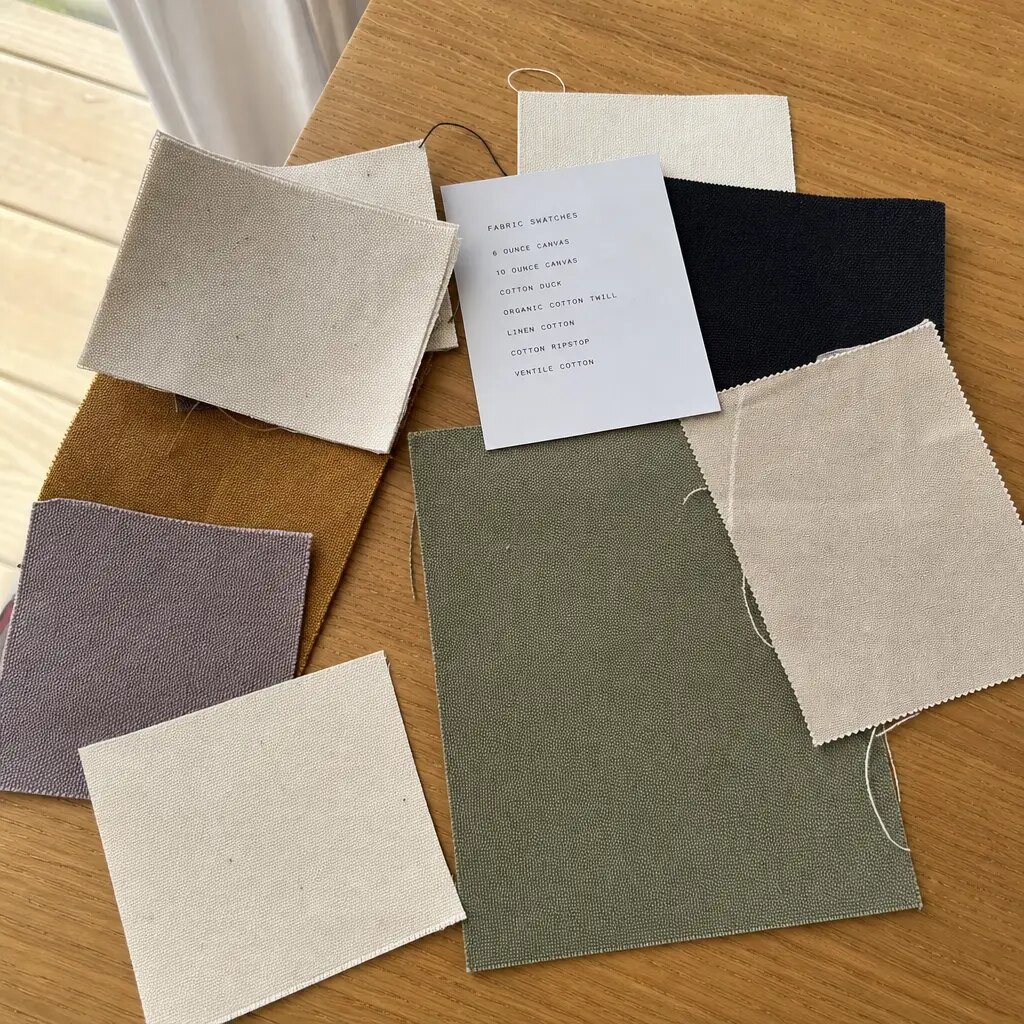
Why MOQ negotiation is different for craft fair grocery totes
Canvas grocery totes for craft fairs are usually not ordered like a single national retail SKU. A buyer may need several artwork versions for different makers, regional shows, seasonal markets, or sponsor logos. The commercial problem is simple: the event team wants variety, while the factory wants stable material purchasing, efficient cutting, and uninterrupted printing. A good MOQ negotiation does not push the factory to accept an unrealistically low number; it separates which parts of the tote can be standardized and which parts can vary.
For canvas grocery totes, MOQ pressure normally comes from fabric roll usage, printing setup, sewing line efficiency, and packing complexity. If every design uses a different fabric weight, body color, handle length, and carton label, the supplier has to treat them as separate small productions. If the buyer standardizes the body and negotiates variation only in the front print, the same total quantity becomes easier to quote and safer to produce.
- Best MOQ lever: keep one bag size, one fabric color, one handle specification, and one packing method.
- Costly MOQ splitter: different bag colors, different fabric weights, different handle styles, or individual retail packaging by design.
- Practical RFQ wording: state total program quantity and quantity per artwork so the factory can quote both combined and split MOQ logic.
Start with the bag specification before negotiating quantity
MOQ discussions become vague when the tote is described only as a canvas grocery bag. A factory needs finished dimensions, fabric weight, handle style, stitching details, print area, and packing method before it can decide whether a lower MOQ is workable. A 38 x 42 cm flat tote in 8 oz canvas is not the same production job as a 40 x 35 x 15 cm gusseted grocery tote in 12 oz canvas with long handles.
For craft fair use, most buyers choose a practical grocery size with enough width for packaged goods, folded textiles, books, candles, or small handmade items. A gusset improves function but increases cutting panels, sewing time, and carton cube. If the tote will be sold as merchandise, a heavier fabric and cleaner finishing matter more. If it is a booth giveaway, weight and price may matter more than structure.
- Common grocery tote range: 35-42 cm width, 35-45 cm height, 10-18 cm gusset.
- Handle length: short hand-carry around 35-40 cm; shoulder carry often around 55-65 cm depending on bag height.
- Fabric range: 8 oz for budget events, 10-12 oz for dependable grocery use, 14 oz for premium resale.
- Stitching: lockstitch seams with reinforced handle attachment; overlock or binding can be specified depending on finish level.
Fabric weight and GSM drive MOQ more than many buyers expect
Canvas is often quoted in ounces, but factories and mills may control it by GSM. For buyer comparison, 8 oz is roughly 270 GSM, 10 oz roughly 340 GSM, 12 oz roughly 407 GSM, and 14 oz roughly 475 GSM. These are not exact conversions for every weave, but they give procurement teams a useful benchmark. When one supplier quotes 10 oz and another quotes 10 oz with a looser weave, the hand feel and strength may still differ.
MOQ can rise when a fabric is custom dyed, bleached to a special shade, organic-certified, or not available from the supplier's regular fabric stock. Natural cotton canvas usually gives better MOQ flexibility than custom colors. However, natural canvas can show seed specks and shade variation. For craft fair aesthetics, that may be acceptable or even desirable; for a clean retail brand, the buyer should define the acceptable level before production.
- Use stock natural canvas when the main target is lower MOQ and faster lead time.
- Use custom dyed canvas only when brand color consistency is worth the higher fabric MOQ and longer schedule.
- Define whether natural slubs, seed specks, and minor shade variation are acceptable.
- Request the same fabric quality in the pre-production sample that will be used for bulk cutting.
How print method changes MOQ, cost, and approval risk
For canvas grocery totes, screen printing is usually the most stable method for simple logos, one-color graphics, and medium to large quantities. The print has good opacity when ink and mesh are chosen properly, and the unit cost improves as quantity increases. The MOQ challenge is that each artwork and each color may need separate screens, setup labor, and print line cleaning. A low total MOQ split across many designs can become expensive even if the bag body is identical.
Digital print, DTF transfer, and heat transfer can help when artwork has gradients, many colors, or small design runs. These methods can reduce screen setup barriers, but they introduce different risks: hand feel, edge finish, wash or rub resistance, and adhesion on textured canvas. For craft fairs, where designs may be decorative and seasonal, transfer methods can be practical, but they should be tested on the actual canvas weight before bulk approval.
- One-color screen print: best for simple logos and predictable cost.
- Multi-color screen print: good for repeat programs but setup-heavy for small design splits.
- DTF or heat transfer: useful for colorful low-volume artwork but needs adhesion and hand-feel approval.
- Embroidery: premium look but usually slower, more expensive, and less common for large grocery tote graphics.
- Print position tolerance: define acceptable movement, such as +/-5 mm to +/-10 mm depending on design and bag size.
MOQ negotiation tactics that do not damage production quality
The safest MOQ negotiation is not simply asking for a lower number. It is offering the factory a production structure that reduces its risk. For example, 1000 pieces total across five prints may be workable if all prints use the same natural 10 oz canvas tote, same handle, same print size, and same packing. The same 1000 pieces may be unattractive if it becomes five fabric colors, five print techniques, and five carton specifications.
A buyer can also negotiate step pricing rather than forcing one minimum. Request quotes at 300, 500, 1000, and 2000 pieces, with a clear note on whether the quantity is per artwork or total program volume. This helps the team see where the real cost break happens. Sometimes the difference between 500 and 1000 pieces is small because fabric and screen setup are already absorbed. Other times, the price drops only after fabric roll usage becomes efficient.
- Offer a combined body MOQ with separate artwork setup charges.
- Keep print size consistent across designs to avoid multiple screen sizes or transfer layouts.
- Use shared carton marks with an artwork code sticker instead of fully different printed cartons.
- Accept standard handle length if it avoids a new cutting and sewing template.
- Avoid negotiating away the pre-production sample; low MOQ orders have less room for correction after bulk starts.
Sample approval should close the gap between quote and production
A craft fair tote order often moves quickly, so buyers are tempted to approve from photos or an old supplier sample. That is risky when MOQ has been negotiated tightly. The sample should prove the actual fabric weight, bag size, handle strength, print method, print position, and packing fold. A sample made from available fabric is useful for shape review, but it should not be treated as final approval if bulk fabric will differ.
The pre-production sample should be measured and photographed with a ruler, weighed if needed, and compared against the RFQ. Print color should be checked under consistent lighting, preferably with Pantone or physical color reference if brand matching matters. For natural canvas, color matching should allow fabric shade influence; a white ink or light ink may not appear the same as it does on paper artwork.
- Measure finished width, height, gusset, handle length, and handle drop.
- Check seam alignment, handle reinforcement, stitch density, and loose thread level.
- Rub the print surface with a dry white cloth and, if relevant, a damp cloth after curing.
- Fold the sample as it will be packed and confirm the print does not crack or block.
- Approve a sealed sample or detailed sample report before bulk cutting and printing.
Packing choices affect MOQ, freight, and craft fair distribution
Packing is often treated as an afterthought, but it changes labor time and landed cost. Flat bulk packing is usually the most efficient for canvas grocery totes. Inner bundles of 25, 50, or 100 pieces can keep counts organized without adding the labor and plastic of individual polybags. Individual polybags may be necessary for retail channels, but for craft fair organizers and distributors, they often create extra unpacking work and waste.
Carton planning should be part of the MOQ discussion because heavier canvas and gusseted construction increase carton weight and cube. A 12 oz gusseted tote packed too tightly can develop deep creases, especially over printed areas. A carton that is too heavy may fail in domestic handling or exceed warehouse preferences. Buyers should request estimated carton dimensions, gross weight, and pieces per carton in the initial quote, not after the order is placed.
- Bulk flat pack: lowest packing cost and efficient for event distribution.
- Inner bundle with paper band or polybag: useful for count control and cleaner warehouse handling.
- Individual polybag: better for retail resale but adds cost, time, and compliance questions.
- Carton marks: include PO number, artwork code, quantity, gross weight, net weight, and destination if needed.
- Avoid over-compression when using large prints or transfer prints.
Lead time risks when the fair date is fixed
Craft fair programs usually have a hard event date. Missing the date can turn a good unit price into unsellable inventory. Lead time should be built backward from the required arrival date, including sampling, sample revision, deposit, fabric preparation, printing, sewing, inspection, packing, export handling, and inbound freight. A supplier's production lead time may not include artwork clarification, public holidays, or shipping queue time.
MOQ negotiation can also affect schedule. Very low MOQ orders may be inserted between larger productions, which can be efficient but less predictable if materials are not ready. Custom fabric color, multiple artwork approvals, and retail packing all add days. If the fair calendar is close, it is better to simplify the tote spec than to negotiate a complex low-MOQ order with many approval points.
- Sampling: allow time for first sample and at least one correction if the print or size is new.
- Fabric: stock natural canvas is faster than custom dyed or special certified fabric.
- Printing: multi-color screen print needs artwork separation, screen making, registration, and curing time.
- Sewing: heavier canvas and gussets reduce output speed compared with flat lightweight totes.
- Inspection and packing: reserve time for carton labeling, count verification, and correction of minor defects.
Quote data needed to compare suppliers fairly
A low unit price is not enough to select a supplier. Procurement teams need a quote that separates body specification, print charges, sample charges, packing, carton data, lead time, and MOQ logic. Otherwise, one supplier may appear cheaper because it used 8 oz canvas instead of 10 oz, excluded print setup, quoted bulk packing instead of individual packing, or assumed a smaller print area.
The cleanest comparison uses a quote sheet with the same assumptions for every factory. Include Incoterms, currency, payment term, sample cost, bulk unit price by quantity tier, mold or setup charges if any, and estimated carton volume. For importers and distributors, carton cube can change the landed cost enough to affect the buying decision, especially when totes are bulky but not high value per cubic meter.
- Unit price by quantity tier: 300, 500, 1000, 2000 pieces or your actual program levels.
- MOQ rule: per order, per artwork, per color, per fabric, and per packing method.
- Print charges: screen, film, setup, ink matching, transfer setup, or embroidery digitizing if relevant.
- Sample charges and sample lead time: prototype, print strike-off, and pre-production sample.
- Packing data: pieces per carton, carton dimensions, gross weight, and any palletization assumption.
- Commercial term: FOB, EXW, CIF, DDP, or another term with named port or destination.
Acceptance criteria that prevent small-order disputes
Small and mid-size craft fair orders can still create large disputes if the quality standard is not written. Canvas is a natural material, and sewing has tolerance. The point is not to reject every minor variation; the point is to define what affects resale, brand presentation, and function. A clear standard protects both sides because the factory knows what to control and the buyer has measurable grounds for inspection.
For canvas grocery totes, the most important thresholds are finished size, fabric weight, handle strength, print placement, print adhesion, stains, and packing count. If the order includes multiple artwork designs, carton labeling becomes a QC point too. A common receiving problem is mixed designs packed without clear labels, causing delays during event allocation. That is preventable with artwork codes on inner bundles and cartons.
- Size: set tolerance for width, height, gusset, and handle drop.
- Fabric: define GSM or oz tolerance and acceptable natural cotton appearance.
- Print: approve color standard, position tolerance, opacity, registration, and curing result.
- Sewing: reject broken stitches, skipped handle reinforcement, open seams, and severe twisting.
- Cleanliness: reject oil marks, mold odor, major stains, and visible dirt on front print area.
- Packing: verify quantity per carton, design code, carton strength, and moisture protection.
Specification comparison for buyers
| Spec decision | Recommended option | When it fits | Buyer risk to check |
|---|---|---|---|
| Fabric weight for craft fair resale or giveaway | 10 oz to 12 oz cotton canvas, roughly 340-407 GSM | Good balance for grocery use, table display, and repeat carrying without making freight excessive | Do not compare quotes unless fabric construction and GSM tolerance are stated; 10 oz open-end canvas can feel very different from combed or tighter woven canvas |
| Entry-level budget tote | 8 oz canvas, roughly 270 GSM, with reinforced handle stitching | Fits low-cost event giveaways, booth gift-with-purchase, or one-day craft fair promotions | Thin canvas may show print strike-through, wrinkle more in packing, and feel weak if buyers expect grocery load capacity |
| Premium artisan retail tote | 12 oz to 14 oz canvas, reinforced bottom seam, longer handles | Fits retail resale, maker markets, museum shops, and higher perceived value programs | Higher GSM raises MOQ pressure because mills may require full roll usage and cartons become heavier |
| Print method for small MOQ | One-color screen print on one side | Best for minimum order control, fast approval, and stable unit cost when design is simple | Setup charges may be reasonable, but multiple colorways or many artwork versions split the MOQ and increase waste |
| Print method for detailed artwork | DTF transfer or digital print after testing adhesion and hand feel | Useful for craft fair graphics, multi-color logos, and seasonal illustrations at lower quantities | Transfers can feel plasticky on heavier canvas and need wash/rub testing before bulk approval |
| MOQ negotiation lever | Consolidate body fabric and bag size, vary only print artwork | Allows several craft fair vendors or stores to share one production base | Factory may price as one fabric MOQ but still charge separate print setup, film, screen, and packing labor per design |
| Handle construction | Self-fabric canvas handles, cross-stitch or box-X reinforcement | Works for grocery use and gives a cleaner retail appearance than narrow webbing on natural canvas | Handle length and placement affect carton size, carrying comfort, and failure rate under load testing |
| Packing format | Flat pack 50-100 pcs per export carton with inner polybag bundles | Best for importers who need efficient inbound freight and later domestic distribution | Over-compression can crease prints; individual polybags add cost, plastic compliance questions, and more packing time |
| Sample approval route | Pre-production sample using bulk fabric quality, actual print method, and final handle stitching | Needed when MOQ is negotiated close to the factory minimum and there is little room for remake | A showroom sample or previous tote is not enough; it may use different fabric, thread, print ink, or sewing template |
Buyer checklist before sampling
- Define the bag size in finished dimensions, not only flat cutting size; include width, height, gusset, handle length, and handle width.
- State fabric in oz and approximate GSM, plus acceptable tolerance, color, shrinkage expectation, and whether natural specks are acceptable.
- Limit early MOQ negotiation to one shared body fabric, one bag size, and one handle construction before adding design variations.
- Separate total order quantity from SKU quantity; show quantity per artwork, per fabric color, and per packing requirement.
- Choose the print method based on artwork complexity, target hand feel, and order quantity rather than only the lowest setup charge.
- Require a pre-production sample using bulk fabric, actual print colors, final stitching method, and final packing method.
- Include packing requirements in the RFQ: pieces per polybag or bundle, pieces per carton, carton strength, carton marks, and pallet preference if any.
- Use acceptance criteria for print position, stitch density, size tolerance, fabric defects, odor, stains, and carton condition.
- Compare quotes on landed-cost impact, including print setup, carton cube, inspection, domestic relabeling, and split shipment charges.
- Reserve a schedule buffer for sample corrections, fabric dyeing or bleaching, print screen remake, and carton artwork approval.
Factory quote questions to send
- What is your MOQ for this exact canvas grocery tote size and GSM, and what changes if we use stock fabric instead of custom fabric?
- Can several artwork designs share one MOQ if the bag body, fabric color, and handle construction are identical?
- What is the minimum quantity per print design, per print color, and per packing style?
- Which fabric weight do you quote: oz per square yard or GSM, and what production tolerance do you apply?
- What print method is included in the quote, and are screen, film, ink matching, or transfer setup charges listed separately?
- Will the pre-production sample be made with actual bulk fabric and final print method, or only with available sampling fabric?
- What are your normal size, print position, and color tolerance standards for canvas totes?
- How many pieces fit per export carton for this size and GSM, and what are the estimated carton dimensions and gross weight?
- What is the lead time for sampling, bulk fabric preparation, printing, sewing, inspection, and packing after deposit and artwork approval?
- What cost change applies at 300, 500, 1000, and 2000 pieces if we keep the same body but split artwork designs?
Quality-control points to confirm
- Finished bag size tolerance should be agreed before production; common tolerance is around +/-1 cm for height and width on sewn canvas items.
- Fabric GSM or oz should be verified from a retained cutting or swatch; do not rely only on supplier quotation wording.
- Handle strength should be tested with a realistic grocery load, especially when using long handles or 8 oz canvas.
- Print adhesion, rub resistance, and registration should be checked on the actual canvas surface before bulk printing.
- Print placement tolerance should be defined from bag centerline or seam reference, not judged by eye only.
- Stitch density, loose threads, skipped stitches, and reinforcement bartacks or box-X stitching should be inspected at handles and gusset seams.
- Natural canvas stains, oil marks, colored yarn contamination, and severe slubs should have a clear accept/reject standard.
- Carton compression, moisture protection, barcode placement, and mixed-design carton labels should be checked before shipment.