Start With the Hotel Retail Use Case
A canvas grocery tote for hotel retail has to do more than carry items. It is a functional shopping bag, a branded souvenir, and often a quiet extension of the property’s retail experience. A guest may buy it in the hotel market, fill it with bottled drinks and snacks, carry it to the beach or spa, then reuse it later for groceries at home. That journey is why material selection matters. Fabric weight, handle construction, decoration, seam finish, and packing all affect how the tote looks on the shelf and how it performs after purchase.
The first sourcing decision should not be canvas weight. Start with the commercial role of the bag. A tote used for robe packaging or amenity presentation can prioritize clean folding, soft handfeel, and a polished logo. A hotel market grocery tote needs enough structure for drinks, packaged food, sunscreen, books, folded apparel, and small resort purchases. A premium souvenir tote may justify heavier canvas, bound internal seams, contrast webbing, or subtle patch branding, but only if the retail price can absorb the higher material, sewing, and freight cost.
Many quote issues begin with a short request such as “canvas tote bag, 12 oz, hotel logo.” Suppliers may reply with different body sizes, gusset depths, handle lengths, fabric finishes, print areas, and packing methods while using similar product names. The lowest unit price may simply be a smaller or lighter bag. A better RFQ explains the selling channel, target retail price position, likely contents, display method, artwork, packing needs, and receiving market. Once those basics are fixed, fabric weight can be compared fairly.
- For hotel market grocery use, describe the real load: bottled drinks, snacks, folded apparel, small amenities, and guest purchases.
- For spa or in-room packaging, prioritize clean finish, handfeel, foldability, and brand presentation over maximum load rating.
- For premium resort retail, consider 12 oz to 16 oz canvas, bound seams, heavier webbing, and understated decoration when the retail price supports the landed cost.
- For event or outlet retail, keep the specification efficient with standard natural canvas, one-color print, simple overlocked seams, and bulk or paper-band packing.
- For multi-property programs, standardize the body, handles, and carton plan, then vary logo, label, or color only where MOQ and inventory planning support it.
Read Fabric Weight Without Guesswork
Canvas weight is often quoted in ounces, but hotel retail buyers should ask for GSM as well. Both describe weight per area, yet suppliers may use oz labels loosely. Some refer to greige fabric before finishing; others refer to finished fabric after dyeing, washing, or calendaring. A “12 oz canvas” description without finished GSM, fabric finish, and swatch approval is not a complete material specification. GSM makes quote comparison cleaner, although it still cannot replace a physical sample in the buyer’s hand.
For many canvas grocery totes in hotel retail, 10 oz to 12 oz cotton canvas is the practical starting range. Depending on weave and finishing, that often equals about 270 to 340 GSM after finishing. This range gives enough body for shelf presentation and enough substance for reusable shopping positioning while still folding into cartons efficiently. A 10 oz canvas can work when price and freight efficiency matter. A 12 oz canvas usually feels more substantial and more retail-ready, especially when paired with a bottom gusset and shoulder-length handles.
Heavier canvas should be chosen with intent, not because it sounds more premium in a specification. A 14 oz to 16 oz tote, often around 380 to 450 GSM depending on construction, can feel durable and high value. It also increases seam bulk, shipping weight, carton volume, and needle stress. Factories that mainly sew lightweight promotional totes may struggle with bulky corners, skipped stitches, needle cuts, or uneven handle reinforcement on heavy canvas. Before approving heavy material, review a production-style sample with final fabric, handles, seam finish, print, folding method, and carton packing.
- 8 oz canvas: suitable for light boutique purchases or amenity packaging, but weak for a true grocery-use claim.
- 10 oz canvas: good entry point for hotel shop totes when price, foldability, and carton efficiency are important.
- 12 oz canvas: strong core option for grocery-size hotel retail totes with better handfeel and shelf presence.
- 14 oz canvas: premium choice for resort retail and gift sets when freight, seam bulk, and price point are planned.
- 16 oz canvas: very substantial; test print coverage, folding creases, handle reinforcement, and carton density before approving bulk.
Select the Canvas Finish
The finish of the canvas sets the tone before the guest even touches the bag. Natural unbleached canvas is popular for hotel retail because it feels relaxed, reusable, and easy to match with many hospitality brands. It is not pure white. Depending on cotton source, processing, and lot, it may read cream, beige, oatmeal, or slightly grey. Small slubs and seed specks can be part of the accepted look, but oil stains, dark contamination, mildew marks, and strong odor should not pass. Approve a physical shade range rather than relying on product photos.
Dyed canvas gives stronger brand control. It works well for seasonal retail collections, destination color stories, and property-specific merchandise. Stock dyed colors are usually easier to manage because the mill or factory may already hold fabric. Custom dyed canvas adds more control, but it also adds lab dips, fabric MOQ, bulk shade approval, and possible delay if the first dip misses the target. Dark shades such as black, navy, olive, and charcoal need extra attention for crocking or color transfer, especially when the totes are folded tightly or may rub against light garments.
Washed canvas has a softer, lived-in feel that can suit beach resorts, wellness properties, and casual lifestyle shops. The tradeoff is measurement variation. Washing may shrink the body, pucker seams, soften corners, and slightly shift logo position. If the finished tote is garment washed, final dimensions should be measured after washing. Organic cotton canvas and recycled-content canvas can support brand policy, but the documentation must be raised early. Certification scope, chain-of-custody claims, hangtag wording, and material availability can affect MOQ, lead time, and what the hotel can responsibly claim in store.
- Natural canvas: efficient and versatile, but requires shade range approval, stain limits, and clear acceptance rules for slubs and seed specks.
- Stock dyed canvas: practical for common hotel colors when MOQ needs to remain manageable and lead time is important.
- Custom dyed canvas: useful for brand programs, but requires Pantone target, lab dip approval, bulk shade tolerance, and longer sourcing time.
- Washed canvas: attractive for relaxed resort styling, but requires shrinkage checks, post-wash measurements, and print-position validation.
- Organic or recycled canvas: specify documentation needs, certification scope, labeling rules, and whether the claim applies to fabric only or the finished product.
Control Size, Gusset, and Capacity
Finished dimensions should be written like a production specification, not left for the supplier to interpret from a photo. For grocery-style hotel totes, evaluate body width, body height, bottom gusset depth, side gusset if used, handle total length, and handle drop. A tote can look large in a flat image but carry very little if the gusset is shallow or the base does not open properly. The reverse is also true: a deep gusset can improve usable volume but make the folded tote bulkier on shelf and less efficient in cartons.
An 8 cm to 12 cm bottom gusset is a useful range for many hotel retail grocery totes. It creates enough base volume for snacks, bottled beverages, sunscreen, folded apparel, and small amenities without making the bag awkward to fold or display. A side-plus-bottom gusset creates a more supermarket-style shape and helps the tote stand better when filled, but it adds sewing operations, changes the way the front panel expands, and may complicate print placement. The right answer depends on the merchandising fixture, expected contents, and freight plan.
During sampling, ask for filled photos, not only empty beauty shots. The tote should be packed with realistic items that match the property’s retail use. Filled views reveal bottom sag, handle twist, corner distortion, seam stress, and whether the logo appears visually off-center once the gusset opens. If the tote will be sold folded, check the folded sample on the intended shelf or fixture. A bag that looks excellent open can still fail at retail if folded stacks look bulky, uneven, or heavily creased.
- Define finished width, height, bottom gusset, side gusset if any, handle drop, and open-top or closure style in the RFQ.
- Use an 8 cm to 12 cm bottom gusset for most hotel grocery tote programs, then adjust based on shelf space and expected contents.
- Ask for filled sample photos with beverages, packaged snacks, apparel, towels, or spa products matching the actual retail use.
- Measure logo placement on the finished expanded bag if gusset shape affects how the front panel sits when loaded.
- Confirm folded dimensions and carton count before approving a large gusset or heavy fabric specification.
Engineer Handles for Real Loads
Handle construction is one of the clearest performance risks in canvas grocery totes. The body fabric may be strong, yet the bag can still fail at the top edge if the handle anchoring is weak, stitch lines are too short, thread tension is poor, or reinforcement is missing. For a hotel retail program, that failure is not just a product complaint. It reflects on the property that sold the tote. Treat handles as a core specification, not a trim detail.
Cotton webbing handles are common because they are consistent, clean, and easier to control in production. Folded self-fabric handles can look more integrated and premium, but they need accurate cutting, folding, pressing, and stitching to avoid twisting, rolling, or uneven bulk. Handle width should be stated clearly. Very narrow handles may lower cost, but they can feel less substantial and may dig into the hand or shoulder when the guest carries drinks, groceries, or beach items.
Handle length should match the way the tote will be carried. A shoulder-friendly total handle length is often around 55 cm to 65 cm, though the best measurement depends on body height, target user, and intended drop. Reinforcement should be visible and repeatable: box-cross stitching, bar-tacks, or another approved pattern at every attachment point. The RFQ should also state thread color, thread type where relevant, stitch density target or reference, and the load or pull test the factory will use. A quick manual tug is not a reliable test method.
- Specify handle material, width, total length, drop, thread color, reinforcement pattern, and attachment position.
- Use box-cross stitching, bar-tacks, or an approved equivalent; avoid single-row handle attachment for grocery-use totes.
- Ask the factory to state its load test method, test weight, duration, sample size, and pass/fail criteria before production.
- Inspect for skipped stitches, broken stitches, loose loops, needle cuts, weak top-edge anchoring, and uneven handle lengths.
- Review comfort under load, because a technically strong handle can still feel poor if too narrow, stiff, short, or twisted.
Match Branding to Canvas Texture
Hotel retail totes are often judged by the logo before anything else. Decoration therefore needs more control than a digital mockup. Canvas texture affects ink coverage, fine-line clarity, and edge sharpness. Artwork that looks crisp on a PDF can break up on 12 oz natural canvas because of weave texture, slubs, and surface variation. The safest approval step is a physical strike-off on the actual production fabric weight, finish, and color.
Screen printing is usually the most practical choice for solid hotel logos, destination names, and one- to three-color artwork. It can deliver a strong balance of cost, durability, and visual quality when the artwork is not too fine and the ink is cured correctly. The RFQ should include print size, color count, Pantone or physical color target, print side, location, and whether printing happens before or after sewing. Large solid ink areas deserve extra review for handfeel, cracking after flexing, edge quality, and coverage over the canvas weave.
Heat transfer can work for complex multicolor artwork, gradients, or illustration details that are difficult to hold with screen printing. It may create a smoother, more film-like surface, so review whether that finish fits the hotel’s retail aesthetic. Embroidery can look premium for small marks, but it can distort fabric or become expensive on large panels. Woven labels, side tabs, and small patches are useful when the brand wants a quieter tote that guests are likely to reuse outside the hotel.
- Use screen print for solid hotel logos, simple resort artwork, destination names, and cost-controlled retail programs.
- Use heat transfer for many colors, gradients, photographic elements, or details that cannot be held cleanly on textured canvas by screen print.
- Use embroidery, woven labels, side tabs, or patches for small premium branding rather than large grocery tote graphics.
- Define Pantone or physical color target, minimum line thickness, print size, print side, and placement tolerance in the RFQ.
- Approve a strike-off for color, edge sharpness, ink coverage, curing, rub resistance, flex result, and handfeel before bulk printing.
Compare Supplier Quotes Fairly
MOQ can be confusing because a tote order has more than one minimum. The sewing factory may accept a lower quantity than the fabric mill, dye house, webbing supplier, label supplier, or packing supplier. In many sourcing programs, a natural canvas tote with one-color screen print may have a practical MOQ around 500 to 1,000 pieces per design or color, depending on factory setup and stock fabric. Custom dyeing, special webbing, woven labels, certified material, washed finishing, or retail packaging can raise the practical MOQ even when sewing capacity is available.
Quote comparison only works when the variables are controlled. Two suppliers may both describe a 12 oz canvas grocery tote, but one may quote a smaller body, lighter finished GSM, shorter handles, no gusset, smaller print, overlocked seams, bulk packing, and tighter carton density. Another may quote a larger gusseted tote with bound seams, barcode labeling, paper bands, and fewer pieces per carton. Those are not equivalent offers. Ask for a controlled grid with 10 oz, 12 oz, and 14 oz options while keeping dimensions, handles, seam finish, logo size, packing, quantity, and incoterm the same.
Landed cost matters more than unit price by itself. Heavier canvas may increase freight through both weight and volume. Retail packing can add labor and reduce carton efficiency. Individual polybags, paper bands, hangtags, barcode labels, inner cartons, property-specific carton marks, and mixed allocations all create real handling cost. Ask the supplier to separate blank tote cost, decoration cost, trim cost, packing cost, carton cost, inspection or documentation charges, and shipping assumptions where possible. That makes it easier to see what is driving the price.
- Confirm whether MOQ is per order, per fabric color, per custom dye lot, per logo design, per trim color, or per retail packing SKU.
- Request quote options in 10 oz, 12 oz, and 14 oz using identical dimensions, handles, print size, seam finish, packing, quantity, and incoterm.
- Ask for finished GSM, sample photos, carton dimensions, pieces per carton, net weight, gross weight, and production lead time with each quote.
- Separate blank bag, print, labels, hangtags, packing, export carton, inspection, and documentation costs where possible.
- Compare landed cost by specification, especially when heavier canvas or individual retail packing changes carton volume.
Approve Samples With Clear Criteria
Sample approval should move beyond “looks good.” Hotel retail projects often involve procurement, brand marketing, merchandising, operations, and sometimes a distributor. Each group sees a different risk: shelf presentation, logo scale, handle comfort, interior finish, barcode position, folding method, carton marks, or durability. A written approval sheet keeps the review practical and reduces late revisions after fabric is cut or bulk printing begins.
The first sample can confirm direction: approximate size, fabric handfeel, gusset shape, handle style, and logo scale. The pre-production sample should be held to the final standard. It should use production fabric, final color, final logo method, approved thread, seam finish, labels, hangtags, barcode placement, folding method, and carton mark plan. If a major element changes after pre-production approval, such as fabric weight, dye color, handle type, or print method, the affected part should be revalidated before bulk production.
A strong sample review includes measurement, loading, display, and packing checks. Measure body width, height, gusset depth, handle length, handle drop, logo position, label placement, and folded dimensions. Fill the tote with realistic hotel-market items and watch for seam gapping, handle twist, bottom sag, top-edge distortion, and visual logo shift. Place the folded tote on the intended shelf or compare it with fixture requirements. Keep one approved physical sample as the standard for inspection.
- Create a sample approval sheet listing finished dimensions, tolerances, GSM, finish, color standard, logo method, trim, and packing method.
- Photograph front, back, side gusset, bottom gusset, inside seams, handle attachment, label placement, barcode area, and folded presentation.
- Approve logo scale and placement from a physical tote, not only from a flat digital mockup or edited product rendering.
- Test the sample with realistic load items and record handle comfort, bottom shape, seam stress, and filled appearance.
- Do not approve a pre-production sample until artwork version, fabric, trim, barcode data, hangtag copy, folding method, and carton marks are final.
Set Tote-Specific QC Standards
Quality control for canvas grocery totes should focus on retail appearance, brand consistency, and carrying performance. Natural cotton canvas can include approved slubs and seed specks, but heavy stains, oil marks, mildew odor, torn fabric, broken stitches, weak handles, wrong dimensions, wrong logo color, severe shade mismatch, and ink transfer are major problems for hotel retail. A tote sold in a hotel boutique usually needs tighter visual control than a bulk giveaway bag.
Inspection should start before finished goods are packed. Fabric receiving checks catch shade variation, stains, odor, and weight inconsistency before cutting. Sewing in-line checks catch handle reinforcement, seam allowance, stitch tension, skipped stitches, and gusset symmetry. Print checks catch placement, color, curing, rub resistance, and transfer during stacking. Final inspection checks the complete retail item, folded presentation, carton count, barcode accuracy, carton marks, and moisture risk.
AQL inspection can be used, but the defect list should be specific to canvas totes. Generic apparel checklists may miss handle strength, bottom gusset distortion, print transfer between stacked bags, or carton compression caused by heavy canvas. Define critical, major, and minor defects before production. This avoids disputes where the factory considers a natural mark acceptable but the hotel retail team sees an unsellable item.
- Treat wrong material, wrong logo, torn fabric, weak handle attachment, heavy stains, strong odor, severe shade mismatch, and unsafe needle fragments as critical or major defects.
- Treat small approved slubs, minor natural seed specks, short thread tails, and slight folding marks as minor only when they match the signed standard.
- Use practical tolerances such as plus or minus 1 cm for body and gusset measurements, plus or minus 1.5 cm for handle length, and plus or minus 5 mm for centered logo placement unless otherwise approved.
- Verify finished GSM from a cut sample and compare dyed or washed goods against the approved shade standard under consistent lighting.
- Open random packed units to check odor, moisture, ink transfer, fold creases, barcode accuracy, hangtag placement, carton count, and carton marks.
Plan Packing and Store Handling Early
Packing is part of material selection because canvas grocery totes are bulky relative to their unit value. Moving from 10 oz to 14 oz canvas can change unit cost, carton size, gross weight, and freight cost. If totes are folded too loosely, cartons become inefficient. If they are folded too tightly, heavy canvas can develop hard creases that look poor on a boutique shelf. Approve packing during sampling, not after finished goods are waiting at the factory.
The right packing format depends on the channel. Hotel boutiques may prefer a clean folded tote with a paper band, hangtag, or discreet barcode sticker. Distributor programs may require individual polybags, barcode labels, inner cartons, and SKU-specific carton marks. Sustainability-focused properties may want to reduce plastic, but natural canvas still needs protection from dirt and moisture during transit and storage. The packing plan has to balance presentation, protection, labor, freight, and receiving requirements.
Carton data should be included with the quote. Pieces per carton, carton dimensions, net weight, gross weight, carton material, and folding method all affect freight estimates and warehouse handling. For multi-property rollouts, carton marks should identify SKU, color, logo, quantity, gross weight, destination, PO number, and allocation code if needed. A tote program can be delayed even when production is finished if barcode files, hangtag copy, carton marks, or allocation details are not approved before packing.
- Request pieces per carton, carton dimensions, net weight, gross weight, folding method, and carton material before confirming freight estimates.
- Define whether totes are bulk packed, individually polybagged, paper banded, hangtagged, barcode-labeled, inner-cartoned, or packed by property allocation.
- Approve folded dimensions and crease limits, especially for 12 oz to 16 oz canvas that may hold hard fold lines.
- Confirm moisture protection for natural canvas, humid seasons, long ocean transit, and any packing format that limits airflow.
- Lock barcode files, hangtag copy, carton marks, SKU data, and allocation rules before final packing begins.
Specification comparison for buyers
| Spec decision | Recommended option | When it fits | Buyer risk to check |
|---|---|---|---|
| Main canvas weight | 10 oz to 12 oz cotton canvas, typically about 270 to 340 GSM after finishing depending on weave and treatment | Most hotel market, resort boutique, and reusable shopping tote programs needing a balance of retail handfeel, carry strength, and carton efficiency | Do not compare oz labels alone. Request finished GSM, fabric swatch, yarn/weave description if available, and a production-style sample in the same finish. |
| Premium heavy canvas | 14 oz to 16 oz canvas, often about 380 to 450 GSM after finishing | Luxury resort retail, spa gift sets, high-price souvenirs, and reusable grocery totes positioned as durable merchandise | Higher seam bulk, larger carton volume, heavier freight, more needle stress, and higher risk of puckering or skipped stitches if the factory is not set up for heavy canvas. |
| Light retail canvas | 8 oz to 10 oz canvas, roughly 220 to 270 GSM depending on construction | Small hotel shop purchases, amenity packaging, event retail, and lower-load boutique bags | May not support a true grocery claim. Test loaded appearance, handle anchoring, bottom sag, and whether the bag feels too promotional for the retail price. |
| Fabric finish | Natural unbleached, stock dyed, custom dyed, pigment dyed, washed, organic, or recycled-content canvas | Natural suits eco-style hotel retail; dyed fabric supports brand color stories; washed canvas supports relaxed resort styling | Natural shade varies by lot. Dyed goods require lab dip and crocking checks. Washed goods require shrinkage control. Certified claims require documentation before PO. |
| Handle specification | Cotton webbing handles, folded self-fabric handles, or contrast webbing with box-cross or bar-tack reinforcement | Webbing gives consistent strength and clean production. Self-fabric handles look integrated and premium when folded and stitched evenly | Single-row stitching is not enough for grocery loads. Define handle width, length/drop, reinforcement size, stitch density, thread type, and load-test method. |
| Gusset and capacity | Bottom gusset 8 to 12 cm for most hotel grocery totes; side plus bottom gusset for more structured grocery capacity | Bottom gusset works for snacks, beverages, folded apparel, and amenities. Side gussets improve supermarket-style use but add cost and folding complexity | Flat dimensions can mislead capacity decisions. Request filled photos, bottom view, finished volume estimate, and final folded carton layout. |
| Seam finish | Overlocked internal seams for standard retail; bound seams for premium interior presentation; reinforced bottom corners for higher load expectations | Overlock controls cost and clean trimming. Bound seams improve perceived quality when customers inspect the inside before purchase | Seam finish changes labor cost, bulk, and lead time. Define thread trimming limits, seam allowance, skipped-stitch rules, and inside appearance standard. |
| Logo method | Screen print for solid marks; heat transfer for complex color; embroidery, woven label, or patch for small premium branding | Screen print is usually best for hotel logos, destination names, and simple retail artwork on canvas | Canvas texture affects fine lines. Approve a strike-off on the actual fabric and define print size, Pantone target, placement tolerance, curing, and rub resistance. |
| Retail packing | Bulk folded, paper banded, hangtagged, barcode-labeled, individually polybagged, or packed by property allocation | Hotel boutiques may prefer paper bands and hangtags. Distributor programs may need barcode labels and inner cartons. Amenity programs may prioritize bulk efficiency | Over-tight folding causes hard creases; loose folding increases freight. Confirm folded dimensions, carton size, gross weight, carton marks, and moisture protection. |
Buyer checklist before sampling
- Define the tote’s commercial job first: grocery-use merchandise, hotel market shopping bag, in-room amenity packaging, spa gift bag, premium souvenir, or event retail item.
- Include finished width, height, gusset depth, handle drop or total handle length, open-top or closure style, target load, logo size, packing method, and receiving market in the first RFQ.
- State canvas weight in both oz and GSM, and ask whether the weight refers to greige fabric, finished fabric, washed fabric, or a supplier catalog name.
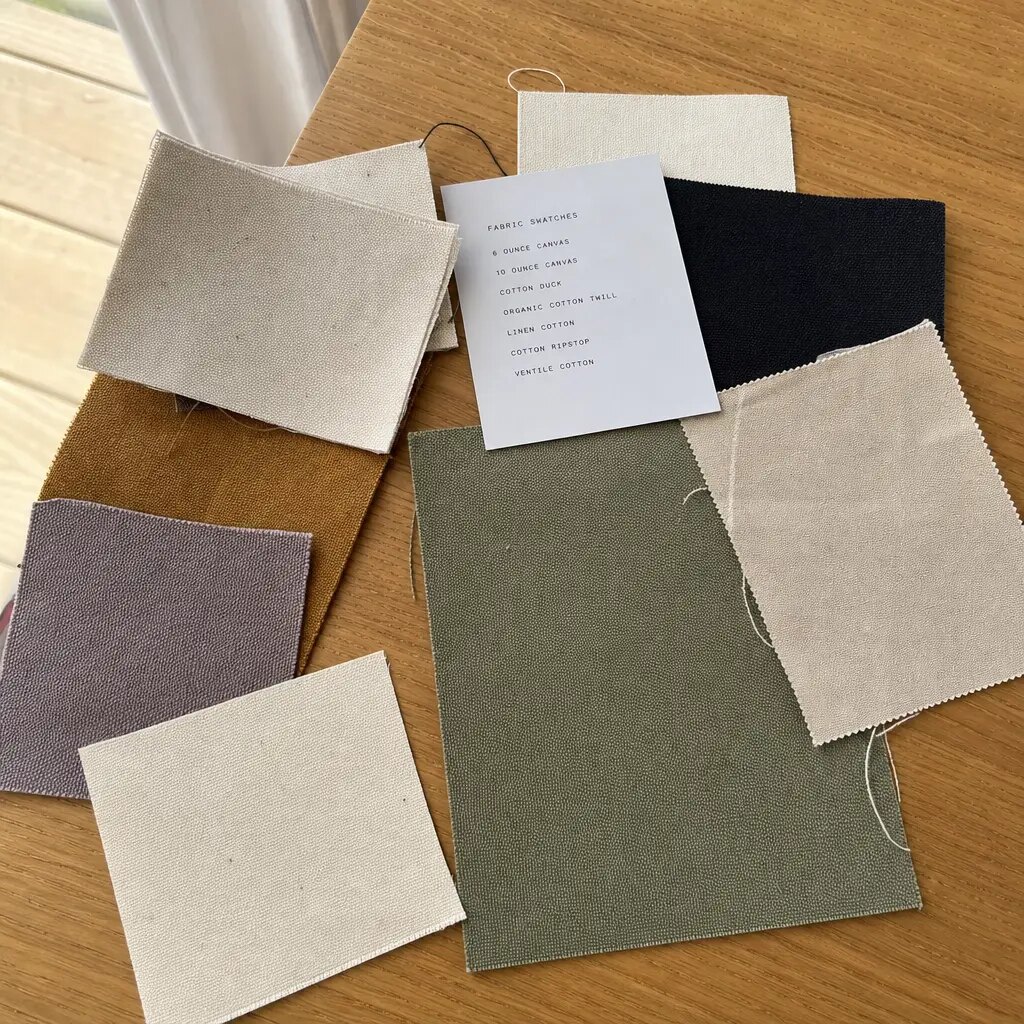
- Request physical swatches for each canvas option, including natural shade or dyed color, handfeel, finish, approximate shrinkage information, and visible slub or seed-speck standard.
- Ask for controlled quote options in 10 oz, 12 oz, and 14 oz canvas using the same finished size, gusset, handles, seam finish, print size, packing, quantity, and incoterm.
- Confirm whether MOQ is per order, per fabric color, per logo design, per custom dye lot, per trim color, or per retail packing SKU.
- Define handle material, width, length/drop, reinforcement pattern, thread color, stitch density target, and agreed pull or loaded-hang test before sampling.
- Match decoration to artwork and canvas texture: screen print for solid logos, transfer for detailed multicolor graphics, embroidery or woven labels for small premium branding.
- Set print criteria for Pantone or physical color target, minimum line thickness, print size, placement tolerance, curing quality, rub resistance, edge sharpness, and acceptable coverage over canvas texture.
- Require sample photos and physical sample review for front, back, side gusset, bottom gusset, inside seams, handle attachment, label placement, hangtag/barcode position, folded presentation, and packed carton layout.
Factory quote questions to send
- What are the actual finished GSM and oz of the proposed canvas, and can you provide a cut swatch from the same fabric lot or same stock fabric before sampling?
- Is the quoted canvas natural greige, stock dyed, custom dyed, pigment dyed, washed, organic, recycled-content, or another finish, and what MOQ applies to each option?
- Can you quote the same finished tote in 10 oz, 12 oz, and 14 oz canvas with identical dimensions, handles, seam finish, logo size, packing method, and incoterm?
- Does your fabric weight refer to greige fabric before finishing or finished fabric after dyeing, washing, or calendaring, and what weight tolerance should we expect in production?
- What shrinkage should we allow after washing, steam pressing, or garment washing, and will the approved finished dimensions be measured before or after that process?
- For natural canvas, what shade range, slub level, seed speck level, and stain rejection standard do you recommend for hotel boutique retail?
- For dyed canvas, can you provide lab dips, production shade bands, and a crocking or rub test result for dark colors such as black, navy, olive, or charcoal?
- Which logo method do you recommend for our exact artwork on this fabric, what is the minimum printable line thickness, and will you provide a strike-off on production fabric?
- Will printing happen before sewing or after sewing, and how will you control placement on gusseted panels, heavy canvas, or bags with seam bulk near the logo area?
- What handle material, width, total length, drop, reinforcement pattern, stitch density, thread type, and seam allowance will be used for the sample and bulk order?
Quality-control points to confirm
- Finished size tolerance should normally be controlled within about plus or minus 1 cm for body width, body height, and gusset depth, and about plus or minus 1.5 cm for handle length unless a looser handmade or washed-garment tolerance is approved.
- Fabric weight should be verified from a cut sample using a GSM measurement method, not only from a supplier invoice, fabric roll label, catalog description, or generic oz name.
- Canvas weight tolerance should be agreed before production; if no brand-specific requirement exists, buyers should ask the supplier to state its normal finished GSM tolerance and confirm it on the approved sample.
- Natural canvas should be checked for unacceptable oil stains, dark contamination, mildew marks, strong odor, heavy shade mismatch, and foreign fibers while allowing approved natural slubs or seed specks within the signed standard.
- Dyed canvas should be checked against the approved lab dip or shade band under consistent lighting, with attention to panel-to-panel shade variation, dark color crocking, and color transfer during folded packing.
- Washed canvas should be measured after washing if the final product is garment washed, because shrinkage and seam puckering can change finished dimensions, logo position, and handle drop.
- Handle attachment should show the specified box-cross, bar-tack, or reinforcement pattern with no skipped stitches, broken stitches, loose loops, needle cuts, or weak anchoring at the top edge.
- A practical loaded-hang test should use the agreed weight and duration from the RFQ, with inspection focused on handle seam tearing, thread breakage, top-edge distortion, and bottom seam stress.
- Stitch density should be visually consistent across side seams, bottom seams, gusset seams, and handle attachments, with thread tension tight enough to avoid gapping but not so tight that it puckers the canvas.
- Print position should be measured from fixed finished edges, with a practical tolerance such as plus or minus 5 mm for a centered front logo unless the artwork or brand guideline requires a tighter or different tolerance.