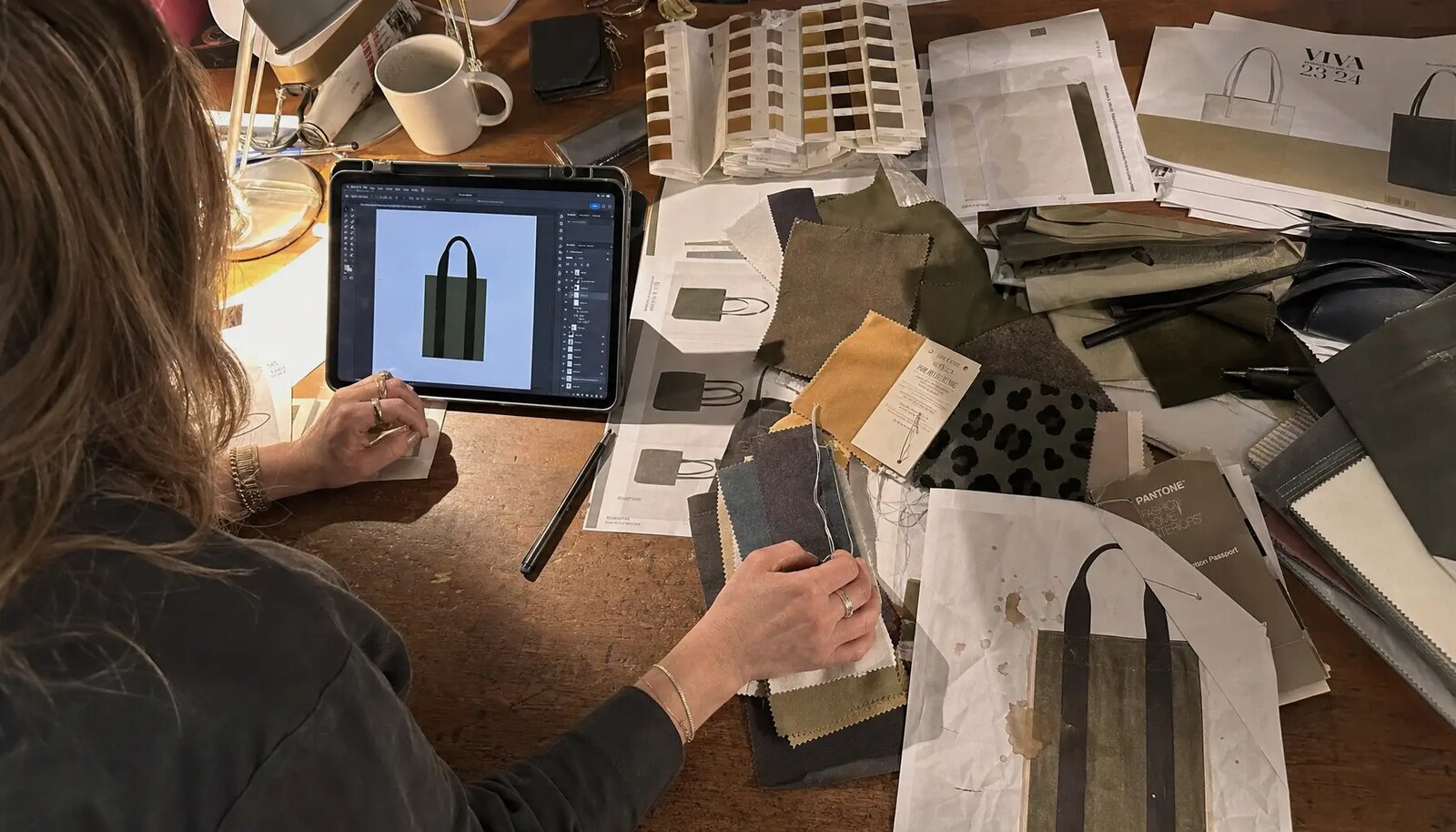
1. Why boutique wineries need a different tote spec
A canvas grocery tote for a boutique winery is not the same product as a generic supermarket bag. Winery buyers usually need three outcomes at once: a premium retail look, dependable carrying strength, and a cost structure that still works for resale, bundles, or tasting-room merchandising. That combination usually pushes the product away from a simple promotional tote and toward a more controlled retail specification.
The first procurement mistake is choosing on appearance alone. A tote can look excellent in a mockup and still create problems in use if the canvas is too light, the handle drop is awkward, or the bottom seam is too weak for actual bottle or grocery loads. Winery bags also tend to move between shelf, tasting room, and customer carry in the same week, which means the bag must perform in more than one context.
For that reason, material selection should start with use case, not logo placement. Decide whether the tote is mainly for mixed groceries, bottle transport, premium gifting, or retail resale. Each of those pushes a different answer on fabric weight, reinforcement, decoration, and packing. When the use case is clear, sourcing becomes simpler: you can compare suppliers on the same basis and avoid paying for features that do not improve real-world performance.
- Retail tote: prioritize shelf appearance, logo clarity, and repeatable size.
- Bottle-carry tote: prioritize seam control, handle reinforcement, and base stability.
- Gift-set tote: prioritize perceived value, carton presentation, and a cleaner interior finish.
- Reorder program: prioritize repeatability, shade consistency, and factory traceability.
2. Canvas weight, weave, and finishing: what actually changes performance
For most boutique winery grocery totes, 12 oz to 14 oz plain canvas is the practical sourcing range. That usually gives enough body for retail presentation while staying manageable for sewing, folding, and freight. If the tote is only for a giveaway or short-life promotion, 9 oz to 10 oz can work, but the bag will feel softer, collapse more easily, and show wear sooner. If the tote needs to support heavier bottles or a more premium retail position, 14 oz is often the better starting point because it holds shape better and gives the bag a more substantial hand feel.
The important procurement detail is that canvas weight can be described in different ways. Some factories quote ounce weight, some quote GSM, and some quote one number while actually delivering another basis. You also need to know whether the weight refers to raw cloth, finished dyed fabric, or finished bag weight after sewing and trimming. If that is not written down, two quotes are not comparable. In the RFQ, ask for a written description that includes the measurement basis, pre-shrink status, and whether printing or washing changes the final weight.
Weave quality matters almost as much as weight. A dense plain weave with low slub variation usually prints more cleanly and looks more premium in a boutique retail setting. A loose weave may be acceptable for low-cost giveaways, but it can make line art fuzzy, allow seam distortion, and reduce the visual consistency buyers expect from a winery program. If your artwork has small text or fine crest details, ask for a close-up fabric swatch and a physical print on the actual cloth rather than relying on a digital proof.
- 9 oz to 10 oz: lowest cost, light promotional use only.
- 12 oz: best baseline for most retail grocery totes.
- 14 oz: better body, better shelf look, and stronger premium feel.
- Ask the factory to confirm whether the quoted weight is before or after finishing.
- Use a physical swatch to evaluate weave density, slub variation, and print sharpness.
3. Material comparison matrix for winery tote programs
It is easier to source canvas grocery totes when you compare a small set of realistic material options rather than asking vendors to quote a vague "high quality canvas" tote. Boutique winery buyers typically end up choosing among light unbleached canvas, standard plain canvas, cotton duck canvas, organic cotton canvas, or recycled cotton blends. Each option has a different cost structure, visual effect, and risk profile. The right decision is rarely the heaviest or the cheapest. It is the option that best matches the intended load, retail price, and reorder frequency.
The table above is meant to reduce noise. It keeps the comparison focused on material behavior instead of mixing in decoration or MOQ logic, which makes the sourcing decision cleaner. When a row starts blending fabric, construction, and pricing in the same line, it becomes hard to compare suppliers honestly. A material matrix should answer one question clearly: what does this cloth do for the bag, and what does it cost the buyer in performance and risk?
For a boutique winery, the useful rule is simple: choose the lightest canvas that still passes the real load test and still supports the brand presentation you want on shelf. If the tote is for resale, visual body and print clarity usually matter more than chasing the thickest fabric. If the tote will hold bottles repeatedly, reinforcement at the handle and base often matters more than adding another few ounces of cloth.
- Keep the evaluation load identical across suppliers so you can compare performance fairly.
- Use a retained swatch for each material option so shade and hand feel can be checked later.
- Do not let decoration or packaging hide the true fabric choice in the quote.
- If sustainability is part of the brand story, require documentation for any organic or recycled claim.
4. Handle, seam, and base construction: the real load-bearing spec
For procurement, the handle and seam package is where a tote either proves itself or fails. A bag can have acceptable fabric weight and still be unsuitable if the handle width is too narrow, the drop is wrong, or the bartacks are too small. The most common buyer mistake is using loose language such as "strong handles" or "reinforced bottom" without measurements. That makes quotes difficult to compare and allows inconsistent production later.
A practical starting spec for a boutique winery grocery tote is a double-fold self-fabric handle with a finished width around 2.5 cm to 4 cm, depending on the bag size and intended load. Handle drop should be tied to use: hand carry, shoulder carry, or display carry. If the tote will regularly carry bottles or jars, wider handles usually distribute weight more comfortably and reduce cutting into the hand. Ask the factory to state the exact cut length and finished drop, not just the overall handle length, because folding method changes the final result.
On reinforcement, bartacks matter more than decorative stitching. A clean bartack at each load-bearing point is a basic expectation for a retail tote that might carry heavy mixed contents. Many buyers also specify a seam allowance so the factory cannot quietly shrink the sewing margin to save time. If the tote uses a gusseted base, ask whether the base is a single-panel fold, a boxed corner, or a reinforced seam. Each option changes appearance, cost, and load stability. The best choice depends on whether the tote is meant to sit upright on shelf or simply carry purchases comfortably.
- Specify handle width in cm, not just "wide handle."
- Specify finished handle drop and the intended carry style.
- Ask for bartack count and bartack location on the sample drawing.
- Confirm seam allowance on body panels and base before production starts.
- Use reinforced base construction if the tote must carry bottles or jars repeatedly.
5. Decoration choices: match the artwork to the fabric and the reorder plan
The decoration process should be chosen around artwork and order pattern, not habit. For most boutique winery grocery totes, screen printing is the most reliable choice because it gives consistent color density, good repeatability, and sensible setup economics for ongoing programs. It is especially effective for one- or two-color logos, short taglines, and simple line art. If the bag is meant to be reordered regularly, screen print is usually the safest commercial choice because it behaves predictably across production lots.
Heat transfer can be useful when you are validating a design quickly or placing a very short run. It is a useful test route, but it is usually not the best long-life retail option if the bag will be folded, handled often, or exposed to abrasion. Digital print can help with more complex art, gradients, or multi-color graphics, but it should be judged on rub resistance, opacity, and repeat cost rather than novelty. Buyers should ask the supplier to recommend the method based on print size, color count, and forecast quantity.
Whatever method you choose, approve a physical sample on the final fabric. A PDF proof can confirm placement logic, but it cannot show how ink sits on the weave, how sharp small type remains, or whether the color density matches the brand standard on actual canvas. If the artwork has a centered crest or a small winery name, ask for a measured strike-off and define placement tolerance in millimeters. On a retail tote, small shifts become visible quickly.
- Screen print: best for repeat orders and simple winery logos.
- Heat transfer: useful for short-run testing, not ideal for long retail life.
- Digital print: useful for complex graphics; check rub resistance and opacity.
- Approve a printed sample on the final fabric, not only a digital proof.
- State print size, print position, and number of colors in the RFQ.
6. RFQ discipline: how to build a quote that suppliers can answer cleanly
MOQ is not just a number; it reflects how much setup the factory must absorb for your program. Fabric sourcing, cutting, sewing, print setup, and packing all affect the minimum economic quantity. A one-color natural canvas tote may support a relatively low MOQ because it sits close to a standard production path. A dyed canvas tote with a special handle, lining, or multi-color print can require a higher MOQ because it creates more changeovers. Buyers should expect the MOQ to move when the spec changes.
To compare suppliers fairly, use one RFQ format for every vendor. The most useful fields are canvas weight, finished size, handle spec, print method, packing format, MOQ, sample cost, setup charge, lead time, carton dimensions, gross carton weight, and delivery term. Without that structure, one quote may look cheaper simply because it omitted polybags, skipped reinforcement, or quoted blank bags while another included printing and finished packing. That is a scope mismatch, not a pricing advantage.
A buyer-friendly quote also separates one-time costs from recurring costs. Ask for blank bag cost, print cost, packaging cost, and freight assumption as separate lines. That makes it easier to see where the real money goes and whether a higher unit price is offset by better packing density or fewer defects. For a winery program, landed cost per salable unit matters more than ex-factory price alone.
- Ask for pricing at 500, 1,000, and 3,000 pieces if the factory supports those breaks.
- Separate blank bag cost from print and packaging cost.
- Define whether MOQ is per design, per color, or total quantity.
- Request carton dimensions and gross weight before quote approval.
- Compare landed cost, not just unit price.
7. Factory-direct, trading company, or domestic conversion: choosing the right source route
The source route changes both risk and commercial visibility. Factory-direct sourcing is usually the strongest option when you need repeatable construction, direct control of the sewing line, and clear responsibility for fabric and print quality. It is especially useful for a tote that will be reordered because you can keep the same spec, same sample, and same production references over time. The downside is that you need a precise RFQ and you need to manage communication with a manufacturer that expects technical detail.
Trading companies can be useful when you are consolidating several SKUs, need faster coordination, or want one party to manage artwork and packing across different products. The tradeoff is less direct visibility into the sewing factory, which makes root-cause tracing harder if a defect appears. Domestic converters can help when lead time is tight or when you need a low-MOQ replenishment option, but the price per unit is often higher. That can still be the correct answer if the tote is for a seasonal event, a rush launch, or a short trial program where speed matters more than absolute cost.
The practical evaluation is not which route is "best" in general. It is which route gives you the right balance of cost, traceability, and response speed for this tote program. For a boutique winery retailer that expects reorder continuity, direct factory communication usually provides the strongest control. For a one-time seasonal bundle, a more flexible trading route may be acceptable if the sample and QC standards are still written clearly.
- Use factory-direct when repeatability and spec control matter most.
- Use a trading company when bundled coordination matters more than direct factory access.
- Use domestic conversion when speed and flexibility outweigh unit cost.
- Ask who owns cutting, sewing, printing, and final packing.
- Request factory photos or video of the sample room if route transparency matters.
8. Vendor evaluation criteria that matter more than sales language
A good tote supplier does more than quote a price. They should be able to discuss fabric sourcing, stitch control, print registration, packing logic, and reorder stability in concrete terms. If a vendor only answers with generalities like "good quality" or "we can do it," that is a signal to push for more detail. Procurement value comes from specificity. You want a supplier who can tell you what cloth they use, how they control shade, what their normal defect thresholds are, and how they handle line changes when a reordering customer comes back six months later.
Useful vendor checks are practical, not theatrical. Ask for photos of a recent production line, a first-off sample image, and a packing station image if they will provide them. Review whether they can separate fabric, print, and packing into clear cost lines. Ask how they label lots, whether they retain sewing patterns or cutting markers, and how they handle shade variation between fabric batches. For boutique wineries, these details matter because a tote often lives as a brand object, not just a utility bag.
You can also evaluate how the supplier reacts to a specific correction request. If you ask for a thicker handle fold, a tighter print placement tolerance, or a cleaner interior finish, do they respond with a process adjustment or just a price increase? The best vendors explain the cost driver and the tradeoff. That tells you they understand the program, not just the order.
- Ask for production photos or sample-room photos, not just product mockups.
- Check whether the factory separates fabric, print, and packing costs.
- Ask how lot numbers and retained references are handled for reorders.
- Test how the vendor responds to a concrete correction request.
- Prefer suppliers who can explain tradeoffs rather than only quoting a unit price.
9. QC, AQL, and sample approval: turn the tote spec into a pass/fail system
Quality control should be written in measurable terms before production begins. A tote approved on visual impression alone is more likely to drift in size, handle balance, print placement, and seam finish. For B2B procurement, the sample should define exactly what counts as acceptable. That means finished dimensions with tolerances, print placement tolerance, color tolerance, acceptable thread trim limits, and bartack appearance. If the tote is intended to carry bottles, add a load test threshold and require the factory to show the test method in the pre-production sample stage.
A practical inspection approach is to combine in-process checks with final lot inspection. During production, the factory should check first-off pieces from the sewing line for size, handle symmetry, and print placement. At final inspection, many buyers use an AQL framework for visual and functional defects. A useful starting point is AQL 2.5 for major defects and 4.0 for minor defects on standard retail bags, with tighter limits for premium bottle carriers. The key is not the number alone; it is defining what is critical, major, and minor. A critical defect would be a handle failure, a seam opening, or a misprinted bag that cannot be sold. A major defect would be size out of tolerance or a crooked logo. A minor defect might be loose thread ends within the buyer limit or slight fold marks from packing.
Sample approval should move in stages. Swatch first, blank sewn sample second, printed sample third, and pre-production sample if the order size justifies it. Each stage answers a different question. The swatch confirms the cloth and shade. The blank sample confirms construction, reinforcement, and dimensions. The printed sample confirms artwork and ink behavior. The pre-production sample confirms line repeatability, packing, and label accuracy. Keep a measured approval form and retain one reference sample on both sides so reorder lots can be checked against something real rather than memory.
- Set finished size tolerance in writing before sampling.
- Measure print placement on actual sewn bags, not on flat artwork files.
- Require the factory to state how it classifies critical, major, and minor defects.
- Hold the lot if any critical defect appears in final inspection.
- Keep a retained reference sample from both buyer and supplier.
10. Packing, freight, and reorder consistency: where tote programs quietly win or fail
Packing decisions affect both freight cost and retail readiness. Flat-packed canvas totes are efficient for freight and warehouse storage, but they can arrive with strong fold lines, especially on heavier fabric or printed areas. Individual polybags improve presentation and cleanliness, yet they add material cost, labor, and carton volume. For many boutique winery programs, a simple flat-pack or orderly inner pack is enough if the totes will be stickered or shelved after arrival. If the bags must look pristine on first display, the extra packing cost may be justified.
Freight and landed cost should be part of the quote from the start, not an afterthought. Carton dimensions affect how many units fit per master carton, how many cartons fit per pallet, and how much ocean or air freight you actually pay. A tote with a slightly higher unit price can still win if it packs more efficiently, uses less carton volume, or reduces destination labor. That is why buyer-side RFQs should request carton length, width, height, gross weight, inner count, and whether the cartons are suitable for export stacking. If the supplier cannot provide this, they may not be thinking in procurement terms.
Replenishment planning matters as much as the first shipment. If the tote is part of a branded retail line, ask whether the supplier can keep the same fabric shade, print screens, and cutting pattern for a second run. If they cannot, a reorder may require a new sample cycle. That is acceptable for a one-off promotion but not ideal for an item expected to stay on shelf. The more consistent your packaging, labels, and carton counts are, the easier it is to store, receive, and replenish the tote in a winery or distributor warehouse.
- Define flat-pack, folded, or polybagged packing in the RFQ.
- Request carton dimensions and gross weight to estimate landed cost.
- Check whether carton count supports warehouse replenishment habits.
- Confirm whether the supplier can repeat the same shade and print setup on reorder.
- Include inland freight, duties, and receiving labor in the landed-cost view.
Specification comparison for buyers
| Option | Typical spec / cost profile | Best use case | Tradeoffs and buyer checks |
|---|---|---|---|
| 9 oz unbleached cotton canvas | Lowest fabric cost; softer drape; fastest to sew; easiest to fold and display | Light promotional bags, tasting-room giveaways, low-load event merch | Can sag under mixed groceries or bottles. Ask for a loaded sample with the exact contents you plan to pack and confirm the bag still stands and carries cleanly. |
| 12 oz plain-weave cotton canvas | Balanced cost; better body; common retail baseline; good print clarity on simple logos | Retail grocery totes, general winery shop carry bags, seasonal resale items | Usually the safest starting point, but only if handle width, stitch density, and base reinforcement are locked before sampling. |
| 14 oz cotton duck canvas | Higher fabric cost; firmer body; stronger shelf presence; slightly heavier freight | Premium retail programs, gift-with-purchase sets, heavier bottle carry | Thicker fabric can distort at seams if construction is weak. Check seam bulk, corner finish, and whether the tote still folds neatly for shelf storage. |
| 16 oz+ heavy duck canvas | Highest unit and freight cost; stiffest body; premium tactile feel | Long-life retail items, bottle-focused totes, high perceived value programs | Can be harder to sew cleanly and may increase reject risk. Ask for stitch density, corner photos, and a sample with the exact bottle weight you expect. |
| Organic cotton canvas | Premium raw material cost; stronger sustainability story if certification is real and documented | Wineries with sustainability messaging or premium eco-positioning | Certification claims must be document-backed. Request transaction certificates or mill documentation, not a verbal assurance. |
| Recycled cotton canvas blend | Variable cost; often good for sustainability-led assortments; hand feel depends on blend ratio | Seasonal collections, eco-merchandising, branded resale items | Blend quality can vary by lot. Ask for fiber composition, shade consistency guidance, and a retained swatch for reorder comparison. |
Buyer checklist before sampling
- Define the use case first: tasting-room giveaway, retail grocery tote, bottle carrier, or premium gift item.
- State the exact contents the bag must carry, including bottle count, bottle size, inserts, and expected total load.
- Lock finished dimensions, handle drop, handle width, seam allowance, and base construction before any sample is approved.
- Confirm whether the supplier is quoting fabric weight in oz, GSM, or finished bag weight, and whether the measurement is before or after finishing.
- Request a fabric swatch, a blank sewn sample, a printed sample, and a pre-production sample when the order size justifies it.
- Ask for a measurement sheet with agreed tolerances for width, height, gusset depth, print placement, and carton count.
- Require a retained reference sample from both buyer and supplier for reorder comparison.
- Get carton dimensions, gross carton weight, inner pack count, and packing format before you approve the quote.
- Set pass/fail rules for seam integrity, handle pull, shade match, and print registration before production starts.
Factory quote questions to send
- What exact canvas construction are you quoting: fiber content, weave type, ounce weight or GSM, and whether the weight is measured before or after printing and finishing?
- Is the canvas pre-shrunk, washed, or calendared, and how does that affect the finished dimensions after sewing?
- What finished dimensions are included in the price, and what seam allowance are you using on body panels, top edge, and handle folds?
- How many bartacks are included at each load-bearing point, and what stitch density do you use on handles and seams?
- What is the exact handle spec: cut length, finished width, finished drop, and whether the handle is self-fabric, webbing, or a blended construction?
- Is the MOQ based on total quantity, per color, per print design, per fabric lot, or per packaging configuration?
- Can you quote blank bags, printed bags, and packaging as separate line items so we can compare landed cost cleanly?
- What sample stages are included, and can you provide a blank construction sample before artwork approval?
- What defect classification system do you use at final inspection, and what AQL do you apply for critical, major, and minor defects?
- Can you provide carton dimensions, gross weight, inner pack count, palletization assumptions, and export carton photos before bulk release?
Quality-control points to confirm
- Critical defects should be zero-acceptance: open seams, missing bartacks, broken handles, major misprints, or a tote that cannot be used safely.
- Major defects should be defined in writing. Common examples are size deviation outside tolerance, crooked logo placement, visible stains, or a handle drop that differs from the approved sample.
- Minor defects should also be defined, such as loose thread ends under the buyer limit, fold marks from packing, or slight variation in stitching path that does not affect function.
- A common starting point for retail tote programs is AQL 2.5 for major defects and 4.0 for minor defects, with tighter limits for premium or bottle-carry programs.
- Use stitch-density targets that match the fabric weight: a common baseline is 8 to 10 stitches per inch on standard seams and 10 to 12 stitches per inch on topstitching or handle reinforcement.
- For heavier duck canvas, slightly lower stitch density may be more practical if higher density causes puckering or seam bulk; confirm the sample behaves cleanly instead of forcing a universal target.
- Measure finished dimensions on actual sewn bags, not on the cut pattern or artwork file.
- Inspect handle symmetry, twist, and attachment alignment on every sampled piece because handle variation affects both comfort and shelf appearance.
- Check print placement against the sewn bag and agree on a measured tolerance in millimeters for center position and vertical placement.
- Run a load test using the actual bottle or grocery combination the winery will sell, then repeat the lift test to check for seam creep, handle stretch, or opening distortion.