Start With the Load, Not the Logo
For artisan bakeries, the main buying problem is not only how the canvas grocery tote looks on a retail shelf. The bag has to carry products with awkward shapes: crusty loaves, baguette sleeves, pastry boxes, jars, coffee bags, and sometimes refrigerated items added by the customer later. If the tote is too narrow, the bread crushes. If the canvas is too soft, the bag collapses at checkout. If the handle drop is wrong, customers cannot carry it comfortably while walking from a market stall or store.
A useful RFQ starts with the intended use case. A giveaway tote for a bread subscription can be lighter than a paid retail tote sold beside jams and coffee. A farmers market tote needs more structure than a flat event bag. Before discussing artwork, define the largest product, target carrying weight, display method, and whether the tote must stand partially open for staff to pack quickly.
- For bread and pastry use, request a bottom gusset instead of a simple flat tote unless the bag is purely promotional.
- For mixed grocery use, design around a practical load of 5 to 8 kg rather than only one loaf of bread.
- For retail resale, prioritize hand feel, seam finish, and print sharpness because customers compare the tote like merchandise.
- For wholesale distribution, keep carton dimensions and packing count in the RFQ so freight cost is not guessed later.
Select Canvas Weight by Function
Canvas grocery totes for bakeries are usually quoted in ounces, GSM, or both. This creates confusion because ounce ratings are often used loosely, and mills may describe fabric before or after finishing. A practical middle range is 10 oz to 12 oz cotton canvas, often around 340 to 407 GSM. This gives enough body for grocery use while keeping the bag sewable, printable, and not too expensive for repeat orders.
An 8 oz canvas can work for light campaigns, but it may not deliver the sturdy retail feel many bakery brands expect. A 14 oz canvas feels premium, but it increases material cost, sewing effort, carton weight, and freight. Procurement teams should compare finished fabric weight, not just supplier descriptions. Two suppliers quoting “12 oz canvas” may deliver noticeably different stiffness if one fabric is loosely woven and the other is denser.
- 8 oz canvas: acceptable for low-cost promotions and light goods, but less suitable for heavy grocery loading.
- 10 oz canvas: good entry point for branded bakery totes with moderate structure and manageable cost.
- 12 oz canvas: stronger retail feel and better display body for paid merchandise or gift sets.
- 14 oz canvas: premium option, best used when retail margin supports higher material and freight cost.
Choose Natural, Bleached, or Dyed Fabric Carefully
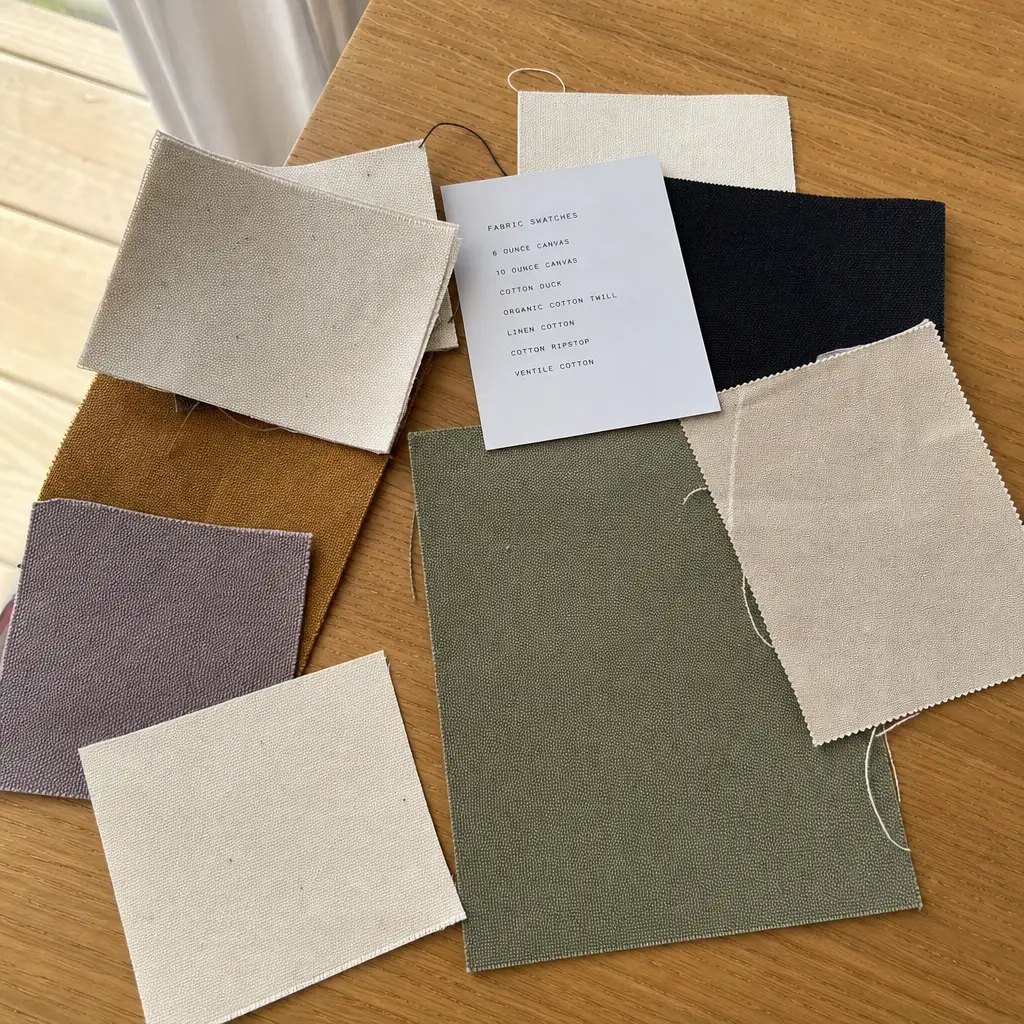
Natural unbleached canvas is popular for artisan bakeries because it matches a handmade, organic, or farmers market position. It also avoids the extra cost and lead time of fabric dyeing. The tradeoff is shade variation. Natural canvas can shift from cream to beige depending on cotton lot, yarn, and finishing. If a brand requires exact color matching across seasons, natural canvas needs realistic tolerance rather than a strict lab dip target.
Bleached or dyed canvas gives stronger color control and a cleaner retail presentation, but it adds decisions. Dark dyed canvas may need different print inks, colorfastness review, and longer lead time. A bakery chain using a fixed brand palette may prefer dyed fabric, while an independent sourdough brand may accept natural variation. The key is to state whether fabric shade is part of the brand standard or simply a background for the logo.
- Use natural canvas when rustic appearance and cost control matter more than exact shade repeatability.
- Use bleached canvas when the artwork needs a cleaner white base and sharper color contrast.
- Use dyed canvas when the tote color is part of the retail identity, but allow time for lab dip approval.
- For dark fabrics, confirm ink opacity and rub resistance before approving bulk print.
Build the Bag Around Bakery Packaging
The right tote size depends on the bakery’s packaging, not on a standard catalog dimension. A common mistake is selecting a general grocery tote and discovering later that pastry boxes sit at an angle or baguette sleeves stick out awkwardly. Buyers should collect dimensions for the widest box, tallest loaf bag, and any gift set components. The factory can then recommend width, height, and gusset depth that reduce wasted fabric while still fitting the product.
For most bakery grocery totes, a bottom gusset of 10 to 15 cm gives better packing space than a flat bag. Side gussets can help the tote expand, but they add sewing complexity and may change how the front print sits when the bag is loaded. A boxed bottom improves structure for jars and boxed goods. If the tote will be displayed hanging, handle drop and folded size should also be considered.
- Send the factory product dimensions and target packing layout instead of only asking for a standard tote size.
- Use a bottom gusset for bread, pastry boxes, coffee bags, and grocery bundles.
- Keep front artwork away from fold lines and gusset seams to avoid distortion when the bag is loaded.
- If the bag must stand on a counter, request a sample loaded with real or dummy bakery packaging.
Specify Handles Like a Load-Bearing Part
Handles are often treated as a small detail, but they are one of the first failure points in canvas grocery totes. For bakery use, self-fabric canvas handles usually give a better matched look than webbing, especially on natural canvas bags. Width matters. A narrow handle can cut into the hand under load, while a wider handle improves comfort but uses more fabric and can look bulky on a small tote.
Handle drop should match how the customer carries the bag. A short hand-carry handle may suit a small bread tote, but a grocery tote should often fit over the shoulder. Many buyers use a handle width of 2.5 to 3.8 cm and define the drop in centimeters. Reinforcement should be specified clearly. Backstitching may be enough for light bags, but box-X or cross stitching is better for repeated grocery loading.
- Define handle drop from the top edge of the bag to the inside top of the handle curve.
- Use box-X or cross reinforcement for paid retail totes and grocery loading.
- Avoid very long handles on short bags because the tote may drag when hand carried.
- Include handle pull strength in QC checks instead of relying only on visual inspection.
Match Print Method to Canvas Texture
Most bakery canvas grocery totes use screen printing because it is cost-effective for solid logos, bakery illustrations, and repeat orders. Water-based ink can give a softer hand on natural canvas, while plastisol or heavier ink systems may improve opacity on some surfaces. The artwork style should match the fabric texture. Fine serif type, thin wheat illustrations, and small ingredient text can lose clarity on coarse canvas.
Digital printing can be useful for complex artwork or many colors, but it may not be the best default for bulk bakery totes if the artwork is simple. Heat transfer can handle detail but may feel less natural on cotton canvas and can be vulnerable to edge lifting if poorly applied. Embroidery gives a premium look but adds cost, weight, and distortion risk on large logos. The safest process is to approve a strike-off on the exact canvas, not only a digital proof.
- Use screen print for 1 to 3 solid colors, repeat orders, and clean bakery logos.
- Use digital print only when artwork complexity justifies the cost and the hand feel is approved.
- Keep small text large enough to survive fabric texture and ink spread.
- Request print position tolerance and color reference, such as Pantone or approved physical swatch.
Understand MOQ and Cost Drivers
MOQ is not one number. It changes by fabric availability, dyeing, bag size, print method, and accessory requirements. A natural canvas tote in a standard size may have a lower MOQ because fabric is easier to source. A dyed canvas tote with custom size, woven label, hangtag, and multi-color print may require a higher MOQ because the factory must purchase fabric, prepare screens, set up sewing lines, and manage separate trims.
When comparing quotes, separate the cost drivers. Fabric weight affects material consumption and freight. Bag dimensions affect cutting yield. Print colors affect screen setup and production time. Inner packing affects labor and carton count. Buyers who only compare unit price often miss setup charges, sample charges, testing charges, and packing differences. A better comparison uses the same quantity breaks and the same quote basis.
- Ask for price breaks at realistic quantities such as 500, 1000, 3000, and 5000 pieces if those volumes match the program.
- Separate one-time screen charges, sample charges, and artwork adjustment fees from the unit price.
- Compare quotes on the same Incoterm, such as EXW, FOB, or DDP, to avoid false savings.
- Request estimated carton size and gross weight early because heavy canvas changes landed cost.
Approve Samples With Measurable Criteria
A pre-production sample should represent the final material, final size, final print, final handle construction, and final packing where possible. A nice-looking development sample is not enough if the bulk order will use a different fabric lot or different ink system. For bakery totes, the sample should be tested with actual packaging: bread bags, pastry boxes, jars, or gift items. This quickly shows whether the gusset, height, and handle drop are correct.
Sample approval should include a written tolerance sheet. Without it, disputes become subjective. Fabric shade, print color, print placement, stitch density, handle length, and finished size should all have acceptance limits. Keep one sealed approved sample at the factory and one with the buyer or inspection team. This avoids arguments when bulk goods are checked weeks later.
- Measure width, height, gusset, and handle drop on the sample and record acceptable tolerance.
- Load the sample with target weight and lift repeatedly to review handle strength and comfort.
- Rub the print with a dry white cloth and a slightly damp cloth to check basic adhesion and transfer.
- Photograph the approved sample under neutral light and keep physical reference samples for inspection.
Set QC Thresholds Before Bulk Production
Canvas tote QC should cover fabric, cutting, sewing, printing, and packing. The most common bulk issues are uneven fabric shade, skewed panels, weak handle stitching, print misregistration, dirty marks, loose threads, and carton compression. These are manageable if the acceptance criteria are clear before production starts. For standard commercial orders, many importers use AQL inspection, but the defect definitions must match the product.
For bakery retail programs, visible defects matter because bags may be sold as merchandise, not only used as packaging. A crooked logo or stained natural canvas panel can reduce perceived value immediately. Define major defects as handle failure, incorrect size beyond tolerance, wrong print color, severe stain, open seam, and incorrect carton count. Minor defects may include small loose threads or slight natural cotton specks if they are within the agreed standard.
- Classify handle detachment, open seams, wrong fabric, and wrong print as major defects.
- Set a print placement tolerance, commonly measured from the top seam and center line.
- Inspect inside seams and gusset corners, not just the front logo panel.
- Confirm needle holes, trimming, and thread color are acceptable for the retail positioning.
Plan Packing and Freight Before Price Approval
Packing affects both presentation and landed cost. Canvas grocery totes are often flat packed, but heavy canvas can crease if compressed too tightly. If the tote is for retail resale, hangtags, barcode stickers, belly bands, or individual polybags may be required. These details add labor and material cost. If the tote is a wholesale bakery supply item, bulk packing without individual polybags may be more efficient and reduce waste.
Freight planning should use carton dimensions and gross weight, not only unit price. A heavier 12 oz or 14 oz tote can look affordable in factory price but become expensive in air freight or small-volume shipments. Carton markings should match the importer’s warehouse requirements, including PO number, SKU, quantity, gross weight, net weight, and country of origin if required. Poor carton data slows receiving and can create chargebacks for retail buyers.
- Confirm pieces per carton and whether bags are flat packed, folded, bundled, or individually packed.
- Avoid over-compression if the tote will be sold in-store and visible crease quality matters.
- Include barcode, hangtag, carton mark, and polybag requirements in the first RFQ.
- Use carton gross weight and CBM to compare landed cost across fabric weight options.
Specification comparison for buyers
| Spec decision | Recommended option | When it fits | Buyer risk to check |
|---|---|---|---|
| Main canvas weight | 10 oz to 12 oz cotton canvas, roughly 340 to 407 GSM depending on yarn and weave | Best balance for bread, pastry boxes, retail merchandise, and repeated grocery use without feeling too heavy at checkout | Do not compare quotes by ounce only; request GSM, yarn count if available, and finished fabric weight after washing or finishing |
| Lighter promotional version | 8 oz cotton canvas, roughly 270 GSM, with reinforced stress points | Seasonal campaigns, lower retail price points, or giveaways where the tote carries light bakery goods | Thin fabric may show product corners and may not stand well for display; test loaded appearance with actual bakery packaging |
| Premium retail version | 14 oz canvas or heavy 12 oz with dense weave and gusset support | Paid merchandise, gift sets, farmers market retail, and brand stores where hand feel affects perceived value | Heavier fabric increases unit cost, carton weight, freight cost, and sewing time; confirm whether margin still works landed |
| Gusset structure | Bottom gusset of 10 to 15 cm with side expansion when needed | Loaves, baguette sleeves, cake boxes, jars, coffee bags, and mixed grocery baskets | A flat tote may quote cheaper but fail in use; provide product dimensions and target loading weight before sampling |
| Handle construction | Self-fabric canvas handles, 2.5 to 3.8 cm wide, cross-stitched or box-X reinforced | Daily customer use and retail resale where the bag must feel stable under 5 to 8 kg test loading | Long handles can drag when bag is short; short handles may not fit over winter coats; specify drop length in centimeters |
| Print method | Water-based screen print for 1 to 3 solid colors on natural or dyed canvas | Bakery logos, simple illustrations, ingredient slogans, and repeat orders with stable brand colors | Fine lines can fill on textured canvas; approve strike-off on final fabric, not only on paper or digital proof |
| Color and finishing | Natural unbleached canvas for rustic bakery identity; dyed canvas for stronger retail color control | Natural canvas suits sourdough, organic, market, and farm-style brands; dyed canvas suits chain retail programs | Natural shade varies by cotton lot; dyed fabric needs lab dip approval and colorfastness review if dark colors are used |
| Packing format | Flat packed in export cartons, 50 to 100 pcs per carton depending on size and fabric weight | Wholesale distribution, retail store replenishment, and warehouse receiving with barcode or carton mark requirements | Over-compression creates hard creases; confirm carton size, polybag policy, hangtag placement, and carton drop resistance |
Buyer checklist before sampling
- Define the tote use case before quoting: free bread bag, paid grocery tote, gift set carrier, or retail merchandise.
- List actual bakery product dimensions, including the largest bread loaf, pastry box, jar set, or coffee bag bundle.
- Specify finished bag size, gusset depth, handle width, handle drop, seam type, and target loading weight.
- Request fabric weight in both ounces and GSM, plus whether the weight is greige, finished, washed, or dyed fabric.
- Choose print method based on artwork detail, fabric color, order volume, and required hand feel.
- Require a pre-production sample using final fabric, final print colors, and final packing method before bulk cutting.
- Set acceptance criteria for fabric shade, print position tolerance, stitching density, handle strength, and carton marking.
- Compare supplier quotes on the same Incoterm, packing count, sample policy, artwork charges, and lead time basis.
- Confirm whether price includes labels, hangtags, barcodes, inner polybags, recycled cartons, and any required testing.
- Keep one approved sample sealed for factory reference and one for incoming inspection at destination.
Factory quote questions to send
- What is the exact canvas weight in GSM and ounces, and is it measured before or after finishing?
- Is the quoted fabric natural, bleached, dyed, washed, or preshrunk, and how much shade variation should we expect by lot?
- What finished bag size tolerance do you apply for width, height, gusset, and handle drop?
- What handle reinforcement is included in the standard price: backstitch only, cross stitch, or box-X stitching?
- Which print method is quoted, how many colors are included, and what is the maximum printable area on this bag size?
- Are screen setup, artwork adjustment, woven label, hangtag, barcode sticker, and sample charges included or separate?
- What is the MOQ for natural canvas, dyed canvas, custom size, and custom print separately?
- How many pieces fit per export carton, what is the estimated carton weight, and can you provide carton dimensions for freight calculation?
- What is the normal sample lead time, bulk production lead time after sample approval, and peak-season capacity risk?
- What inspection standard do you use for AQL, loading test, print rub test, seam strength, and carton drop handling?
Quality-control points to confirm
- Fabric weight tolerance should be agreed before production; many buyers use plus or minus 5 percent as a practical range for canvas.
- Finished size tolerance should be defined in centimeters for width, height, gusset, and handle drop, not described as approximate.
- Print position should be measured from the top seam and side seam, with a clear tolerance such as plus or minus 5 mm for simple logos.
- Handle strength should be tested with realistic loading, commonly 5 to 8 kg for bakery grocery totes, held and lifted repeatedly.
- Stress points at handle joints and gusset corners should show secure backstitching or box-X reinforcement with no skipped stitches.
- Print adhesion should be checked by dry rub and light wet rub on the final canvas surface, especially on dyed or washed fabric.
- Cartons should be inspected for correct count, dry condition, readable shipping marks, and no excessive compression creasing.
- Incoming inspection should compare bulk goods against the sealed approved sample for fabric shade, hand feel, print color, and construction.