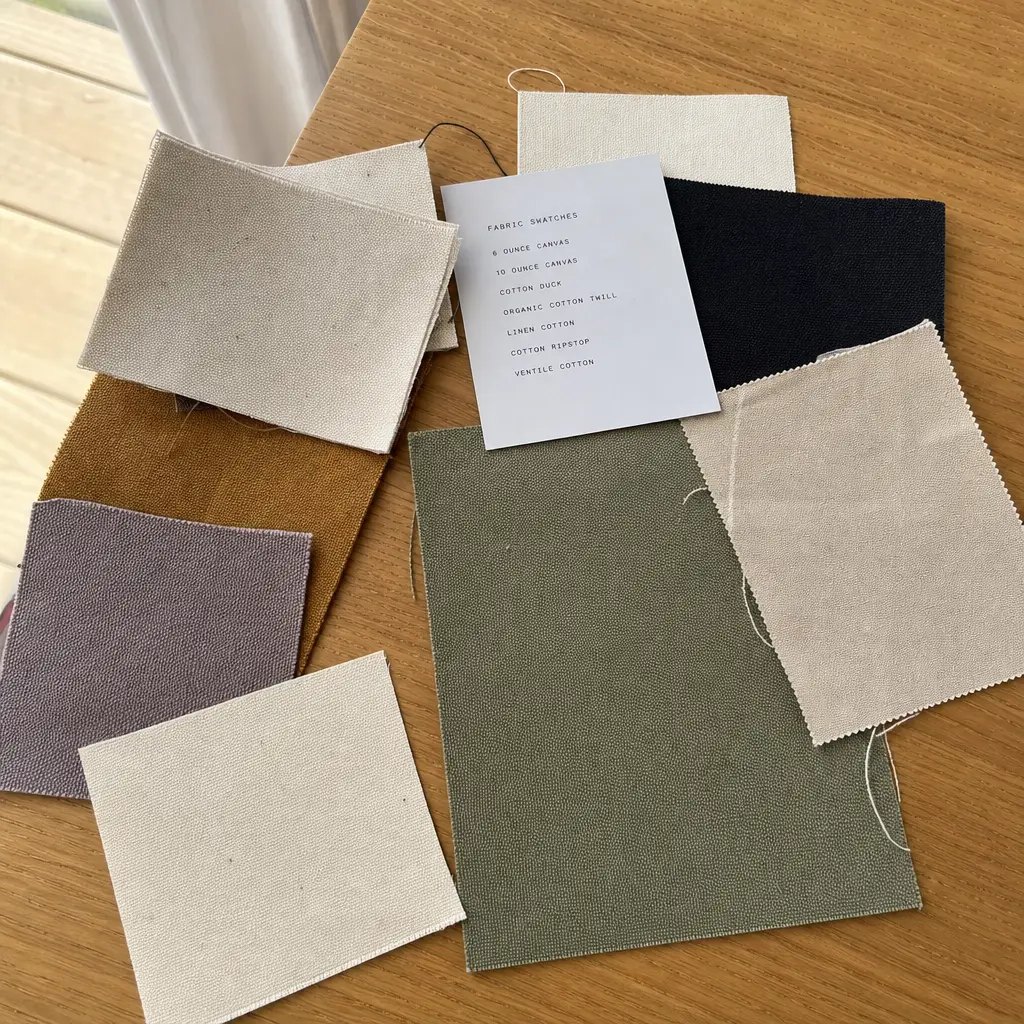
Start With The Bookstore Load, Not The Tote Photo
A canvas grocery tote for a university bookstore is not the same product as a thin event giveaway shopper. Bookstore buyers usually need one bag to handle mixed retail use: hardbound books, notebooks, hoodies, drinkware, snacks, graduation gifts, and sometimes fresh-market or pantry items from campus convenience shelves. The material choice should start with the load profile and shelf presentation, then move to fabric weight and print method.
Many RFQs fail because they request a canvas grocery tote with logo, size, and quantity, but leave out the expected carrying weight, gusset behavior, and handle comfort. That forces suppliers to quote their easiest house style. One quote may use 8 oz canvas and narrow handles, while another uses 12 oz canvas and reinforced webbing. The cheaper number then looks attractive until the store receives bags that collapse on shelves or feel weak under textbooks.
- For light apparel and orientation sales, 8 oz to 10 oz canvas may be enough if the bag is not expected to carry heavy books.
- For daily bookstore grocery tote use, 10 oz to 12 oz canvas is a safer starting point because it gives better body and handle support.
- For premium campus retail programs, 12 oz to 14 oz canvas can work, but freight, sewing time, and retail price must justify the upgrade.
- If the bag must stand on a counter or shelf, specify bottom gusset width and fabric stiffness, not only finished dimensions.
Choose Fabric Weight By Finished Performance
Canvas weight is usually quoted in ounces per square yard, while many factories also provide GSM. For rough comparison, 10 oz canvas is about 340 GSM and 12 oz canvas is about 407 GSM, but the finished feel depends on yarn count, weave tightness, washing, coating, and whether the fabric is pure cotton or blended. A 10 oz tight canvas can feel stronger than a loose 12 oz fabric with open weave.
For university bookstores, the safest RFQ language is to specify a target finished GSM or oz range and require the supplier to state whether the quoted weight is greige, pre-shrink, finished, or coated. If your team approves a sample made from one canvas and production uses another weight from the same color family, the bag may change in stiffness, print absorption, shrinkage, and carton weight.
- Entry retail tote: 8 oz to 10 oz, about 270-340 GSM, suitable for lighter merchandise and lower price points.
- Standard grocery tote: 10 oz to 12 oz, about 340-407 GSM, suitable for most campus bookstore retail programs.
- Premium heavy tote: 12 oz to 14 oz, about 407-475 GSM, suitable when durability and shelf structure matter more than freight cost.
- Avoid approving fabric only by hand feel unless the approved sample is sealed and used as the inspection standard.
Material Composition Changes Price And Risk
Most campus buyers think first about natural cotton canvas, but the actual options include conventional cotton, organic cotton, recycled cotton blend, cotton-poly blend, and jute-cotton blended looks. Each route affects price, availability, print result, shrinkage, color consistency, and claim support. The correct choice depends on whether the bookstore is selling the tote as merchandise, using it as a reusable grocery bag, or bundling it with admissions or alumni campaigns.
Natural conventional cotton canvas is usually the most practical choice for stable sourcing and clean printing. Organic cotton may be needed for specific campus sustainability positioning, but it should not be treated as a simple substitution without confirming certification scope, fabric MOQ, and shade availability. Recycled cotton blends can support waste-reduction messaging, but yarn variation and speckling must be accepted in the approved sample.
- Conventional cotton canvas: practical for repeat programs, broad fabric availability, and reliable screen print performance.
- Organic cotton canvas: useful for sustainability-led retail but needs certification documents and higher fabric planning discipline.
- Recycled cotton blend: suitable when visible fiber variation is acceptable and the artwork can tolerate a more textured base.
- Cotton-poly canvas: can improve dimensional stability, but some buyers avoid it when the product must read as a natural cotton tote.
Gusset, Handles, And Reinforcement Decide Real Usability
The material selection is incomplete without the bag construction. A bookstore grocery tote normally needs a bottom gusset so the customer can carry books and packaged items without everything stacking vertically. Common bottom gussets range from 10 cm to 15 cm. Wider gussets increase capacity but also increase fabric usage, sewing complexity, and packed carton volume. If the tote is mainly a flat branded shopper, a large gusset may be unnecessary cost.
Handles deserve the same attention as fabric. Self-fabric handles look clean and retail-oriented, especially when the same canvas continues from body to handle. Cotton webbing handles often perform better for heavier loads because they are dense, smooth, and comfortable. For campus stores selling textbooks or drinkware, handle width below about 3 cm can feel cheap and cut into the hand or shoulder.
- Specify handle drop for hand carry or shoulder carry; a common shoulder-friendly drop is about 25-30 cm depending on bag height.
- Use box-stitch or cross-stitch reinforcement where the handle meets the top panel, especially for 10 oz and heavier canvas totes.
- Set stitch density expectations, such as even stitching without skipped stitches or loose thread nests at stress points.
- Require load testing on the approved construction, not only on fabric swatches, because handle attachment is the usual failure area.
Print Method Should Follow Fabric And Artwork
For canvas grocery totes, screen printing is usually the most stable commercial choice for university bookstore artwork. Water-based or pigment inks work well on natural cotton canvas when the logo uses solid school colors, mascot marks, bookstore names, or simple campaign graphics. The key is to match the artwork detail to the fabric surface. Open-weave canvas will not hold tiny reversed text as cleanly as a tighter canvas.
Heat transfer and digital printing can be useful for small batches, multi-color artwork, or complex images, but buyers should compare hand feel, wash resistance, and cost at bulk quantity. Embroidery can look premium on small marks, yet it may distort lighter canvas or create an uneven surface on large designs. If the program requires exact school colors, a printed strike-off on the real bulk canvas is more useful than a digital proof.
- Screen print: best for solid logos, reliable repeat orders, and predictable unit cost at wholesale quantities.
- Heat transfer: useful for detailed artwork, but test edge adhesion and hand feel on canvas before approval.
- Digital print: suitable for complex colors or shorter runs, but quote the exact print area and pretreatment requirements.
- Embroidery: works for small premium marks, not for large grocery tote graphics where stitch count becomes expensive.
- For dark dyed canvas, confirm ink opacity and rub resistance before approving full production.
MOQ Logic Comes From Fabric, Color, And Print Setup
MOQ is not only a supplier policy. It usually comes from fabric procurement, dye lot quantity, cutting efficiency, print setup, and carton planning. A natural canvas grocery tote can often support a lower MOQ than a custom-dyed canvas tote because natural canvas is easier to source from stock or regular fabric lines. If the university wants several campus logos, departments, or bookstore branches, combining the same bag body with different prints may reduce fabric MOQ pressure.
The quote should separate total order MOQ from design MOQ. For example, a factory may accept a total quantity if the body fabric and size are the same, while applying a minimum per print design because each artwork requires screen setup, ink mixing, alignment, and print loss allowance. Buyers who do not clarify this early often receive a low headline MOQ and later discover that each design variant is priced separately.
- Lowest MOQ route: natural canvas, standard fabric, standard size, one print position, one or two print colors.
- Medium MOQ route: same tote construction with several bookstore or department logos sharing one fabric color.
- Higher MOQ route: custom dyed canvas, custom handle color, special lining, multiple print positions, or hangtag sets.
- Best RFQ practice: state total quantity, number of artwork versions, quantity per artwork, and whether mixed cartons are required.
Quote Comparison Must Include Hidden Cost Drivers
A canvas grocery tote quote can look simple, but small specification gaps create large price differences. Fabric weight, gusset width, handle type, print colors, ink coverage, individual packing, carton strength, and inspection requirements all change cost. If one supplier quotes 10 oz natural canvas with narrow handles and bulk packing, while another quotes 12 oz canvas with reinforced webbing and individual polybags, the unit prices are not comparable.
For importers and distributors, landed cost matters more than factory unit price. Heavy canvas increases fabric cost and shipping weight. Wide gussets and stiff packing increase carton CBM. Individual polybags improve retail handling but add material, labor, and waste concerns. A strong quote sheet should include the data needed to estimate both cost and operational fit at the bookstore receiving point.
- Fabric cost drivers: oz or GSM, cotton grade, weave density, dyeing, washing, shrinkage control, and special material claims.
- Sewing cost drivers: gusset depth, handle reinforcement, top hem width, inner seams, binding, labels, and thread color matching.
- Printing cost drivers: number of colors, print area, ink type, artwork detail, drying time, and print spoilage allowance.
- Packing cost drivers: individual bags, hangtags, barcode labels, carton size, carton strength, desiccants, and palletization.
- Logistics cost drivers: carton CBM, gross weight, Incoterms, consolidation point, and campus warehouse delivery constraints.
Sample Approval Should Lock The Production Standard
A photo sample is not enough for a university bookstore program. The approved sample should represent the planned bulk fabric, handle material, stitching method, print method, print size, label, and packing style. If a supplier sends a quick sample from available fabric only for shape approval, treat it as a fit sample, not a production approval sample. The pre-production sample must be closer to bulk reality.
The sample review should be practical and measurable. Weigh a fabric swatch or finished bag, measure the finished dimensions, load the bag with expected bookstore items, and rub the print after full drying. Place the tote on a shelf or counter to see whether it collapses, leans, or presents well. This is especially important when the tote will be sold as campus merchandise rather than given away.
- Measure finished width, height, gusset, handle drop, handle width, and print placement from fixed edges.
- Compare fabric color and texture under store-like lighting, not only under bright sample-room light.
- Load test with realistic items such as two textbooks, a hoodie, and a bottle to evaluate handle comfort and seam stress.
- Rub the print with a dry white cloth after curing; for dyed canvas, add a basic wet rub check if color transfer is a concern.
- Seal one approved sample at buyer side and one at factory side so inspection has a physical reference.
Packing Has To Match Bookstore Receiving
Packing is often treated as an afterthought, but it can decide whether the order is easy or painful for a campus bookstore to receive. Canvas grocery totes are bulky, and heavier fabric quickly pushes carton weight beyond comfortable manual handling. A practical carton plan may use 50 to 100 pieces per export carton depending on bag size, fabric weight, gusset, and whether bags are individually packed.
Flat packing is normally better for retail presentation than tight compression. Vacuum packing can reduce freight volume, but it may create creases that are difficult to remove before store display. If the bookstore needs barcode labels, hangtags, or department-level sorting, the packing plan must be included in the quote before production starts, not added after sewing is complete.
- Set maximum carton gross weight based on the receiving environment; many buyers prefer keeping cartons below 18-20 kg.
- Use clean export cartons with clear carton marks showing PO number, SKU, quantity, color, design, and carton sequence.
- Avoid overfilled cartons that bend handles, crush gussets, or create permanent fold lines on printed panels.
- For mixed designs, define whether cartons are single-SKU, mixed by ratio, or separated by campus store destination.
- If humidity risk exists, use dry cartons, clean inner liners where appropriate, and moisture controls agreed before packing.
Lead Time Risk Is Usually In Approvals
Factory sewing time is only part of the calendar. The real schedule for canvas grocery totes includes artwork cleanup, quote confirmation, deposit, fabric booking, lab dip if needed, sample making, courier transit, sample approval, bulk cutting, printing, sewing, finishing, inspection, packing, export paperwork, and freight. University bookstore orders often connect to fixed events such as orientation, homecoming, graduation, alumni weekend, or move-in week, so late approval creates more risk than the sewing line itself.
A clean specification can shorten the schedule because the factory does not need to re-quote every time a detail changes. Natural canvas with standard handles and screen print is usually faster than dyed canvas with multiple logos and special packaging. If the order has several artwork versions, approve print layouts together and avoid releasing designs one by one unless the supplier confirms how that affects production flow.
- Fastest route: natural canvas, stock-like fabric, one bag size, one print method, and clear artwork files at RFQ stage.
- Schedule risk route: custom dyed fabric, exact Pantone fabric match, recycled or organic documentation, many artwork versions, or retail barcode packing.
- Approval buffer: allow time for sample courier transit and internal university brand review, which can take longer than sample sewing.
- Production buffer: keep space for inspection findings, carton relabeling, or replacement of defective printed panels before shipment.
Specification comparison for buyers
| Spec decision | Recommended option | When it fits | Buyer risk to check |
|---|---|---|---|
| Main fabric weight | 10 oz to 12 oz cotton canvas, about 340-407 GSM before washing | Best balance for bookstore grocery totes carrying books, apparel, drinkware, snacks, and event merchandise | A quote listing only ounces may hide whether the weight is pre-wash, finished, or blended fabric |
| Fabric construction | Plain weave canvas with tight yarn count and moderate stiffness | Works for upright shelf display, campus grocery use, and clean screen print edges | Loose weave feels cheaper, distorts print edges, and may stretch at the handle reinforcement |
| Gusset design | Bottom gusset 10-15 cm with side fold, depending on target capacity | Useful when the tote must hold textbooks plus convenience-store items without tipping over | Overwide gussets increase fabric consumption and carton volume if the store only needs a flat shopper |
| Handle material | Self-fabric handles for premium look or 3.5-4 cm cotton webbing for stronger daily use | Self-fabric suits branded retail programs; webbing suits heavier campus bookstore loads | Thin handles reduce cost but create shoulder discomfort and seam tearing complaints |
| Print method | Water-based or pigment screen print for one to three solid school colors | Reliable for bookstore logos, mascot graphics, orientation programs, and reusable grocery campaigns | Fine gradients, small reversed text, or coated dark canvas may need different ink tests before approval |
| Dye and color route | Natural canvas for lowest risk; yarn-dyed or piece-dyed canvas only when color matching is required | Natural canvas works for sustainability messaging and faster repeat orders | Dyed canvas adds shade variation, crocking risk, and longer lab dip approval time |
| Reinforcement | Cross-stitch or box-stitch handles with 2.5-3 cm seam allowance and back-tack at stress points | Needed for totes expected to carry hardbound books or bundled merchandise | Decorative stitching without load testing can pass photo approval but fail in store use |
| Packing format | Flat pack 50-100 pcs per export carton with moisture control and carton weight under local receiving limits | Suitable for bookstore backrooms, campus warehouses, and distributor consolidation | Vacuum packing may save freight but can create hard creases that hurt retail presentation |
Buyer checklist before sampling
- Define the real load: textbooks, apparel, bottled drinks, food items, or mixed campus merchandise.
- Specify finished bag size, gusset width, handle drop, handle width, and target load rating instead of only sending a photo.
- Choose fabric by finished GSM or oz plus weave density, not by marketing terms such as heavy canvas.
- State whether natural cotton color variation is acceptable or whether a lab dip and shade band are required.
- Provide logo artwork in vector format with Pantone references, print size, print position, and minimum line thickness.
- Request a pre-production sample using bulk fabric, bulk handles, bulk stitching method, and the exact planned print process.
- Set inspection tolerances for size, GSM, print placement, handle strength, stitch density, carton weight, and moisture condition.
- Confirm carton dimensions, units per carton, gross weight, inner polybag policy, carton marks, and pallet or floor-loaded shipment requirements.
- Compare quotes using fabric weight, construction, print method, packing, sample fee, lead time, and Incoterms, not only unit price.
- Reserve calendar time for artwork proofing, sample courier transit, fabric booking, production, inspection, and bookstore receiving deadlines.
Factory quote questions to send
- What is the proposed canvas weight in oz and GSM, and is it measured before or after finishing?
- Is the fabric 100% cotton, recycled cotton blend, cotton-poly blend, or another composition?
- What yarn count, weave type, and shrinkage range are used for this canvas option?
- What finished bag size, gusset width, handle drop, and handle width are included in the quoted unit price?
- Which handle construction is quoted: self-fabric, cotton webbing, cross-stitch, box-stitch, or reinforced patch?
- Which print method is included, how many colors are priced, and what is the maximum print area?
- What MOQ applies to the fabric color, print setup, and total order quantity if several campus designs are combined?
- Can the factory make a sample with bulk fabric and bulk printing, and how long will sample approval take?
- What are the carton dimensions, pieces per carton, estimated gross weight, and whether bags are individually packed?
- What lead time starts after deposit, artwork approval, fabric approval, or sample approval?
Quality-control points to confirm
- Finished fabric weight should be verified against the approved sample, with tolerance agreed before production.
- Bag width, height, gusset, and handle drop should stay within practical retail tolerances, commonly plus or minus 1 cm unless otherwise agreed.
- Handle attachment must show consistent back-tack, box-stitch, or cross-stitch reinforcement with no skipped stitches at stress points.
- Print position should be measured from fixed bag edges, not judged only by visual centering.
- Ink should pass reasonable rub testing after drying, especially on dyed canvas or dark colors.
- Loose threads, oil stains, broken needles, fabric holes, shade panels, and distorted panels should be sorted before packing.
- Carton moisture condition should be controlled with dry cartons, clean poly liners when needed, and no mildew smell.
- Carton gross weight should be suitable for bookstore or campus warehouse receiving, often better below 18-20 kg where manual handling is expected.