Start With The Carry Use, Not The Logo File
Canvas grocery totes for wellness studios are usually expected to do more than hold a towel or brochure. They may carry retail products, bottled drinks, skincare, supplements, yoga accessories, event gifts, or member welcome items. That matters because logo placement is affected by tote structure. A flat promotional tote gives a large clean panel, while a true grocery tote with side and bottom gussets changes how the front panel behaves when filled.
For procurement, the first buying problem is to avoid approving a beautiful centered logo on a flat sample that looks too low, warped, or partly hidden when the bag is loaded. The RFQ should describe the intended use and load level before the logo discussion starts. A wellness studio selling retail products needs a different construction from a low-cost event giveaway.
- For light welcome kits, 8-10 oz canvas may be enough if the contents are soft and light.
- For grocery-style retail carry, 10-12 oz canvas is safer and feels more substantial in hand.
- For heavy bottles or bulk retail items, specify reinforced handles and bottom gusset strength before increasing print size.
- For premium studio merchandise, keep the logo slightly smaller and allow more blank fabric around it.
Choose Fabric Weight Before Fixing Placement
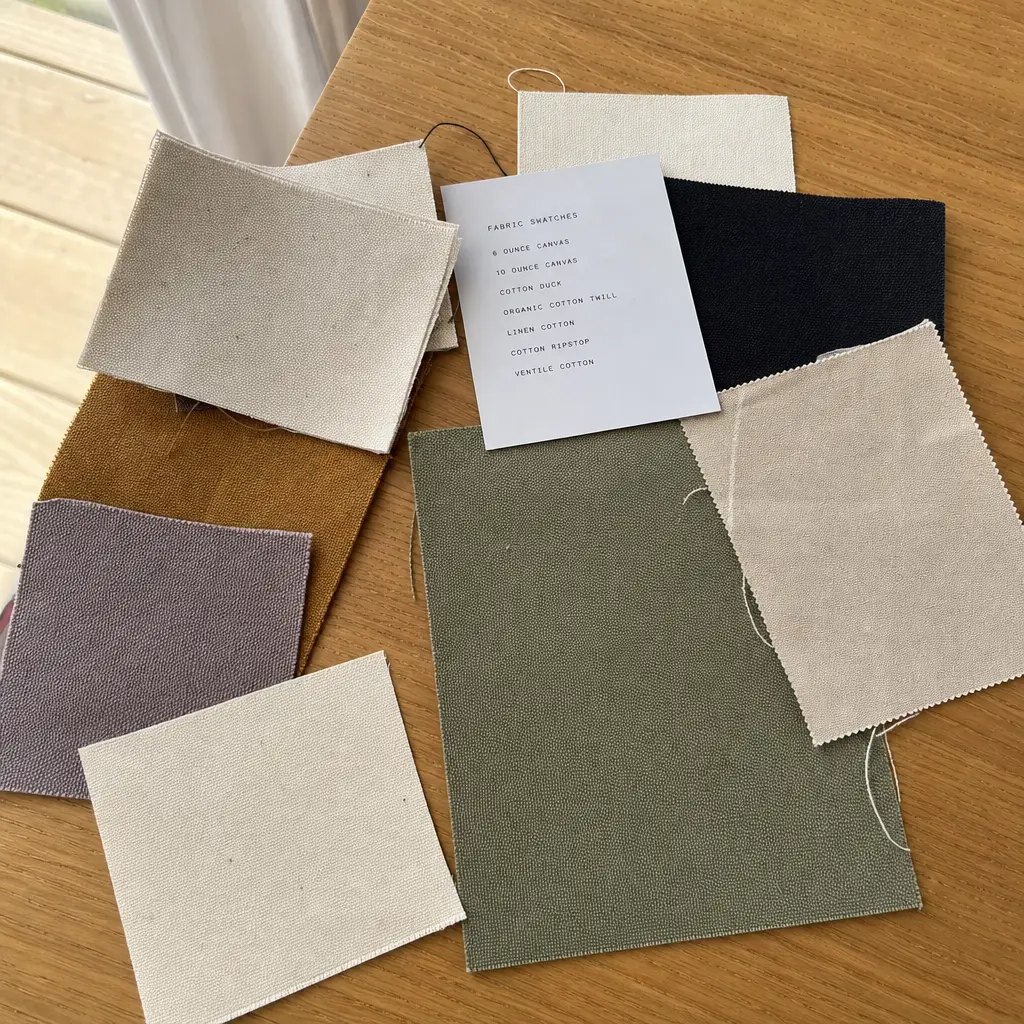
Logo placement cannot be separated from fabric weight. A 6 oz cotton bag lies flat and prints easily, but it does not behave like a 12 oz canvas grocery tote. Heavier canvas has more texture, more body, and more resistance at folded seams. It gives a better retail feel, but it also makes fine print details harder to reproduce cleanly.
Most wellness studio grocery totes work well in 10-12 oz canvas, roughly 340-410 GSM depending on yarn and weave. If a supplier quotes only ounces, request GSM as well. If another supplier quotes only GSM, request ounce reference and fabric swatch. Comparing a 10 oz open-weave canvas against a dense 10 oz canvas can still produce different print results, stiffness, and perceived value.
- 8 oz canvas: lower cost, easier folding, less premium hand feel, better for short campaigns.
- 10 oz canvas: common balance for branded studio retail and repeat-use totes.
- 12 oz canvas: stronger presence and durability, but higher fabric cost and slightly bulkier packing.
- 14 oz canvas: premium but may be overbuilt for grocery totes unless the brand sells heavy retail goods.
Set Logo Position From Construction Points
The most common placement mistake is approving a logo by eye from a digital flat drawing. In production, the factory needs measurable references. Use the top opening, side seams, bottom seam, handle stitching line, or gusset fold as fixed points. For a standard canvas grocery tote, a front logo centered horizontally and placed about 90-120 mm below the top opening is often more reliable than placing it in the mathematical center of the panel.
If the tote has a deep gusset, the bag front may curve outward when filled. A logo positioned too close to the bottom can disappear into the fold or look distorted when the tote sits on a counter. A logo too close to the handle stitching can look cramped. The approved sample should include a placement sheet showing distances, not only a photo.
- Define horizontal placement from left and right side seams.
- Define vertical placement from the top opening or bottom seam, not from a floating artwork layer.
- Keep important logo details away from gusset folds and stitch lines.
- Use a tolerance such as plus or minus 5 mm for standard screen print placement where realistic.
Match Print Method To Wellness Brand Artwork
Most wellness studio logos are suitable for screen printing: solid marks, simple typography, one to three colors, and calm brand palettes. Screen print is usually the best commercial option for canvas grocery totes because it gives good durability, controlled cost at volume, and a clean look on natural canvas. The buyer should still provide vector artwork and avoid judging the result from a digital mockup.
Heat transfer can be useful for gradients, photographic artwork, or small multicolor batches, but it changes the hand feel and can look less integrated with canvas. Embroidery is possible for small chest-style marks or side labels, but it is usually not ideal for large front grocery tote logos because the stitch area can pull the fabric and raise cost. For premium subtle branding, a woven side label plus small front print often works better than an oversized multicolor print.
- Screen print: best for solid logos and repeat bulk orders.
- Heat transfer: useful for detailed multicolor art, but test flexibility and edge adhesion.
- Embroidery: better for small marks, not large grocery tote panels.
- Woven label: good for side seam branding and understated retail positioning.
Control Color Before Bulk Printing
Color approval on canvas needs practical tolerance. Natural canvas is not a white paper substrate; it has seed flecks, yarn shade variation, and surface texture. A warm beige fabric will make ink appear different from the same Pantone on coated paper. Black, dark green, navy, clay, and muted brown often perform well for wellness studios because they maintain visibility without requiring thick ink coverage.
For dyed canvas, the risk changes. A light logo on dark canvas may need underbase printing to achieve opacity. That adds screens, setup cost, and sometimes a thicker print feel. If the brand requires exact color matching, the RFQ should state whether color approval is based on Pantone on fabric, an approved strike-off, or a reasonable commercial tolerance.
- Approve ink color on the actual fabric, not only on paper or screen.
- Use one-color artwork when budget, MOQ, and lead time need to stay controlled.
- For light ink on dark canvas, confirm whether an underbase is included.
- Reject strike-offs with obvious pinholes, poor coverage, heavy bleeding, or fuzzy edges.
Understand MOQ Logic And Cost Drivers
MOQ is not only a factory preference; it is tied to fabric sourcing, dyeing, printing setup, label production, cutting efficiency, and packing. A natural canvas tote using stock fabric and one-color screen print can usually start at a lower MOQ than a custom dyed tote with a woven side label, custom inner label, hangtag, and individual retail packing.
When comparing quotes, do not accept a low unit price without knowing what is excluded. One quote may include 12 oz canvas, side label, individual packing, and export carton marks. Another may quote 8 oz canvas with one front print and bulk carton only. The difference will show up later as artwork charges, sample charges, repacking fees, or quality issues.
- Fabric weight and width affect material consumption and cutting yield.
- Number of print colors affects screens, setup time, and rejection risk.
- Custom labels may carry their own MOQ separate from bag production.
- Individual packing increases labor, carton volume, and plastic or paper material cost.
- Custom dyed fabric usually requires more planning than stock natural canvas.
Build The Sample Approval Around Real Handling
A pre-production sample should prove more than appearance. For canvas grocery totes, the buyer should load the sample with expected studio retail items and observe how the logo sits when the bag is carried, placed on a table, and folded for packing. If the front panel buckles or the logo falls into the bottom crease, the placement should be corrected before bulk production.
The sample should also verify sewing quality. Handle drop must fit the intended carry style, especially if the studio expects shoulder carry. A handle that works for hand carry may feel too short when the tote is filled with retail purchases. The buyer should approve physical dimensions, fabric hand feel, logo scale, print color, side label position, and packing fold in one controlled sample approval.
- Measure the actual sample, not only the pattern specification.
- Photograph the tote empty, filled, carried, and folded.
- Rub the printed area after curing to detect weak adhesion or surface dusting.
- Check whether folded packing creates a hard crease through the logo.
- Keep one signed approval sample with the buyer and one with the factory.
Set QC Thresholds That Inspectors Can Use
Quality control should translate brand expectations into measurable factory criteria. For logo placement, a common workable tolerance is plus or minus 5 mm for front screen print on a sewn canvas tote, depending on panel size and construction. For side labels, the inspector should check orientation, seam capture, fold alignment, and whether the label remains readable after the bag is opened.
For fabric and sewing, QC should include GSM verification, dimension checks, stitch density, loose threads, handle bartack security, and carton condition. Print defects should be classified clearly. Wrong logo, wrong placement, severe smudging, and unsafe handle failure are critical or major defects, not minor cosmetic issues. If the buyer uses AQL inspection, the defect list should be agreed before inspection day.
- Finished width and height should follow approved tolerance, commonly plus or minus 10 mm depending on size.
- Handle drop should be measured because comfort changes quickly when it is too short.
- Logo skew should be checked against the top opening and side seams.
- Ink bleeding, transfer marks, and strong odor should be recorded as shipment risks.
- Cartons should be opened randomly after packing to inspect creasing and count accuracy.
Plan Packing For Logo Protection And Freight
Packing affects both presentation and landed cost. Flat packing helps keep the front logo visible and reduces hard wrinkles, but it increases carton footprint. Folding reduces carton size but can create a crease through the print if the fold line is not planned. For retail buyers and distributors, the correct packing method depends on whether the totes will be sold individually, used in studio welcome kits, or redistributed to multiple locations.
A practical carton plan should state pieces per carton, carton dimensions, gross weight, inner packing, moisture protection, and carton marks. Canvas absorbs moisture and odor more easily than synthetic bags, so clean packing and dry cartons matter. Overpacking heavy canvas totes into large cartons may reduce carton count but increases handling damage and makes warehouse receiving harder.
- Bulk flat pack is efficient for studio distribution and reduces logo creasing.
- Individual polybag protects the tote but may conflict with wellness brand packaging values.
- Paper band or recycled paper sleeve can work for retail presentation if cost allows.
- Carton gross weight should stay practical for manual handling, often below heavy-lift thresholds.
- Master carton marks should match PO, SKU, color, quantity, and destination requirements.
Protect The Schedule From Artwork And Curing Delays
Lead time risk often comes from decisions made before production starts. Low-resolution artwork, unclear placement, late label approval, and changed fabric color can push back sampling and bulk production. Screen printing also needs proper ink curing before packing. If totes are packed too soon, ink transfer, odor, or surface blocking can appear inside cartons.
A realistic schedule separates artwork confirmation, material preparation, sample making, sample courier time, approval, bulk cutting, printing, sewing, final inspection, packing, and export handling. Buyers should not compress all steps into one vague production lead time. If a wellness studio has a launch event, retail opening, or seasonal campaign, the latest approval date should be written into the PO.
- Artwork review should happen before fabric cutting, not after the sample is sewn.
- Printed strike-off approval reduces the risk of rejecting a finished sample for color.
- Bulk printing should allow drying or curing time before stacking and packing.
- Inspection booking should be planned before the final carton date.
- Late changes to logo size or placement can require new screens and new samples.
Specification comparison for buyers
| Spec decision | Recommended option | When it fits | Buyer risk to check |
|---|---|---|---|
| Front center logo placement | Logo centered 90-120 mm below top opening, print width 180-240 mm on standard grocery tote | Best for studio retail, welcome kits, referral gifts, and visible street carry | Logo may sit too low if tote height changes; approve placement from top edge, not only from bag center |
| Side label branding | Woven cotton side label 25-35 mm wide sewn into side seam or handle seam | Fits premium wellness brands wanting subtle branding and lower print coverage | Label color, fold type, and seam position must be approved before bulk sewing |
| Fabric weight | 10-12 oz canvas, roughly 340-410 GSM, with reinforced handle stitching | Good balance for grocery loads, studio merchandise, and repeat-use retail bags | Quotes may compare 8 oz to 12 oz as if equal; require GSM tolerance and fabric sample |
| Print method | Screen print for solid logos; heat transfer only for gradients or small multicolor runs | Most wellness studio logos are one to three colors and suit screen printing well | Fine lines can fill in on textured canvas; require minimum line width and strike-off approval |
| Logo color | One dark color on natural canvas, or two-color print on dyed canvas after testing | Works for calm wellness branding and keeps setup cost controlled | Natural canvas shade varies by lot; Pantone match should be judged on fabric, not paper |
| Handle branding | Avoid large handle print; use small woven label or contrast bartack if branding is needed | Useful when front panel is reserved for retail artwork or event graphics | Handle print can crack or distort around stress points and is harder to align consistently |
| MOQ logic | Start from fabric color and print setup: lower MOQ for stock natural canvas, higher for custom dye | Best for distributors testing multiple studio accounts with shared base construction | A low quoted MOQ may exclude custom label, dyed fabric, or individual packing |
| Packing format | Flat packed 50-100 pcs per export carton with moisture control and carton marks | Keeps panels smooth for retail presentation and reduces creasing across the logo area | Over-compressed cartons can crease printed logos; carton size and gross weight need approval |
Buyer checklist before sampling
- Define tote size by usable grocery volume, not only flat width and height; include gusset depth and handle drop.
- Specify fabric as oz and GSM with acceptable tolerance, such as 10 oz canvas at about 340 GSM with minus tolerance disclosed.
- Provide logo artwork in vector format with Pantone references and minimum line thickness for textured canvas.
- State logo placement from fixed construction points, such as top opening, side seam, bottom seam, or handle attachment.
- Decide whether branding is front print, side label, inside label, handle label, or a combination before sampling.
- Request a physical print strike-off on the confirmed fabric before approving the pre-production sample.
- Set acceptance criteria for print position tolerance, color tolerance, handle strength, seam security, and carton condition.
- Confirm whether retail folding, individual polybag, paper band, hangtag, barcode, or master carton only packing is required.
- Compare quotes using the same fabric weight, size, print area, packing method, and Incoterm.
- Reserve schedule time for artwork correction, sample courier transit, and bulk print drying before sewing or final packing.
Factory quote questions to send
- What exact fabric construction are you quoting: cotton canvas, cotton-poly canvas, recycled cotton blend, or organic cotton canvas?
- What GSM and ounce weight will be used, and what is the normal production tolerance for this fabric lot?
- Is the quoted fabric stock natural canvas, stock dyed canvas, or custom dyed fabric with a separate MOQ?
- What is the maximum recommended print size for our tote panel without distortion near seams or gusset folds?
- Which print method are you quoting, and how many screen, plate, or setup charges are included?
- Can you provide a printed strike-off on actual bulk fabric before the full pre-production sample?
- What placement tolerance can you hold for front print and side label after sewing?
- How many pieces per carton, what carton size, and what estimated gross weight are included in the quote?
- What is the sample lead time, bulk lead time after approval, and latest artwork approval date to hold shipment?
- Which quote items are excluded, such as hangtags, barcodes, inner labels, testing, inspection, pallets, or export documents?
Quality-control points to confirm
- Fabric GSM checked against approved sample with tolerance recorded before cutting.
- Finished tote dimensions measured flat, including width, height, gusset, and handle drop.
- Logo placement measured from the top opening and side seams using an approved placement sheet.
- Screen print surface checked for pinholes, smudging, poor opacity, and ink build-up on heavy weave.
- Print color compared to approved strike-off under consistent light, not only to digital artwork.
- Handle attachment inspected for bartack position, stitch density, loose thread, and load-bearing security.
- Side label position checked for fold direction, readable orientation, seam capture, and fraying.
- Bulk cartons checked for piece count, moisture protection, carton strength, and scannable shipping marks.
- Random finished pieces opened after packing to check logo creasing, transfer marks, and odor.
- AQL inspection plan agreed before shipment, with critical defects including wrong logo, wrong placement, and unsafe handle failure.