Start With The Bottle Load
A canvas grocery tote for a liquor retailer is not the same purchase as a light event giveaway bag. The tote may carry glass bottles, cans, mixers, and loyalty-club items in one trip from checkout to car. Before sending an RFQ, define the load you expect the bag to survive. A common practical test is three 750 ml wine bottles or two spirits bottles plus smaller items, but your own retail mix matters more than a generic claim.
The buyer problem is usually not whether the bag looks strong in a photo. It is whether the base holds shape, the handle remains comfortable, and the side seam does not twist when the tote is loaded unevenly. Liquor retail packaging also has a brand visibility function, so the tote must carry weight without stretching the front print out of shape.
- State the intended load in bottles and approximate kilograms, not only in words such as heavy duty.
- Include typical bottle diameters if the tote must handle wine, spirits, craft beer, or gift packs.
- Decide whether the bag is for checkout reuse, paid merchandise, corporate gifting, wine club pickup, or promotional giveaway.
- For store counter use, specify a gusseted base that can stand open while staff load bottles.
Choose Canvas Weight By Use
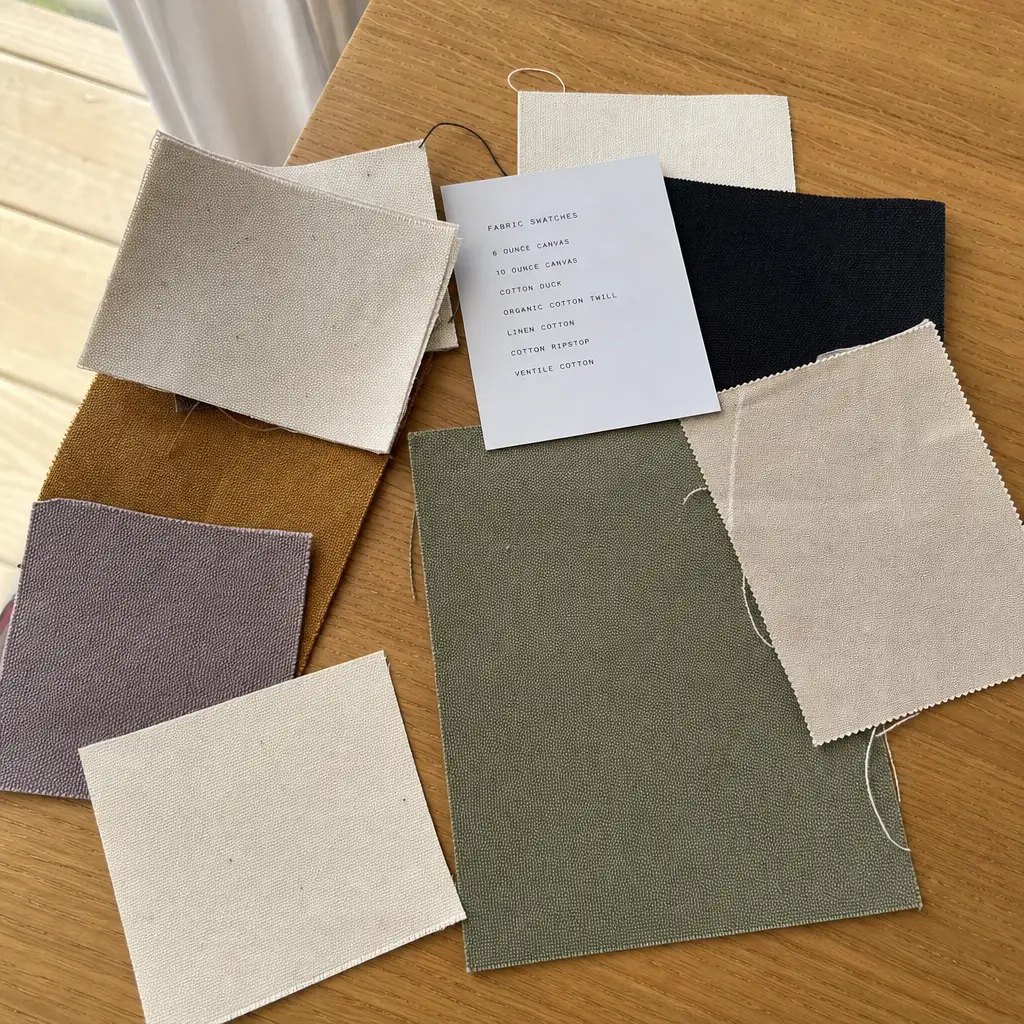
For wholesale canvas grocery totes used by liquor retailers, fabric weight is one of the first cost and performance decisions. A light 6 oz to 8 oz cotton fabric may work for low-cost promotions, but it usually feels underbuilt for bottles. A more reliable range is 10 oz to 12 oz canvas, roughly 340 to 407 GSM, when the bag needs a reusable retail feel and better handle support. Some premium programs use 14 oz canvas, but that adds material cost, sewing resistance, carton weight, and freight volume.
Do not compare quotes where one supplier lists 12 oz canvas and another writes 12 oz cotton without clarifying the construction. Canvas, drill, and plain cotton cloth can all be described loosely in casual quotation emails. For purchasing control, ask for fabric type, weight in GSM, finishing, shrinkage expectation, and color method. Natural unbleached canvas normally costs less than dyed canvas and avoids some color-matching issues, but it can show seed flecks and shade variation.
- 6 oz to 8 oz: budget events, light items, low reuse expectation.
- 10 oz to 12 oz: practical wholesale range for grocery totes carrying bottles.
- 14 oz and above: premium retail merchandise, but review sewing, freight, and folding bulk.
- Dyed canvas: better brand color control, but check dye fastness, shade tolerance, and MOQ.
Fix The Grocery Tote Shape
The tote shape should be engineered around checkout handling. A standard flat tote is easy to print and cheap to sew, but it can be awkward for liquor stores because bottles push against the corners and the bag collapses while staff load it. A grocery-style tote with side gussets and a boxed bottom is usually more suitable. It gives the bag volume, helps it stand open, and spreads the weight across the base instead of forcing everything into two bottom corners.
Finished dimensions need to be written as finished size after sewing, not cut panel size. For example, a useful starting point might be around 34-38 cm wide, 36-42 cm high, and 12-18 cm gusset, depending on bottle mix and local grocery-bag preferences. Handle drop is equally important. Short handles feel controlled for heavy bottles, while long shoulder handles improve convenience but can swing and strain seams when overloaded.
- Use a boxed bottom or full gusset when the tote must carry bottles upright.
- Set handle drop by carrying style: hand carry around 18-22 cm, shoulder carry often 25-30 cm.
- Specify top hem depth so the handle attachment has enough fabric layers for reinforcement.
- Add measurement tolerances to the spec sheet before sampling.
Handle Reinforcement Matters
Handle failure is the defect that customers remember. For liquor retail, self-fabric canvas handles give a consistent look and can be strong when properly sewn. Cotton webbing handles may reduce sewing bulk and improve grip, but color matching and texture may differ from the body fabric. The important detail is not just the handle material; it is the width, stitch pattern, thread quality, and reinforcement area.
A simple single-row stitch at the top hem may pass a quick visual check but is not enough for a loaded bottle tote. A box-X stitch or dense cross-stitch pattern spreads the load and gives inspectors a visible acceptance point. The top hem should be folded cleanly and strong enough to hold repeated stress. If the tote uses heavy 12 oz or 14 oz canvas, confirm the factory's sewing machines can handle multiple fabric layers without skipped stitches.
- Use 3 cm to 3.8 cm handle width for better comfort under bottle weight.
- Define box-X, cross-stitch, or bartack reinforcement rather than leaving the factory to choose.
- Review the back side of handle stitching for skipped stitches and loose thread.
- Run a loaded hang test on the pre-production sample before approving bulk.
Print Method And Logo Risk
Most liquor retailers use these totes as moving brand media, so the logo must stay clean after handling. Spot color screen printing is normally the most stable and cost-efficient method for bold logos, store names, simple illustrations, and event graphics. It works well on natural canvas and many dyed canvases, provided the ink is cured correctly. For detailed multicolor artwork or small batch personalization, heat transfer may be considered, but it needs careful testing for edge lift, cracking, and hand feel.
Large solid ink areas on heavy canvas create two risks: stiffness and curing failure. If the front panel becomes too rigid, the tote feels cheap even when the fabric is strong. If ink is under-cured, prints may transfer in bundles or fail during rub testing. For better quotation comparison, send vector artwork, Pantone references, print size, print position, number of colors, and whether the print is on one side or two sides.
- Screen print: best for most one-color to four-color retail logos.
- Heat transfer: useful for fine detail or short runs, but test on the actual canvas.
- Embroidery: premium look, higher cost, less suitable for very large logos on grocery totes.
- Woven side label: good for subtle brand detail without increasing front print complexity.
MOQ Logic And Cost Drivers
The cleanest wholesale quote is built from one fabric color, one bag size, one construction, and one print layout. Costs rise when the order is split into multiple fabric colors, store-specific logos, different carton markings, or separate packing rules. MOQ is not only a factory preference; it is tied to fabric purchasing, dyeing minimums, screen setup, cutting efficiency, line changeover, and packing control.
Procurement teams often lose quote accuracy by asking for too many options at once without quantities. A better method is to request a base quote and controlled alternates. For example, quote 3,000 pieces natural 12 oz canvas with one-color front print, then separate adders for two-side print, dyed fabric, woven label, removable divider, and individual polybag. This makes supplier comparison easier and prevents hidden upgrades from being buried in a single unit price.
- Separate tooling, screen, sample, label, and packing charges from unit price.
- Ask for MOQ per fabric color and per print design, not only total order MOQ.
- Request price breaks at realistic quantities such as 1,000, 3,000, 5,000, and 10,000 pieces.
- Keep store allocation changes out of production specs when carton labels can solve the issue.
Sampling Before Approval
A photo sample is not enough for a liquor tote program. The pre-production sample should use the quoted fabric weight, same handle construction, same print method, and same packing fold if creasing matters. If the supplier sends a similar tote from previous production, treat it only as a reference. It cannot approve your order unless materials and construction match your quote.
Sample review should be practical. Load it with the bottle mix you sell, leave it hanging for a short period, carry it by hand and shoulder if both uses are expected, then inspect handle seams and bottom corners. Measure the finished size against the spec sheet. Review whether bottles stand upright, whether the bag tips over, and whether the print remains readable when the tote is full.
- Approve fabric swatch, construction sample, and printed sample before bulk if timing allows.
- Photograph the approved sample from front, back, inside seam, bottom, handle stitch, and carton fold.
- Record print position from top edge and side edge so inspection has a measurable standard.
- Keep one signed approved sample with the buyer and one with the factory.
Packing And Store Distribution
Packing is a cost and operational issue, not an afterthought. Heavy canvas totes take carton space quickly, especially when they have boxed bottoms, wide gussets, or stiff print areas. A low unit price can become less attractive if the carton count, CBM, or warehouse handling cost is high. Before issuing a PO, request carton dimensions, pieces per carton, gross weight, net weight, and estimated total CBM.
For retail distribution, inner bundles of 25 or 50 pieces are usually easier for warehouse and store teams than loose bulk packing. Individual polybags add cost and plastic use, but they may be needed for e-commerce resale, dust protection, or premium merchandise. If the bag will be distributed to multiple stores, carton marks and barcodes must match receiving requirements. Wrong carton marks can create delays even when the product itself is acceptable.
- Set a maximum carton gross weight that warehouse teams can handle safely.
- Avoid folding directly across large fresh ink areas when possible.
- Use carton marks showing item code, color, quantity, PO number, and destination if required.
- Confirm whether retail labels, hangtags, or barcode stickers are applied at factory or locally.
Lead Time And Schedule Risk
Lead time for canvas grocery totes depends on fabric availability, dyeing, sample rounds, print approval, production queue, and packing complexity. A simple natural canvas tote with one-color screen print can move faster than a dyed canvas tote with dividers, labels, and store-specific carton sorting. Buyers should not measure lead time from quotation date. The useful clock starts after artwork approval, deposit, confirmed spec sheet, and pre-production sample approval if required.
Schedule risk usually appears in the details: late Pantone approval, artwork changes after screen making, uncertain label compliance, unclear carton marks, or a failed print sample. For liquor retailers planning holiday campaigns, wine-club pickups, or new store openings, build a decision calendar backward from the required delivery date. Leave time for sample transit, bulk inspection, export booking, customs, and domestic distribution.
- Separate sample lead time from bulk production lead time in the quote.
- Do not release bulk cutting until fabric weight, color, and dimensions are approved.
- Freeze artwork before screen setup to avoid extra charges and lost days.
- For seasonal retail programs, book inspection and shipping space before goods are packed.
Landed Cost Comparison
The lowest unit price is not always the lowest landed cost. A thicker tote may cost more per piece but last longer and support a higher retail or loyalty value. A thinner tote may reduce ex-factory cost but increase complaints, returns, or brand damage if handles fail. Freight is also affected by carton volume, carton weight, and packing method. Heavy canvas grocery totes should be compared by landed cost per usable bag, not only factory price.
Build your comparison sheet with the same assumptions for all suppliers. Include unit price, sample charge, screen charge, label charge, carton packing, estimated CBM, freight method, duty basis, inspection cost, and any local repacking. If one supplier quotes a lower price but uses lighter canvas, smaller dimensions, or fewer stitches at the handle, that is not a saving; it is a different product.
- Compare fabric GSM, finished size, and handle reinforcement before comparing price.
- Add freight estimate using supplier carton dimensions and total CBM.
- Include inspection and repacking costs if the order ships to multiple retail locations.
- Treat vague specifications as cost risk because they leave room for cheaper production choices.
Specification comparison for buyers
| Spec decision | Recommended option | When it fits | Buyer risk to check |
|---|---|---|---|
| Fabric weight for loaded bottles | 10 oz to 12 oz cotton canvas, roughly 340-407 GSM before washing or finishing | Store checkout bags, gift-with-purchase campaigns, club member bags, and reusable bottle carriers where the tote may hold 3-6 bottles plus groceries | Very light canvas can pass a photo review but sag badly under bottle weight; request loaded-bag testing and actual GSM tolerance on the quote |
| Bag construction | Grocery tote with boxed bottom, side gusset, folded top hem, and reinforced handle stitching | Liquor retailers that need the tote to stand open at checkout and fit bottles without crushing labels | Flat promotional totes are cheaper but do not sit well on the counter and can put too much strain on the top seam |
| Handle type | Self-fabric canvas handles, 3 cm to 3.8 cm wide, with cross-stitch or box-X reinforcement | Orders where customers may carry the tote from store to parking lot or public transport | Narrow webbing or single-row stitching can cut into the hand and fail during load tests; define stitch pattern and handle drop |
| Print method | Spot color screen print for bold retailer logos; heat transfer only for small detailed runs after wash and rub testing | Most liquor retail logos, event graphics, and store branding on natural or dyed canvas | Large ink coverage on heavy canvas can feel stiff and crack if curing is weak; approve print hand feel and rub resistance on a pre-production sample |
| Interior bottle protection | Open grocery tote for general use; optional removable bottle divider only when the retail use case requires mixed bottle transport | Retailers selling wine, spirits, craft beer, or gift bundles with different pack sizes | Fixed dividers increase sewing labor, carton volume, and sample time; do not add them unless merchandising needs justify the cost |
| MOQ strategy | Start with one fabric color and one print layout, then split quantities by store only through carton labels or hangtags | Importers and distributors consolidating orders for multiple retail doors | Too many colorways or store-specific prints push up setup cost, sampling rounds, and production error risk |
| Packing method | Flat folded or half-folded bags in export cartons with inner polybag bundles of 25-50 pieces | Warehouse receiving, store allocation, and retail backroom storage where bags are replenished by carton or bundle | Over-compressed cartons can crease heavy print areas; request carton dimensions, gross weight, and bundle count before PO release |
| Compliance and labeling | Country-of-origin label, fiber content label if required by destination market, and retail barcode or carton mark when needed | Wholesale programs shipping through distributors, chains, or third-party logistics warehouses | Missing labels can delay receiving even when the tote quality is acceptable; include label artwork and placement in the approved sample file |
Buyer checklist before sampling
- Define the real load: number of bottles, bottle diameter range, expected carry distance, and whether the bag must stand open at checkout.
- Specify canvas weight in oz and GSM, plus allowed tolerance, instead of using only words such as heavy duty or premium.
- Fix finished dimensions with tolerance: width, height, gusset, handle width, handle drop, top hem depth, and boxed bottom size.
- Choose construction details before quoting: folded seams, overlock or bound inner seams, handle reinforcement pattern, and optional bottom insert or divider.
- Send vector logo artwork with Pantone colors, print size, print position, and whether ink hand feel can be slightly raised or must stay soft.
- Request one physical sample made in the quoted fabric weight and construction, not only a photo of a previous tote.
- Approve sample by loading it with actual bottles and recording seam behavior, handle comfort, print alignment, and whether the base stands flat.
- Lock packing instructions: pieces per bundle, inner bag use, carton quantity, carton marks, retail barcodes, and max gross carton weight.
- Compare quotes using same fabric GSM, same print area, same carton packing, and same sample approval basis.
- Keep a signed spec sheet, sample photos, print proof, carton mark, and inspection checklist in one purchase file before deposit.
Factory quote questions to send
- What is the actual canvas weight in oz and GSM, and what tolerance do you apply after dyeing or finishing?
- Is the fabric greige, bleached, natural, dyed, washed, or laminated, and will shrinkage affect the finished bag dimensions?
- Which seam construction and handle reinforcement are included in the quoted price?
- What maximum loaded weight have you tested for a similar tote, and how was the test performed?
- What print method is quoted, how many colors are included, and what is the maximum print area before price changes?
- Are screen setup charges, sample charges, mold fees, divider charges, labels, and carton marks included or listed separately?
- What is the MOQ per fabric color and per print design, and what surcharge applies below normal MOQ?
- How many days are needed for artwork proof, material sourcing, pre-production sample, bulk production, and packing after sample approval?
- What are the carton dimensions, carton quantity, gross weight, and estimated CBM for the quoted order quantity?
- What inspection standard will be used for stitching, stains, print defects, measurement tolerance, and carton drop risk?
Quality-control points to confirm
- Finished size tolerance should normally be controlled within +/-1 cm for width and height and +/-0.5 cm to +/-1 cm for handle drop, depending on fabric shrinkage and sewing method.
- Canvas GSM should be verified from a cut sample or supplier test report, with the agreed tolerance written on the purchase order.
- Handle attachment should show no seam opening, tearing, or loose threads after a loaded hang test using the buyer's expected bottle weight plus a safety margin.
- Print position should stay within the approved tolerance, commonly +/-0.5 cm to +/-1 cm from the approved artwork placement.
- Screen print should pass dry rub testing and basic tape pull review before bulk packing, especially on dark dyed canvas or large ink blocks.
- Top hem, side seams, and bottom corners should be checked for skipped stitches, broken thread, needle holes, puckering, and raw edges.
- Random cartons should be opened to verify bundle count, folding method, barcode or label placement, carton marks, and mixed-style separation.
- Odor, mildew marks, oil stains, dye streaks, and excessive lint should be treated as shipment risks, not minor cosmetic issues for retail bags.