Why liquor retailers need a different tote RFQ than standard promo bags
A canvas grocery tote for liquor retail is not the same product as a flat event giveaway bag. The use case is heavier, less forgiving, and more visible at the point of sale. Glass bottles create vertical load, concentrated bottom stress, and handle strain that expose weak sewing and underweight fabric fast. If your RFQ reads like a general marketing tote inquiry, suppliers will quote the cheapest interpretation and the comparison will be unreliable.
The main buying problem is simple: buyers need supplier quotes that reflect real bottle-carry performance, not just a logo on canvas. That means your RFQ has to define load use, bag geometry, handle reinforcement, print position on gussets, and packing method. Once those fields are fixed, price differences between factories become easier to explain and negotiate.
- Promo tote logic usually starts at 6 oz to 10 oz fabric; liquor carry use often starts at 12 oz canvas.
- Flat bags look cheaper on quote sheets but often fail in store because bottles swing and the bottom seam distorts.
- A gusseted grocery shape improves carrying stability and shelf presentation when folded at the checkout counter.
- For chain retailers, carton efficiency matters because these bags often ship to a DC, then to stores in smaller allocations.
Start with the load case, not the logo
The first line of an effective RFQ should describe what the bag must carry. A two-bottle wine program, a mixed spirits gift bag, and a reusable grocery-format checkout bag do not need the same fabric or dimensions. When the use case is not defined, one supplier may quote a 10 oz flat tote while another quotes a 14 oz gusseted tote with reinforced handles. Both may appear competitive, but they are not quoting the same product.
For most liquor retailers, the practical load cases are 2, 3, or 4 bottles of standard 750 ml glass. If your program includes larger format bottles, box inserts, or bundled retail offers, state that up front. Good factories will use that information to guide gusset width, handle drop, and seam construction. Weak suppliers will still quote a generic tote, which itself becomes useful evidence during supplier comparison.
- Typical 2-bottle tote: moderate gusset, lighter reinforcement acceptable if fabric is still heavy enough.
- Typical 3-bottle tote: strong handle reinforcement and bottom seam quality become more important.
- Typical 4-bottle carry format: 12 oz to 14 oz canvas, wider base, and more disciplined packing to avoid shape damage.
- If the tote is also used as a branded reusable shopping bag, shoulder carry comfort matters as much as load strength.
Fabric and construction specs that change both performance and quote value
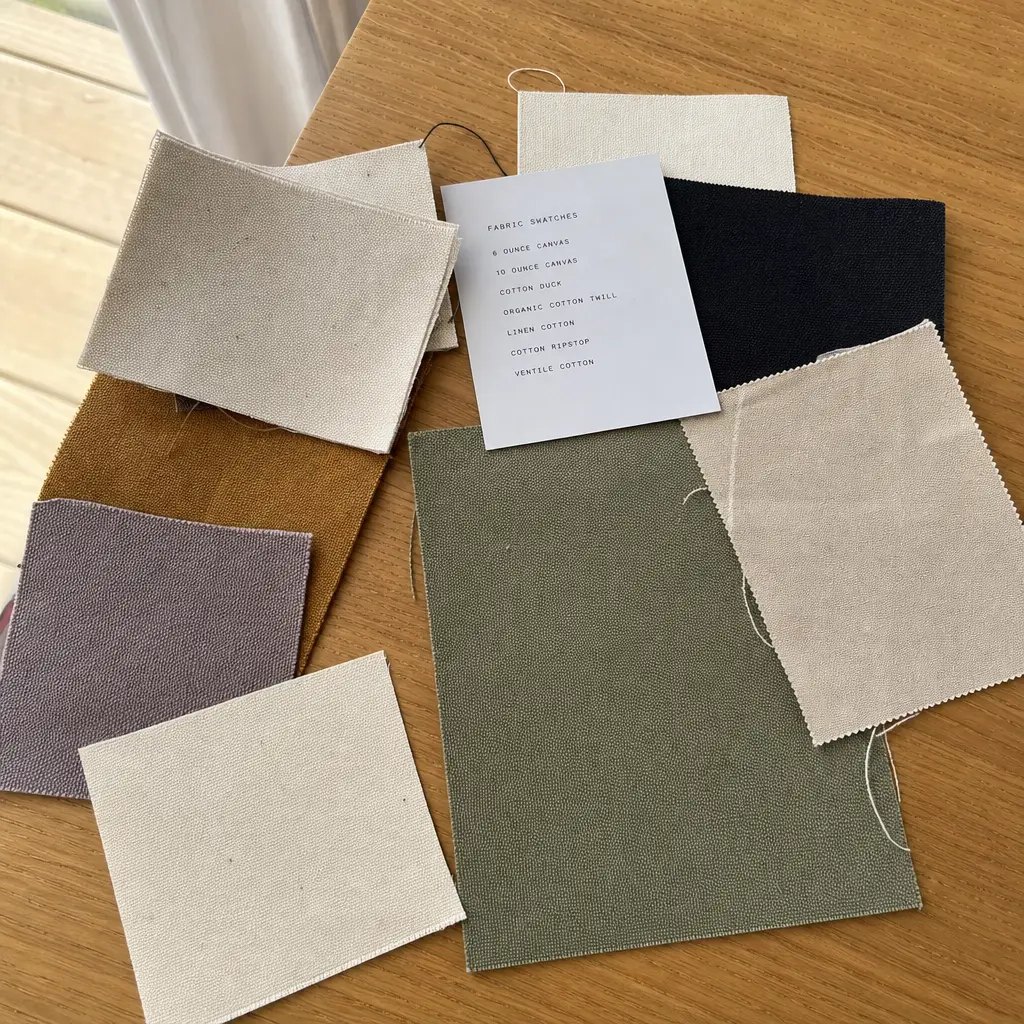
Canvas weight is one of the biggest quote drivers, but buyers still get inconsistent offers because suppliers mix oz terminology, unfinished fabric references, and vague claims like heavy canvas. Put both systems in your RFQ when possible: 12 oz to 14 oz canvas, approximately 407 to 475 GSM finished weight. Also specify whether natural canvas is acceptable or whether dyed fabric, recycled cotton blend, or laminated lining is under consideration. Every one of those changes material cost and lead time.
Construction details matter almost as much as fabric weight. A bottom gusset of 10 to 15 cm usually gives enough base area for bottle carrying without making the tote bulky. Side gussets improve shape and print visibility when filled. Handle width should normally be 2.5 to 3.5 cm, with folded or self-fabric construction. For repeated bottle-carry use, require box stitch plus bartack reinforcement at the handle join. That one line removes a lot of weak quote interpretations.
- Recommended baseline for liquor grocery totes: 12 oz canvas, bottom gusset, reinforced shoulder handles.
- Natural cotton canvas usually gives the best cost and print consistency for simple store branding.
- Dyed canvas adds color impact but usually extends material planning and color approval steps.
- Recycled cotton blends can work, but surface consistency may affect fine print detail and exact shade matching.
- If inner dividers are considered, quote them separately; they add labor, slow sewing, and increase carton volume.
Print method selection: where many cost surprises begin
For most liquor retailer programs, screen print is still the most practical decoration method. It handles store logos, campaign slogans, and simple graphic panels at a controllable unit cost. It is also easier to inspect in bulk than more complex transfer methods. But screen print on textured canvas needs realistic artwork planning. Fine reverse lines, dense solids, and edge-critical branding often look worse in bulk than on digital mockups.
If your artwork includes photography or gradients, heat transfer or digital printing may look attractive, but they change both cost and defect profile. Transfers can feel heavier, and adhesion on rough canvas should be tested. Digital printing may suit low-volume color variety, but the per-unit cost often makes less sense for broad store programs. A disciplined RFQ should request the preferred method plus an alternate pricing option if the artwork could move either way.
- Screen print suits 1 to 3 solid colors and typically gives the best cost stability at scale.
- Provide print area dimensions and placement reference from seams, not only centered front artwork.
- Request acceptable color variance and print alignment tolerance, especially on gusseted bags.
- If using dark dyed canvas, ask whether an underbase is needed; it affects print feel and cost.
- For premium programs, woven labels or side labels can add brand detail without enlarging front print cost.
MOQ logic: how to avoid paying for complexity you do not need
MOQ is not just a supplier gatekeeping number. It is usually a result of fabric sourcing, print setup, cutting efficiency, and carton planning. Buyers often push for too many colorways or too many size options on the first order, then wonder why quotes vary sharply. A simpler first run usually gets a better unit price and cleaner production control. Once the bag shape and approval standards are stable, you can expand variations with less risk.
The most efficient first PO structure is usually one bag size, one fabric weight, one or two print colors, and one standard packing method. If your retail rollout needs multiple logos by store group, request a base quote for the common bag body and a surcharge per print version. This lets you compare true setup costs rather than treating all artwork variation as hidden margin.
- Natural canvas stock may support lower MOQ than custom dyed fabric.
- Each print color usually adds setup and inspection complexity, even when unit cost increase looks small.
- Multiple bag sizes reduce cutting efficiency and can create carton planning issues at the DC level.
- Mixed assortments are fine if the carton marking and pack ratios are fixed clearly in advance.
How to build a quote sheet that suppliers cannot interpret three different ways
A usable quote sheet should force line-by-line comparability. Buyers often request a single FOB price without separating sample cost, print screens, labels, insert options, or packing assumptions. That creates a bad comparison because one supplier includes export polybagging and another does not; one includes screen charges and another hides them until artwork approval. A clean RFQ should break the product into cost-bearing elements.
In practice, your sheet should include product spec, print spec, packing spec, compliance or testing requirement if any, sample requirement, and commercial terms. Add quantity breaks that reflect realistic purchase scenarios, such as pilot volume, first production volume, and repeat volume. This gives you immediate visibility into whether a supplier is set up for long-term volume or only chasing an initial order.
- Request pricing at at least three volume breaks, for example 3,000, 5,000, and 10,000 units.
- Separate optional adders: divider, base board, woven label, hangtag, or custom care label.
- Request FOB and ex-works only if you can compare freight independently; otherwise stay consistent on one trade term.
- List sample lead time and bulk lead time separately, not as one blended promise.
- Require carton dimensions and gross weight in the quote, especially if you compare sea and air replenishment scenarios.
Sample approval should test use, not just appearance
Many tote programs fail because the sample approval is based on logo position and overall look only. For liquor retail use, the sample should also be treated as a functional test piece. Load it with the planned bottle count, carry it by hand and over the shoulder, and observe whether the base collapses, the side seams twist, or the handle attachment puckers. These simple tests catch more sourcing mistakes than lengthy email clarification.
The best approval flow uses two stages. First, review a development sample for shape, fabric, and handle logic. Second, approve a pre-production sample in actual bulk fabric and print method before cutting the full order. If the product includes dyed canvas or exact Pantone branding, a print strike-off or lab dip step may be needed before final sample sign-off.
- Measure finished width, height, gusset depth, and handle drop against the RFQ table.
- Load test with actual bottle weight or equivalent dummy weight to evaluate seam behavior.
- Fold and repack the sample to see whether print cracking, edge marking, or severe creasing appears.
- Review the inside seam finish if the bag is unlined; exposed raw edges should still be neat and consistent.
- Approve sample photos alone only for very simple repeat orders; new programs need physical review.
QC thresholds that make sense for printed canvas liquor totes
Quality control for this category should be practical and defect-driven. Your retail customer is unlikely to reject a bag over minor natural slub variation in cotton, but they will reject a visibly crooked logo, a weak handle attachment, or a bag that cannot stand with the intended bottle load. Build the QC criteria around end use and shelf presentation rather than luxury-gift-bag standards that are expensive to enforce on a grocery-style canvas product.
Define critical, major, and minor defects before production starts. Critical defects usually include broken handles, holes, severe contamination, or wrong branding. Major defects often include off-position print beyond tolerance, unstable dimensions, missing bartacks, or severe seam skew. Minor defects can include modest natural color variation, light thread tails, or slight panel waviness that does not affect use.
- Dimension tolerance should be realistic for sewn canvas, usually tighter on handle drop than on panel width.
- Print placement tolerance should be measured from a fixed seam reference point.
- Use a simple load simulation during inspection for a sample subset if carry performance is central to the program.
- Carton audit matters because over-compressed bags can arrive wrinkled with print offset.
- If a base board is included, inspect insertion consistency and corner fit, not just bag body sewing.
Packing plan: the hidden driver of freight, store handling, and damage claims
Packing is easy to overlook because the tote itself is simple, but for importers and distributors it affects landed cost directly. A gusseted canvas tote can compress well if folded correctly, but too much compression leaves hard creases and possible print transfer. If your order moves by sea, carton density is an advantage up to the point where the bag shape is damaged. If part of the order may move by air as a replenishment, carton dimensions become even more important.
Retail buyers should decide whether the bag ships bulk to a DC or pre-bundled for store count allocation. Bulk packing in bundles of 25 or 50 often works best, but if stores receive fixed campaign kits, pre-assorted carton counts save internal labor later. This is where a slightly higher packing cost at factory level can reduce downstream distribution cost.
- State bundle count and whether individual polybags are prohibited, optional, or required for moisture protection.
- Set a maximum carton gross weight that warehouse teams can handle safely, often around 12 to 18 kg depending on buyer preference.
- Ask for carton dimensions in centimeters so freight forwarders can estimate cube accurately.
- If shipping in humid season or long ocean route, consider simple moisture barrier packing rather than full individual bagging.
- Require shipping marks that match the distributor SKU or campaign code to avoid relabeling at destination.
Lead time planning and the schedule risks buyers usually miss
Lead time for canvas totes is often quoted too simply. A supplier may say 25 to 35 days, but that may assume greige fabric in stock, simple one-color print, and no approval delays. Once dyed fabric, woven labels, inserts, or multiple print versions are added, the path changes. The realistic schedule should separate sampling, material prep, bulk cutting, printing, sewing, final inspection, and booking to ship.
The biggest avoidable delays are usually buyer-side: slow artwork sign-off, late approval on print strike-off, and packaging changes after bulk production begins. Your internal team should align merchandising, brand, and logistics before the PO lands. A factory can only hit the date if the RFQ and approvals are stable enough to manufacture against.
- Natural canvas with stock fabric usually moves faster than custom dyed canvas.
- Screen print lead time depends on artwork readiness and whether exact Pantone matching is required.
- Woven labels and custom hangtags may need separate approval windows before assembly.
- Book extra buffer if the order mixes several print versions or special inserts.
- Ask for a simple production timeline with milestone dates rather than one total lead-time figure.
Specification comparison for buyers
| Spec decision | Recommended option | When it fits | Buyer risk to check |
|---|---|---|---|
| Fabric weight | 12 oz to 14 oz canvas, about 407 to 475 GSM | Best for carrying 2 to 4 wine or spirit bottles with less bag distortion | Some suppliers quote lighter 10 oz fabric but call it heavy canvas; require finished GSM tolerance and fabric construction |
| Bag construction | Bottom gusset 10 to 15 cm and side gusset if bottle stability matters | Liquor chains that use the tote as a reusable bottle carry bag rather than a flat promo tote | Flat totes tip and stress handles under bottle weight; request load-use photos or sample fill test |
| Handle attachment | Cross stitch plus bartack reinforcement | Higher load retail use, especially for 3-bottle and 4-bottle carry formats | Plain box stitch may pass visual inspection but fail during actual carry use; define minimum stitch density |
| Handle material | Self-fabric handles with folded edge, 2.5 to 3.5 cm width | Most liquor retail programs where comfort and cost must balance | Cotton webbing upgrades cost and appearance; verify whether handle GSM matches body or is lighter |
| Printing method | Screen print for simple 1 to 3 color logos; heat transfer only for photo detail | Store-branded grocery totes with straightforward logo placement | Large solid ink areas can crack on rough canvas if curing is poor; ask for rub test and alignment tolerance |
| Bottle support option | Add sewn divider or removable paperboard base only if needed | Gift-focused retail sets or premium bottle purchase promotions | Internal dividers slow sewing and raise carton volume; many buyers add unnecessary complexity without enough shelf value |
| MOQ route | Single size and single print color for first run; split colors only after approval | New retail program testing sell-through or store rollout | Too many colorways push buyers into higher sample cost, longer lead time, and uneven inventory consumption |
| Packing method | Flat packed in export carton with bundle count by 25 or 50 and moisture barrier if humid route | Import container or LCL shipment to distributors and chain store DCs | Over-compressed cartons leave handle creases and print offset; define carton dimensions and max gross weight |
| Quote basis | FOB with tooling, sample, print screens, and carton details separated | When comparing multiple factories line by line | All-in quote hides cost drivers; suppliers may omit screen charges, test cost, or export packing assumptions |
Buyer checklist before sampling
- State the intended bottle load: 2, 3, or 4 standard 750 ml bottles, and whether the bag must stand upright when filled.
- Specify finished bag size in centimeters including gusset depth, not only approximate width and height.
- Define fabric as finished canvas weight in GSM or oz plus cotton content and whether recycled content is acceptable.
- Set handle dimensions, drop length, reinforcement method, and minimum load expectation for in-store use.
- Include print artwork size, print colors by Pantone reference, print sides, and acceptable print placement tolerance.
- State whether pre-production sample approval is required before bulk fabric cutting or before bulk printing only.
- List packaging format: units per polybag if any, bundle quantity, carton dimensions target, and max carton weight.
- Request quote breakouts for sample cost, print screen charges, FOB price, and any surcharge for gusset, base insert, divider, or special labels.
- Define inspection standard or AQL level and name the defects considered critical for this program.
- State shipping term, destination port, target ex-factory date, and whether the order is for one SKU or mixed color assortment.
Factory quote questions to send
- What finished fabric weight do you guarantee after washing or finishing, and what tolerance do you apply per production lot?
- Is the quoted handle reinforcement box stitch only, or box stitch plus bartack at both ends?
- What is the tested safe carrying load for this size and handle construction using glass bottle weight simulation?
- Does your quote include screen charges, color matching, strike-off, and pre-production sample courier cost?
- If the tote has a gusseted base, how do you control bottom seam alignment and corner twist during sewing?
- What carton count are you quoting, and what are the estimated carton dimensions and gross weight?
- Do you print before cutting or after sewing, and how do you control print position on gusseted bags?
- What defects are classified as major for your in-line and final inspection on printed canvas bags?
- What lead time is based on greige fabric in stock versus dyed fabric or custom color fabric production?
- Can you quote optional versions with woven side label, inner care label, recycled cotton blend, or paperboard base separately?
Quality-control points to confirm
- Finished dimensions within agreed tolerance, typically plus or minus 1 cm for width and height and plus or minus 0.5 to 1 cm for handle drop.
- Fabric weight and handfeel consistent with approved sample; no hidden substitution to lighter canvas on bulk.
- Handle stitching reinforced and symmetrical, with no skipped stitches, loose thread nests, or weak bartacks.
- Print color visually matched to approved reference and positioned within agreed tolerance from top seam and side seam.
- Bottom and side gussets sewn straight without severe torque; bag should stand with expected bottle load if specified.
- No oil marks, mildew smell, severe slubs, holes, needle damage, or prominent weaving defects on front panels.
- Carton count accurate, barcode or shipping marks correct, and no over-compression causing print transfer or shape distortion.
- If base board or divider is included, fit and insertion must be consistent and not crack or deform during folding.