Start With the Retail Use Case, Not the Fabric Swatch
Canvas grocery totes for liquor retailers look simple, but the correct material depends on how the bag will be used at checkout. A free promotional tote for one bottle and a paid reusable grocery tote for four bottles should not share the same construction. Procurement teams should define the selling channel first: in-store giveaway, paid merchandise, wine club packaging, distributor promotion, or private-label reusable bag program.
The buying mistake is treating all canvas totes as promotional bags. Liquor retail loads are dense, hard-edged, and breakable. A tote that works for apparel may stretch, twist, or fail when carrying glass bottles. The RFQ should describe the load, bottle type, and handling path from checkout counter to car trunk, not just the logo size.
- For a light checkout tote, 8 oz to 10 oz canvas may be acceptable if the bag carries one or two bottles.
- For a reusable grocery tote, 10 oz to 12 oz canvas is a safer default because it balances strength, price, and foldability.
- For a paid premium tote or bottle club program, 14 oz canvas can justify the higher unit cost if the retail price supports it.
- For stores selling wine plus mixers or snacks, prioritize gusset stability and handle comfort over the thickest possible fabric.
Choose Canvas Weight by Load, Feel, and Freight Impact
Canvas weight is usually quoted in ounces per square yard, but many factories and importers also use GSM. For liquor retail sourcing, buyers should request both units because it prevents confusion between cotton canvas, cotton duck, recycled cotton blends, and lighter sheeting fabrics described loosely as canvas. A practical working range is about 280-340 GSM for mainstream reusable grocery totes and 400 GSM or above for heavier premium bags.
Higher GSM does not automatically mean a better bag. Heavy canvas improves structure and perceived value, but it adds material cost, sewing time, carton weight, and freight cost. A 16 oz tote may look impressive in a sample room yet become too expensive once the importer calculates carton CBM and gross weight. The right fabric is the lightest construction that safely carries the planned bottle load and still matches the brand position.
- 8 oz canvas: suitable for budget promotions, lighter loads, and short campaigns; not ideal for repeated bottle use.
- 10 oz canvas: common entry point for reusable liquor grocery totes when reinforced handles are included.
- 12 oz canvas: strong commercial balance for retailers wanting better hand feel and longer reuse life.
- 14 oz to 16 oz canvas: suitable for premium retail bags, gifting, or club packaging where freight cost is accepted.
- Recycled cotton blends: commercially attractive for sustainability messaging, but confirm tear strength and color consistency.
Specify the Bag Shape Around Bottles
Liquor retailers should not approve a flat tote if the real use is grocery-style bottle carrying. The bottom gusset, side gusset, and handle drop determine whether bottles stand upright or lean against each other. A common practical size is a medium-to-large tote with enough width for boxed spirits or two wine bottles side by side, plus a bottom gusset around 10-15 cm depending on the product mix.
The bottom seam deserves extra attention. Bottle bases push against the bottom corners and create stress during walking. If the gusset is too narrow, the tote collapses like a flat shopper. If it is too wide without enough fabric weight, the bag may sag. The RFQ should include finished dimensions and the target bottle count, then allow the factory to recommend seam allowances and reinforcement.
- Define finished width, height, gusset, and handle drop in centimeters or inches.
- Use a longer handle drop for shoulder carry, but confirm the bag does not drag when held by hand.
- Use a wider bottom gusset when the tote must carry boxed spirits, mixers, or multi-bottle purchases.
- Consider a reinforced bottom panel for paid retail bags or higher bottle counts.
- Avoid very tall narrow bags unless the program is specifically for wine bottles.
Handle Construction Is the Main Failure Point
For liquor retail totes, handle attachment often matters more than another ounce of fabric weight. Glass bottles create sudden stress when the customer lifts the bag from the counter or places it into a car. A neat-looking single stitch may pass a photo review but fail in real use. The safer specification is box-and-cross stitching, bar tack reinforcement, or another agreed reinforced pattern at each handle joint.
Handle material also changes cost and comfort. Self-fabric handles match the body and look clean, but they consume more fabric and must be sewn carefully. Cotton webbing handles are stable, comfortable, and efficient for production. For heavier bags, wider handles reduce pressure on the hand and shoulder. Buyers should define handle width, drop length, attachment depth, and stitch density instead of leaving the factory to choose the lowest-cost method.
- A typical handle width range is 2.5-4 cm depending on bag size and target load.
- Handle drop should be tested with a filled tote on both hand carry and shoulder carry.
- Reinforcement stitching should be visible, consistent, and free of skipped stitches.
- Thread color should be specified if contrast stitching is part of the design.
- Load testing should be done on a finished printed sample, not only on a blank construction sample.
Match Print Method to Canvas Texture and Order Quantity
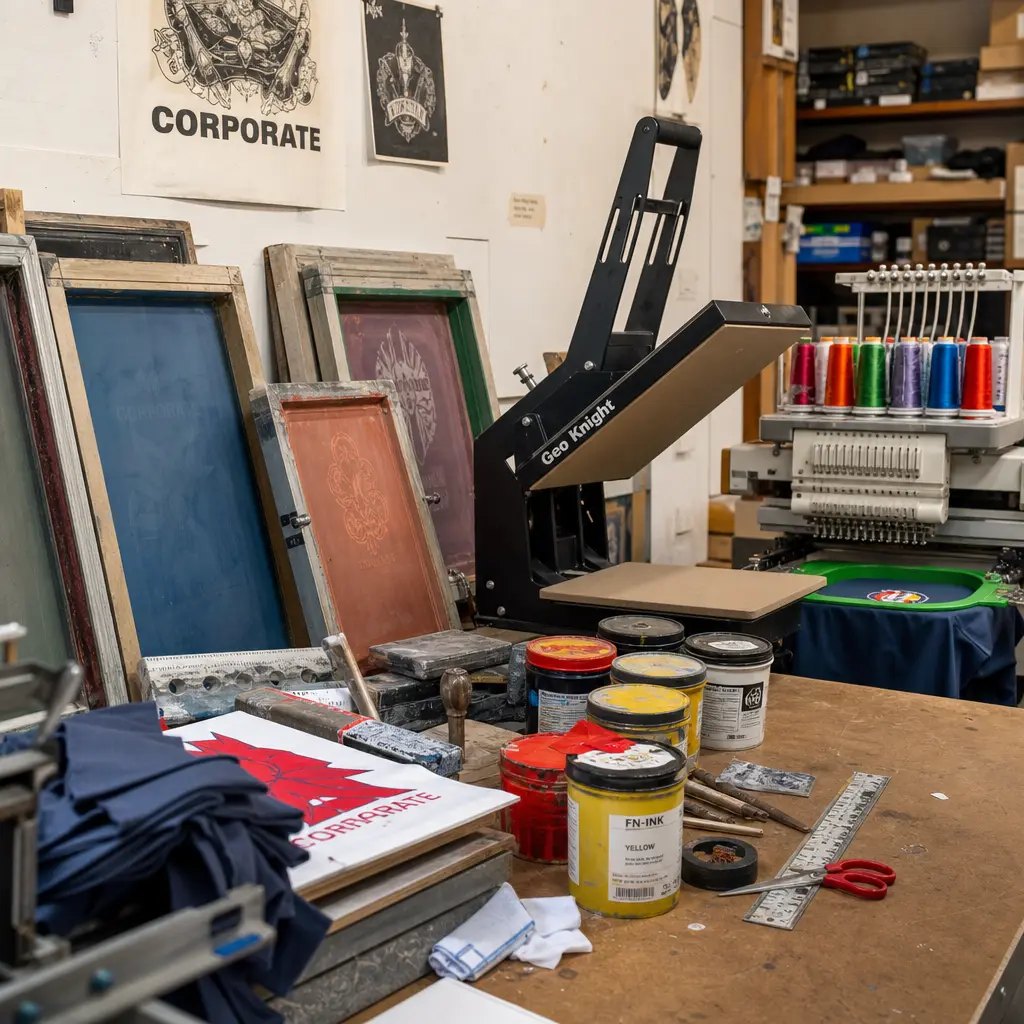
Screen printing is usually the most practical decoration method for canvas grocery totes for liquor retailers. It works well for store logos, bottle shop branding, simple slogans, and solid-color liquor brand programs. It also scales well when the order quantity is large enough to absorb screen setup charges. Buyers should specify print size, number of colors, Pantone references, print placement, and whether artwork is one side or two sides.
Detailed artwork requires more caution. Heat transfer can reproduce small text and gradients, but it may change the fabric hand feel and must be tested for adhesion on textured canvas. Digital printing can be useful for complex designs, but color saturation and wash resistance vary by supplier and fabric pretreatment. Embroidery can look premium for a small logo, yet it is not suitable for large front-panel graphics on a cost-sensitive grocery tote.
- Use screen print for 1-4 solid colors and repeatable bulk orders.
- Use heat transfer for smaller runs with complex artwork, but test edge lifting and cracking.
- Use embroidery for small premium marks, not large liquor campaign graphics.
- Use woven side labels when the front artwork changes by season but the retailer wants consistent brand identification.
- Allow enough curing time before tight packing to reduce ink transfer and blocking.
Understand MOQ Logic Before Comparing Quotes
MOQ for canvas totes is not only a factory preference. It is driven by fabric availability, dyeing, printing setup, cutting efficiency, label production, and packing requirements. A natural canvas tote with one-color screen print may have a much lower practical MOQ than a dyed canvas tote with custom webbing, inside dividers, woven labels, and retail barcode stickers. When quotes vary sharply, the MOQ structure often explains the difference.
Procurement teams should ask suppliers to split MOQ by component. This makes it easier to compare a stock-fabric solution against a fully customized program. For example, a supplier may accept a lower order for natural canvas because fabric is stocked, while a custom dyed color requires a higher fabric dye lot. A buyer who understands this can adjust the design without weakening the bag.
- Stock natural canvas usually supports lower MOQ and faster sampling.
- Custom dyed canvas may require higher MOQ due to fabric dyeing and color approval.
- Custom webbing, metal hardware, woven labels, and retail packaging can each create separate MOQ limits.
- Multi-color screen printing increases setup cost and sample approval time.
- Bottle dividers, inside pockets, or reinforced bottoms add labor and may slow sewing output.
Build the RFQ Around Quote Data, Not Descriptions
A strong RFQ should make supplier quotes comparable line by line. Vague wording such as heavy canvas tote, strong handle, or good printing leaves too much room for interpretation. The RFQ should list finished size, fabric weight, fabric composition, handle specification, print method, color count, packing method, label requirements, inspection standard, trade term, and target delivery date.
Quote data should separate unit cost from one-time charges. Screen setup, printed sample fees, lab dips, custom label charges, retail barcode sticker fees, export carton upgrades, and domestic trucking can make a low unit price less competitive. Importers and distributors should request carton data early because freight and warehouse handling may change the true landed cost more than a small difference in factory price.
- Request unit price at several quantity breaks such as 500, 1,000, 3,000, and 5,000 pieces if relevant.
- Request EXW and FOB terms if the buying team compares factories in different regions.
- Request carton dimensions, pieces per carton, gross weight, net weight, and CBM.
- Request one-time charges listed separately from bulk unit price.
- Request sample lead time and bulk lead time after artwork and sample approval.
Approve Samples With Bottle-Load Testing
A photo sample is not enough for this product. The pre-production sample should be filled with the same type of bottles expected in the store. For a wine retailer, that may mean two to four 750 ml bottles. For a spirits retailer, include at least one boxed or square bottle if that is common in the basket. The goal is to see how the fabric, bottom gusset, handles, and print behave under real load.
Sample approval should also cover appearance details that affect retail acceptance. Canvas has natural slubs and texture variation, especially in natural or recycled cotton. Buyers should define what is acceptable before bulk production. Print position, color tolerance, handle symmetry, loose threads, and folding marks should be checked on the signed sample so the factory has a clear production reference.
- Measure the sample flat and record size tolerances before approval.
- Fill the sample with target bottles and hold it for a defined time, such as 5-10 minutes.
- Check whether the bottom sags, corners distort, or handles pull away from the body.
- Rub the print surface after curing to detect weak adhesion or poor ink coverage.
- Keep one signed control sample at the factory and one with the buyer.
Set QC Thresholds That Match Retail Risk
QC for liquor retail totes should focus on safety, function, and brand presentation. A small thread end may be acceptable after trimming, but a weak handle is a product liability and customer experience issue. Inspection criteria should separate critical, major, and minor defects. Handle failure, open seams, wrong material weight, wrong print, and sharp contamination should be treated more seriously than slight natural canvas shade variation.
Factories can perform in-line checks during cutting, printing, sewing, and packing, but buyers should still define final inspection points. For large retail programs, an AQL inspection or buyer-approved inspection checklist is useful. For smaller importer orders, a practical photo report with measurements, load test photos, carton marks, and random packed goods checks may be enough if the supplier is reliable.
- Critical defects: broken handles, open bottom seams, unsafe contamination, wrong product construction.
- Major defects: wrong size beyond tolerance, incorrect print color, obvious print misplacement, skipped reinforcement stitching.
- Minor defects: trimable thread ends, small natural fabric slubs, slight fold marks outside the print area.
- Functional tests: load test, seam pull review, handle stitching review, print rub check, carton drop risk review.
- Documentation: inspection photos should show measuring tape, filled bag test, print close-up, and carton label.
Plan Packing for Warehouses and Store Presentation
Packing is often decided too late. Canvas grocery totes can be flat packed, folded once, bundled, or individually polybagged depending on the retail channel. Flat packing protects the shape and reduces crease marks, but carton dimensions may be larger. Folding saves space, but it can leave permanent marks on heavier canvas and may damage fresh print if curing time is not sufficient.
Retailers with distribution centers may require carton labels, barcodes, master carton limits, and specific carton gross weight. Importers should control carton weight because heavy canvas totes can create handling problems when packed too densely. If the bags are sold as retail merchandise, hangtags, belly bands, care labels, or barcode stickers may be required. These items should be included in the quote, not added after production starts.
- Avoid folding directly across a large front print when possible.
- Limit carton gross weight to a warehouse-friendly level agreed with the buyer.
- Use moisture-resistant export cartons for ocean shipment when humidity risk is high.
- Confirm whether individual polybags are required or discouraged by the retailer.
- Provide carton marks with SKU, quantity, country of origin, gross weight, net weight, and dimensions.
Specification comparison for buyers
| Spec decision | Recommended option | When it fits | Buyer risk to check |
|---|---|---|---|
| Main fabric weight | 10 oz to 12 oz cotton canvas, about 280-340 GSM | Reusable grocery tote for wine, spirits, mixers, and retail merchandise without making the bag too stiff | Low GSM fabric may pass visual approval but sag or tear when carrying bottles; request fabric GSM test or supplier declaration |
| Premium heavy-duty version | 14 oz to 16 oz canvas, about 400-460 GSM | Paid retail bag, VIP gift set, or bottle club program where structure and long reuse life matter | Heavier fabric increases carton weight, freight cost, sewing difficulty, and print ink consumption |
| Handle construction | Self-fabric handles with box-and-cross stitching or heavy cotton webbing handles | Liquor stores needing stable carry for 2-4 bottles plus groceries | Single-line handle stitching is a common failure point; define minimum stitch pattern and load test |
| Bottom structure | Flat bottom gusset 10-15 cm with reinforced seam allowance | Retail buyers needing bottles to stand upright at checkout and in car trunks | Too narrow a gusset makes the tote behave like a flat promotional bag instead of a grocery carrier |
| Print method | Screen print for 1-4 solid colors; heat transfer only for detailed small runs | Store logos, liquor brand co-op campaigns, loyalty programs, and seasonal graphics | Ink cracking, poor opacity on dark dyed canvas, and registration drift on large panels |
| Fabric finish | Natural greige or dyed canvas with pre-shrink control where size tolerance matters | Retail programs needing a consistent look across repeat orders | Uncontrolled shrinkage can reduce bag dimensions after washing or steaming during finishing |
| Inside bottle support | Optional divider insert, stitched bottle slots, or thicker bottom panel | Wine retailers, tasting rooms, and stores selling mixed bottle bundles | Bottle dividers add labor and MOQ complexity; confirm whether they are sewn-in, removable, or folded inserts |
| Packing method | Flat packed or folded once with inner polybag only when required by retail DC | Importers balancing carton cube, clean presentation, and warehouse handling | Over-folding creates crease marks on print areas; avoid tight bundling on fresh ink |
| Compliance and labeling | Care label, country of origin label, carton marks, and retail barcode if needed | Distributors and retail chains shipping through centralized warehouses | Missing labels delay receiving; provide label artwork, placement, and barcode file before bulk production |
Buyer checklist before sampling
- Define whether the tote is a free checkout bag, paid retail item, club gift, or brand-funded promotion before choosing fabric weight.
- Specify finished size, gusset width, handle length, and target bottle load instead of only sending a reference photo.
- Request canvas weight in oz and GSM, yarn quality, color standard, and expected shrinkage tolerance.
- Set handle stitching method, seam allowance, stitch density, and minimum load test requirement in the RFQ.
- Match print method to artwork: screen print for solid logos, transfer for detailed graphics, embroidery only for small premium marks.
- Approve a physical pre-production sample using filled bottles, not only photos on an empty tote.
- Confirm packing fold method, carton size, carton gross weight, and whether retail barcodes or hangtags are included.
- Separate one-time charges from unit price: screen setup, lab dips, sample cost, mold or label fees, and domestic delivery to port.
- Build lead time around artwork approval, fabric booking, printing, sewing, QC, packing, and export document preparation.
- Keep an approved control sample at both buyer and factory sides for repeat orders.
Factory quote questions to send
- What canvas weight options can you quote for this design in both oz and GSM, and are they in stock or made to order?
- What finished size tolerance do you recommend for this bag, and what shrinkage rate should we expect after finishing?
- Which handle material and stitching pattern will you use for a tote carrying 2-4 glass bottles?
- What is the tested load capacity in kilograms, and how many minutes is the bag held during the load test?
- Which print method do you recommend for our artwork, and what are the print size limits on this fabric?
- What MOQ applies to natural canvas, dyed canvas, custom printed fabric, and custom woven labels separately?
- What sample types are included: blank sample, printed sample, pre-production sample, and shipment sample?
- What are the carton dimensions, pieces per carton, net weight, gross weight, and estimated CBM for 1,000 pieces?
- Which QC checks are performed before packing, and can you provide photos or a simple inspection report?
- What quote terms are included: EXW, FOB port, export carton, inner packing, screen charges, labels, and documents?
Quality-control points to confirm
- Fabric GSM tolerance should normally stay within the agreed range, commonly plus or minus 5 percent unless otherwise approved.
- Finished bag size should be measured flat, including width, height, gusset, and handle drop, with a written tolerance before production.
- Handle attachment should use reinforced stitching, with no skipped stitches, loose threads, or needle damage around stress points.
- A filled-bag load test should match the intended retail use, such as 8-12 kg for common liquor grocery tote programs.
- Print color should be compared against approved artwork, Pantone reference, or signed sample under consistent light.
- Print surface should pass basic rub checks after curing, especially on dark fabric or large solid ink areas.
- Seams should be checked at gusset corners, bottom folds, and handle joins because these points carry bottle weight.
- Packing should protect the printed face from ink transfer, crushing, moisture, and excessive fold marks.