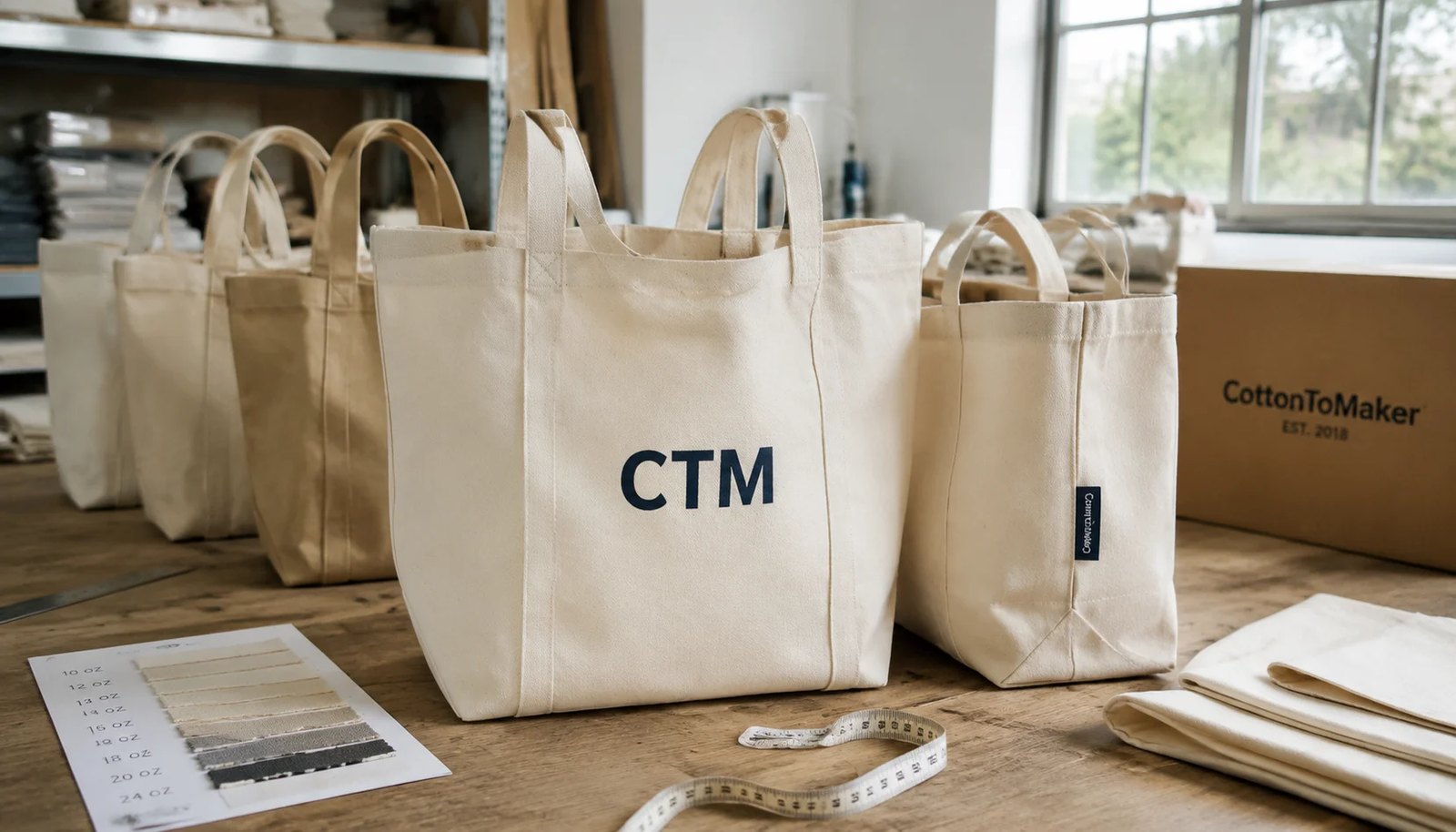
Why lead time planning is harder for liquor retail totes than standard promo bags
Canvas grocery totes sold through liquor retail have a narrower timing window than generic event giveaways. They often support holiday promotions, wine club fulfillment, tasting programs, and checkout merchandising tied to a fixed calendar. Missing the delivery date by even one or two weeks can wipe out the selling season, especially for fourth-quarter gift traffic. That is why the buying problem is not just how to source a tote, but how to build a schedule that survives sample revisions, print changes, and shipping delays.
The main mistake is treating canvas totes like low-risk commodity bags. In reality, liquor retail use adds load-bearing requirements, bottle-shape fit issues, and a greater chance of design changes because the bag may sit next to premium packaging. A bag that looks fine in a flat photo can fail at retail if the gusset is too shallow for two bottles, the handles are too short for shoulder carry, or the print cracks where the bag folds around glass weight. Lead time planning should therefore start from function, not just from target price.
- Seasonal programs often need goods in warehouse 3 to 6 weeks before store launch
- Bottle-carry use raises the need for stronger seams and more careful sample testing
- Holiday capacity pressure can extend printing and sewing queues even if raw fabric is available
- Artwork approvals often take longer than buyers expect because natural canvas affects color appearance
Start with the load case: bottle count drives fabric, construction, and timing
Before requesting quotes, define the actual use case in simple carrying terms: two 750 ml bottles, four bottles, or mixed groceries plus bottle carry. This one detail influences almost every production choice. For many liquor retailers, 10 oz to 12 oz canvas, roughly 280 to 340 GSM, is the practical middle ground. It gives enough body for a reusable bag without pushing sewing time and freight too high. If the bag is intended for six bottles or a premium gift set, some buyers move to 14 oz canvas, but that choice adds cost, bulk, and sometimes a slower line speed.
Construction matters as much as GSM. A flat tote can work for low-cost checkout use, but side and bottom gussets make the bag more stable for bottle loading and easier for staff to fold and stack. Reinforced handle attachment is not a decorative feature; it is a risk-control point. A factory quote that does not mention handle stitch method, webbing option, or seam reinforcement is incomplete for bottle retail use. Better RFQs include the expected weight load and whether the buyer wants a self-fabric handle or separate cotton webbing.
- Typical usable spec for many liquor retailers: 38 to 40 cm wide x 35 to 38 cm high x 10 to 15 cm gusset
- Common canvas range: 8 oz for light promo use, 10 to 12 oz for mainstream retail, 14 oz for heavier bottle programs
- Reinforcement details to state in RFQ: box stitch, cross stitch, bartack, handle width, and stitch density
- If using bottle dividers or stiff base insert, add sample lead time and packing complexity
Lead time is built from several smaller clocks, not one factory promise
Procurement teams often ask for a single lead time number, but a useful schedule breaks the order into stages. For example, stock natural canvas with one-color screen print may move faster because fabric is already available and screen setup is simple. A more complex program with custom dyed canvas, woven labels, multiple print colors, and inner protection inserts may require separate booking for fabric, labels, printing screens, and packing materials. If one subcomponent slips, the final ex-factory date moves even when sewing capacity is open.
For a realistic planning model, treat lead time as five parts: development sample, bulk material readiness, pre-production approval, production, and outbound packing. This lets buyers compare supplier quotes more accurately. One factory may quote 25 days but exclude sample approval and label lead time. Another may quote 35 days but include all materials and export packing. The longer quote can be safer if it reflects the true path to shipment.
- Illustrative timing for stock fabric order: 3 to 5 days artwork and sample prep, 5 to 10 days pre-production sample, 18 to 28 days bulk production, 2 to 4 days final packing
- Custom dyed canvas can add roughly 7 to 14 days depending on mill queue and color approval method
- Additional components that can add time: woven labels, hangtags, bottom boards, custom polybags, retail inserts
- Peak periods before major holidays often extend print and sewing queues even for simple replenishment orders
How fabric and print choices change both schedule risk and unit economics
Fabric choice is one of the few decisions that affects cost, freight, print quality, and timing at the same time. Natural stock canvas generally gives the shortest path because mills and factories often keep regular weights ready. Custom dyed canvas may be justified if the tote is a brand shelf item rather than a promotional pack-in, but buyers should understand that dyeing introduces lot variation risk and a shade approval step. If the exact brand color is critical, the RFQ should state whether color match is visual only or tied to a reference such as a Pantone approximation on cotton substrate.
Print method also changes risk. Screen print is usually the most stable choice for bulk liquor retail totes with one or two solid colors. It handles repeated runs well and usually offers a better cost curve over volume because setup is spread across more units. Heat transfer or digital methods can make sense for short runs or detailed multicolor artwork, but they can slow approvals because the sample must prove adhesion, flexibility, and fold durability on the chosen canvas. A print that looks bright on a smooth sample can lose sharpness on coarse heavy canvas.
- Natural canvas often prints with slight tone variation because the base cloth is not a bright white board surface
- Screen print usually suits medium to high volume orders with simple logos and large fill areas
- Transfer print may help with complex art but needs stronger adhesion review on fold lines and seam areas
- Dark dyed canvas may require underbase printing, raising both setup complexity and print cost
MOQ logic: reduce launch risk without creating an expensive specification trap
MOQ is not just a sales policy; it reflects how many pieces are needed to use fabric width efficiently, prepare print screens, and keep a sewing line productive. Buyers often focus only on the tote bag MOQ, but the real issue is the MOQ of each variable feature. Stock natural canvas usually supports lower custom MOQs because the factory is not booking a dedicated dye lot. Once the order adds custom color fabric, woven labels, special inserts, or multiple SKUs with split quantities, the practical MOQ rises even if the nominal bag MOQ stays the same.
For liquor retailers testing a new private-label tote, a phased order structure often works better than pushing for an unrealistically small first run with too many custom features. Keep the launch version on stock natural canvas, one-color screen print, and standard export packing. After sales data proves turnover, move to dyed fabric, premium labels, or stiffer base construction in the second order. This sequencing shortens the first lead time and makes supplier comparison cleaner because fewer moving parts are involved.
- Low MOQ usually comes from using stock canvas, standard thread colors, standard carton sizes, and simple print
- Multiple SKUs split from one order can trigger surcharge logic even when total units are high
- A custom dyed body color may have a fabric MOQ independent from the bag sewing MOQ
- Short-run premium details often look cheap in the quote but expensive in delay risk
Sample approval should test load, measurements, and retail usability, not only artwork
Many tote delays start when the buyer approves a sample by photo and later notices practical issues after bulk cutting begins. For bottle retail, a pre-production sample should be reviewed as a functional item. Load it with the intended bottle count. Measure whether the gusset opens enough to stand upright. Test whether the handle drop allows shoulder carry with a coat on. These are not small details; if they fail after artwork approval, the revision can force recutting panels or remaking screens.
The sample approval sheet should include more than a visual sign-off. It should capture finished size, fabric GSM, actual print size, print position tolerance, handle length, seam construction, and packing method if carton fit is tight. If the program includes a base insert or divider, review how the insert sits after repeated loading. A tote that works for a showroom display may still be inefficient for store staff if inserts fall out or bags collapse awkwardly at checkout.
- Approve one sample made in bulk-intended fabric and thread, not substitute cloth
- Record measurement tolerances for width, height, gusset, and handle drop
- Run a practical load test using real 750 ml bottles, not only hand feel evaluation
- Photograph front, back, seam joins, inside finish, and packed fold format for reference
Packing decisions can quietly add a week if they are left until the end
Packing is often treated as an afterthought, but it directly affects ex-factory timing and downstream warehouse labor. Liquor retail buyers frequently need bags split by SKU, store group, or promotional wave. If the supplier receives packing instructions late, finished goods may sit while cartons, barcode labels, or inner pack stickers are revised. That delay is avoidable if the RFQ already states pack ratio, carton size limit, gross weight limit, and shipping mark format.
Flat packing is usually the most efficient route for canvas grocery totes, but the folding method should be standardized. Overly tight folding can leave set creases in printed areas, while loose packing reduces carton efficiency and raises freight cost. If the bags include cardboard bottom inserts, decide whether inserts ship assembled in the bag, separately in the carton, or only at destination. Each option changes labor location, carton count, and damage risk.
- Typical export preference: flat packed, same SKU per carton, count verified by bundle
- State maximum carton gross weight if your DC or retail warehouse has handling limits
- If retail labeling is required, define label position and barcode format before bulk packing
- For inserts or dividers, specify whether they are pre-inserted, separately packed, or omitted for replenishment orders
Use QC thresholds that fit canvas reality instead of generic soft goods language
Quality control on canvas totes should be practical and measurable. Generic instructions such as 'good quality' or 'no defects' do not help either side. Natural canvas is a woven material with some character variation, so the buyer should distinguish between acceptable material variation and actual defects. A tiny slub in fabric may be normal; a major oil mark across the front print area is not. The same principle applies to print and stitching. It is better to define position tolerance and seam expectations than to argue after inspection using vague terms.
For liquor retail use, seam strength and dimensional consistency should rank higher than purely cosmetic perfection. If bags vary too much in gusset depth, the in-store presentation becomes uneven and bottle fit may differ from unit to unit. If print placement drifts, shelf appearance suffers, but if handle seams are weak, the end customer may experience product failure. Buyers should prioritize inspection points according to actual retail risk, not only visual appeal.
- Set print position tolerance in millimeters rather than saying 'centered'
- Define acceptable and unacceptable marks on front panel, back panel, and interior separately
- Require seam security at handle joins and bottom corners because these are the highest load points
- Inspect carton quantity accuracy and SKU labeling as part of QC, not only the bag body
How to compare supplier quotes without being misled by a shorter lead time
When comparing quotes, separate the commercial number from the operational assumptions behind it. A lower unit price may exclude screen charges, sample fees, woven label cost, or stricter packing instructions. A shorter lead time may assume immediate artwork approval, standard carton packing, and no changes after the first sample. The useful comparison is not just FOB price versus FOB price; it is quote structure versus your real launch plan. Procurement teams should rewrite supplier quotes into a common template before choosing a vendor.
One simple method is to calculate the total landed decision impact of each quote path. Example only: Supplier A is lower on unit price but uses heavier cartons and less efficient loading, which raises ocean freight per bag. Supplier B is slightly higher on piece price but offers stock canvas and a cleaner sample path, reducing launch risk and emergency air shipment exposure. For time-sensitive liquor retail promotions, the safer operational quote often has the lower total program cost once schedule risk is included.
- Normalize quotes by listing included and excluded items: sample, screen, labels, inserts, packing, inspection support
- Compare ex-factory date assumptions, not only production days
- Add estimated freight effect of heavier GSM and larger gusset dimensions when reviewing landed cost
- Treat air-freight rescue risk as part of sourcing cost for seasonal retail programs
A practical backward schedule for in-store launch planning
The most useful planning tool for liquor retailers is a backward schedule built from the in-store date. Start with the date goods must be received at your warehouse or distributor. Then subtract customs clearance, drayage, port handling, ocean transit or air transit, factory outbound packing, production time, pre-production sample approval, and development sampling. This exposes whether your requested factory lead time is realistic or whether the launch is already tight before ordering begins.
Add a buffer for revision cycles. Canvas tote programs look simple, but revisions commonly occur in logo size, gusset depth, handle drop, or print color density on natural fabric. If the product is tied to a holiday release or chain-wide activation, buyers should avoid using the theoretical minimum schedule. A realistic plan builds in at least one sample correction round unless the design is a repeat order with unchanged specs and packing.
- For first orders, reserve time for one sample correction round even if artwork seems straightforward
- Move faster by freezing packing instructions early; late carton changes are a common avoidable delay
- If launch timing is critical, consider stock fabric and one-color print for the first production run
- Book freight based on factory-ready date range, not a single optimistic day
Specification comparison for buyers
| Spec decision | Recommended option | When it fits | Buyer risk to check |
|---|---|---|---|
| Fabric weight for standard bottle retail use | 10 oz to 12 oz canvas, about 280 to 340 GSM | Good balance for 2 to 4 wine bottles, everyday grocery reuse, and stable print surface | Lighter than 10 oz may sag with bottle weight; heavier than 12 oz adds freight and can slow sewing capacity |
| Bag construction for glass bottle support | Bottom gusset plus side gusset, reinforced handle box stitch | Best for liquor shops needing upright bottle carry and easier shelf packing | Flat bags may twist under load; confirm gusset width and stitch count at handle joints |
| Print method for logos and seasonal promos | Screen print for solid artwork; heat transfer only for short runs or multicolor detail | Screen print suits bulk repeat orders and keeps unit cost lower after setup | Heat transfer may crack on heavy flex areas; confirm print adhesion and color tolerance on natural canvas |
| MOQ planning for custom color canvas | Use stock natural canvas for lower MOQ; custom dyed canvas only when color match is core to brand | Stock fabric shortens material lead time and reduces risk on replenishment orders | Custom dye lots often raise MOQ and add 7 to 14 days; request shade band approval before bulk cutting |
| Handle length choice | 60 to 70 cm total length for shoulder carry | Best for mixed retail use where customers carry bottles and groceries together | Short handles improve carton efficiency but reduce usability; confirm tolerance so left and right handles match |
| Inner protection for bottle-heavy programs | Optional removable cardboard bottom insert or sewn-in base panel | Useful for gift-with-purchase, wine club packs, or premium bottle sets | Inserted base can shift if pocket is loose; sewn base adds labor and can extend production time |
| Packing route for store distribution | Flat packed in master cartons with size sticker and carton mark by SKU | Works for chain retailers splitting stock across stores or DCs | Loose mixed packing creates receiving errors; confirm exact pieces per inner and per master carton |
| Sampling route before bulk production | Digital artwork proof, then one pre-production sample in final fabric and print | Best for new artwork, new handle length, or bottle-load applications | Approval from photo only is risky; insist on sample measurements, fabric GSM, and print position tolerance |
Buyer checklist before sampling
- Define bottle load per bag: 2, 4, or 6 standard 750 ml bottles, plus any grocery use beyond bottle carry
- State target fabric clearly in GSM or oz canvas, not only 'heavy canvas'
- Choose stock natural canvas or custom dyed canvas based on launch timing and MOQ tolerance
- Specify finished bag size, gusset depth, and handle length with measurement tolerance
- Match print method to order size and artwork complexity before requesting quotes
- List packaging format: flat packed, inner pack quantity, carton dimensions limit, and carton mark format
- Request pre-production sample in bulk-like fabric, thread color, and print color before mass production
- Set QC thresholds for fabric weight, print position, seam security, odor, stains, and carton count accuracy
- Map your deadline backward from in-store date to include freight booking, customs, and warehouse receiving
- Separate first-order launch quantity from replenishment forecast so factories can plan raw material correctly
Factory quote questions to send
- What is your standard lead time for stock natural canvas totes with one-color screen print at 3,000, 5,000, and 10,000 pieces?
- How many days are needed for raw fabric booking, cutting, printing, sewing, inspection, and export packing?
- What fabric options do you recommend for carrying 2, 4, or 6 wine bottles, and what is the actual GSM tolerance?
- Is the quoted fabric stock material or made to order, and does that affect MOQ or shade consistency?
- What print method is included in the quote, and what setup charges apply for additional colors or larger print area?
- Can you provide a pre-production sample in final canvas and print, and how many days does that sample take?
- What seam reinforcement is used at the handles, and what internal load standard do you test or recommend?
- How are bags packed per inner and master carton, and what carton dimensions and gross weight are expected?
- What common causes delay your tote production during peak season, and how much schedule buffer do you advise?
- Which quote items are variable after sample approval: fabric price, print screens, export carton, labels, or packing inserts?
Quality-control points to confirm
- Fabric weight within agreed tolerance and visually consistent shade across the production lot
- Finished dimensions within approved tolerance for width, height, gusset, and handle drop
- Handle attachment reinforced with clean box stitch or cross stitch and no skipped stitches
- Print artwork centered within agreed tolerance with no obvious smudge, ghosting, pinholes, or color drift
- Top hem folded evenly with no twisting, exposed raw edges, or uneven seam tension
- Side and bottom seams straight, secure, and able to support intended bottle load without seam opening
- No major oil marks, mildew odor, heavy creasing, needle holes outside seam area, or foreign fibers
- Correct barcode label, SKU mark, packing quantity, and carton shipping mark per buyer instruction